Foreign thinker
Fazlur Rahman Malik
Fazlur Rahman MalikIslamic Philosophy and Religious IntellectualismPakistani
Life and Thought
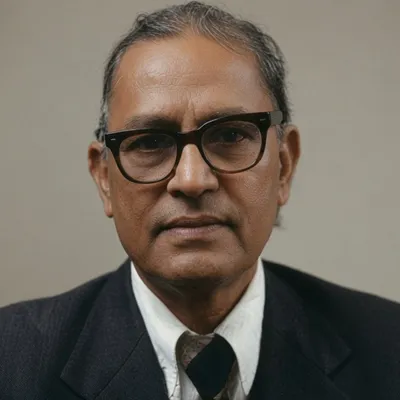
Fazlur Rahman Malik (1919–1988) was a Pakistani Islamic thinker and philosopher, and one of the most important representatives of religious intellectualism in the Islamic world in the twentieth century. Combining deep knowledge of the Islamic tradition with Western critical methods, he offered a historical and ethical approach to understanding the Quran. His works have had a lasting impact on contemporary Islamic studies and the religious reform movement.
Fazlur Rahman Malik was born on September 21, 1919, in the Hazara district (in British India, today Pakistan). His father, Maulana Shahab al-Din, was a prominent Sunni jurist, and he received his early Islamic education from him. He then studied at the University of Punjab and went to the University of Oxford for his doctorate, graduating in 1949 with a dissertation on Ibn Sina.
He taught at the universities of Durham, McGill, and California, and from 1969 until the end of his life, he was Professor of Islamic Thought at the University of Chicago. Fazlur Rahman was proficient in Arabic, Greek, Latin, German, and French, and sought to forge a link between the Islamic tradition and the challenges of modernity.
His most important works include "Islam," "Major Themes of the Qur'an," "Islam and Modernity: Transformation of an Intellectual Tradition," and "Prophecy in Islam." He emphasized a historical understanding of the Quran, the distinction between enduring ethical principles and historical rulings, and the revival of ijtihad. In his view, the Quran is a book of ethics and guidance, not merely a collection of legal rulings. Fazlur Rahman died on July 26, 1988, in Chicago.