Religion
Fazlur Rahman and the Meta-Problem of Modernity in the Islamic World: A Conversation with Mehrdad Abbasi
Fazlur Rahman is one of the most important Islamic thinkers to engage with the meta-problem of 'tradition and modernity.' His translator, Mehrdad Abbasi, discusses the relationship between Rahman's ideas and modernity, and the experiences of Pakistan and Iran.
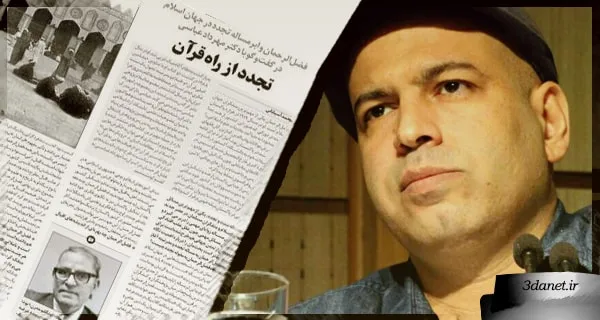
Fazlur Rahman is one of the most important thinkers of the Islamic world. He was born in 1919 in Hazara, Pakistan (at a time when the country had not yet separated from India). He began his preliminary Islamic studies under his father, Mawlana Shahab al-Din, who was one of the great Sunni jurists in Pakistan. He went to the University of Oxford to continue his education and graduated with a doctorate. He then taught at various universities such as McGill, Durham, and others, and gained proficiency in Greek, Latin, German, and French.
Some time after Pakistan's separation from India and the formation of the country, he settled in his homeland at the invitation of officials and assumed the directorship of the Islamic Research Institute, but he could not establish a good rapport with the followers of traditional Islamic thought in Pakistan and was compelled to return to the Western academic system. He passed away in 1988. Two of his books, titled Major Themes of the Qur'an and Islam and Modernity: Transformation of an Intellectual Tradition, were published last year in the Islamic Studies series of Kargadan Publishing, translated by Fatemeh Alaghebandi and Zahra Iranban respectively. This series is supervised by Mehrdad Abbasi. Abbasi holds a doctorate in Quranic Sciences and Hadith and is currently a faculty member at the Islamic Azad University, Science and Research Branch, as well as a researcher at the Encyclopaedia Islamica Foundation, engaged in teaching and research. Among the most important books published with his translation and editing are Approaches to Islam in Religious Studies, Approaches to the History of the Interpretation of the Quran, and Approaches to the Qur'an. On the occasion of the renewed discussion of Fazlur Rahman's ideas in Iran, we sat down for a conversation with Mehrdad Abbasi.
The problem of tradition and modernity is one of the most important issues for the Islamic world and Muslim thinkers in the modern era. This issue encompasses significant dimensions, and under it, important questions such as the causes of Muslims' backwardness from global civilization have also been raised. To begin, it is better to start our discussion on the importance of Fazlur Rahman's particular view on the issue of modernization and modernity. What is Fazlur Rahman's view on the category of modernization?
Fazlur Rahman is among those figures in the Islamic world who have grappled with the meta-problem of “tradition and modernity,” or in other words, “Islam and modernity.” His responses to this meta-problem must be considered among the most serious and methodical answers offered by researchers and activists in this field during the twentieth century. Fazlur Rahman can also be described, in a sense, as a “modern theologian”—a theologian in that, like any classical theologian, he sought to present a coherent doctrinal system for the followers of a particular religion and to safeguard their beliefs and convictions, and modern in that he designed this system with regard to the presence of modern achievements and according to new exigencies, in effect offering a kind of “new theology.” Perhaps the Egyptian Muhammad Abduh can be seen as the initiator of this current, who, with his book Risalat al-Tawhid, pursued such an ideal. The project of Fazlur Rahman, Abduh, and many others was the formulation of a theoretical framework and the establishment of practical rules for living as a Muslim in the modern world. This project was underway in almost all Islamic countries from the late nineteenth century and throughout the twentieth century, and was not confined to a single country or specific region. In the modern period, serious questions arose in Islamic societies, such as: In the modern era, what is the place and weight of the Quran and exegesis, hadith and history, jurisprudence and its principles, philosophy and theology, and Sufism and mysticism? By whom and through what mechanisms should Muslim societies and Islamic countries be governed? What stance should be taken on issues concerning women’s rights, family law, and population control? These questions were not merely theoretical curiosities of the kind found in research articles or academic theses. Rather, they were questions intertwined with the individual identity of every Muslim person and the collective identity of every Islamic society in the present age. It is not without reason that we see his works gaining many adherents in many parts of the Islamic world, from Arab countries to Turkey, as well as Malaysia and Indonesia, and being translated into the vernacular languages of the Islamic world. Iran, naturally, cannot be excluded from the Islamic world. Indeed, it is surprising that his books have remained unknown or little-known to this day for many researchers of Islamic thought and the issues of the contemporary Islamic world in our country. One of my motivations for translating and publishing Fazlur Rahman’s more important works into Persian was to remedy this deficiency and fill this void. Although the necessity of understanding Fazlur Rahman’s works can also be viewed from the angle of the cultural similarities between Iran and India.
Will the importance of raising Fazlur Rahman’s discussion in Islam’s response to modernity also have an impact on the growth of debates on the relationship between tradition and modernity in Iran?
In principle, comparing the experiences of different countries in the Islamic world in confronting the modern world over the past 150 years can be one of the worthy and necessary undertakings in Islamic and sociological studies. In a word, it can be said that these experiences, despite their many differences, also have significant similarities. The experiences of India, Turkey, and Egypt, as the intellectual leaders of the Islamic world, are very valuable to us, and studying them can be highly insightful. In comparing Iran's experience with that of important Islamic countries, leaving aside Egypt and Turkey—for which there is no room to speak here—India, due to the shared cultural, literary, and linguistic history it has had with us, should receive much attention. Studying the intellectual and practical programs of the great figures of Indian history, such as Sheikh Ahmad Sirhindi, Shah Waliullah Dehlawi, Sir Syed Ahmad Khan, Abul A'la Maududi, and Muhammad Iqbal Lahori—in whose lineage Fazlur Rahman also stands—will be very fruitful, both scientifically and practically. For each of these figures, in terms of their intellectual and political record, one can find parallels and counterparts in our own country. The process of Pakistan's separation from India and the formation of a country based on the religion of Islam brings to mind many similarities with the process of the Iranian Revolution and the formation of the Islamic Republic. Both Iqbal Lahori and Fazlur Rahman harbored the ideal of forming a country based on the teachings of Islam and a kind of "Islamic Republic," and were considered theorists and ideologues of this movement. Death did not grant Iqbal time, and he did not live to see the formation of Pakistan. But Fazlur Rahman continued his intellectual striving for several decades after Pakistan's formation; although at the peak of his intellectual and scholarly vigor, he directly faced the problems and tribulations of being in Pakistan. From this perspective, Fazlur Rahman's works can also be useful and enlightening as a lived experience for our researchers.
What benefit did Fazlur Rahman derive from the thoughts of Iqbal Lahori, and what is the relationship between his intellectual system and Iqbal's?
As you know, in Iran, the fame and even popularity of none of the thinkers and poets of the subcontinent in the contemporary period reaches that of Iqbal Lahori. Therefore, explaining the relationship between Fazlur Rahman's thoughts and Iqbal's intellectual framework might be appealing to the Iranian audience. Fazlur Rahman was 20 years old at the time of Iqbal's death and was in the prime of youthful vigor and enthusiasm. Iqbal's important work, like that of Sayyid Jamal and Abduh, was to critique the current state of contemporary Muslims and invite them to build the future. The poem cycle "Asrar-e Khudi" (The Secrets of the Self) and other poems of Iqbal had a profound impact on Fazlur Rahman's generation. It is not without reason if we say that Fazlur Rahman was engaged in an intellectual struggle with Iqbal throughout his entire life, and at the same time, his project can be seen as a continuation of Iqbal's program and thought; although there were undoubtedly differences and disagreements in their views on certain matters related to Islam and Muslims. Ms. Sheila McDonough, a professor at Concordia University in Montreal who was in close contact with Fazlur Rahman for a time at McGill University, points to an interesting point about Fazlur Rahman's general feeling towards Iqbal. She, who read Iqbal's poems with Fazlur Rahman for a period with the aim of learning Urdu, says that Fazlur Rahman had a feeling of ambivalence and doubt towards Iqbal. This feeling of Fazlur Rahman apparently stemmed above all from his religious upbringing, which had a negative view of poetry and considered it frivolity and decadence.
This particular view of Fazlur Rahman towards poetry is also interesting. Of course, perhaps this view of his towards poetry can be seen as a continuation of the tradition of the necessity of the educational function of poetry held by some Muslim thinkers.
Although Fazlur Rahman himself was interested in poetry, he regarded it as tantamount to a departure from ethics and recklessness, and worried that it might be harmful to his society. In other words, he feared that Iqbal’s poetry would be treated as revelation by the people, that they would become enchanted and intoxicated by these poems and cease to think. The Qurʾānic teachings were not sufficiently promoted in Iqbal’s poetry, and the possibility that this poetry might replace the Qurʾān and the Sharīʿa was a source of concern for him. Let me add, parenthetically, that the Qurʾān’s negative view of most poets and the creation of a kind of opposition between the Qurʾān and poetry should also be seen from this perspective. In a sense, one could say that Fazlur Rahman wrote the book Major Themes of the Qurʾān to compensate for the shortcomings of Iqbal’s poetry in terms of encompassing Qurʾānic teachings, and also the book Islamic Methodology in History to explicate the foundations of Islamic Sharīʿa and to defend the presence of religion in people’s lives and culture. Fazlur Rahman’s distrust of Iqbal’s poetry had another reason as well, namely the criticisms of figures such as Hamilton Gibb and Wilfred Cantwell Smith, who warned against the romantic individualism in Iqbal’s poetry and considered the influence of Nietzsche’s concept of the “Superman” on his thought to be detrimental. Nevertheless, Fazlur Rahman admired Iqbal’s thought in many respects and, despite the opposition of sociologists, sympathized with the idea of establishing an independent Islamic state that had been put forward by Iqbal. He was also in accord with Iqbal’s view of history, science, and nature. On the whole, Fazlur Rahman’s final judgment on Iqbal should be sought in the entry “Muhammad Iqbal” in Mircea Eliade’s Encyclopedia of Religion, where Fazlur Rahman writes, in this article from late in his life, that Iqbal attained the discovery of true Islam—that is, a dynamic, not static, Islam—and through his writings summoned Muslim and non-Muslim people across the world to this “invigorating and ethics-oriented” Islam.
Fazlur Rahman also had diverse and fascinating intellectual phases. In one period, he was interested in philosophy and engaged in philosophical reflections. In other periods, although his thought cannot be separated from philosophy, it is as if he broke away from philosophy and turned to the Qurʾān.
As I have written elsewhere before, Fazlur Rahman must in one sense be considered an “authentic” thinker; meaning that throughout his life he lived his thoughts and research, and was not merely an academic scholar or a political activist. He lived for about 70 years, and at one stage was interested in Iranian and Islamic philosophy, authoring books and articles on philosophers such as Ibn Sina, Mulla Sadra, and Mir Damad. At another stage, the problem of revelation and its nature preoccupied his mind, and he addressed the subject seriously, paying a heavy price for it. At yet another stage, his mind turned to social issues, and he turned to Islamic modernism, addressing the important issue of ijtihad or subjects such as women's rights and family law. In another period, he focused on one of the most important issues of the day in the Islamic world, namely fundamentalism or neo-fundamentalism. Accordingly, in some research works, Fazlur Rahman's life has been divided into five periods: 1) From the beginning to age 30, which was a period of intellectual curiosity and following the figure of Iqbal. During this period, he studied traditional Islamic seminary lessons under his father and Rumi's Masnavi under his maternal uncle, and became a memorizer of the Quran. Around the age of 15, he became enamored with the thought, philosophy, and poetry of Iqbal. It is said that after obtaining his master's degree, Fazlur Rahman learned German and even translated Ignaz Goldziher's famous book on the schools of Quranic exegesis into English, though his manuscripts were lost during the independence of Pakistan. 2) From age 30 to 40, which was the period of his presence at Oxford University and acquaintance with the orientalist Hamilton Gibb, who greatly influenced his thought. During this period, he tried to show Westerners that Islamic philosophy did not end with al-Ghazali's critique, and in this vein, introduced thinkers such as Shaykh Ahmad Sirhindi and Shah Waliullah Dehlavi to Westerners. 3) The period at McGill University, where he met Wilfred Cantwell Smith and founded the Institute of Islamic Studies at the university. It was during this period that Fazlur Rahman's interests shifted from classical Islam to contemporary Islam. 4) The period of return to Pakistan, when he returned to his country at the invitation of President Ayub Khan and assumed the directorship of the Islamic Research Institute in Karachi. It was at this institute that Fazlur Rahman, apart from lessons and academia, became acquainted with the realities of Islamic society. Various religious groups led by Mawdudi and others opposed him and his institute, portraying it as a sedition against Islam and its teachings. By publishing his correspondence with Cantwell Smith, opposition groups portrayed him as an individual linked to Westerners and spared no effort to disgrace him doctrinally. The disputes spilled over into the media, and Fazlur Rahman was forced to resign from his post. 5) The final 20 years of Fazlur Rahman's life, when he emigrated to America with his wife and five children and submitted to a self-imposed isolation or exile. He spent the first year at UCLA and then went to the University of Chicago, where he remained for about 20 years until the end of his life. Towards the end of this period, the Levi Della Vida Medal was awarded to Fazlur Rahman. This prestigious award had previously been granted to prominent Islamicists such as Joseph Schacht, von Grunebaum, Franz Rosenthal, and William Montgomery Watt.
Did Fazlur Rahman write more in Urdu or English? In what language did he write his most important works?
Over a period of roughly 35 years, Fazlur Rahman wrote about 10 books and dozens of articles in English, and also wrote articles in Urdu during his time in Pakistan. There is naturally no room here to address all of these works, but allow me to provide a brief overview of his most important English books. Fazlur Rahman's first work, written during his initial period in the West, was the book Avicenna's Psychology. In this period, he viewed the discussion of revelation and prophethood as a starting point for discussions in the philosophy of religion. Although in these years he considered Avicenna the first and most methodical thinker in the history of Islamic thought, he also had criticisms of him. In the book Prophecy in Islam, he turned to the philosophy of prophethood and the psychology of the prophet, and was well aware that in any program of progress for Muslims, the concept of prophethood can never and should never be set aside. Then, in a book titled Selected Letters of Ahmad Sirhindi, he addressed this Naqshbandi Sufi's critiques of Ibn Arabi. In this book—at the center of which also lies the personality and characteristics of the concept of prophethood—Fazlur Rahman paid attention to the social role of the Prophet and sought to explain the status of the Prophet's Sunnah. Fazlur Rahman then, in the book Islamic Methodology in History, which he himself considers his best book, moved from discussions related to philosophy, theology, and Sufism to discussions related to the principles of jurisprudence. His view in this book is that hadith is also bound by history and the conditions of time and place, and his aim is to shape and introduce the concept of
Undoubtedly, revival and reform in Muslim thought and practice were among Fazlur Rahman’s most important concerns and one of the central axes of his intellectual program. In addition to being considered one of the Muslim reformers in the intellectual and practical spheres of the Islamic world in the twentieth century, he also reflected on the history of this subject, the pioneers of reform, and its limits and boundaries, and has writings on the matter. In 1970, he wrote a theoretical article on the scope and methods of Islamic modernism, at the beginning of which he clarified his view on Islamic reform. According to him, the classical modernists of the nineteenth century regarded Islamic reform as a comprehensive project that encompassed law, society, politics, and intellectual, moral, and spiritual affairs, and was connected to issues such as the rules of testimony, the status of women, modern education, the reform of institutions and establishments, and the right of Muslims to think about themselves, God, the nature of the world, and humanity. In 1977, in the renowned Cambridge History of Islam—which has also been translated into Persian—he wrote an article under the title “Revival and Reform in Islam,” in which he ably demonstrated the history of religious revivalism and reformism in Islamic thought. It must be said that Fazlur Rahman considered the reform of Islamic societies to be contingent upon the reform of their education and educational systems. His main concern was to create a ground for rethinking Islam, which was made possible through education, and in this path, he criticized the ulama who resisted the changes and transformations brought about by modernity. Although he praised and respected the intellectual heritage and multifaceted tradition left by the ulama, he faulted them for having forgotten the critical and creative aspects of this tradition and for abandoning reform and active engagement with new issues. Of course, one must also pay attention to this pivotal point: he sought reform based on ethics and criticized figures like Abul A’la Maududi, whose reform program was accompanied by anger and violence. However, the program of figures like Shah Waliullah Dehlavi was pleasing to him, and he believed that the reform program must have an intellectual, moral, and spiritual dimension. In Fazlur Rahman’s view, the fundamental problem in the history of Islamic thought is that at many critical historical junctures, the connection between Islamic political philosophy and Quranic ethics was severed.
Fazlur Rahman’s Quranic view on the issue of politics is also another specific aspect of his thought. What influence did Fazlur Rahman’s interpretation of the Quran have on his political outlook?
As a modernist Muslim, Fazlur Rahman believed that the Quran must be interpreted based on the conditions and characteristics of the new era, and undoubtedly such an approach requires a clear understanding of the general spirit of the Quran and the dynamism of today’s complex and multifaceted society. Therefore, each generation must understand the general spirit governing the Quran through a fresh study and an intellectual and spiritual effort in its own age. It can perhaps be said that the most important element in Fazlur Rahman’s hermeneutics is the concept of “ijtihad,” according to which the message of the Quran must be interpreted in light of current conditions in a way that best fulfills the Quran’s goal of establishing an ethical system and social equality. It is predictable that this view of Fazlur Rahman stood in opposition to the fundamentalist approach and created challenges. Among other things, one of Fazlur Rahman’s challenges with the fundamentalists was over the issue of bank interest. He did not consider the Quranic prohibition to include the small amounts of interest prevalent in the modern period. He also opposed the view of a group of ulama regarding the status of women. For example, on the subject of the testimony of two women in place of one man, he believed that this ruling pertained to a time when women essentially did not participate in financial and economic affairs, but in the modern age, the situation is different. Fundamentally, Fazlur Rahman’s emphasis on traditional Islamic views about women is one of the recurring themes in his modernist and reformist approach.
What was Fazlur Rahman’s practical entry into politics like?
Fazlur Rahman also entered into discussions concerning governance, politics, and the manner of administering society based on religious teachings, and he expressed his views on these matters as well, including writing about Atatürk's reforms in Turkey and showing attention to Iqbal's perspectives on the subject. In fact, the concern of Iqbal and Fazlur Rahman was the formation of a state based on the religion of Islam, which ultimately led to the establishment of Pakistan, and in this context, the case of Turkey was a noteworthy example for them. They held an ambivalent stance toward Atatürk's reforms. On the one hand, they praised the courage and positive actions of the revolutionaries, and on the other, they did not consider the abandonment of religion a prerequisite for the establishment of social justice. Indeed, based on the principle of human equality in Islam, Iqbal and Fazlur Rahman were concerned that, for instance, in India, Hindus might also seek to exclude Muslims. Muslims should not merely attach importance to religious belief but must also establish legal and social institutions. These two sought to reform religious and legal thought and to provide new methods for realizing the moral values of the Quran, and both insisted that governance should not be based solely on national interests. Rather, it must also contemplate the issue of realizing social justice within the country and the world. Fazlur Rahman also wrote several articles on the Islamic concept of the state, shura and democracy, and similar topics. It is evident that his desired model for the government of Pakistan was neither a communist system nor a capitalist system; rather, he envisioned a system based on Quranic values. For the initial phase of an Islamic state, he preferred a single-party system accompanied by shura over a multi-party system, and he considered a multi-party system suitable only once the Islamic state had become firmly established. On the whole, it can be said that the Quran played a central role in his political framework as well, and Quran-based justice and ethics were its fundamental and inviolable principles. Although the details of the relationship between religion and politics in Fazlur Rahman's thought merit independent research.
Fazlur Rahman was a "modern theologian"; because every classical theologian sought to present a coherent belief system for the followers of a specific religion and to safeguard their beliefs and convictions, and he was modern in that he designed this system with regard to the presence of modern achievements and based on new exigencies, and in fact, he presented a kind of "new theology."
Fazlur Rahman considered the reform of Islamic societies contingent upon the reform of their education and educational systems. His primary concern was creating a foundation for rethinking Islam, which was made possible through education, and in this path, he criticized the ulama who resisted the changes and transformations brought about by modernity.
Fazlur Rahman's works have gained many adherents in numerous regions of the Islamic world, from Arab countries to Turkey, as well as Malaysia and Indonesia, and have been translated into the indigenous languages of the Islamic world.
The project of Fazlur Rahman, Abduh, and many others was the formulation of a theoretical framework and the consolidation of practical laws for living as a Muslim in the modern world. This project was underway in almost all Islamic countries in the late nineteenth and throughout the twentieth century and was not confined to a specific country or region.
Iqbal Lahori and Fazlur Rahman both cherished the ideal of forming a state based on the teachings of Islam and a kind of "Islamic republic," and they were considered the theoreticians and ideologues of this movement. Death did not grant Iqbal respite, and he did not live to see the formation of Pakistan. However, Fazlur Rahman continued his intellectual endeavors for several decades after Pakistan's formation, although at the peak of his intellectual and scholarly vitality, he was closely confronted with the problems and tribulations of residing in Pakistan.
Fazlur Rahman's distrust of Iqbal's poetry had another reason, and that was the criticisms of figures such as Hamilton Gibb and Wilfred Cantwell Smith, who warned against the romantic individualism in Iqbal's poetry and considered the influence of Nietzsche's concept of the Übermensch on his thought to be detrimental.
In Fazlur Rahman's view, the fundamental flaw in the history of Islamic thought is that at many historical junctures, the connection between Islamic political philosophy and Quranic ethics has been severed.
The most important element in Fazlur Rahman's hermeneutics is the concept of "ijtihad," according to which the message of the Quran must be interpreted in light of current conditions in a way that best fulfills the Quran's purpose.
The concern of Iqbal and Fazlur Rahman was the formation of a state based on the religion of Islam, which ultimately led to the establishment of Pakistan, and in this context, Turkey was a thought-provoking example for them. They held an ambivalent stance toward Atatürk's reforms. On the one hand, they praised the courage and positive actions of the revolutionaries, and on the other, they did not consider the abandonment of religion a prerequisite for establishing social justice.
.
.
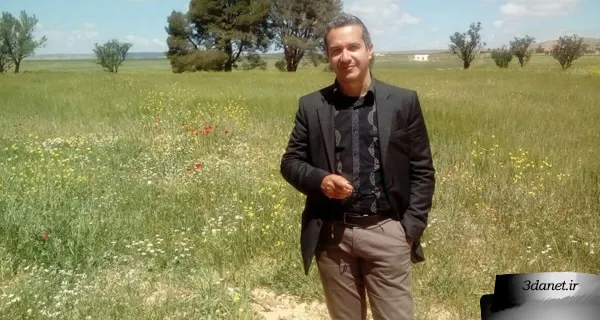
A conversation by Mohammad Asiaban with Mehrdad Abbasi
Published in the Etemad newspaper | Issue 4404, Wednesday, July 3, 2019
.
.


Discussion4 comments
مدرنیته اجازه حضور اندیشه دیگری را در کنار خود نمی دهد .
یعنی بیش از « سنت » به تنوع و تغییر میدان می دهد و روایی تنوع و تغییر از مشخصه های آن است ؟!
بله ؛ همه را دربرمی گیرد و به همه امکان ابراز وجود و نشو و نما می دهد ؛ و انحصارطلبان این را خوش نمی دارند .
متکلم مدرن و فراتر از نُرم جامعه ای که اکثریتش نامسلمان و حاکمانش سکولار بوده اند ، چنین بوده ؛ بقیه چیستند ؟! نخشب و بازرگان و شریعتی و پیمان بسی برتر جلوه می کنند .