Religion
Is Acceptance of the Other Possible in the Islamic World?
The 'tradition of disagreement' is a constant of human history, and tolerance is not a simulation of otherness. The acceptance of the other must be grounded in humanity, not born of helplessness or an inability to eliminate differences; Mohamed Chawki Zine.
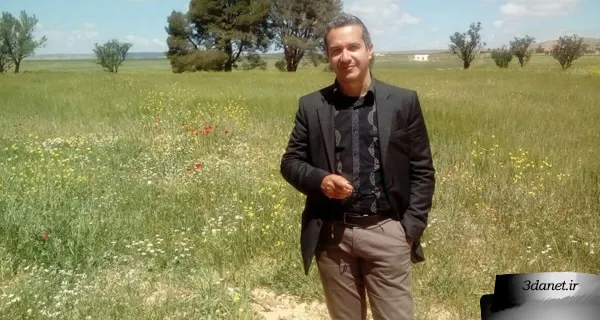
Note: Mohamed Chawki Zine is an Algerian university professor and analyst with a PhD in Arab-Islamic Studies and a specialization in philosophy and Sufism from the University of Provence. He received his second doctorate on the French thinker Michel de Certeau from the University of Aix-Marseille. Among his works are Ta'wilat wa Tafkikat (Interpretations and Deconstructions), Siyasat al-'Aql (The Politics of Reason), and al-Thaqaf fi al-Azminat al-'Ijaf (Culture in Lean Times). Gadamer's Philosophy of Interpretation and Michel de Certeau's The Practice of Everyday Life are the most important books he has translated so far.
1- One of the characteristics of the world we live in is its immense diversity and differences, something referred to in religious language as the "tradition of difference." What is your understanding of the tradition of difference?
The tradition of difference is one of the constants of human history, meaning that humans have always agreed on the existence of differences among themselves; they think within the unity of human reason, in the sense of a tendency toward a natural and diverse intellectual space. I have referred to it on some occasions as "uniformity." Humans share common anthropological forms, even though they differ in attributes, colors, and languages. 2- Some raise the point that practical behavior cannot be derived from divine traditions. For example, one of the divine traditions is that the world is an abode of trial, and humans grapple with all kinds of illness, poverty, and death. However, from this situation, which is God's existential will and decree, one cannot derive a legislative conclusion. That is, one cannot conclude that since God has willed the world to be a place of trial and affliction, with poverty and illness, we should therefore make no effort to eradicate poverty and illness. Can we conclude from the fact that God has willed humans to be different that we should not strive for the standardization of human beings?
Sometimes we see erroneous interpretations in highlighting a text that needs to be interpreted; the existence of traditions and the laws of existence does not deny the freedom of action in influencing things. In reality, illness, poverty, and calamity exist, but these harms can be overcome through scientific inquiry, for instance, by finding medicine for some diseases or by preventing poverty through the fair distribution of wealth and the reduction of social classes. Duality and despotism in the form of divine will and human incapacity may lead to contempt and prejudice. It is stated in religious texts that God created the human in His own image, and wisdom dictates that humans, in their actions, should resemble their deity in line with the goals of their existence; meaning that they should be influential in the world they live in, produce things, build personalities, and connect with their fellow human beings.
3- What are the requirements and necessities of acceptance of the other? In other words, how should we behave with others to have been accepting of the other? The requirements of acceptance of the other are that a person feels that in the world they live in, there are fellow human beings beside them who share some attributes with them, even if they have disagreements in conceptions and approaches. Here, one can point to some obvious texts that say a person should treat the other as they expect to be treated. It is fitting to see oneself in the mirror of the other and to observe the other in the totality of their behaviors and conceptions. First, a person feels alterity with themselves, meaning that in all the states they undergo, they become other than what they are. Then they feel this alterity with the other, meaning they see the other as similar to themselves and, at the same time, different from themselves.
4- What is the difference between the terms endurance, tolerance, forbearance, and acceptance of the other? Do they all signify a single meaning? These concepts are interconnected and often do not signify a specific subject distinct from the other concepts, but they share a commonality in terms of the connection that must inevitably be established with the other, a connection that shows the human depth in terms of perception, communication, and interaction.
5- Whence arises the necessity of adhering to tolerance and acceptance of the other? Does it stem from our inability? That is, because we are incapable of making others like ourselves, we are forced to tolerate them? Is acceptance of the other born of compulsion? Tolerance has by no means meant making the other similar, and making similar never indicates that we are tolerant. Tolerance means a relationship that must be established in the sphere of human communications, a relationship founded upon a set of acceptances (acceptance of the other) and, in the words of the philosopher Immanuel Kant, at its apex, the human being is treated as an end, not a means. One must interact with the other as an essence capable of engaging with a comprehensive and shared humanity.
6- In expressions such as acceptance of the other and tolerance, there is always talk of a kind of interaction with "the other." The question is whether there is a limit or boundary for "the other" with whom one must behave acceptingly and tolerantly. For instance, can one be accepting and tolerant toward those who promote non-acceptance and intolerance? One must not retaliate in the face of intolerance; if a part of moral duties or obligations is transgressed, it is the law that must resolve this problem. Tolerance in the realm of others' thought is an independent human entity, indivisible and not subject to discrimination, meaning we cannot inflict violence and hatred upon it, nor can we separate it from its human rights and unity.
7- The expression "acceptance" of the other requires further elucidation. Especially when we use other expressions such as toleration and tolerance, the acceptance of the other may take on a more negative aspect. In the sense that we do not obstruct them and do not seek their rejection and elimination. But a more affirmative meaning can also be derived from the expression "acceptance." That the other must also have equal opportunity with us. The other also has the right to propagate their creed and doctrine. The other is equal to me in the enjoyment of social and political rights and benefits. In your view, which of these two meanings does acceptance of the other and tolerance represent? Tolerance is not merely a moral value devoid of considerations such as laws or duties; for example, the law intervenes in the face of intolerance. When we deny the other freedom of expression and the choice of belief suitable to them, the law acts to protect freedom and liberation from prejudice and violence. Sometimes tolerance applies to individuals based on their open-mindedness, but in some human societies or in some ideological or religious tendencies, tolerance encounters difficulty because such is the nature of these societies, or because it encompasses all individuals and seeks to impose a specific approach or behavior.
8- It seems that to accept the other, it is not necessary to believe that their opinions are also true and that the other is equal to me in the enjoyment of epistemic rightness. It is sufficient that we accept they must enjoy rights and opportunities equal to mine. But another question is whether acceptance of the other means that we also treat everyone the same emotionally and relationally? Acceptance of the other cannot be fragmented or separated because it applies to a human essence that, in establishing a relationship with the other, possesses rights and duties.
9- Another question that arises is whether the currents and factions that are in a position of minority, weakness, and deprivation of political power speak of acceptance of the other because of this minority status, or whether acceptance of the other is a lasting strategy for them, to whose requirements they would remain committed even if they were in a position of power and management? In other words, is the emphasis on acceptance of the other due to their own particular circumstances, or does it stem from a perspective to which they have arrived at intellectual and strategic conviction? Acceptance of the other is not subject to specific tactics, calculations, or maneuvers; because the human being is indivisible in their physical and spiritual unity. They must have rights in expressing their opinions, thought, and belief, and they must have duties according to which they obey the law and respect others, and this is the crux of the matter. 10- In your view, what are the factors that strengthen acceptance of the other at the societal level? What are its consequences and harms? What are the outcomes of non-acceptance of the other in social relations, if they exist? Strengthening the culture of acceptance of the other often depends on the transition of the human being from a means to an end, and their end is inherent in their essence. When we establish this rule as the regular behavior and philosophy of our social life, the question of acceptance of the other becomes one of the necessities of human society and the relationship between individuals. Some differences become apparent simultaneously with joining a party or team or inclining toward a belief or culture, but it is the boundary of these differences that determines the degree of soft or hard connection between individuals and groups. In democratic societies, acceptance of the other is at the forefront of political and social culture, but in closed societies with sectarian or ideological tendencies, acceptance of the other is very difficult to achieve morally and legally. 11- If we reflect on religious sources, we know that anti-other and extremist readings of religion have been and are being formed. Neglect and disregard of what issues cause such readings? In what way can anti-other readings of religious texts be effectively criticized? As I mentioned, the problem in interacting with religious sources is related to the idolization of the text and not placing it in its temporal context and reasonableness. That is, in times when war and enmity with the intent of domination and occupation of a land become political and military patterns. In times of peace, the culture of acceptance of the other flourishes because communication has more flexibility, and coexistence among cultures and sects opens the way for greater tolerance among individuals. 12- Which teachings and signs can serve as the theoretical rule for acceptance of the other? Looking at the purposes of religion and the philosophy of rulings, how can acceptance of the other be justified?
I previously referred to the Kantian rule, which is that the human being themselves is an end; considering this rule or principle, acceptance of the other will have a different meaning and concept. Enmity and aversion arise from the idea that the other is a means, not an end; that is, contempt for the other and the growth of egoism. Often, these perceptions lead to erroneous judgments and distorted representations, which in turn impair a healthy relationship with the other.
13- If we reflect on religious sources, we know that anti-other and extremist readings of religion have been and are being formed; neglect and disregard of what issues cause such readings? In what way can anti-other readings of religious texts be effectively criticized?
There are some religious teachings that have become a motivation for enmity with others; such as enjoining good, forbidding evil, jihad for the sake of exalting the word of God, the divine mission to reform the world, eliminating corruption, the misguidance of the majority of people, their lustful tendencies, the religion's advice not to follow the majority of people... How can we reconcile these teachings with the principle of tolerance?
The paradox is that those who call for reforming the world and enjoining good and forbidding evil employ immoral means such as violence and terrorism to achieve these ends. As long as the understanding of the other is subject to deep dualities such as infidel and Muslim, believer and misguided, and so on, the foundation of tolerance cannot be laid within this contemptuous perspective. Tolerance requires a kind of resemblance, meaning that all beliefs spring from a single truth but in various forms; thus, in principle and essence, that is, in monotheism, they share common ground. Here the important Stoic principle stands out, which says: there is always one truth and one right; truth is one, and right has many facets. The totality of creeds and religions are rights that have branched off from a single truth. When these rights clash over the monopoly of truth, tolerance is nullified.
14- If we wish to speak of a tolerant citizen, what characteristics should such a person have? We need a citizen who adheres to the law that defines his responsibility toward the other; the necessity of interaction among individuals in the sphere of shared coexistence is also important, and behavior stemming from a common morality that places the human being at the center of attention guarantees this, regardless of his inclinations and choices. The common sphere is a sphere in which the values of shared life and reasonable conduct, free from prejudice and hatred, are distributed.
.
.
Is Acceptance of the Other Possible in the Islamic World?
Interview by: Moloud Bahramian
.
.

Discussion0 comments
No comments yet; let yours be the first voice.