Political Science
The Contradictions of the Islamic World, Dr. Davood Feirahi
Islamic societies are caught in profound paradoxes, such as the relationship between sharia and law or religion and democracy. Davood Feirahi argues that religion and politics have become fused, and the solution is neither their separation nor the dominance of one over the other, but rather the regulation of elements within religious texts.
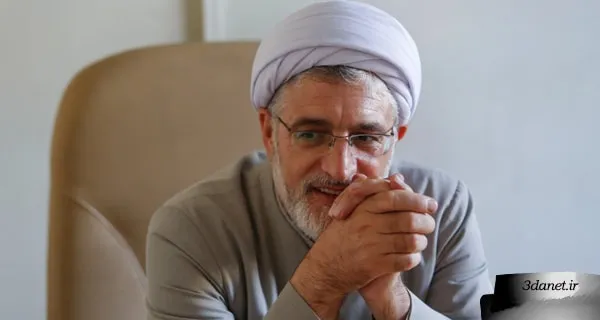
«Islamic societies have become entangled in profound paradoxes that are extremely difficult to resolve. Paradoxes such as the relationship between “Sharia and law,” the relationship between “this world and the hereafter,” “freedom and security,” “religion and democracy,” the relationship between independence and dialogue and openness to the world, the possibility of dialogue with others and dissidents, and so on.»
This is part of Hujjat al-Islam wal-Muslimin Dr. “Davood Feirahi’s” description of the conditions of the Islamic world in the contemporary era. He believes that conditions have fallen out of “equilibrium,” and its manifestations are evident in religion, the economy, life, and livelihood.
He says: Do you think that all the Daeshis are irrational people who have gathered there? That is not the case at all. Some of them have become neurotic rationalists. They have their own rationality. It is not that we should think none of them are normal people and we are all normal; rather, a situation has brought them to this state.
As the discussion heats up, he puts forward a thesis about “education” and elaborates on it with a calm tone and voice and carefully measured words.
His office at the Faculty of Law and Political Science at the University of Tehran is never empty of students at any hour. He patiently receives students in his office and devotes ample time to them. The interview was conducted during the brief intervals between these comings and goings.
More than anything, he tries to make his audience reflect, and when he himself meticulously advances a discussion, he says: “I say a bunch of things; call it thinking out loud.”
He is among the university professors who have the experience of scholarly life in both the seminary and university contexts. Regarding why he chose this position, he says: “I feel that one day we will need these two to be alongside each other.”
What is the thing you think about most these days and dedicate the most time to?
All the topics I think about revolve around a very large project titled “Religion and Life,” which in our field of work is discussed particularly as faith and politics or jurisprudence and politics... Recently, I have also been writing a book titled “Jurisprudence and Party Governance” and working on it.
Over my long period of study, teaching, research, lectures, and travels, I have come to the conclusion that in the Islamic world, as the late “Akhund Khorasani” said, religion and politics have become intensely intertwined, and no one has been able to separate the two. Whoever has tried to do so has suffered harm. Whoever wanted to subordinate politics to religion has been damaged, and whoever wanted to impose politics over religion has also been damaged.
In general, our societies have become entangled in profound paradoxes whose resolution is extremely difficult. Paradoxes such as the relationship between “Sharia and law,” the relationship between “this world and the hereafter,” “freedom and security,” “religion and democracy,” the relationship between independence and dialogue and openness to the world, the possibility of dialogue with others and dissidents.
With the advent of modernity, the Islamic world has encountered challenges that it must resolve. So far, three paths have been proposed for addressing these issues. One set of them has culminated in religious radicalism, and we are seeing its effects. The Dahieh bombing, the upheavals in Syria, Iraq, and other issues in the Islamic world, the terrorist acts in France, the downing of the Russian plane, and the insecurities that have arisen are all consequences of this very approach. Conversely, for a long time we had secular radicalism, which led to the imprisonment of all religious people; just as we witness the issues in Egypt during and after Mubarak, and in some Central Asian countries. We remember the severe conflicts our own society had and with which it is still grappling.
In any case, a second path has also been proposed, which has tried to solve the problems by secularizing society. To be fair, this solution is also not feasible.
The third approach moved towards reconciling the two. This approach had promising glimmers in the literature of the late Imam (Khomeini), and we also see this perspective in the thoughts of some thinkers. But for various reasons, from about 110 years ago until now, this approach has still not been able to become the dominant discourse throughout the Islamic world. Our society has also not yet reached a state of equilibrium. One day it leans to one side of the spectrum, and another day to the other side. The fluctuation is so great that with a change of a president, it is as if a regime is changing! There is great fluctuation, and it is natural that these issues cause much concern. Thinking about these matters is valuable, and I, too, wrestle with them day and night.
Regardless of the conditions of societies, theoretically speaking, is there a way in Islamic texts to resolve these contradictions and challenges?
Religious and Islamic texts have various dimensions; these texts, like a human being, contain characteristics within themselves. In them, there are codes regarding defense, violence, peace, forgiveness, coexistence, and war... just as in a human being there exists love and violence, affection and hatred, beauty and ugliness, bitterness and sweetness. The issue is how these elements are arranged alongside one another? Which one dominates the other and issues the ruling?
These are weighty discussions that we must address and regulate. The issue is not their presence or absence. What, after all, is the difference between a bad person and a good person? A bad person also has affection in their heart, and a good person also has violence within them. But in the existence of individuals, one inclination has restrained the other. For example, in a person who steals, "harming others" has overcome "loving others." Whereas in a positive person, loving others is dominant. The issue is not that one of these two is absent in a person; rather, they are everywhere. The world and religion are also like this.
But some believe that Islamic societies, in confronting new issues, have suffered from a theoretical poverty. Do you accept this view?
This view may be correct in some respects; but in some respects, it is not. It is not correct because a self-made person traverses their path for a long time and then articulates their theory. Does a young person who is moving on a positive path in their life have a theory? They do not. A person begins to acquire the skill of living and later turns this skill into a theory.
Does this also hold true for societies?
Yes, it is the same for societies. Some of our intellectuals had explained this matter correctly. Did the West first have a theory and then develop? Or did the Islamic world in the medieval period first have a theory and then develop? As it happens, it first found a way of living and then began to build theories and teach the next generation.
So why can't the Islamic world today follow that same path again?
The issue is complex. I don't want to speak of despair and say that we cannot. Because in terms of existential possibility, there is always the possibility that a violent person becomes kind tomorrow, or that a thief repents, and a good person takes up the sword tomorrow. This matter comes down to care. We must care for many things. We must care for our society at every moment. Of course, care is different from control. Life is habit. A person who constantly practices living well, lives well even unconsciously. But if that same person steals twice, their hand becomes crooked. Don't we have examples of this in societies? The Islamic world's hand, so to speak, has now become badly crooked. It has fallen into violence, and whoever falls into this abyss also justifies themselves. When you catch a thief, doesn't he justify himself? He justifies that I had such and such a problem, or so-and-so insulted me and I did this. In a society, too, when violence emerges, they will find a couple of verses and a few hadiths, and can build a few theorists for themselves.
We must consciously give privilege to the positive aspects of behavior in today's Muslim society; just as we, at home, give privilege to a child who has become weak, reduce their homework, and give them more time to rest. In the Islamic world, since positive concepts have become weak, we must therefore give them privilege. We must highlight the good concepts of our texts; give them the right of reservation in the media. There was a time when women were weak in assemblies and elections; in theories of transition to democracy, they gave women special rights and did not let them compete with men. They gave them quotas. We must, in our media, give privilege to our Do you see yourself among the thinkers of the third group, those seeking a reconciliation between religion and politics? I do not consider myself a thinker. But I consider myself someone who searches in this field. I feel that the solution lies here. Because our society has experienced imbalances, but its problem today is the possibilities for balance. We know we must achieve balance, but we do not know how this should happen. What problems do you see in this field that prevent this approach from standing on its own feet and becoming powerful? Part of this discussion goes back to the issue of "balance." Balance is a delicate matter. On the two pans of a scale, even a breeze disrupts the balance. Balance is always fragile; this is the nature of balance. One must take care of balance. On the other hand, one must recognize the limits of balance and its boundaries. We must know how this balance operates and from where we should seek and prepare this balance. Balance is the most difficult thing and, at the same time, it is necessary. Balance is not only in religion; it also finds meaning in economics, life, and livelihood. Balance is not a negative equilibrium where you give nothing to anyone. Steering both left and right. Nor is it a positive equilibrium where you accept a percentage of the left and a percentage of the right. Balance is not a combination; balance is a state. In the best case, you see balance in modern stores, where everyone pursues their own desires and no one bothers anyone else. Yet, when everyone leaves the store, they are satisfied. Both the buyer and the seller. How can we reach a point of satisfaction where both the citizen and the state are satisfied? Both modern institutions and traditional and religious institutions. This subject has its own particular complexity. Of course, important efforts have been made. Perhaps it can be said that the first efforts were made by the late Naini. The continuation of this conversation took place two weeks later in the same office of Dr. Feirahi at the Faculty of Law. Between two work trips and regular classes, we arranged a one-hour window to complete this conversation. The first few minutes were spent summarizing the topics that had been discussed. I will say a series of things; call it thinking out loud: Every religion and civilization, like every human being, is a mixture of various inclinations and talents. For example, in a person, there is a desire for theft, defense, violence, stinginess, generosity, kindness, love, self-sacrifice, order, and disorder. It is the same in civilization; that is, if across generations there is no element called defense or martyrdom, this civilization cannot preserve its pride. It is like a person. If there is nothing called zeal in a person, like virtue and dignity, when someone extends their hand before another, they feel no sorrow regarding it; but there are many who, despite poverty, stand on their own feet. From Plato until now, the debate has been about how one can regulate the set of inclinations within a civilization or an individual in such a way that the overall outcome is positive; that is, a person can create a coherent whole from stinginess, betrayal, and keeping promises, and so on. For example, breaking a promise is good in some places; where no one else has kept their promise, a person can at least convince themselves that they will no longer keep their promise. This is no longer bad. One cannot always be bound to everything. The art of breaking promises gives a person the risk of allowing themselves, in their personal life, to say, 'I will leave this office because it is not loyal to me.' These are not bad. It is the same in war and defense. At one time it is said, 'If you are attacked, stand firm to the death,' and at another time, 'Harm others even if they have not harmed you.' This approach is clearly pathological; that is, the instinct for defense in that person has gone to extremes and harms others, even though others do not harm them. We have seen young people who harm others in the streets. Civilizations are like this too. At times they have a program for order, reason, compassion, forgiveness, and tolerance of others, and a helpful outlook on the lives of others, and at other times they want to harm others. In the literature of Rousseau, I often saw something interesting. He said that when a poor person feels that a rich person has consumed his share, then he becomes aggressive; but if he thinks the rich have worked, and if I work I too will become rich, then he will not harm others. These are two different types of outlook and behavior. Is my example clear? The positive parts of Islamic civilization are also gradually being overshadowed. It feels that others have harmed it and it must harm them. That historical colonial memory has also entered the field, and in fact, the defensive approach has moved beyond rational defense and turned into unbalanced emotions. This is destructive and harms the entire world. It is like how every human being could be a thief or a police officer; but how does one become a thief instead of a police officer!? We must accept that our civilization has become unbalanced. We see this imbalance everywhere. This was the point I wanted to make. Now I want to present a thesis. We have a concept called 'education' and another concept called 'history.' I want to rely more on individuals than on history. Returning to history does not cure our pain. In literature, it is said, 'Suppose your father was a scholar'! Well, he was! Whatever he had, he worked for and took with him. Suppose your father was a thief! Suppose others did other things in the past. But we cannot shift our own responsibility onto history. We must think about it right now. Think about why we are like this? Let me state this thesis for you, and let us advance this discussion together. Perhaps one day someone will read this discussion and think about it a little, critique it, and maybe a way will be found. In the field of education, we say that education is something whereby if a person repeats an action, whether good or bad, for a period of time, they gradually become accustomed to it. If a person tries to be truthful or drives in an orderly manner on the street, if they are mindful of it for 10 days, 20 days, or a month or a year, it gradually becomes a habit and no longer requires conscious attention. This is technically called "becoming a disposition" (malaka shodan). That is, a person's behavior, through mindfulness, gradually changes, and then this change becomes so internalized that it no longer requires thought. Many social behaviors have changed in this way and seem very simple and trivial today; therefore, we do not need a long history for habits to emerge; rather, our recent history is sufficient. We must see where this recent history of ours, from which our bad habits originate, lies. Let us pursue his thesis. We must know why our behavior has worsened in these times and from what point it worsened more, so that we can go back and find the cause and solution for this behavior from there. Is this "we" the "we" of the world's Muslims or the Iranian "we"? Both. It could even be the family. Because each and every one of us is like this. If it is small, it is me and my family; if the group is larger, it is the faculty. Are not the same disorders present here!? If it is larger still, it is the country and civilization. So this is an important point; I say let us go back and see where the problem originated. Let me give a concrete example of this. I was a child, and our city, Zanjan, was on the route between Tabriz and Tehran. Lines of Turkish trucks would pass through the city, and everyone was cautious and said that these Turks are not trustworthy, do not go near them. They commit theft and murder, and things of that sort. After a while, when the "Justice and Development" government came to power, with all the calamities it has created, within 10-15 years, when I traveled to Turkey, I felt that a stable civility had been established. The gap between these two types of behavior was not large; about 14 years; therefore, we do not need such a long history. Apparently, these "Daesh-like" behaviors are no more than 40-50 years old; so something has happened. From this discussion, I want to conclude that every civilization has good and bad aspects. How does one come to dominate the other? Why are the bad parts gaining dominance in our civilization? This dominance comes back to mindfulness, practice, and repetition, and it does not require a long history of practice and repetition. Have we not seen a person smoke at one time and quit at another? Civilization is also like this; therefore, the discussion returns to an analysis of our recent history and not the distant past. Something has happened, and it is getting worse every day, and it is worsening in a particular way; that is, if some people do not take care regarding these matters and do not accept that we have become corrupted, they cannot accept how we should become good. An addict must first accept that they have become an addict and then find a way to recover. No one can help us. The only thing others can do is portray us as more savage and suppress us more. Because they have no need to solve our problem and can only form a global coalition for their own security and suppress us. Do you analyze the challenge that has been created for Muslims through their encounter with external factors? Yes, these are important. But they are not fundamental. We must understand our own problem. Nothing changes until a person undergoes an inner transformation. Linking the problem to colonialism is, on one hand, correct and no one denies it, but one must consider how colonialism arises. Colonialism is the result of others' dominance and our weakness. Suppose you have several tiles somewhere. If the mortar of one tile is loose, lateral pressures will crush it, but if it is strong, the pressure is distributed to the adjacent tiles. The issue of the colonial factor also comes back to why we fell into despotism. If it were not for the devastations of the Qajar monarchy, would we have fallen to colonialism!? We have substantial historical reports of how much society was disintegrating from within. It is never my belief that in relations between nations, nations become strong and then overpower others; rather, nations become weak and then are overpowered by others; therefore, I never seek, for my own reform, whether someone gives me permission to work or not. Because this does not even occur to me. As a person, a family, or a civilizational sphere, I must impose my presence on others. I must say, I am here and you need me. This is an important point. Another point is that if a nation is strong, even if foreigners invade from time to time, it will revive itself; therefore, colonialism exists, the discussion is how we should revive ourselves. Then, constantly seeking revenge and engaging with the colonialists achieves nothing; the only thing it does for us is increase the violence of the colonialists and gives the international community the right to suppress us. Some intellectuals and experts do not accept your analysis. In examining issues, some go beyond the historical root-finding of problems and their direct connection to current issues, and even see the root of some collective behaviors in our "genes." I do not accept this approach. These kinds of thoughts lead us to a dead end. Ibn Khaldun said Europe was weak, it had no civilization; meaning it had lost its civilization, what it had slipped from its grasp and was gone. Civilization is like ice; if you cannot use it well, it melts. Ibn Khaldun says that when Europeans came to Baghdad, they thought not only did its scientists have a higher intelligence quotient, but the ordinary people of Baghdad also possessed a higher intelligence quotient. In those days, they thought God had created Easterners and Westerners differently; meaning their DNA was different. Ibn Khaldun says they were unaware that this is the result of civilization. God did not create anyone higher or lower. When civilization becomes intelligent, its ethics also become intelligent. When it weakens, everyone becomes weak. Ibn Khaldun gives the example that our civilization was weakening to such an extent that our scholars read things but they were no longer usable. They toil greatly but can no longer find an application for it. Our scientist cannot make a recommendation, cannot say that such-and-such is good and such-and-such is bad. Today, we have the same conditions. The average effort an Iranian scientist exerts is more than that of a Western scientist. We toil, but we do not get a result from it. We cannot find an application for it and we do not get a result. Do you see yourself in these conditions as well? Yes, I am in this situation too. I see the individual efforts, the tremendous work that goes into them, and these efforts are numerous, but they do not bear fruit. So something has happened. In the experience that Europe underwent, the elites and intellectuals of society played a significant role. How has this role been defined regarding Iran? The late Naini gives a weighty example regarding Europe. He says when the Crusades occurred and Europe was defeated, its defeat was the beginning of an awakening, and something called the "Awakening of Europe" emerged. It realized the path it had been following was not the right one and turned back. Then it began to rely on two things: how to gradually secure the freedom of human beings, and how to make its affairs scientific and rational, and from this point, it opened a way for its problems. Regarding our society, one is sometimes worried that we are getting caught in a bad trap. On the other hand, I remember my grandmother saying, "Let this water become muddy; if it does not become muddy, it will not become clear." That is, will this ISIS-like movement take us to the very depths of our abasement so that our heads hit the ground and we awaken, like that European Crusade? Or will our former cycle continue as before! If ISIS helps our heads strike a stone and we realize that this path leads to this result, and we generally understand how we thought to arrive at such an outcome, perhaps one could say that some warmth can be drawn from this flame. ISIS can also be viewed as a "warning"; if we look at this crisis as a warning, we can derive the opposite result from it. Do you see the ideology of ISIS as arising from the core of Islamic currents, or as a fabrication of Western powers and certain regional powers? The "ideology" of ISIS is neither a fabrication of powers nor a fabrication of history. ISIS goes back to the latent crime in the contemporary history of Islam and arises from an Islam whose result is that it does not see itself as guilty, but rather sees others as guilty. As long as a student who failed the university entrance exam does not realize that their failure was due to insufficient study or a lack of precision during the test, they will always see their competitors as enemies. We see competitors as enemies and ourselves as pure. This is, idiomatically, a process of "tanzih" (purification); meaning "self-righteousness," from within which nothing emerges but the criminalization of religion. When you see yourself as pure, you imagine others as evil, and ultimately, with this same pure intention, you commit crimes, saying: this one is a thief and an invader, I must kill him; this one does not think like me, I must kill him; a religious intellectual is undertaking democratic reforms, I must kill him; another traveled to America, I must kill him. What is the result? The criminalization of religion; just as we are facing today. In this atmosphere you have depicted, where is the role of our elites and intellectuals seen? We have problems in this regard. Most of our intellectuals have not turned our real issues into problems. We have not been able to do this. We must speak humbly of the failure of intellectualism so that we can help it move forward. We have sometimes had intellectual delusions. Our intellectualism always has an external basis. It either relies on Marxist literature or on the literature of Hegel, Popper, Habermas, Heidegger, and the like. It always has an external basis; that is, it first puts on glasses and then sees our problems. It does not feel our problems. Our intellectuals usually have no connection with society, and because this connection does not exist, they have constructed a world of Iran that exists only in books and not outside; for this very reason, we greatly need the discussion of intellectualism to be raised again. Criticizing intellectualism does not mean defending tradition. The discussion is about how we can make our intellectualism our own again. How can we untangle our knots together and judge for ourselves. The views of the intellectual sector are not very connected to the body of society; just as the economic and political sectors are not connected to society and planning. The research carried out in some sectors is mostly outdated; that is, they are actually working on things that have no application, and therefore we have something called a structural rupture between the pragmatic sector and the decision-making and thinking sector of society. That sector does not provide data, and this theoretical sector does not provide anything to the other. Theories are without backing, like an engine that runs but never transmits power to the gears. What about yourself? How do you cope with these issues? Do these issues bother you? It bothers me. Yes. It occupies my mind, but it is not such that it terrifies me. When a person accepts the reality of their life, they deal with it in a different way. It is like the way people deal with their illness. An individual might lose themselves, or they might accept that they have such an illness and then patiently think about evaluating ways to cure it. I see the issue this way. I try not to let excitements and dangerous moments take me out of this state; because it is very dangerous for a person to leave this state. They might become fundamentally aggressive or entangle themselves in a series of legal binds and many other issues. I feel we must inculcate patience in ourselves every day. But this patience does not mean ignoring the issues; that is, we endure patiently; for this reason, wherever there is an opportunity to express views and present material, I try to raise a part of my discussions. For example, this university semester, I tried to set forth the concept of the paradoxes of our own civilization after the Constitutional Revolution. After that, I tried to show who made what efforts to solve it and how those efforts can be evaluated. It was important to me that students know that we should not defend everything in its totality or reject it in its totality, but rather we have paradoxes. We should not say everything about us is good and it was others who only harmed us. Yes, they do harm, but has Japan suffered less from colonialism than us? Have South Korea and Germany suffered less than us? Why has Germany been able to traverse a path such that, in our nuclear program discussions, it can play a role alongside several members of the Security Council? Germany plays a very important role in today's Europe. It is not just a matter of economy or military power; when we study Foucault's works, we see that Germany exercised a creativity in governance that is gradually sweeping through all major countries, and they imitate it. To what extent do you see social issues as connected to the sphere of political power? Very much so. What percentage of these issues must first be resolved there? We must not get caught in the vicious cycle that if our government is corrupt, it is because our society is corrupt, and a corrupt society produces a corrupt government, and a corrupt government corrupts society. We have had two theories about this in our society so far. Some believe that reforms must begin with individuals, while others believe that reform in society is slow to arrive and changes must start from the government. I believe the priority is not what matters; rather, we must pursue the work from wherever we can start. On this path, in addition to the resolve we must have for reform, there must also be clear-sightedness. The path is not clear, and for this reason, even if we are resolute but lack a path, the result is destruction. Everyone is reaching the conclusion every day that our society needs reform. To be honest, I am very afraid. Do not think that death and illness are always for the neighbor. It is very possible that one day this flame of extremism will engulf us all; for we must not ignore that the potential for the flame of extremism ultimately exists in our society as well. Do you mean you see people in our society who sympathize with these extremist currents? Yes, they not only sympathize but are just like them. That is not the point. When a society reaches the point of vengeance and everyone starts taking revenge on one another, then it holds everyone guilty. I wish never to see such a day and hope such a thing never happens to our society, that it falls into turmoil. After all, we have a largely good experience with security. I wish for this stability to always remain. But let us note that behind the security crisis, there is a socio-political problem that brings with it religious, educational, and cultural issues. Until those are reformed, you cannot carry out security work. But problems arise one after another; we must think more about these matters. We must remember in this context that one approach is the "control" of issues, and the other is based on "solving issues"; in reality, controlling postpones the crisis and does not solve it. We must have two ideas: one, how to control the situation, and the other, how to solve it. Isn't your view on this subject pessimistic? I never think that many people in our society hold extremist views; rather, I am looking at the situation. Imagine how very rational people behave when they get angry, and what things they do? My assumption is not at all that there are a large number of extremist tendencies in our society; rather, my point is that when a particular atmosphere is created, they become radical. Let me give you an example: When I was returning from a trip, at the airport, we passed through all the security checkpoints quickly, but when we arrived at Imam Khomeini Airport, a long queue of those intending to enter Iran had formed. For minutes, everyone stood calmly, but there was no one to do anything. Gradually, protests took shape, and the very people we never imagined would exhibit certain behaviors were shouting and yelling. Who was shouting? Those who felt embarrassed in front of the foreigners. We asked the officials there to apologize to the passengers. None of them were negative people. Do you think that all the ISIS members are irrational people who have gathered there? It is not like that at all. Some of them have become nervous rationalists. They have their own rationality. It is not that we should think they are all not normal people and we are all normal. Rather, a situation has brought them to this state. In the past, there was something called terror. I remember reading in history that they said the Arabs do not suffer defeat. Then they said the Mongols do not suffer defeat. So if a Mongol passed by on horseback, thousands would flee. I do not know if this is true in history, but they say there was a rebellion against the Mongols in Nishapur. The reason was that a youth was throwing a stone with a sling, which accidentally struck the head of one of the Mongols and killed him. Everyone was astonished and said, Although the atmosphere is generally hopeful and many students have a successful future, not all of them do! I am not hopeful for myself either. Of course, I am among the luckiest people, having been in touch with a large number of my students, who are generally intelligent and are currently active as professors at most universities. You routinely encounter discussions that are sometimes discouraging. Are you satisfied that you chose such a path in your life? I am satisfied, because understanding gives one pleasure, while at the same time it creates anxieties; but on the whole, if I were asked, if you could go back, which path would you choose, I would come down this same path again and would choose it consciously. As someone who has both seminary and university education and has worked in both environments, do you consider combining the two and drawing upon them a suitable method for addressing a set of issues in Iran? Yes. I feel that one day we need these two to be alongside each other. . . . .***
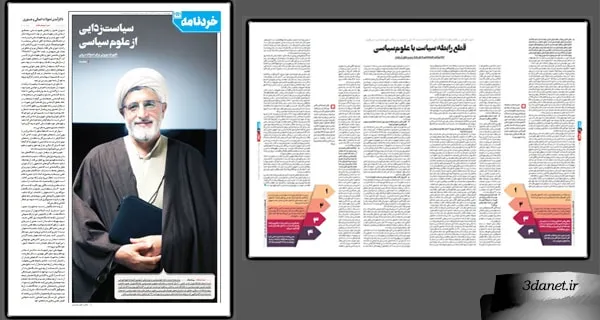
Interview with Davood Feirahi entitled The Contradictions of the Islamic World
Source: Official website of Davood Feirahi| 5 Dey 94

Discussion1 comments
بسم الله اگر فاکتور تصلی که در دین هست ولی ازآن غفلت شده است. به معرفت دینی وعرصه جامعه آورده شود مشکلات بشکلی منطقی وسریع حل گردد وآن نشر حقیقت حضور وعامل پروردگار حی وقیوم درفرهنگ عمومی مردم است وقتی من ندانم که هرحرکتم موجی ایجاد می کند که عکس العملی سریع دارد درمواضع وسیاست ها بیذبند باری پیشه خواهم کرد وباری به هرجهت وبرمبنای سلیقه وخواستم حرکت می کنم اما دانستن حمایت ویاری عمل مصلحانه وحق گرایانه ازطرف خالق قادر وسخط ورهاکردن وعذاب وفتنه او برظلم وتضبیع حق نتیجه دارد اعمال وحرکات هوشیارانه خواهد شد متاسفانه باغفلت از این فاکتور اصلی وعدم توجه به آن عوارض اعمال ظهور می یابد وهرکس زمانی متمتع وسرنگون می گردد