Political Science
A Conversation with Davood Feirahi: From Karl Marx to Abu Bakr al-Baghdadi
Davoud Feirahi argues that ISIS prioritizes territorial expansion, and to sustain it, they define the concept of the 'heart-emirate' so that every individual becomes a representative of the caliph. By harking back to the Abbasid era, before the Westphalian system, the ISIS caliphate holds a historical allure.
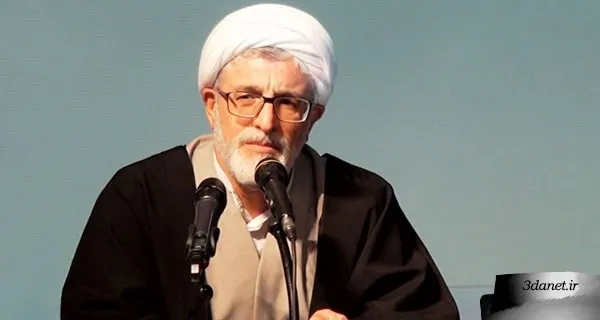
Hadi Khosroshahin: Davood Feirahi, professor of political science at the University of Tehran, in a conversation with Mehrnameh, considers ISIS's priority to be territorial expansion and believes that these groups define two types of caliphate; one is the caliphate in actual geography that must be preserved, but in order to preserve the first type of caliphate, they define another type of caliphate called the “heart-emirate.” This means that anyone living anywhere in the world has an emirate, a representative, and is a subject of the caliph for themselves. In his view, the ISIS caliphate harks back to before the Ottoman era, that is, to the revival of the Abbasid era, the era of Harun al-Rashid, al-Ma'mun, and so on. Perhaps, in another sense, the ISIS caliphate takes the matter back to a time just before early Islam; before a unified, centralized Islamic world existed; therefore, it has appeal. This is a return to before the Westphalian system. Elsewhere in this conversation, Feirahi considers ISIS's idea to be derived from the group's pragmatism in attracting the subjugated of the global network and says: The issue of ISIS goes beyond Marx or Lenin because they did not herald the liberation of nations, but al-Baghdadi heralded a kind of felicity or liberation for each and every human being. The issue, in a way, transcends nations. ISIS breaks the concept of the entire nation and infiltrates organizations.
Before the terrorist attacks that occurred in Paris, it was thought that ISIS, unlike the path pursued by al-Qaeda, which sought a network group to advance its actions and developments around the world, was seeking a foothold or the establishment of a type of caliphate in a specific geography. However, the events in France showed that ISIS is, in a way, pursuing two strategies simultaneously. Meaning that it is simultaneously advancing the network game and the caliphate in a specific geography (territorial domain). What is your opinion on this?
My understanding is that ISIS's priority is territorial expansion, and it advances its goals based on this. Therefore, if it intends to carry out operations elsewhere, it does so in order to protect its territorial domain. In essence, the nature of ISIS's operational strategy differs from that of al-Qaeda and other groups. It is true that there are similarities, which relate to threatening enemies and confronting them face-to-face in their own lands. This strategy has always existed, since ancient times, among terrorist groups; such that wherever they felt their opponents posed a threat to their position, they would fight them in their own society. I recall in 1991—the Kuwait War—the Al Jazeera network conducted an interview with an American soldier; one of the questions was, why did you come to the Middle East? And he replied, we intend to engage the enemy in their own region so that we won't have to defend ourselves in Washington or New York in the future. Around that time, a message circulated on social networks that later turned out to have been issued by bin Laden. This message emphasized that we will treat our Western enemies the same way they treat us, and we will do the same to you; meaning they will engage their Western enemies in their own region. This strategy is important. But ISIS's actions consist of recruiting in European, American regions, and other countries to protect the geographical borders they hold. I accept that this strategy is taking shape simultaneously, but the issue of particular importance to ISIS is preserving geography. To preserve its territory, it carries out these actions.
Doctor! Why is this geography important, and more importantly, why does a subject called the caliphate, which holds a kind of nostalgia for the masses, lie at the center of gravity of this territorial domain?
Such subjects have had their own specific meaning in the literature of radical groups from the past to the present. They consider two types of migration, one geographical migration and the other migration of the heart. Therefore, these groups have two types of caliphate; one is the caliphate in actual geography, that is, on the ground, and one is a caliphate that is in the hearts, is virtual, and whose borders are in people's hearts. For this reason, the discussion that arises is that each piece of this geography tries to join the caliphate, for example, a part of Boko Haram, the Sinai Desert, or other places. Since they are in geography, distance does not matter to them.
That is, they believe wherever they manage to seize territory, it is under their control. But in their minds, there exists a caliphate whose legitimacy rests on the number of people. For example, these groups have rendered the concepts of Dar al-Islam and Dar al-Kufr from the classical theory of the caliphate virtual. On this basis, a young Muslim convert in the heart of Paris, Milan, Washington, etc., is also a base or virtual emirate for the caliphate.
Therefore, these groups define two types of caliphate: one is the caliphate in real geography, which must be preserved, but in order to preserve the first type of caliphate, they define another type of caliphate called the heart-emirate. This means that anyone living anywhere in the world has an emirate, a representative, and is a subject of the caliph for themselves. To prove their identity, these groups create such virtual borders; for instance, a French Muslim, while being inside France, is psychologically not there; while being outside the caliphate, they are inside it. Thus, they try to defend it, just like a mujahid who, in their own words, carries out such actions based on this thinking in Mosul, Raqqa, and other places. Therefore, the term heart-emirate is very important. That is, while they are outside the caliphate, they are inside it. On this basis, these groups attempt to protect geographical borders by expanding virtual borders.
If we consider the geographical caliphate of ISIS, this geography is located in the Middle East region; a region that emerged from the Ottoman Empire and the era of the glory and grandeur of the Islamic empire or civilization in the face of Western civilization. After the collapse of this empire, we have been faced with failed and unsuccessful experiences such as secularism, modernization, or developments like Ba'athism, etc., which have practically left the countries of the region in a backward, bankrupt, and dysfunctional state. Can the caliphate that ISIS proposes—in that it is taking the matter back to the golden age of the past, the era of Islamic civilization's glory—hold any appeal?
Look! The ISIS caliphate takes the discussion back to before the Ottoman era, that is, to the revival of the Abbasid era, the age of Harun al-Rashid, al-Ma'mun, and so on. Perhaps, in another sense, the ISIS caliphate takes the matter back to even before the Ottomans. Because many people opposed the Ottoman state even in its own time; during the Ottoman era, the Wahhabi movement
emerged to confront the Ottomans. On the other hand, literature such as that of Ibrahim Pasha, the independence of Egypt, and even the discussion of dividing the Islamic world into Iran and the Ottoman Empire was accompanied by a kind of anti-Ottoman tendency. This group tries to go back to a time long before all this. Before there was a unified, centralized Islamic world; therefore, it has appeal. This is a return to before the Westphalian system.
Does this return to before the Westphalian system or the revival of the Abbasid era, for the sake of security, development, and welfare, hold a nostalgic state for the Arab masses of the Middle East?
Yes. This nostalgia manifests itself in two ways. One of them turns the weakest region into the land of the caliphate; for example, this happens in Africa (Nigeria) or the Sinai Peninsula, where sovereignty is always weak. But in countries where existing sovereignties are strong and have power, it turns into virtual domains. Virtual domains have a tendency to become real domains. Imagine Central Asia, for instance; one feels that apart from Boko Haram and other groups that joined ISIS and declared themselves forces aligned with ISIS, if another territory were to have the potential, it would probably be Central Asia—near the borders of China. Because the virtual space there is becoming dense, and it seems these groups might one day be able to
They also have a geography of their own. Wherever borders are strong in terms of security and authority, cyberspace exists, and wherever these groups are denser and borders are weak, they have a desire to declare their existence and become real. This nostalgia exists, and initially, in distant margins, they form their virtual borders, and then these margins gradually join together, and in places where they are close, there is also the possibility of creating a new geography for them.
If we look at the developmental trajectory of this type of fundamentalism, which also takes on a radical aspect, it is in fact a current that began with Rashid Rida, moved forward, and reached new versions, the Muslim Brotherhood of Sayyid Qutb's time, then al-Qaeda, and then ISIS. ISIS is the product of a failed experience of radical fundamentalism. What has ISIS adopted from the past of this radical fundamentalism?
All the failures that religious radicalism has experienced have become technical experience for ISIS. ISIS can make good use of two things: one is the potential of modern management technology, and it uses previous failures. ISIS can tell all previous radicals that your path has failed, and what we propose is the only unrivaled alternative because, instead of, for example, instilling fear in the heart of the Egyptian president, it can globalize this fear. Therefore, the assembly of the humiliated, or the assembly of the subjugated or the degraded, find an opportunity to join this gathering from all over the world. That is, even those who were not previously Muslims are encouraged toward Islamism. Anyone who has suffered injustice somewhere joins these groups to respond to the injustice.
Dr. Feirahi! A question arises here; how does the terror and horror that ISIS globalizes occur in the realm of practice?
In the realm of practice, it happens through the absorption of all the subjugated of the world into a global network; that is, it replaces the workers' network that existed in Marxism. Through the absorption of all the global subjugated into two networks: one a real geographical network and the other a virtual geographical network. Because the virtual geography is easier, it can attract more forces, and in order to prove that they are part of the caliph's invisible army, they carry out operations so as not to fall behind, thus a rivalry emerges. For example, they say the caliph's sympathizers in France carried out this action, and you in America have lagged behind. In this situation, they also decide to take an action. For instance, they intend to show that sympathizers in other places also do such things to prove themselves.
Al-Qaeda also had this virtual network; how is it different from ISIS?
Al-Qaeda did not have a centralized caliph to be able to carry out such actions. Al-Qaeda had a kind of specific networking characteristic. If you combine the two systems of Goldcoist and networking, then you can easily understand the ISIS system. There is a kind of centrality at the center and a kind of decentralization on the outside, but each of their operations benefits the center. Looking within ISIS's own systems, the emirates act independently, and even the battalions, that is, its kata'ib, also act independently. This is a kind of skill that the ISIS group has acquired.
So it wasn't like this in al-Qaeda? Because everyone operated from bin Laden and in a network fashion.
No. The networks of the group were never like this, and there is a difference. This group has created a caliphal nostalgia that has a hundred times more inertia than al-Qaeda. Bin Laden, at best, was considered a warrior or a mujahid, but here the caliph is the center of gravity of a world that is the world of the subjugated, the humiliated, and the degraded.
Therefore, in this respect, can we somehow compare al-Baghdadi to a figure like Marx and Lenin for the leftists?
It goes beyond these. Because Marx, and especially Lenin, did not herald the liberation of nations, but al-Baghdadi heralds a kind of felicity or freedom for every single human being. The issue in a way transcends these nations and the system that leftist groups, namely the Socialist Internationalists, had, but this pays no attention to nations; rather, it attends to each and every individual. ISIS shatters the concept of the whole nation and infiltrates organizations.
Dr. Feirahi! This raises the question that the freedom which promises and heralds for each and every individual or each and every human being, at the same time carries out the most violent and brutal actions against human individuality!
Yes. Because this group's theory is to maximize terror with the aid of the media empire. These groups imagine that in a war with a global scope—that is, if one looks at this issue from the perspective of a Western-oriented ISIS member—ultimately a large number of people will be killed. But if we mediatize the terror, its effect is greater than reality. Therefore, this group tries to maximize terror so that every single state or every single citizen feels they are precisely in danger. In classical wars, they usually tried to conceal crimes due to human rights pressures; to the extent that they would deny their actions. But these groups strive to create terror and horror and announce it immediately. Therefore, if unrest occurs in many other countries for any reason, these groups announce that the action was carried out by them, so that they can maximize fear to the point that every human being anywhere in the world feels that they are currently on ISIS's front line, meaning they are a target of ISIS. This is the strategy of spreading terror to make the war easier. Such groups believe that creating terror can increase the war's gains and lower the cost and time of conflict.
Does creating terror and horror not affect the heralding of freedom for individuals and diminish that appeal?
No! Because this group's discourse revolves around two types of good, derived from classical Islamic literature; meaning that people, in the face of the enemy, either triumph and survive, or are killed and attain the ultimate goal, which is paradise. In fact, for an individual who carries out a suicide operation, the superficial thought in their mind is that this freedom is even beyond and better than that freedom. This freedom means liberation from the bonds of the world entirely. Well! This freedom is even greater than the freedom they were seeking in society. They have a saying; they say whoever does not fear death is victorious in any case. Because either they are killed and become a martyr, or they push back the enemy. This is the theory these groups hold. This theory is based on a divine image of the concept of liberation.
Let us step away from the Middle East and go to the Western world, and refer to the event that took place on November 13 in Paris. Erich Fromm, in "Escape from Freedom," points out that human beings in the Western world find themselves in a state of escape from freedom. Because they cannot establish social bonds through love and work, they therefore fall into masochisticpower-seeking or alienation. Now we are faced with immigrant or Muslim-born communities in the West who live there but seem to fit into neither of Fromm's two options; in other words, they are in search of a meaning to escape this anxiety and the distress of loneliness. Therefore, it seems that meaning is the fundamentalist ideology that ISIS is propagating and promoting. Why do these types of Muslim-born individuals and new immigrants gravitate toward this?
For me, observing these developments from afar, it is easy to understand. So there is no need to view this issue through the lens of Erich Fromm! These young people generally follow three paths. First, they try to be absorbed into Western systems; those who managed, by any means, to obtain a job. Second, there is a group who studied at university and also tried to be absorbed into a job system, but for whatever reason could not secure a job, so they turned to indifference and dissoluteness.
Some of them also turn to drinking, but shortly after, they undergo a transformation and say to themselves, we must take revenge on this system. Thus, the justification for this revenge becomes the virtual caliphate. Consequently, both sides benefit: the caliph benefits, and the individual who, as a focal point at a great distance, virtually connects himself to this group benefits. Just as any worshipper, wherever they stand facing the Qibla to pray, feels that they have now joined the multitude of Muslims who have turned to this Qibla. These individuals also feel such a sense of identity, and to prove themselves—that although we are not currently on the ISIS front, we are on the virtual ISIS front—they try to carry out their suicidal duties.
So you do not confirm the dimension of the search for meaning?
Of course I do! But the Erich Frommian framework perhaps cannot explain this entire matter, because that framework is somewhat materialistic; that is, it is more through this action that they search for meaning, but this search for meaning has various stages. One is the stage of absorption, which is a kind of period of wandering, and a kind of emergence of consciousness of the ISIS-type identity. This identity helps these individuals take revenge. That is, to feel that this body which is being wasted in the West, instead of being wasted, let it take action in line with the goals of the ISIS caliph.
To solve the identity crisis, other prescriptions are also offered in the Western world by Muslim thinkers. This very term "search for meaning" is also put forward by Dr. Seyyed Hossein Nasr. Why do these individuals not gravitate towards those alternative prescriptions and accept ISIS's reading of meaning-seeking?
The discussions of the search for meaning that Dr. Nasr pursues have a character that fits with the intellectual world, but the masses and the youth do not connect with it much. The youth seek to find immediate and understandable connections; therefore, a literature of the type of Dr. Nasr's, which says that in the face of modernity, they must see their meaning in the sacred elements of the past, which involves a kind of mysticism, is not accepted by these young people.
Another issue is that the intellectual apparatuses of Sunni Islam do not have much aptitude for mysticism to be able to make the search for meaning more mystical and to make human beings tame, civil, and philanthropic. Sunni apparatuses discuss these harsh legal propositions, retribution, and so on.
.
.
From Karl Marx to Abu Bakr al-Baghdadi
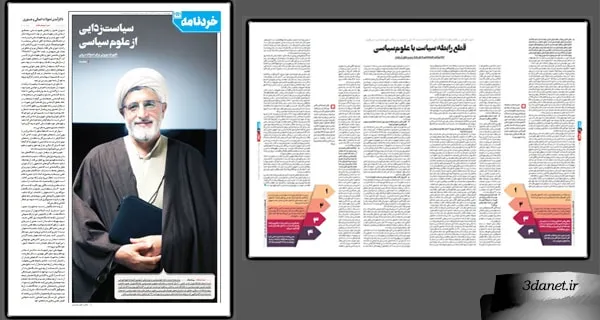
A Conversation with Davood Feirahi, Professor of Political Science at the University of Tehran / Scientific Advisor to Mehrnameh
Source: Issue 45 of the Monthly Humanities Magazine Mehrnameh / Sixth Year / January 2016 / Pages 102 and 103
.
.


Discussion1 comments
ظاهراً ابرقدرتان شرق و غرب، مصمم شده اند که بهانه و طعمه ای جدید در میانشان بیابند تا اولا با منطق دشمن مشترک، رفاقت خودشان را بیشتر کنند وگرنه در صورت عدم تفاهم، عقده هایشان را بر سر نوچه ها خالی کنند و چه چیزی جالبتر و مستعدتر از دنیای ایدولوژیک اسلامی که هم واسطه شرق و غرب ست و هم اینکه در متون مذهبی همه چیز یافت میشود و حتی زحمت جعل و افتراء هم لازم ندارد. متدینان حتی اگر هم هشیار باشند راه سختی در پیش دارند تا بلکه و شاید بتوانند خودشان را ازین دام و تله نجات دهند. ظاهراً اینهمه هیاهو بخاطر اینست که آزادیخواهان و لیبرالها و معنویون واقعی، در زیر آوارهای تبلیغاتی و جنجالی مدفون شوند.