Political Science
Blue Sky Interview with Davood Feirahi: De-politicizing Political Science
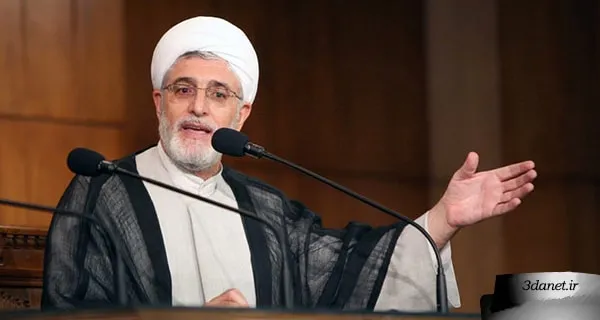
Davoud Feirahi, a professor at the University of Tehran, critiques the Political Science Transformation Plan in an interview with Aseman-e Abi, issue 96. In his view, the Supreme Council of the Cultural Revolution's top-down changes, made without collective wisdom and with a depoliticizing approach, widen the gap between the discipline and social realities.
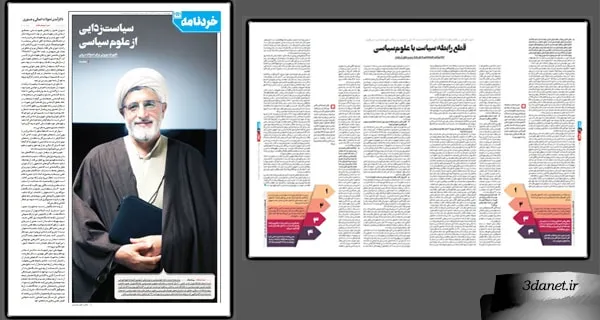
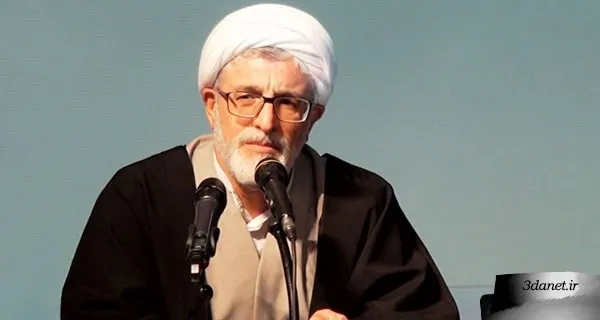
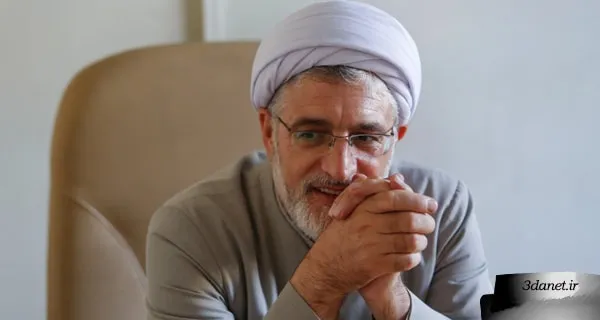
For a discussion on the discipline of political science in Iran, one of the best choices is Davood Feirahi; a professor at the University of Tehran who has been present at the Faculty of Law and Political Science for all of the past 30 years and, in addition to teaching political science at the university, is also a member of the clergy. In the following conversation with "Blue Sky," Feirahi discusses the angles, problems, issues, and hidden aspects of the Council for the Transformation of the Humanities' plan to change the syllabi of the political science discipline; a conversation that could be the source of many discussions about the 2017 draft of the political science transformation plan.
.
De-politicizing Political Science
External Changes for Internal Transformations
Blue Sky's Conversation with Davood Feirahi
Blue Sky | Khordnameh | Monday, July 31, 2017 | Second Year | New Era | Issue 26
.
The Inefficacy of Imposed and Top-Down Transformations
The Council for the Transformation and Promotion of the Humanities was formed during the Ahmadinejad administration with the aim of Islamizing the humanities, based on the assumption that the humanities taught in our universities were not sufficiently Islamic or suited to our Iranian character and culture; hence, they lacked the necessary efficacy. To achieve this goal, the Supreme Council of the Cultural Revolution, through a resolution in its 650th session on October 13, 2009, established the "Specialized Council for the Transformation and Promotion of the Humanities." Although the decision to make changes in humanities disciplines had existed since the years following the revolution, it accelerated during the tenth administration, resulting in the formation of such a council and the approval of various resolutions for humanities disciplines. This council, chaired by Haddad-Adel, is defined within several working groups, where decisions related to each discipline are formulated and reviewed in the working group corresponding to that discipline.
The formation of this council and the decisions and changes arising from its resolutions have always been accompanied by protests and controversy. From the transfer of the clinical psychology discipline to the elimination of the undergraduate counseling program and the alteration of certain syllabi in the undergraduate sociology discipline, to murmurs about eliminating the undergraduate level for philosophy and the latest changes in the course syllabi for political science and law, which are set to be implemented from the upcoming academic year, all have been fraught with uproar and controversy. The council's recent decision to form a seminary support council for the Islamization of the humanities, considering all the objections that professors and figures in the country's humanities field have had regarding the council's working process, seems like a strange decision.
The question is, what exactly is meant by Islamizing or indigenizing humanities disciplines, such that this task cannot be accomplished with the help of professors, leading figures, and veterans of the said disciplines, and a team of seminary scholars must be employed who have been trained and educated for a purpose other than what we understand as transformation and change in the humanities?
Changes and transformations in course syllabi at universities around the world occur based on the needs and potentials of the university, its professors, and faculties, and with regard to the sciences required by the day. What has provoked the criticism of university professors and student groups regarding the work of the Transformation Council is that the determination of course syllabi for various disciplines has not been carried out with the participation of universities and relevant scientific associations, and overall, with the help of "collective wisdom." It is expected that for offering courses intended to bring about transformation and promotion, they would utilize expert professors and retirees who have at least 30 years of experience teaching sciences at universities and dealing with students. The expectation that professors, students, and scientific groups related to each discipline be effectively included in the decision-making process does not seem unreasonable either.
What has made academics more sensitive to the Council's changes is their binding nature for all universities. The Council's top-down perspective and its presentation of resolutions lacking sufficient potential for implementation in universities constitute a key aspect of professors' criticism. Some of the approved courses do not have the necessary scholarly backing and precedent, meaning there are insufficient resources for professors and students to reference; hence, few professors agree to teach the courses in question. As students have repeatedly reported, in such classes, professors teach topics of their own choosing, but come exam time, they ask about something else.
The overlap of approved courses, the lack of suitable professors, and the absence of adequate resources are the most important issues raised by critics regarding the approved changes, which have, in a way, made their acceptance impossible. Lacking scholarly backing and acceptability can lead to negative outcomes, contrary to what the Council seeks. What our universities grapple with today is the encounter with unenthusiastic students, resulting in credentialism and the ineffectiveness of graduates. What like-minded critics raise in their notes, letters, and interviews is the need to distance universities from imposed directives and factional thinking. They unanimously emphasize that viewing the university from outside it is impossible and leads to the training of ineffective graduates who have neither the ability to solve pressing social problems nor the capacity to add scientific and theoretical contributions to their fields.
Davood Feirahi, in an interview with "Blue Sky," discusses the flaws of the 2017 revision of the "Transformation and Enhancement of Political Science" plan
Severing the relationship between politics and political science
The Islamization of political science is not about increasing the number of courses and their titles
A discussion that has recently returned to the forefront of news in the country's academic community is the matter of the Humanities Transformation plan. Specifically, in July of this year, the Working Group for the Transformation and Enhancement of Political Science, a sub-group of the Council for the Transformation and Enhancement of the Humanities, published its new plan regarding the syllabi for the political science discipline. It seems that over the past years, this viewpoint has always existed towards the humanities, and especially political science. What has been the general nature of this issue?
The core issue of changing the syllabi of the political science discipline is a matter with a long history. I recall that even when I was a student in the 1980s, there was talk of such changes. Political science courses in that era had two characteristics with their own specific problems.
The first characteristic was that almost all courses were unrelated to political practice and had not progressed or been updated alongside societal changes. Political science is a living discipline and must remain so. Usually, many developments and changes occur in the realm of politics, and these changes, of course, necessitate a revision of the titles and syllabi of this discipline. But in the 1980s and that period, the syllabi were not like this and were distant from the practical developments of society. The syllabi of the political science discipline in the mid-1980s had a strange, unbalanced, and somewhat irrelevant combination to the state of society and politics in our country, and usually consisted of four orientations; a portion of the courses had traces of leftist and Marxist thought; discussions of colonialism and imperialism, the Third World, North and South were among the courses of this orientation. Another part consisted of topics related to common issues and ideas in Europe and America, and generally addressed issues concerning the West and the capitalist world. The third part included courses on the history of Iran and ancient Iran; and finally, there was a fourth part that pertained to religious-political topics and was included in the set of political science course units following the 1979 Islamic Revolution and the establishment of the Islamic Republic of Iran; courses that, given the exigencies of the early Islamic Revolution and the new political system, typically addressed the generalities of Islam and politics. It was natural for it to be so; because the institutions and pillars of the new system had not yet been consolidated and experienced, and its issues and challenges had not been tested in theory and practice. In any case, this discipline, with such characteristics in the 1980s, fundamentally lacked a coherent theoretical composition, identity, and clear synthesis.
The second problem with the political science discipline in these years was that it lacked a firm connection to political practice and the objective conditions of our society. A purely theoretical character on the one hand, and its dispersal into other academic disciplines such as history, philosophy, law, economics, and sociology on the other, had, in the words of some classmates, turned political science into an ocean five centimeters deep and, inevitably, a sack of scattered, superficial, and incoherent information. To all this, one must add the backward-looking orientation and the flight from problem-centeredness and contemporaneity in the teaching and research of this discipline.
Perhaps one of the important reasons for this situation stems from the nature of the political discipline and the restlessness of the political sphere in the country. My lived experience at the Faculty of Law and Political Science at the University of Tehran from 1986 until now shows that, when discussing issues of political science, professors and students do not feel the degree of freedom and comfort they feel in other disciplines, such as engineering, mathematics, or the experimental sciences. To escape this situation, the best option for teacher and student is to take refuge from examining today's political issues in the history of politics or grand political theories and finish the academic term without any desire to apply theory to practice. It is as if there is a compound consensus and an unwritten agreement between professor and student on this matter. A look at doctoral and master's theses in political science clearly demonstrates this point. In most of these studies, there is certainly knowledge and awareness, but "our political issue of the day" is either absent or exceedingly rare. In any case, these two problems or characteristics, which have accompanied and been coeval with this sensitive and important science since the birth of the political discipline in Iran, have unfortunately remained to this day. For this very reason, any effort to modernize the units and syllabi of the political science discipline is of great necessity and importance; especially since this knowledge has developed numerous branches and orientations in today's world. But it appears that the revisions that have occurred so far, despite some achievements, still lack the necessary soundness and have provoked much criticism.
The revision of humanities disciplines, including political science, has a long history and has always been discussed inside and outside political science departments, but it gained momentum and, of course, a sensitive fate during the ninth and tenth administrations. During the presidency of Dr. Ahmadinejad, the very significant idea of the "Islamization" and subsequently the "indigenization" of the humanities, which was not unprecedented, was pursued with seriousness and a particular style and direction, and it had its first effect on disciplines like political science. Changes were proposed, and the Supreme Council of the Cultural Revolution and some other bodies also supported them. Based on this, syllabi were formulated, and the order for their implementation was issued in 2013. However, these courses were not in a very suitable condition and still contained the same problems I mentioned earlier, and even more. Ultimately, these changes resulted in the addition of a few Islamic courses, but the same four orientations and fragmentation were still visible in the courses; moreover, they remained unrelated to political objectivity and practice and never corresponded with the day-to-day situation of society.
Was the letter from political science professors to Mr. Rouhani published around this time?
In the early days of Mr. Rouhani taking office in 2013-2014, a number of political science professors and students objected to these syllabi, and these very issues caused the plan to be halted. It was decided that the plan would be reviewed again, and the latest reviews date back to July of this year (2017), when the recent discussions surrounding it took shape. In this new revision, some of the problems and defects of the previous plan have been resolved, and some courses, such as political sociology, have returned to the syllabi; but other important courses were removed, and again, these changes are not changes that transform the political science discipline into an up-to-date, lively, active, attractive, and effective field. Unfortunately, many flaws still exist in it. Apparently, the recent amendments still preserve the general structure of the revision from Dr. Ahmadinejad's era, and while maintaining that same direction and format, they have only accepted and added some case-by-case corrections. For this very reason, the dual flaw we previously mentioned, which is inherent in the 2013 amendment, still remains in the 2017 version.
What is your view on these objections? And what effect do you think these changes will have on the discipline of political science under the current circumstances?
What I have said so far is a history of the discipline of political science and the changes and transformations that were supposed to take place within it. It seems that the most important objection facing these decisions lies in the decision-making mechanism.
In fact, for the transformations in the discipline of political science, as in other humanities disciplines, professors, students, and academic departments have not been effectively included in the decision-making or even the decision-shaping process. Professional opinions and dialogues have been less considered, and changes have mostly been implemented from the top down. A large number of experienced professors did not offer their views on these courses. The decision-making mechanism for revising the course units was initiated from the top, and at times it is said that a few individuals, not chosen by the academic departments but by direct invitation from the decision-making bodies, personally participated in these meetings and discussions; not that the departments within the faculties carried out this work. During Mr. Ahmadinejad's term, this discussion was undertaken by one or two academic centers that were not particularly central from the perspective of the discipline's professional body. For example, part of this work was undertaken by Allameh Tabataba'i University during Mr. Shariati's presidency, and another part by some colleagues in certain institutions in the city of Qom. But these centers were not the academic hubs of this discipline, and some of the decisions made were not well received. One of the objections was that renowned and experienced professors did not participate in it, and even retired professors who have worked in this field for over 30 years and are familiar with the possibilities and problems of this discipline were not consulted.
Unfortunately, the recent review still has the same situation, and in a way, the transformation is supposed to take shape from the top down. This is a major problem for all humanities disciplines. If this objection had been resolved and the changes had taken shape gradually and through professional bodies, perhaps a consensus from below regarding the changes to the course units would have been found, and acceptances would likely have been greater. Although in disciplines like political science, there is no theoretical consensus even within the departments. Professional dialogues, in any case, have a greater potential for creating legitimacy and would have made the bond within the triangle of the academic discipline, professor, and student more cohesive. Professional discussions could have begun, and perhaps a better outcome could have gradually been achieved.
Now that, for whatever reason, changes are being made from the top and outside of the academic departments, perhaps presenting some viewpoints, assessments, and field experiences is a way to participate from a distance and an effort to optimize such changes. I, too, have participated in this conversation with this reasoning and hope.
As one of the professors in this field with 30 years of experience, what proposal do you have for solving this problem?
It is a well-known saying that "Ahl al-Bayt adra bima fi al-bayt"—meaning, the people of the house are more aware of what is in the house. Not only in the field of political science but in all disciplines of the humanities and other sciences, it is not an appropriate approach for the most fundamental decisions concerning the fate of a discipline to be made outside its academic departments. One must pay attention to the fact that political science departments in faculties have a history; for instance, the age of the political science discipline at the University of Tehran dates back to the School of Political Science of the Constitutional era. Due to this long history, there are experiences within this faculty. There have been individuals in this faculty who, whether they are in the department today or not, are experts and can gradually make procedural reforms in the discipline, but unfortunately, this has not been done. The professors who have been present in the working group for the transformation and promotion of political science and have implemented the recent changes are all respected and credible figures, and of course, their intentions and efforts are commendable, but in my personal opinion, if we accept that the transformation plan has two fundamental claims—one being making the discipline efficient and the other being its indigenization/Islamization—my impression is that, in the changes proposed, these two goals are, in fact, not achievable. Firstly, the discipline, in terms of the course units they have defined, is not efficient. If we liken the units of a curriculum to a cone, its center of gravity should be new and contemporary issues. Although it is necessary to have references to the past and the history of an issue in a society to maintain its continuity, this should only be to the extent of a reference and stating the background of the topic and issue, and no more. This is precisely the orientation and the point that must be made in the discipline of political science. In reality, new and very important issues such as elections, voting, majority and minority, the thoughts and tendencies of political factions, issues related to parties, ethnic and border problems, the legislative system, the nature of law, the relationship between Sharia and legislation, leadership and parliament, nationality and religiosity, separation and independence of powers, the nature of influence groups in the Islamic Republic, local governance, issues of religious movements inside and outside the country like extremism, and so on, negotiation techniques and conflict resolution in domestic, regional, and international issues, political opinion polling, and many others are our important discussions today; issues like the mechanism of elections, election monitoring, the question of legitimacy, sovereignty, democracy, local governance such as the election of mayors, and so on are also among other discussions. Now, these are our main discussions. After all, society has undergone a revolution, and a political system has been established for a long time, and now a religio-political system with its own specific institutions, possibilities, limitations, and challenges is in power and discusses various topics like voting, democracy, and so on. It is fitting for students to work on these issues; but instead of these topics, they have introduced courses that almost all revert to the two subjects of the history of Islam and the history of Iran's developments within the history discipline. I am not concerned with whether the topics are Islamic or non-Islamic. Suppose they had previously offered a course on Greece and have now repeated it again. A student who studies politics in Iran today and is 2,500 years removed from Plato must study today's discussions, while alongside that, a reference is also made to Plato; or, for example, they have placed discussions like pre-modern Christianity in the syllabi, which are not even taught in political science programs in Europe itself. Interested students can study such topics individually according to their personal interests, and professors usually mention them in passing during class, but the course title and the political science syllabus must pertain to today so that it can be utilized; or, for instance, they have introduced courses titled "History of Political Thought in Islam 1: From Early Islam to the End of the Umayyads" and "History of Political Thought in Islam 2: From the Abbasids to the Safavids," which belong entirely to the discipline of history and have nothing to do with political science. A political science student in these areas can refer to research on the history of Islamic political thought in the history faculty or the department of Islamic history and fulfill their needs, and if they develop a personal interest, they can delve deeper with the guidance of expert professors.
The issue of the political science discipline is current. Right now we have a major problem and predicament called “radicalism in the region” or “the election crisis in the Middle East” or “the border crisis” and so on, which is important to us. At this very moment, we do not have a single course unit on party studies that could answer questions such as “Are parties legitimate or illegitimate in a religious state in the first place? Can they get involved in elections or not? Or what is, or should be, the desirable form of elections in a religious state like the Islamic Republic of Iran?”
Or they have introduced another course titled “History of the Evolution of the State in Islam” and eliminated a more important and current course titled “The Political System and the State in Islam.” The course “History of the Evolution of the State in Islam” has remained and, moreover, does not discuss much beyond the end of the Safavid era! Whereas the most significant transformation in the realm of governance occurred during the Constitutional period. In the courses currently defined, we have absolutely no independent course unit or syllabus on this matter. The history of the evolution of the state in Islam, and only up to the Safavid era, is more suitable for the history department than for political science. Modern politics and the state for Iranians date from the Constitutional era onward, and this should be the central subject and problem of Iranian political science. The transformations of religion, the state, and democracy from the Constitutional era through the Pahlavi period and up to the Islamic Republic are more important than the Safavid period, which has, in any case, become history.
Dr. Feirahi, with this view, aren’t people like you accused of preserving the status quo and resisting change?
No one denies change; there must certainly be changes in the course units of political science, but the political science discipline is current, problem-oriented, and of the moment. One of the serious flaws in this regard is the new edition’s (2017) syllabi heading toward the past. I feel that if these syllabi were offered in the history faculty, it would be much better than teaching these same courses to political science students. With such a syllabus, political science students will not become acquainted with anything in the new world, nor even with anything about the Islamic Republic. Throughout the world, everyone knows, for example, that municipal elections are a starting point for changes in the entire system, but no measured discussion has been foreseen for this type of analysis, or for the relationship between national and local governance in general, from the perspective of thought and socio-political processes. In any case, this kind of orientation has not happened at all, and the discipline has become more historical and abstract. Many general philosophical and jurisprudential discussions, and so on, have been included that belong to other disciplines and seem to have no direct relevance to political science and are not considered the foundations of this science.
A review of the new edition of political science units and syllabi evokes the hypothesis that a student interested in political science must be a mujtahid in most of the humanities, including literature, linguistics, history, philosophy, jurisprudence, theology, ethics, mysticism, and so on; oblivious to the fact that political science is not the compendium of all sciences but a discipline alongside other disciplines, and while focusing on its own identity, subjects, and specific problems, it also has a logical interaction with neighboring disciplines and fields of knowledge; that is all.
Can it be said that the relationship between the political science discipline and politics has been severed?
Yes, that is correct; with these units and syllabi, it appears that the relationship between political science and politics has been severed. This flaw existed before as well, but now that changes are supposed to be made, they should address these flaws. When a student who is now studying a course in class leaves the faculty, they should see those same concepts happening; for example, we currently do not have a course on electoral trend analysis systems that could tell us what tendency is likely to emerge in the realm of public opinion, governance thought, and so on, within four years. Now, a political science student in the Islamic Republic does not properly know, for example, what the relationship is between the Expediency Discernment Council, the Legislative Assembly, the Guardian Council, the Supreme Council of the Cultural Revolution, and the Cabinet or the Presidency. With the courses currently defined, a student will not be able to connect with such topics even in a hundred years.
We now face a fundamental problem and need this discipline to be up-to-date. The field of political science must be able to separate its identity from history, pure philosophy, sects and creeds (doctrines, theology, etc.); of course, separating its identity does not mean negating other disciplines, but rather that political science must be able to become a distinct field that is, at the same time, relevant to the issues of our society today. Students should feel that the discipline of political science has the capacity for such things. It seems that the 1996 revision has turned political knowledge not into an independent discipline among other disciplines and in interrelation with them, but into an archipelago and an amalgam of a collection, or most, of the humanities disciplines.
Unfortunately, the field of political science is now defined as outdated and antiquated; for example, a topic has been introduced under the title of political thought in ancient Iran; a history student works on this, and we also read their works. The debate is that an ideology emerged during the Pahlavi era and was attached to this course, remaining until today; but the question is, what need does a political science student today have to study the political thought of ancient Iran as "a course unit"? Isn't there a concentration in the history department for ancient Iran? Well, let the findings of those researchers be used. How much awareness do two credits provide, and how useful are they for governance today? In universities, in other classes and venues, professors encourage students to read about ancient Iran or hold a temporary workshop on governance in ancient Iran.
The number of credits a student must complete is 136. A student spends four years of their useful youth on this field, and a significant portion of their courses overlaps with the history discipline, such as the history of Islam, the history of doctrines, ancient Iran, and so on. What does this student actually gain? But if you ask them, for instance, what happened in the Ministry of Interior in 2017, they cannot answer you because they have not worked in this area. As another example, today, topics such as political Islam, Iranophobia, Islamophobia, takfir, terror, and terrorism are the top headlines of world political news and also influence the destiny of our society; yet no systematic discussion on these issues is offered to the political science student. The issue is not the strengthening of Islamic courses or the weakening of non-Islamic courses; the issue is that the discipline itself and its units are defined as outdated and antiquated. The outlook of the political science discipline is, on the whole, backward-looking.
There are other objections in this regard that critics believe cause a decline in the quality of the political science discipline; a critique you yourself have pointed to: that the changes implemented with the aim of Islamizing this discipline are not acceptable.
In this regard, the critiques are mostly that the political science discipline has become too Islamized. I feel that this increase in Islamic units is severely detrimental to Islamic discussions and, to put it more precisely, detrimental to the Islamic Republic. The issue of Islamization does not mean that you increase the number of courses and titles. When the content is repetitive, this is a major harm. One of our professors, who also has a valuable economic sense, gave an example in one of the meetings of the University of Tehran's political science department: if you want a commodity to be desirable in the market, do not let its supply in the market become too abundant and accessible. The issue here is scarcity; meaning the number of units and repetitions should be few, but the content should be rich. The Islamization of the political science discipline does not mean increasing the number of courses and repeating the topics every semester, because the student gets tired; rather, the credibility of a course's Islamization lies in you offering two or three strong, content-rich courses, and the weight of these courses should be such that students eagerly study these topics, choose them for their theses, feel that this is an attractive field with unknown material, and work on it.
There is a methodology and formula in Islamic research: referring any issue to the fourfold proofs of the Qur'an, Sunnah, consensus, and reason; for example, whenever we read any political thought by any Muslim, its sources are the Qur'an, Sunnah, Muslim history, or consensus and reason. In the new transformation plan, they have defined a course titled “The Qur'an and Politics,” and then another course is proposed about the political conduct (Sirah) of the Prophet (PBUH); whereas in any discussion we have in this field, one of its proofs consists of the verses of the Qur'an and the political conduct of the Prophet (PBUH) and the Infallibles (AS).
Suppose we want to have a discussion about the conditions of the ruler in Islamic society; we bring its first proof from the Qur'an, then we go to the Prophet (PBUH), and then we examine the conduct of the Imams (AS). When we set a course about the Qur'an, another course about the Prophet's (PBUH) conduct, and also a course about Nahj al-Balagha and the conduct of the Imams (AS), these discussions will inevitably be repeated in all our courses. In the thought of Naini and Imam Khomeini (RA), or in Sunni thinkers, ancient or modern, this repetition will be unavoidable.
Repetition does not create attraction, and quantity never brings quality. If courses are set up in this way and the student faces this repetition, even if 30 percent of a course is repetitive, the student will perceive the entire subject as repetition. The consequence of this is the student's flight from the class, and you will be forced to keep the student in class through mandatory attendance. What happens then? And what calamity befalls an Islamic course when the teacher keeps the student in class by means of attendance?
Imagine, the student has become unmotivated due to repetition; their body is in class by force of attendance, but their mind is elsewhere; the teacher repeatedly gives warnings and... as the seminary students say, “and so on and so forth.” Does this mean advancing Islamic courses? Is this the very goal we have? As a seminary student who likes Islamic-political discussions to be of interest to students, about 20 to 25 years of experience tells me what happens with such increases. Islamic-political discussions inherently have had and still have their own attraction; recently, they are being examined more precisely in classes, and students have become more interested in them, but with this situation, such a trend will be disrupted. It is a rule that excessive promotion of something and greater insistence always yields a negative result.
Another objection that I see in the 2017 revision is the inclusion of courses in which there is a clear specification of individuals' names, such as the late Imam or Ayatollah Khamenei, in the course unit title. There is no politician who has not created love and hate in societies. After all, every great and influential leader has attraction and repulsion. When a specific person's name is placed on a course, everyone confronts that course with a stance, with prejudice. Why do you do this? One could easily replace the title “The Political Thought of Imam Khomeini and Ayatollah Khamenei” with the title “Political Thought in the Islamic Republic Era”; then the thoughts of figures like Ayatollah Beheshti and Mesbah Yazdi and others would also be included in this course, and the course would gain more vitality and attractiveness, and the scholarly nature of the material would be highlighted. It seems that those who set this title thought that if they bring the Leader's name into the title, the course becomes Islamic; whereas we see in student psychology that this is not the case. Everything becomes difficult in class this way.
After all, in the Islamic Republic era, there exists a set of political thoughts upon which the consistency and durability of this system are based. Friend and foe, proponent and opponent are interested in hearing and reading about these influential thoughts and perspectives. These topics can be better taught, researched, and promoted thematically.
In my belief, the thought and system of the Islamic Republic is a school of thought, and it is natural that a political school is not dependent on one or two specific leaders; it is an intellectual current whose parts have been proposed, interpreted, and highlighted by numerous thinkers. With such an approach and prudence, this course would, in fact, become an engaging report of what is happening in the realm of political thought and institutions in the Islamic Republic of Iran. Unfortunately, although with good intentions, this type of naming is, in any case, not a sign of good taste in determining titles for course units.
Despite all the talk and claims about Islamization, in the optional undergraduate courses in political science, the Islamic section is the poorest and most incoherent. There is a joke among some China scholars who say: "The philosophy of communism in China was to improve the condition of three groups: women, peasants, and workers." Incidentally, the Communist Party has been unsuccessful in no area as much as with these three groups.
.
.
PDF file of the Blue Sky interview with Davood Feirahi, titled De-politicizing Political Science
.
.

Discussion0 comments
No comments yet; let yours be the first voice.