Political Science
Davoud Feirahi's Lecture: Ashura and the Crisis of the Caliphate
Ashura arose from the antagonism between society and the state—when the government shifted from Medina’s consultative tradition toward Meccan aristocracy and monarchy. As spoils flowed into the treasury, the state grew independent of the people, and systemic corruption and inequality set the stage for the uprising of Hussein (AS).
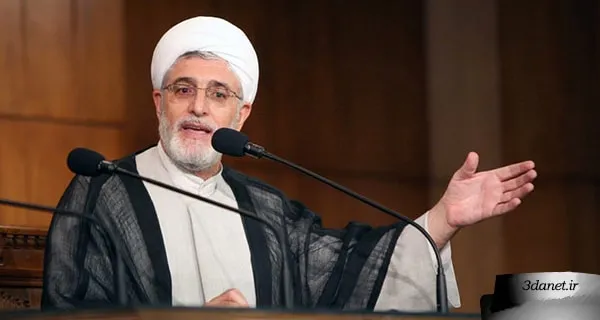
Essentially, in our societies, wherever we look—whether ancient or modern states—only a portion of developments can be traced back to rulers, not all of them. In fact, the relationship between society and the state is an enduring question of state studies in all societies. For this reason, when we speak of an event like the Ashura incident, we are actually talking about contexts that occurred within the dialectic or interaction between society and the state, and it was from within this conflict of forces that "Ashura" came into being.
In fact, Ashura is a sign of the anger between society and the state. In societies where the state has separated from society and gained independence, it develops an autoimmune disease and clashes with society, the result of which is, in effect, various prisoners, victims, and massacres. This issue knows no time or place. Whenever a society finds itself in a state of anomie and the state and the nation, or the government and the people, create a rift, it will ultimately end in conflict, manifesting itself in the form of rebellions and repressions.
The second preliminary point concerns the nature of the state in the Islamic world. At certain junctures since early Islam, the state has been a kind of rentier state. A rent based on spoils, meaning a great deal of money is in the hands of the state, and therefore the fate of society rests in the capable or incapable hands of the state. For this reason, in such a society, we witness the state's unbridled dominance, and it must be said that under these conditions, states become totalitarian and seize control of the entire society's destiny.
In such a situation, not only is economic power in the hands of states, but instead of politics adopting the logic of economics, economics adopts the logic of politics, and the state, with the money at its disposal, controls religion, culture, the education system, public opinion, and the media. Under such conditions, two situations arise. First, repression for freedom-seekers, and second, opportunism for opportunists. This situation divides society into two parts: those who protest the status quo and those who benefit from the existing situation.
When we look at pre-Islamic Arab society, we do not see a state in the modern scientific sense of the word. There was a state, but it was technically called a city-state. That is, each city had its own independent state and distinct tradition. From within this historical tradition, two models of governance can be extracted. The first is the Meccan model, which had an aristocratic tradition with a hierarchy led by superior tribes and men; in Greek literature, this mode of governance was technically called "aristocracy" (rule of the best).
In this system, the closer we get to the apex, the smaller and stronger it becomes, and the further down we go, the more the powerless masses increase. While such a system prevailed in Mecca, Medina had a democratic character. Medina relied on the tradition of consultation (shura), and the famous verse "Their affair is by consultation among them" (Quran 42:38) speaks of Medina's situation. The story goes that when the Prophet of Islam (PBUH) entered the city of Medina, he chose the Medinan tradition, steering governance toward a series of contracts and introducing a consultative vein into it.
After the Prophet (PBUH), we gradually witness the merging of the Medinan tradition with the Meccan one, and the predominance of the Meccan tradition over Islamic civilization. That is, the formation of a Quraysh-dominated tribe or an aristocratic government based on the Meccan tradition, which was also a significant tradition inspired by Rome. Under such conditions, Ibn Khaldun has a beautiful sentence in the introduction to his book, saying: if a conflict arises between the Banu Hashim and the Banu Umayya, because the power potential of the Banu Umayya is high, the Banu Umayya will ultimately win power. This happened, resulting in a caliphate that was outwardly based on allegiance (bay'ah) but inwardly contained an aristocracy.
Ibn Khaldun explains that such a caliphate can transition to monarchy in three stages. That is, egalitarian and freedom-seeking elements no longer find meaning within it. At first, it becomes slightly democratic, then outwardly democratic but inwardly more rigid, and finally, after 40 years—that is, from the beginning of Mu'awiya's rule—it moves intensely and rapidly toward Persian monarchy, revealing its elements.
When Muʿāwiya, after the peace treaty with Imam Ḥasan (ʿa), enters Medina under the pretext of the Ḥajj, the notables address him thus: “al-Salāmu ʿalayka ayyuhā al-malik” — that is, they no longer call him Caliph, but address him as king. And when Muʿāwiya protests, asking why they do not call him Caliph, those individuals reply: “The Caliph is the one we choose, but you have imposed yourself upon us by force of the sword.”
There is fundamentally a proposition in history that it takes time for an event or a political decision to move beyond its nucleus and reveal its consequences. That is, the decision of Saqīfa needed sixty years to unfold until it reached ʿAbd al-Malik b. Marwān, and it required fifty years to reach Yazīd b. Muʿāwiya and to manifest its elements. This explanation was necessary to show how the two traditions, the Medinan and the Meccan, were merged in favor of the Meccan tradition, and how important Islamic ideals found no place within it. Such conditions are agonizing for the free-spirited and for those who fixed their hopes on Ḥusayn (ʿa).
Ḥusayn b. ʿAlī (ʿa) should not be viewed in isolation. For the collection of people who had fixed their hopes on Ḥusayn (ʿa) expected a reaction from him. In early Islam, governance was based on the voluntary contributions of citizens; thus, the state was dependent on the people. The last public treasury that the Prophet (ṣ) distributed amounted to about 80,000 dinars, which was not so significant in Medina. Therefore, in reality, the state had no money and relied on the people.
At that juncture, two types of bayʿa (pledge of allegiance) were practiced: one was allegiance to the government, and the other was a moment-by-moment allegiance regarding critical decisions, which today would be called a “referendum.” The year 15 AH is a very important year for the history of Iran and Syria, because in that year the Battle of Qādisiyya took place, and the wealthy empires of Iran and, immediately thereafter, Rome collapsed, and their wealth entered Medina. It is interesting that the management of that wealth fell into the hands of the state, and a system called rentierism appeared, exactly like today’s oil wells. When the state has no need of the citizen, it is impossible for the citizen, a dependent of the state, to exercise proper oversight over its performance.
Thus, all economic policymaking fell into the hands of the Caliph, and an important event occurred: a phenomenon called systematic corruption took shape within the state. Until the year 13 AH, if there was any booty, it was divided equally. For example, when Abū Bakr wanted to distribute the public treasury, he would say that, for him, there was no difference between a mujāhid and a non-mujāhid.
But in the year 15 AH, the second Caliph defined a formula for distributing spoils that remained in place until the end of the Umayyad dynasty and marked the beginning of the Islamic state’s further distancing from the sīra of the Prophet (ṣ). The formula was simple: each Muslim’s share was equal to the degree of his kinship proximity to the Prophet multiplied by his precedence in Islam. That is, whoever had embraced Islam earlier, by the number of days and hours he had done so, gained more privilege over others, and whoever was tribally closer to the Prophet gained more privilege. When we introduce this mathematical formula into the economy, we can calculate how much money Ṭalḥa received and how much a slave or a non-Arab received.
The story of discrimination was the beginning of the systematic corruption that existed in that period. ʿUmar, the second Caliph, had understood part of the problem and said that money should be in the hands of the Companions, but they did not have the right to convert their wealth into capital. This is very important, because wealth is pure assets; but capital means assets that are increasing. It is interesting that very soon the children of those individuals were drawn into corruption, and ʿUmar has a saying: “I stood at the Ḥarra crossing in Medina, watching that the Arab’s waistband did not slip down.” He imagined that he could prevent this process with such statements, but he himself fell victim.
The third Caliph, upon coming to power, immediately began privatization, and all the wealth that was in Medina was converted from coinage into agricultural lands. The Companions, by paying money, bought up the lands of Sābāṭ, Kufa, Rayy, Syria, and other places one after another, turning the previous inhabitants into serfs, and this same money returned to the public treasury and, according to ʿUmar’s formula, went back into their pockets. In reality, this money did not benefit the state and only removed the state’s lands from its possession.
Gradually, Qurayshism and tribalism took shape, imbalance arose, and the seat of the caliphate became a center for the production and reproduction of systematic corruption. In fact, the seat of the caliphate was a heart that pumped this corruption into society. Under such conditions, a phenomenon of protest accompanied by fear takes shape; society develops a suppressed resentment and, because of the political, military, and judicial pressure on its shoulders, cannot express its protest freely.
In such a society, there is no longer any bond between the state and the people; rather, a structural rupture has formed between society and the state, and in this situation, the state becomes a security state and strives intensely to preserve itself, refraining from no violent act to do so. But if its rulers are shrewd, this resentment persists for a time. Mu'awiya is one of the greatest statesman-caliphs in Islamic history, and some have compared him to Machiavelli.
Mu'awiya was asked, "How were you able to govern this populace that Ali ibn Abi Talib (AS) could not control, leading to his martyrdom?" He replied, "People have their angers, but they do not know their way. They stage sporadic rebellions, and at that moment I feel that the bond between Syria and the people has been reduced to a single thread; so, however many people they kill, I loosen this thread. But people soon grow weary and fall asleep, and I pull this thread back as much as it has been stretched, and whoever has been gathered by that thread falls into my hands. And if I pick off these elites one by one, the rest will remain silent for a long time."
Mu'awiya also says in a testament to Yazid: "As soon as I am gone, the people will not leave the leaders residing in Medina in peace, and especially Kufa and Iraq will not remain calm." He advises Yazid to be wary of four people: Husayn ibn Ali (AS), Abdullah ibn Umar, Abdullah al-Zubayr, and Abd al-Rahman ibn Abi Bakr, each of whom is connected to a great figure and each is a prominent figure in society's affairs and a well-known social elite. Interestingly, he advises that if you are harsh, do not be harsh with Husayn (AS), for he is a free man who will resist hardship. So, if you wish to be harsh, be harsh with Abdullah al-Zubayr.
.
.
Audio of Davoud Feirahi's Lecture Titled Ashura and the Crisis of the Caliphate
.
.
Ceremony of the Fourth Night of Mourning for Husayn ibn Ali (AS)
Dar al-Zahra Cultural and Religious Institute
September 17, 2018
Source of the text report: Jamaran
.
.

Discussion8 comments
دکتر محمد فاضلی نوشته است: سخنرانی دکتر داود فیرحی، محقق و استاد علوم سیاسی دانشگاه تهران، با عنوان عاشورا و بحران خلافت از آن معدود سخنرانیهاست که علیرغم کوتاه بودن، توضیحی است عمیق از شرایط اجتماعی و سیاسی منجر به پیدایش حادثه عاشورا. چند خصیصه این سخنرانی، آنرا به محتوایی ارزشمند برای شنیدن بدل میکند: 1. بهکار گرفتن نظریات علوم سیاسی و جامعهشناسی برای توضیح شرایط اجتماعی منجر به پیدایش واقعه عاشورا 2. تبیین سازوکارهای پیدایش فساد سیستماتیک در جامعه 3. تبیین نسبت جامعه رانتی و کردار و اخلاق حاکمان 4. فراتربردن حادثه عاشورا از چارچوبی اسلامی-شیعی، و قرار دادن آن در چارچوب دولتپژوهی و شناختهای علوم انسانی و اجتماعی 5. ذکر سخنانی از حسین بن علی بالاخص در آخرین فراز سخنرانی که در آن امام حسین، منطق خود برای پا نهادن به میدان عاشورا را تشریح میکند.
تقدیس اوتاریتی چند نویسنده اجازه اندیشه را از ایرانی گرفته است. اگر فردی دارای اوتوریته جهانی سخنی گفت آیا نبایت مورد دقت قرار بگیرد و نقد شود؟ احساس حقارت در برابر دیگران عقلانی نیست.
سلام و درود بیکران ...بسیار عالی ...ممنونم ...
محمد بن جریر طبری در کتاب تاریخ طبری: [و عمر با لشکر آنجا فرو آمد و نامه نبشت به عبیدالله ابن زیاد و جواب آمد که "حسین را نخست سوی من باید آمدن، تا من او را به یزید فرستم." (((حسین گفت:"من خود سوی یزید شوم. کسی را از آنِ خویش با من فرست.))) عبیدالله گفت:"نخست به سوی من باید آمدن تا با من بیعت کند به سوی یزید" حسین گفت:"من سوی عبیدالله نشوم" و اندر این، یک هفته روزگار شد و حسین به لشکرگاه خویش همی بود و عمر به لشکرگاه خویش همی بود و چون وقت نماز بودی، همه از پس حسین صف زدندی و نماز کردندی. و خبر سوی عبیدالله ابن زیاد شد. نامه کرد به عمر ابن سعد که "من تو را نه به آن فرستادم که با حسین منازعت کنی و از پس وی نماز کنی." و مردی را بفرستاد، نامش کوثر ابن بدر تمیمی، و او را گفت:"اگر عمر حرب کند، و اگر نه، او را بند کن! تا من کسی فرستم که حرب کند." عمر چون این نامه برخواند، همانگاه برنشست و سپاه را برنشاند و آهنگ حرب کرد و بانگ کرد و گفت:"یا حسین، من جهد کردم که مگر حرب نباید کردن، تا به خون تو هنباز نباشم. این کار همی برنیاید و همی فرمان نکنی و عبیدالله اکنون رسول فرستاده است که اگر من حرب نکنم، مرا بند کند. تو را آگاه کردم." حسین گفت:" مرا امروز زمان ده، تا فردا!" گفت:"دادم." پس حسین آن شب، همه شب، سلاح راست کرد. پس به نیم شب، رسول عبیدالله ابن زیاد فراز رسید سوی عمر ابن سعد و گفت:"آب فرات بر ایشان بگیر! و دست بازمدار که آب خورند، تا از تشنگی بمیرند! و چون حسین را بکشتی، تنش به سم ستوران بکوب !" عمر ابن سعد، همانگاه 500 مرد به لب رود فرات فرستاد، تا آنجا که آبخور بود بگرفتند.
دوست گرامی،جناب آقای فیرحی! لطفا خودتون رو بگذارید جای یه آدم غیرِ مسلمون،اما بی غرض و مرض که این عبارت رو در متن تون می خونه و می خواد به کل یا جزیی از اون چیزی که شما قصد اصلاح اش رو دارید، توجه بکنه و اون هم مثل شما ردای تبلیغ دین رو به تن بکنه: "توزیع غنائم" من جای اون باشم، می گم مرده شورِ کلِ این بحث ها و این تاریخ غارت رو ببره، که بعدش ما بیاییم و بی خیال دعوای این پلشتیها و جنایت ها، وسطِ دعوا نرخ تعیین کنیم. آقا اگه حرفی در مورد دین شناسنامه ای مون می زنیم، بهتر نیست،اول از همه تکلیف این عناصر ماهوی و ماهیتی رو که دگرگون کننده ی کلِ بحثه روشن کنیم، تا این که از وسط دعوا برای حل مشکلاتِ فعلی مون شروع کنیم؟ دو تا مشاهده و یک نقل قول خدمت تون گزارش می کنم که پیگیری اش رو به عهدهی خود شما که اهل جستجویید و همهی خوانندگان می گذارم: نقل از ویل دورانت: "تاریخ چیزی نیست جز مقدار زیادی حدس و باقیماندهاش: تعصب!" نقل از سیاحی ایتالیایی در قرن پانزدهم میلادی: مدینه،شهری با ۴۰۰۰ نفر جمعیت! عکسی از مکه: چند عکس از اوایل قرن بیستم از کعبه و مکه در اینترنت وجود داره که از هر تاریخ و قصهی تاریخی، "کم حدس تر" است: کعبه در سیل، احتمالا سال ۱۹۱۴ یا ۱۹۴۱ و عکس دیگری را که من خود دیده ام و تلاش خواهم کرد هر سه منبع بالا رو در کامنت های بعدی بیاورم. این ها به ما می توانند بگویند که انگار در واقع امر، خیلی هم خبری نبوده تووی اون جا. حالا این ها رو بگذارید در کنار چیزی به اسم "برساخت گرایی"، اون وقت است که ستون خیمه ی خرگاهی که از دولت و تقسیم مال چپاول و غارت (تو بخوان مال حرام و شبهه)تماما فرو می ریزد و فقط می ماند سر به پایین افکندن و بس! آقا، این بنده خداها که برادران نوعی ما بوده اند، در اون جا هیچ چیزی نداشته اند که شما بخواهید از توش، ملقمهای از بحث های امثالِ لنین و ماکس وبر و پوپر رو از توش رد و تایید کنید. هر چی بوده مال غارتی بوده و بس، و دعوای پسرعموها و باجناق ها و دامادها بر سر همون اموال غارتیِ مردمی که قبلا هم پادشاهان سرزمین های مفتوح از اون مردم دزدیده بودند. حالا ما می خواهیم از توش صد تا تاکتیک و استراتژی و شهادت و ... و ... در بیاریم؟ آقا! به پیر، به پیغمبر، این کار ها رو امثال مرحوم سعید محسن، مرحوم رضا رضایی، مرحوم شریعتی، مرحوم اکبر گودرزی و خیلی های دیگه رفتند و خواستند از جایی که ایکس توش نبود، هم ایکس در بیارند، و هم چندین حرف دیگه ی الفبا رو که دلشون می خواست: مصطفی شعاعیان به بهزاد نبوی می گه" بهزاد! جون مولا، مجاهدین ازم می خوان بیشترش کنم" (اندیشه پویا، ۴۹، ص.۹۵) [کتابِ راه حسینِ مرحوم رضارضایی در اصل، محصول همکاری او با رضا رضایی بوده. او مسئول قاطی کردن گوشت و نخود لوبیای مارکسی برای ترکیب با آب و پیاز و ادویه ی اسلام بوده] مصطفی ملکیان به درستی در مورد مرحوم شریعتی گفت: ده سطل آب در چاه خشک می ریخت و مردم را صدا می زد و یک سطل لبریز از آب بیرون می کشید و نشان می داد و می گفت: و ... اینک ... آب، ای یاوه یاوه خلائق! در ضمن شما رو دعوت می کنم به دیدنِ روایت شگفتِ طبری، این مورخ معتبر تاریخ و البته یادمون هم هست که اولین روایتهای تاریخی از برهه ای که ما همگی یقه مون رو براش می درانیم، بیش از تقریبا ۱۴۰ سال با وقوع حادثه فاصله داشته اند. و این یعنی فاتحه مع الصلوات! به روایت طبری گوش بسپاریم:
چقدر راحت با تکیه به ملکیان (مرجعی قابل قبول!) هر چی خواستید نتیجه گرفتید! در مورد فیزیک شیمی وغیره صحبت بفرمایید تا مشکلات علوم بنیادین براحتی حل شود!
مشکل آناکرونیسم در این سخنان هویداست. یکسان گرفتن معنی بیعت و شورا در زمان پیامبر و رای گیری مردمسالارانه امروزی اگر به یه شبه دمکراسی در مدینه زمان پیامبر باور داشته باشیم، واقعه غدیر چه معنایی میتونه داشته باشه؟ مساله اینه که دکتر شریعتی براساس مد زمانه، قیام و شورش و انقلاب از دل کربلا در می اورد، الان هم که با فساد سیستماتیک و بغض فروخورده در ایران مواجهیم
نگفت در همه مسائل آخر دموکراسی است... گفت در برخی تصمیمات مهم...انتخاب امام که دست مردم نیست.