Religion
A Conversation with Abolghasem Fanai on the Ethical and Spiritual Dimensions of Imam Hussain's Movement
Abolghasem Fanai offers an ethical reading of Imam Hussein's uprising, grounded in justice and dignity. This interpretation extends the Imam's example beyond Shiites and insists that, in the path of religion, the end never justifies the means.
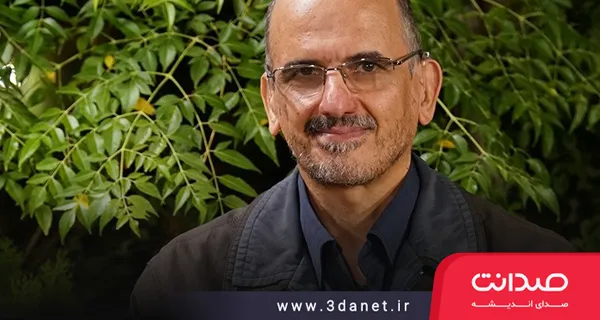
The explanations that have been offered so far of the Ashura event and Imam Hussain's movement have often pointed to a particular aspect of this important incident. Abolghasem Fanai—who has produced significant works on the relationship between religion and ethics[1]—in this conversation also provides an ethical explanation of this event. An explanation that, although not necessarily negating other explanations, appears both more foundational and more realistic, and is also significant in terms of its function and the lessons that can be drawn from the Imam. This explanation points to ethical principles such as justice, dignity, and freedom, the observance of which can be seen throughout the events of Ashura and in other periods of the Imam's life. The Imam's and his companions' attention to observing these principles confirms that in the course of fulfilling religious duties, one should never assume that the end can justify the means. Moreover, this explanation does not limit the Imam's role as a model to Shiites or Muslims. Sedanet recommends listening to this fine conversation, which was organized through the efforts of the Imam Hussain Cultural and Artistic Center, to those interested.
- Dr. Hamed Shivapour: It seems that among the various interpretations and commentaries on the Ashura incident in recent decades (for example, the somewhat jurisprudential interpretation of Martyr Motahhari, the political interpretation of the late Salehi Najafabadi, the political-mythological interpretation of the late Shariati, etc.), an ethical reading of this incident has been faint or neglected. To what extent do you think the Ashura incident can bear an ethical interpretation and explanation?
- Dr. Abolghasem Fanai: The very fact that we call Imam Hussain's movement an uprising shows that we have a particular presupposition. It is better to use a more neutral term, such as movement, action, or campaign. For a long time, the common explanation of this incident among the general Shiite thinkers and Shiites was a mythological interpretation or explanation. It was an explanation based on which the divine will had decreed that such a bitter event should occur in that specific historical situation and that specific geographical location.
After this, the late Dr. Shariati, the late Ayatollah Salehi Najafabadi, and later Ayatollah Motahhari and others tried to provide a more earthly explanation of this incident. A natural explanation from which others could also draw lessons and which could have an impact on their lives. Of course, some, like the late Salehi Najafabadi, claim that their explanation was common before the spread of the mythological explanation and had supporters among Shiite thinkers like the late Sheikh Mufid.
We have very diverse explanations, and these diverse explanations are usually single-factor explanations, which in my opinion is a weakness. Of course, the late Motahhari's explanation, in which he actually declares a combination of three factors as the Imam's motivation in this movement, can be considered a composite explanation. The explanations of figures like the late Dr. Shariati and the late Ayatollah Salehi Najafabadi are single-factor explanations.
The important point is that even if we provide an ethical explanation of this incident, this does not mean ignoring other aspects. Another point is that historical events usually do not occur in a vacuum. It is not the case that overnight, an individual or group decides to do something. The ground for a new situation is gradually created. (Defense, uprising, movement, etc.)
Providing a correct explanation of this event depends on our separating two readings of Islam from each other; the Alawite reading and the Umayyad reading.
These readings differ in various respects. One is regarding politics and the other is political ethics. If we want to have an ethical explanation of the event, we must examine what values or anti-values they were acting upon. Our motivation for approaching a historical incident is also important.
Many of those who speak about this incident try to touch upon that motivation in their audience and say that their words meet your needs.
That mythological reading is compatible with the motivation of gaining reward and forgiveness of sins through mourning and shedding tears.
اما دیگر تبیین ها با آن انگیزه سازگار نیست. آن انگیزهای که کسانی مثل مرحوم صالحی نجف آبادی را به آن تبیین کشاند، داشتن یک الگو برای حکومت اسلامی بود. بعدها آن نظریه که در آنجا پرورده شده بود و آن توجیهی که از این طریق به دست می آمد، برای تلاش برای برپایی حکومت اسلامی، یکی از عوامل مهمی بود که به شکل گیری انقلاب اسلامی انجامید.
یا در تبیین دکتر شریعتی، تاکید می کند بر اینکه اگر شما در ذیل یک حکومت جبار و خودکامه زندگی می کنید که تا بن دندان مسلح است و به هیچ عنوان از راه مسالمتآمیز و یا جنگ مسلحانه هم نمیتوانید آن حکومت را بر اندازی بکنید، دست کم کاری که میتوانید بکنید این است که حکومت را افشا کنید.
به همین خاطر در تبیین مرحوم شریعتی، نقش اسرای کربلا خیلی پررنگ است. انگار که یک وظیفه مرکبی بوده که به دو قسمت تقسیم می شده، یک قسمت کار امام حسین بود که با شهادت خودش آن رسالتی را که داشت انجام بدهد و قسمت دیگر رسالتی بوده که بر دوش اسرا و مخصوصاً حضرت زینب علیهاسلام وجود داشته است.
اگر ما بخواهیم از این حادثه درسی بگیریم، باید سراغ یک تبیینی برویم که مبنای تصمیمگیری امام و مبنای تصمیمگیری یزید را به خوبی بتواند توضیح بدهد. مبنای تصمیمگیری طرف مقابل از این جهت مهم است که ما باید از آن رفتارها اجتناب کنیم.
دلیل دو طرف ماجرا چه بوده است؟
کنشگر عاقل وقتی میخواهد کاری را انجام بدهد به دو جور دلیل نیاز دارد: اول دلیل توجیه کننده : کار را توجیه میکند. دوم، دلیل بر انگیزاننده. دلیل کنشگران اخلاقی برای کارشان می تواند همان دلیل توجیه کننده باشد.
سوال این است: آیا امام حسین (ع) برای آن کنش ها و واکنش هایی که از خودشان نشان دادند، از همان ابتدای حرکت تا جنگ و تصمیمات مهمشان، آیا توجیه و دلیل اخلاقی داشتند؟
پیش فرض بنده این است که بسیاری از فجایع بزرگی که در تاریخ اسلام و چه بسا در تاریخ ادیان دیگر اتفاق افتاده، به خاطر جدا شدن دین از اخلاق بوده است.
حضرت علی می فرمایند: وَ اللَّهِ لَوْ أُعْطِيتُ الْأَقَالِيمَ السَّبْعَةَ بِمَا تَحْتَ أَفْلَاكِهَا عَلَى أَنْ أَعْصِيَ اللَّهَ فِي نَمْلَةٍ أَسْلُبُهَا جُلْبَ شَعِيرَةٍ مَا فَعَلْتُه
به خدا قسم، اگر هفت اقليم را با آن چه زير آسمانهاست، به من دهند تا خدا را نافرماني کنم و پوست جويی را به ناحق از مورچهاي بگيرم، چنين نخواهم کرد.
اصل مبنایی و پایه در اینجا، اصل عدالت است. آن طرف اصل مبنایی چیست؟ الحق لمن غلب! این دو با هم تقابل دارند.
اصل دیگر این است که آیا هدف وسیله را توجیه می کند یا نه؟
آن طرف چون فلسفه سیاسی و اخلاقی اش اصالت قدرت است و میگوید ما قدرت را باید به هر قیمتی شده به دست بیاوریم و حفظ کنیم، برایشان هدف وسیله را توجیه میکند، اما این طرف این گونه نیست.
اقدام مسلم ابن عقیل از این نمونه است. به او پیشنهاد میدهند که ما ابن زیاد را دعوت می کنیم، تو پشت پرده پنهان شو، و بعد بیا و او را به قتل برسان. مسلم این کار را نمی کند. اگر این کار را میکرد به احتمال قوی مسیر تاریخ عوض می شد.
اگر ما بخواهیم تبیینی اخلاقی از حرکت امام حسین داشته باشیم که بتوانیم از آن تبیین در زندگی خودمان استفاده کنیم، به اصل اخلاقی برجسته باید توجه کنیم:
1- اصل عدالت: امام در وصیت نامه شان به محمد بن حنفیه، قبل از خروج از مدینه، می فرمایند من از مدینه برای امر به معروف و نهی از منکر بیرون میروم. در انتهای آن جمله می گویند: وَ أَسیرُ بِسیرَةِ جَدِّی وَ أَبی عَلىِّ بْنِ أِبی طالِب؛ مى خواهم امر به معروف و نهى از منکر کنم و به روش جدّم و پدرم على بن ابى طالب(علیه السلام) رفتار نمایم.
یعنی روش زمامداری و شیوه اداره جامعه. آن شیوه اداره جامعه در آن زمان پیامبر اکرم صلی الله و حضرت علی شیوه عادلانه بوده است.
Regarding amr bil-maʿruf (enjoining good), contrary to the interpretation some have of this event—that Yazid was a gambler and a dog-fancier, and the Imam’s purpose in enjoining good and forbidding evil was to address the corruptions that had appeared in society, and that he wanted to seize the government and, through the government, enjoin good and forbid evil among the people—no, it is none of these things. For the greatest evil that had occurred there was the transformation of the caliphate into a monarchy.
The belief in the primacy of power was the greatest evil that had occurred. Rectifying the remaining evils depended on rectifying this evil.
What is meant by justice is the term in its general sense. It encompasses political justice as well as social and economic justice.
If you want to eliminate a major evil and establish social justice, you cannot do it alone. The people must be with you. If the people do not lend their support, this duty is lifted from the shoulders of Imam Hussain.
When the Imam sees that the Kufans have changed their minds and are not willing to support him, this duty is lifted from his shoulders. His proposal is: either let me go so that I may leave for a distant place, or let me return to Medina.
2- The principle of human dignity. The Imam reaches the conclusion that defending, becoming a martyr, and dying with honor is better than living with abasement.
What was Yazid’s proposal? The meaning of bayʿah (pledge of allegiance) at that time was that if you pledge allegiance, I will let you live. That is, you are buying your life in this way. You are making a transaction: you pledge allegiance to me, and I grant you the right to life. Whereas Imam Hussain, in reality, believed that no, God has given me the right to life, and it is meaningless for you to want to grant me this right to life, and if I were to pledge allegiance, this would be incompatible with my human dignity.
It is in contradiction.
3- The principle of freedom and liberality. Many of the actions the Imam undertook, including accepting Hurr’s repentance, giving water to the enemy army, releasing his companions from their pledge of allegiance, and so on, trace back to the principle of liberality and freedom.
With these three principles, this movement can be explained. The result is that Imam Hussain is not only a model for Shiites, nor only a model for Muslims, but can be a model for all of humanity. All human beings can accept these three principles as three fundamental ethical principles and live according to them.
Imam Hussain paid a very heavy price to revive these principles and to make them eternal.
When we say Imam Hussain is a model for us, it does not mean that we must use exactly the same tools, preliminaries, and methods that the Imam employed to follow these principles in that era. It is possible that if we want to realize the ideal of social justice, we must take a different path. Here we must ask: if Imam Hussain (AS) were in our situation, given the means now at his disposal, how would he use these means?
- Shivapour: The golden sentence of Imam Hussain, peace be upon him, on the day of Ashura, when he said: “If you have no religion, at least be free in your world,” has a very close connection with your intellectual project regarding the relationship between religion and ethics, and you spoke about this years ago somewhere. Since the audience of this program may not have heard your previous discussion, please explain what connection this sentence has with your intellectual project on the relationship between religion and ethics?
Fanai: I have a detailed lecture on this subject, which was later turned into an article. I recommend that dear audience members definitely study this article. Its title is: The Religious Matter and the Meta-Religious Matter in the Event of Karbala.[2]
This is a very profound statement, and many points can be drawn from it. The Imam wishes to say that your action is wrong for two reasons: one religious and the other extra-religious. The religious reason is effective if you fear an ill fate and the afterlife. If you have no religion, naturally this motive will not be effective for you. But someone may have no religion, yet still possess humanity. If you have no religion, at least your human identity should restrain you. That liberality is a requirement of human identity.
- Shivapour: Before setting out for Kufa, the Imam said, "Someone like me does not pledge allegiance to someone like Yazid." It seems this statement can be interpreted from the perspective of Kant's moral law: "Act only according to that maxim whereby you can at the same time will that it should become a universal law." Do you think this statement can bear such an interpretation?
- Fanai: We cannot attribute the entire theory that Kant later elaborated and expanded. That would be an anachronism. If we want to explain that statement today, one of the best explanations is within the framework of Kant's ethical theory.
Kant's principle of universalizability applies to all human beings. It applies to all rational beings. Now we must see whether Imam Hussain's (AS) refusal to pledge allegiance in that situation means that all human beings, when placed in that situation, should not pledge allegiance, or that someone like Imam Hussain, with those special characteristics, should not do such a thing?
If we say the former, it means that considering the Imam's Imamate and that special personality he had, and the recognition people had of him, if we want to say that if someone is placed in that situation, they should not pledge allegiance to someone like Yazid, that is a kind of universalizability. But it is not universalizability to all human beings simply insofar as they are human.
In one sense, it does include all human beings, on the condition that if any human being were placed in that situation where their pledge of allegiance would somehow legitimize an incorrect, unethical reading of religion, then yes.
- Shivapour: Some experts believe that the character and ethical behavior of mystics, saints, and moral heroes, among the three main schools in moral philosophy—namely, utilitarian ethics, deontological ethics, and virtue ethics—are best explained based on virtue ethics. In your opinion, can the decisions and actions of Imam Hussain (AS) be explained solely on the basis of virtue ethics, or can his character and stances also be explained based on utilitarian or deontological ethics?
- Fanai: We have ethics on one hand, and ethical theory on the other. Ethics refers to those moral considerations and reasons. Ethical theories or schools are the product of viewing those moral considerations from the perspective of philosophers. Moral philosophers try to systematize the set of moral considerations. Here we have three general approaches under which we can subsume these diverse ethical theories.
What has happened throughout the history of ethical theories and the history of moral philosophy is that proponents of each of these approaches have tried to critique the opposing approach. This has led us to develop very expanded and complex readings of these three views, theories, or approaches.
I think the Imam's conduct can be explained based on all three approaches. But with a specific reading.
If you consider utilitarianism there, the benefits considered must cover the costs the Imam paid and the benefits he envisioned achieving through that movement. If we limit our perspective to worldly benefits, this cannot be explained. There is a religious, spiritual, afterlife-oriented reading of utilitarianism. In this reading, if human dignity, justice, liberality are among the items in our calculation, it can be explained with this reading of utilitarianism, as well as with a virtue-ethical reading and deontological ethics.
- Shivapour: In the event of Karbala, we are faced with numerous dilemmas, choices, and decisions by various characters. Firstly, regarding the Imam himself, there are instances such as his refusal to pledge allegiance to Yazid, his departure from Mecca, his journey toward Kufa, and being caught between the two paths of an honorable death and a life of humiliation. Or, regarding Abbas, we have his choice of fetching water instead of fighting and his abstaining from drinking water.
Apart from him and his brother, who are the central figures of this event, other instances of dilemmas and crucial decisions can be seen on both sides of the affair. For example, on one side, we have Hurr and Zuhayr. Or on the other side, Umar ibn Sa'd. In your view, what messages and lessons does the story of Ashura hold for us in facing dilemmas, major decisions, and choosing the right path?
- Fanai: All the decisions in our lives can be divided into two categories. In some of these decisions, ethics is unconditional; it is silent.
But the second type is where we encounter what we call an ethical dilemma. If we want to follow the path that ethics dictates, we must pay a cost. It is that cost which shows how much human beings have attained perfection in the realm of ethics. The more a person is willing to pay a greater cost to follow the ethical values they believe in, the more it shows that this person is more ethically complete. The dilemmas that occurred in Karbala were all of this kind, where if they did this, they would have to pay a heavy cost, and if they did not, they would not pay that heavy cost.
Every human being has a price; that is, the important thing is that we accept that in everything we do, from one perspective, we are conducting a transaction, we are selling ourselves. We must see at what price we are selling ourselves and our dignity.
One of the most important points is that we understand, firstly, that in each of these situations we find ourselves in, we must pay a cost for ethical behavior.
At what price and through what arrangements can others compel us to perform that unethical act? It is, in fact, a scale to measure our own ethical weight.
What would we have done if we had been there?
If the governorship of Rey had been offered to us, what would we have done?
It is a tempting offer! Here we sit comfortably and say no.
- Shivapour: Let us turn the questions from the event itself to our relationship with this event. There is no doubt that mourning or lamentation for the deceased is fundamentally an emotional act. This is also true regarding mourning for Imam Hussain, peace be upon him, and beyond that, as a recommended act, it is also a Sharia-oriented action directed toward attention to religious symbols and rituals. But can mourning for Imam Hussain, peace be upon him, also be considered an ethical act?
- Fanai: In fact, do we have an ethical reason for mourning or not? Yes, under certain conditions, we can say that mourning is ethically a good act, and perhaps even a necessary one.
One thing that is very important here is that we pay attention to whom we are mourning for and what we expect from this mourning. Certainly, if this mourning for Imam Hussain leads to a transformation in our character and we become better human beings, so that when we leave the mourning gathering others feel that we have changed—we lie less, we cheat people less, we commit less injustice—if these things happen, then this itself becomes a school for moral education. In fact, I think the main purpose of that mourning was precisely this. Now, what has happened throughout history that a kind of green light has been given for some people to commit immoral acts throughout the year and then say, "Well, we will go there, shed a tear, make a vow, or beat our chests, and our sins will be forgiven." This is a distortion that has occurred in this matter. The emphasis of the narrations on mourning is so that people come to these gatherings and keep company with Imam Hussain, and as a result of keeping company with Imam Hussain, becoming acquainted with Imam Hussain, and connecting with the real Imam Hussain—that character, an emotional connection with the real Imam Hussain—the virtues of that character overflow into them and they become better human beings. Human beings who are morally better people.
Mourning and lamentation have an instrumental value. If we want to say from an ethical perspective that this act is a good act, we must see what this instrument is for. It is the goal that gives value to this means. If that goal is good, it becomes valuable, but if the goal is something else, even Yazid himself might be willing to participate in these gatherings!
Dr. Shariati used to say that blood has been turned into opium! If these mourning gatherings for Imam Hussain, instead of awakening sleeping human beings and consciences and awakening people's moral sensitivity to oppression, injustice, and unfairness, act like a narcotic and people think their only duty is to come there, beat their chests, shed tears, and then when they go out, their behavior outside is that of someone who seems to have no connection with Imam Hussain—if we look from the outside, we see that this behavior aligns with the very principles that Yazid and his army followed. What is important is commemorating the memory of Imam Hussain. Because of the political conditions and the fact that tyrannical rulers would in no way allow a normal memorial gathering to commemorate the Imam and introduce his character, except in the form of mourning.
They say, "Well, these people are mourners; they are not doing anything, it is just mourning, there is not much political sensitivity towards mourning." For this reason, throughout history, there has been an emphasis on mourning and the spiritual reward of mourning, but in my view, it is not the essence. What is important is establishing an existential connection with Imam Hussain. This existential connection has two aspects: an emotional connection and a cognitive and experiential connection. That is, when we participate in the mourning for the Imam, we must try to be as if we are on that scene. That is, it should become a practice for us so that when we are placed in that situation, or a similar situation, our behavior resembles the same behavior and reaction that Imam Hussain showed in that situation.
Shivapour: One of the manifestations of our religiosity as Shiites is the rituals and ceremonies of mourning. Whether mourning for the Imam (peace be upon him) is itself a moral act or not, can we speak of something as an "ethics of mourning"? I do not mean the kind of moral recommendations that mourning should not involve bothering others, or extravagance, or insulting the sanctities of other religions, and so on—though these recommendations are, of course, correct and appropriate. From a broader and more general perspective, one more focused on intentions and ideals, can we speak of something as an "ethics of mourning"? What moral values should be considered in mourning?
- Fanai: In mourning, we must certainly observe a set of ethical principles. A few points can be mentioned here as suggestions for further reflection.
We must look at mourning as a means and an instrument, and always be sensitive to whether this instrument and means, firstly, leads us to the goal or not, and secondly, whether it is the best possible and available instrument and means for reaching that goal. Many important acts of worship—prayer, Hajj, fasting—are purposeful instruments. (Indeed, prayer prohibits immorality and wrongdoing)
If a personal transformation occurs within me, we can view this mourning just like other acts of worship.
Much of this contentless lamentation and the form of chest-beating, the form of the content, the poems, the style of performance, are neither befitting of Imam Hussain nor do they have the slightest positive spiritual or ethical impact on the audience and listeners. It has become a tool for entertainment and catharsis. This is not what the Imams had in mind.
.
.
[1] Religion in the Scales of Ethics: The Relationship Between Religious Ethics and Secular Ethics, Abolghasem Fanai, Tehran: Serat Publications, 2005
The Ethics of Religious Studies: An Inquiry into the Epistemological and Ethical Foundations of Jurisprudence, Abolghasem Fanai, Tehran: Negah-e Moaser, 2010
The Ethics of Religiosity, forthcoming
[2] Abolghasem Fanai: The Religious and the Meta-Religious in the Message of Ashura: Sedanet
.
.
A Conversation with Abolghasem Fanai on the Ethical and Spiritual Dimensions of Imam Hussain's Movement
By the efforts of the Imam Hussain (AS) Cultural and Artistic Center
Watch the full video of the conversation on Aparat
.
Watch the same video in two parts:
Part One: YouTube | Aparat
Part Two: YouTube | Aparat
.
.
Discussion1 comments
باسلام وعرض ادب خدمت استاد فنائی وتهیه کنندگان بسیار عالی ودقیق بیان شدبسیار استفاده نمودیم. ان شاءالله به این سخنان بادقت عمل کنیم.تا جامعه دچار این همه گرفتاری ومشکلات نشود