Religion
Mohsen Kadivar's Essay 'Imam Hossein from Another Perspective: Rule or Exception?'
Mohsen Kadivar distinguishes between traditional and revolutionary approaches to Ashura, re-examining the figure of Imam Hussein. The traditional view centres on mourning and divine reward, while the revolutionary reading replaces lamentation with rational analysis, social reform, and the demand for just governance.
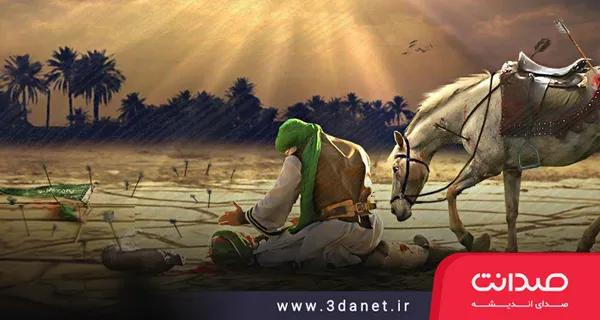
Imam Hossein ibn Ali (peace be upon them both) is truly the lord of the free people of the world. The days of his martyrdom, along with his family and loyal companions, on Ashura in the year 61 AH at Karbala, are a time to review the lesson of freedom and the highest human virtues in the school of Islam. I am seeking answers to three key questions: Was Imam Hossein, among the Imams of the Ahl al-Bayt, the rule or the exception? Have Shia scholars, in their lifestyle and scholarly orientations, followed and recommended the Hosseini path? What scientific and practical impact have Hosseini gatherings had on the Shia? To answer these three questions, I have distinguished three types of approaches in interpreting the great work of Imam Hossein. I will briefly mention the indicators of these three approaches. This discussion has the potential for extensive development. In this space, I will suffice with the headlines and outlines of the subject.
The Traditional Approach
The dominant and prevalent interpretation in the traditional perception of Ashura, Karbala, and Imam Hossein has at least five pillars:
First. A special and personal mission for Imam Hossein for his own martyrdom, that of the men of the Ahl al-Bayt and his companions, and the captivity of the women and children of the Karbala caravan.
Second. The heinous and oppressed killing of the Prophet's grandson and his companions in Karbala by the ruling Umayyad villains is "the most central axis of Shia identity," more important than any religious event, absolutely speaking. And now, the most prominent symbol of Shiism and the largest religious gathering takes place during the days belonging to Imam Hossein, and it is completely known to non-Shia Muslims and even non-Muslims.
Third. The Shia are "mourners" from the time of Imam Hossein's martyrdom until the end of time. No ceremony, not even Shia religious, sectarian, or customary festivals, is accepted without the visitation of Imam Hossein and the remembrance of the painful events of Karbala in the year 61 AH. This mourning is accompanied by weeping, causing others to weep, and feigning weeping (crying, making others cry, and showing oneself as weeping); therefore, the commemoration of Imam Hossein is accompanied by lamentation, sorrow, and crying—"permanent and public lamentation, sorrow, and crying."
Fourth. The commemoration of Imam Hossein has been concomitant with the recitation of "Maqtal" and the reading of the book "Rawzat al-Shuhada" by Mullah Hossein Vaez Kashefi Sabzevari (d. 910 AH), and later, in short, "Rawda-khwani" (recitation of the Rawda). A Maqtal is a type of book detailing the particulars of those killed at Karbala, in Arabic, for example, the Maqtal of Abi Mikhnaf. Rawda is in the local language: Persian, Turkish, or Urdu, and the like. Hence, Maqtal-khwani or Rawda-khwani becomes a common profession, another name for which is lamentation singing or eulogy recitation. The focus in this profession is on the details of the oppression of the martyrs and captives of Karbala and the cruelty and wickedness of the dastardly criminals and perpetrators of that event.
Fifth. Hosseini mourning gatherings are "assemblies of divine reward." Mourners come to lighten the burden of their sins with a teardrop and attain the grace of divine reward. The more heart-rending the Rawdas, lamentations, and eulogies, the more tears they draw, the more popular they become, and the warmer their market. In this market, the "authenticity" of the narrations is not much of a criterion. In general, "increasing religious knowledge" is neither the speaker's goal nor the listener's demand. Everyone seeks divine reward, the washing away of sins, and the lightening of their own pains.
This perception is one of the most deep-rooted elements of the general Shia culture. Its depth is such that even those who do not practice religious obligations and avoid religious prohibitions refrain from debauchery and vice on the day of Ashura out of respect for the lord of the free, attend the Hosseini mourning gathering, beat their chests, and shed tears; that is, they are religious for at most two days a year: one on Ashura in honor of Imam Hossein, and one on the 21st of Ramadan in honor of Imam Ali. This is also a kind of "minimalist religiosity" common in our society.
The Revolutionary Approach
From around the 1950s, at least in Iran, we witness another current that can be called "Militant Shiism" with these components:
First. The epistemological dimension of Imam Hossein's action becomes the focus of attention, and the gathering for "earning divine reward" transforms into a gathering for "teaching Hosseini teachings." Instead of repeating platitudes, the speaker endeavors to announce a specific title for their lecture beforehand and later publish the written text of their speech. When the lecture text is published, the orator (and not the rowzeh-khān, eulogist, maqtal-reciter, or panegyrist) must speak with documentation and pay sufficient attention to the reliability of their narrations. Instead of focusing on the maqtal (martyrdom narrative), tracing roots in Islamic history becomes the focus of lectures. The book series Goftār-e Māh (Monthly Discourse) from 1960 to 1962 is a clear example of this approach. The names of the speakers at this gathering: Morteza Motahhari, Mohammad Ebrahim Ayati, Mahmoud Taleghani [whose 40th death anniversary falls on these days], Ali Golzadeh Ghafouri, Mohammad Beheshti, Morteza Jazayeri, Musa Sadr, Khalil Kamarei, Mohammad Bagher Sabzevari, Morteza Shabestari, Hossein Mazini, and Mohammad Taghi Jafari.
Second. "Rational analysis" replaces the stirring of emotions and feelings. The speaker and the listener have come to discover and learn something new from the school of Imam Hossein and apply it in their individual and social lives. The personal approach and the private mission of Imam Hossein for martyrdom and the captivity of the Ahl al-Bayt have no place in this approach. The "logic of Imam Hossein's movement" becomes the focus of lectures, and "social demands" are highlighted. In this conception, Hossein is a social reformer who rose to "reform" the deviations of his grandfather's community and show the "landmarks of religion" to the Muslims.
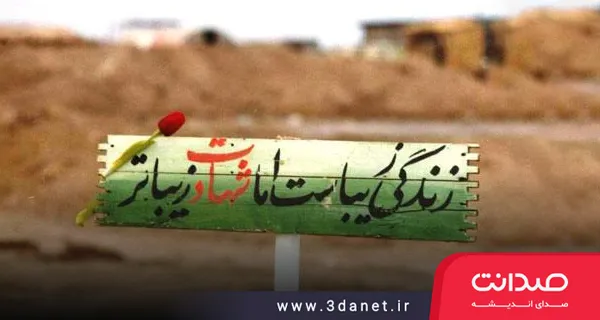
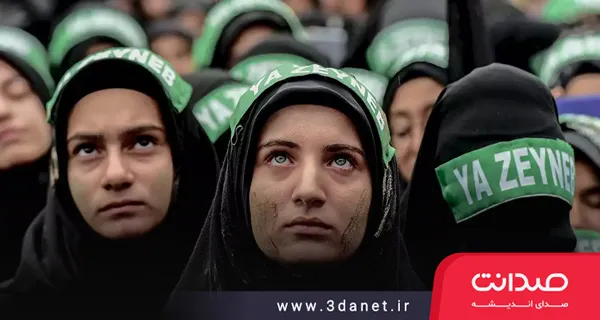
Third. Gradually, in accordance with the times, Imam Hossein's action is termed a "Hosseini revolution, uprising, movement, or epic." Imam Hossein becomes a revolutionary, a rebel against the oppression of the age, an insurrectionist against tyranny, and the creator of the Karbala epic. Slogans such as "Indeed, life is creed and jihad" or "Every day is Ashura and every land is Karbala" (neither of which has any basis!) are fabricated, or "Indeed, in me you have an example" (from phrases attributed to Imam Hossein) is given attention. Hossein becomes the model of revolution against oppression, and Zaynab the messenger of these revolutionaries rolled in blood. Ali Shariati's famous phrase is a true witness to this approach: "Those who went, did a Hosseini deed, and those who stayed must do a Zaynabi deed, otherwise they are Yazidis"! One must either become a martyr or convey the message of the martyrs, otherwise one is considered a collaborator with the oppressors.
Fourth. In the late 1960s and especially the 1970s, Imam Hossein's movement, besides being revolutionary, acquired another demand: "Islamic government." At the stage where the Imam accepts the invitation of the people of Kufa and Basra to establish justice and righteous rule, and sends Moslem ibn Aqil to those provinces to assess the situation, the "establishment of an Islamic government" is highlighted as the main demand of that "Eternal Martyr" and introduced as a perpetual model for the "Community and Imamate," something that had no precedent before.
Fifth. "Enjoining good and forbidding evil" becomes the headline of the teachings of the Master of Martyrs. This omitted section of jurisprudential books is revived. In the traditional conception, one of the conditions of this Islamic obligation was the absence of corruption and the lack of harm or hardship for the enjoiner and forbidder. In the new conception, enjoining good and forbidding evil in matters upon which the dignity of Islam and Muslims depends is not annulled by hardship or harm, even if it is life-threatening, and sacrificing life and property for certain levels of enjoining good and forbidding evil becomes not only permissible but obligatory. The silence of religious scholars, if it strengthens falsehood, is forbidden, and protesting and expressing hatred towards the oppressor is obligatory for them, even if it is ineffective in removing his oppression. (Tahrir al-Wasilah by Mr. Khomeini) This was the very conception that led to the unpredictable victory of the February 1979 revolution in Iran.
"Political Islam" is the product of this view of Imam Hossein, Karbala, Ashura, Islam, and Shiism. Revolutionary Islam has presented its own specific interpretation of Imam Hossein as a model of revolution and struggle, at least in the last five decades in Iran. Among the most famous books of this approach, despite their differences, are: "Hossein, Heir to Adam" (Collected Works No. 19) by Ali Shariati, "The Path of Hossein" by Ahmad Rezaei (one of the early cadres of the People's Mojahedin Organization of Iran), "The Eternal Martyr" by Nematollah Salehi Najafabadi, and to some extent "The Hosseini Epic" by Morteza Motahhari.
The Critical-Historical Approach
In a third approach to Imam Hossein, Ashura, and Karbala, neither the attainment of spiritual reward nor struggle is of primary importance. This approach, within a comprehensive view of the entire system of Islamic teachings and Shi‘i doctrines, seeks the true position of Imam Hossein. The outlines of this view, in utmost brevity, are as follows:
First. The actions of Imam Hossein—from refusing to pledge allegiance to the tyrannical ruler, to seizing the government caravan and striving to establish an independent government from the so-called Caliph of the Muslims in Medina at the invitation of the people of Kufa and Basra, and finally accepting the option of war, martyrdom, and the captivity of his family in the face of the army of a caliph who had given him the choice between the humiliation of pledging allegiance to a tyrant and death—are not the "rule" in the history of the Imams; they are an "exception." It can be claimed that Yazid ibn Mu‘awiya (26–64 AH) as a symbol of cruelty and vileness, and Hossein ibn Ali (4–61 AH) as a symbol of virtue and human perfection, possessed unique characteristics that did not occur during the era of any other Imam. This claim is irrefutable. In the traditional view, which holds that all Imams are a single light, differences are thus attributed solely to temporal circumstances. Proving that the contemporary caliphs of the other Imams possessed even the minimum conditions of a just ruler is exceedingly difficult. If Imam Ali (23 BH–40 AH), with "a bone in his throat and a thorn in his eye," pledged allegiance to the first three caliphs, and Imam Hasan ibn Ali (3–50 AH), after a few months, signed a peace treaty out of desperation with Mu‘awiya ibn Abi Sufyan, the first to transform the caliphate into a monarchy, and Imam Sajjad (38–95 AH), due to the specific constraints of his time, could do nothing but take refuge in prayer and supplication, then the relatively long era of Imam Muhammad al-Baqir (57–114 AH) and Imam Ja‘far al-Sadiq (83–148 AH), which coincided with the interregnum between the Umayyad (41–132 AH) and Abbasid (132–656 AH) caliphates, is the best time to test the method of the Imams to see whether Imam Hossein's way was the rule or the exception. These two Imams, especially Imam al-Sadiq, who had the most flourishing teaching circle among the Imams, preferred foundational cultural action over acute political action, particularly armed struggle, and, citing a lack of sufficient supporters, refused to repeat Imam Hossein's action. It was during the Imamate of Imam al-Sadiq that his uncle Zayd ibn Ali ibn Hossein (76–122 AH) rose up and met the same fate as Imam Hossein. Ja‘fari Shi‘ism, unlike Zaydi Shi‘ism, did not consider armed uprising against a tyrant a condition of the Imamate. As soon as the Abbasids were established, Imam Musa al-Kazim (128–183 AH) spent years in prison. Imam Reza (148–203 AH), due to his popularity, reluctantly accepted Ma’mun's appointment as heir apparent for a time, on the condition of non-interference in political affairs. The later Imams also never engaged in political activity and gradually came under increasing pressure, to the extent that even contact with their close companions became difficult. Ultimately, the method of Imam Hossein's confrontation with the ruling power of his time is not observable in the life of any other Imam. For whatever reason, Imam Hossein was the exception among the Imams of the Ahl al-Bayt, not the rule.
Second. The Hosseini model—with its explanation that one must fight the tyrant and that silence in the face of the oppressor is forbidden, in other words, “Red Shiʿism” and “Islam as a militant school”—has never been followed among Shiʿi scholars either. From the very beginning until now, Shiʿi scholars have walked a different path. From Sayyid Murtaḍā ʿAlam al-Hudā (355–436 AH), the Naqīb of the Ṭālibids, Amīr al-Ḥājj, and head of the Dīwān al-Maẓālim, and Naṣīr al-Dīn Ṭūsī (597–672 AH), advisor and vizier to the Mongol Hülegü Khan, who were close to the ruling powers of their time, to the pro-constitutional jurists such as Ākhūnd Mullā Muḥammad Kāẓim Khurāsānī (1255–1329 AH) and Mīrzā Muḥammad Ḥusayn Nāʾīnī (1276–1355 AH), who inclined toward political struggle, neither of these two tendencies was ever in the majority among Shiʿi jurists. The representatives of the majority of Shiʿi jurists have been jurists such as Shaykh ʿAbd al-Karīm Ḥāʾirī Yazdī (1267–1355 AH), the founder of the Qom seminary, and Āqā Ḥusayn Ṭabāṭabāʾī Burūjirdī (1254–1340 Sh), who are known as the politically “quietist jurists.” The only jurist who can be said to have risen up in accordance with the Hosseini model was Āqā Rūḥ Allāh Mūsawī Khomeinī (1281–1368 Sh). He himself presented the uprising of 15 Khordād and the 1979 Revolution as a branch of the Hosseini uprising. Although in the years 1342–43 Sh many Shiʿi sources of emulation entered the political struggle, after the exiles of Messrs. Rūḥ Allāh Khomeinī and Ḥasan Ṭabāṭabāʾī Qummī (1290–1386 Sh), the remaining sources of emulation returned to the traditional Shiʿi approach. In a general overview of the history of Shiʿi scholars, it can be said that the overwhelming majority of them did not follow the Hosseini approach in practice. At this level too, Imam Hossein is not the rule, but again the exception. In the fatwas of the vast majority of Shiʿi scholars, the obligation of enjoining good and forbidding evil is conditional upon the absence of harm to life or property. That is, a religiously observant Shiʿi is not obligated to act in a Hosseini manner and embrace martyrdom for the exaltation of the word of truth.
Third. In all stages of his life, Imam Hossein made “rational” decisions. Had he been aware of the outcome, he would not have heeded the unsubstantiated invitation of the people of Kufa and Basra. To put it simply, Imam Hossein, as one of the “pious scholars” (ʿulamā-yi abrār), made a human decision, and its consequences befell himself, his family, and his companions. The notion that he had knowledge of the unseen regarding the outcome but was not permitted to use it (the traditional response) is unacceptable. Was anyone permitted to act contrary to the Qurʾan’s guiding command: “And do not throw yourselves with your own hands into destruction” (2:195)? The correct answer is that Imam Hossein made a decision based on human calculation and had not foreseen the treachery of the faint-hearted inviters of Kufa and Basra. In his subsequent actions, he refused the humiliation of pledging allegiance to the tyrannical caliph and drank the cup of martyrdom with honor. The other Imams, learning from his experience, strove to avoid open confrontation with the tyrannical caliphs so as not to meet his fate. The lives of the Imams confirm the “method of the pious scholars,” not “superhuman sacred Imamate.” For this reason, the only Imams who were martyred were Imam ʿAlī and Imam Hossein (killed by the sword), and Imam Ḥasan al-Mujtabā and Imam Mūsā al-Kāẓim (killed by poisoning), while the other seven Imams died a natural death. This is the exact statement of Shaykh al-Mufīd (336–413 AH), one of the greatest Shiʿi scholars. (Al-Muqniʿa, chapter on lineages and visitations, pp. 461–485). He considered the martyrdom of Imam Riḍā by poisoning to be doubtful and strongly rejected the martyrdom of the remaining Imams (that is, the other six Imams). (Taṣḥīḥ al-Iʿtiqād, p. 132).
Fourth. The importance of the tragic massacre of the Lord of Martyrs, his family, and his companions at Karbala has been exaggerated in both traditional and revolutionary Shiism. Undoubtedly, the Prophet's mission, the revelation of the Quran, and the designation of Imam Ali by the Prophet as the third source of Islamic knowledge were events far greater than the martyrdom of Imam Hossein. The grandees of Shiism turned the tragedy of Karbala into the most prominent identity symbol of Shiism. Certainly, in terms of wounding emotions and feelings, no other event has had such a capacity, and this emotional aspect has been and remains completely tangible for all classes of people—women, men, children, youth, and adolescents. The amount of information Shiites possess about the historical details of the martyrdom of Imam Hossein and even his horse, Zuljanah, is far greater than their knowledge of the firm teachings of the Quran, key doctrines in the prophetic tradition, essential Shiite teachings in the doctrines of Imam Ali, moral values in the teachings of Imam Hassan, the supplications and whispered prayers of Imam Sajjad, jurisprudential standards in the teachings of Imam Baqir and Imam Sadiq, and theological discussions in the teachings of Imam Kazem and Imam Reza. Superstitions about a wife named Shahrbanu, daughter of Yazdegerd III, a young daughter named Ruqayya, the wedding of Qasim ibn Hassan in his adolescence on the day of Ashura, and many other matters have entered the popular culture of the Iranian people. Yet, alongside this information—which is neither among the principles of religion nor its branches—the level of knowledge about many Islamic and Shiite standards is extremely low, and adherence to religious and moral standards is even lower. One cannot beat one's chest, shed tears, and spend money for the Master of the Free, yet lie, backbite, embezzle, be indifferent to the rights of others, be negligent in performing religious rites, fall short in one's duties, and cheat. Despite the fact that over ninety-five percent of Shiites actively participate in Hosseini ceremonies, they do not exhibit a tangible proportion of Hosseini ethics and nobility, nor greater adherence to religious rites and standards, compared to other Muslims. Therefore, it can be said that Hosseini rituals and mourning have not led to the establishment of Hosseini virtues and Islamic and Shiite values in society. These ceremonies must serve the deepening and expansion of all Islamic and Shiite teachings; otherwise, recounting the martyrdom, its historical details, or analyzing it for militant or political purposes does not and has not resulted in the slightest increase in religiosity. By stirring emotions and feelings, religious identity and a booming market for religious rituals have been achieved. Through ahistorical, uncritical analyses and the application of the Karbala event to political, militant, and revolutionary issues, the capacity of this event has, of course, been used or misused for these purposes—of the type that puts religion in the service of political aims. But no benefit beyond revolution and struggle has been obtained. These gatherings must be transformed into assemblies for promoting religious virtues and legal standards. Hossein sacrificed his life to revive these virtues and values. Following Imam Hossein is verifiable through the observance of religious and moral standards. Let us begin with ourselves.
.
.
Imam Hossein from Another Perspective: Rule or Exception?
Author: Mohsen Kadivar, Tasua 1441, September 9, 2019
.
.

Discussion6 comments
واقع مطلب این است که پیش از این بحث، این مطلب روشن شود که امام، معصوم است یا خیر، برای بنده اصلا روشن نیست که امام ع معصوم نباشد و برّی از عالمان باشد، در عین حال سخن او حجیت داشته باشد؟! این مطلب اگر روشن شود، این بحث نیز روشن میشود که امام ع سلیقه شخصی اش در تشخیص مبارزه نبود بل واقعا حکم الهی بود... آخر چطور فرزدق شاعر و ابن عباس و بسیاری دیگر از مردم، امام حسین را از دغل بازی کوفیان اگاه کردند [و امام هم در نقلی گفت که من آگاهم از سخنی که می گویید ]ولی امام گوش نداد؟ ایا عاقلانه نیست که کسانی که چندبار امام علی ع و امام حسن ع را یاری نکردند و تنها گذاشتند، دوباره امام حسین به آنان اعتماد کند؟! و زن و بچه را با خود بیاورد؟! چطور آنان تشخیص دادند امام که در زمره اصلا عالمان ابرار باشد، تشخیص نداد؟ یعنی اینقدر موضوع شناسی امام ضعیف بود!
با سلام و احترام ... ضمن آرزوی توفیق برای نویسنده مقاله و روشنگری لازم که نموده اند ... با خواندن نظر هموطنان باید بگویم که متاسفانه ما باید برای استدلالهای خود دلیل بیاوریم و نه اینکه همچون حزب باد ها بگوییم فلانی چون با فلانی است پس بد است و بلعکس خوب... کشور ما روزی روی سعادت را خواهد دید که این گونه تصمیم گیری ها را کنار بگذاریم و منطقی بیاندیشیم و منطقی نظری را رد کنیم و یا قبول ... و با آرزوی سلامتی برای دست اندرکاران این سایت که در آگاهی مردم کشورمان میکوشند ...
منطق در خدمت تعصب. مثل فلاسفه متبختر عاشق شهرت
تا کنون فکر میکردم کدیورها و سروش ها مغضوب سیستم هستند چون حرف حکومت را تایید نمی کنند اما اکنون میبینم اینها واقعا بیسواد هستند و واقعا مایه شرمساری شیعه است که اینها خود را منتسب به این مذهب میدانند متنی سراسر اراجیف و اباطیل که صرفا برای خوش آمد اربابان منحوسشان نگاشته اند
خجالت آور و مایه شرمساری است که چگونه فردی انسانیت خود و وجدان خود را به شهرت می فروشد.
با سلام قبل از اظهار نظر از مسؤلین صدا نت خیلی خیلی گله مندم که چرا امکان کپی کردن مقاله را حذف کرده اند. پس از 70 سال عمر و اشنایی و خواندن اکثر کتب نامبرده در متن تنها مقاله موجز اما کاملترین اطلاعات کلیدی بود . دست جناب کدیور درد نکند. خیلی ممنون.