Religion
“Religious New-Thinking and Ashura” by Ali Mirmousavi
Religious new-thinking critiques the distortions of Ashura—dogmatism, despotism, and extremism—offering an authentic interpretation of the event. Hussein ibn Ali is a model of resistance against tyranny and a symbol of emancipatory politics who proclaimed, 'Live free, humanity, live free.'
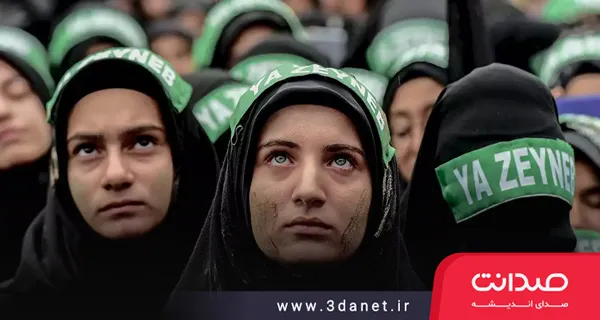
The story of Husayn ibn Ali (AS) and the event of Ashura has been narrated and interpreted in various ways. Epic and tragic narrations and emotional, historical, ethical, mystical, and political interpretations have, in different manners, examined and analyzed the nature and objectives of Husayn's (AS) action and movement, as well as its results and consequences. This plurality and multiplicity, more than being rooted in differing historical data, stems from the differences in the perspectives and concerns of the narrators and interpreters. Based on these very perspectives and concerns, historical data are selected, and certain aspects of the event are highlighted to justify and substantiate that narration and interpretation.
Religious new-thinking, as a movement that seeks an authentic and up-to-date understanding and interpretation of religion that responds to today's needs, and which has a history of nearly two centuries, bears two important missions and responsibilities in understanding and interpreting Ashura: first, criticizing distorted perceptions of Ashura, and second, explaining and correctly interpreting this important historical event, which holds a symbolic position in Shi'ism.
Regarding the first mission, it can be said that Ashura is exposed to distortion and misinterpretation from three areas: superficiality and superstition, despotism, and extremism. The situation becomes complicated when these three factors accompany one another. The efforts of religious new-thinkers, from Sayyid Jamal to Shariati and Motahhari, have always been devoted to confronting these three types of distortion.
Superficiality refers to a kind of shallow understanding of religion that is based on fatalistic presuppositions and, in understanding religion, gives credence only to the outward appearances of religious texts, particularly unreliable and invalid hadiths. This perspective, with a tragic narration of Ashura, reduces it from a model for struggling against oppression and injustice to a pretext for wailing and lamentation, and turns it into a means for overlooking and forgiving the immoral and incorrect behaviors prevalent among Shiites.
Despotism is a political structure in which important decisions ultimately revert to a single individual, who exercises his power over everyone from a supra-legal position. The supporters of despotism, whose harm to the Shiite masses is, in Naini's words, worse than the army of Yazid, make the holding of mourning ceremonies for the Master of Martyrs a tool for consolidating their own power. This current puts the horseshoe on backward and, through a kind of historical simulation, places itself in the position of Husayn and accuses its opponents of being Yazidis.
Shi'ism has experienced numerous examples of this type of distortion, of which Safavid Shi'ism is one. This experience clearly shows that the most magnificent mourning ceremonies can be held by those who not only have no relation to the ideals and creed of Husayn ibn Ali (AS), but by taking shelter in his tent, suppress the struggle against oppression and the quest for freedom.
Extremism is a current that presents a violent and radical understanding of Islam and, by delineating two fronts of truth and falsehood, places itself on the side of truth and its opponents on the front of falsehood. This current, too, by presenting a bellicose and combative image of Husayn ibn Ali, tries to justify its own violent behaviors. Without paying attention to the abundant historical data indicating Husayn ibn Ali's avoidance of battle with the army of Ibn Ziyad and his efforts to resolve the matter through peaceful means, they introduce him as a violent rebel who recognizes only the sword to achieve his goal.
By criticizing these three distorted perceptions, religious new-thinking, in the next stage, has the responsibility of presenting a correct interpretation of Ashura that can serve as a model for the contemporary life of the Shiite. Drawing boundaries with these three currents will be the first step paving the way for such an interpretation.
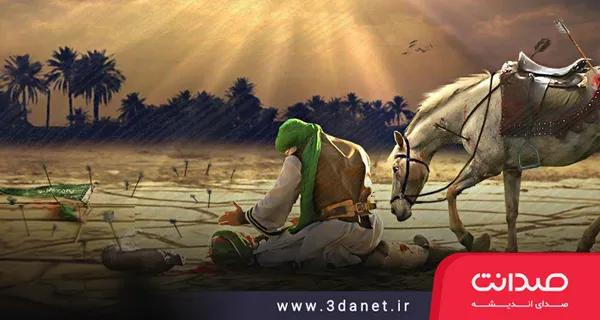
In this interpretation, with an epic narration, Husayn ibn Ali is introduced as a model for resistance and standing firm against the nascent Umayyad despotism, which sought to consolidate its foundations through the stupefaction of the masses, the corruption of the elite, and the suppression of freedom-seekers. Husayn ibn Ali heralded a kind of politics of liberation that was based on the ethics of resistance. In his plan, he considered all the rational measures necessary to prevent bloodshed, but when he was placed at the crossroads of humiliation and martyrdom, he rolled in his own blood. His call still echoes across the summit of history: Live free, O humanity, live free, O humanity
.
.
Religious New-Thinking and Ashura
Author: Ali Mirmousavi (Associate Professor of Political Science, Mofid University)
.
.
Discussion0 comments
No comments yet; let yours be the first voice.