Political Science
Lecture: Despotism, Virtue, and Ashura by Davood Feirahi
Drawing on Abd al-Rahman al-Kawakibi's The Nature of Despotism, Davoud Feirahi defines despotism as arbitrary rule over the common right and sees Imam Hussein's (PBUH) movement as a negation of the despotism that, under Muawiyah and Yazid, cloaked itself in religion and, through the concentration of powers, destroyed virtues.

In his lecture “Despotism, Virtue, and Ashura,” Dr. Davood Feirahi, drawing on Kawakibi’s book The Nature of Despotism, addressed various definitions and classifications of despotism and, while presenting the important types of moral virtues, explained the movement of Imam Hussein (AS) and his companions from the perspective of liberality and the negation of despotism.
.
Ashura is a great historical transformation and a prismatic event; whenever and wherever we probe into it, we discover new points. When we look at the year 61 AH and the event of Ashura, a strange occurrence is taking place.
Ibn Khaldun, the great Sunni thinker, says: When the dispute arose between Ali ibn Abi Talib (AS) and Muawiyah, if the story revolved around tribal partisanship, Muawiyah would be the winner. Ibn Khaldun points to a correct observation; that is, if the story revolves around tribal partisanships, Muawiyah is the winner, and as you know, after Ali (AS), Muawiyah ruled for 20 years, from 40 to 60 AH, and it is unfair to underestimate a figure like Muawiyah, because the enemies of the Commander of the Faithful and Aba Abdillah (AS) were very powerful enemies.
Muawiyah was a statesman; he knew what he was doing and also changed the course of developments in Islamic history. During Muawiyah’s era, we witness the emergence of several innovations: first, a ruler comes to power without the will of the people, which occurs for the first time in the Islamic world. Second, the ruler does not meet the conditions of governance, including justice. Third, the ruler exercises despotism. Abd al-Rahman al-Kawakibi, a thinker of the Islamic world, in his book The Nature of Despotism, defines despotism as: self-opinionatedness where a common right exists; meaning, where there is no common right, there is no despotism, such as a person and his property, but if another individual is also a partner in this property and he disregards his partner’s opinion in spending the wealth, he becomes a despot. The situation in Muawiyah’s time is like this. Despite various innovations, he exercises despotism, but this despotism does not end here; that is, it is not naked despotism, it also dons the garb of religion. He believes he acts this way because God has said so. For the first time, despotism has a halo of religion and is very dangerous. From ancient times in the Islamic world and even in Christianity, religion could never be separated from politics and the state. Even in the era of secularism and modernity, religion has not been able to separate from the state, but there is a problem; that is, wherever the state is corrupted, it automatically corrupts religion too, and wherever religion becomes sick, the state also becomes sick. These two are connected by the carotid artery. The interesting point is that despotism has also extended to religion, and for this reason, the issue becomes dangerous.
Always, wherever there is despotism, there is also a sanctified despot. It makes no difference what time it is, and that is why the action of Aba Abdillah (AS) is not an action confined to history. Wherever an event occurs, Aba Abdillah (AS) and Ashura are also present there. The important thing that is happening is that Islamic civilization is deviating more and more from its path, to the point where people say this is a religion that fosters servility and creates slaves, and is not a religion of freedom. Whereas one of the reasons for the growth of Islam was that it moved towards the needs of the rational. For example, before Islam, in financial matters, the tax was usually one-fourth. In Islam, it became one-fifth. Zakat was about one-half and one-third, which in Islam was made one-tenth; meaning they always tried to make human needs easier. The reason that Iran, with its civilization, inclined towards Islam was not simple. In this event, there was both material benefit and liberality.
Despotism was destroying virtues, two of which I will mention. In Kawakibi's literature, despotism is categorized. He says: The most severe degree of despotism, from whose evil we seek refuge in God, is the rule of an absolute individual who controls the executive power, is simultaneously the commander of the army and the religious leader; that is, when these three are combined in one place, they produce a calamity that is the most dangerous calamity. Because if these were in different centers, they could likely control each other to a great extent, but here the despotic individual commands, the religious authority justifies, and the army acts. In such an atmosphere, society has no refuge for seeking justice, and the result is nihilism, and life loses its meaning, which is the most important effect of despotism. In the literature of Mu'awiya's era, this despotism had occurred, but Mu'awiya's time differs from Yazid's time for two reasons. One is that Mu'awiya himself was intelligent and softened the despotism somewhat. The reality of the despotism was harsh, but it had a better appearance; however, after Mu'awiya, despotism shows all its harsh face, and interestingly, this harsh face occurred more in the realm of culture, poetry, and hadith; that is, in places that engage a person's mind more, and at a time when rulers would give five hundred dinars for two lines of poetry. Do not think the value of a dinar is small. Today, when the ISIS government minted a dinar, it was equivalent to 141 US dollars, and it was equivalent to the dinar of that time; that is, a dinar is worth the equivalent of seven or eight Bahar-e Azadi coins. When they gave fifty coins of that time as a reward for two lines of poetry, they spent much more for fabricating hadith, and this was the most dangerous act. They would substitute counterfeit hadith for the original in such a way that no room for doubt remained, and it became a certainty for everyone that it had flowed from the two lips of the Prophet.
Ayatollah Ahmadi Mianji has mentioned in Makatib Ahl al-Bayt that when the people of Kufa wrote to Husayn (AS), the Imam explicitly declared that he currently had no intention of any opposition. It is also recorded in history that some objections were raised, but he paid no heed to them. For example, when a large caravan from Yemen was passing through the route of Medina, the Imam (AS) ordered that the caravan be stopped and its goods distributed among the poor. There were probably two arguments in the background of the Imam's (AS) mind, which is called the hermeneutics of the text. The Imam reasoned that something would reach the poor, and Mu'awiya would probably object, opening a channel for discussion, and it would become clear where the right lies and what oppression is.
Mu'awiya's companions said, "Be harsh with Husayn (AS), for he has become bolder." Mu'awiya wrote a letter, which was his harshest letter, and said: O cousin, I heard that you stopped the caravan of Yemen. You know that this is the right of the governor. I wish you had let it reach Damascus, and I myself would have decided and given it to you, but it is good that you took it, because political occupations made me neglectful and unaware of your right.
This kind of approach was Mu'awiya's strength, which perhaps had great influence even within the Shi'a caravan. In any case, this was one of the reasons that no action was taken by the Imam during Mu'awiya's time. The second reason was that after Mu'awiya, the Umayyad camp had become divided. Mu'awiya was a person who covered up this discord; that is, he had the same strategies within the tribe as he had on this side. The Umayyads were internally splitting into the Banu Mu'awiya and the Banu Marwan. After the year 64 AH, that is, three years after the martyrdom of Imam Husayn (AS), power fell into the hands of Marwan for 88 years and left the hands of the Banu Mu'awiya. Figures like Abd al-Malik ibn Marwan and Hisham ibn Abd al-Malik came, individuals who were able to preserve the Umayyad caliphate; that is, the caliphate was disintegrating from within, and the Umayyad strategy was that if they could capture Husayn ibn Ali (AS) and make him pledge allegiance to Yazid, it would mean they had permanently marginalized the Banu Marwan. The effort to secure the Imam's (AS) allegiance was because a large part of the objections would be silenced, and Mu'awiya's lineage would continue. They also intended to at least control the Banu Hashim so that their efforts could be focused on their internal rifts. This is a significant event that has not yet been given attention in our history.
In the early Islamic period, the concept of bay‘ah (pledge of allegiance) had an interesting meaning; that is, it was not the case that a person had to either pledge allegiance to the ruler or fight him. A large segment of the people neither pledged allegiance nor fought, and this was a tradition during the time of Imam Ali (AS). In the time of the Prophet (PBUH), many individuals did not pledge allegiance to the Prophet and worked freely in Medina. In fact, one of the innovations (bid‘ah) of the Umayyads was to push the matter into the paradox of “either allegiance or war,” and it is precisely for this reason that Imam Hussein (AS) says on the day of Ashura: “They have placed me between two pressures, either the flash of the sword or allegiance.” I do not want to be placed in such a situation because I am neither a man of war nor do I wish to accept humiliation. I do not want to pledge allegiance so that I can keep this line intact, because there are free human beings in the Islamic world who, while not pledging allegiance to the government, also live freely. This is a human law; even today, if you look at some countries, you see an individual quite easily saying, “I will not do military service, I do not want to be employed by the government, and I want to work freely.” The government also has no right to force that young person, and hence they speak of voluntary military service.
This tradition existed from ancient times that whoever pledged allegiance became committed, but if someone did not pledge allegiance, no one bothered with him. In the literature of Imam Ali (AS), we also see that he says to Talha and Zubayr: “Leave others alone; you are the ones who pledged allegiance to me.” This sentence shows that there were others who had not pledged allegiance and wanted to be ordinary, free citizens.
In society, there are several virtues that are specific to humans, and when these virtues are broken, a person suffers a loss of identity. One of these very important virtues is the virtue of religion, and another is knowledge. A society in which knowledge does not grow, or is not allowed to grow, feels a sense of inferiority itself. Another virtue is ownership. A person must be able to spend and decide upon his wealth and property as he wishes.
Another virtue is majd (glory) and magnanimity; that is, a person must feel that he is free. Kawakibi says: “If you capture some animals, they kill themselves”; meaning they possess such dignity that they do not submit to captivity. A person might not leave his house for a month, but if someone tells him, “Do not leave the house for a month,” he will take offense, and this is that very free spirit and glory (majd).
Another virtue is ethics and the dimension of upbringing and progress, which are specific to humans, and we do not see these in animals; although we do see the discussion of glory and freedom in some animals. Our discussion is focused on freedom. We have always considered Aba Abdillah (AS) a free man, but we have never been able to explain what freedom means.
Majd means nobility, magnanimity, and freedom; that is, a person must respect himself and not allow anyone to humiliate him for any reason. Ethicists in the world have raised a question: which of these two desires is important? The greed to preserve life—that a person wants to preserve his life—or the greed to preserve freedom? If these two come into conflict, which one is important? Researchers believe that those who are magnanimous prefer freedom, even if they die; but those who have a slavish morality prefer life, even if they are captives.
Kawakibi believes that great people cannot abandon freedom. Based on this rule, the great leaders of the Ahl al-Bayt were excused for throwing themselves into these dangers, because, due to their being noble and free, their zeal and sense of honor cause them to choose a dignified death, and they preferred a dignified death to a life of humiliation. Kawakibi is a Sunni, but when he comes to the Ahl al-Bayt (AS), he prostrates before their dignity.
It is idiomatically said that the work of despotism is to create scorched earth; that is, to sweep away the small and great of the community alike and advance. This is the paradox of despotism, but the destiny of history is that zealous human beings resist the pressure of despotism. Perhaps these resistances do not yield results quickly, but this virtue gradually spreads through society. “Do not suppose every thicket is empty; / Perhaps a leopard lies sleeping there.”
Great human beings who resist despotism do not merely fight despotism; they negate it. There is a difference between fighting despotism and fighting the despot. If you do not understand what despotism is, when you push aside one despot, a new, fresh despot comes to power who learns from the previous collapse and employs new tricks. This is the characteristic of fighting the despot, but if we define despotism as the antithesis of liberality and virtue, when virtue flows through society, no room remains for despotism.
Kawakibi says: 1. A society that has not felt the pain of despotism with its entire being does not deserve freedom; 2. One must not fight despotism with violence; no matter how much force you have, its army is stronger, its courts are more robust, and its prisons have more locks. Despotism must be dealt with gently; that is, one must spread awareness. Awareness is the antidote to despotism. For this reason, during his despotic rule, Mu'awiya controlled pulpits, hadiths, and the pilgrimage to Mecca. One of the issues despotism has always been and remains entangled with is awareness; 3. Those who can fight despotism are those who have had a clear solution from the outset. If you do not present a clear solution in the view of society, no matter how much you fight, despotism remains standing. The intellectuals of society must have a superior alternative, so that despotism can be eradicated and cannot resist.
It is here that Aba Abd Allah (AS) emphasizes the necessity of virtue and the value of liberality. We have seen Aba Abd Allah (AS) either solely as a guerrilla who risked his life, or, under the influence of leftist ideologies, we imagined that Aba Abd Allah (AS) was a sacred Che Guevara! We have even seen it somewhere that Aba Abd Allah (AS) was looking for an excuse to leave the field and avoid conflict; but there is a third theory: Aba Abd Allah (AS) seeks virtue, and a virtuous person does not pledge allegiance to such individuals, but is not necessarily seeking war either. He seeks a solution; he asks, where is zeal? Where is liberality?
In contrast to liberality, honor, or glory, we have a term called tamajjud; that is, fabricated ranks and false, puffed-up liberality. Despotic governments, in order to undermine great personalities, try to create counterfeit personalities and, through money and media, declare them to be the reference for the youth and influential figures of society. This is idiomatically called tamajjud; that is, the counterfeit of noble human beings. This phenomenon, which occurs in modern societies, existed back then as well. Despotism creates a counterfeit opposition so that people will say, if this is the opposition, woe to the state of opposition! Kawakibi believes that in contrast to glory, there is something called tamajjud. Tamajjud means fabricated and counterfeit poles and centers that emerge through money and the overt and covert support of despotism. This is so that amidst the quarrel and opposition, the essence of the quarrel is lost, and society does not know whom to trust. When repression is created, society needs honest loudspeakers it can trust, but these counterfeit poles strip this protest of its honesty and push society toward a kind of nihilism. In many places, we see counterfeit parties being established. Look at the Rastakhiz Party and other parties of the Pahlavi era; such stratagems have existed before. A quarrel is created whose end is also unclear, but a wise person, even without political literacy or awareness, looking at the affair, knows it is nothing more than a simple game and trick, and loses hope for change. Such issues also occurred during the time of Mu'awiya, and such a situation existed.
The despot, in the name of serving religion, creates counterfeit centers and personalities to deceive the people. He presents national heroes and those who ostensibly defend progress and support the interests of society in a counterfeit form. One of the tricks of despotism is to interpret any criticism as endangering national security and to consider critics as the enemy's fifth column. This accusation was also leveled against Husayn ibn Ali (AS); meaning that these accusations are the common currency of the stratagems of despotism. During Mu'awiya's time, whenever anyone stirred, they would say the Turks and the Romans want to attack and are sowing discord among the people. In the name of unity, any criticism was prevented. During Mu'awiya's time and after, we cannot find a single slogan that does not have a verse from the Quran or a hadith behind it! They would even document their slogans with Quranic verses and hadiths.
We can view Aba Abd Allah (AS) in this way: neither a guerrilla seeking to overthrow, nor one resigned to tyranny. Great human beings possess immense value and do not pledge allegiance at any price, but this does not necessarily mean war either. We usually summarize the story of Ashura as follows: it begins around 9 a.m. and ends around 4 p.m. The entire story of Ashura lasts about seven hours, but what issue was expressed and made manifest in these seven hours that is repeated every year?
First, I will recount the event that occurred on the day of Ashura. It is said that Aba Abd Allah (AS) had instructed them on the eve of Ashura to worship, to recite invocations, to perform the ritual bath, and other matters that have been narrated from him. Despite all this, when the morning of Ashura arrives, Aba Abd Allah sets out towards the army. The narration states that Aba Abd Allah (AS) mounted a she-camel or a horse! But my analysis is that it was not a horse; the hermeneutics of the text indicate this. There is a difference between a she-camel and a horse. In Arab tradition, if someone mounted a she-camel, it meant they did not intend to fight, but someone who mounted a horse meant they intended to fight. Husayn (AS) mounted a she-camel and did not intend to fight. In this discussion, my reliance is on the Luhuf of Ibn Tawus, because greater value has usually been accorded to this history or maqtal of the Allamah, and it is believed to be the most authentic, or among the most authentic, of the maqtals. He says: Imam Husayn mounted his she-camel and stood alone before the enemy. Both the Arabs understand that one should not shoot arrows at someone who has come on a she-camel, and Aba Abd Allah (AS) knows that if he goes forth on a she-camel, he has not declared war and there is no war. According to the narration, when he goes before the enemy army, he calls them to silence; meaning they too have accepted that there is no war. He called everyone to silence and then praised God. The Imam says, do you know me? I am the son of your Prophet's daughter, and he asks, why have you come here? If you are seeking war, I do not desire war. When the Imam raises these points, some of them ask him, then why have you come here? The Imam throws the letters, one by one or in bundles, towards the army and says, I have come at your invitation, not for war! Some deny it, and the narration states that he names several of those who had written to him. Individuals who were even among the commanders of Umar ibn Sa'd's army.
The Imam says, you wrote me letters and invited me to come here. One of these individuals says, pledge allegiance to Yazid and settle the matter! You who say you have not come for war, then pledge allegiance. The Imam becomes agitated. When a virtuous and free man is told, since you do not intend to fight, then pledge allegiance to me, he becomes agitated and says, they have put me in a vise! Between the flash of the sword and the humiliation of allegiance, "Hayhat minna al-dhilla"! That path is closed, and it is impossible for me to go that way. Imam Husayn (AS) does not say I want to fight; he says I will not pledge allegiance. Besides, if I pledge allegiance, what will the world say? God is not pleased that I should do this! The Prophet of God is not pleased either; no believer is pleased that anyone should accept humiliation. What will all the rational people who have pure and sound hearts say to me?
The Imam elevates and universalizes the issue, and then asks, will not those of pure disposition ask why you have taken honor to the sacrificial altar of Yazid? After all, there is a tomorrow, and future generations will ask why the son of the Prophet's daughter submitted to humiliation? What will those who hold their heads high say to me? What would those who have been killed in the path of values say if Husayn submitted to such an allegiance? What will those who possess a zealous spirit say? Those who possess a zealous spirit will reproach me. I cannot consent to obedience to the lowly and the vile, those who have killed free men before me! After all, there is a Resurrection; if I go there, will not Hujr ibn Adi, Abu Dharr, and Malik al-Ashtar say, why did you submit to such humiliation? After mentioning several sentences, the Imam says, yes, all do not prefer obedience to the base over martyrdom! Verily, I, with this family of mine—several women and daughters and forty horsemen and nearly a hundred foot soldiers, to whom he gestures—with this small number of my companions, will never prefer humiliation over martyrdom.
When His Holiness saw that no answer came, he said, bring my horse. He sees that a warlike atmosphere has prevailed and he must go to the battlefield for martyrdom, and until the end of this event on this day, he murmurs under his breath that dying is better than mounting the nag of allegiance. "Dying is better than riding upon disgrace, and disgrace is better than entering the Fire." It is better for me to suffer torment here than to be ashamed before the Prophet. He does not beg for his life from Umar ibn Sa'd. Rumi also says:
If death be a man, let him come before me, so I may embrace him tightly, close and fast.
I shall wrest from him a soul colorless and scentless, and he shall take from me a cloak of many colors.
The Umayyad narrator recounts and says that with every moment, this man's radiance increased. Hafez says:
I asked him, in the very midst of union, what is this lament and cry? He said, the Beloved's splendor kept us occupied in this task.
If the Friend did not sit with us, there is no cause for protest; he was a prosperous king and felt shame at beggary.
Our need and coquetry find no purchase with the beauty of the Friend; blessed is he who, from the graceful ones, enjoyed good fortune.
Arise, let us scatter our souls upon the brush of that painter, who wrought all these wondrous forms in the compass's turning.
The narrator of the Ashura event says thus: When they severed the head of Aba Abdillah (AS), I still imagined he was reciting the Quran, and I thought the sun was atop the spear, and for this reason, the closer this head on the spear came to the army, the more anxiety I felt. Perhaps this is why, when they insulted Lady Zainab (SA) in the enemy's assembly and said, how did you see Karbala? She replied, "I saw nothing but beauty."
.
.
Audio of the lecture Despotism, Virtue, and Ashura by Davood Feirahi
.
.
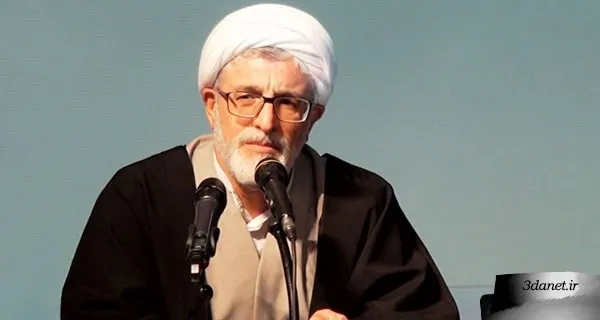
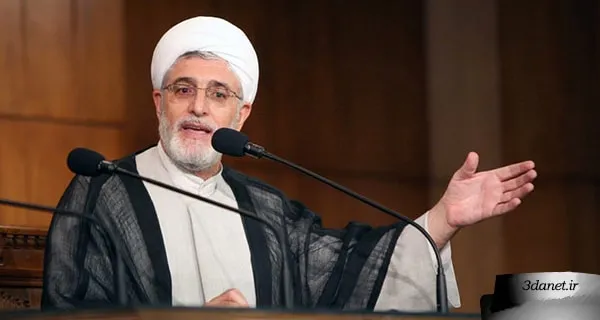
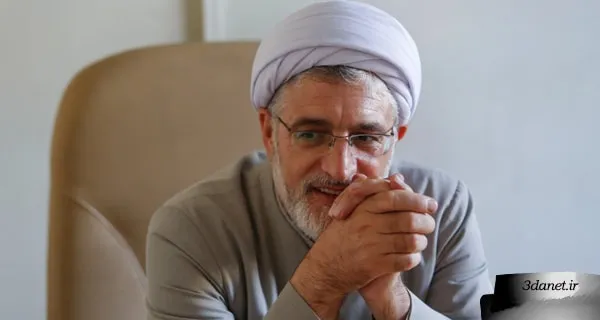
Speaker: Hujjat al-Islam Dr. Davood Feirahi
Lecture Title: Despotism, Virtue, and Ashura
Isfahan, Ashura 94
.
* With thanks to Mr. Mehdi Fouladgar for sending the audio of the lecture

Discussion3 comments
از اینکه دانشمندان در اقلیت هستند نمیتوان نتیجه گرفت که دانش بد است و نمیتوان آنرا برخلاف عدالت دانست.
موضوع اصلی هدایت مردم تمام زمانها ونجات آنها از گمراهی وفساد، واتمام حجت بر همه است.استبداد شخصی فقط یک نوع ازفساد است. ان الحسین مصباح الهدی و سفینه النجاه
یعنی فقط 150 میلیون شیعه در کشتی سوارند و الباقی 7 میلیارد نفر دیگر در دریای گمراهی سرگردانند و در تلاش بیهوده برای رستگاری؟؟؟ در حالیکه عمده این 150 میلیون نفر،چون در خانواده های شیعه به دنیا آمدند،بر این مذهب هستند.واقعا که چه خدای عادلی!!!!