Political Science
Seyed Ali Mahmoudi's essay “Davoud Feirahi: In the Struggle between Political Jurisprudence and Modernity”
Davoud Feirahi was a scholar of the origins of Islam and constitutionalism who emphasized freedom, justice, and the rule of law. While praising his character, Seyyed Ali Mahmoudi examines the relationship between Feirahi's thought and Naini's theory, and the boundary between political jurisprudence and democracy.
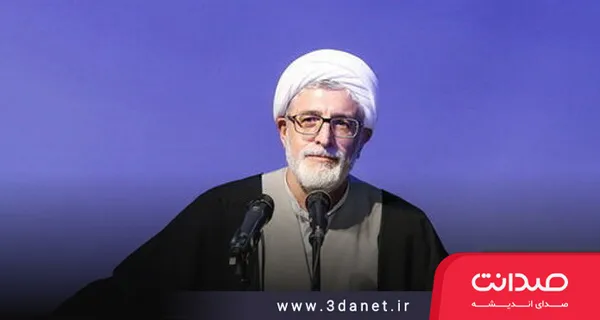
Davoud Feirahi: In the Struggle between Political Jurisprudence and Modernity
Seyed Ali Mahmoudi | Political Science Researcher and University Professor
Source of Publication: Mashq-e No Website | Publication Date: 14 November 2020
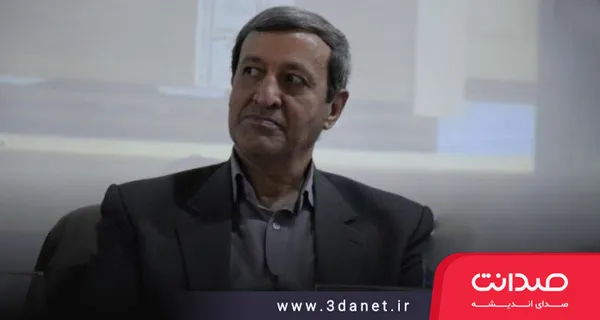
Davoud Feirahi (1964–2020), a distinguished professor at the University of Tehran and a religious scholar, has departed from among us; a departure that has set hearts ablaze and deepened sorrows. He was a good-natured, pious, wise, and inquisitive wayfarer. A friend whose defining trait was kindness. On the third of Aban, a friend informed me of his illness. Moments later, I sent him a message: “Old and intimate friend,” and wished him a swift recovery, that “your body may never need the delicate care of physicians…” and “may you always be healthy and dynamic.” Days passed in patience, waiting, and hope, until the dawn of the twenty-first of Aban, when news arrived that he had shed the cage of the body and set out for the eternal abode. Who was Feirahi, how did he live, what did he do, and what path did he traverse?
1) In Feirahi’s character, there was a charm, a spark, and a flame that shone unpretentiously and generously upon friend, acquaintance, and stranger alike, bringing joy and warmth to souls. In his speech, conduct, and company, he was unadorned, unassuming, kind, and hopeful. You could see the embodiment of spiritual purity in his gaze and countenance. He was a blend of nobility, honesty, and humility. It was as if his prayer had been answered: “O God, purify me and purify my heart…” In the foul world of deals, timeserving, duplicity, profiteering, and opportunism, he was an unassuming, penniless striver who, indifferent to the three-headed hag with a thousand suitors of gold, force, and deceit, went his own way and did his own work; a responsible work that is organized in his curricular and research plans.
2) Feirahi was a researcher of origins. He explored and studied the religion of Islam with a focus on the history of early Islam. The eras of the Prophet, Imam Ali, and Imam Hussein, from a social and political perspective, were at the center of his Islamic studies and historical research, casting light into the dark corners of some of the political developments of early Islam. This enlightenment was very precise, measured, and instructive. In Iranian history, Feirahi also looked primarily to the dawn of the Constitutional Revolution; that is, the era when Iran stepped into the modern world. In his research, he based his work on the historical documents and records of this period and intelligently transcended politicized categorizations and the biases of this person or that.
Feirahi, as his works attest, had understood where the two main currents of the constitutional movement—namely “Constitutionalist” and “Sharia-based”—each began and where they are heading. For him, freedom, justice, and the rule of law were three fundamental pillars. Therefore, he was not in agreement or sympathy with the views of Fazlollah Nouri. Among the religious scholars, he sought the authentic, progressive, and pioneering current of the constitutional movement more in the thoughts of Mohammad Kazem Khorasani and Mohammad Hossein Gharavi Naini. His affinity for Naini is particularly evident in the book The Threshold of Modernity: A Commentary on Tanbih al-Umma wa Tanzih al-Milla (2015). These two currents persisted in Iranian history after the Constitutional Revolution until reaching the Iranian Revolution. The two tendencies of Constitutionalist and Sharia-based still continue under other names in contemporary Iran, with the emphasis that the intellectual tendency of Fazlollah Nouri took on an institutionalized form in the era that began with the revolution in Iran. Thus, Feirahi, who sympathized with the constitutionalist ideas of religious scholars, endeavored to examine the logic and outcomes of these ideas in his research and to reflect them in his books, articles, and discourses.
Regardless of Feirahi’s view of the two aforementioned currents, Fazlollah Nouri’s record in theory and practice is such that it is as if his opponents, flustered and hurried, take refuge in Naini and his treatise with a sanitary gaze, so that in its vicinity they might find safety and comfort! The notion that Naini’s jurisprudential theory can serve as the foundation for a democracy-based government is, in my belief, a misreading of the treatise Tanbih al-Umma wa Tanzih al-Milla. In this treatise, although he defends “limited government” (within the framework of law) against “absolute government,” he has, based on his jurisprudential theory, placed the main reins of the three branches—legislative, judicial, and executive—in the hands of the jurists; a matter that, for reasons unknown, is often overlooked in Iran. Naini explicitly considers governance during the occultation of the Twelfth Imam to belong to the jurists as his deputies. What Naini presents in his treatise in criticism and rejection of “religious despotism” is largely directed at his explicit criticisms of the thoughts and actions of Fazlollah Nouri in accompanying, encouraging, and collaborating with Mohammad Ali Shah Qajar in suppressing the constitutionalists through the use of firearms. The negation of religious despotism does not signify Naini’s belief in popular sovereignty and the rule of law. In the book Iranian New Thinkers, I have endeavored, by citing the text of Naini’s treatise, to demonstrate his theory, which is founded, directly or through deputyship, on the governance of the jurists.[1] Therefore, the views of Nouri and Naini regarding the main pillars of government (I emphasize: the main pillars of government) cannot be separated from one another. These two streams ultimately join a common waterway. Thus, Feirahi’s political jurisprudence is, at best, an output of Naini’s jurisprudential theory; a theory whose account is separate from popular sovereignty and a system of government based on democracy. What is useful from the heritage of jurisprudence in social and political affairs is that it be utilized, alongside the social contract, traditions, prior statutory laws, and the legislative experience of other countries, as one of the sources of law.[2]
3) Feirahi was a professor and researcher of political thought. Although he closely observed politics and the institution of government in Iran, he did not enter government positions. My belief is that he chose intellectual work and theoretical reflections because he thought that today’s Iran has not yet properly traversed its path in the theory of the state, and until this path reaches its true destination, Iran will not find proper order. As previously mentioned, the focus of Feirahi’s intellectual project was on freedom, justice, and the rule of law; with the emphasis that political jurisprudence lay at the heart of his reflections. Thus it was that, in the words of Sohrab Sepehri, he watched the “train of politics” go by “how empty.” Presumably, accompanying this train was the theory of the state, whose grounds and preliminaries Feirahi addressed in his works from a jurisprudential perspective, so that perhaps in the end, the “train of illumination” might be set in motion.[3]
4) Feirahi’s primary habitat was the university, although he had studied and lived for years in Qom and resided in that city until the end of his life. In Qom, he would gather with his like-minded seminary colleagues to discuss and engage in dialogue. This circle was both a convivial gathering and a forum for questions, concerns, and seeking solutions in religious, cultural, and social affairs. Parallel to his teaching and research work, Feirahi was an active and diligent participant in Iran’s public sphere. His works were published gradually over the past three decades. In hundreds of conferences, lectures, and dialogues, he presented the fruits of his research to society. Accordingly, he did not confine himself to academic work and disseminated his learnings and insights in the public sphere through civil institutions, in order to contribute his share to liberal, justice-seeking endeavors and the formation of a law-based government. On one hand, he sought to refine Islamic texts and promote religious enlightenment; on the other, he contemplated Iran’s present and future, aiming to contribute to the enrichment of the theoretical substance of political thought in Iran. Based on his works, Feirahi was thus a transformationist, advocating change and reform in the structure of Iran’s governmental system through a gradual process.
5) Drawing on the jurisprudential and political foundations of the Islamic and modern eras that he possessed, Feirahi centered his research on political jurisprudence concerning governance. Along this path, he traversed several waystations and presented his findings. It is now fitting for scholars, and especially the students of this academic figure, to continue along the path he opened, traversing the waystations ahead with new and critical research, with the aim of providing Iranians with the necessary theoretical foundations for formulating a theory of the state, as befits the modern era alongside an ethical and faith-based life.
I extend my condolences on the passing of this thoughtful and erudite professor to his respected wife and dear children, his friends, colleagues, the nation’s academic community, and his students. May the name, memory, and works of Davoud Feirahi endure in the realms of thought, religion, and politics.
.
.
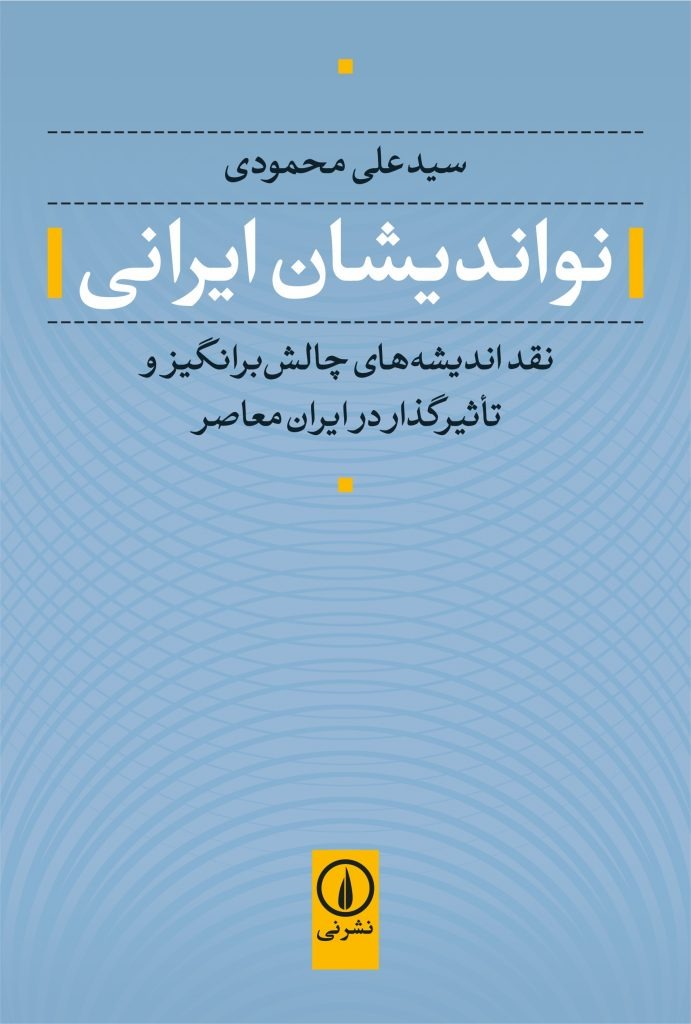
[1] Mahmoudi, Seyed Ali (2019), Iranian New Thinkers: A Critique of Challenging and Influential Ideas in Contemporary Iran, Chapter Three: “The Theory of ‘Constrained Government’ of Mohammad Hossein Naini and the Longstanding Challenge of Democracy,” Fifth Edition, Tehran, Ney Publishing.
[2] On the relationship between jurisprudence and law, see: Mahmoudi, Seyed Ali (2019), “The Constitution, an Unfinished Text: A Critique of the Rights of the Nation and Religious Constraints in the Constitution of the Islamic Republic of Iran,” Iran-e Farda Monthly, No. 48, April-May, pp. 53-58. And Mahmoudi, Seyed Ali (2019), “Assessing the Relationship between Sharia and Law, and Its Reflection in the Constitution of the Islamic Republic of Iran,” [Forthcoming].
[3] Sepehri, Sohrab (1983), Hasht Ketab (Eight Books), Tehran, Tahouri Library, from the poem “The Sound of Water’s Footsteps”:
I saw a train carrying light.
I saw a train carrying jurisprudence.
And how heavily it moved.
I saw a train carrying politics
And how empty it moved…
.
.

Discussion0 comments
No comments yet; let yours be the first voice.