اندیشهفلسفهخردگفتگوحکمتمعناپرسشفرهنگ
Political Science
The Relationship Between Liberal Democracy and a Life of Faith and Ethics, Seyed Ali Mahmoudi
Liberal democracy has sought to remedy the 'tyranny of the majority.' Religious fundamentalism is incompatible, but religious modernism can find agreement; a lecture by Ali Mahmoudi; the relationship between a life of faith and democracy requires 'conscious adaptation.'
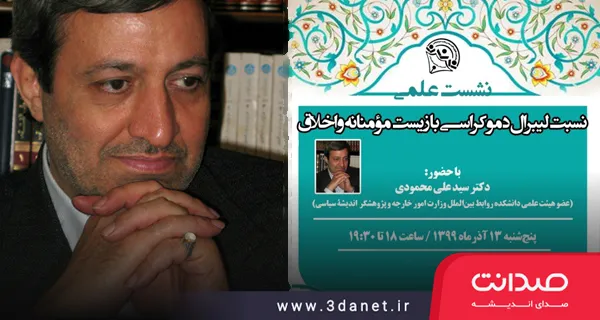
Classical democracy is the simple form of democracy based on majority rule. The historical experience of this type of democracy showed that the rise of the majority can lead to the "tyranny of the majority" and the violation of minority rights.
Liberal democracy was a measure that sought to remedy the major flaw of democracy by providing mechanisms.
The fundamental pillars of liberal democracy are: the human being and their individual personhood, freedom, equality, pluralism, universalism, human rights, the choice of conceptions of the good and lifestyle by individuals, state neutrality regarding individual choices as citizenship rights, the right to self-defense, adherence to pacts and covenants, non-interference in the affairs of other individuals, tolerance and forbearance, popular sovereignty, state neutrality, transparency, state accountability, free elections, separation of powers, and the independence of the judiciary.
In the contemporary era, liberalism constitutes the content and the center of gravity of democracy as its most complete possible form.
Religious fundamentalism and traditionalism are incompatible with liberal democracy, but from the perspective of religious modernism, one can reach an agreement with most of the teachings of liberal democracy.
In some instances, liberal democracy conflicts with faithful religiosity. In the advanced democracies of a number of states, some teachings of liberal democracy have not been accepted.
We in Iran need a "conscious adaptation" of liberal democracy (as with any school, doctrine, and mechanism). This method is universal and common in our time.
Lecture Topics:
What are the differences between classical democracy and liberal democracy?
What are the foundations and principles of liberalism?
What is the "tyranny of the majority" and which political philosophers introduced it?
Through what mechanisms does liberal democracy curb the "tyranny of the majority"?
Why and how does liberal democracy defend the "priority of the right over the good"?
Are the principles of liberal democracy compatible with a life of faith and ethics?
Which reading of religion can achieve compatibility with liberal democracy?
Can liberal democracy be fully harmonized with religion and a life of faith?
.
.
Audio file of this session
.
.
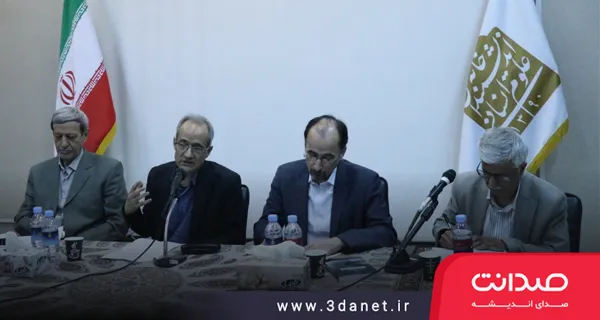
Lecture by Seyed Ali Mahmoudi at the session of the "Political Science Student Association of Allameh Tabataba'i University", with Q&A
Date: December 3, 2020
.
.

Discussion0 comments
No comments yet; let yours be the first voice.