Political Science
“The Relation Between Law and Politics”: Book Launch and Discussion of The Political Concept of Law
“Public law must be studied within the political tradition,” and no deep theorizing has taken place in Iranian public law; report on the “Law and Politics” session and the unveiling of the book The Political Concept of Law.



Mohammad Rasekh
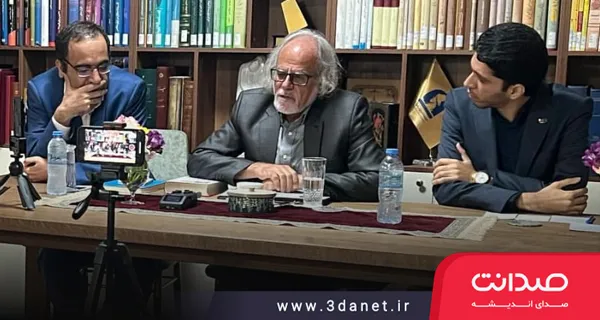
SpeakerAccording to the public relations office of the House of Humanities Thinkers, the meeting “The Relation Between Law and Politics,” featuring the introduction and unveiling of the book The Political Concept of Law, was held through the efforts of the Law and Political Science groups of the House of Humanities Thinkers, in collaboration with the Iranian Association for Legal Studies, on Sunday, April 28, 2024, in the Hafez Hall of the House of Humanities Thinkers. Abolfazl Delavari served as the secretary of this meeting. A summary of the report on this meeting follows.
Watch the video of this meeting on Aparat
Download the audio of this meeting
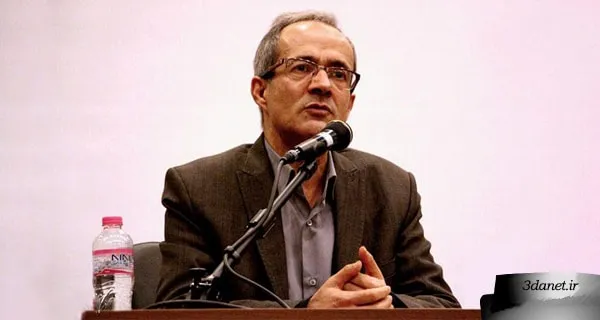
Mohammad Rasekh: We have not been able to engage in deep theorizing in the field of public law
Mohammad Rasekh, the translator of the book The Political Concept of Law, stated: In the introduction to the first book I translated by Martin Loughlin, I pointed out that we are at least 250 years behind Europe conceptually. The ideas raised in Europe are not directly applicable in Iran. In the book The Political Concept of Law, the author has a concern, such that he wants to reverse the extreme legalistic view and, instead of starting from legal norms, begin from the subject of law. The subject of public law is governance and the state. His work is, in one sense, realism and, in another sense, phenomenology. Loughlin has a historical inclination. He added: What the author frequently repeats is that law is an aspect of a human experience, and the human experience that lies at the center of law is the political. But the question of what the political is, is a question that must be discussed. We have not been able to engage in deep theorizing in the field of public law. Loughlin wants to bring the subject into the concept. We have learned from him about the birth of the people. We have not had a birth of the people in Iran. The author speaks of a tradition that discusses matters after the birth of the people.
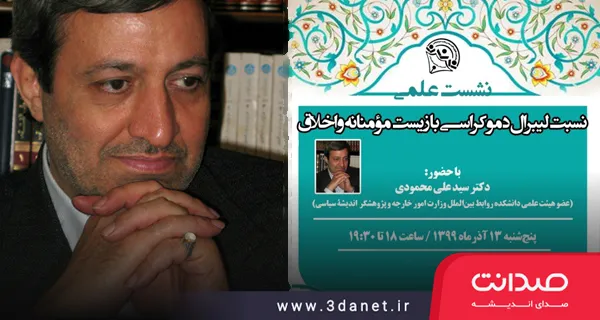
Mahnaz Bayat Komitaki: Public law must be studied within the political tradition
Mahnaz Bayat Komitaki, a university professor, stated: I have been familiar with the writings of the author of this book for a relatively long time. His thought contains many insights for public law researchers. His fundamental question is the question of the nature of public law. He says that public law is not well understood unless its independence and self-sufficiency are well understood. She added: The author has presented a categorization of legal philosophy theories. The first category is positivist legal theory. The second category is normative anti-positivist theory, and the third category is the political theory of law, which is depicted in the book The Political Concept of Law. In his view, political legal theory is both opposed to positivism and anti-positivism. She continued: The root of the problem stems from the identity of the modern state. With the establishment of the modern state, public law discourse has faced a dichotomy. Public law must be considered as a dimension of the political tradition. Public law must be studied within the political tradition. Public law has not been formed outside the political system.
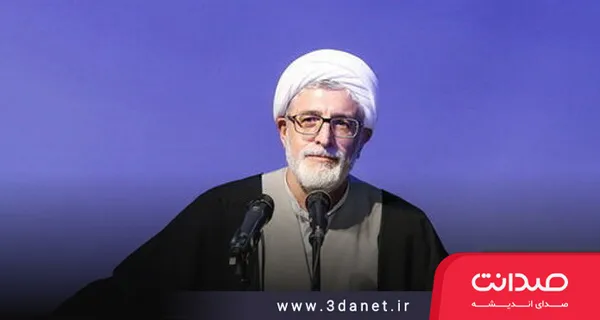
Hassan Vakilian: Translating Loughlin’s books requires peripheral knowledge
Hassan Vakilian, a university professor, stated: I congratulate the esteemed translator of the book, who has kept the torch of translation alight in the field of law in the country. Fundamental points and basic concepts are expressed in this book. Translating Loughlin's books requires peripheral knowledge. I would like to express the position of this work in our own temporal context, especially in public law. We have not had a correct understanding of the concepts of governance, and this can be inferred from our constitution. This work can express the relationship that exists between the political and the legal, as well as the balance that must occur between theory and practice. We read these thoughts, but it is we who must act upon emphasizing these values. He added: Political scientists have always been ahead of legal scholars. In comparative constitutional law, political scientists have paved the way. In Iran, not much interaction is seen between political scientists and legal scholars, and interactions must increase. Another significance of this book lies in the poverty of political-legal theory in Iran. We have little benefit from fundamental concepts. Such works can help strengthen our minds regarding external reality. He continued: Regarding the translation of the book, there are some concepts in law that are adrift, such as the concept of state and government. I think in some parts of the book, these have been used interchangeably. It would have been better if some of the book's concepts were explained in footnotes.
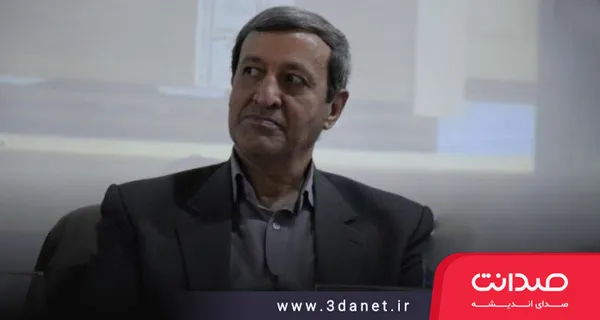
Mohammad Javad Gholamreza Kashi: The book "The Political Concept of Law" makes an important contribution to the field of political thought
Mohammad Javad Gholamreza Kashi, a university professor, stated: Reading this work was very inspiring for me, and I congratulate the translator. This book makes an important contribution to the field of political thought. But the question arises: where does this book stand in today's Iranian society? A contentious debate has been ongoing over the constitution for three decades. Some say, rely on this very constitution to preserve the status quo. Another group says this constitution must be dissolved or another law written. The third group are the proponents of interpretation, who say that within the framework of this very constitution, provided it is interpreted more correctly, we can make any desired change. Reading this book helped me understand that all three positions are irrelevant. He added: The author seems to ask these three groups: first, answer whether the constitution relies on itself or arises from elsewhere? Did the people do this in a normal situation? Was the people's will, based on the founding of something new, a single-voiced will or a matter of conflict? Was the constitution that was approved the end of conflicts? The constitution is merely the juridified language of the people's will for the founding and realization of the general will. He continued: For over a hundred years, we have lived under the influence of ideologies, each of which has created an obligated will, and an obligated will does not seek founding.
Seyed Ali Mahmoudi: A conclusion is missing at the end of the book
Seyed Ali Mahmoudi, a university professor, stated: I congratulate the translator of the book, who, over the past decades up to the present day, has made valuable efforts to transmit the knowledge of public law. Knowledge does not belong to any particular country; it is a universal matter. There are some points regarding this book. The priority of organization over moral and legal principles is raised. The question that arises is: at what point in this process do we stop and discuss the theory of political law? The next discussion concerns the rejection of universal values. Here, a political process must exist in which values follow order. A kind of fluidity is observed here, and it is unclear what kind of dwelling it provides for us. He added: When norms are discussed in the book, the author is expected to raise a discussion among ethical schools as to which ethical school he has in mind. One part of the book reminded me of John Rawls's theory of political liberalism. Rawls finds the solution in public interests and public law. Of course, he proposes the two principles of liberty and equality as principles of justice. Rawls and Kant believe that a revolution occurs; when the revolution triumphs, a new assembly drafts the constitution. They say the constitution must be drafted in a situation where wise individuals draft it based on the will and desire of the people. The law must distance itself from any political waves, influence peddling, and revolutionary fervor. Both in the Constitutional Revolution constitution and in the Constitution of the Islamic Republic, we have witnessed the challenge of internal powers. He continued: Regarding the structure of the book, I think a conclusion is missing at the end of the book. It would also be better to provide explanations for some of the concepts.

Discussion0 comments
No comments yet; let yours be the first voice.