Philosophy
Seyed Ali Mahmoudi's Lecture: “Kant, Rationality, Enlightenment, and Iran Today”
Seyyed Ali Mahmoudi, examining Iran’s relationship with the Enlightenment, stresses the need to emerge from “immaturity” and to employ reason in shaping one’s destiny; he views the constitution as civil rather than revolutionary, and rationality as the pivot of policymaking.
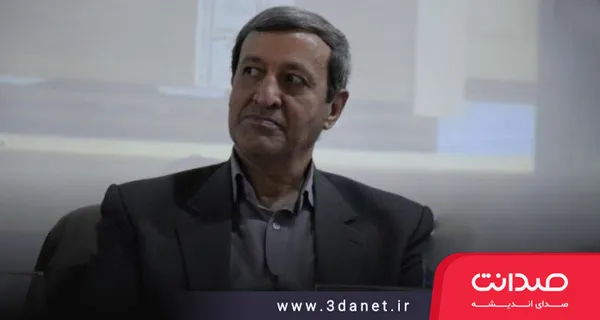
Seyed Ali Mahmoudi's Lecture with Q&A: “Kant, Rationality, Enlightenment, and Iran Today”
Seyed Ali Mahmoudi is an Iranian researcher and professor at the School of International Relations. His works primarily focus on the critique of modern political thought in Iran and the examination of Kant's ideas.
Organizer: Iranian Institute of Philosophy (Summer School)
Date: September 12, 2022
Lecture Topics:
1) What is Enlightenment? What are the foundations of the Enlightenment? Why does the limitation of human knowledge lead to tolerance and forbearance? What place do freedom, justice, and human rights hold in the Enlightenment?
2) In Kant's view, revolution is passionate, motivating, and inspiring, but the reform of the mode of thinking does not arise from revolution. Revolution can be the source of many transformations, but with the collapse of the old order, a new government is founded on the basis of a “constitution.” The new constitution has a civil nature and literature, not a revolutionary one; meaning it is not a combination of civil and revolutionary propositions. Otherwise, it faces two fundamental problems: first, the contradiction between the “civil approach”—which is of a legal and juridical nature—and the “revolutionary approach”; second (and consequently), conflict and strife in the realm of execution and in the field of practice.
3) During the European Enlightenment, philosophers and theologians were accused of “licentiousness” by despots for their advocacy of freedom. In Iran during the Reform era, we witnessed the same opportunistic and destructive method from the authoritarians.
4) The philosophers and theologians of the Enlightenment were not anti-religion. They believed in God and religion and advocated for them, but they were in challenge and conflict with the Christian Church as an institution of “religious despotism.” They believed in a connection between “religion and politics,” but believed in the separation of the “institution of religion and the state.”
5) Kant's essay on Enlightenment carried the message that humanity must emerge from “immaturity” and, instead of following the masters of politics, wealth, and religion, determine its own destiny autonomously by utilizing human reason.
6) “Development” has scientific, practical, and calculable definitions and indicators, and is therefore a universal concept and mechanism accepted by the United Nations. In contrast, “growth” lacks a precise, practical, and calculable scientific definition for determining the degree of development of countries.
7) The fundamental question is: what is the relationship of Iran today with the Enlightenment? Is the human being in Iran accepted as an “inherent end in itself”? Have freedom, justice, and human rights been realized there? Has tolerance and forbearance found its way into the mode of thinking, character, and behavior of the rulers and citizens? In Iran, has “rationality,” as the center of gravity of the Enlightenment, become the basis and criterion for drafting laws, public policymaking, planning, and implementation towards balanced and sustainable development?
.
.
Watch the video on YouTube
Watch the video on Aparat
.
.



Discussion0 comments
No comments yet; let yours be the first voice.