Philosophy
Nezam Bahrami Komeil's essay 'Ernst Cassirer, Yadollah Moqan, and the murmur of the silent current of Enlightenment in Iran'
Through his translations of Cassirer, Yadollah Mowqen demonstrated that Enlightenment values are the only way to counter dictatorship, and that Iranian society's compatibility with these values stands in contrast to the leftist and religious intellectual currents that marginalized freedom and democracy after the revolution.
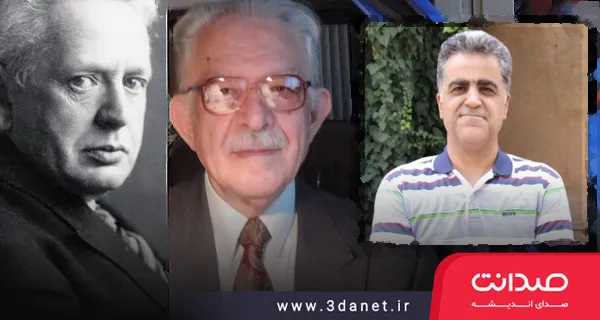
Ernst Cassirer, Yadollah Moqan, and the murmur of the silent current of Enlightenment in Iran
Nezam Bahrami Komeil (Philosophy Researcher)
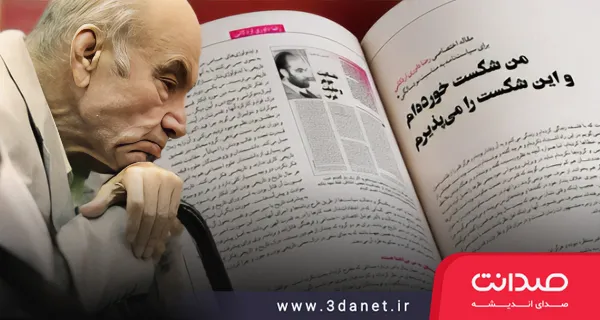
Published in Qalamyaran Magazine, Issue 24, pages 24-32
Editorial Note
In Iran, it is difficult to speak of Ernst Cassirer without mentioning the name of Professor Yadollah Moqan. By translating some of Cassirer's important works into Persian and also writing a book about him, he demonstrated that modernity and Enlightenment values—democracy, human rights, freedom, pluralism, and so on—are the only way to confront dictatorship. Cassirer had warned of this Enlightenment possibility for confronting dictatorship before the outbreak of the Second World War, but the submersion of German intellectuals in various left and right ideologies and the attribution of all the weaknesses and evils of modern society to the capitalist system and, worse, to modernity, caused intellectuals' eyes to open to this deterrent possibility far too late. Cassirer also showed that culture can be considered the most important factor of change, contrary to Marxists who regarded it merely as a tool of the bourgeoisie for domination. This article attempts to determine the degree of compatibility of Iranian society with Enlightenment values, in comparison with the ideological values particularly advanced by leftist intellectuals. Furthermore, by emphasizing certain concepts and theories of Ernst Cassirer and Lucien Lévy-Bruhl, it seeks to ascertain their efficacy in posing and solving the problems of Iranian society. The reader will judge for themselves which group among Iranian intellectuals—Marxists and liberals—has prioritized the real and actual problems of Iranian society—and not abstract ideologies—in proposing and disseminating concepts and theories, and also, in an era when being secular, liberal, democrat, and humanist was an insult, who undertook the defense of these, as well as the defense of science, freedom, democracy, and individual rights.
Introduction: The Fourth Current of Enlightenment versus the Three Currents of Marxism, Religious Intellectualism, and Anti-Modernity in Iran
The performance of the three intellectual currents of the left, religious intellectualism, and the anti-modernity and anti-rationalist right after the 1979 Revolution shows that each of these three currents has, in its own way, marginalized the goals and values of modernity and the Enlightenment such as freedom, autonomy, the general will, democracy, critical reason, pluralism, civil rights, and secularism, and has caused their weakening.
1) The leftist current, which had raised the banner of struggle against capitalism and American imperialism before the victory of the 1979 Revolution, added the struggle against liberalism to its goals and slogans after the revolution, in addition to its previous objectives. The struggle against liberalism caused the leftist current to downplay issues such as freedom, democracy, human rights, and even secularism, and to place its main focus on the destruction of capitalism and liberalism. Especially after the revolution, issues such as freedom of expression, media, and parties, humanism, democracy, and civil society were absent from this current's discourse. The leftist current was not only unconcerned with civil rights, tolerance, and pluralism, but by promoting violence and revolutionism, labeling moderate and freedom-seeking domestic currents as liberal, and defining America as the sole enemy of the world's exploited, it paved the way for the occupation of the American embassy and the resignation of the interim government—which the Iranian left considered a symbol of liberalism.
From the early 2010s onwards, the leftist current within Iran, by taking a stance against "neoliberalism," followed the same path that their predecessors had taken before the revolution in their opposition to "liberalism." The new leftist current in Iran, like the old left, never endeavored to understand the real problems of Iranian society, and even if, unlike their predecessors, they were not obedient to Moscow—since there was no longer a Moscow, as the Soviet Union had collapsed—at best, they merely repeated the same analyses and prescriptions of the global left. This current's critique of neoliberalism not only did not help to expand justice and weaken the inequalities resulting from the logic of extreme capitalism, but by shifting the locus of conflict and highlighting the neoliberalism/non-neoliberalism divide, it unconsciously diminished the main divide in society, namely the contradiction between the desire for freedom and democracy and despotism and totalitarianism.
Even if we optimistically assume that the goal of the early-revolutionary left in raising the slogan of combating liberalism was to reduce discrimination and inequality in society, since the principal discrimination and inequality of that period lay, above all, in political power rather than in the economy, the left, by attacking liberalism, inevitably helped to institutionalize political discrimination and inequality—the worst kind of inequality. This was because, in delegitimizing liberal values such as humanism, human and citizen rights, and political and individual freedoms, they aligned themselves with the proponents of religious ideology, who sought total dominance over both political and economic power. Today, too, the slogan of fighting neoliberalism and the claim of combating capitalism, privatization, commodification, World Bank policies, and the actions of the United States has turned solely and exclusively into a pretext for suppressing freedom of expression and the media, democracy, and citizen rights. For opposition to neoliberalism can only be meaningful in a society that is genuinely under neoliberal rule. More importantly, the conventional democratic structures must prevail in that society so that, within the framework of those structures and through party struggle or the pressure of social movements, justice-seeking policies can be advanced. But how can the economy of a society like Iran, the major part of which is under the control of the state and para-state institutions, be called neoliberal? Worse still, in such a society which, in addition to state control over the major part of its economy, lacks conventional democratic structures, what logical justification does the critique of neoliberalism have? The experience of the fall of the Weimar Republic in Germany and the experience of the fall of Mosaddegh's government and the resignation of the post-revolutionary provisional government in Iran indicate that communists and the radical left, by clinging to theory and ideology instead of a realistic diagnosis of the tangible problems of their own society, ultimately helped to establish dictatorship, not the realization of so-called social justice. Thus, it is unlikely that the Iranian left, which describes any freedom-seeking current other than itself with the stigma of "neoliberal," can ultimately help to establish a democratic system.
2) The religious intellectualism current, which had been active since the Constitutional era alongside the secular intellectuals of that period, returned to Iran's political scene in the 1960s. In the late 1960s and early 1970s, Shariati attempted to reform Shiite Islam with a socialist approach. His efforts led to the cohesion and empowerment of religious currents against their non-religious rivals. However, after the victory of the revolution, this current could not gain a significant share in governance. The reason for this situation, which had remained hidden from the eyes of the likes of Shariati, was predictable: it was the fact that if people are to make religion the basis of their movement and build their ideal society on the foundation of religion, then, for building such an ideal society, the clergy will have precedence over the non-clergy.The religious intellectualism current began to reinvent itself in the late 1980s, centered around Abdolkarim Soroush and with two press organs, first "Keyhan-e Farhangi" and later the monthly "Kiyan." Although the religious intellectuals were able, on a theoretical level, to confront traditional and reactionary believers with numerous challenges and also to reassure modern believers that they could simultaneously maintain their religious beliefs and come to terms with modern values, in the practical arena they could not bring about much change. Religious reformers and intellectuals, even despite holding a portion of political power during the so-called reform era, increasingly ceded ground to their traditional rivals and ended one step forward with two steps back! Soroush, who considered the ideologization of religion to be Shariati's great mistake, himself became entangled in the contradictions arising from combining religion with modernity. Terms such as "religious intellectualism" and "Islamic democracy" indicated the intellectual confusion of religious intellectuals who lacked the courage for "emergence from self-incurred immaturity" and the necessity of choosing based on "self-founding reason." Immanuel Kant rightly considered "autonomy" the fundamental principle of the Enlightenment era and its distinguishing feature from the age of obscurantism, whereas religious intellectuals were thinking about how to create an Islamic party, democracy, and economy by citing religious sources!
3) The rejection of modernity, especially the rejection of rationalism and humanism, had been reflected even before the revolution, particularly in the works of Fardid, Shayegan, Nasr, and Shadman. In the first and second decades of the revolution, the staunch critic of the totality of modernity was Reza Davari. But from the 1990s onward, the banner of the struggle against rationality and rationalism fell into the hands of certain thinkers and translators of the works and ideas of Nietzsche, Heidegger, and the postmodernists. The propagation and promotion of these anti-rational approaches in a society still suffering from superstition and disregard for reason was one of the ironies of the age. Criticizing rationalism and democracy in an emotional society that is still far removed from democracy is like speaking in a society with traditional agriculture about the dangers of genetically modified products and industrial agriculture in producing greenhouse gases! This was precisely the work of the Iranian anti-rationalists and postmodernists.
Of course, engaging with any school of thought and theory can—and should—be done in academic environments and scholarly circles. Also, individuals may, for personal reasons, be translators and promoters of any thought or thinker; people's intellectual interests are not subject to judgment. But in cases where an individual sees themselves not as a university professor or a professional translator, but as an intellectual, and claims that their favored school of thought can answer society's needs, then they must demonstrate what achievements that school will bring for society in the short and long term. If an intellectual promotes Heidegger's ideas in the mass media and presents them as a panacea for some or all of society's problems, it is essential that they also outline the intellectual horizon of such a claim for the public. For example, in a society grappling with political despotism, the restriction of social freedoms, and the consequent severe collective despondency, what real benefit would Heidegger's ideas have in promoting unquestioning obedience to the leader, opposing freedom of expression, or glorifying death?! "A philosopher like Martin Heidegger was a disgrace to many intellectuals, because he asked his colleagues and students to move past the news of corrupting concepts such as freedom of expression and instead serve the new German Reich completely" (Lynch, 1396: 133). Unlike a university professor or a translator who works based on personal taste and professional duty, the intellectual is morally responsible for the consequences of the ideas they promote. It must be emphasized, of course, that these words do not mean creating the slightest obstacle or limitation for freedom of expression.
After this brief review of the performance of the three currents—the Left, religious intellectualism, and anti-modernity—in weakening Enlightenment values, the question arises: in the years before the revolution, what was the position of that minority intellectual current that remained faithful to Enlightenment values? In exchange for the hundreds of leftist, religious intellectual, and anti-modernity intellectuals of the 1960s and 1970s, how many liberal intellectuals supporting freedom, secularism, and other Enlightenment values were there? Against the likes of Shariati, Al-e Ahmad, Fardid, Nasr, Shayegan, Shadman, Naraqi, Tabari, Shamlu, and Ashuri, how many liberal thinkers did we have? Against the dozens of institutions and publications that prioritized the dissemination of leftist and religious works, how many liberal institutions and publications existed? How much literature was produced on subjects like democracy, civil rights, party freedoms, the separation of powers, and the dangers of absolute power? In the 1960s and 1970s, perhaps if, alongside the few like Gholamhossein Sedighi and Fereydun Adamiyat, more people had defended the ideals of the Enlightenment, which were manifested in Iran's Constitutional Movement, the path of the 1980s and 1990s might have been traversed with more open eyes and ears. Indeed, the importance of someone like Yadollah Moqan lies precisely in this: from the 1990s onward, he was the symbol of this fourth, minority current: the murmur of the silent current of the Enlightenment.
Ernst Cassirer and the Return to the Enlightenment
One of the eminent thinkers whose works Moqan has translated into Persian in order to strengthen the Enlightenment in Iran is Ernst Cassirer. Cassirer published The Philosophy of the Enlightenment in 1932, a year before Hitler came to power. In Iran, its Persian translation was published by Yadollah Moqan in 1991. (Another translation of this book had been published earlier, in 1983, by Najaf Daryabandari.) Apparently, the publication of the original book in Germany and its translation in Iran shared the same fate, which was that they went unnoticed for years. "Perhaps it would not be amiss to mention here that the clamor that prevented Cassirer's message in The Philosophy of the Enlightenment from being heard did not come solely from the Nazis; Horkheimer and Adorno later joined the Nazis and other reactionaries in creating this clamor by writing Dialectic of Enlightenment" (Cassirer, 2016: Translator's Introduction). Cassirer says: "The motto 'Dare to know,' which Kant called the motto of the Enlightenment, also applies to our own historical relationship with that period. Instead of reproaching the thinkers of the Enlightenment, or ignoring them, we must have the courage to measure ourselves against the age of Enlightenment and reach a proper understanding with it. That century, which held reason and science in esteem as the highest human cognitive faculties, cannot and must not be consigned to oblivion even for us. We must find a way not only to see that age in its specific form, but also to once again liberate those original forces that shaped and propelled it" (ibid.: 83-84). Moqan writes: "It is said that on the eve of Nazism's victory in Germany, Cassirer stood alone in defending the ideals of the Enlightenment. The author, too, has been utterly alone in introducing and defending the Enlightenment in Iran. The intellectuals of Middle Eastern countries strive with all their might to combat the Enlightenment, modernity, its Western-style rationality, and liberal democracy; for they see these as being in opposition to their ancient beliefs; yet they welcome Nazism, fascism, Bolshevism, and postmodernism with open arms. They are disgusted by modernity, but warmly embrace its side effects, which are rooted in the European Middle Ages" (ibid.: Translator's Introduction).
In the author's view, one of the most important aspects of Cassirer's thought, which is highly effective for diagnosing the problems of Iranian society, is Cassirer's discussion of the "technique of modern myth-making" in the final chapter of The Myth of the State. Here, we will briefly review this crucial discussion by Cassirer.
In Cassirer's view, all the techniques employed to revive fascism in the form of a political myth ultimately sought to prohibit independent thought and destroy critical thinking. In The Myth of the State, Cassirer shows how fascism, in the form of a new political myth, emerges at a time when danger and severe crises have placed society under pressure. He writes: "Of all the distressing experiences of the last twelve years, the experience of conformity with the environment has perhaps been the most bitter of all. ... Individuals suddenly abandon their highest human privilege and no longer wish to be free and autonomous persons. ... The new political myths operate in a completely different manner. They want to transform people so that they can keep them under command and control" (Cassirer, 2003: 415-416). The National Socialists discovered how to create a kind of mythical consciousness through technical means, and thereby managed to change people in such a way that the individual personality became submissive and obedient to the command of another person.
In his book The Myth of the State, Cassirer proposes the theory that the reason for the rise and triumph of the Nazis in Germany and Hitler's ascent to power should not be reduced merely to the economic depression of 1929–39 or mass media propaganda. The most important reason for the Nazis' rise to power was that they were able to harness the force of myth once again in the modern era. They managed to win people's trust by manipulating their emotions and feelings, while their democratic and liberal rivals tried to draw the German people to their side with rational arguments and purely economic reforms. Cassirer believed that the Nazis successfully employed modern mass communication technologies to revive myth, using radio, film, and illustrated magazines to suppress and control criticism and reasoning, and to rekindle public passion and excitement. The totalitarian state derived its legitimacy from myth, in which the leader's will was above any authority. Parliament or the constitution no longer mattered; what mattered was the destiny that history had determined for the German nation. In his speeches, Hitler constantly emphasized the destiny and mission of the German nation, thereby further devaluing reason, rationality, and even democracy. The political function of the concept of destiny is to justify the elimination of democratic methods. The elite leader knows what ought to be, and therefore knows what must be done, and because he is immune to error and fallibility, he can interpret the divine will for the people (ibid.: 419–423). Once the political myth of fascism dominates society, governing will no longer be very difficult, because myth is immune to experience and rational arguments; no matter how many irrational and immoral acts the Nazi party commits, and no matter how much empirical evidence of the fascist government's weak performance is presented, its supporters will not abandon it, for followers have faith and belief in myths and never doubt them. In other words, myth is, in a sense, invulnerable, and rational arguments have no effect on it. To understand how it is possible for people to have mythologized something, it suffices to ask them under what circumstances and with the presentation of what evidence they would doubt that myth and abandon it. You will soon realize that people who hold a mythical belief in something will never abandon that belief with any proof, document, or rational argument. It makes no difference whether what has been mythologized is a party, a state, an individual, a religion, or an intellectual creed; what matters is that none of them will be weakened by rational experience.
According to Cassirer, the four main techniques employed in constructing the modern myth of fascism are:
1) The manipulation of language in a way that prevents communication and mutual understanding. Language has both the characteristic of conveying meaning and the characteristic of arousing emotions. When descriptive language fades and emotional language replaces it, it becomes easier to spread feelings of hatred, contempt, and suspicion, and harder to engage in rational and logical discussion. Obviously, mass media helped the Nazis to more easily disseminate emotional language throughout society (ibid.: 411–413).
2) The ritualization of actions to the point where the boundary between private and public life disappears. Cassirer believes that nothing can destroy our sense of individuality and personal responsibility like the ritualization of life through public demonstrations and the individual's attachment to a collective creed and doctrine (ibid.: 413–414). For example, the Nazi style of saluting, their emblems, insignia, and uniforms, or the special rituals they performed, replaced ideal moral values with tangible signs and images of good and evil. Cassirer says that nothing can paralyze our active forces, our power of judgment, and our critical discernment, and destroy our sense of individuality and personal responsibility, more than the uniform performance of these rites and rituals (ibid.: 414).
3) The destruction of all ideal values and the substitution of concrete images of good and evil in their place, so that there is a decision and a prejudice about everything. The summary of the third technique is that concrete and tangible instances (concrete) are put in place of ideal values. Instead of phenomena and behaviors being measured against ethical values and ideals, and what is being compared with what ought to be, in a mythical technique what ought to be is equated with what is, and the phenomenon or behavior that has been mythologized becomes the standard for measuring ethical values and ideals. For example, in Nazism, instead of authentic values being the ethical standard and norm, the myth of the Aryan race becomes the standard for ethical ideals. With this technique, the meaning of value is inverted; whatever the Aryan race does is good and ethical (ibid.: 340-358).
4) The reinterpretation of time and history as "destiny," which serves as the ultimate justification for pure submission to the totalitarian state. In this technique, the conception of time and history is transformed into a fatalistic conception in which the prophecy of political affairs governs the future. Cassirer writes: "The new politicians have rightly understood that the great masses of people can be moved more easily by the force of imagination than by sheer material force. Prophecy or soothsaying is an essential element in the new art of political leadership" (ibid.: 419). It was this very technique that helped Hitler always speak of the destiny of the German nation and predict the crisis, collapse, and destruction of enemies like a soothsayer.
As can be observed, the first two techniques limit the creativity of thought and action, and the latter two techniques become substitutes for creative thought and action. Referring to the events of the era of Nazi Germany and Fascist Italy, Marcel Mauss says: "We never anticipated that modern societies that had emerged from the Middle Ages could be enchanted by their dances and set in motion as easily as the natives of Australia. Such a return to the state of primitive societies had never crossed our minds. Mauss was referring to the domination of collective representations over the thought and behavior of individuals, which was seen in the rituals and marches of the Fascists or Communists" (ibid.).
Lucien Lévy-Bruhl's Discussion of the Structure of the Primitive Mind: A Perfect Mirror of the Iranian Intellectual's Mind
Another thinker whose views Moqan found useful in diagnosing the problems of Iranian society and undertook the translation of one of his most important works is Lucien Lévy-Bruhl, a follower of the school of Émile Durkheim. Moqan specifically considers Lévy-Bruhl's views on the "primitive mentality" or "pre-logical" mind to be a description of the state of Iranian society in general, and Iranian intellectuals in particular, and it is in this context that he translated his book How Natives Think (Les fonctions mentales dans les sociétés inférieures).
Lévy-Bruhl, who is close to the continental philosophical tradition, attempts, by re-analyzing the field data provided by anthropologists, to achieve a better understanding of the structure of the mind and culture of people in primitive societies. He concludes that the mentality of primitive societies is a pre-logical or mystical mentality in which collective representations play a very prominent role and independent individual thought is very weak and undeveloped. Bruhl's concept of "collective representations" evokes Durkheim's concept of "collective consciousness," which emphasizes the unparalleled power of the totality and collective pressures on individuality. Collective consciousness is a moral and social system comprising shared feelings, beliefs, and values among the members of a society, which, outside the individual's control, affects them like an independent force. Lévy-Bruhl's collective representations also have this characteristic; that is, their existence is not dependent on the existence of individuals and they impose themselves on all members of society.
The primitive mentality sees the system of causality not in the relationship of cause and effect and through concepts, but in images and the will of persons. For example, from the perspective of the primitive mind, the cause of rain is not that water evaporates, turns into clouds in the sky, and becomes rain due to cold, but rather that the god of rain has managed to defeat the god of drought. The primitive mentality is immunized against experience, and experience cannot easily influence it. The primitive mind operates according to the "Law of Participation." According to this principle, anything can be both itself and something else at the same time. This situation does not cause a contradiction for the individual with a primitive mentality (Moqan, 2010b). For a scientific mentality, a thing cannot be both itself and not-itself, but the primitive mentality can consider a thing to be both itself and not-itself. How the primitive mentality is capable of doing this is unknown to the individual with a scientific mentality, just as he is incapable of understanding how magical properties can be attributed to objects, beings, and phenomena. When the primitive individual claims that he and the members of his tribe are red parrots, this claim does not mean that they become red parrots after death, nor does it mean that the members of that tribe have been metamorphosed; rather, it is like accepting that a silkworm could claim it is also a butterfly! Red parrot is not a name or a relation they give themselves; rather, they believe in a real identity between themselves and red parrots. They are simultaneously both human and red parrot!
Some of the characteristics of mythical thought in Cassirer's theory, or the primitive mentality in Lévy-Bruhl's theory, are as follows: 1) Mythical thought and religious thought divide the world into two parts, sacred and profane: light against darkness, good against evil, divine forces against demonic forces and devils. 2) Causality in the primitive or mythical mentality is the will of a person. The primitive mentality sees a kind of invisible hand behind every phenomenon, and this invisible hand can be the hand of gods, devils, sorcerers, and for Eastern intellectuals—both left and right—America and England, which are also the embodiment of demons or sorcerers. The mentality of Iranian intellectuals—both secular and religious—is of this very kind (Moqan, 2010).
According to Vico, human history has passed through three stages: 1) the age of gods, 2) the age of heroes or the age of barbarism, and 3) the age of men, that is, the age of reason and civilization. In Vico's view, primitive man thought only in images, and his mode of thinking was "poetic." It is impossible for us to believe that bodies are spirits, but the Romans believed that the stormy sky was Jupiter. The sky, in their view, was a gigantic and terrifying person. We think abstractly, but they were immersed in the sensible. They were completely absorbed in sensations and prisoners of their own emotions. They imagined the cause of phenomena to be persons; that is, when they sought the cause of a phenomenon, they looked for a person. Sometimes they even claimed to have seen celestial beings, and those natural signs, namely thunder and lightning, were the actual words of Jupiter (Moqan, 2004).
In notes published after his death, Lévy-Bruhl writes: "It suffices to say that the primitive mentality, which exists to a greater or lesser extent in all societies, has a mystical character. Being mystical means that the primitive mentality is subject to collective emotions and feelings, and its action is based on participation. Participation in the primitive mentality, and perhaps in the modern human mind as well, is a fundamental matter. Participation is a complementary weight, and perhaps a counterweight, to the organizing principles of logical thought. The primitive mentality accepts irreconcilable matters without any hesitation" (Moqan, 2010: 78-83).
Moqan says: “What Lévy-Bruhl says about the primitive mentality, I have observed in the works and utterances of Iranian intellectuals. They parrot to one another that history will show you! But they have not realized that their pre-logical mind is not receptive to the lessons of history or experience. Historical consciousness emerges in the Enlightenment period and reaches its perfection in the nineteenth century, which is called the century of history. The fate of the Iranian intellectual’s mythical mind is timeless and anti-historical; therefore, historical consciousness does not penetrate it. What Lévy-Bruhl calls participation, under whose sway he considers primitive thought, I have observed in the utterances and writings of Iranian intellectuals—both secular intellectuals and religious intellectuals. The thought of the Iranian intellectual does not adhere to the principle of non-contradiction, but follows the law of participation. This mentality has prevailed both in the West, especially in the Middle Ages, and in the East. But in the West, with the Renaissance movement and the Enlightenment movement, this mentality gradually loses its dominance; yet in the East it still has the upper hand.” (Lévy-Bruhl, 1389: translator’s introduction)
A Response to the Critics of the Enlightenment
Citing Cassirer, Moqan says: “At the beginning of the formation of the state, there was no such thing as a secular state or a laic state. But Niccolò Machiavelli, against the medieval theories of the state, declared that the claim that kings have come to rule by God’s decree is not only absurd but also blasphemous. Politics deals with deceit, cunning, and repression, and these matters are far beneath God’s dignity. With Machiavelli, the theory of the secular state comes into existence. Hitler, Mussolini, Lenin, Stalin, and Mao considered their position sacred. They too regarded their word as inviolable and beyond criticism, like sacred texts. Criticism of their programs was tantamount to atheism and blasphemy, and its punishment was death or deportation to forced labor camps” (ibna.ir). These remarks by Cassirer and Machiavelli in analyzing the modern state and religious government can be placed alongside the critiques of Adorno and Horkheimer in the book Dialectic of Enlightenment. Although Adorno and Horkheimer were also distressed by the rise of fascist states and their barbarism, their critique of positivist particularism, science without practice, the culture industry, and instrumental rationality ultimately led to a critique of rationalism, democracy, and all the achievements of the Enlightenment, and instilled in the reader a passivity or a dream of returning to the pre-modern era. Stuart Hughes writes in this regard: “The most original and at the same time most shocking aspect of Adorno and Horkheimer’s thought was their firm and gradual conviction that the barbarism of the twentieth century was the direct offspring of the eighteenth-century Enlightenment movement” (Hughes, 1376: 171). Adorno and Horkheimer saw the world as steeped in the sickness of the Enlightenment and the limitation of rationality to instrumental reason, which seemed to be the grim fate of humankind. They did not see that it is fascism that has restricted the Enlightenment and modernity to the acquisition of power, control, and the exploitation of nature, and “while the philosophy of its leaders is ruthless individualism, rationalism, and utilitarianism, it prescribes holism, irrationalism, and duty-boundness for the masses” (Bunke, 1395: 215). Moqan well recounts the dangers of Adorno and Horkheimer’s ideas for developing societies. He says that if the reader did not know that the authors of this book were Marxists, they would imagine that the book was written by fascists. Zeev Sternhell claims that these two philosophers thought that modernity was one and solely the achievement of the Enlightenment. Therefore, they thought that the emergence of Nazism must also be a consequence of the Enlightenment. It did not occur to these two that Nazism is the product of the anti-Enlightenment tradition, not the Enlightenment. In his book titled The Anti-Enlightenment Tradition, Sternhell speaks of two types of modernity: one, a modernity based on rationalism and individualism, of which Descartes, John Locke, Montesquieu, Rousseau, and Kant were representatives; and the other, a modernity based on instinct, emotion, and myth, promoted by Herder, Vico, Nietzsche, Bergson, and Sorel (Moqan, 1393).
The Iranian Intellectual, Deprived of Autonomy
One of the problems of Iranian thinkers—whether left or right, religious or secular—is that they have not yet emerged from the period of minority and have not found the courage to think. It makes no difference which text, thinker, or school they worship to recount this minority; what matters is that they themselves lack the audacity to think and choose. For this reason, they blindly repeat the opinions of others; it makes no difference whether these others are Plato, Rumi, Marx, Montesquieu, Foucault, or anyone else.
If we look at the conditions of our own society and agree on its main problems, we can easily discern which thinkers' views are more suitable for our current situation. If we accept that the most important problems of our society over the past century have been irrationalism, intuitionism, sentimentalism, disregard for individual and civil rights, non-acceptance of the public will and desire, the failure of a culture of tolerance and pluralism to take hold, the lack of democracy, political underdevelopment, non-separation of powers, the weakness of the rule of law, political and religious despotism, the failure to form a public sphere, discrimination and inequality, and the like, then certainly, by disseminating the thought of figures such as Machiavelli, Bacon, Descartes, Voltaire, Diderot, Locke, Rousseau, Montesquieu, Constant, Kant, Mill, Comte, Durkheim, Popper, Arendt, Berlin, Parsons, Habermas, and Rorty, we can better find solutions for these problems than by promoting the thought of figures such as Hegel, Böhme, Nietzsche, Heidegger, Bergson, Schmitt, and Adorno. Wolin says: "The writings of French thinkers such as Derrida, Foucault, Deleuze, and Lyotard were inspired by Nietzsche's pronouncements against civilization. These individuals, following Nietzsche, considered the highest ideas such as morality, truth, and beauty to be hollow. Of course, it was natural that university professors, disillusioned by the political failure of the 1960s movement, would, in a time of despair, welcome Nietzsche's iconoclastic recommendations (Wolin, 2004: 8).
Now the question arises: if, for any reason, including the failure of the 1960s movements in Europe, some thinkers on that continent showed an inclination toward postmodernist ideas, what reason is there for Iranian thinkers to promote those same ideas with even greater intensity and vehemence? Unfortunately, in Iran, criticizing rationality and democracy by citing Nietzsche, Heidegger, Adorno, Derrida, and Lyotard is more indicative of an individual's intellectual character than emphasizing Machiavelli, Bacon, Descartes, Voltaire, Arendt, and Berlin. To what extent are the thoughts and ideas of figures such as Giorgio Agamben, Ernesto Laclau, Emmanuel Levinas, Alain Badiou, Norbert Elias, and the new leftists unveiled every day truly applicable to solving the main problems of our society? Of course, this does not mean that for our society, all the ideas of the first group are correct and the thoughts of the second group are inappropriate and ineffective. Certainly, Nietzsche's view on the function and role of power in defining truth can give us a better understanding and recognition; but does Nietzsche's critique of democracy and universal suffrage not lead to the strengthening of despotism? Does the contempt and discrimination he deems permissible against women lead to a better future for our society? Similarly, Horkheimer and Adorno's theory of the "authoritarian personality" is very useful for analyzing the formation of fascism and combating it; but what help will their attack on scientism and the ideals of the Enlightenment offer a developing country? We must not forget that even in the West itself, the criticisms of the second group are aimed at reforming an existing state of affairs that is the outcome of the realization of the thoughts and ideas of the first group. In third-world societies, where the thoughts and ideas of the thinkers of the first group—that is, the promoters of the Enlightenment and defenders of modernity—remain merely aspirations, where will the resonant repetition of the critical ideas of the second group and the questioning of modernity and its components lead?
Iranian intellectuals must ask themselves what the purpose of their translation, authorship, and promotion of thought is. Have they seen, in the theory they promote, a capacity and a solution for answering the problems of their own society? Or do they consider posing this question irrelevant and merely seek to satisfy their personal needs? If in the West, due to the observance of the principle of the separation of powers, there is no longer a necessity to repeat Montesquieu's thoughts and they have moved past him, must we also move past Montesquieu? Have John Stuart Mill's words in defense of liberty, which are self-evident to Westerners, also become self-evident and trivial for us? If we, in imitation of certain Western intellectuals, attack humanism, is the problem of our society truly the dominance of humanism, or are we stuck at the most basic individual rights and merely repeating the critique of humanism in the East because it carries prestige for the critic in the West? Or, for instance, to what extent is raising an issue like the "culture industry" and speaking of the harms of commercial Hollywood cinema a priority for our society? Does raising such discussions outside of Western culture and politics not lead to the justification of censorship and filtering?
Unfortunately, the majority of Iranian thinkers, without analyzing and considering the conditions of their own society, are repeating the opinions of thinkers critical of modernity. For example, it suffices to look at the introduction of the topic of "identity" in the last twenty years. Is raising such an issue truly beneficial in a society that has not yet developed "individuality"? For nearly ten years, the author has been saying that the urgent need of our society is the formation of individuality and the defense of civil rights, and that raising issues of identity is neither properly feasible nor fundamentally beneficial (Bahrami Komeil: 1390). In this same context, Wolin writes: "In the 1980s and 1990s, leftist academics tried to replace the discourse of 'democratic legitimacy' with the concept of 'identity politics'; while such an endeavor was full of contradictions and paradoxes. Raising identity politics in systems where institutionalized and stable legal and juridical guarantees existed seemed reasonable; but in societies lacking such provisions, pursuing identity politics heightened tensions whose peaceful management was impossible. For example, in Bosnia, Rwanda, and Algeria, raising identity politics led to tragedy (Wolin, 2004: xii)." Unfortunately, many of the discussions that have been highlighted in our country share this same condition. To clarify the discussion, I will point to another concrete case. Ernesto Laclau and Chantal Mouffe, two prominent leftist thinkers, observing the inability of Marxists and even Social Democrats to understand and respond to the demands of various strata and groups in society—such as environmentalists, feminists, LGBTQ+ individuals, and identity-seekers—especially after the 1968 protests in France, decided to re-examine leftist politics and approaches and published the result in 1985 in the book "Hegemony and Socialist Strategy." Now see how naive we must be to think that the main problem of our society will be solved with the prescription offered by Laclau and Mouffe in this book. If the author emphasizes the importance of the works of eighteenth- and nineteenth-century European intellectuals, or if he suggests continuing the path of the Constitutionalist intellectuals, it is because he sees a greater similarity between the conditions in which those thoughts were formed and the current conditions of Iranian society. For example, if we accept that from the era of the formation of the modern nation-state in the late Qajar period until now, one of the main problems of our country has been the issue of the separation of powers, especially the independence of the judiciary, it is natural to conclude that Montesquieu's works are far more illuminating and comprehensible for us than the critics of the Enlightenment's goals.
Even within the Frankfurt School, a thinker like Franz Neumann had realized that one must remain committed to the values of the Enlightenment, and it was precisely these positions that led to his distance and separation from the Frankfurt School. The author of Behemoth, after the Second World War, emphasized in a series of articles that freedom is the necessary condition for any rational or humanistic action and for any science of politics. He wrote an admiring introduction to Montesquieu’s The Spirit of the Laws, in which he identified the chief distinction of that French thinker’s writings as the clear difference he drew between despotism and every other form of government, and he saw the importance of his famous theory of the separation of powers in the fact that the independence of the judiciary could be guaranteed by nothing less than that theory (Hughes, 1376: 130-131). Now, if the Iranian intellectual, following Adorno and Horkheimer, incessantly criticizes the mythologization of science and positivism, what help does this offer to the country’s current situation? Does it lead to anything other than the critique of positivism, in the manner done by Adorno and Horkheimer, resulting in the negation of all philosophers and thinkers who defended the Enlightenment and scholars of the human sciences—from Montesquieu and Comte to Parsons and Popper? What is the output of the theories of Nietzsche, Adorno, and Heidegger? Is it anything other than that we must—according to Vico’s aforementioned classification—discard the third age in human history, which is the age of scientism and positivism, and return to the second age, the age of heroes, or the first age, the age of myth and gods? Is it anything other than that if Heidegger once said science and philosophy are dead, today some individuals speak daily of the death of a scientific discipline and call for a return to the age of obscurantism? A study of the works of figures like Seyyed Hossein Nasr shows that individuals who have been settled in America for years and prescribe for the Iranian people a theory of return to tradition and “perennial wisdom,” when it comes to themselves, are not even willing to treat their hemorrhoids with traditional and native knowledge and facilities!
Moqan’s importance lies in the fact that he raised these issues based on an understanding of the society in which he lived. In his critique of Heidegger, whose ideas were promoted in Iran by figures like Fardid, Moqan writes: “Among the German revolutionary conservatives, one can name figures such as Oswald Spengler, Ernst Jünger, Carl Schmitt, and Martin Heidegger. The members of this group played a role in overthrowing the Weimar Republic and, with the rise of the Nazi movement, joined it and supported Hitler. Their view was that the West was on a path of decline due to the Enlightenment movement and modernity, and that only the German people bore the historical mission to confront this situation and to fight both American capitalism and Russian communism. They recognized Nietzsche as their intellectual leader, because they believed that Nietzsche, with his philosophy, had paved the way for the emergence of the Superman; a Superman who was beyond good and evil” (Moqan, 1397: 25). In his article “Heidegger, Nazism, and Postmodernism,” Moqan shows how Heidegger, through his antagonism and mockery of Enlightenment values, provided the intellectual and philosophical underpinning for the rise of Nazism, and how orthodox communists and Marxists, in order to oppose liberalism and even parliamentary social democracy, allied with the fascists and saw the final solution for dismantling bourgeois culture and the capitalist system in Hitler’s rise to power.
When people like Ahmad Fardid, under the code name “Nasnas,” or Reza Davari, with the keyword “nafs va nafsaniyat” (the carnal soul and carnality), and others directly attacked humanism, how many defended this achievement of the Enlightenment era? Let alone the fact that Fardid did nothing but distort the words of Spengler and Heidegger! But have all the sayings and writings of the likes of Fardid, Nasr, Shayegan, Shadman, and Naraghi been as useful for our society as a single note by Akhundzadeh or Malkum Khan? Truly, in a society afflicted by, in Bacon’s terms, various idols of the mind, or, in Kant’s words, one that remains in its period of minority and lacks the courage to think, doubt, and criticize, what necessity or value is there in attacking self-founded reason? Even from a purely theoretical perspective, can such an approach be put forward in an underdeveloped society captive to superstitions and excitements? In the 1960s and 70s, when Iran’s intellectual atmosphere was in the hands of anti-rationalists and ideological figures like Fardid, Shayegan, Jalal, and Shariati, how many intellectuals supporting rationality and liberal-democratic values existed in Iran?
Moqan and Two Criticisms of Iranian Intellectualism
It seems that Moqan, in his discussion of Iranian intellectualism, has raised two fundamental issues: the first, shaped above all by his translations of the works of Lévy-Bruhl and Cassirer, is the identification of the mental structure of intellectuals. Moqan says: “Unfortunately, until now, in our society, no attention has been paid to the question of mentalities and worldviews. This neglect has been due, on the one hand, to the dominance of the mythical mentality over our society; because this mentality is self-enclosed and the notion of another mentality or mentalities does not arise for it; and the other reason has been the prejudices propagated by the left in our society, under whose sway it itself has been. Especially with the emergence of communism and communist beliefs, not only in Iran but in the intellectual circles of all countries, the question of mentalities was set aside as something superstructural, a consequence of the economic base, and because of the praise communists and intellectuals lavished upon the deprived and lower classes of society, even their intellectual and mental backwardness was respected and given scientific and rational justification (Lévy-Bruhl, 1389: Translator’s Introduction).
Moqan considers the mental structure of Iranian intellectuals—from left and right to religious or secular—to be a mythical structure that easily accommodates contradictions and intellectual inconsistencies. The essay “Jalal Al-e Ahmad’s Westoxification: The Perfect Mirror of the Mythical Mentality” was written to substantiate such an approach. Moqan demonstrates how Al-e Ahmad’s mythical mentality allows him to readily combine completely contradictory phenomena and subjects and feel no conflict or contradiction whatsoever. Describing why he considers the minds of Third World intellectuals to be mythical, Moqan writes: “Marxism, too, sees society as the scene of class struggle, in which the proletariat stands on one side, which is Ahura, and the bourgeoisie on the other, which is Ahriman. When communists and Third World intellectuals in general speak of imperialism and spy organizations, they are in fact talking about gods and demons” (Moqan, 1378).
Citing the views of Lévy-Bruhl and Cassirer, Moqan considers indifference to contradiction in their thoughts to be one of the most important characteristics of the mythical mentality of Iranian intellectuals. According to the teachings of Lévy-Bruhl, of course, the primitive mentality’s indifference to contradiction does not mean a failure to perceive it. For example, in explaining the story of the creation of the reindeer, the Eskimos say: “The mother of the reindeer, that is, the mythical creator of this animal, wore trousers made of reindeer skin. But when the Eskimo’s attention is drawn to this contradictory statement, he too realizes that there is a contradiction in this myth. For how could such trousers have existed before the reindeer set foot in the world? When this contradiction is pointed out to the Eskimo, although he perceives it, perceiving this contradiction does not cause his belief in the said myth to disappear” (Moqan, 1389: 62). It is based on this same law of participation that the primitive individual, by wearing the skin of certain animals, becomes certain that he has transformed into them, or by flaying the skin of an enemy and donning it, feels he has acquired all of his inherent and vital powers.
This matter, that the primitive mentality is not bound by the principle of non-contradiction, is evident and manifest in the works of Iranian writers such as Al-e Ahmad and Shariati. Even Abdolkarim Soroush, who is one of the proponents of “religious new-thinking” or “religious intellectualism,” has, in his pre-logical and mystical mind, reconciled Rumi’s mysticism with Popper’s neo-positivism! Without this “amalgamation” being problematic for him. He has now raised the banner of war against philosophical secularism, without realizing that one of the most prominent representatives of philosophical secularism is Karl Popper. We see that Soroush’s pre-logical mind is incapable of grasping such contradictions. The minds of our intellectuals—whether secular or religious—are pre-modern minds, inculcated in them by the collective representations of our society (Moqan: 1389). Moqan adds: “The mythical symbolic world, unlike the symbolic worlds of science and art, is domineering and monopolistic. Myth claims to possess absolute truth; hence, it attacks other symbolic worlds and intends to destroy them. When someone’s mind is subjugated by myth, no logical argument is capable of confronting it. Myth is invulnerable to logical and scientific arguments. The ideological wars throughout human history are testimony to this claim” (ibna.ir).
Moqan emphasizes the role of myths in constructing society and, quoting Schelling, says: “The history of every people is the consequence of its myths. He [Schelling] sees myth and religion as a kind of glue that binds individuals together and shapes them. Myth among primitive peoples plays the same role that religion does among advanced peoples” (ibid.). Of course, this emphasis on the role of myths does not mean endorsing them, and Moqan has always sought to demonstrate the negative and destructive effects of the mythical mind on society. He writes: “Myth divides the world into sacred and profane, into the camp of friend and foe, the camp of insider and outsider. The emergence of a charismatic leader who attributes all social inadequacies and problems to an imaginary or real enemy leads to his worship by his followers. During the Nazi era, Germans fell prey to the delusion that they must conquer the world. Hitler himself was afflicted with such a delusion. World domination was not within the Germans’ capability, yet abandoning such a myth was also impossible for its believers. Hitler constantly spoke of destiny. The concept of destiny is the oldest mythical concept. Perhaps Hitler imagined that destiny had decreed that Germany should conquer the world. The god of the Nazis was destiny, and the god of the Communists was history. The Nazis were obedient to destiny, and the Communists were executors of history’s decree” (ibid.). Moqan shows that analyzing the mythical mind is even useful for demonstrating the savage acts of the Taliban and ISIS. Citing the ideas of anthropologists, he says: “Myth makes no distinction between an object and its image. This is the basis of idolatry. But art distinguishes between an object and its image. Religion sometimes distinguishes between an object and its image, and sometimes it does not. Hence, ISIS members consider works of art such as statues and paintings to be idols and set about destroying them. Perhaps ISIS will be suppressed militarily, but the myths that caused the rise of ISIS and its members will remain in place, without any intellectual challenge, only to rear their heads again in the future” (ibid.).
The second theme Moqan has raised in his writings and interviews is his emphasis on the necessity of the importance of the values and achievements of the Enlightenment era, such as rationality, freedom, and secularism. He particularly laments the enormous volume of anti-rational tendencies and the thirst for translating works that attack modernity, in a society already sufficiently captive to emotion, superstition, and the bonds of tradition. Complaining about the failure to translate classic works of the Enlightenment, he writes: “Obscurantism has so penetrated the bone marrow of our intellectuals that they are always looking for works to translate that discredit reason and ridicule science” (Moqan, 1390b). Where the Cartesian subject—that is, a human being capable of doubt, possessing will, intellectual courage, awareness, and understanding—exists, one can speak of thinking in its true sense. Otherwise, individuality does not take shape, there is no thought, and no trace of individual creativity is seen. In such a society, everyone’s duty is to imitate the sacred past and reproduce it. In such a society, the past must be worshipped, not made the subject of criticism and examination (Lévy-Bruhl, 1389: translator’s introduction). It is from this perspective that Moqan says of Voltaire: “Voltaire’s aim was to combat ignorance and superstition, and for this reason he was constantly in conflict with the sources of power. Voltaire also fell out with the Church and wrote extensively about tolerance, especially religious tolerance, identifying the Church as the cause of Europe’s, and particularly France’s, misery. These issues had stirred public opinion against the sources of power, including the Church and the court, leading them to be seen as the main cause of their intellectual and social backwardness” (Moqan, 1390a).
Conclusion
In conclusion, the author deems it necessary to mention two major shortcomings in the work of Professor Yadollah Moqan. First, although he has made efforts in the field of myth and in defending Enlightenment values, the volume of work he has produced could have been greater than this.
The second weakness is that he, too, like some Iranian thinkers and intellectuals, accuses others of insufficient understanding and knowledge of subjects, especially modernity. Of course, it is to some extent acceptable for someone to say that some or most people have not understood a subject. But if a person claims that no one has ever understood the subjects I am interested in and have opinions about, such an approach seems inconsistent with Enlightenment values, including skepticism, dialogue, tolerance, and the avoidance of absolutism. In Moqan's writings, no contemporary Iranian thinker is spoken of favorably, and all are accused of not having understood modernity. Even regarding Fereydoun Adamiyat, to whom we owe our knowledge of the history of constitutional thought, Moqan believes that Adamiyat, too, did not understand the essence and core of modernity. I asked him in writing: in your opinion, which Iranian intellectual has more or less understood modernity and whom do you accept? I received no reply! Perhaps the master, too, is in search of a myth!
At a time when anti-Westernism and opposition to modernity were the currency of the market, Yadollah Moqan endeavored, through writings and translations that ran counter to the dominant discourse, to recount the importance of reason and rationalism for a society that was in dire need of it. We must appreciate lone stars like him, Rahmatollah Moqaddam Maraghe'i, Ezzatollah Fooladvand, Manouchehr Bozorgmehr, and Khashayar Deyhimi, who, with such an approach, have undertaken the translation of Western works. In his interviews and notes, Moqan opened new horizons for those weary of attacks on the achievements of the Enlightenment era, and for this reason, his works will endure.
..
References
- Bunge, Mario Augusto (2016), "Philosophical Dictionary", translated by Alireza Amirqasemi, Akhtaran Publishing, Tehran.
- Bahrami Komeil, Nezam (2011), "Freedom of Expression Has No Suffix or Proviso", Sobh-e Azadi Weekly, No. 200.
- Cassirer, Ernst (2003), "The Myth of the State", translated by Yadollah Moqan, Hermes Publications, Tehran.
- Cassirer, Ernst (2016), "The Philosophy of the Enlightenment", translated by Yadollah Moqan, Niloufar Publications, Tehran.
- Lévy-Bruhl, Lucien (2010), "How Natives Think", translated by Yadollah Moqan, Hermes Publications, Tehran.
- Lynch, Michael (2017), "Nazi Germany", translated by Babak Mohaghegh, Farhang-e Javid Publications, Tehran.
- Moqan, Yadollah (1999), "Mythical Logic", Azadegan Newspaper, 7 and 8 October 1999.
- Moqan, Yadollah (2004), "Lucien Lévy-Bruhl and the Problem of Mentalities", Naqd Quarterly, No. 3.
- Moqan, Yadollah (2010 a), "Under the Low Ceiling of the Mythical Mind", Supplement to Mehrnameh Monthly, October 2010.
- Moqan, Yadollah (2010 b), "Lucien Lévy-Bruhl and the Problem of Mentalities", Cultural Research Bureau, Tehran.
- Moqan, Yadollah (2011 a), "Voltaire, the First Journalist in Human History", Etemad Newspaper, Thursday 15 June 2011.
- Moqan, Yadollah (2011 b), "Adamiyat and Kasravi Did Not Recognize the Nature of Modernity", Roozegar Newspaper, 8 January 2012.
- Moqan, Yadollah (2014), "Heidegger, Nazism and Postmodernism", Seda Weekly.
- Moqan, Yadollah (2018), "Jalal Al-e Ahmad's Book Gharbzadegi: A Perfect Mirror of the Mythical Mentality", Qalamyaran Monthly, No. 10.
- Hughes, H. Stuart (1997), "Consciousness and Society: The Reorientation of European Social Thought", translated by Ezzatollah Fooladvand, Tarh-e No Publications, Tehran.
- Wolin, Richard (2004), The Seduction of Unreason, Intellectual Romance with Fascism from Nietzsche to Postmodernism, Princeton: Princeton University Press.
- http://www.ibna.ir/fa/doc/naghli/265078/
.
.
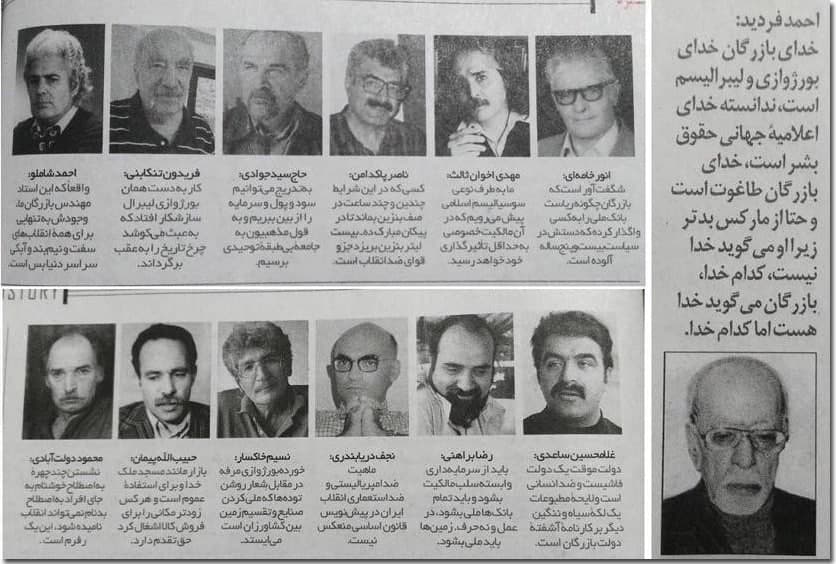
If we optimistically assume that the goal of the early-revolutionary left in raising the slogan of combating liberalism was to reduce discrimination and inequality in society, since the primary discrimination and inequality of that period lay, more than anything else, in political power and not in the economy, the left, by attacking liberalism, inevitably contributed to the institutionalization of political discrimination and inequality, which is the worst form of inequality.
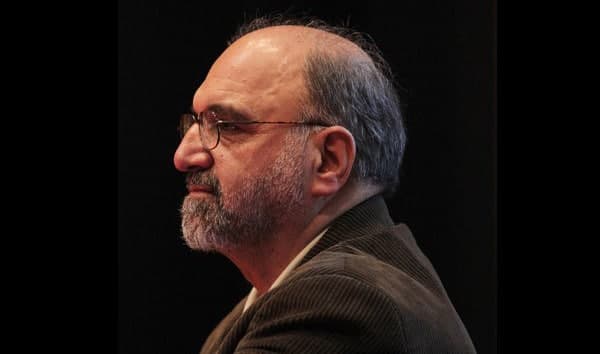
Religious reformers and new thinkers, even despite seizing a portion of political power during the so-called reform era, increasingly ceded ground to their traditional rivals and ended one step forward with two steps back! Soroush, who considered the ideologization of religion to be Shariati's great mistake, himself became entangled in the contradictions arising from the combination of religion and modernity.
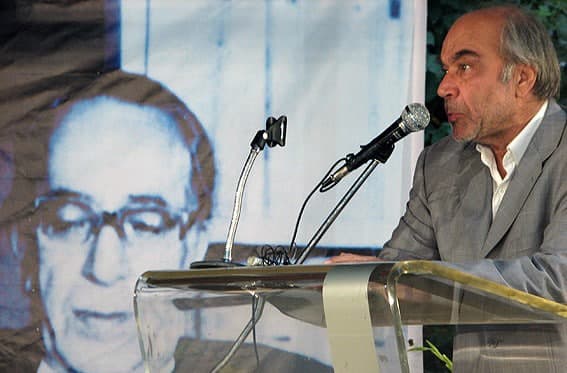
When people like Ahmad Fardid, using the code name "Nasnas," or Reza Davari, with the keyword "nafs and nafsaniyat" (the self and selfhood), and others directly attacked humanism, how many defended this achievement of the Enlightenment era? Let alone the fact that Fardid did nothing but distort the words of Spengler and Heidegger! But have all the sayings and writings of the likes of Fardid, Nasr, Shayegan, Shadman, and Naraqi been as useful to our society as a single note by Akhundzadeh and Malkum Khan?
.
.
Complete PDF file of Nezam Bahrami Komeil's essay titled "Ernst Cassirer, Yadollah Moqan, and the murmur of the silent current of Enlightenment in Iran"
.
.




Discussion13 comments
سلام مشکل این دوست عزیز آقای امیر کاذب بودن جملاتش نیست. مشکل آن است که جملاتش اکثرا بیمعنا هستند. فقط شماری اصطلاح را به فارسی و انگلیسی به صورت بیمعنا کنار هم قرار می دهد و جمله می سازد. و در نهایت کل بحث شان مبتنی بر اتهام زدن و تخطئه خصم است. از نقد محتوا کلا خبری نیست.
ادامه به مدعیان متوهم گزاف گوی حاکمیت نولیبرالیسم و کاپیتالیسم دوم : سیاست های قیمتی منتقدان تئوری اقتصاد آزاد را به گران سازی قیمت ها تشبیه می کنند. در یک مورد مشهور مخالفان بازار آزاد معتقدند که قیمت بنزین باید ثابت بماند و همواره از غول تورمی افزایش قیمت حامل های انرژی سخن گفته اند . آنها مدعی اند افزایش قیمت بنزین تنها به ضرر خانواده های کم درآمد است . اما واقعیت افزایش قیمت بنزین چیست ؟ مبانی اقتصاد آزاد و نئولیبرالیستی : در چارچوب دکترین اقتصاد مبتنی بر بازار به علت اصالت جریان عرضه و تقاضا ، قیمت های نسبی در بلند مدت همواره در موازنه هستند . بنابراین هر دخالت دولت در قیمت های نسبی در کل اقتصاد و رفتار بازیگران انحراف ایجاد می کند .یکی از مبانی اصلی این تئوری ، برقراری تعادل نسبی بین قیمت هاست . هنگامی که نرخ ارز در داخل جهش پیدا می کند و نرخ بنزین ثابت می ماند ، به چه خروجی ختم می شود ؟ با افزایش نرخ ارز، ارزش پول داخلی در برابر پول خارجی افت می کند در نتیجه قیمت کالاهایی که در داخل ثابت می مانند برای مشتری خارجی جذاب می شود . این دقیقا پاشیدن بذر قاچاق در اقتصاد است . یک عدم تناسب قیمتی دیگر ، بی ربط بودن قیمت بنزین در داخل با میانگین جهانی است . اکنون با افت ارزش پول داخلی ، این فاصله به حد غیرمتعارفی رسیده است . واقعیت در مورد ایران و سیاست اقتصادی حاکم بر آن : در عمل دولت متهم به اجرای سیاست های نئولیبرالی از اصرارش بر ثبات قیمت بنزین پا پس نکشید .قیمت بنزین طی سالها ثابت در حد همان هزار تومان بدون کوچکترین تغییری باقی ماند و گروههای پردرآمد جامعه از آن منتفع شدند تا اصرار دولت منجر به ایجاد کسری بودجه پنهان شود . کسری بودجه ای که به نحوی تامین می شود که در نهایت منجر به تورم و تضعیف قدرت پول ملی می شود . در واقع دولت از یک طرف کالای ارزان به خانوار ( مخصوصا خانوارهای دهک های بالا و ثروتمند ) تحویل می دهد ، و از طرفی به دلیل عوارض همین سیاست ، با به وجود آوردن تورم از قدرت خرید آنها ( به خصوص خانورهای دهک های پایین ) می کاهد . حال ثبات قیمت بنزین در حد هزار تومان از سال ۹۳ تا اواسط سال ۹۸ که دولت دیگر از سر اجبار و ناچاری مجبور به افزایش به یک باره و شوک آمیز سه برابری آن شد و اصرار بر تداوم این سیاست در دولت های مختلف ، بر مبانی کدام تئوری اقتصاد آزاد و نئولیبرالیستی استوار است ؟
ممنون به این فهرست میتوان موارد دیگری مانند بنیان ایدئولوزیک سیاست خارجی که بر بالا رفتن از دیوار سفارتخانه ها و مرگ بر این و آن بنا شده و یا اندازه و حجم دولت و کارمندانش و....را نیز افزود.
به متوهمان و مدعیان حاکمیت سیاست های نئولیبرالیسم غربی بر ایران خب در این کامنت می خواهم وارد مصادیق شوم و نشان دهم که ادعاهای عده ای ایدئولوژیک اندیش در مورد حاکمیت سیاست های نئولیبرال و کاپیتالیسم و اقتصاد بازار آزاد چه قدر واقعیت دارد ؟ اول : سیاست های ارزی مبانی اقتصاد آزاد لیبرالی در مورد نرخ ارز :اندیشمندان اقتصاد آزاد معتقدند که نرخ ارز هر کشور باید با استفاده از تقابل نیروهای عرضه و تقاضا در چارچوبی که دولت و سیاست گذار نقش هجومی در آن ندارند حرکت کند . نسخه اقتصاد آزاد برای مدیریت نرخ ارز ، کنترل نرخ تورم است . با کنترل نرخ تورم است که می توان قدرت خرید داخلی را حفظ کرد . اگر در اقتصادی نرخ تورم کنترل نشود نباید مانع متناسب سازی طبیعی نرخ ارز شد تا مزیت صادراتی برای کالاهای تولید داخل از بین نرود چرا که در این صورت کالاهای خارجی ارزان تر از کالاهای داخلی می شود . بر طبق اصول اقتصاد آزاد ، تورم ریشه پولی دارد و راه مهارش ، کنترل نرخ ارز نیست ، بلکه کنترل رشد نقدینگی و پایه پولی است. هنگامی که رشد نقدینگی و پایه پولی در اقتصاد از حد متعارف عبور کند ، وقوع تورم های بالا لاجرم خواهد بود . حال اگر پیش تر با پمپاژ ارزی و حفظ مصنوعی ارزش پول ملی ، مانع حرکت نرخ ارز شده باشیم ، ذخیره تورمی انباشت شده ، به شکل جهش ارزی ظهور می کند . در این هنگام ، شاید برای آحاد جامعه این تصور ایجاد شود که جهش نرخ ارز ، ارزش پول ملی را پایین آورده باشد ؛ اما در واقعیت آنچه ارزش پول ملی را تضعیف کرده رشد نقدینگی و تورم انباشته شده است . واقعیت اقتصاد ایران : از زمان روی کارآمدن حسن روحانی در مرداد ۹۲ ، تا زمان آغاز جهش ارزی ( فروردین ۹۷ ) شاخص قیمت مصرف کننده ۶۵ درصد رشد کرده بود ، در حالی که رشد شاخص قیمت اقتصاد آمریکا در این بازه زمانی ۵ ساله کمتر از ۷ درصد بوده است . اما در تمام این مدت ، نرخ ارز با هر هزینه کلانی که می شد ( ارزهای نفتی ) ، ثابت نگه داشته شده بود .گواه این ادعا ، سخنان عادل آذر رئیس سابق کمسیون محاسبات است . وی در برنامه تلویزیونی اعلام کرد " در سال ۹۶ معادل ۲۲ میلیارد دلار ارز مداخله ای به بازار تزریق شود . " در واقع آن چه در بازار ارز رخ داد ، افزایش دستوری نبوده بلکه تلاش همه جانبه برای ثبات نرخ ارز بوده است .اما هزینه این تلاش همه جانبه از منابع نفتی بوده است . این مسئله تا جایی ادامه یافت که یک تلنگر خارجی که درآمدهای نفتی را نشان گرفته بود ، فنر ارزی آزاد و جهش ثبت شد . مسئله ی دیگر در این مورد ادامه سیاست دلار ۴۲۰۰ تومانی است که معادل ۲۱۷ هزار میلیارد تومان رانت و همین طور فساد را توزیع کرده است . ( مابه التفاوت مبلغ پرداختی برای ارزهای ۴۲۰۰ تومانی و نیمایی با بازار آزاد ) .مبلغی که معادل ۹۰ درصد کل درآمدهای غیرنفتی یک سال کشور یا مجموع ۵ برابر یارانه های سال ۹۸ است . اما آیا این سرکوب قیمتی تاثیری بر عدم افزایش قیمت ها داشته است ؟ پاسخ منفی است . حال سوال این است که اتفاقات رخ داده در سالیان اخیر وسیاست های پیاده شده با کدام مبانی اقتصاد آزاد و سیاست های نئولیبرالی هم خوانی دارد ؟
جالب است عده ای از مخالفان نئولیبرالیسم در حالی که اصولا نه شناختی از نئولیبرالیسم داشته و نه شناخت چندانی از واقعیت اقتصادی حاکم بر ایران را داشته مثل طوطی و طوطی وار ادعاهای مضحک حاکمیت نئولیبرالیسم و کاپیتالیسم اقتصادی بر ایران را مطرح می کنند . این جماعت ایدئولوژیک اندیش متوهم و خودشیفته که مدعی حاکمیت غرب زدگان و خودباختگی متفکران و اساتید ایران هستند گویا خودشان را نمی بینند که در حالی اصولا بسیاری از سیاست های اقتصادی ایران در تضاد با کاپیتالیسم و سیاست های نئولیبرالی است چگونه ادعای مضحک و خنده دار حاکمیت نئولیبرالیسم و کاپیتالیسم را مطرح می کنند ؟! این جماعت ایدئولوژیک اندیش درست مثل طایفه اجتماعیون عامیون و سوسیال دموکرات های اواخر دوره قاجار هستند که در نشست حزبی خود در حالی که در کشور یک کارخانه هم نبود مدعی شدند که ایران در مرحله سرمایه داری قرار دارد ! البته نئولیبرالیسم هم مثل سایر مکاتب باید نقد شود و نقاط مثبت و منفی و قوت و ضعف آن آشکار شود ولی وقتی عده ای مدعی اند ناکارآمدی و معضلات اقتصادی کشور به دلیل حاکمیت غرب زدگان نئولیبرال حاکم بر کشور است و نباید به حساب قشر دیندار گذاشت که اصلا معلوم نیست منظور این جماعت از قشر دیندار چیست چون بسیاری از این غرب زدگان و خودباختگان به قول این آقایان اتفاقا از همین قشر دیندار هستند ؛ باید فکت و شاهد دهند که بله این قسمت از سیاست های اقتصادی ایران مبتنی بر سیاست ها و اصول نئولیبرالیسم و اقتصاد بازار آزاد است . در صورتی که با یک بررسی اقتصاد ایران و سیاست های اقتصادی آن معلوم می شود که بسیاری از سیاست های اقتصادی جرا شده در ایران توسط دولت ها حتی دولت های متهم به لیبرالی بودن مثل دولت آقای روحانی در تضاد با اصول و پایه های کاپیتالیسم و نئولیبرالیسم و اقتصاد بازار آزاد است . اگر هم اندکی از سیاست های نئولیبرالی اجرا و مبتنی بر اقتصاد بازار آزاد بوده است به صورت ناقص و جنبه های منفی آن بوده است که اجرا شده است . این جماعت در حالی مدعی غرب زده بودن و خودباخته بودن بسیاری از اساتید کشورند که خودشان هیچ چیزی در چنته نداشته و فقط نق و غر می زنند و مشتی شعار موهوم و خیالی و کلی مثل اقتصاد اسلامی سر می دهند که خودشان هم نمی دانند این اقتصاد چیست و چه مولفه هایی دارد و حتی عده ای از خود دینداران مثل آیت الله علوی بروجردی صریحا اعلام کردند چیزی به نام اقتصاد اسلامی نداریم و اقتصاد یک علم است . اما خب در کامنت بعد به مولفه ها و از جمله برخی سیاست های اقتصادی اجرا شده در کشور از جمله دولت آقای روحانی که متهم به اجرای سیاست های نئولیبرالی است و مقایسه آن با اصول اقتصاد بازار آزاد و کاپیتالیسم و نئولیبرالیسم می پردازم تا معلوم شود که چه قدر سیاست های دولت متهم به غرب زدگی و نئولیبرالی با اصول اقتصاد بازار آزاد و کاپیتالیسم در تضاد و ۱۸۰ درجه برعکس است . و در نهایت چگونه این جماعت ایدئولوژیک اندیش متوهم و خودشیفته که طوطی وار ادعای حاکمیت نئولیبرالیسم بر ایران را دارد از واقعیات جامعه ایران به دور است و در یک فضای ذهنی و انتزاعی و متوهمانه ایدئولوژیک بریده از واقعیات سیر می کند و این جماعت با این دور بودن از واقعیات و تکرار توهمات خود به هیچ وجه نمی تواند مدعی نجات ایران شود دیگر چه برسد به خواهد در عمل این کار را کند .
درصد عصبانیت و abusive tenure ، 99/5nvwn درصد irrelavance به عنوان انتخابی خود نویسنده: این را به خواننده محول می کنم content و academic structure متن نظر بالا : پر از deviation و محتوای غیر آکادمیک (از جمله عدم توجه به متن مورد نقد و عجیب تر دعوا کردن نویسنده با خود ) ف نویسنده حتی با نحوه ارجاع دهی آکادمیک نیز آشنا نیست و نظرهای خود را به من نسبت داده و به انها تاخته stereotyping: ایشان تصور میکنند جامعه به افراد طرفدار علم و فلسفه و مخالفان ایشان در تاکسی و اتوبوس و مهمانی تقسیم شده. ظاهرا تحت تاثیر مجله ها، روزنامه ها، و فضای اینترنت کشورتان تصور می کنند جامعه دانشگاهی منتقد لیبرالیسم و آمریکای خسته از حقنه سرمایه داری و دنشگاه پروفشنال حامی لیبرالیسم و سرمایه داری که در body آقای روحانی و وزیران کابینه وی در ایران پدر مردم رو درآورده اند هم جامعه مورد تنفر ایشان هستند. کمی از اتوبوس و مترو شهرتون اگر بیرون بیایید با جامعه جهانی که post American World که بیش از decadeاز انتشار آن می گذرد و دیگر passe شده است رو بیاورید. دانشگاه کشور شما هم که شما ان جا هم نرفته اید برای آغاز آشنایی با جامعه جهانی خسته از دیکته لیبرالیسم و stratagems مزورانه نظری و talk up کردن روستاییان راه یافته به دانشگاه های درجه یک کشورتان با detail پیچیده و لی توخالی بد آغازی نیست.
نقل قول از نویسنده فاشیست-لیبرال متن: " مخالفت با نئولیبرالیسم تنها در جامعهای میتواند معنادار باشد که واقعاً تحت حاکمیت نئولیبرالیسم باشد. " اصولا توتالیتریانیسم حاکم بر لیبرالیسم که در عمل نتیجه منطق شک گرا و شهودی و غیر موجه لیبرالیسم است هم در نظریه و هم در عمل برای جامعه جهانی و نه فقط برای احاد مردم ایران روشن است و لیبرالیسم دیگر passe به وضع انتیکیته درآمده. اشتباه بودن و مغالطه محتوای این بخش از متن از تغافل نویسنده نسبت به دو مطلب است. اولا آن چه در در واقع رخ می دهد را بعلن بیوسادی و بی دقتی با محتوای نظریه تمایز نگذاشته و یکی فرض کرده. دوم، این که در ایران دانشگاه و فضای علمی فلسفی موجود که در قبضه اساتید غربزده، روشنفکران شیفته جلو گری و شهرت طلب در کشور شما حاکم بوده و نه تنها رفتار سیاسی بلکه کاپیتالیسم اقتصادی بر کشور حاکم بوده و لی با دروغ و یا به علت عدم دقت به حساب قشر دیندار گذاشته میشود. باید توجه داشت که حاکمیت در ایران یکپارچه نیست و افرادی مانند ایت الله هاشمی رفسنجانی نگاهی تکنوکرات و آقای روحانی نگاهی تکنوکرات و لیبرال به جهان داشتند. آن چه رخ داده نتایج دیکته های دانشگاهی است. این شارلاتانیسم اکادمیک در ایران شناخته شده و قدیمی است و دیرگر موثر نیست. مخاطب این مغالطه( انگار نتایج نگاه تکنوکرات و لیبرالیسم سیاسی) فقط چند جوان دانشجوی شیفته تحصیل در خارج از کشور شما و نیل به اتوریته فاشیست-لیبرالیست است که کشورهای غیر غربی را از پیشرفت، دانش (نه ساینس)، و عدالت و حاکمیت عقلانیت در کشورهایشان محروم کرده است. آن چه فاشیسم هیتلر و موسیلینی نتوانست انجام دهد لیبرالیسم با سخنان رومانتیک و فریبکارانه و شیرین بازی با عواطف جوانان demogogyبه نتیجه رساند .اکنون جوان ایرانی بایست در کالیفرنیا زندگی کند و ببیند که جامعه آمریکایی middle class و lower classدنبال سوسیالیسم حمایت دولت از اقشار است. نویسنده در 1900 گیر کرده. Get up to date.
باسلام برای شما فاشیست و لیبرال باهم سازگار و یکسان هستند فکر نمی کنید اگر بخواهیم اینطور بحث کنیم استالین و مائو و سایر مارکسیستها لیاقت بیشتری دارند که کنار فاشیسم بنشینند. مقاله من درباره نئولیبرالیسم در فضای مجازی و در مصاحبه ای که با خبرگذاری مهر کردم موجود است اگر آن را مطالعه فرمایید متوجه میشود که به بحث لیبرالیسم و نئولیبرالیسم هم پرداخته ام و شبهات شما برطرف میشود.
عجیب است که در مورد toatlitarianism ، entry می گذارید و صدا و راه نقد آن را میبندید.من مطلبی نوشتم اگر می گویید که نقد تمامیت خواهی است خودتان به توصیه خود چرا عمل نمی کنید؟ اگر این تظاهر و فریب جامعه واعظ غیر متعظ خوب است فقط برای دیگران فایده دارد؟ بریا گوینده صدق نمی کند؟
عالی بود.
اقای بهرامی پایدار بمانید.بسیار عالی
با عرض ادب و خسته نباشید من به عنوان خواننده علاقه مندی که خواندن این مقاله برام کمی مشکل بود و سعی کردم خوب درک کنم و بعد پاراگراف بعدی رو بخونم، یعنی اینکه سواد کمی دارم، ولی واقعا مفید بود و خیلی استفاده کردم. بله متاسفانه در دانشگاههای ما به جای پرداختن به اندیشه های روشنگری و لیبرالی، با قدرت خیلی زیاد به اندیشه های مارکسیستی میپردازن و چقدر مقالاتی نوشته میشه در نقد و یا تمجید مکتب فرانکفورت! کاش این مقاله رو همه اساتید فلسفه و علوم اجتماعی مطالعه کنند. با سپاس از زحماتتون و خسته نباشید به آقای بهرامی کمیل
ممنون و خوشحالم که مفید بوده