Philosophy
Heidegger and Iran, from Yesterday to Our Today: A Conversation with Reza Davari Ardakani
Reza Davari Ardakani sees the decline of the modern West in the rise of postmodernism and reads Heidegger as the thinker of the West's future. Yet he stresses that Heidegger's thought offers no prescription for the problems of other peoples, and that the future cannot be built through imitation.
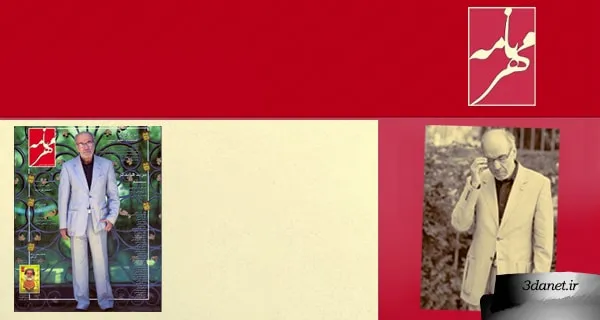
I recall that the first book I read by Reza Davari Ardakani was The Status of Philosophy in the History of the Islamic Period, and the eagerness to read that book also led me to read Farabi, the Founder of Islamic Philosophy. The sweetness of these two books was the beginning of my familiarity with Dr. Reza Davari Ardakani. During one of my visits with Dr. Davari at the Academy of Sciences, when one of his staff learned of my field of study, they remarked with surprise, "Political science students usually don't like Dr. Davari!" But moving beyond the discussion of whom we like or dislike is the first step on the path to empathy with philosophers such as Reza Davari. We call him a philosopher because he poses questions about his contemporary issues and the history of thought before him. The story of love and hate towards Reza Davari Ardakani in Iran must also be seen as the other side of the love and hate towards philosophy in contemporary Iran. For it seems that Davari has always placed philosophical reflection on history at the forefront of his work. But is philosophical reflection and seeking help from great philosophers like Heidegger unpleasant? Dr. Reza Davari Ardakani has repeatedly shown his attachment to Heidegger in his works, along with Heidegger's critique of instrumental rationality, modern science, technology, and his reliance on thinking in place of philosophy.
In fact, Davari is a thinker who, by referring to Heidegger and the tradition of Islamic philosophy, undertakes a serious critique of the West and its requirements and exigencies. In his speeches, he always describes the song of the West's destruction as audible and considers the beginning of the decline of the modern West to be in the emergence of postmodernism. An emergence that is also irreversible; for in Davari Ardakani's view, all philosophers after Heidegger are and will be Heideggerian. The ontological dimension of Davari's discussions in contemporary Iran has caused a shift from epistemology to ontology, and this is one of the effects of Davari's thought in the land of Iran. If we consider even this one effect as resulting from Davari's thought, it seems we should not doubt calling him a philosopher. In this conversation, Davari speaks of Heidegger and Heideggerian thought in the land of Iran and answers the most explicit questions and the most critical notions about himself. Perhaps those who do not have a misunderstanding about philosophy will, by reading this interview, also have their misunderstandings about the thought of Reza Davari Ardakani resolved. A conversation in which Davari has said that Heidegger's thinking is neither the end of thinking, nor does he have a prescription with which the cultural and social problems of peoples and nations can be solved and their historical situation set in order. Read the full conversation.
Dr. Davari! Given the value crises in the West, you are hopeless about the continuation of the West and believe that modernity will eventually end, but the time of its end cannot be determined. In fact, you speak not of the end, but of its signs, and you consider these signs to have appeared. Signs such as postmodern thought. You also consider Martin Heidegger to be the index of this thought. You believe that all postmodern thinkers have come after Heidegger, for he is the thinker of the West's future. Now my question is: does Heidegger also prepare us for the future?
Thank you for your kindness. Speaking of the future is not easy, not only in the current conditions but in any situation. Nietzsche, in the second half of the nineteenth century, spoke of a 200-year history of nihilism, but we do not know whether the history of nihilism will come to an end in the second half of the twenty-first century, and if it does, how this coming to an end will be and what history will begin after it. The time-conscious thinkers among us have said nothing about the future except that Western history, like all other histories, has a period that comes to an end, and we are now at the end of this history (and not at the end of history). Postmodernists, too, without having any opposition to modernity, consider the dream of the eighteenth century to have ended. The dream of the eighteenth century was the dream of a world, some things of which have been realized in the developed West. People in other regions of the world have also heard something of this dream and have pinned their hopes on it. To be precise, their hope is more a hope for the scientific-technical advances that have been realized in the West and in the modernized world. When we think about the future of our country, we can understand that, firstly, our future is not separable from the future of the world and modernity.
Second, although modernization is an aspect of the repetition of the history of development, the history of the future cannot be considered a journey along a path already traveled. Third, the future and thought are bound together, and the path to our future is also opened and revealed in the works of our thinkers; and of course, no European philosopher, whoever he may be, can tell us anything about our future, unless we take his foresight into account in the reflection we undertake for our own future. The future comes about through thought. In the realm of thought, it is evident that thinkers find a common language and become interlocutors, but people nowhere in the world can or should act according to a philosopher's prescription. In my view, Heidegger is a great thinker, and anyone engaged with philosophy pays attention to what he has brought forth, but Heidegger's thought is neither the end of thinking, nor does he have a prescription with which the cultural and social problems of peoples and nations can be solved and their historical situations set in order. If we are people of insight, we listen to the words of people of insight and walk our own path; and if we are not people of insight, what benefit can we possibly derive from the insight of a person of insight? Someone who is an imitator of Heidegger or any other philosopher has nothing to do with thought and is not even engaged with ideology.
Because if we consider ideology to be the application and deployment of philosophical discourse in politics, it is clear that we must link philosophy with political action, and linking the formal discourse of philosophy with politics is a more or less ridiculous affair. If I consider Heidegger important, it is because he has more or less made us aware of the world we inhabit and of the transformation that has occurred in human existence in the modern era, but when we read his works, we cannot and should not ask him what our path to the future is. We can think about two futures. One is the future of the entire current world, whose people, in the words of the French poet René Char, have built and are building their homes on the roofs of atomic and hydrogen arsenals; and the other is the future of our own country. In both cases, we need to be aware of the state of the world and to know that these two are not separate and one is not independent of the other. If a person of insight has a view about the future of the world,
he necessarily sees and finds the future of his own country in relation to it. Let us note that, in any case, the future is not built through imitation. Imitation, at best, is the prolongation of present moments, and this repetition of the present is the very essence of decline, because the present, in repetition, becomes emptier and emptier each time. The modern world has not yet reached the stage of decline, but perhaps the current state of the history of modernity can be considered a state of imitating its own past. Now the West imitates itself, and the rest of the world is also in the dream of traversing the path already traveled by Western history. So the meaning of my words is not that the existing Western world will soon collapse and the people of the world will very easily, by referring to existing philosophy, begin another history; and thank God that this is not the case, for if it were, we, whose relationship with philosophy is very confused, would become even more bewildered and distressed. Philosophy is important, but one should not naively imagine that by teaching and repeating a philosophical discourse, however profound it may be, the world can be changed. Philosophy has no direct effect on our affairs. When we place the responsibility for today's injustice on the shoulders of yesterday's thinkers, we are in fact easily overlooking the shortcomings and errors of ourselves and our contemporaries, and we devalue and disparage thought and philosophy.
We now, while apparently valuing philosophy, in truth do not appreciate its worth. A sign of this is that we label everyone with a philosophical tag and mention attribution to this or that philosophy as a flaw; and is it not the case that in our language, attributing individuals to Hegelian, Marxist, Heideggerian, and Popperian traits is a form of reproach and rejection? I am a student of philosophy. I have read Plato and Aristotle and have some knowledge of the philosophy of the Islamic period and of modern and contemporary philosophy. I respect all the great figures of thought, both Western and Eastern. Heidegger is also one of the great figures of thought, but I have not pledged that everything I say is Heidegger's word, and I do not believe that thought came to an end with Heidegger. Nor am I a disciple of Heidegger or any other philosopher. Philosophy is not a party. In philosophy, there is sympathy and shared language, but there is no place for subservience. There may be those who wear their devotion to a philosopher on their sleeve.
These are usually lovers of the philosopher and are less often people of philosophy. This Fardidian and Heideggerian division, etc., stems from a confusion between ideology and philosophy and an analogy of philosophy with ideology. I am not part of any philosophical or political categorization, but when I think about the future, I cannot be without a view. Inevitably, I must give priority to some philosophies. There is another thing as well. I have spoken not of Heidegger's views, but of the lofty stature of this thinker in the history of philosophy, and they have supposed that I am a propagandist and promoter of Heidegger and that I defend his views, and sometimes they ask why I have not written a book about his philosophy. If someone were to place 'Aristotle' and 'Yahya al-Nahwi' side by side, I would defend the stature of Aristotle. It is very bad that we do not recognize the limits and measure of philosophers and thinkers and do not differentiate between philosophical writers and teachers of thought. In my view, Heidegger has the same respect as 'Farabi' and 'Aristotle'. Although 'Habermas', 'Abu al-Hasan al-Amiri', and 'Popper' are people of opinion, they cannot be placed alongside them. This statement does not mean the confirmation of all the views of Farabi, Aristotle, and Heidegger and the negation of al-Amiri, Habermas, and Popper.
Dear Dr.! It is more or less established that the future belongs to the thought of the modern era, or 'modernity'. As you yourself have also pointed out, the West ultimately dominates our future. But this is a point that Martin Heidegger disregards. As you say, 'If we take Western civilization as absolute and consider the future to be the extension of this civilization, then this future has already ended, and tomorrow is no different from today. This is why Heidegger, instead of saying something about tomorrow, awaits the opening of a new horizon.' Something that Fardid called the day-after-tomorrow of the world and, by focusing on it, evaded the history of today and tomorrow. How can this day-after-tomorrow, in which there is no news of metaphysics, be visible in a land whose language of tradition and culture is deeply philosophical? With Farabi and Avicenna, can one reach Fardid's day-after-tomorrow?
One must speak cautiously about the future. The meaning of what I have said about our own future is that if we seek socio-economic and technological progress and development, we are in fact moving on the path of modernity, or to put it correctly, on the path of modernization, and for this reason, our future is a stage of the history of modernity, a form of which has been realized elsewhere. Here, two points must be noted. One is that if we want modernity, we must open and pave its path ourselves, because the path of history closes behind its travelers, and those who have been left behind from the path must open it again. The other point is that the history of modernity is not perpetual and endless. What history will come after modernity and what will become of the current civilization is a question whose answer no one knows except God. This issue is not a subject of dispute among philosophers either. So, when we speak of the future, we can consider two futures.
One is the future of development, which finds meaning and realization through planning, and the other is the future of the new civilization and the era and age that may come after it. In the first case, one must move beyond the common repetitive and formulaic talk and think about how, by understanding the time of development (understanding the time of development is understanding the conditions, possibilities, proportions, and relationships), its plan can be formulated. This plan is implemented within the history of modernity, but regarding the future of modernity and what will happen to the current world, or where this world is going, and if it is to end, what age and time will take its place, what judgment can be made? The philosophers I know have not said anything on this matter, and what and how could they say? Speaking of a tomorrow and a day-after-tomorrow whose foundation, for example, is not based on metaphysics, is easy. What is important is to know the extent of the circle of human possibilities in the future world. Philosophy can no longer be the designer of the future, but philosophy, and especially poetry, in this time can assist the people of the developing world in planning and even prepare groups of people in the developed world for the future, but the future time is no longer the time of philosophy. The metaphysical time that has expanded in the West comes to an end with the completion of modernity. When the contemporary philosopher cannot show us the path to the future, what can be expected of 'Farabi' and 'Avicenna'? Our expectation of these philosophers should be that they teach us the secrets of thought so that we ourselves can think about the future. We must open the path to the future in the place where we stand.
Speaking of the thinking of the future and Martin Heidegger without mentioning Seyyed Ahmad Fardid is not without issue. Indeed, Fardid has rightly been called the first philosopher of Iran's modern history. I wanted to know whether, in your view, Seyyed Ahmad Fardid was a suitable expositor of Martin Heidegger?
Someone who knows the truth of a philosopher's views and has a criterion for judging commentaries and interpretations can answer this question, and I do not know whether such a person exists or can exist. What matters in philosophy is conversation and harmony. Philosophy is not the repetition of philosophical words and phrases. Fardid lived with a devotion to philosophy and had a deep understanding. Instead of asking whether he interpreted Heidegger correctly, it is better to see whether he had something to say and a lesson to teach in philosophy. When I was in Paris in 1972, I attended philosophy classes. That year, a professor named Piro interpreted Heidegger more or less like Fardid. Others had different interpretations. Philosophies and their interpretations, more than being correct or incorrect, must be instructive for thinking.
You once said, in response to the question of how one can find a way into Heidegger's thinking, "I still do not properly know this way, but I know which paths distance us from Heidegger." Does this answer still hold?
In the statement you quoted from me, two points are implicit. One is that I did not consider the question precise. The other point concerns the conditions that distance us from thinking. We look at philosophy through the lens of politics, and when we read a book of philosophy, we often regard it as a means to achieve political ends and imagine that philosophers, too, had political intentions in whatever they said. A philosopher can be political, or political consequences can result from their philosophy, but thinking is free from the bonds and intentions of politics. If experts and philosophers viewed philosophy with political intentions, they would not have become philosophers. Even Marx, in diagnosing the contradictions and conflicts within capitalism, did not have a political view, and it was for this reason that he opposed ideology. But when someone thinks about capitalism, the result of their thought, whatever it may be, turns into a political theory, and we saw that Marxism became an ideology, and a total ideology at that. These classifications that are well-known in our country, where people of philosophy are called followers of this or that person,
whether correct or not, indicate the poverty of philosophy. If there really are people who are followers and imitators of this or that philosopher, they have, in truth, no relation to philosophy. Why should we speak of illusory groupings? You might say, were there not, and are there not, the Vienna Circle or the Frankfurt School, etc., in philosophy? These are genuine schools of philosophy, and their titles are not labels. Their philosophical works also testify to their being philosophers. Not everyone can establish a school of philosophy whenever and wherever they wish. One can only reach philosophy by enduring pain. The path to familiarity and intimacy with a philosopher also opens when ears are attuned to philosophy and tongues speak the language of dialogue with philosophers. But the realization of this state is very difficult.
Our age no longer has an interest in philosophy, and with the presence of technology and politics, no need for philosophy is felt, and it is quite possible that attention to philosophers like Heidegger is also a byproduct of ideological interests. Heidegger is now the focus of attention worldwide and is widely read. The developed world pays attention to Heidegger's philosophy because it seems to want to recognize in this philosophy the position and status of its own world and the danger that threatens the entire current world. We know that Heidegger had accepted the poet's word that salvation comes from where the danger is. Perhaps Heidegger can give the West and the whole world some indication of certain danger zones on the path ahead. But the undeveloped world, which has not been victorious in the race for development and in the political struggle with the West, can hardly learn the language of Western thought, and in philosophy in general, and especially in philosophies that involve a critique of the West, it seeks something to replace the ideologies of struggle against Western colonialism and domination. Unfortunately, an ideological interpretation of Heidegger is not a good guide for political struggle, but perhaps it sometimes brings solace and peace of mind.
You engage with the category of “revolution” in a way that draws on Heidegger. For you believe that no revolution can take place in the world unless the very foundations of the West are overturned. That is to say, we are in fact at the end of Western history, and one can no longer hold out hope for the future of the West, even though, as you say, grasping this meaning is not yet easy. The question is, do you still stand by this statement of yours?
I do not consider revolution to be merely political revolution. If you refer to the small treatise I have written on revolution, you will see that I have had in view revolution in the world of spirit, thought, theory, and practice, and of course I believe that revolution must be able to penetrate the foundations of the current world and lay down another foundation. All my writings to date have corroborated this point. Perhaps the interpretation of Western history as having ended and reached its completion has led to a misunderstanding. The completion of Western history does not mean that the feet of modernity must be turned toward the qibla; rather, it means the actualization of all its potentialities. In other words, modernity has now entered the period of exploitation. So one should not be surprised that in this history, all there is, is politics and technology. Politics and technology develop, but they cannot preserve the foundation of modernity. Politics and technology have now become groundless and, as we see, lay claim to the truth of “I am the Truth.” It is true that what endures has no foundation, but is itself the very foundation, yet a groundless history cannot be permanent. The expanding scope of the critique of modernity also confirms this meaning.
Nevertheless, the order of modernity, as long as it exists, has power. Indeed, this order is power itself, and if another order is to take its place, it must be established on the very firm basis and foundation of the thinking that is to come. Just as the foundation of modernity was laid in the brilliant poetry and philosophy of the Renaissance. I said nothing of the revolution of the prophets, for they, through connection to the source of revelation, saw and taught the exoteric and the esoteric together. In modern history, philosophers and poets discovered and recounted the prospect of the new world; now this history has been made. Philosophies and ideologies have come and done their work, and are still busy at it. The eighteenth century hoped that with these philosophies and ideologies that came into being, the earth would become a heavenly paradise. This ambition no longer has any credibility, but it is very likely that from within this history, sparks may gleam and show or illuminate the path of another history. In any case, no revolution takes place by ignoring modernity. Revolution is not a return to the past and a revival of its customs. In revolution, one must pass through the West and from its midst (and not alongside it). The West does not allow any power to pass by it untroubled. I remain faithful to revolution, provided that we do not limit it to the observance of some customs and the abandonment of others, and that we do not harbor the ambition of solving all problems through the exercise of political power.
One of the points that astonishes me is the juxtaposition of the names of Heidegger and Popper in post-Islamic Revolution Iran, and even the theoretical dispute between their devotees. It goes without saying that you have been situated in the Heideggerian camp and chastise Popper for not showing respect to philosophers. But how can a German postmodern thinker and a philosopher of science belonging to the analytic philosophy tradition have anything to say to one another, let alone engage in debate? It seems that the occurrence of this debate in Iran, by the proponents of these two, is one of the jokes of the history of thought. Of course, before answering this question, let me say that I am fully aware that the failure to enter into Heidegger’s thought and his difficulty is one of the fertile grounds for reducing him to an ideology and setting him against another ideology.
Thank you for the forthright question. I know of no place called the Heideggerian camp, and I myself belong to no camp. You are right that a German thinker like Heidegger cannot enter into dialogue with an analytic philosopher, but why say this to me! Say it to those who consider Popper's The Myth of the Framework a guide to dialogue. Popper said that dialogue should have no conditions or constraints whatsoever. As if everyone can become 'conversant' with everyone else. But what you have rightly called a joke of the history of thought is perhaps only related to thought insofar as it clarifies to some extent which opinions, actions, and statements are compatible with one another and which are not. It may be difficult to discern the contradictions within the fabric of a philosophy, but in an ideology oriented toward political action, discerning contradiction is not so difficult. When ideology becomes the measure of thought, theoretical differences also take on a political form, and of course, sometimes political differences are concealed under the guise of theoretical differences; otherwise, in philosophy, no matter how intense the debate and dispute, it does not lead to factional and political alignments. I repeat that I belong to no camp or encampment, and I hope that such divisions and oppositions, which arise from and indicate indifference or scant regard for wisdom and knowledge, will not be repeated.
In many of your works, you have clearly been influenced by Heideggerian notions and, following him, have turned from philosophy to thinking. In your view, does our path ultimately pass through philosophy or through thinking?
Look! A student of philosophy has questions and is a lover of knowing. I, who study philosophy, must be more or less informed about all philosophies. Heidegger is also a great philosopher who must be known. I too have read some of his books and articles, and works about his philosophy, but I am not obliged to say everything he said. As in the last 30 years, all my writings have been about our own situation. Unless they say I have applied Heidegger's statements to the situation of Iran, which I do not think is the case. And even if it were, it could not have been done without reflection, thinking, and research. You are right that I learned hope in thinking from Heidegger, but before that, I had learned hope in the Friend from Saadi, who composed:
Your hope has driven all hope from the heart, Your passion has emptied the head of all passion.
Without this intellectual background, I would not have heeded Heidegger's word. But as for having said somewhere that philosophy, in the form it emerged in Greece, traversed two thousand five hundred years, and arrived at the abode of modernity, has no future—my reference is to the philosophies after Nietzsche. From the beginning of the twentieth century until now, new philosophy has had three general forms. Continental or European philosophy, which, by delving into the two-thousand-five-hundred-year history of philosophy, wants to know where the work of philosophy has led or is leading. Analytic philosophy, in truth, has little to do with so-called European philosophy, despite efforts to build a bridge between the two. But the American philosophy of pragmatism stands between these two domains and returns philosophy to politics, action, efficacy, success, and democracy. The latter two domains have nothing to do with the future and do not think about the future. The philosophy of the European domain does not prophesy, but it has a care for the future. This care is valuable. To understand this care, one must become acquainted with postmodern thought and reflect upon it. What philosophy can do, and whether Heidegger can be introduced in our country or not, are important questions, but before addressing them, we must know what philosophy is, what it has done so far, and what business we have with philosophy. If these questions and the questions you have raised are posed seriously, I will retract my statement and accept that philosophy, at least in our world, can still be the source of great works. But where is philosophy, and from whom should one ask the address of its house? We talk about philosophy. Or we talk the talk of philosophy, but philosophy is a pain, not talk:
If there be no Solomon's seal-ring, / What virtue does the signet's carving bring?
Neither Hafez has the presence of the lesson of seclusion, / Nor the scholar the knowledge of certainty.
And finally, that:
The people of desire and coquetry have no path to the quarter of the libertines; / A wayfarer is needed, a world-burner, not an untried, carefree soul.
There is a painful point in your thought, and that is that we have found ourselves in a situation in history where neither can “philosophy” save us, nor can “we” save philosophy. As if philosophy does not belong to the future, and it is through thinking that we step into the future. This view also relies on Heidegger’s prediction that “thinking” is to come, and that it is no longer “philosophy,” because it thinks more originally than philosophy. I wanted to know, where do you see the relation between philosophy and the future?
I must offer an explanation regarding philosophy and the future in response to your question. Look! I have said that philosophy, whatever it may be, no longer provides any assistance to the future of modernity. That is, the path of modernity does not continue with Plato, Thomas Aquinas, Descartes, Kant, Hegel, William James, Nietzsche, Heidegger, Sartre, Kripke, Rorty, and so on, and the current problems of the world will not be solved. However, our future is in no way the future of the West. It is true that development, whatever it may be and whatever form it takes, is generally repetition and imitation, but to achieve it, one must think. Philosophy cannot make modernity permanent, but its existence is necessary for opening and traversing the path of modernity. In other words, in a situation where we must inevitably accept development, turning to philosophy and the human sciences is also essential. We now, and in these historical circumstances, need philosophy and the human sciences (and of course, not merely the repetition of the words of philosophers and scientists).
Dr. Davari! In an interview I had with you regarding the human sciences, which was published in the first issue of the magazine, your views on the human sciences and their origins were presented to those interested. Many, while reading and benefiting from that interview, complained to me that I did not bring up your past views on the human sciences and Islamic sciences. Of course, for me, sitting across from you, it is clear that these words you speak today are also the result of the passage of time, and after all, every human being remakes themselves over time. But it seems that you yourself are not very inclined to talk about your intellectual periods. Today, everyone knows that, for example, Javad Tabatabai had two intellectual periods, or Dariush Shayegan passed through various intellectual periods. Do you agree that we speak of the first and second intellectual periods of Davari Ardakani?
Once, about 10 years ago, in response to this question, I said, “I have not changed; the times have changed.” In the past, I defended the revolution that occurs at the end of the era of modernity and lays the foundation of a world in which the human being, while free, is not the center of existence, but rather finds their desire and fulfillment not in domination and malice, but more in friendship, love, and knowledge. This love and knowledge does not emerge except in the shadow of a transformation in the relationship we have with the earth and the sky. You see, I still remain faithful to my former pledge. Regarding the human sciences, I still think what I thought and said 40 years ago: that these sciences are, in the world before modernity, analogous to theology (Kalam). The human sciences address the crises of modern history and are a way out of them; and what else did theology do? But the difference you see is, in truth, not a difference.
If another world is to come, its science—without severing its ties to current science—will also acquire a different form, condition, and end. If the politics of development is to continue, this politics will be of no avail except with the aid of the human sciences. I would even say that if Western history emerged and proceeded without the human sciences and arrived at the human sciences at the stage of crisis, then for traversing the path of modernization (pseudo-modernism), one must not only seek help from the human sciences but must also begin with them. This matter was not as clear thirty years ago as it has become now. In the early years of the revolution, I used to say, let us reflect on the meaning of development. I had other proposals as well, to which no one paid any attention. Had they done so, my statements of that time would not now be so obscure and would cause less misunderstanding. But I accept that the main misunderstanding stems mostly from the ideological tone of the statements and writings of that period. At that time, all discourse was ideological, and not only mine, but all discourse, and everyone’s speech, had an ideological tone and tenor. Of course, if you say that those engaged in philosophy should speak the language of philosophy, I do not disagree with this statement, and I may well critique some of my earlier statements and writings. I am very strict with myself and my writings, and if I read something I have written seventy times, I will still change it on the last reading. I am myself one of the critics of my own writings, but there is something in all of them that I do not negate.
In the first period of your thought, which coincides with the victory of the Islamic Revolution, you held the most explicit and radical positions against the West and its modern thought. Following Heidegger, you sought to negate Western philosophy and turn toward “thinking,” aspects of which you considered to lie in religious guardianship (velāyat-e dīnī). Today, however, we witness that, contrary to that first period, in defending the human sciences you adopt a thoroughly anti-Heideggerian stance, choosing a metaphysical language to analyze and defend the human sciences, whose birthplace has been the West. In the second period of your thought, you even rise to the defense of philosophy against science and analyze every matter with regard to its philosophical foundation. It seems that these periodizations are very clear. Do you not disagree with this view?
I must emphasize once more and say that I defend the revolution. In other words, I still defend the revolution and continue to view the West and modernity with a critical eye. Nor do I consider liberal democracy to be the end of history. Yesterday, when I explicitly criticized the West and its manifestations, my critique was a critique from the outside. That is, I assumed myself to be outside Western history and looked upon it, but in reality we live within history. The interior of Western history is not homogeneous; rather, within it, center and periphery, the powerful and the powerless, colonizer and colonized, developed and underdeveloped, oppressor and oppressed, are easily distinguished from one another. In this world, in one place stands the strong and powerful West, still relatively endowed with effective reason, and at the other pole stands the destitute, self-alienated West that has lost its former wisdom, drifting from side to side amidst clamor and verbosity. If we are to dwell within the West, which place shall we choose? Within the West, one must side with philosophy and metaphysics, for the West’s coherence lies in philosophy. I defend the human sciences in the hope that they might, to some extent, moderate Western destitution. That is, I look upon philosophy and the human sciences as a path necessary for entering the abode of development, but I still hope for the opening of another way. My earlier discourse concerned the ideal system. Now that we must traverse the path of development, I speak of the requisites and conditions for traversing the path of development and overcoming underdevelopment. This discourse is a philosophical discourse, whereas the past discourse was more political. Of course, a philosophical discourse is not necessarily opposed to a political discourse, but it differs from it. Speech must be heard and understood in its proper time, and this, of course, is no easy task. If the underdeveloped world knew this, it would more or less overcome its difficulties.
It is recounted in the accounts of Heidegger that one day a young man asked him when he would write a book on ethics, and Heidegger replied to that question by saying, on what basis can one speak of ethics? Of course, it is true that Heidegger gives this answer in order not to fall into the trap of metaphysics, but I want to ask you: when will you write a book on our relation to Heidegger’s thought? Are you even able to do this with the materials and resources that the tradition in Iran places at your disposal? Especially since you know our tradition well and have paid attention to this in your research on Farabi and the history of philosophy in the Islamic Iranian period?
I beseech you to free yourself from the perception that has emerged and become common over the last 20 years, and not to consider me a representative of Heidegger or any other philosopher, but rather to look into what I say and point out the problems you see in it. I do not expect my contemporaries, or even the generation after me, to read my writings, but I hope that your generation and the generation that is coming will not disregard them on the grounds that their author is attributed to some imaginary group. I have experienced and recounted the pain of the history of underdevelopment. Or, to put it more precisely, I have told the tale of falling out of history. So I do not speak on behalf of others or as their representative, but regarding ethics, I submit that in the modern world, the relation of ethics to science and politics has been transformed. This world is not opposed to ethics, but none of its pillars rely on, or are even connected to, an ethics independent of the principles of modernity, and its spheres do not consider themselves bound to observe ethical rules. Perhaps this is why Heidegger, too, could not write a book on ethics in this world. In this world, power determines the duty of ethics. But writing a book about Heidegger and any other philosopher is the task of philosophy departments. I, who have been a member of the philosophy department at the University of Tehran, might have been able to write such a book, but I have written nothing except one article.
Our intellectual and philosophical traditions are no obstacle to turning toward any philosophy. On the contrary, in my view, if we want to write a scholarly work on any of the modern philosophies, we must penetrate deeply into our own past philosophy. Modern philosophies differ from our philosophy in their foundations, but let us not forget that both are philosophy, and philosophy, whatever it may be, is the thinking of Being. To attain the station of research in philosophy, one must become familiar with the language of philosophy. Language is not a means for saying and writing intentions; rather, it can be identical with thought itself. Whenever we become familiar with the language of modern philosophy, we can reach the station of research and of sharing a language and a conversation with philosophers in that philosophy. Word-for-word and sentence-for-sentence translation may be a prelude to this familiarity, but by stopping there, one cannot reach philosophy, and now it seems this prelude has become somewhat prolonged. I have never, until now, thought of writing a book about Heidegger, but when I wanted to write a short history of contemporary philosophy,
I wrote a chapter about Heidegger, which was published in a collection titled “What is Philosophy?” I am sorry that I did not succeed in writing the history of contemporary philosophy, and now I no longer think I will have the opportunity to do this work, yet every day I think that perhaps tomorrow will be a day of leisure. But when tomorrow comes, it brings its troubles with it. You know I am not someone who contentedly wastes my time on ceremonial tasks, which increase more and more every day. Nevertheless, I am compelled to submit to some more or less scattered tasks and spend hours of my time on administrative work, unnecessary and unproductive meetings, writing on miscellaneous topics, and lecturing at this gathering and that gathering. I am not happy about this, but there is no point in regretting it either. I am glad that I am nearing the end of my life, and I hope that, considering my waning strength, the activists in the field of culture will excuse this frail old man. Sometimes this thought also occurs to me: if I am still alive in a few months, when my term of administrative responsibility ends, I will flee Tehran. But is there anywhere to flee to? If only I could flee from myself.
Imagination brews the patience of the sea, alas / What things befall this impossible-thinking drop
Unfortunately, the climate of modernity does not suit my temperament as much or as well as it should, and it troubles me, but the dust of false opposition to modernity troubles me even more. Of course, in my scattered endeavors I have always been mindful of philosophy, but I cannot say that my time has not been disturbed. In short, philosophy requires time, and there is no time (by ahistoricity I mean precisely this absence and lack of time, or its disturbed state), and if there is any, it is disturbed. From the very beginning, when I took up Farabi's politics, I wanted to know how he became a philosopher, what he sought from philosophy, what he can now teach us, what we can learn from him, and more importantly, what relation we can have with ancient and modern philosophy by returning to his works and those of his successors. Turning to and clinging to a single philosopher, whoever they may be and whatever standing they have in the history of philosophy, and confining oneself to one philosophy, has no affinity with philosophy and philosophical thinking. Philosophy begins with the pain of the question of Being, and the question must not be asked exclusively of one philosopher. Anyone who has a question in philosophy finds a common language with the masters of philosophy and learns from them how to properly pose the question and find a way into it. Of course, someone who has no intimacy with tradition cannot have a question either, and if they speak of philosophy, it is merely the repetition of words.


Discussion0 comments
No comments yet; let yours be the first voice.