Religion
Are We Conversing or Quarreling?
Dialogue is the language of civilizations, yet it sometimes degenerates into polemics and quarrelsomeness—a vice that religious texts have warned against. The key difference lies in the aim: dialogue seeks understanding and friendship, whereas polemics thirsts for victory and domination, and its end is enmity.
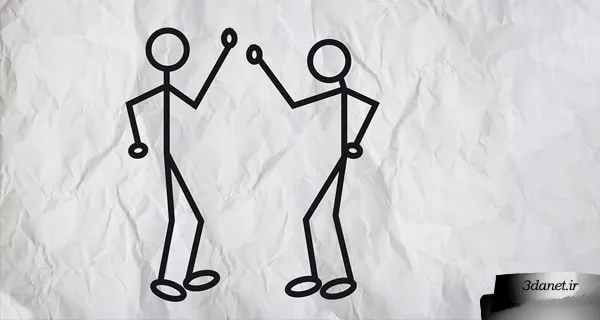
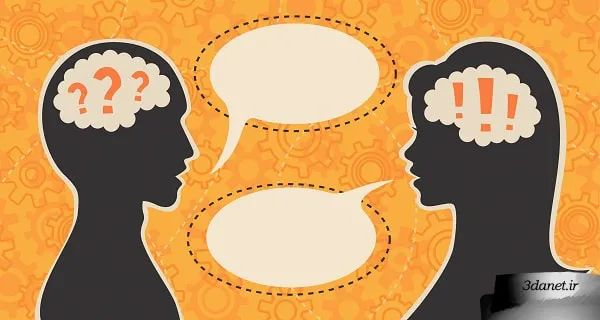
“Conversation” is the language of civilizations. No civilization has ever taken shape without conversation, nor has any endured without it. Civilized human beings, even when resolving inner problems and treating their psychological ailments, take refuge in conversation with psychologists and expert counselors. Is the foundation of psychotherapy anything other than intimate sessions and extended conversations? When the most inward human problems can be resolved through conversation, why should we be unable to do so with objective, scientific, and social problems?
Nonetheless, “conversation” sometimes turns into quarreling. Quarreling—or, in the idiom of religious texts, mirāʾ—is the blight of conversation. In religious texts, it is related from the Prophet of Islam that the most pious among you is the one who does not engage in mirāʾ, even if he is in the right (Shahīd Awwal, al-Arbaʿūn Ḥadīthan, p. 56). It is also related from Imam ʿAlī (a.s.) that no servant attains the truth of faith unless he abandons mirāʾ, even where he is in the right (Kanz al-ʿUmmāl, ḥadīth 9024). Most astonishing of all is a narration according to which the Prophet (s.a.w.) said: On the Night of Ascension, after polytheism, God forbade me from nothing as much as quarreling. We know that Abū Ḥāmid al-Ghazālī’s famous repentance was also from disputation and mirāʾ. At the tomb of Abraham the Friend (a.s.), he covenanted with his Lord never again to dispute with anyone. When Ḥāfiẓ says, “Conversation was not the rite of the dervish,” by conversation he means quarreling, not chitchat.
In logic, quarreling (jadal) is counted among the five arts (alongside demonstration, rhetoric, etc.), and in the literature of the Noble Qurʾān, “the best disputation” (jidāl aḥsan) stands alongside wisdom and admonition; but unfortunately, what is now prevalent and entrenched among us is mirāʾ, or blameworthy quarreling—not logical disputation, nor the best disputation, nor conversation. Quarreling is a counterfeit of conversation. Our need for conversation sometimes leads us into quarreling, and we try to fill the void of the one with the other. On the one hand, we need nothing as much as conversation, and on the other, nothing deprives us of the blessing of conversation as much as quarreling. At present, in hundreds and thousands of virtual groups and scholarly and political circles, quarreling holds sway, and many people, under the naïve illusion that they are conversing with one another, have fallen into the abyss of fruitless and endless disputes. The boundary between conversation and quarreling is very fine and ambiguous. The differences between quarreling and conversation ought to be the subject of several academic dissertations. What I note here are a few simple, concise points:
1. The goal of conversation is for me to know what is going on in your mind and for you to know what my pain is; but quarreling thirsts for victory and has a lust for dominating the other.
2. The end of quarreling is enmity, and the end of conversation is friendship. The minds and tongues of quarrelers are captive to suspicion of others or to selfishness; but conversation is a way to reduce divisions and misunderstandings. Conversation brings us closer to one another, and quarreling makes us more distant and more hostile. Conversation, if it does not untie a knot, does not make the knot tighter.
3. In conversation, we distinguish between an idea and the person who holds it. That is, our opposition to an idea does not lead to enmity with the person who holds that idea.
4. In conversation, we strive to understand the other’s words, and in quarreling, we strive to force our own words into the other’s ear.
5. People of quarreling have no concern for truth. For this reason, they never admit to any error or injustice. But in a healthy conversation, the parties occasionally accept that they have erred on a certain issue, or have been negligent or exaggerated, or have gone too far.
6. Quarreling is the exploitation of conversation; that is, conversation in quarreling is nothing more than a pretext. Hence, people of quarreling sometimes abandon this pretext and use other tools that have no affinity with conversation, such as bullying, threats, unsolicited advice, exposure, and violation of individuals’ privacy.
7. Quarrelers usually have a rough tongue, full of barbs and sarcasm; though not everyone with a rough tongue is a quarreler, and not every quarreler has a rough tongue.
8. Quarreling is past-oriented; but conversation is future-building. In quarreling, you defend a path you have already traveled; but in conversation, you seek a path that will build the future. For this reason, conversation is progressive; but quarreling returns each time to the starting point.
9. In conversation, we strive to learn something; in quarreling, our effort is mostly to make others see things our way.
10. Persistence and excess in pursuing arguments are signs of a quarrelsome person. Those who engage in dialogue leave it as easily as they enter it, and know when and where to step back; but the quarrelsome flail about until they raise the flag of victory and the opponent confesses defeat.
.
.
Are We Conversing or Quarreling?
Reza Babaei
Reza Babaei's Personal Website
Reza Babaei's Personal Channel
.
.


Discussion2 comments
ماشالا آقای شهرستانی چقدر نظر دارید شما
با مرور گفتارهای انتقادی برجسته ترین اندیشوران ایرانی و بررسی پیام های زیر گفتارها ، بیشتر به نظر می رسد که رجز و خطبه می خوانند و در بهترین حالت ، جدل می کنند و بحث اگر مصداق داشته باشد ، لابه لای دیگر اقسام سخن ، محو می شود .