Philosophy
Dialogue as a Way of Life, Mohammad Mehdi Mojahedi
Avoiding dialogue leads to self-conceit and epistemic error, because in the public sphere, understanding the world is only possible through the discovery of mistakes. Dialogue is a way of life among those who, with humility and critique, seek to solve problems.
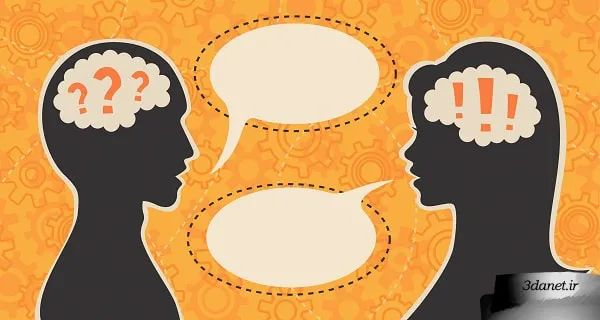
Avoiding dialogue has at least two drawbacks: one moral-spiritual and the other epistemic. The moral-spiritual and psychological drawback relates to the possibility of dialogue-averse individuals falling into the trap of self-centeredness, self-conceit, and self-exceptionalism, as if they consider themselves a breed apart from others and above dialogue, as though they know things that others cannot understand, or if those things were to reach others' ears, they would disturb them, or at the very least, others have nothing in their bag to add to their knowledge, to bring forth and teach them, or to be able to critique them.
Introduction
In this collection of notes, what I mean by "dialogue" is the specific sense intended by critical rational philosophers, and more than merely a reference to the "logic of dialogue" or "logical dialogue," it is a name for a kind of way of life. Such a way of life is a vigilant, continuous, and improving endeavor in which no one is or can become independent of the "meaning-giving other" or without need of them.
We come to know the world through the discovery and elimination of error. This is the condition of our survival at various levels of human life. It is through discussion, critique, and presenting our views in the public sphere that all of us understand our errors, errors whose discovery and elimination are a necessary condition for survival, as well as for our cognitive and skill-based growth.
Some may, in their solitude, be able to privately feel more satisfaction with themselves and their views, and lament the narrow-mindedness, ignorance, and pretentiousness of others out of self-sufficiency or compassion, and take this very narrow-mindedness of others as a reason that they should not expose themselves and their views to discussion and critique in the public sphere. But the reality is that the less we expose ourselves and our views to the arena of public discussion, the more we deprive ourselves and others of the possibility of discovering and eliminating errors.
In other words, avoiding dialogue has at least two drawbacks: one moral-spiritual and the other epistemic. The moral-spiritual and psychological drawback relates to the possibility of dialogue-averse individuals falling into the trap of self-centeredness, self-conceit, and self-exceptionalism, as if they consider themselves a breed apart from others and above dialogue, as though they know things that others cannot understand, or if those things were to reach others' ears, they would disturb them, or at the very least, others have nothing in their bag to add to their knowledge, to bring forth and teach them, or to be able to critique them.
The epistemic drawback of dialogue-aversion is the very deprivation of the dialogue-avoidant individual from being critiqued and becoming aware of their theoretical and practical mistakes by others, each of whom knows things that this individual perhaps does not. For this reason, to the extent that such an individual deprives themselves of critique in the public sphere, they equally rob themselves of the possibility of becoming aware of their own errors. It is for these two reasons that new social networks can provide an unparalleled possibility for the expansion and propagation of this way of life, a way of life that is both more ethical and more truth-seeking.
Practicing dialogue as a way of life requires (1) liberation from certain misunderstandings about dialogue, (2) recognizing and removing obstacles to dialogue, and (3) providing the conditions for dialogue in the real world. I will address these three matters in what follows.
Three Misunderstandings about Dialogue
For dialogue to become fundamentally possible, one must, with great care and precision, recognize the obstacles to dialogue and remove them in the course of dialogue. Apart from technical and skill-based obstacles, some of the most important obstacles to dialogue are rooted in our understanding and expectations of dialogue. Here we will review three examples of common misunderstandings about dialogue, misunderstandings that prevent dialogue from taking place or hinder its progress.
۱. Many suppose that critical dialogue is merely one type of dialogue, whereas dialogue essentially has no meaning other than critical dialogue. Dialogue means critical dialogue. Two-way or multi-way verbal acts that are not critical are not dialogue at all. The adjective “critical” can essentially be omitted after “dialogue.” If we do bring this adjective, it is to emphasize the critical nature of dialogue and to avoid a great and common error regarding the meaning of dialogue—an error that has unfortunately ensnared many—namely, the mistaken supposition that dialogue can be non-critical. If two people are talking to each other about an issue, but have no difference of opinion, or do not make their difference of opinion the basis for critique, one can hardly call their activity dialogue. Their act, if not accompanied by verbal violence, is probably the unburdening of a weary heart to a patient listener, or the telling of a lover’s heart’s secret to a beloved, or a class session between student and teacher, or an expression of devotion by a disciple to a master, and the like. If it is accompanied by verbal violence, it is something akin to a quarrel and dispute, and possibly contention and polemic, or the disputation of novice students. If the wheel of a verbal act does not turn on the axis of critique, whatever it may be, it is not dialogue.
۲. Others suppose that when they have a problem, as long as they are at an impasse in understanding or solving it, they should not enter into dialogue with others about it. We have often heard, when inviting some to dialogue about a problem, that they say with a scholarly tone: “The problem is not yet clear / complete for me.” This stems from their ignorance of dialogics. Dialogue is not among those who have reached the end, or who fancy themselves as having done so. Dialogue is among those who always see themselves as being on the way. One must tell those ignorant of dialogics that dialogue means a critical discussion and problem-solving among those for whom the problem is not yet clear or complete, and more importantly, who never suppose that the problem will, for them, become clear or complete once and for all without dialogue.
The subject of dialogue is always a problem. If no problem exists, dialogue is meaningless and without a subject. The problem that is the subject of dialogue is a problem for which neither of the two parties to the dialogue alone has any solution, or any reasonable solution, or if they do, they do not consider their own solution to be the final solution or the best possible solution.
The two parties to the dialogue are “optimistic” and “hopeful” that through dialogue they will arrive at a solution, or a better solution, to a specific problem. For this very reason, in dialogue neither party wishes to impose their view on the other, because they themselves entered the dialogue with the assumption that their understanding of the problem and its solution is insufficient, unclear, or incomplete. This is the meaning of scholarly, unfeigned humility and critical modesty, and a lowering of the wing devoid of ceremony, pretense, and nuisance. Because of this humility, each of the two parties to the dialogue is intensely careful to correctly understand the other party’s view and to grasp its problem-solving value. Therefore, while being sensitive to the errors and weaknesses in their own and the other’s speech, they are not lying in wait for the weak points in the other party’s words in order to highlight them, flaunt their own erudition, and show that the other party has been defeated so as to remove them from the scene; rather, they try to discover the error in their own speech in the mirror of the other’s critique, and reciprocally, to hold up a critical mirror before the other so that they too can see the error in their own viewpoint in that mirror with transparency and clarity. Dialogue in this sense is a participatory and reflective process and praxis for the mutual discovery of error and the optimal formulation of a specific problem, and possibly its solution ...
3. On the other hand, however, dialogue is not debate either. In a debate, the goal is to defeat the opponent. A debate is a “zero-sum game,” meaning any positive point for one of the two rivals is a negative point for the other. Whereas, firstly, the two parties to a dialogue are not rivals—that is, they are not competing over the possession of something or for win-or-lose; secondly, any positive point for one party to the dialogue is simultaneously a positive point for the other side as well. For this reason, each of the two parties to a dialogue is on the lookout for the positive points that can be found in the other side’s speech, to refine and develop those points from their weaknesses and use them as part of the path that must be traversed to understand the problem and find a solution. In a debate, by contrast, each of the two adversaries or rivals uses every method to convince the spectators or readers that the opposing side has been defeated. Methods such as waging psychological warfare against the adversary, provoking them nervously, tripping them up, provoking, belittling, or mocking them, slandering them, playing the snake charmer and exploiting the simplicity and ignorance of the opponent and/or the audience and spectators, deliberately committing fallacies, giving false information, stirring up the emotions, feelings, and beliefs of the audience and spectators against the rival, playing the victim, interpreting the rival’s words in their most foolish sense and attributing that flimsy and base meaning to the rival, and similar tricks. All of these are aimed at driving the adversary from the field, and are entirely alien to the method, goal, and meaning of dialogue.
In fact, the relationship between the two parties to a dialogue is like the relationship of members of a team in a relay race, not runners in a hundred-meter dash or a marathon. In a relay race, it does not matter ultimately which team member crosses the finish line; for this reason, each runner on a team tries to run the distance they must cover in the shortest time, and if previous teammates have slacked off, the next runner tries to compensate for their shortcomings as well.
Some Cognitive and Psychological Obstacles to Dialogue:
* Self-victimization: Self-victimization is one of the obstacles to critical dialogue, a troublesome and poisonous trait that has unfortunately penetrated the deepest layers of identity and personality for many of us, robbing us of ourselves and rendering us incapable of solving common problems, of “learning through dialogue,” and, in a word, of experiencing a growth-oriented life.
Self-victimization, instead of resolving issues, is the logic many of us employ in confronting life’s problems, and hence, when we encounter a difficulty, we reinterpret the entire history of our individual or collective life as evidence of our own victimhood and seek the roots of the problems in our own wretchedness or in the decrees of fate, a baleful historical destiny, or in the conspiracy of enemies, ill-wishers, and the envious, or in the contrariness of the totality of circumstances and conditions, and similar external obstacles beyond our own will, choice, and control.
For instance, on the scale of family life and within the framework of marital relations, regarding the victimhood of women and men in our society, at least four views can exist:
a. Men are the victims.
b. Women are the victims.
c. Women and men are both victims to varying degrees.
d. No one is a victim.
But the reality is that in the real world, in any conflict, depending on the case, one side or both sides of the conflict may, to varying degrees, be victims of factors beyond their will, choice, and control; what is erroneous, however, is adopting the logic of self-victimization even when confronting those very cases where the individual sees themselves as a victim of factors beyond their will, choice, and control.
By considering the following seven points, one can understand why the logic of self-victimization not only precludes the possibility of critical dialogue but also ruins the lives of self-victimizers from the ground up.
1. The logic of victimhood is the logic of evading the acceptance of responsibility. When linguistically formulated, the key expressions of this logic are: I am a victim of culture, family, religion, history, economic conditions, race, gender, social class, my own good-heartedness, and/or ...; I have been deceived; I was forced; I did not want to but ...; I yielded to the insistence of so-and-so; my heart went out to them and I made this or that decision; and the like.
2. The logic of self-victimization is a logic self-sufficient from reality that severs its possessor's relationship with reality. Someone who has surrendered to this logic, regardless of what transpires around them, always presupposes in understanding their failures that they must have been the victim of some factor outside their will and control, and strives with all their might, by hook or by crook, to find that factor, and if they cannot find it, to fabricate it.
3. The logic of self-victimization, for the two reasons above, deprives its possessor of the possibility of a problem-solving approach. Therefore, day by day, the situation of the possessor of this logic and the problems of their life become more complicated.
4. The logic of self-victimization takes away from its possessor the possibility of liberation from the clutches of this logic, because it severs its possessor's relationship with reality and deprives them of the possibility of falsifying their analyses through their collision with reality and the real consequences of adopting such analyses.
5. The logic of self-victimization appears passive at the beginning of the path, but later, as it advances and becomes more entrenched, it results in violent and aggressive struggles.
6. The cycle of self-victimization, in this way, locks like the ring of a snare when it passes the stage of passivity and enters the stage of aggression. When the aggressive stage begins, these sentences are usually heard: Now that I am a victim (I have been deceived, I have been forced, I have made a decision against my own will, I have given in to the insistence of so-and-so, I have shown compassion but received ingratitude, and the like), I have the right, as a victim, to struggle; for example, I have the right to inflict the very same harms that were inflicted upon me onto the supposed oppressor, to ruin their reputation, to disregard their rights, to exert mental, psychological, and/or physical pressure on them, and the like. A self-victimizer, based on this logic, in the vengeful struggles they undertake, deems and justifies many moral, religious, and legal wrongs as permissible retaliation and recompense, and counts committing them as their indisputable right.
7. Someone who has given in to this passive-aggressive cycle is self-sufficient from reality because all outcomes are summarized for them in one word: they are a victim. Thus, they have no need to understand and know reality, because they have no intention of correcting their own conceptions, and therefore they do not submit to critical dialogue either. The possessor of such a logic only accepts dialogues whose outcome is gaining affirmation and sympathy. If they see the slightest sign of criticism and/or non-acceptance in the interlocutor, they take this very thing, in a self-pitying manner, as a sign of their own victimhood and leave the dialogue with sorrow or anger. They are not seeking to be criticized and to solve problems; nor are they seeking to correct their own position through the criticism they receive.
Thus, self-victimization is an approach that, instead of addressing problems with a problem-solving and responsible approach, constantly consolidates and deepens two feelings simultaneously in its possessor: a feeling of self-righteousness and a feeling of being absolved of shared responsibility. The problem, in this way, is never solved, but rather constantly becomes more complicated. After a while, a person who becomes accustomed to this logic fundamentally becomes crisis-dependent; that is, without the problems that make a victim of them and give them the possibility of a "pitiable" escape from another responsibility, they simply cannot live, because without such problems, they cannot justify their irresponsible position in life. They have now grown accustomed to being a victim and constantly take on passive-aggressive roles one after another. This cycle also inflicts damages on those around such a person, but ultimately it ruins the life of the person themselves. Instead of striving "responsibly" to solve the real problems of their life, they flee from them "pitifully" and resort to "pseudo-problems."
It is for this reason that educated individuals, who usually possess a higher IQ than the average intelligence of the general public, are by no means immune to the blight of self-victimization. In fact, one could even say that, on the contrary, those who are more intelligent can devise more complex and numerous pretexts and justifications for considering themselves victims, and as a result, the deadly poison of self-victimizing thought can contaminate them in a more covert, complex, and profound manner.
On the other hand, the issue becomes even more complicated when the system of values and worth surrounding the individual venerates weakness and favors victims. In such cultures and societies, individuals, through various mechanisms such as active conditioning, adapt themselves to the environment and actively internalize patterns of act and behaviour through which they receive the best environmental responses. In such cultures, self-victimization is rewarded; it makes no difference whether the self-styled victims are ordinary people involved in daily affairs, or officials and politicians entrusted with the administration of public matters. Whoever can better and more effectively play the oppressed, more easily finds a place in people's hearts. Politicians' recourse to conspiracy thinking is one of the most effective methods of deceiving and attracting public opinion and diverting it from fundamental issues.
* The Fallacy of Framework-Centrism and Focus on Foundations: For a critical dialogue to take shape, must the intellectual or cultural foundations or frameworks of the parties to the dialogue be shared, or must they have extensive overlaps? Those who answer this question in the affirmative have, unfortunately, fallen prey to one of the most common and dangerous misunderstandings about dialogue: "The Myth of the Framework."
The myth of the framework is the great error of supposing that a critical, instructive, and problem-solving dialogue can only take place when the two sides of the dialogue share, to a large extent, common foundations, or intellectual, cultural, class, and/or other frameworks. Karl Popper, one of the most prominent critical rationalists, highlighted this error in his critique of epistemic relativism and called it "The Myth of the Framework." Framework-centrism, despite its familiar, plausible, domesticated, harmless, and even scholarly appearance, is one of the most vulgar and common, yet most unconstructive and unproductive fallacies, which begins the violence and destruction of collective human life by deeming dialogue impossible among those who have extensive or fundamental disagreements, and if placed in a context suitable for the exercise of violence (a context which, unfortunately, is found in abundance these days), it easily proceeds to the borders of physical elimination.
All this emphasis placed on "foundations" in our intellectual, cultural, and political atmosphere is a direct indication of this central error. If you inquire at any university or humanities and social sciences research center in Iran, you will find a great many lectures, articles, books, theses, and research projects focused on the "foundations" of something. In contrast, if you search among the books, research, articles, and lectures at the world's leading and reputable universities and research centers, the number of titles focused on foundations, bases, and frameworks is very, very small. This difference is not random or accidental.
Our view of knowledge, awareness, and thought is still subject to architectural and pyramidal metaphors, which, despite their realistic appearance, easily metamorphose into relativism. It is as if every body of culture, tradition, and knowledge, like an inverted pyramid, has one or two fundamental cornerstones upon which the subsequent stones of awareness are mounted, and the higher we go, the more numerous the stones of knowledge become, but their epistemic density (or their logical depth) diminishes. According to such a viewpoint, to understand an edifice of thought, one must inevitably begin from the foundations. Now, if the life, language, and world of awareness of two individuals rest upon two different foundations of knowledge and thought, according to this relativistic outlook, what do they have to say to each other? How can they even speak to one another?
The myth of the framework in fact rests on a legendary presupposition: cultural purity and the fundamental alienation of cultures and traditions from one another. Today, only profound naivety, malignant ignorance, and a vast unawareness of the history of science, religion, and culture could convince anyone that even a single pure and unadulterated religious or national culture, philosophical tradition, or theological framework can be found anywhere in the world. In reality, beyond identity markers and exaggerated differences, cultures and traditions are not so alien to one another. Our intellectual and cultural frameworks are the product of the confluence and amalgamation of different traditions and cultures. Exactly like human beings themselves, with different languages, skin and eye colors, and physiological features, who share so many common characteristics and genetic intermixtures that no pure race can be shown to exist in the world.
The reality is that if the two sides of a dialogue have many commonalities, or if all their mental and cultural frameworks are identical, or if their commonalities far outweigh their differences, then fewer important disagreements remain that could serve as material for critique, and if any disagreement remains at all, it will be something on the level of individual tastes regarding minor and subsidiary issues; and tastes, except for entertainment and adding to general knowledge about others, are not amenable to dialogue.
Dialogue is an action that is only more meaningful and, at the same time, more fruitful between individuals with more or less different frameworks. What makes dialogue between individuals with diverse intellectual frameworks impossible is not the diversity of these frameworks itself, but rather a lack of openness to new possibilities for solving the problem and an absence of patience and goodwill. If this openness is absent on both sides of the dialogue, how can they hope to move beyond myths and truth-claiming traditions and arrive at a more considered understanding of the world or a more reasonable solution to a problem? If the problem were solvable within the same previous frameworks, there would have been no need for critical dialogue in the first place.
Some of the Most Common Communicative-Cognitive Disorders
1. A jurisprudential/legal approach to social relations instead of an ethical and human approach (a conclusive, judgmental, fault-finding, and punitive approach to communicative problems)
The main task of jurisprudence and law in human relations is "settling disputes" or bringing conflicts to a conclusion through judgment and ruling to identify the guilty party, debtor, creditor, criminal, and the like. Jurisprudence and law, as their past and present demonstrate, contain no specific program for managing affairs nor possess any particular communicative model for regulating social relations. Social relations among friends, relatives, peers, spouses, and colleagues—that is, relations among individuals who interact with one another at a more or less equal level in terms of the hierarchy of political power, and who wish to live together harmoniously, especially if they seek to pursue the model of critical dialogue as a way of life—have the most distant relation to the jurisprudential-legal approach. This is because the jurisprudential-legal approach pertains to the level of bringing practical disputes to a conclusion; it is the final act, specific to the end of the matter. Dialogue, however, is an ongoing, open, and elevating intellectual exchange between those who are not seeking to find fault or settle conflicts through non-consensual means, but rather want to understand a problem better than before and possibly solve it. And in the end, dialogue always concludes temporarily and remains open to the continuation of discussion; nothing is settled conclusively.
A sign of adopting the legal-jurisprudential approach is that the sentences an individual constructs are full of "legal and juridical oughts and ought-nots" and fault-finding and punitive judgments. In such discourse, expressions like the following are heard in abundance: "The law dictates that...;" "So-and-so's legal duty is to...;" "It is so-and-so's legal right/obligation to...;" "According to the law, I am in the right, therefore...;" "So-and-so has violated their legal duties and their punishment is that..." This approach is, of course, appropriate for the context of legal and jurisprudential dispute resolution, that is, the very situation that may commence once the possibilities for critical dialogue have been exhausted.
2. A feminine-masculine approach to human relations (including the marital relationship) instead of an ethical and human approach
The hallmark of adopting such an approach is that the arguments and claims the individual makes are often essentialist judgments about woman/women or man/men, such as these expressions: “Woman is emotional but man is rational; woman should soften the atmosphere but man must support and protect woman; women are made to manage household affairs, but men are made for work outside the home; man likes woman to always be attractive and ready to receive him; woman likes man to think only of her and for man’s entire heart to belong to her; woman should solve these kinds of problems, man should solve those other kinds of problems; regulating family relations is woman’s work, but regulating social relations is man’s work; it is better for women not to enter intellectual and political discussions, and it is better for men to keep their women away from such mental entanglements, and the like.” These essentialist judgments block the path to dialogue, because by affixing gender labels to this and that from the very outset, they guarantee the desired results even before any discussion begins, and foreclose the possibility of transcending the horizon of stereotypes that are themselves part of the problem, not part of the solution.
۳. The authoritarian or vengeful, patronizing, top-down, imperative, reproachful, punitive approach, possibly accompanied by psychological and/or physical pressure
The words of someone who has adopted such an approach, besides being harsh and aggressive, usually either begin with “must/must not” and/or their explicit or implicit content is often that “do not ask me for reasons; I am not willing to discuss these matters; you must accept these points from me wholesale; the difference in my status and position and that of my audience necessitates that there be no questioning; I will not accept any opposing word in this particular area,” and the like. Dialogue is a democratic process among those who, in the position of dialogue, consider themselves equal with the other parties to the dialogue.
Some Positive Conditions for Critical Dialogue
Up to this point, some cognitive, personal, and communicative obstacles to dialogue have been mentioned. Here, some of the most important positive conditions for the continuation and enhancement of critical dialogue from the perspective of critical rationalists are pointed out.
As was discussed in the introduction and critique of the “myth of the framework,” what must be common among interlocutors is not intellectual, cultural, familial, doctrinal, class, gender, linguistic, or interest-based frameworks and the like. To initiate a dialogical, critical, and problem-solving relationship, what must be common in the first instance is the will and serious decision to engage in dialogue, the goodwill of the interlocutors, and their effort to protect the conditions of dialogue, that is, a patient commitment to the guiding and coordinating principles of dialogue.
It seems that some of the most important guiding and coordinating principles that make the continuation and enhancement of critical and problem-solving dialogues possible are as follows:
۱. Acceptance that life means continuous problem-solving at various levels of human life, and that in a reflective social life, problem-solving is not accomplished except through critical dialogue with others;
۲. Acknowledgment of the existence of a common problem;
۳. The belief that neither of the two parties to the dialogue can alone find an (optimal) solution to the problem;
۴. Recognizing that the intellectual frameworks of each of the parties to the dialogue do not necessarily, on their own, have sufficient capacity to find the best solution to that problem;
۵. Psychological openness toward the “other” who is the party to the dialogue, with all their differences;
۶. Acceptance that the two parties to the dialogue do not agree with each other and are not supposed to confirm each other during the dialogue or at the end of any chapter of the dialogue. The permanent goal of dialogue is mutual and enhancing critique;
۷. Optimism and hopefulness that through dialogue, the problem under discussion can at least be better understood and perhaps solved or dissolved;
8. Readiness to be criticized and to criticize, which requires anthropological optimism and epistemological pessimism; that is, one must assume the good faith of the interlocutor, but not regard it as proof of the validity of their claims;
9. Each of the two parties to the dialogue must consciously, responsibly, deliberately, and to the greatest extent possible, expose themselves to the other's critique;
10. Helping the other to formulate their point better, more forcefully, and with greater reasoning;
11. Internalizing the model of mutual synergy;
12. A sense of responsibility and concrete, practical accountability for the fate of the dialogue;
13. Recognizing the "other" as a partner, not a rival. One must defeat a rival, must vanquish them, or else they will defeat you; but with a partner, one must join forces, be sensitive to their errors, and share those errors with them. One must have a good opinion of them and be hopeful about the partnership. The success of each partner depends upon (and signifies) the success of the other.
14. A mutual understanding that even without shared frameworks and foundations, two people can choose problem-solving and critical dialogue as a way of life, experience it together, and, based on that, shape a shared experience.
The conditions for dialogue are almost never ready; one must engage in dialogue!
If dialogue is contingent and conditional upon the gathering of the conditions enumerated so far, no dialogue will ever occur, for "dialogue in this earthly realm cannot be attained." The ideal dialogue, as described, can only be found in the ideal conditions of definitions and among the pages of books, if it can be found at all. Otherwise, we humans who live in the "human condition" on this very earth and in one of these known societies, with all our deficiencies and shortcomings, cannot, when engaging in dialogue, will or expect that the two parties to the dialogue will suddenly set aside all their psychological knots, behavioral sharpness, moral roughness, and communicative incapacities, become different people, imagine themselves in the position of the "other," sympathize with them, look at themselves through the eyes of the "other," curb their egoism, carnality, narcissisms, and self-centeredness, and see and acknowledge their own errors—to which they have grown accustomed and with which their identity has become intertwined—in the mirror of the other's critique, and instead of breaking the mirror, not even furrow their brow, recreate themselves, and keep the atmosphere of the dialogue vigilantly and compassionately warm and cherished. We ordinary, conventional human beings who pass our days and nights together, often, and perhaps without exception all of us, in every communicative encounter, bring our entire being, with all its bad and good habits, along with us, and we usually do not monitor our own state so vigilantly "always" from above and outside (if it is even possible most of the time) that for the utterance of every word, every glance of the eye, and every turn of the head and neck, we observe the ideal conditions of dialogue and the state of the interlocutor opposite us, lest any of these movements and stillnesses become a cause for misunderstanding and the thread of dialogue be severed. Such a "human in this earthly realm cannot be attained," and precisely for this reason, we must presumably forget the wish for dialogue and accept that "dialogue in this earthly realm cannot be attained" at all.
This perception stems from a dangerous misunderstanding about the nature and reason of "dialogue as a way of life." This misunderstanding has two main roots. One is the conflation of the ideal conditions of the definition of dialogue with the objective conditions of dialogue in real life and everyday relations, and the other is the confusion between the "conditions for starting a dialogue" and the "conditions during dialogue." The first point is a simple one: definitions often describe the ideal situation, but in practice, the ideal situation is never present. Ideal definitions have a horizon-opening and heuristic value, and they show the direction of movement and the signs and conditions for progressing along the path. This point becomes clearer with the explanation of the second point.
The difference between the prerequisites of dialogue and the conditions of dialogue is that in the absence of "prerequisites," dialogue does not come about, whereas "conditions" describe the state and situation of dialogue. The ancient tradition of dialogue, rooted in the wisdom of the ancient Chinese, ancient Indians, and the Socratics and pre-Socratics, is a self-realizing path; that is, the gradual realization of the "conditions" of dialogue can be seen as signs of progress on the path of dialogue and the results of practicing dialogue as a way of life. In other words, the parties to a dialogue are not complete human beings from the outset of the dialogue; rather, through dialogue, they gradually become aware of some of their deficiencies, and if they continue the exercise of dialogue, those deficiencies are gradually removed from their being. To put it yet another way, the conditions of dialogue can be considered the very goals or outcomes of dialogue, not the foundations, roots, and "prerequisites" of dialogue. The prerequisites for the possibility and realization of dialogue are nothing more than an initial will to dialogue, the mutual goodwill of the interlocutors, and their effort and patience; that is all. Beyond this, whatever is said about the conditions of dialogue is not, in the strict sense of the word, "prerequisites" of dialogue, the absence of which could be used as a pretext to refrain from beginning or continuing dialogue; rather, they are "conditions" that are gradually provided and attained in the course of dialogue and during benevolent and patient effort. In this sense, the goal of dialogue is dialogue itself and not something outside it.
With such an approach, we do not engage in dialogue merely in a mirror-like and contemplative manner; in addition to critical reflection, this approach also entails, among other things, "caring" for the situation of the other and being strict with oneself, at least for the purpose of tolerating the roughness and coarseness of the temperament and/or the harsh and rough words of the other interlocutor, and generously overlooking unpleasant words, behaviors, or insinuations that may be intentionally or unintentionally introduced into the speech or conduct of the other interlocutor, including in objection to the non-observance of the conditions of dialogue.
It seems that one can and should prepare the child for such a way of life from an early age. This, of course, requires that the father and mother themselves have already established such a critical and dialogical relationship with each other and each of them with themselves beforehand. This is an experience that improves the more it is practiced. The preparation of the father and mother for such a way of life entails, among other things, abandoning certain conventional and customary authorities, especially within patriarchal/matriarchal/parent-dominated families, for which many may lack the necessary psychological, mental, and epistemic readiness.
The state of the media system, public education, and the university system is also very effective in laying the groundwork for cultivating, expanding, and popularizing this way of life. That is, the political system encompassing these social sub-systems must be vigilantly prepared to relinquish certain types of authority and establish a relationship with its citizens in which practicing such a way of life becomes a source of growth and advancement for the citizens, and not a cause of their loss and disappointment.
Receptivity to dialogue in this sense can be considered the most important indicator and component of democracy. In other words, alongside examining the negative and positive conditions of dialogue, a question worthy of all manner of pause and reflection is whether the provision of these positive conditions is solely a function of the will of each individual, or whether it is itself contingent upon specific political, social, and economic conditions. To put it another way, the question is whether those who live under closed and authoritarian political, economic, and social systems have an equal chance to those living in open and democratic political, economic, and social systems to initiate, sustain, and enhance critical dialogues. It is clear that the answer to this question is negative.
An Example of a Deeply Probing and Exploratory Critical Dialogue
In November 1968, Huston Smith [1] conducted a dialogue with Krishnamurti [2], the complete film of which is fortunately available.
This dialogue is one of the brilliant gems in the recorded history of philosophical dialogues, in which, with the utmost simplicity and unpretentiousness, and free from any theatrical or ostentatious aspect, both sides of the conversation strive with all their spiritual, psychological, and cognitive powers to untie the knot of a difficult conceptual problem: “clarity,” “purity,” or “lucidity.” This concept is key to understanding the thought of Krishnamurti and many other sages and seers, a concept that refers to a state which, in Krishnamurti’s view, is only realizable when the seeker sets aside the question of method or “how.”
Krishnamurti soon steers the discussion toward the necessity of liberation from authoritarian thinking, and considers this liberation constitutive of the state of clarity, and not merely a condition for becoming pure, but the very essence of becoming pure. This is the point where Huston Smith assumes the role of a critical, problem-solving interlocutor, and over the course of nearly an hour of dialogue with Krishnamurti, with a brilliant and extraordinary artistry that only emerges from a learned mind and a cultivated, unknotted soul and psyche, he reaches the depth of the meaning Krishnamurti has in mind.
Neither Huston Smith nor Krishnamurti refrains from the clear, frank, and direct expression of radical critiques of the other side’s viewpoint, yet at every moment of this dialogue, empathy and critical compassion, anthropological optimism, and epistemological pessimism abound. This dialogue, apart from its valuable content, is also a rare example for discussion in this article because it weakens the myth of a common framework as a precondition for dialogue. Nevertheless, the breadth and depth of the critical understanding formed in this dialogue, and the reflective openness that surges within it, is an ideal even for dialogues taking place within a shared intellectual and cultural framework.
.
.
[1] Huston Smith, born in 1919, is one of the renowned professors and authors of the history and philosophy of religion. One of his fourteen books alone, titled “The World’s Religions,” has sold over two and a half million copies and is still considered one of the primary and rare sources for the comparative study of religions. He has taught religion and philosophy at universities including MIT, Washington, California, and Syracuse. He also introduced to the world a type of polyphonic vocal music common among some Tibetan Buddhists, a discovery recognized as a turning point in musicological studies. He has not only deeply studied Eastern paths in the search for truth but has also persistently practiced and lived some of them himself.
[2] Jiddu Krishnamurti, born in 1895 and died in 1986, was an Indian sage with a Hindu background and an upbringing in Theosophy. At the age of thirty-six, according to his own account, a profound inner and deeply spiritual experience transformed him from the ground up, an experience that those close to him believed recurred many times until the end of his life, and which he himself called an experience of mystical union and immense peace. According to those around him, this experience was accompanied by a kind of innocent, childlike state and then by a rending of the veil of matter and body, and has been described technically as a transformation and boundlessness. Finally, on August 3, 1929, by announcing the dissolution of the Order of the Star in the East (OSE), which he himself headed, Krishnamurti declared the search for truth through (or within) any specific cult or religion, institution, organization, sect, or philosophy to be impossible, and said that henceforth he would devote all his efforts to the liberation of the human being. He shed all religious, national, and philosophical affiliations and any kind of authority, imitation, and master-disciple relationship, considering all such attachments as paths to bondage and not liberation, paths that, in his view, prevent the finding of truth. He considered truth to be a “pathless land.”
.
.
Dialogue as a Way of Life
Author: Mohammad Mehdi Mojahedi
ـ This article is a revised and expanded version of an article published in the third issue of Andisheh Pouya magazine in Shahrivar and Mehr 1391 (August-October 2012).
.
.




Discussion1 comments
با سلام و احترام و ضمن سپاس و تشکر از درج این مقاله مفید، شیوا و گیرا، مزید امتنان خواهد بود اگر نسخهpdf یا word آن را هم برای دانلود به اشتراک بگذارید!