Conversation
Hostility Toward the Other and Its Consequences in Iranian Society
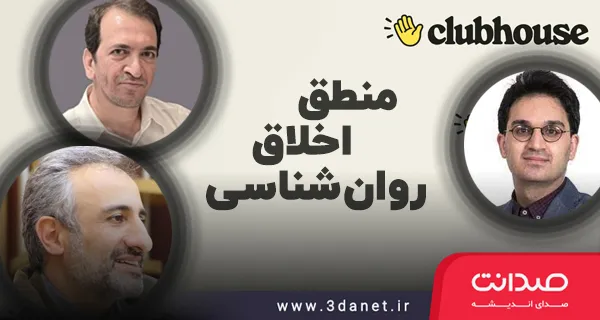
This conversation examines the phenomenon of hostility toward the Other and its individual and social consequences in Iranian society. In this program, Ali Sahebi and Mohammad Mehdi Mojahedi discuss the psychological, ethical, and political roots of the exclusion of the Other and the possibilities for moving beyond it.
About this video
In this program, Ali Sahebi and Mohammad Mehdi Mojahedi, in conversation with Mohammad Reza Kadivar, address the issue of hostility toward the Other—a phenomenon in which an individual or group perceives the Other not as an equal human being, but as a threat, an enemy, or an inferior entity.
The discussion's focal points can be traced on several levels: the psychological roots of fear and hatred of the Other, the role of collective identities in reinforcing exclusion and rejection, the political and social consequences of hostility toward the Other, and its relationship with violence, discrimination, and the collapse of civil dialogue. The program's emphasis on Iranian society brings this discussion closer to concrete experiences and the current issues facing Iran.
The significance of this conversation lies in its refusal to view hostility toward the Other merely as an individual or moral failing, instead recognizing it as a social, political, and cultural problem. From this perspective, understanding hostility toward the Other can contribute to the restoration of trust, tolerance, dialogue, and coexistence in society.