Political Science
Revolutions: The Unplanned Consequences of Planned Actions
Revolutions carry their actors away; the unplanned consequences of planned actions. Like a heart attack, they are unpredictable yet preventable. Reform means enhancing problem-solving capacity to forestall the Behemoth of revolution.
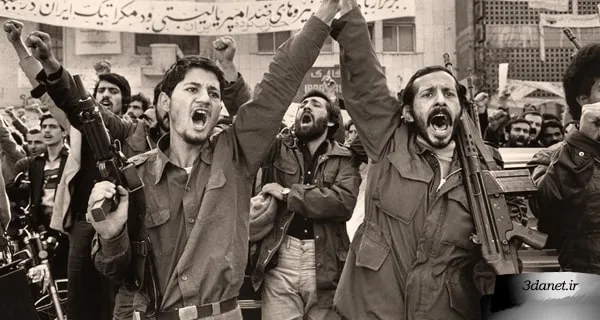
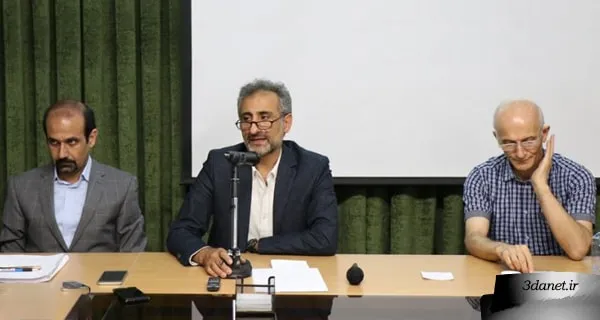
Some time ago, I wrote a note entitled ""Revolution as Event: A Reflection on the Question of the 'Achievements of the Revolution'". A number of friends kindly sent me their critiques and opinions about that piece. Among them, Dr. Seyed Ali Mirmousavi, the dean of the Faculty of Political Science at Mofid University, raised critical questions that provided an occasion for further elaboration on what I had written in that initial note. With gratitude to him and other friends who shared similar questions with me, I am publishing those questions and my answers here for the further benefit of friends' critiques and opinions. The publication of these questions and answers is the result of Dr. Mirmousavi's recommendation; I am very grateful to him and other friends who, by raising these and similar questions, provided the grounds for proposing and publishing this supplement.
Questions: ◽️ First question: What is the role of the element of will in revolution? ◽️ Second question: How can a revolution be preventable despite its unpredictability? ◽️ Third question: What is the meaning of the priority of reform over revolution given the inevitability and unpredictability of revolution?
Answers: ◾️ Regarding the role of "active agency" or agency, and also the role of will in events, it seems to me that one can refer to Ernesto Laclau's classification of "demands." The pursuit of demands, from his perspective, is in fact the arena for the presence, emergence, and activation of agencies and wills. Through a series of preliminaries, Laclau proposes that "demand" can be considered the unit of politics and then distinguishes between two types of "demand": specific (democratic) demands and general (popular) demands.
These general popular demands are, in fact, a reference to any type of request that can, despite its ambiguity, open a comprehensive umbrella over the specific demands of various groups (demands that are highly diverse and even contradictory), gather all demanding groups together, and combine their forces. Popular uprisings and revolutionary movements become, in reality, the most important arenas for the emergence of such agencies and wills, which have two characteristics:
Firstly, at the individual level and in the identification with the micro-groups participating in the movement, a kind of illusion of pursuing a specific demand is underway; secondly, at the level of collective revolutionary action, the movement's action, in fact, revolves around general, interpretable, indeterminate, and gelatinous demands, of which everyone has become a supporter from their own perspective. Precisely for this reason, movement and revolutionary activists have irresolvable disagreements about whether the movement has achieved its results or not, whether it has ended or not, whether it has failed or not, and also about who the comrades and friends of the movement are and who the enemies are at any given juncture.
Thus, it is true that in every revolutionary movement, individual activists exercise agency and imagine that they are at the forefront of pursuing demands, but at every juncture when they look back, they see that the course of events has had little relation to their demands and their intended direction. Just like a swimmer swimming in a torrent. He demonstrates the utmost of his buoyancy and swimming ability, but every time he gets a chance to lift his head out of the water and reorient his position, he sees that, for example, instead of getting closer to the shore, he has fallen hundreds of meters further away from it, and, suppose, instead of heading eastward, he has ended up heading southward.
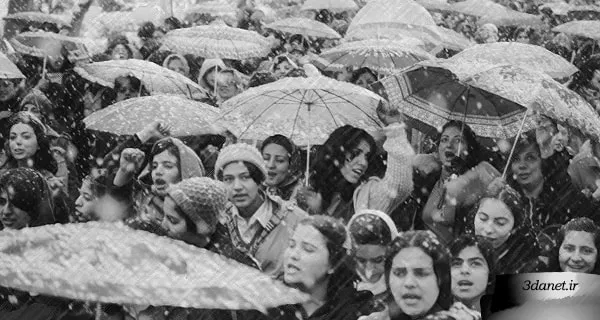
◾️ Revolutions are structural tidal waves that disrupt all the rules of the game, institutional boundaries, and the agency capacity of actors, changing them without prior notice. Non-actors become active, and actors either face a change in the scope and power of action or are completely stripped of agency. It is for this reason that, despite the fact that people caught up in revolutionary currents realize after a while that it was not they who made the revolution, but on the contrary, it was the tidal wave of the revolution that carried them away.
Revolutions are, on the one hand, unpredictable, and on the other, preventable. These two propositions appear incompatible. But in reality, they are not contradictory. In ordinary, everyday life, we know that by observing dietary hygiene and exercise we can prevent a heart attack, even though a heart attack, in terms of its unpredictability and suddenness, is no less dramatic than political revolutions. Revolutions are unpredictable because the conditions on the verge of revolution, by definition, are conditions in which none of the organs, institutions, and structures any longer possess the characteristics and properties they had in a normal state. For this reason, studying them and monitoring their state and condition is no longer indicative of the state of society and government. For this reason, while from the perspective of structural and institutional analysis, the Pahlavi regime in the years 1356 and 1357 (1977-1978) appeared completely stable, the revolution had, in fact, drawn near to its final steps.
No one knew, nor could know, when and where the Behemoth of revolution (to use Hobbes's term) would ultimately rear its head, but one could have known long beforehand which policies, if adopted, would turn the ground of government and society into a Behemoth-breeder. In this sense, if the actors of political society and civil society are not deluded and are sufficiently "counter-revolutionary" and act vigilantly, they can avoid providing the grounds and beds for the coming together of the Behemoth of civil war or revolution. Hobbes's extraordinarily readable book, The Long Parliament, concerning the English Civil War (1640 to 1660), is one of the classic and brilliant works in this field.
◾️ The meaning of the priority of reform over revolution is, in fact, precisely this prevention of the formation of the grounds for the coming together of the Behemoth's seed. Political reform in this context means the constant enhancement of a political system's problem-solving capacity in order to diagnose, digest, absorb, or resolve the predicaments and problems that are constantly becoming more complex in step with the increasing complexity of the world, humanity, and society. Reform in this sense is a mechanism for the survival and enhancement of a system's problem-solving functions and, of course, from the perspective of all conservatives, some liberals, most advocates of democracy, and all "counter-revolutionaries," it takes priority over revolution.
.
.
Revolutions: The Unplanned Consequences of Planned Actions
Author: Mohammad Mehdi Mojahedi
.
.




Discussion0 comments
No comments yet; let yours be the first voice.