Philosophy
The Ethics of Confronting Terrorism
Confronting terrorism requires ethical reflection; the terrorist act is inherently vile, and judging it must not depend on the identity of the victim or the perpetrator. The response to terrorism is not terrorism, and the state must not cede its monopoly on the use of force to citizens.
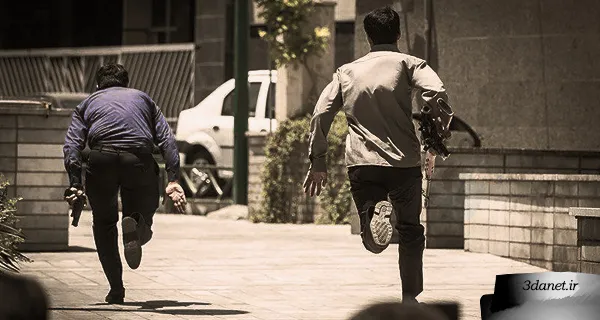
The abyss of new terrorism has now brazenly stared us Iranians in the eye from the closest possible distance. For some time, we too had been staring eye to eye with the shadow of the abyss of new terrorism in every corner of the Middle East. There is no need to review Nietzsche and his understanding of threat and catastrophe to realize that thinking about the ethics of confronting terrorism is not a fanciful matter for leisure time; just as seeing the deeply political theme hidden in the Plasco disaster was/is not a matter of arbitrary speculation; and again, just as understanding the deeply political meaning and import of the ban on broadcasting Rabbana before iftar, as well as criticizing the justifications offered for this ban by a member of the IRIB Supervisory Council, is/was not an aesthetic indulgence born of purely aesthetic concerns.
Now we Iranians feel the unbridled ugliness and the man-eating brutality of new terrorism at the very heart of Iran's security, that is, both in the heart of democracy and in the symbol of the establishment of the system (namely the Imam's mausoleum). We must elevate the perception of all this ugliness, threat, and danger from the aesthetic level to the level of critical political and ethical reflection, so that we may learn something from this costly experience, which has come at the price of the precious lives of some of our compatriots and the cracking of the delicate china of the public sense of security, so that the price we have inevitably paid is not squandered in vain.
This terrorist event is unique in some respects, but like any other terrorist event, it is shocking. In shocking situations, such as confronting terrorist threats, there is a valuable opportunity for ethical reassessments. Regarding the details and generalities of this event and the security-political lessons to be drawn from it, one must await official and critically examined news, information, and data.
However, to derive an ethical-political lesson from this event, one can ask:
1. What is the general ethics governing the confrontation with terrorism?
2. What can be learned from this specific event?
This writing concerns only the first, general question.
Regarding the general ethics governing the confrontation with terrorism, several points are worth raising, particularly because they are usually neglected in the deliberations and decision-making of some of us when confronting terrorism.
1.1. A terrorist act is inherently the most heinous and dangerous political act. The measure of importance we attach to it and the seriousness with which we take it should not be a function of the number of victims, the intensity of the explosions, the number of bullets fired, or the duration of the operation. Whether this number and intensity are small or large, it should not, on the scales of ethical judgment, have a trivializing or permissive effect on the weight and value we assign to a terrorist event.
2.1. Our friendship or enmity with the perpetrators or the deceased and injured, as well as their nationality, race, gender, age, religion, beliefs, political orientation, economic standing, status, and social class (whether the terrorists or the victims), should not influence our judgment of a terrorist event. Terrorism, by whomever against whomever, is always an ethically wrong act.
3.1. From the two points above, supplemented by some clear premises, it can be concluded that terrorism is not answered by terrorism. Terrorism draws its life and substance from terrorism. The reign of the logic of terror is the main goal, and indeed the entire wisdom, of terrorism. Confronting terrorism with terrorism, for instance, resorting to various forms of ethnic and tribal revenge killings, is like trying to extinguish a fire by adding more fuel and oxygen to the blaze.
4.1. Terrorism within a national unit, in fact, challenges the integrity of sovereignty. The meaning of the integrity of sovereignty is that only the sovereign can declare a state of emergency and sit royally in the position of the exclusive exercise of force and violence, claiming that here and now, and until further notice, whatever that sovereign does is sweet, meaning the sovereign is not bound by law, but rather the law is whatever the sovereign does. Terrorism, however, renders the situation an emergency and imposes its own will above the prevailing law, here and now.
The trap of terrorism is activated when the government, in exchange for this threat and danger, signs off on the fragmentation of its own sovereignty; how? Among other ways, by stripping governing institutions of their authority and responsibility and granting citizens permission to, if they deem it necessary, shoot in certain situations, or take action in whatever way they see fit.
5.1. Fearing terrorism makes it bolder and its danger more serious. There is a fear that is a condition of reason, prudence, and foresight. But there is a fear whose source is a miscalculation in measuring the capabilities of terrorists. Terrorists often have a very limited scope of ability, action, and planning.
6.1. Terrorists are not as bad as terrorism. One must distinguish between the evil of the act and the evil of the agent. Terrorists are not necessarily dragon-like, man-eating individuals. Let us remember, as Hannah Arendt said, evil is banal. A criminal or terrorist does not have to be the most vile and wicked of human beings to kill non-aggressive, unarmed individuals with bombings, indiscriminate gunfire, or by using cold weapons or other tools, outside the battlefield in public or private places, for the purpose of intimidation and spreading fear and terror in the hearts of the public and elites. Although it is morally certain that terrorists have erred in their choice of method of struggle and identity formation, which is, of course, the worst possible error among political actions.
7.1. Studies have shown that the rate of personality disorders among terrorists is higher than the average incidence of the same disorders in their reference society. Many of them have been brainwashed. Many of them truly believe that using any means, even if extremely heinous and criminal, is justified to achieve a good purpose and a desirable goal. In this sense, most of them are "utopian" in the extreme and pathological sense of the word. But none of these characteristics alone, or even all of these characteristics together, always makes an operational terrorist. What makes a terrorist a terrorist, in addition to these conditions, is another condition, in the absence of which no combination of the aforementioned conditions can alone create a terrorist. That other condition is a set of dysfunctional political and social situations and circumstances, especially the absence of various forms of justice. This point must be explained on a separate occasion.
.
.
The Ethics of Confronting Terrorism
Author: Mohammad Mehdi Mojahedi
.

Discussion0 comments
No comments yet; let yours be the first voice.