Sociology
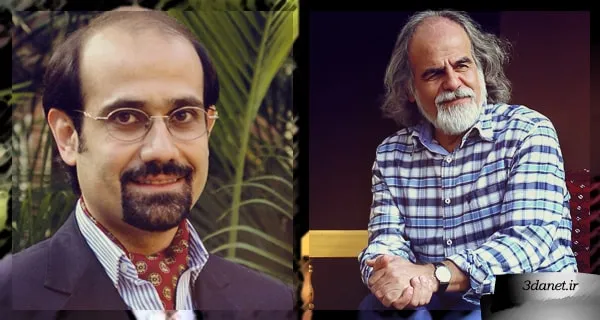
A Session on Ethics and Public Culture with Maghsoud Farasatkhah and Mohammad Mahdi Mojahedi
In a session on ethics and public culture, Maghsoud Farasatkhah identified public policy, power structures, wealth, and science policy as factors that make ethical living difficult and numb society, eroding trust and spreading survival values.
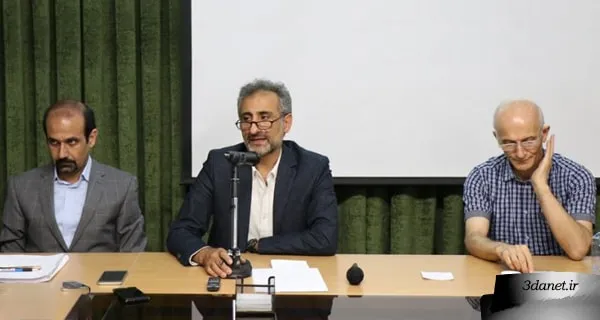
The session “Ethics and Public Culture” was held on Monday evening, September 2nd, with the presence of Maghsoud Farasatkhah, faculty member at the Institute for Research and Planning in Higher Education, and Mohammad Mahdi Mojahedi, faculty member at the Science and Research Branch of Islamic Azad University, at the office of the Association for Ethics in Science and Technology.
Maghsoud Farasatkhah, referring to Bahman Ghobadi’s film A Time for Drunken Horses, said: This film is evocative of today’s Iranian society; currently, Iran is grappling with the moral numbness of human beings and a time for the destruction of virtues.
He went on to identify some of the factors influencing the facilitation and difficulty of ethical living as follows: public policies, public culture, the structure of power and management in the country, the structure of wealth and systematic accounting in Iran, and scientific policies are among the influential factors in this arena.
The faculty member at the Institute for Research and Planning in Higher Education, referring to public policies, stated: The set of policies in Iran over the past four decades has reduced stability. That is, the sense of stability and the confidence coefficient in Iran have decreased. For example, due to tension-inducing foreign and regional policies, uncertainty in this land has increased, and economic policies have brought strange ambiguities and contradictions for investment and development.
Farasatkhah asserted: There is conflict among the governing elites, and there are no institutionalized ways in Iran for the elites to dialogue with one another and resolve their conflicts in a satisfactory manner. Elite conflict is transmitted to society in the form of violence, resulting in political instability and policies of distrust. Day by day, people’s trust and their sense of participation-seeking have diminished, and they have been suppressed.
He added: Due to the policies of the governance system in the country, self-actualization values have diminished day by day in Iran, and survival values have gained importance instead. Because the environment is unstable and uncertain, as a result, people want to preserve themselves, and there is no path for self-actualization, self-expression, participation, or the public good.
The faculty member at the Institute for Research and Planning in Higher Education pointed out: Self-actualization, self-expression, and a life oriented toward progress arise from values in which ethics exist, but currently, we see life as merely passing through a livelihood, a system that has nothing to do with ethics.
Farasatkhah referred to public culture and said: One of the constructs used internationally to examine public culture is GLOBE, which is one of the mechanisms used to describe public culture in this or that society and includes various indicators such as performance orientation, long-term orientation, etc.
Stating that performance orientation deals with people’s confidence in success through performance, he said: People’s long-term orientations, their expression and articulation, power distance, humane orientation, institutional collectivism, in-group collectivism, gender egalitarianism, and so on are among its indicators.
The faculty member at the Institute for Research and Planning in Higher Education stated: Dr. Maniei and I worked on the GLOBE indicators at the level of the country’s universities in 2017 and obtained its academic data, which addressed long-term orientation, confidence and uncertainty, individualism and collectivism, gender equality, etc. Fortunately, in this research, we were able to gain knowledge that allows us to compare ourselves in universities with the world.
Farasatkhah, stating that if we have a performance orientation, high scientific effectiveness is created because we feel we can research, have findings, act on the findings, and solve our problems, said: If we have a future orientation, we can pursue more robust research and express the results of our research without self-censorship and stand by that truth.
He said: Cultural characteristics affect scientific ethics. Public culture has problems in some of its aspects in Iran; for example, in Iran, long-term orientation, risk-taking, etc., face difficulties.
Farasatkhah introduced some indicators of the impact of power structures and management on scientific ethics as follows: democratic power structures, the liberal distribution of power, the role of government and elections, political culture, civil liberties, etc. Based on these, an index has been created to identify governments in terms of democracy, and in this ranking, Iran is 158th out of 167 countries, which is generally not a favorable rank.
The faculty member of the Institute for Research and Planning in Higher Education stated: There are macro-level authorities in Iran that cannot be held accountable. There are weaknesses in meritocracy in the management of the scientific and public system, and in our management system, meritocracy does not enjoy public trust. Meritocracy in the university management system also faces weaknesses, all of which affect public and scientific ethics.
He added: People live in a land where they feel powerless. The feeling of powerlessness reduces national attachment and social solidarity. The sense of inequality and deprivation creates tension, and all these factors damage public and scientific ethics.
Farasatkhah pointed to the structure of wealth and systematic corruption and said: In a society where the structure of wealth is unsatisfactory and systematic corruption exists, the moral sense of the people becomes strained. The Palma ratio is one of the equality indicators in the area of wealth resources, which is not satisfactory in Iran. Corruption exists systematically, and people feel helpless and cannot confront this corruption. Their only way is to participate in the corruption, securing their daily resources in the lower layers of this corruption.
The faculty member of the Institute for Research and Planning in Higher Education, continuing by stating that science policies create difficulties for scientific ethics, remarked: Science policies in Iran are such that they do not help the moral sense and are not conducive to the flourishing of scientific ethics. For example, quantitative, superficial science policies and superficial rankings cause organizational deontological ethics to occur in Iran; meaning academics become a kind of organizational person in order to get promoted, producing articles from which no scientific passion arises, and our science policies have, in a way, damaged the life of scientific ethics in society.
Citing research by Ms. Shiroodi in 2018 using a phenomenological method from the context of Iranian universities, he introduced four patterns of research among academics and stated: The X model, which is the deontological one, where we research to fulfill our organizational duty and be able to formally and administratively answer to our manager.
Farasatkhah called the second model commerce and said: In this model, we take on projects and produce research reports to create profit for ourselves.
Introducing the Rubik's model, where a professor creates and arranges articles, the faculty member of the Institute for Research and Planning in Higher Education said: The thinking, interactive professor... who engages in theorizing is another model, in which some academic researchers conceptualize and discover.
Stating that theorizing carries moral energy and a moral burden, he said: Theorizing requires the courage to know and carries a moral burden. Scientific ethics means revealing the truth and fidelity to scientific truth, where one is not an organizational person but examines society's problems to understand the causes of issues.
Farasatkhah stated: When an academic, a PhD student, a researcher, etc., wants to act with scientific ethics, science policies, public culture, the power structure, and management are not favorable to them; that is, society does not assist them. Ethics is not constructed socially and culturally, which leads to the destruction of scientific ethics in society. People suffer from mental erosion, and the national self-image of the people becomes distorted. We Iranians have developed a distorted national self-image, mental erosion, and emotional fatigue, which is not suitable for moral vitality.
Stating that external conditions do not actually assist us in being ethical, he remarked: Moral luck in Iran is diminishing day by day; the moral fortune of the people in Iran is changing day by day. People born in this land have less moral luck to live by, and contrary to their long-standing civilization, they cannot have much luck in being ethical.
He continued: Ethicists believe that the ethical matter is self-referential and emanates. They concluded that if we want to become ethical, we must emanate from within ourselves; we ourselves can discover ourselves and find values within ourselves. Humans have personal capabilities, and through their endogenous personal activity, they can experience an ethical life. The human being has personal moral responsibility, and the existence of unfavorable factors does not strip a person of their personal moral responsibility; they can have moral resistance, self-understanding, and moral self-efficacy.
Pointing out that a good society is one that facilitates ethical living, increases the chance of being ethical for social groups, and reduces the cost of being ethical, the faculty member of the Institute for Research and Planning in Higher Education said: People can lead an ethical life with their average intelligence, general understanding, and common sense, and the prerequisite for this is hearing the voice of the other and connecting with others.
He added: First, we must hear the silent voice of our own conscience and the voice of social others, which requires being with the community. The more we participate in scientific communities and have professional institutions, the more our distorted national self-image improves, and we can have a more ethical understanding and a better scientific life. Our moral self-understanding develops through our communicative actions and interactions and causes ethical motivations.
Stating that ethics is not advice to be taught in a classroom, Farasatkhah remarked: To be ethical, we must participate in society through righteous action and social action to achieve moral improvement. Through social participation, people learn to change their learned patterns, to respect others, and so on.
In closing, pointing out that our society is not a moral power, the faculty member of the Institute for Research and Planning in Higher Education said: For society to develop ethically, civil institutions must provide the grounds for participation for society and the people. For example, when neighbors participate in an apartment building, the apartment becomes ethical, and each of the residents achieves moral improvement.
Mohammad Mahdi Mojahedi, in a part of this session, said: We live in an era where ethical practices on an individual and collective scale have become difficult and require resistance and resolve. These discussions must be expressed in associations so that a path can be opened for them.
Stating that associations have a key role in practicing ethics in public culture and elevating the level of ethics in public culture, he remarked: Scientific associations are not a decorative part, or for entertainment and leisure; rather, they are among the most important practices in any society. These associations play important roles in every society.
Pointing out that our society is weak in this area, the faculty member of the Science and Research Branch of Islamic Azad University said: A state that is formed oriented towards a weak society is strong considering the aspect of coercion, but when the aspect of legitimacy is considered, such states are weak.
Mojahedi then pointed to the weakness of public culture and said: Public culture becomes weak and loses its moral self-awareness when the public sphere becomes weak, and the public sphere becomes weak because the public space lacks the opportunity for growth, development, and effective activities. One of the most important causes of the frailty of the public space is the transactions that are created with politics.
Referring to the existing non-political, anti-political, and meta-political situation, he said: There is a difference between being non-political and political, and these two are considered the most significant afflictions of the public sphere in society; the problem is that public spaces, meaning the spaces that take shape in civil society—associations, institutions, etc.—become caught up in a political or non-political state, and this is the starting point of becoming unethical.
The faculty member of the Science and Research Branch of Islamic Azad University emphasized: If we unconsciously, consciously, compulsorily, or voluntarily move towards politicization or depoliticization, it is the beginning of becoming unethical, in the sense that we desensitize ourselves to political and social issues as they should be seen on a macro socio-political scale, we set aside their political aspects, and only a collection of technical matters remains.
Stating that technical, professional, and specialized discussions should not be subject to today's political exigencies, and that this is in fact one of the requirements of our truth-seeking, which must not move in subordination to power, Mojahedi said: The work of civic associations, as an important part of civil society and the public sphere, is to produce the standards by which politics must regulate itself. In this way, they are meta-political; that is, they transcend political exigencies from within, stand outside them, and by self-reference create standards so that politics can reform itself, and one of its driving engines must be ignited within associations.
He introduced two tendencies in the field of political thought as follows: One group believes that the correction of the ethical system on a social scale and the reform of the public sphere are subject to new theories; we must create new theories, and these theories must have the capacity to reform reality; theory precedes society.
He continued: Another powerful group believes that more important than theories, and the condition for the formation of theories, are institutions, and prior to theories, the conditions of possibility for theories must be provided.
Stating that in recent decades a new discovery has been made that invites us to transcend the dispute of theory versus institution, to rise above this system and see something in the depth of theory or institution, this university professor said: This new discovery not only makes theories possible and builds institutions, but also encompasses almost all members of society, and it is the very social imaginary that guides our action and secures the limits of the possibility of social action.
Referring to an institution like democratic elections, whose theories are electoral, Mojahedi said: At the level of policymaking, these theories are transformed into institution-building and rule-making; therefore, a set of theories and institutions guide and organize elections. However, when theories remain unchanged and institutions are active, the general tendency of the people in utilizing the electoral game changes, and major events occur in politics and society.
He added: People's social imaginaries change; people develop different viewpoints about what can and cannot be done with elections, and based on these viewpoints, their actions change. Therefore, in the realm of ethics in public culture, social imaginaries must be taken into consideration.
Pointing out that one of the most important mechanisms for the formation of social imaginaries is associations, the faculty member of the Science and Research Branch of Islamic Azad University said: Associations can change people's social imaginaries and elevate and alter the level of political ethics.
Stating that ethics in the public and private spheres differ, and that in the public sphere, to answer what public goods are, one must first discuss how to address this question—since with each answer, our ethical level changes accordingly—Mojahedi said: The second question is how public resources should be allocated to provide public goods, and the third question, after identifying public goods and allocating resources, is that profit and loss must be considered to determine how redistribution should occur.
He noted: If these three questions are not settled, social justice remains unexamined; the answer to these questions is, in fact, the answer to social justice.
Stating that social justice finds no response in our society and that we have still been unable to answer these three questions because three missing links exist in society, he remarked: In attempting to answer these questions, we have not recognized the pluralities existing in society, thereby weakening and undermining the resources of our social imagination; pluralities are not represented in the hard structure of power, meaning that different voices in society are not only unrecognized but also unrepresented; consequently, the political and social system and the public sphere become severely asymmetrical, and this is a reflection of primary injustice, and society cannot display itself as it truly is.
The faculty member of the Science and Research Branch of Islamic Azad University added: Even in the process of discovering society and its characteristics, we encounter obstacles that, among other things, hinder our studies.
In conclusion, Mojahedi stated: In the field of ethics in the public sphere, there are many ethical theories and a set of meta-theories that examine these theories, but what pertains to ethics in public culture is the capability of human beings for ethical action and the capability for dialogue; through dialogue, we gain an implicit understanding of one another, and our ethical standing is discovered and understood there.
.
.
Audio of the Ethics and Public Culture Session
.
.
Ethics and Public Culture
With the presence of Maghsoud Farasatkhah and Mohammad Mahdi Mojahedi
September 3, 2018
Text source: Atna
.
.


Discussion1 comments
" در حال حاضر ایران درگیر کرخ شدن اخلاقی انسانها و زمانی برای از بین رفتن فضیلتها است " این توصیف مسأله ای که در مورد بخشی از جامعه که تحت تاثیر رسانه است را به دیگران تعمیم می دهد. چشم خود را به بخش بزرگی از احاد جامعه بگشایید