Political Science
A Session on the Ethics of War and Peace with Saeed Hajjarian, Davood Feirahi, and Javad Heydari
Kant's dream of peace is not realistic; at a session on the ethics of war and peace, Saeed Hajjarian described the situation in Iran and the region as an 'armed peace' with complex moral dimensions. He identified the transition to a political phase and the exposure of warmongers as a moral duty under these conditions.
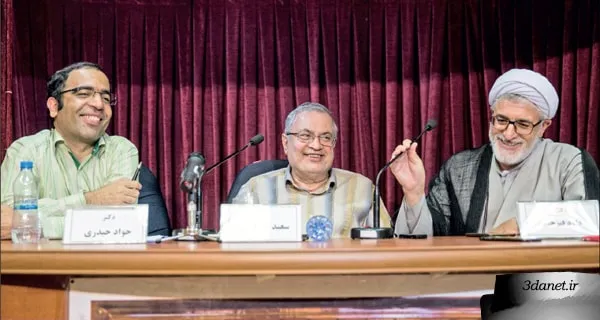
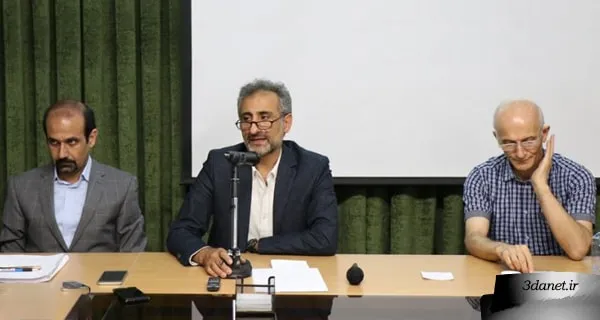
Kant's dream of perpetual peace seems far from realistic given the conditions we live in today. In various corners of the world, especially the Middle East, war is ongoing in many forms, and therefore it is necessary, if we cannot avoid fighting, to at least become familiar with the ethics of war. This was the subject of a session held yesterday evening at the Research Institute of Culture, Art and Communication in collaboration with the Iranian Political Science Association, where Saeed Hajjarian, Davood Feirahi, and Javad Heydari each addressed an aspect of the ethics of war and peace. A report on these speeches follows:
Ethics in a State of Armed Peace
Saeed Hajjarian
Political Analyst
Various articles and books have so far been written on the ethics of war and even the ethics of peace, and centers such as the Stockholm Peace Research Institute have been established for this very purpose. But the subject I address in this note is the intermediate state between war and peace, or in other words, armed peace. Armed peace prevails at two times: first, when the parties to the conflict have inflicted sufficient casualties on each other and lost their energy, and have temporarily and de facto declared peace in order to re-equip forces and resources and resume the war. Second, when the parties to the conflict have severed their economic and political relations, have begun a so-called cold war, and are on the verge of actual war. The parties to the conflict may refer to two countries, such as the current situation of Azerbaijan and Armenia, which have fought and become frozen, or it may refer to two clans, like conflicts between clans. But why has the ethics of this situation become important to me? Currently, Iran and some other countries find themselves in such a situation. As we observe, our political and economic relations with Israel, Saudi Arabia, and America have been completely severed, and the parties are intensely engaged in propaganda against one another. In confronting this group of countries, Iran is in a pre-war situation, but in some areas, such as Syria, especially in the southern region of that country, our situation is neither war nor peace. Because the fire of war has been halted only for the removal of the dead and possibly to regroup. After this history, we must discuss duty in this situation. Duty in the ethics of war and peace is clear, but in the ethics of armed peace, it is very convoluted and complex. It can be said that before the Geneva Convention, religious ethics prevailed in situations of war. Meaning that it was mostly religions that, with their recommendations, explained the ethical criteria of war. For example, in Islam, there are verses and narrations stating that during war, one must not cut down trees, must not pollute water sources, must not set fire to harvests, and so on. But now the Geneva Convention has come and granted rights to civilians and prisoners of war. Such that, based on it, violators can be brought before the International Criminal Court in The Hague for failing to observe the laws, like the action taken after the Bosnian massacre. In armed peace, conditions are different, no specific law prevails, and the conflicting parties must see what tactic to resort to. I suppose in this situation, Hafez's phrase "tolerate the enemies" is no longer sufficient, because tolerance is an individual matter, and in such abnormal conditions between countries, an individual can do nothing. Today, from a comprehensive view, the situation between Iran and Saudi Arabia is critical, because 1- The Houthis attack interior regions of Saudi Arabia with missiles; 2- In the conflict between Qatar and Saudi Arabia, Iran has practically sided with Qatar; 3- In the Al-Sharqiya region, after the execution of Sheikh Nimr, clashes between police, army, and Shia people are intensely ongoing; 4- Two years ago, several hundred Iranian pilgrims were killed due to the incompetence of the Saudi government; 5- Every day and every week, news arrives that Saudi Arabia has seized our fishing boats or vice versa; 6- Rogue groups set fire to the Saudi embassy and occupied its consulate, and the affair has become so protracted that we now call them the House of Jews and name them the Evil Tree; 7- Saudi Arabia has allied with Israel, supports ISIS to attack inside Iran, and has purchased about 450 billion dollars' worth of weapons from America. Considering this list, can an individual stand in the middle of the fray and ethically invite the parties to tolerance by saying phrases like "For God's sake, hold your hands," "Raise your threshold of tolerance," "Do not be provoked"? Naturally, such an individual, if not killed on the spot, must spend the rest of their life in prison on charges of espionage. In times of armed peace, both the government and the people are so enraged that essentially no individual can fulfill their ethical duty and tell them what ominous effects war brings and expect a listening ear. So what is the ethical duty in these times? First. This duty must be broken down, meaning that capacities such as campaigns, petition-writing, seeking help from elders, artists, and the like must be utilized. In such conditions, one can even recruit forces from the other side of the conflict to raise the threshold of tolerance. In this way, we search among the Saudis, find intellectuals and duty-bound individuals who interact towards common goals. Second.
Warmongers must be exposed, because the warmongers on both sides usually tie their prestige to the war, and it is often they who drag politicians into the pit of war. In fact, it must be shown that these individuals do not have a good track record, and global examples should be introduced to the people of how warmongers have led their countries to ruin. Third. A transition must be made from the military phase to the political phase. It is commonly said that war begins when politics has ended. In a state of armed peace, any effort that pushes the situation toward diplomacy and the political sphere must be welcomed. For instance, in the relationship between Iran and Saudi Arabia, the dispatch of pilgrims should be defended, the handshake between Zarif and Jubeir should be commended, and, if possible, assistance should be given to establishing economic and cultural exchanges between hostile states. The distance from a hostile state to a most friendly state is long and must be traversed step by step, and moral duty dictates that this path be taken, especially with regard to neighbors, because foreigners will one day leave the region, and we will remain with our neighbors. Fourth. It is possible for the state of neither war nor peace to turn into a state of partly war and partly peace, meaning the war becomes regionalized, like the situation that exists between India and Pakistan. These two states have arrayed their forces against each other, but in certain places, such as Jammu and Kashmir, limited conflicts persist. Under such conditions, extinguishing sparks that could turn into a conflagration is the primary duty of every peace-loving person. Finally, the question arises: what is the moral duty under conditions of just war, in its new meanings, of course? Under these conditions, the strategy is defense. As we witnessed in the Second World War, many intellectuals migrated to America and there placed themselves in the service of the Allies, because they defined their duty as repelling fascism, preventing the destruction of the German people, and halting Hitler's bloody advances to various parts of the world. This migration led to achievements such as the Frankfurt School, whose hardware branch went on to build the bomb and whose software branch took the path of philosophizing. In France as well, some intellectuals joined the Resistance movement and fought in defense of their country.Peace in the Intellectual Tradition and Jurisprudential Literature of Muslims
Davood Feirahi Professor of Political Science, University of Tehran
In the intellectual tradition and in the jurisprudential and legal literature of both Shia and Sunni Islam, there exists a body of work called the “Literature of Peace,” but the discussion of peace is not confined there; it is also discussed elsewhere. For example, it appears in discussions of war, in contracts and agreements, and so on—meaning the scope for discussing peace is broad. For this reason, I will first provide a brief report on what exists regarding peace in the Muslim tradition, and I will also mention a few suggestions or interpretations. In the Muslim tradition, when we speak of peace, it is said that peace is one of the correlative terms, meaning it always evokes its opposite, namely conflict, dispute, or war. That is, it is among the antonyms that are known by their opposite. When we speak of peace, it means there is probably a war or an expectation of a war occurring. Our jurisprudential thought has accepted that peace is a contract for resolving or preventing conflict. Resolving conflict is where a dispute has occurred, whether internationally or as a disagreement between two individuals. In fact, this type of peace can be defined as restorative peace, whose aim is to repair disrupted relations. This is also a type of compensatory or justice-oriented peace, meaning it compensates for the damage incurred. But the second type is preventive peace; here, a lawsuit or war has not yet occurred, but the overall atmosphere of life indicates that something is about to happen. Preventive peace does not seek restoration but rather seeks to avert conflict, meaning it wants to prevent what is about to come. This exists both in international relations and in the private relations of individuals. This blessed peace is a less costly peace than the first type. It tracks the signs of war and conflict and tries to avert them in some way. These two types of peace exist constantly in Shia and traditional literature. However, in Shia literature and to some extent in Shafi‘i jurisprudence, they speak of another type of peace called “initiatory peace”—that is, not a peace to compensate for a conflict, nor to prevent a probable conflict, but a peace that begins independently and produces new contracts and order. In Shia literature, it is called initiatory peace, but in some literature, it is also called pioneering or constructive peace, which is, in fact, forward-looking. I will speak more about this type of peace, but before that, I will point out the philosophical basis of the two previous types of peace.
The Stones of Human Beings Will Strike One Another
According to Muslim theories, it appears that Muslim jurists and thinkers in the field of peace were mostly close to the realist school, and their assumption was that human desires are many while their attainments are few. That is, existence is condemned to scarcity and cannot fully satisfy the desires and needs of everyone, whether in the realm of belief, practice, or material things. Perhaps it is an economy. We have something called the economy of life; that is, the scarcity of many things. Therefore, the apparent implication is that our traditional jurists' understanding was that, in any case, people's stones will strike against each other. That is, this is a presupposition that apparently exists in the context of peace theory. That is, the interests of human beings will inevitably intersect. One can substitute groups, tribes, nations, communities, etc., for individuals; ultimately, each of these has interests and interpretations that conflict with one another and will clash. For this reason, it is said that while peace is the noblest of contracts, in terms of rank, it is among the secondary matters. That is, wherever conflict arises, peace also arises. Peace has no originality, even though it is good and the master of contracts, but it is subordinate to actual hostile relations that have occurred or are likely occurring among humans. This is a presupposition that seems to have become entrenched in our jurisprudential systems. For this same reason, when they speak of preventive peace, it is considered the ultimate advancement. Preventive peace is far better than preventive war, and for this reason, our traditional jurists believed that initial peace is meaningless because war is not expected, nor has it occurred; therefore, peace has no subject matter at all for us to speak of a term like constructive peace, initial peace, or primitive peace. Thus, since it has no subject matter and is not even conceivable, it is void. That is, a third type of peace does not exist at all. Today, most Sunnis, with the exception of some Shafi'i jurists, hold such a view; that is, they believe that the third type of peace is groundless and cannot be conceptualized. However, roughly from the Qajar period onward, an idea emerged among the Shi'a, which was first found in the literature of the late Mirza-ye Qomi, author of "Jami' al-Shatat," during the time of Fath-Ali Shah, when the conflict between Iran and Russia was ongoing and there were also serious internal disputes. The late Mirza-ye Qomi fundamentally divided peace into three parts and said: restorative peace, which is after a conflict; preventive peace, that is, where conflict is anticipated; and initial peace, where a person essentially initiates peace to build the future as they wish, so that the path to war is reduced and blocked. This peace was introduced from that point and has been prevalent in Shi'a jurisprudence ever since. Initial peace is one of the techniques of the art of negotiation and diplomacy Today, initial or constructive peace is one of the techniques of the art of negotiation and diplomacy in the realm of domestic and foreign policy. Some of our jurists, like the late Naser Katouzian, opposed initial peace. He believed that initial peace destroys other contracts and cannot do anything new either. But initial peace has recently gained great importance. For example, it is said that initial peace is a contract that has no prior conditions, and its terms are determined by the contracting parties. For instance, in a sale, the conditions are embedded beforehand and cannot be altered, but this is not the case with initial peace, and they say it has two important conditions: one is the mere consent of the parties, and the second is that the parties know, in brief, what they are agreeing upon. This definition has moved from private law to public law. In private law, it was first used in Iran regarding insurance. Insurance contracts are not subject to traditional contracts because the amount of cost is unknown; that is, the insured and the insurer contract certain things, but it is not very clear whether these will be realized or not. Therefore, initial peace means that the negotiator in international relations, or political groups in domestic matters, before waiting for the generation of conflict or its signs, creatively enters into conciliatory contracts. Contracts that reduce the possibility of dispute. For example, before the shipping regime of the Persian Gulf causes problems for both sides of the Gulf, constructive contracts can create a new legal regime that reduces the possibility of conflict, let alone its occurrence. This discussion is very serious in the international system. For example, in the discussion of polarizations, where currently one nation tries to recruit allies among other nations without any prior likelihood of conflict existing at all.
Thus, it seems that one of the very important possibilities inherent in the concept or contract of peace is to charge the concept of initial peace. This is not fanciful; rather, it is the creation of a new custom in the international system and in relations. For example, in the private sphere, there is the issue of usury in banks; the problem of usury cannot be solved within the framework of conventional contracts. The only way is mutual consent, meaning a compromise is reached between the investor and the investee, and this peace can open the way for banking to some extent. I mentioned this so that a greater path for peace in international relations and international agreements might be opened. The premise of this discussion has an important philosophical basis, which is that the belief of thinkers who follow this classification is not fundamentalist; they believe that both war and peace are constructed and can be constructed differently. That is, it is not the case that war is the principle and peace a salve upon it, or that peace is the principle and war a crack in the vessel of peace. Meaning, neither peace is the principle nor war, but both are fabricated, and if several contracts could be made until now and people became familiar with them, then other contracts can also be made henceforth to become customary and for people to gradually accept them, just as they accepted insurance. It seems this discussion must also be introduced in the banking sector. It is for this reason that many believe that initial peace is a good, highly beneficial term, whose basis differs from previous theories and which has the potential to extricate us from the wrangling within those conventional peaces.
The Ethics of War in the Just War Tradition Javad Heydari Faculty Member, Shahed University
One of the subjects and issues of political theory is the question of ethics and war. Introducing his book Humanity: A Moral History of the Twentieth Century, Jonathan Glover says, “It is a mockery of our time that the greatest crimes of humanity, the greatest war and mass slaughter, occurred in the twentieth century, and the most serious and profound investigations into ethics also took place in this same century.” In recent years, extensive research has been conducted on ethics and war and the relationship between them. I will present a concise and coherent report of this research below. War is a morally problematic activity; in war, human beings are killed and maimed deliberately on a vast scale. War causes the destruction and devastation of the natural and cultural environment; war entails harrowing social and psychological disruptions. Overall, it can be said that four grand theories about war have been proposed: 1- Pacifism: Pacifism rejects war as something entirely immoral; this theory is rooted in deontology and altruism. A person has a duty to refrain from killing others, and if we take this teaching to its ultimate conclusion, it becomes pacifism. Pacifism says that under no circumstances can an individual be killed, regardless of what good might result from this killing or what evil might be avoided. 2- Realism: This theory rejects ethics as something entirely irrelevant to war. This theory is rooted in human self-interest and egoism. According to the foundations of this theory, whenever human interests dictate, a person resorts to the violence of war, and whenever interests dictate, they extend a hand toward peace and reconciliation. What is decisive is human interests or the interests of a nation; as the saying goes, “Preserve interests, whether by fair means or foul.” 3- Romantic Militarism: This theory considers war the pinnacle of the manifestation of moral virtues and holds that it is only and exclusively in war that moral virtues reach the height of perfection. Hence, this theory views war as a vehicle for human salvation or a vehicle for gaining honor. 4- The Just War Tradition: The wellspring of this theory goes back to the Augustinian tradition, although references to it can be found in the works of Plato and Aristotle. Its detailed elaboration is owed to thinkers influenced by philosophers and especially theologians of the Middle Ages, such as Aquinas and Suárez. The core of this tradition is rooted in the Abrahamic religions. Among the most influential theorists of just war in recent years are Michael Walzer and Thomas Nagel.
The Just War Tradition
The just war tradition is a very important theory in political thought. Political theory has both an ideal function and a persuasive function. Political theory depicts the ideal of collective life and also tries to show each and every human being that they should want to live under the umbrella of this ideal. But regarding both the ideal function and the persuasive function, the serious question is: how can the ideal function and the persuasive function be realized at once? And do they necessarily overlap or not? If reasonable people cannot be motivated to follow an ideal, that ideal, no matter how fascinating for contemplation, is fanciful and utopian. But a political theory that is completely bound to individual and self-interested motives may not be able to accommodate any ideal at all and may lead to the abdication of moral responsibility. Therefore, we need a theory that helps us integrate and cultivate our dual motivations, meaning we neither suspend our self-regarding motivations nor our other-regarding motivations, but rather reconcile and unite these two. From our self-regarding motivation emerges self-interest and realism, and from our other-regarding motivations emerge egalitarianism and pacifism. On the one hand, if we rely solely on pacifism, our political theory may be fanciful and utopian, for full-fledged pacifism ignores the reality of human history and the reality of human psychology. War has been one of the most stubborn human realities. On the other hand, if we rely solely on realism and consider morality irrelevant to war, we fall into the trap of abdicating moral responsibility. Thus, the just war tradition is a tradition in the political theory of war that seeks to pursue both the ideal function, other-regarding motivation, and pacifism, as well as the persuasive function, self-regarding motivation, and realism. In other words, the just war tradition contains both the ideal of pacifism and the advantage of realism. Just war thinking is discussed as a moral tradition and not merely as a legal tradition. There are complex relationships between morality and law. But I think it is clear that law, at its very foundation, requires moral reflection. It is also clear that local or international law often lags behind moral insights. The just war theory has three fundamental pillars: a- justice before war; b- justice during war; c- justice after war.
Justice Before War
The just war theory tells us that before starting a war, these conditions must be observed precisely and completely. Various theorists have expressed these conditions in different ways. Based on justice before war, we have six conditions for morally legitimate resort to war: 1- The declaration of the start of war must be made by a legitimate authority. Of course, determining the instance of legitimate authority in international relations is a very difficult task. 2- There must be just causes for going to war. The only motive that makes war just and moral is self-defense. Even for explaining preventive wars, one must pay attention to this principle. 3- War must be the last resort, and all persuasive and motivating forces must be used, and if no choice remains, we resort to the coercive force and violence of war. 4- There must be a reasonable hope of success. Of course, the interpretation of success is important, and one of the significant disputes in this tradition is the interpretation of this term. 5- The use of violence must be proportionate to the resistance against the wrongdoing. 6- One must fight with right intention.
Justice During War
This principle represents what are sometimes called the rules of war, rules that have been incorporated to some extent, and sometimes in their entirety, into international law and international organizations dealing with the regulations of war, as well as into the body of military leadership codes. The two important ethical principles that underlie most regulations and constitute the fundamental principles of justice during war are: a) The Principle of Discrimination: This principle is essentially concerned with the legitimacy of targets and targeted plans. It states that a distinction must be made between combatants and non-combatants such as children, women, the elderly, and those not wearing military uniforms, and also among combatants, between fighters and non-fighters such as prisoners, the wounded, and medical and logistical personnel. b) The Principle of Proportionality: According to this principle, the warring party must inflict damages proportionate to the redress of the injustice that brought it into the war in the first place. In other words, in war, when harm and damage are inflicted upon us, our response must be proportionate to that harm and damage. It is here that one can understand why the atomic bomb and other weapons of mass destruction are ethically prohibited, because these weapons can observe neither the principle of discrimination nor the principle of proportionality. Based on these two principles, it can be said that it is entirely natural to defend the distinction between fighting honorably and fighting dishonorably. Fighting honorably means directing one's hostility or aggression at its rightful object, not at a peripheral target that is perhaps more vulnerable and through which one could directly attack one's rightful object.
Justice After War
Justice after war is observed when justice before war and justice during war have been observed. There are two accounts of this justice: minimal and maximal. The minimal account focuses its attention on the rights of the victors and seeks to limit the harms that victors can inflict on the defeated army. The minimal account states that victors must act in a way that secures the just causes of the war and punishes the aggressors. In contrast, the maximal account focuses its attention on the duties of the victors and states that those who emerge victorious in war must at least fulfill these duties: 1- The terms of peace must be proportionate and publicly declared. 2- The rights that were threatened by the aggressors must be secured. 3- The responsibility for the terms of peace must not fall on non-combatants. 4- Those who were the cause and instigators of the war of aggression must be punished. 5- Those who committed war crimes must be punished. 6- Compensation to the victims of aggression must be guaranteed. 7- The aggressor government must be able to recover its lost honor and credibility.
War for Freedom
In conclusion, I will mention two points. First, a war can possess one of the three conditions of a just war, or two, or observe all three of these conditions. Therefore, these three criteria can be used for the ethical evaluation of all wars, and as long as these ethical rules are not transformed into enforceable rights, one cannot have much hope for the observance of these three conditions. The second point is that the theory of just war in no way seeks to beautify war; rather, as John Stuart Mill says, "War is an ugly thing, but not the ugliest of things. The decayed and degraded state of moral and patriotic feeling which thinks that nothing is worth a war is much worse. A man who has nothing which he is willing to fight for, nothing which he cares more about than he does about his personal safety, is a miserable creature who has no chance of being free, unless made and kept so by the exertions of better men than himself."
.
.
PDF file of the report "A Session on the Ethics of War and Peace" in Etemad newspaper
.
.
A Session on the Ethics of War and Peace with Saeed Hajjarian, Davood Feirahi, and Javad Heydari
Preventive Peace Is the Ultimate Progress
Mohsen Azmoudeh - Atefeh Shams
August 20, 2017
.
.
Discussion0 comments
No comments yet; let yours be the first voice.