Sociology
The Spell and the Myth of Culturalism: A Critique of Mostafa Malekian's Spiritualist Culturalism
Culturalism, by prioritising culture over politics and economics, distorts the understanding of politics and leads to social deadlock. This essay examines the varieties of this approach in Iran and critiques Mostafa Malekian's spirituality-oriented culturalism.
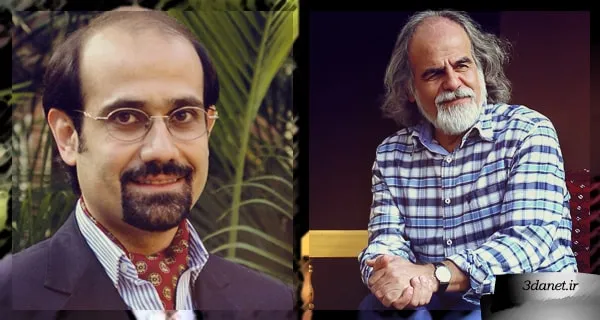
The subject of this writing is one of the great impasses of political practice, particularly in our society and time. I summarily call this blight, or impasse, or predicament of politics “culturalism.” Culturalism not only completely disrupts our understanding of politics and leads it to an impasse, but in practice also brings us to a kind of political shutdown and impasse of social action. This discussion is important because, especially in recent years, following the difficulties society has experienced in the official realm of politics and the hard structure of power, a highly fertile ground has been prepared for pessimism toward politics and, consequently, for the spread of the idea of escaping and avoiding politics. What is meant by culturalism in this writing is a specific opinion and approach to the social matter, the political matter, and the relationship between the individual and society. According to this opinion and approach, culture possesses originality, priority, and determinacy over other realms and domains of individual and collective life, not only ontologically and existentially, but in all three aspects of description and analysis, causal explanation, and prescription. That is, according to this approach, any meaningful and lasting change or stability in the realm of politics, economics, and society can only be achieved through cultural change. Therefore, in our society and for most Iranian culturalists, culturalism concerning the circumstances of Iran is an idea according to which culture is the most important realm of individual and social life; and it is culture that determines and explains the existence, appearance, consistency, durability, and circumstances of other realms of individual and collective life. In some of its maximalist interpretations, culturalism further proposes the idea that the constituent materials of other domains of social life are all themselves of the nature of culture, and have merely found a political or economic arrangement or determination. Culturalists intend various meanings of culture, and this is what distinguishes them from one another. In what follows, we will examine the different types of culturalism and critique and pathologize this opinion and approach.
The Spell and the Myth of Culturalism:
A Critique of Mostafa Malekian's Spiritualist Culturalism*
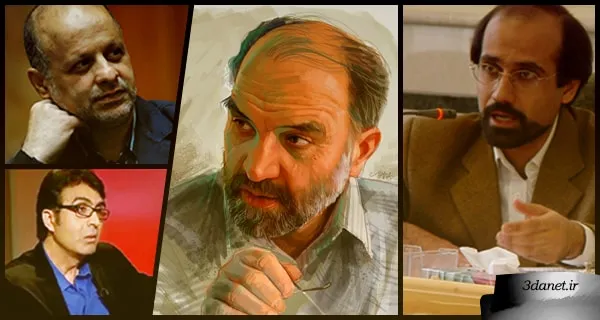
Mohammad Mehdi Mojahedi**
* What follows is the revised text of the author's lecture delivered on the seventeenth of Aban, 1395 [November 7, 2016] at the Andisheh Club. This text, with slight changes, was previously published in issue ... of the Andisheh-ye Pouya journal.
** Visiting Professor of Comparative Political Theory at the University of Berlin, School of Graduate Studies of Muslim Cultures and Societies
The subject of this essay is one of the great impasses of political practice, particularly in our society and time. I call this blight, or impasse, or predicament of politics, in brief, “culturalism.” Culturalism not only completely disrupts our understanding of politics and leads it to an impasse, but in practice it also brings us to a kind of political shutdown and an impasse of social action. This discussion is important because, especially in recent years, following the difficulties society has experienced in the formal sphere of politics and the hard structure of power, a highly fertile ground has been prepared for pessimism toward politics and, consequently, for the spread of the idea of escaping and avoiding politics. What is meant by culturalism in this essay is a particular opinion and approach to the social matter, the political matter, and the relationship between the individual and society. According to this opinion and approach, culture possesses originality, priority, and determinacy over other realms and domains of individual and collective life, not only ontologically and existentially, but in all three stations of description and analysis, causal explanation, and prescription. That is, according to this approach, any meaningful and lasting change or stability in the realm of politics, economics, and society can only be achieved through cultural change. Therefore, in our society and for most Iranian culturalists, culturalism concerning Iran’s circumstances is an idea according to which culture is the most important realm of individual and social life; and it is culture that determines and explains the existence, appearance, consistency, durability, and circumstances of other realms of individual and collective life. In some of its maximalist interpretations, culturalism further proposes the idea that the materials and elements constituting other domains of social life are all themselves of the nature of culture, and have merely acquired a political or economic arrangement or determination. Culturalists mean various things by culture, and this is what distinguishes them from one another. In what follows, we will examine the different varieties of culturalism and critique and diagnose the pathology of this opinion and approach.
۱. A Typology of Culturalism in Iran
Culturalism in our society is not monolithic; rather, it is a diverse current, perhaps identifiable in four branches as follows:
First Branch: Development-Oriented Behaviorist Culturalism
The proponents of this branch of culturalism in our society believe that if there is a problem in the matter of politics, economics, and society, it traces back, primarily and in its most fundamental layer, to the behavioral patterns of the general populace and the elites; and these behavioral patterns and structures must be corrected in such a way that a specific kind of political development and economic development is achieved. In other words, the behavioral patterns of the people and the elites must change. First, the behavior of the elites must change, and then they must change the behavior of the people in the streets and alleys, at home and within the family, on the metro and the bus. In the view of this group of culturalists, the people must be disciplined, and one can sit from the perspective and position of elitism and decide how to change people’s behavior so that, in sum, these changes lead to development. One of the most important representatives and spokespersons of this current is Mr. Mahmoud Sariolghalam.
Second Branch: Religion-Centered Culturalism
This branch of culturalism in our society is the one that considers political, social, and economic problems to stem from religiosity. Of course, it is not the case that all culturalists in this second branch critique politics and society from a position of piety, religious commitment, and obligation. Rather, the issue is that all culturalists of this second branch, despite their internal diversity and the vast and deep disagreements they have with one another over the truth and falsehood, and the goodness and evil of religion, consider religiosity the most important component of culture. Four groups can be distinguished from one another within this school.
The first group in this branch are the religious intellectuals, who, from a position of piety, believe that harmful readings of religion are pervasive in this society and are the source of political and social problems and backwardness; and if we replace these readings with other readings, for instance, human rights-based readings or modernist readings, the mother of all problems in politics, society, economics, and the community will be solved.
The second group in this branch consists of those who, in theory or in practice, have nothing to do with religion and religiosity, and are severe critics of religious intellectuals. Contrary to the opinion of religious intellectuals, they believe that the main problem of our society is not the prevalence of this or that reading of religion, but rather the problem of religion itself, or, in the words of Mr. Aramesh Doustdar, the "religiosity" of this society. In their view, if a fundamental, lasting, and enduring change is to be created in this society, the path is not religious reform, but de-religionization.
The third group in this branch considers religion to be the primary and most central determining factor of the social situation and emphasizes the duty of the religious government in implementing the outward rulings of the Sharia. In the view of the proponents of this tendency, a specific reading of religion must come to power. This group has diverse representatives, including Mr. Mesbah Yazdi and his supporters, on the one hand, and the associates of the Qom Academy of Islamic Sciences, on the other. While the first group relies on existing jurisprudence and jurisprudential ijtihad, the second group refers to a governmental jurisprudence which, in their view, will result from the reconstruction of the religious knowledge system based on the primacy of will and faith over reason, and also based on a specific concept of guardianship (velayat). The fourth tendency is represented by modernist mujtahids from within the seminaries, such as the associates of the Researchers' Assembly in Qom. These four tendencies all place religion at the center of all society's problems. Yet each wants to make its own particular deal with religion. The common feature that places all these four tendencies under one umbrella is the idea that religion must be manipulated in order for society to change.
Third Branch: Ethical Culturalism
Ethical culturalists believe that if our society, our politics, and our economy are in disarray, the path to reforming all areas of our collective life does not pass through either of the two paths proposed by the previous culturalists. We should neither necessarily seek a new reading of religion, in the sense of going to the texts and harmonizing it with something from the modern world, for instance, nor should we seek to go to the behavioral domain of culture. Rather, we must discover a kind of universal ethics, both in the domain of descriptive ethics and in the domain of prescriptive ethics, from the perspective of an ideal observer; and renovate our entire life, including religiosity, within the framework of that ethics; and this renovation is a process in the domain of culture. In their view, we need a new understanding of ethics. Mr. Abolghasem Fanaei is one of the most important spokespersons and representatives of this current.
Fourth Branch: Spiritualist Culturalism
Spiritualist culturalism perhaps advances and pursues culturalism more self-consciously than the other three branches of culturalism. That is, in addition to itself being culturalist, it also justifies culturalism itself as a valid approach. This approach to politics and society, whose most important theorist in Iran is Mr. Mostafa Malekian, is not only culturalist but is self-consciously culturalist, and by theorizing culturalism, it tries to explain to us why culturalism is more valid than politicalism, and is a path we must find and follow. The recommendation of spiritualist culturalism is that if you have political, economic, or developmental troubles at any level or sphere, do not think they have anything to do with behavior, religion, or different readings of religion. These are all incorrect formulations of the problem. If we have a problem, our main problem lies firstly in each and every individual and secondly in the psychological characteristics of each and every individual. That is, if the mental and psychological traits and characteristics of each and every individual in society are set in order, we will have a society composed of psychologically well-ordered individuals who, both in the position of legislation, institution-building, and structuring, and in the position of execution, prefer the public interest over their own particular and private interests. According to spiritualists, such a community of individuals, following the mental and psychological order of each of its individuals, will become more orderly and developed politically and economically. Therefore, this spiritualism has nothing to do with spirituality in the classical sense of the word, but is a specific title that is largely rooted in the achievements of psychoanalysts and psychologists of the third wave of psychology, such as Viktor Frankl; achievements that, after being combined with some Buddhist teachings, are introduced by Mr. Malekian under the title of spiritualism. In what follows, we will pause somewhat critically on this latter branch of culturalism, namely spiritualist culturalism.
2. The Gift and the Encounter of Culturalism: Background and Consequences in Historical Perspective
As mentioned in passing, one of the distinguishing features of spiritualist culturalism from other branches of culturalism is its self-consciousness. Spiritualist culturalism is not only aware of its own culturalist orientation but also explains and provides reasons through a theoretical formulation why this type of culturalism is a more correct path for ordering and rectifying the affairs of the individual and society compared to what it calls politicalism or politicization. This branch of culturalism identifies other branches of culturalism not by name but by pointing to the characteristics of their intellectual projects, introducing them as various instances of politicization. Therefore, spiritualist culturalism believes that {firstly} to improve the conditions of politics, society, and economy, one must turn to culturalism, and {secondly} among the types of culturalism, the efficient version of culturalism is the same spiritualist culturalism which, in its Iranian articulation, is intensely and explicitly oriented towards a kind of psychologistic approach. With this introduction, the main question is whether and why culturalism, especially of the spiritualist type, has priority over politicalism? Before answering this question, we will address a few preliminary discussions.
Max Weber's Dispute with Spiritualist and Individualist Culturalism
Culturalism is not a phenomenon invented in this culture, in this society, or in Iran. Culturalism, as a kind of apolitical approach—a kind of contempt for politics, a setting aside of the sphere of political engagement, and a turn toward spheres such as ethics, mysticism, and spirituality—has a long history, with various approaches and narratives. Nearly a century ago, on January 28, 1919, Max Weber, at the invitation of the Free Students' Union of the State of Bavaria, delivered two lectures with similar titles at the University of Munich: one on science, titled "Science as a Vocation," and the other on politics, titled "Politics as a Vocation." Weber died a few months after these lectures. To understand these two lectures, considering the political and social conditions of Germany after the First World War (and, of course, Weber's own physical, mental, and professional state) is of key importance. These conditions bear a strong resemblance to our own political and social context, and in both contexts can explain why and how ideas based on political asceticism and culturalism find ground to grow, emerge, and gain influence. Weber himself, at the beginning of the First World War, was among the war's admirers and believed: "Whatever the outcome, this war is great and wonderful." But later, when the course of the war turned against Germany, he was repeatedly heard to say: "If I could get my hands on him [Wilhelm II, Emperor of Germany from 1888 to 1918], I would break that incompetent fool's neck myself." When Weber delivered those two lectures, he had for some time been a founding member of the "German Democratic Party," had been giving numerous speeches on behalf of the party for a year, and had for a while been disillusioned with academic affairs. He, who shortly before the party's founding, in a letter dated October 1918, had expressed dissatisfaction with his situation as an academic in the dire conditions of post-war Germany, wrote in complaint of his circumstances, among other things: "People like me, in the current conditions, are 'decorative' both inwardly and outwardly. ... The kind of work I can do is worth nothing, and rightly so. People now need their daily bread. In such conditions, there is not much left for academics to do.... Therefore, I must try to change my path."
But Weber's membership in the party did not last long. In April 1920, only two months and a bit after these two lectures, he resigned from the party and from political activism. In his lecture "Politics as a Vocation," he sharply criticized all the political elites of Germany at that time and said: "As long as politics, from left to right, is in the hands of madmen, it is better for me to withdraw from it." In his letter of resignation, he repeated this same bitter theme sharply: a politician "must and should also compromise, but my profession is scholarship .... a scholar does not need to compromise or cover up follies." As the editors of these very political writings of his have quoted from one of Weber's commentators, "He was constantly engaged in a simultaneous effort to be a man of science with the same zeal and effort usually common among men of action, and to be a man of action with all the ethical rigor, detachment, and personal impartiality usually common among men of science."
Attention to the socio-political and academic conditions and context of this lecture is also important for understanding Weber's intent. The student union hosting him, like many other elite circles of Germany at that time, had turned toward a kind of anti-war ideal, absolute pacifism, and ethical spiritualism. A significant part of Weber's lecture on politics is a sharp and fundamental critique of the views of Friedrich Wilhelm Foerster, professor of philosophy, Christian theology, and pedagogy at the University of Munich, where Weber had also recently taken up a teaching chair. Foerster, in his writings and speeches, propagated a kind of ethical spiritualism and an "ethic of political pacifism based on Christian teachings," and the important student organizations of Germany at that time, including the very union hosting Weber, had been deeply influenced by these views of Foerster in the atmosphere of post-war disillusionment.
And in these two lectures, Weber adopts a position on the definition of politics and in critique of Foerster's views that Carl Schmitt would elaborate in detail three years later in Political Theology (1922) and twelve years later in The Concept of the Political (1932). In this lecture, Weber first defines the modern state based on the monopoly of the legitimate use of violence and
وبر در آن سخنرانی با اشاره به نومیدی سنگین حاکم بر فضای آن روزگار میگوید: «مهم نیست که حالا در ظاهر کدام گروه ممکن است پیروز باشد؛ این که فراروی ماست، باری، تابستان شکوفایی و بارآوری نیست، بلکه شبی قطبی، یخبندانِ تیرگی و دشواری، است. [...] این شب که نرمنرمک پایان پذیرد اما از میان شما، آنها که بهارشان چنین شاداب و شکوفان به نظر میرسد، چه کسی جان به در برده است؟ و تا آن هنگام، چه برسرِ هریک از شما آمده است؟ آیا تلخ درگیر لقمهای نان خواهید بود؟ آیا بهسادگی و برای رفع تکلیف، تسلیم روزگار و کاروبار روزمره خواهید شد؟ یا سهم شما سومین امکان، که بههیچروی کمیابترین هم نیست، خواهد بود: فراز گرفتن رازورزانه از واقعیت. و این سومین امکان، گزینهی کسانی است که یا طبع و مزاج و استعدادشان با رازورزی و سیاستپرهیزی سازگارتر است، یا چنان که رواجی ناخوشایند یافته است، گزینهی کسانی است که خود را در هر حال وا میدارند که از مد روز پیروی کنند. در همهی این حالتها، نتیجهای که من میگیرم این است که این افراد برای کاری که دارند میکنند، ساخته نشدهاند. آنها برای جهان چنان که واقعا در گردش امور روزمرهاش جریان دارد، مناسب نیستند. بیطرفانه و واقعبینانه که بنگریم، ایشان حرفهی سیاست را در عمیقترین معنای آن، نشناختهاند و تجربه نکردهاند، در حالی که به زعم خودشان آن را میشناسند و دارند تجربهاش میکنند. ایشان موفقتر میبودند اگر صرفاً دنبال روابطی برادرانه در مناسبات شخصیشان بودند. باقی افراد هم که بایستی با زرنگی پی زندگی روزمرهشان میرفتند. سیاست اما یعنی عبوری سخت و کند از خلال موانعی درشت و دشوار؛ عبوری شورمندانه و همزمان سنجیده. این کاملاً درست است، و همهی تجربهی تاریخ گواه درستی آن است، که اگر کسی پیشتر سودای رسیدن به هیچ ناممکنی را در سر نپرورانده و سخترویانه آن را پی نگرفته بود، آنچه امروز امکانپذیر است، هرگز ممکن نمیشد. ولی برای این کار فرد باید رهبر و پیشرو باشد، و نهتنها رهبر و پیشرو، بلکه باید همچنین، به معنای خاص و بسیار دقیق کلمه، یک قهرمان باشد. و حتی کسانی که نه رهبر و پیشرو اند، نه قهرمان، باید چندان شجاع و دلاور باشند که دلشان حتی از فروریختن همهی امیدها نلرزد. این ویژگیها همین امروز ضرور است، در غیر اینصورت، همین مقدار هم که امروز ممکن و در دسترس است به کف نخواهد آمد. فقط کسی جنم سیاستورزی دارد که مطمئن باشد اگر جهان روزی در چشم او، و برای آنچه او در سر دارد، خیلی ابلهانه و حقیرانه هم به نظر رسید، باز هم او از پا نخواهد نشست. فقط کسی جنم سیاستورزی دارد که بهرغم همهی این موانع و حقارتها و بلاهتها باز هم در چنان روزی بتواند بگوید: علیرغم همهی این ها. [...] اخلاق غایات نهایی و اخلاق مسؤولیت [سیاسی] با یکدیگر در تضاد نیستند، بلکه مکمل یکدیگر اند، و تنها در کنار هم انسانی بهراستی شایسته میسازند که بتواند مشغلهی حرفهایاش سیاست باشد.»
آن گروه سومی که وبر پیشبینی میکرد در آن شرایط نومیدی وسیع و سنگین اجتماعی و سیاسی شکل بگیرد، همانهایی هستند که به واقعیت سیاست و اجتماع پشت میکنند و به تزهد سیاسی پناه میبرند، به عرفان و معنویت و سلوک شخصی روی میاورند و با نوعی ترفع منزلتی و تزهد سیاسی دوش و هوش خود را از مسؤولیت سیاسی سبک میکنند. وضع و حال خودشان را رفیعتر از درگیریهای سیاست روزمره میدانند. سیاست را آنقدر مهم نمیشمارند که عمرشان را صرف آن کنند. بلکه وقت و نیروی خود را صرف چیزی میکنند که وبر اصطلاحا اسمش را میگذارد اخلاق غایات نهایی. اخلاق غایات نهایی، تعبیر محترمانهتر و روشنفکرانهای است برای معنویت و اخلاق متزهدانهی فردی مسیحی، همین که شخصا آدمهای خوبی باشیم و در غار تنزه و کنج تزهد سیاسی، به تهذیب اخلاق فردی مشغول باشیم. وبر میگوید من این گروه را میبینم و احتمالا اغلب شما آدمهای باهوش که هم اهل نظر اید و هم دنبال بیعملی نیستید در همین گروه خواهید بود، چون مشغلهای هم به شما حس روشنفکری و برتر از غوغای عوام نشستن میدهد و هم نیاز شما به کنشگری را پاسخ میدهد، آن هم برای تأمین خیر عمومی از راه تهذیب نفس خویشتن.
Weber's point is this: what exactly did you expect from politics that you are now so disillusioned with it? What miracle was politics supposed to perform? Did you think that by engaging in politics one could set things right very quickly and entirely according to prior plans? This disillusionment of yours with politics is a function of an inappropriate and unfulfillable expectation. Politics is not an easy task at all; it is not a smooth path. Political engagement is an extraordinarily difficult activity on very rough terrain, and it demands individuals who possess the political mettle to shine in situations both small and large. Weber says that those who have political mettle are those who not only display leadership qualities in whatever situation they find themselves, but also possess the character traits of a hero. The difference between a leader and a hero is that a leader is like a locomotive driver, pulling the people behind him on a pre-determined track. He must, of course, be familiar with the route and know where to slow down or speed up, where a dangerous curve lies, and be careful that no danger lies ahead. But a hero is someone who not only tries to guide people from one point to another, but also opens up new spaces and new paths. Weber's hero must be able to go beyond the pre-determined ranges and orbits, the closed spaces that are dominant and from which there seems to be no escape, and open new paths. Weber says we find ourselves in conditions where political engagement cannot proceed merely with leadership qualities. We need individuals who are prepared to break the boundaries of political imagination, to have new dreams, to cultivate a new imagination of politics in their minds, and to interpret and realize them in the real world.
This statement by Weber, at first glance, seems somewhat sentimental. But his point actually goes back to the conception of politics he shared with us in his earlier books and works. One of the most operational descriptions we have of politics in the modern world is the one Weber put forward: politics is the pursuit of public interests and ideal desiderata within this very real world. 'Ideal' desiderata, by definition, are ideal precisely when they not only do not exist in the real world, but their realization seems impossible. He says politics means pursuing these very ideal desiderata, within this very real world. This definition he gives us of politics is paradoxical. He says the politician is someone who, in the world of existing possibilities and realities, without falling into the illusion that one can overnight rend the vault of heaven and cast a new design, pursues ideal desiderata that everyone thinks are impossible to realize. Then he says your surroundings are full of phenomena that, not so long ago, everyone considered impossible, but individuals emerged and said, even though it seems impossible, we will pursue these desiderata. In Weber's belief, if there had not been people before us who pursued the impossibilities of their own time as if those impossibilities were truly attainable, our world today would not be what it is now. In fact, politics means shifting the boundaries of impossibility, or shifting the thresholds of possibility. In other words, in Weber's interpretation, political engagement means recognizing and shifting the boundaries of the possibility of the political and social. One must see, understand, and know realistically what is possible and what is impossible. But one must strive idealistically to shift the threshold of impossibility so that what seems impossible today becomes, sometime later, part of the ordinary and natural possibilities around us. This requires a political actor. And all of this is in the service of the public good.
This is Weber's approach to modern politics, and it is the critique of spiritualism and culturalism, especially politics after catastrophe, a politics afflicted with hardship, trouble, and deadlock, a politics that, as Weber says, is like the cold, darkness, and height of a polar winter. It is in such a situation, in his view, that the ground for accepting spiritualist ideas is prepared, and, as it happens, it is in such a situation that we need political engagement more than ever before. A situation in which the thresholds of impossibility have fallen very low and almost every task seems impossible. This is where political actors must enter and change the boundaries of impossibility and bring more matters into the circle of our life's possibilities. In other words, politics means opening up closures on a collective scale.
The diagnosis Weber made that day in 1919 seems to be one that holds true, to varying degrees, in any society that has experienced sharp, intense, and concentrated closures. The despairing understanding of politics—that is, seeing politics as an irremediable and all-encompassing dead end—is an understanding that is not so unfamiliar or strange to us today. It is very similar to, and indeed identical with, the diagnosis of the spiritualist culturalists, who see the path of politics as closed both in principle and in practice, and therefore recommend that one must take refuge in the inner light and understand that all this darkness of our collective life is an accumulation of obscurities projected outward from within us. According to the spiritualist culturalists, we must turn inward, cultivate our own inner light, and radiate it outward so that the external world may also become illuminated. This, incidentally, is precisely the understanding that the fourth type of culturalism in Iran—namely, spiritualist culturalism—shares with us.
Culturalism in the Manner of Bernard Lewis
The futility of politics, especially in the Muslim societies of the Middle East, and the necessity of turning to culture in this part of the world—that is, culturalism in Iran and other predominantly Muslim countries—is not an unprecedented diagnosis. In 2001, Bernard Lewis published the book What Went Wrong?, which was the result of expanding one of his articles in The Atlantic magazine. By the time this book was ready for publication, a few months had passed since the events of September 11. However, its main idea had been formed and presented before the September 11 incident. Thus, at the time of its writing, this book contained a kind of prediction: the clash of Western civilization with the Islamic world. A prediction that, as if by ill fortune, had been realized before the book's publication. His question in that book is: why has Muslim civilization fallen into such poverty, misery, and violence? Through a review of the failures from the late Ottoman era onward, the collapse of the Ottoman Empire, and the disintegration of the Islamic world as a universal civilization, he arrives at an analysis of today's situation. His descriptive argument, in summary, is that we who live in Western Christian civilization once settled accounts with the violence latent in our religion, in Christianity. We tamed it and took hold of its reins with a bridle of rationality and the secular state. Based on this approach, the consequences and dangers of which we will point out later, Lewis says that Muslims did not do this with their religion, and now they no longer have the time or capacity to do so. This view does not stop at description but also ventures into prescription, saying that now that it is too late for Muslims, it is our moral and historical duty as Westerners to do this for them! He believes that there are, of course, forces within the Islamic world that want to do this—intellectual forces—but they cannot. In his view, the issue is not political; everything stems from culture, a culture whose core is text-based religiosity. He says the story is that there is a kind of cultural defect in Muslim societies. On other occasions, he has explained, and his disciples have also argued at length, that consequently, what will happen between the West and Muslims will be something akin to an inevitable war. What should be the outcome of this war? The reform of the religious heritage and the alteration of the social fabric and structure of religiosity that has kept Muslims in a state and position of violence! This analysis aligns with a very common Orientalist belief according to which the fault lies in the cultural codes of the predominantly Muslim societies of the Middle East, which must be radically manipulated and corrected. Once one becomes a culturalist, they then look upon political reform and reformist politics as merely repairing the surface of the porch. According to spiritualist and non-spiritualist culturalists, however, the house is destroyed from its very foundation. From the perspective of these culturalists, those in Muslim societies, including Iran, who pursue political work through reformism are merely repairing the surface of the porch. Culturalism, firstly, declares politics in these societies impossible, and secondly, deems it futile even if it were possible. The prescription and recommendation of the culturalists is that these societies must be razed to the ground, rebuilt, and raised anew from the foundation. This is not a problem of political ornamentation that can be solved with reforms, but a problem deep within the genetic traits of the culture.
Thus, culturalism has a vast Orientalist background and lineage and is not an unknown offspring. One speaks in an Orientalist tongue, and others sometimes in the language of spiritualist culturalism, sometimes behaviorist, sometimes religious-intellectual, sometimes non-religious intellectual, sometimes anti-religious intellectual, sometimes moralist, and sometimes even intra-religious. Culturalism is the dominant, general Orientalist view of the problems that exist in Muslim societies. Culturalism, therefore, is a familiar language with a thick pedigree that also brings with it its own particular politics, just as the culturalist ideas of Bernard Lewis and his students were translated, during the era of George W. Bush, into a global mission according to which Westerners had to undertake, from a civilizational standpoint and perspective, to contain this barbarism that, in their view, is constantly reproduced in the form of politics within Muslim cultures. This global mission was the same one that, in one of its formulations within international relations theories, became, in Huntington's work, the idea of the clash of civilizations, which later, with the pursuit of this idea in the George W. Bush apparatus, ended up in this very wrecked Middle East. Culturalism has an extraordinarily tame, friendly, and low-risk appearance, harmless and calm, but in practice it is extraordinarily violent. Because it declares politics impossible and futile. As Hannah Arendt has explained in detail, violence begins precisely at the moment when politics is deemed impossible or fruitless, secondary, and parasitic.
3. A Critique of Mr. Malekian's Spiritualist Culturalism
What has been discussed so far was, firstly, an account of the background and contexts receptive to culturalism and, secondly, an analysis of some of the corrupt consequences of adopting a culturalist position. Attention to the contexts of acceptance and prevalence, and the consequences and side effects of culturalism, redoubles our motivation to take culturalism seriously and to reread it critically and evaluatively, to see what culturalism tells us and what it does to us.
The argument of the fourth branch of culturalism, which is formulated particularly in the expression of Mr. Malekian, is that most of the terms used in the sphere of politics are, technically speaking, indicative titles that point to some of our subjective constructs, such as institutions, entities, and identities, all of which are entirely constructed and have no real external existence. For example, when we say 'family,' the family is not something one can point to out there and say, 'This is the family.' What really exists out there are the man, the woman, and possibly their biological children. 'Family' is a word that points to one of our social constructs; that is, if the relations between several people follow a set of rules and laws, we call it a family; but the family is not a real entity and has no external, objective existence independent of our construction. By the same analogy, society, the state, and the nation are likewise. All state institutions, all economic institutions, everything that in the social sciences, sociology, and political science we technically call institutions and structures, are our constructs; and the constructedness of these institutions and structures means that they have no external, objective, out-there existence independent of those who construct them.
With this preamble, the argument of spiritualist culturalism is that those who write formulas for us in the realm of politics or economics—to change society, to change institutions, to change laws and regulations or their implementation—believe that we either have a problem at the level of institution-building, and our structures and institutions are flawed, or that the people who are supposed to implement a set of rules and laws within these institutions and structures are not performing their roles correctly. Their argument is that reforming both of these ultimately requires the existence of individuals who temporarily forget their own selfishness when implementing laws or when enacting laws, and who prefer the public good over their personal good. For spiritualist culturalists like Mr. Malekian, these individuals must be those who have first reformed themselves in terms of character; that is, they must be human beings who, in his words, have overcome their egoism, self-centeredness, and selfishness. Such individuals can become good politicians and can redefine and arrange institutions anew so that they turn out to be good institutions. But if we do not have such people, in Mr. Malekian's view, even if we grant all authority to a group of individuals to redesign the institutions of politics, society, and economy, they will design them in a way that ultimately secures their own interests and those of their friends; and thus, the same previous problems will re-emerge in a new guise. And again, even if we build the institutions but place them in the hands of those who are selfish and lack a restrained and refined ego, they will manipulate and implement the rules and laws in such a way that, again, their own interests and those of their friends are secured. Therefore, political reform still does not come to fruition. Consequently, the only remaining path, in Mr. Malekian's view, is to abandon the ambition of prioritizing politics and the reform of institutions and structures, and to turn to individuals; individuals who, when placed in decision-making or executive positions, make decisions in which the public good is the primary criterion, not their own selfishness. This is the core of the spiritualist culturalists' argument, particularly as expressed by Mr. Malekian. However:
First. Contrary to the accumulated achievements of the humanities and social sciences over the past one hundred and fifty years, the assumption of this type of spiritualist culturalism is that society is simply the algebraic sum of its individual members. Today, in political sociology, political science, and in sociology and the social sciences themselves, we take as a given this shared achievement of human knowledge: that society is not the algebraic sum of individuals. To describe a specific society, in addition to introducing its members alongside one another, we must state under what power relations these individuals live together; and those power relations are the very structural and institutional components. In other words, if the same 50 million people who live within a society with specific power relations were placed together, with the same psychological and epistemic characteristics, within different power relations, their society would be a different society. If the power relations among these same individuals change, they will exhibit different behaviors, judgments, decisions, and actions. Therefore, society is not the algebraic sum of the individuals within it. Society, in addition to the algebraic sum of its individuals, is composed of structures and institutions that represent the power relations within that society.
Second. Power relations in a society are not merely the relations of the ruling power. In political sociology, especially over the past 50 years, new dimensions of power have been studied and identified. For instance, power has two faces. Previously, we only knew that face of power whose function was rule-making. That is the sole face of power that Mr. Malekian attends to and critiques, saying: suppose the rules changed, suppose the rule-makers changed the rules, then would those same rule-makers or the enforcers of those rules again make rules or enforce them selfishly? We now know that power has a dual character and is the outcome of the competition between two currents or two sources: first, the rule-making currents and the very power that governs and can introduce and establish formal institutions and structures and back them with enforcement guarantees; and second, the power currents that are technically called rule-breaking currents or resistance, and in the sense of power from below, social power, critical power, feminine power, soft power, or cultural power, are the "informal" source of power. It is the sum total of the relations between these two currents, plus the algebraic sum of individuals, that constitutes society.
Third. Another common legacy in the social sciences and humanities, which spiritualist culturalism overlooks, is that society is a collection of structures, institutions, and individuals, but what binds these together is a set of active agencies (Agency). An agency that is not passive, meaning it does not merely follow instructions and is not simply subject to the commands and agency of others, but is autonomous, self-commanding, self-realizing, and even self-creating. It is not merely an agent or functionary, but also possesses a kind of active spontaneity and the pursuit of a creative will. It is the interaction between structural and institutional relations, on the one hand, and the active agencies of individuals and groups, on the other—both within the power structure and outside it in society—that shapes the form of society. This active agency has action and influences the equations of power, but the influence of this active agency has limits of possibility, and politics is born precisely here. When active agency encounters the walls of possibility, the shifting of these walls of possibility is the domain we technically call foundational politics.
Fourth. To judge between culturalism and politicism, besides defining culture and defining politics, we must also explain what our "theory of action" is. That is, by which theory of action do we suppose that if individuals, one by one, become psychologically well-ordered, then our target society as a whole will become a well-ordered society? This judgment and assessment require a specific theory of action in which a particular understanding of active agency and the relations between active agents with one another and with institutions and structures is introduced. Linking the micro level of analysis to the macro level of analysis in spiritualist culturalism is the task of a specific theory of action, one that can methodically explain why, if the mental and psychological state of each individual in a society improves, the state of society also improves, regardless of institutions and structures. It is unclear which theory of action the spiritualist culturalists follow when they say, first, that it is possible for the state of each individual in society to improve without anything happening at the macro level, and second, that if the state of each person here at the micro level improves, a similar occurrence will happen at the macro level. We need a theoretical bridge here. A bridge that, in my opinion, is missing and does not seem so easily constructible.
These four points are the headings of my critique of culturalism, especially the fourth branch of culturalism, namely psychological spiritualist culturalism. I hope in future opportunities to be able to elaborate on these four headings further and to expand upon the conciseness they currently contain.

Discussion5 comments
نقدی منصفانه و دقیق بود.
چونک گنجی هست در عالم مرنج هیچ ویران را مدان خالی ز گنج چون ترا آن چشم باطنبین نبود گنج میپندار اندر هر وجود حاصل این آمد که یار جمع باش همچو بتگر از حجر یاری تراش زانک انبوهی و جمع کاروان رهزنان را بشکند پشت و سنان شکاف میان فرهنگ و سیاست را شاید فقط جامعه شناسی پر کند. در سده معاصر چیزی که شاهدش هستیم رقابت شاق و سخت میان سواره با پیاده ست، بخاطر تکنولوژی های پیشرفته، حتی یک نفر هم براحتی قادر به کنترل و تسلط به توده های میلیونی ست. درسته که در گذشته عیسی نامی توانست با تئوری صلح مطلقش، بر یهودیان غلبه کرده و خود سلسله جنبان آیینی نو شود، اما امروزه حتی امثال گاندی و ماندلا و .... نتوانستند زیرا امروزه براحتی میتوان کشوری را خالی کرده و از مهاجران غریبه، دوباره پر نمود. لذا تنها راه حلی که میماند تئوری پردازی بنفع طبقات متوسط جامعه ست تا طبقه حاکم را قانع ساخت که سرمایهگذاری کلان درازمدت بنفع همه ست مثلا امروزه بورسیه برای برگزیدگان و نخبگان تصویب میشود تا در سطوح عالی با فراغ بال به تحقیقات و کشفیات سرعت ببخشند، یا در سطح نازلتری، یارانه همگانی توزیع میشود تا حدالامکان آمار جرایم و امراض کاهش یابد. و ... بدین ترتیب میتوان با یک تیر معنوی، چندین نشان عقلانی زد. باید ثابت کرد که مطابق هرم نیازها، معنویت نیز نوعی عقلانیت ظریف و رقیق ست که حتی احتمالات ریز را نیز در نظر دارد تا ضمن پیشگیری از هرگونه رخنه ای، مکمل و تمام کننده همه نیازها نیز باشد. مثل روانکاوان که روی همه جزییات نیز حساسیت می ورزند تا نتیجه درمانی بهتری بگیرند. باید مثل مولوی اثبات کرد تا بدنبال گنج ها, روی همه ویرانه ها سرمایهگذاری کرد. باید نشان داد که حقیقت وجودی هر کسی فقط در جای واقعی خودش رهایی بخش خواهد بود ( نه بیشتر و نه کمتر ). لذا فرصت مساوی رقابت ( بدون رانت و تحزب و ایدولوژی و ... ) بتدریج همگان را سرجایش خواهد نشاند و فقط در چنین محیطی شاهد پدیده های اعجاب انگیز خواهیم بود، که گویا فقط چشمان حافظی، میتوانست آن پارادوکس های ظریف را ببیند: که کاندر این کشور گدایی رشک سلطانی بود !! دمی با غم به سر بردن جهان یک سر نمیارزد زهی سجاده تقوا که یک ساغر نمیارزد شکوه تاج سلطانی که بیم جان در او درج است کلاهی دلکش است اما به ترک سر نمیارزد چه آسان مینمود اول غم دریا به بوی سود غلط کردم که این طوفان به صد گوهر نمیارزد که شادی جهان گیری غم لشکر نمیارزد که یک جو منت دونان دو صد من زر نمیارزد
نویسنده مدعی اند : « ربط دادن سطح خُرد تحلیل به سطح کلان تحلیل در فرهنگگرایی معنویتگرا کار یک نظریهی کنش ویژه است، که به نحوی روشمند بتواند توضیح دهد چرا اگر تکتک افراد یک جامعه وضع و حال روحی و روانی بهتری پیدا کردند، فارغ از نهادها و ساختارها، وضع و حال جامعه هم بهتر میشود. » ؛ در حالی که بنا بر تعریف آقای ملکیان از « فرهنگ » ، هم اقتصاد و هم سیاست عناصر و اجزایی دارند که مصداق فرهنگ به شمار می روند . به سخن دیگر ، ایشان می گویند « در درون آدمیان سه چیز بیشتر وجود ندارد : یک سلسله باورها ، یک سلسله احساسات و عواطف و هیجانات ، و یک سلسله خواسته ها . رفتار انسان- چه رفتار گفتاری و چه رفتار کرداری- از مجموع باورها به علاوه احساسات و عواطف و هیجانات و به علاوه خواسته ها ، ناشی می شود . من به این سه ، عناصر درونی فرهنگ می گویم . » با این تعریف از فرهنگ ، اقتصاد و سیاست دارای عناصر فرهنگی هستند و توجه به « حال و وضع روحی و روانی افراد » سازنده جامعه ، فارغ از نهادها و ساختارها نیست . در مجموع ، بنا بر تعریف ملکیان از فرهنگ ـ سوای این که خود او این تعریف را در چه بافتی می گنجاند ـ ، با باور به اهمیت ساختار سیاسی و تعیین کنندگی بافتار اقتصادی ـ اجتماعی منافاتی ندارد .
با سلام نگاه جالبی بود. بنده از علاقه مندان رویکرد جناب ملکیان و آقای سریع القلم هستم به این معنا که باور دارم ساختار ها بر ساخته افراد هستند و تغییر ساختار بدون توجه به افراد بی معناست. این نوشتار فایده اش فهم این بود که تغییر مردم هم بدون توجه به نهاد ها و ساختارها که میتواند خروجی سیاست باشد، کار صحیحی نییت. برای توسعه باید هم افراد و هم ساختار مورد توجه قرار گیرند اما هنوز باید بپذیریم که فرهنگ گرایی اگر حتی به تنهایی موجب توسعه نمیشود اما اولویت دارد و البته باید توجه کنیم که فرهنگ گرایی بدیل سیاست زدگی نیست بلکه بدیل سیاست زدگی سیاست ورزیست و مکمل آن فرهنگ گرایی.
سلام نقد خوبيست .خسته نباشيد. مهم نوع ارتباطيست كه ميتوان در سطح كنش فردي و كنش اجتماعي برقرار كرد. اگر عقلانيت در كنار معنويت را ناديده بگيريم اين خلا وجود خواهد داشت ولي عقلانيت ارتباطي و نوع ساماندعي رفتار فردي در جهت خير عمومي توسط اين عقل ارتباطي ميتواند نقد مورد نظر را پاسخ گويد.بيافزاييد كه تفكيك انتزاعي عقل سياست معنويت نيز اگرچه براي. بحث مناسب است ولي در عرصه ي عيني اجتماع ارتباط ان ها ناگزير است و بايد در نقد و تحليل جايي داشته باشد