Political Science
The Myth and Legend of Violence in the Middle East, Mohammad Mehdi Mojahedi
Mohammad Mehdi Mojahedi challenges three common assumptions about violence in the Middle East: that the region is a model of it, that the violence is a recent phenomenon, and that it is rooted in Islamic culture. He seeks to strip the myths from the political stage.
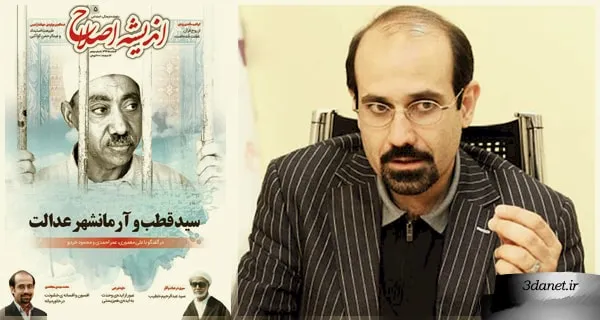
The Middle East region in recent years and at present has witnessed widespread acts of violence. In your view, how can this phenomenon be analyzed? In other words, why is this level of violence being experienced in the region?
I thank you and the other editors of this esteemed publication, especially for addressing the subject of violence, turning it into a problem, and posing questions about this problem.
Let us begin the discussion with an introduction to thinking-about-violence. One of the meanings of thought (اندیشه) is fear and dread. To think of something means to fear it, to be wary of it, and to be watchful of it. For example, in a famous ghazal with the refrain “think of” (اندیشه کن), Sa’ib, in every couplet, calls upon his reader to think of something: of the ups and downs of the times, of the dearth of leaf and fruit, of the turning pages of night and day, of the zenith of prestige, of the hangover, of wounding hearts split in two like Zulfiqar, of seclusion in a corner, and finally, of the night-vigil ascetic:
The mosquito, by keeping vigil at night, feeds on people’s blood,
Beware, think of the night-vigil ascetic!
A breeze can scatter the ledger of the days,
Think of the turning pages of night and day!
To think about something, however, means to reflect upon something and to be mentally preoccupied with it. It is this second meaning that usually comes to mind more readily today from the word thought.
But the combination of fearing something and simultaneously thinking about it is precisely the defining component and constitutive element of late modern political thought, and that thing which is the subject of these two simultaneous modes of thought is nothing other than violence.
Thinking of and thinking about violence may not seem very appealing or pleasant at first glance, and in some respects it is truly distressing, but patience with this bitterness yields sweet fruits. If we look more closely, thinking of and about violence as the mother of all problems and the mother of all evils in politics is a necessary and inescapable condition for thinking about and attaining all the positive values of collective life: peace and tranquility, justice, freedom, security, progress and development, civility and modernity (in whatever sense you mean these values or ideals) all depend on curbing, limiting, reducing, and transforming violence. In other words, you can interpret, define, and explain all the values and ideals I listed, in a negative form, around the negation of one or more facets of violence.
Violence in practical philosophy in general, and in the sphere of politics in particular, has more or less the same role and position that “error” has in theoretical philosophy, or knowledge understood as the set of hypotheses concerning (and of course claiming to represent) the real world.
For centuries, the error of the faculty of understanding was generally considered an accidental, incidental, and contingent phenomenon, and therefore avoidable. It was only in modern epistemology that it became clear that, in addition to various avoidable errors, our understanding is afflicted with endogenous errors that arise from the structure of the human mind and understanding, and not merely from the incorrect application of mental faculties and external senses; and therefore, one must constantly maintain a sensitivity to error, because, in fact, knowledge is nothing but the accumulated result of our efforts to eliminate, and further eliminate, errors.
This great Kantian diagnosis caused error-study, which was previously a subject outside the scope of philosophical scrutiny in the world of epistemology, to sit at the center of various new epistemologies in the modern era. While pre-modern epistemologies largely revolved around the question of the nature of truth, modern epistemology can be seen more as the “knowledge of error-study.” This transformation, that is, the shift of attention from a truth-thinking axis to an error-thinking axis, occurred in the world of epistemology much earlier than a similar transformation in the world of politics.
Finding violence inescapable and concentrating on the thought of violence in modern political and social thought, and consequently shifting the subject of the thought of violence to the center of political thought, is an extraordinarily new phenomenon, its age barely reaching a century. This is one of the most important points of divergence between contemporary political thought and the history of political thought.
Although much is written on this subject these days, in my opinion, Michel Foucault must be considered among the most important pioneers and founders, and perhaps the most influential of them, in this Copernican turn in the world of political and social thought: that is, the turn from thinking positively about positive political values toward thinking of and thinking about violence as that inescapable reality which is the simultaneous negation of all political values. In a broader horizon than the scope of political thought, Nietzsche must of course be considered the founder of this reorientation, particularly with his devastating critique of moral thought in the West.
At any rate, one of the recommendations Foucault makes for understanding and analyzing violence is that you must constantly draw aside the thick, heavy curtains of fable and myth from the stage of politics so that you can see and grasp the deep, veiled, and hidden relations of violence. An important part of these fables and myths have come to dominate our intellectual space in the form of facts, observations, statistics, and figures; others are in the form of basic conceptualizations, analyses, theories, and hypotheses that are prevalent, dominant, seemingly inviolable, and, in a word, "discursive."
Right here, I would like to draw aside three curtains of such fables and myths from the common questions of our time and, in fact, remove the question mark at the end of your question and place it upon one or two of the fundamental assumptions of such questions.
One of the most important discursive assumptions of contemporary questions about violence is that the Middle East is one of the archetypal examples of violence or its supreme instance in our time. Another assumption hidden within this scope of discussion is that this level of violence in the Middle East, besides being high compared to other regions of the world, is also a recent phenomenon, and the level of violence in the Middle East has, in recent decades, risen distinctively above the average global level of violence. This assumption is also a widely established belief. The third assumption is that the extensive and intense violence ongoing in the Middle East is rooted in the religious culture, and specifically the Islamic culture, of the majority of the inhabitants of this region of the world.
It may seem far-fetched, or even as audacious and contrary to reality as denying the obvious, but I believe that all three of these discursive assumptions are not only unsubstantiated, but fundamentally incorrect, and of course, I will provide reasons for this counter-current belief, even though these assumptions themselves do not rest on solid reasoning.
Let us begin with the first assumption and, to the extent this occasion permits, address the subsequent assumptions as well. Is the intensity and extent of violence in the Middle East truly greater than in other regions of the world? This question should not be answered under the heavy shadow of the dark developments in the Middle East following the uprisings known as the Arab Spring; rather, it must be seen and measured within a broader scope.
Is the intensity and extent of violence in the Middle East truly greater than in other regions of the world? The rate of lethal violence per 100,000 people per year is one of the most telling indicators for comparing the intensity and extent of violence. Fortunately, this rate has been measured in 172 countries, including all the countries of the Middle East. According to UN statistics that I have followed up to 2014, the most violent region in the world has been, and remains, Latin America for decades. Approximately one-third of all homicides worldwide each year occur in this region, which contains only 8 percent of the world's population.
According to the latest credible and documented statistics published on this subject by independent sources, including the World Health Organization, which I have seen, 43 countries with a rate of violent deaths ranging from a maximum of 93.9 to a minimum of 11.53 (per 100,000 inhabitants per country per year) fall into the category of highly violent countries. It is interesting to note that only one country from the Middle East and North Africa (even in the broadest sense of "Middle East" and "North Africa"), namely Afghanistan, is among these 43 countries, and even then, it ranks 27th with a rate of 15.45, placing it in the lower half of this bloody list.
The second category of violent countries includes the next 43 countries, where approximately between a maximum of 11.32 and a minimum of 5.53 people per 100,000 inhabitants are victims of lethal violence annually. If we again consider the terms Middle East and North Africa in their broadest application, in this second group you will find the names of only three countries from this vast region: Iraq with a homicide rate of 9.84 (ranked 52nd), Pakistan with a homicide rate of 6.64 (ranked 76th), and Jordan with a homicide rate of 6.62 (ranked 77th) per 100,000 inhabitants.
The next 43 countries fall into the third group of the list of violent countries, with a rate between a maximum of 5.51 and a minimum of 2.03. It is interesting to note that most Middle Eastern countries are in this group of the global violence list, yet again, none of their names appear among the top 10 countries even within this group. And interestingly, Lebanon, with the least violence, is the last member of this group, meaning it stands only 3 percent higher than Finland in terms of the rate of violent deaths, and the fourth group, i.e., countries with the lowest lethal violence, begins precisely with Finland.
And even more interesting is that in the fourth group, which comprises the next 43 countries with a rate between a maximum of 2 and a minimum of 0.28 victims of lethal violence per 100,000 inhabitants per year, you observe the names of six countries from the Middle East and North Africa region. That is, in terms of the rate of violent homicides, six countries in the Middle East are more or less on par with countries typically recognized as the least violent in the world, such as Japan, Norway, Denmark, the Netherlands, Luxembourg, Sweden, and Finland. Place this alongside that initial observation that in the first group, i.e., among the most violent countries, there is the name of only one country from the Middle East and North Africa.
Now, if we turn to the next two presuppositions, applying the same method can demonstrate that nothing remains of the credibility of those beliefs beyond the credibility of this same myth and legend. Here, out of respect for your time and that of your readers, I will refrain from presenting the statistics and figures that show those two presuppositions are also completely flimsy and unfounded, and I refer those interested to the data and information available in credible sources.
However, I do not wish to leave this point unsaid: considering Middle Eastern violence as exceptional is not limited to recent years and the post-September 11, 2001 era. For example, take a look at an article Jonathan Fox wrote more than three decades ago critiquing such myths and legends claiming exceptional Middle Eastern violence. Even back then, a false, baseless, and unjustified belief prevailed according to which the Middle East was portrayed as exceptional in its proclivity for violence and, comparatively, more violent than other parts of the world. And yet, his careful study shows that such a belief was not true even then, despite its unjustified prevalence.
Now if these beliefs, despite being so far removed from reality, dominate the minds and consciousness of so many of us to such an extent that questioning them is like doubting self-evident truths, it is worth asking why and for what reason these brigand myths have been elevated to the status of unquestionable truths, self-evident beliefs, and indisputable presuppositions.
In my view, this question is a very genuine and pertinent political question, and addressing it has both a disenchanting and liberating value, and, positively, it paves the way for us to properly study the phenomenon of violence in the Middle East and opens up horizons before us that have usually remained invisible and unseen due to the prevalence of such fables and myths. You will note that this question is not directly about violence, but about the causes of the unjustified prevalence of the dominant discourse on violence; that is, in this respect, and in methodological terms, it is a second-order question, meaning this question is not about the real world but about certain perspectives and views that claim to represent and explain a part of the real world. This second-order question still concerns the mechanism by which such false beliefs become prevalent and gain ascendancy over rigorous scientific studies.
Once we know that this dominant discourse and its presuppositions lack evidence and are, moreover, clearly contrary to fact, we must seek the secret of their dominance not in their epistemic backing but in the non-epistemic functions they perform. These functions are mainly either quasi-epistemic or political.
By quasi-epistemic functions, I mean the services these myths and fables ostensibly render to researchers and students, but the prevalence of this false consciousness is not the source of any genuine service—that is, it does not reveal any truth—but rather imposes an ideological belief in a disguised yet cheap and easily accessible garb upon complacent researchers. These services (and in fact, betrayals) often appear as shortcuts that give complacent researchers and seekers false peace of mind and a spurious sense of ease. They act like drugs that give their consumers a false sense of satiety. The appeal of these truth-killing myths and fables lies in the fact that they seemingly shorten the path of research and apparently ease the difficulties of constructing a sound and robust argument.
Another quasi-epistemic service (and in fact, betrayal) that makes adopting these fables and myths attractive is actually one of the consequences of this very first function: the believers in these fables and myths find themselves within the secure fortress of the dominant current of social knowledge and, in particular, avoid becoming the target of criticism from "experts" who are themselves the bearers, fabricators, and promoters of these myths, and they can easily enjoy the benefits of concurrence and sympathy with the dominant current. This second service is precisely what Michel Foucault, in particular, drew our attention to, demonstrating the importance of critique and the disenchantment of epistemic discourses through the analysis of the soft, concealed, and complex relations between knowledge and power. Uncovering these relations requires taking seriously the sociology of scientific communities and the mechanisms of membership, rise, and fall of individuals within them.
The political functions of these fables and myths are another cause of their prevalence, because these fables and myths readily lend themselves to justifying the unjustified and unjustifiable policies of certain politicians—interventionist, warmongering, othering, Islamophobic, and demagogic politicians who, by resorting to these same common and vulgar beliefs, can cut budgets for education, health, and public welfare in their own countries and, under the name of defense budgets, spend them on military interventions in the predominantly Muslim Middle East, and by invading a territory as vast as the Middle East and North Africa, plow up the weak political structures and institutions and the fragile social fabrics in the region, guarantee the persistence of tensions in the region—a region that still bears the legacy of readiness for insecurity and instability from the colonial era and can now, as a result of these interventions, easily reach the threshold of deep, pervasive, and protracted crises.
You raised an interesting point. If I were to look at your response from another perspective, the conclusion would be that the level of violence perpetrated in the Middle East is lower than in other regions of the world and is not the result of the will of the region's people. In other words, is it imposed upon them? Now the question arises: is this phenomenon also observed in regions where the level of violence is higher than in the Middle East, or is this issue specific to the Middle East? And what is the difference?
Up to this point, I have not spoken about how much of this violence stems from the will and agency of the inhabitants of the Middle East, or how much is the result of imposition. What I said pertained, firstly, to the necessity of discovering and demystifying the fables and myths that have cast a shadow over the story of violence in the Middle East, and secondly, to the need for a correct understanding of the contexts of formation and the images and archetypes of violence in the Middle East. To properly understand extraordinarily complex and multi-causal phenomena like violence, we cannot rely solely on linear causal approaches. Rather, in addition to this, we are compelled to test approaches that open our eyes to the more concealed and complex layers of this phenomenon. For example, how the archetypes, images, and conceptions that the inhabitants of a region have of the threshold and horizon of the possibility of cruelty have been formed. What I said in response to the first question was more to fulfill the first task. Regarding the second epistemological and methodological necessity, namely the effort to grasp and understand the deeper contexts, semantic networks, and the world of images that determine the threshold and horizon of violent actions, I will offer some points later in this conversation if your questions provide the ground for it.
-
Before the emergence of groups like the Taliban and, more recently, ISIS, violence was predominantly state-sponsored, and we witnessed less organized violence of the Taliban and ISIS type. In your view, what is the reason for this shift in approach?
As it happens, your question provides a very good opportunity to address some of those archetypes and images that have shaped our understanding and perception, as inhabitants of the Middle East, of the threshold and horizon of the possibility of violence. In addition to acknowledging the importance of all the analyses and points, almost all of which have their scope of vision limited and confined to cases like the Taliban, Al-Qaeda, and ISIS, it is time to genealogically broaden the horizon of the phenomenological analysis and causal explanation of violence and terrorism in the Middle East a little further. If we search for the sources and roots of this abhorrent violence within itself, we will ultimately get nowhere. We must not confuse the archetypes of terrorism and organized state and supra-state violence in the Middle East with recent cases like ISIS. These recent cases are, both in form and content, heavily influenced by the very archetype that has shaped our images, we the people of the Middle East, of organized terrorist violence for about a hundred years now: namely, Zionist terrorism. A type of terrorism that is extraordinarily violent, organized, hyperactive and efficient, deeply ideological, apocalyptic, armed with religious justifications and metaphors, secularist to the bone, possessing a management with mechanical and engineering minds, highly power-hungry, cruel, and of course, very disciplined and organized, expansionist, aggressive, ambitious, and resolute.
Look, the history of organized, illegal, and lethal use, and particularly the history of terrorism in the Middle East region for political, defensive, or offensive purposes to the benefit of co-ethnics and co-religionists and/or to the detriment of non-co-ethnics and non-co-religionists, is longer than these. The genealogy of the use of this model of violence in the modern Middle East, in fact, goes back to the formation of a group of armed Jews called "Bar-Giora" in Haifa in September 1907. The founders of this group were all members of a labor organization with a Marxist-Zionist nature called "Poale Zion" (Workers of Zion). "Poale Zion" was, in fact, the name of a group of outcasts from an organization called the "Bund," or the General Jewish Labour Bund in Greater Russia and Eastern Europe.
The declared nature of "Bar-Giora" at the outset was more defensive than offensive. However, during subsequent developments, Bar-Giora changed its nature and gradually took on offensive missions as well. The organizational slogan of "Bar-Giora" reveals the offensive character and the violent mentality behind the minds of its founders: "Judea fell in blood and fire, and in blood and fire it will rise again." (Judea is the historical name for the southern parts of the land of Palestine).
It was not long before "Bar-Giora" was merged into another organization called "HaShomer," which declared its existence in 1909. The design and layout of the Israeli flag is almost one hundred percent identical to the emblem of this very armed group. "HaShomer" literally means the guard. The founders of this organization were all members of the "Workers of Zion" group, with the difference that they considered themselves not Marxist-Zionists, but Socialist-Zionists. This new organization was, in fact, the result of the metamorphosis and expansion of "Bar-Giora." Unlike "Bar-Giora," which was a semi-secret organization and had defined its scope of action as limited to a small part of Palestine, "HaShomer" openly declared its existence and announced its mission area as the entire land of Palestine. Most of the members of this group were of Russian origin. For this reason, during the First World War, the Ottoman Empire considered them affiliated with the enemy and exiled them to Anatolia.
The main tension for this group, besides rivals and neighbors, was with the local Arab riflemen who, traditionally and legally, considered themselves under Ottoman rule as the guardians and guarantors of the security and stability of the lands of Palestine.
Eleven years later, during the years 1920 and 1921, that is, concurrent with the collapse of the Ottoman Empire and in the context of the "Mandate" and the rule of the British Kingdom over the lands of Palestine, from the womb of "HaShomer" a famous and fearsome organization called "HaHaganah" or "Haganah" was born, which is the closest ancestor of the current Israeli army. (I should not leave unsaid and pass over that the two fabricated terms "Qaymumat" and "Qaymumiyat" are not correct according to the rules of the Arabic language, and Arabic speakers do not use these two words. In the Arabic lexicon, the word "Intidab" has been set as the equivalent for Mandate, and instead of the incorrect term "taht-e qaymumat" which has improperly become common in Persian for Mandatory, they say "taht al-Intidab").
Anyway, although "HaHaganah" literally means defense, by the requirement of its explicit mission, this organization quickly took on an extraordinarily offensive nature. This offensive nature in the following years gradually inclined more and more towards the application of higher degrees of violence and terror and the use of collective intimidation techniques, although the name of the army that emerged from within this terrorist and intimidating organization still signified defense: "Israel Defense Forces."
The "HaHaganah" organization was active as an underground and paramilitary organization throughout the period of British rule over Palestine from 1921 to 1948. It is at the end of this period that, with Ben-Gurion's initiative, this organization is restructured into a regular army. HaHaganah has a dark and bloody record of intimidation, terror, plunder, looting, murder, and torture, especially on the eve of the establishment of the State of Israel. A record that even historians aligned with the Zionist occupation project of Palestine do not deny, but justify it as the arbitrariness and disobedience of the autonomous branches of HaHaganah and local commanders and its rank-and-file members, which, considering the pervasiveness of this terrorist pattern in most of HaHaganah's operations, is of course a cold, unconvincing, and invalid justification.
On the scale of the techniques of terror and intimidation known in the world in the late nineteenth and first half of the twentieth century, it can be reasonably demonstrated that the intensity, depth, and brutality of the violence committed by the HaHaganah organization and later the Israeli army, which was born from the womb of this very organization, was unprecedented in its kind, and is comparable only to the ruthlessness of the violence committed by ISIS members.
Mentioning this background sheds light on your question and the current debates about violence in the Middle East because, by opening our eyes to the long and Zionist lineage of terrorism and deadly organized political violence, both state and supra-state, in the Middle East, we can arrive at a more precise and deeper understanding of certain archetypes, roots, causes, semantic networks, and instruments of later terrorism in forms such as ISIS and al-Qaeda.
In other words, if we connect this answer to your first answer, can it be said that your main point in the answers given is the existence of a Zionist will in creating Middle Eastern violence against Muslims? In that case, can the state violence perpetrated in countries such as Syria and Iraq be linked back to this factor?
No, I by no means mean that a Zionist will, as you put it, is the stage manager of this wide spectrum of regional violence. Quite the contrary, I believe that such an analysis, which is both conspiracy-minded and monocausal, is one of the most vacuous analyses propagated in this field by pseudo-researchers whose approach is afflicted by the blight of conspiracy thinking. What I set forth in response to your first two questions was, in short, a critique and refutation of two dominant myths and legends about the ongoing violence in the Middle East: one, that the Middle East is the supreme example of violence (in terms of intensity and degree), and the other, that this violence has an essential and categorical difference from the patterns of violence we have previously witnessed in this region. In what I have presented so far, I have tried, in addition to critiquing and refuting these two incorrect and misleading assumptions, to emphasize at least two points: one, that analyzing and explaining the ongoing violence in the Middle East requires rising above the historical and geographical horizon of the post-September 11, 2001 Middle East, and for this purpose we must both study the chameleonic character of the cycle of violence and study it in relation to the global contexts and processes of the reproduction of violence; and the other, that not only must monocausal analyses be set aside, but we need depth-oriented approaches to grasp the network of meanings and images that have shaped the threshold and horizon of the possibility of violence among us inhabitants of the Middle East. Monocausal analyses range from those that are fallacious (such as culture-obsessed analyses), or incomplete (such as purely anthropological analyses), to analyses that are not actually analyses but pathological pseudo-analyses, such as apocalyptic analyses or analyses based on conspiracy delusion.
My reference to the history of organized state and non-state violence by Zionist formations over the past hundred years in the lands of Palestine was to demonstrate the fact that, contrary to the assumption of your previous question, organized violence in this region has not only had a harsh, heavy, and century-long presence, but has also been a source for producing meanings, concepts, and images, by reference to which the violence of ISIS followers can be well understood and made sense of. This century-long history has determined the semantic thresholds and horizons for us inhabitants of the Middle East regarding the limits of the possibility of savagery and committing violence.
Since the events of September 11 in America, violence in the Middle East seems to have escalated at a faster pace; can a relationship be established between these two?
The reality is that the intensification of violence in the Middle East and North Africa after the terrorist event of September 11 can be analyzed in two stages. The first stage is the attack by America and its Western allies on important and vast countries in the Middle East, under the pretext of the war on terror, which in the cases of both Iraq and Afghanistan proved to have been based on pseudo-intelligence and entirely fabricated and incorrect presuppositions. In this stage, the political and social fabric of the region collapsed.
The second phase comes after the third chapter of the Arab uprisings (which were inappropriately called the Arab Spring. There was no spring, and whatever there was quickly turned to autumn, or even winter). The first chapter of the Arab uprisings coincided with the decline of the Ottoman Empire. The second chapter dates back to the post-colonial period, that is, from the late 1940s onward. And the third chapter is the period of uprisings that occurred following the failure of rigid political structures and the resulting rupture after the first phase—that is, the consequences of those very fissures and the turbulence that, with the invasion of the region by America and its allies after September 11, took hold within the soft social fabrics and political images of the people of the Middle East.
ISIS emerged at the end of this second phase. It relied on an arsenal of suppressed mental and material capital belonging to the people of the Middle East and North Africa, both its inhabitants and the second- and third-generation immigrants in European countries. The pattern of ISIS's formation is exactly identical to the pattern of the violent and terrorist organizations that were experienced over the past century in the form of "Bar-Giora," "HaShomer," and "Haganah," and which led to the formation of the regular Israeli army.
Therefore, my answer to your question is, in short, yes. The rupture that occurred from 2003 onward, with the extensive and prolonged military intervention of America and its allies under the pretext of eradicating the factors behind the September 11 incident in the political structure and fabric of the Middle East and North Africa, became the ground for the disintegration of the concept, image, and structure of the state and the social fabric in this region. This disintegration manifested itself more than anywhere else in the formation of the third generation of Arab uprisings from 2009 onward. In that disturbed and chaotic context, these uprisings became the breeding ground for the birth of a group like ISIS in Iraq and Syria, and its allies in Algeria, Egypt, Tunisia, and other parts of North Africa. This predicament is currently becoming more complicated, and no solution is in sight on the short- or medium-term horizons. The formation of a semantic system, new images of the model of stability, power, and political order, and efficient structures for the effective exercise of national sovereignty in the current Middle East and North Africa will be very time-consuming.
-
Of course, "Arab Spring" was a term coined by protesters in Arab countries and political analysts. Perhaps initially no one imagined that this current would have such different outcomes, like the experience of Tunisia and Morocco versus the experience of Libya and Egypt?
Yes, this title was popularized mostly by young, passionate activists in Tunisia and Egypt, and later by Western journalists and democracy-promotion activists in Northern Europe and America. The title "Arab Spring" had a rhetorical and propagandistic character more than an analytical content, and was meant to signify a kind of political revolution like the Spring Revolution, which, of course, quickly proved that the intertwined structure of the economy, the military, and politics, as well as the strategic calculations of the great powers in the region, would lead to nothing less than the reproduction of authoritarian relations. The grounds for political transformation in the exceptional case of Tunisia had been prepared years before. The case of Tunisia is, in fact, the exception that proves the rule. Although it is beyond the scope of our current discussion, let us not leave it unsaid and pass over it that the current situation in many Middle Eastern countries, including the Arabic-speaking and Turkish-speaking spheres, remains an unstable situation with a high propensity for profoundly disruptive transformations. As seen in many forward-looking analyses, the political arrangement and political geography of the Middle East and North Africa will undergo very extensive transformations in the next two decades. Nevertheless, I doubt these profoundly disruptive transformations will result in an Arab or non-Arab spring anytime soon.
-
Do you see the spread of violence to Europe, specifically the terrorist attacks in France, as a continuation of the expanding wave in the Middle East, or not?
Look, a kind of boomerang effect can be traced here. Many analysts and political scientists in Europe believe that the wave of second- and third-generation Middle Eastern and African immigrant youth in Europe, particularly in France, being drawn to ISIS, and the atrocities these ISIS recruits commit in Iraq and Syria as well as upon their return to Europe, has, in addition to ideological factors, a primary and decisive root elsewhere, namely the systematic repression, discrimination, and alienation by the host countries of these immigrants over recent decades, which has wounded and agitated the souls of these youth with the bloody wound of a painful identity crisis. These vengeful, cold-blooded, brutal, and blind acts of violence could not have been incited solely by relying on this or that religious or secular ideology. This vengeful sentiment and action has two main backgrounds: one is the systematic psychological and physical repression of Arabs by Israel in the region, whether directly or indirectly, backed by the direct material, legal, political, and military support of major Western governments. The other is the social and political processes of alienation in the host countries of Middle Eastern and African Muslim immigrants. These are wounds that have now swollen and become filled with pus and blood. The sharpness, harshness, and violence-inciting nature of the ISIS members is like a lancet upon this swelling of pus and blood. These wounds cannot be definitively and radically treated from the outside. The source of this infection must be removed from the policies and social and political processes of European immigrant-receiving countries, as well as from within the region.
-
Of course, those joining ISIS from Western countries have not necessarily been, and are not, exclusively immigrants of African and Middle Eastern descent. Among them, citizens of Germany, France, Russia, and other European countries, and even America, have also been seen.
Yes, that is correct, with these two considerations: on the one hand, these immigrants of African and Middle Eastern descent we are talking about are all, by acquired citizenship, considered European or American citizens. And on the other hand, when speaking of ISIS recruitment among Western citizens, the overwhelming majority of these Western supporters or Western members who have joined ISIS are from the second and third generations of Muslim immigrants of Middle Eastern or African descent.
-
Given that the perpetration of violence in the Middle East has led to the reproduction of violence, do you think this phenomenon also applies to France, and that French society and the state will impose restrictions and even violence upon its Muslim citizens?
In this regard, competing and alternative political trends exist in European societies, including France. Among politicians and political parties, some are inclined to impose greater restrictions on immigration policies. Conversely, there are various proposals for the cultural and social integration and assimilation of immigrants. But Muslims have a particular situation in this context. Two kinds of expectations of Muslims are now taking shape. One is that Muslim religious, political, and cultural leaders and elites in the West must take responsibility for curbing Islamic extremism, and the other is that the general Muslim population, in return for the security and opportunities they receive from host societies, must, in addition to the usual activities of any other citizen, such as employment and social participation, try to increase their distance from Islamic extremism as much as possible and make this distance ever more apparent.
Another expectation has also taken shape in these societies, one directed more at non-Muslim citizens. That is active cooperation with security agencies to identify those suspected of extremism. For example, under the program known as Prevent in Britain, schoolteachers and university professors are “obliged” (not merely authorized) to report any case suspected of potential extremism to the security authorities. That is to say, if a student or pupil, in the questions they ask or the material they present, or in their style of dress and grooming, or, for boys, in the way they style their beards, shows any resemblance or affinity to Islamic rigorism and extremism, instructors, teachers, and professors must immediately report these suspicious cases. And, interestingly, the security agencies overseeing educational institutions have prepared programs for the de-radicalization of potential suspects, and these suspects must receive a certificate of completion from these programs in order to return to ordinary life. Similar policies in the West have only been seen under fascist, Nazi, and communist regimes in the twentieth century. Well, this situation does not seem likely to change perceptibly in the near future. This is a state of affairs that will further alienate the Muslim minority in Western societies. And this alienation and othering forms a vicious circle with the intensifying identity crisis of the immigrant Muslim minority, which will undoubtedly create the grounds for greater insecurity both for Muslims and for the host societies.
-
Why is there no difference in behaviors? Is the phenomenon of violence leading to a behavioral homogenization in the developed and developing worlds? To what extent do you consider this idea to be real?
Let me, as befits my primary field of study and research, answer your question from the perspective of comparative political thought.
The reality is that violence is an inseparable component of modern politics. This claim requires a detailed explanation. But in this brief opportunity, I will try to briefly clarify what I mean by this claim. You see, for the first time in the history of written and documented political thought in the world, it was the pioneering thinkers of political thought in the twentieth century who explicitly understood and defined politics as revolving around the axis of the exercise of violence and aimed at the elimination of the enemy. In modern thought, the exercise of violence is the constitutive element and defining component of politics. The validity of this proposition is independent of the left and right of the spectrum of modern political thought. Wherever you look on this spectrum, you will see this proposition affirmed.
If you go to the far right of the spectrum of political thought, for instance, you encounter thinkers like Carl Schmitt and Leo Strauss, the former of whom defined political sovereignty as an eliminatory game between friend and enemy whose goal is the eradication of the opposing side, and the latter presented a Manichaean, that is, black-and-white, picture of social, political, and civilizational forces, among which coexistence was fundamentally unthinkable; one must ultimately annihilate the other.
Now, if you go to the far left of this spectrum, for instance, you meet Marx and a range of his followers, at the core of all of whose thought about politics lies the concept of unavoidable antagonism and conflict (class-based or interest-based). Here too, politics has an inherently agonistic character and is a movement within the context of contradiction.
Around the middle of the spectrum of political thought, the situation is more or less the same. For example, recall an influential and important thinker like Max Weber, who defined politics as the monopoly of the legitimate use of violence/force (Gewalt) over citizens within a given territory. That is, he incorporated the element of monopoly, the element of violence/force, the element of legitimacy, and the two interconnected elements of citizenship and territory into the definition of politics within a single constellation, and, of course, linked all of these around the axis of violence/force.
This very brief introduction could be greatly expanded, but I think this hint suffices to answer your very important question. The reality is that despite all the theoretical and practical efforts in our era to curb violence in the modern world, the degree of diversity, intensity, scope, and brutality of violence does not seem to have noticeably decreased. My main argument is that modern politics, especially in its most external and structured globalized form, namely the modern nation-state, not only lacks a peaceful tenor or a natural inclination toward peace, but on the contrary, its inner and central tendency is toward violence and its reproduction. In other words, the driving engine of this political model draws its power from the constant creation of antagonism between the 'self' and the 'other.' Othering is the mechanism of modern politics' activity and vitality. This precisely aligns with the central logic of capitalism as well. That is, this other-making and other-consuming politics also has an economic substructure completely congruent with it, and operates like a system with maximum internal consistency. In my view, regardless of all the causes that can be enumerated at the level of micro-politics and empirical policy analysis, what I have outlined here is the most fundamental cause that explains the thriving market of violence reproduction and the inescapability of this ruthless mechanism.
.
.
The first version of this interview was published in Esfand 1394 (March 2016) in the fifth issue of the Andishe-ye Eslah (Reform Thought) journal. The above text is the same interview, accompanied by a detailed introduction on the necessity and importance of thinking about violence and thinking from violence.
Interview with Mohammad Mehdi Mojahedi
The Myth and Legend of Violence in the Middle East
Professor of Comparative Political Theory, University of Berlin
.
.


.webp)
.webp)
Discussion0 comments
No comments yet; let yours be the first voice.