Religion
A Critical Assessment of the Correlation Between Religion and Violence, Mohammad Mahdi Mojahedi
The violence of the devout does not stem from religious texts; it arises from the invention of tradition within the ideology of the modern nation-state. In the lives of believers, religion plays little more than a lubricating role, while the flames of war are kindled on other slopes.
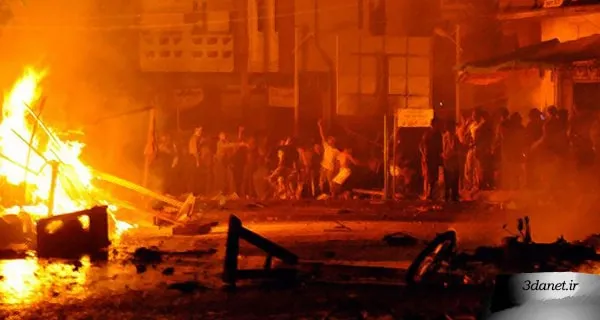
Some, with heartfelt concern, point to the verses, narrations, and commentaries that incite the followers of religions to bloodshed, and sometimes in bewilderment and sometimes searchingly ask whether these very pretexts and justifications are not sufficient for the violence of the devout. I believe I well understand the reproach implicit in their words, and more than that, I share the heartfelt concern and goodwill of some of them, am of the same mind, greatly value it, and do not dismiss it in the least, for this heartfelt concern and goodwill is exceedingly precious and dignified.
.
A Critical Assessment of the Correlation Between Religion and Violence
Mohammad Mahdi Mojahedi (Professor of Comparative Political Theory, University of Berlin)
"Primitive savages who, driven by their Islamic beliefs, have attacked the ramparts, towers, and walls of civilization and modernity." This image is a reflection of the imaginary form held by many of our contemporaries, Muslim and non-Muslim alike, of the context of a black, man-eating dragon that has lately taken hold in people's souls, constantly spreading a murmur of blood and ashes and setting fire to the delicate lives and worlds of human beings.
Religious Violence, Modern Violence, and the Secular Nation-State
This dragon, whatever it is, has not, however, reared its head from outside the walls of modern civilization. And neglecting this subtle point is precisely the slippery slope that has drawn the imaginary formulations of many of our contemporaries into the maw of deceptive fallacies and deadly illusions. This raging, man-eating dragon has arisen from the bed of an illegitimate mixture between tradition and the ideology of the modern nation-state: the ideological mutation of tradition. This genetic mutation of religion and the state is a thoroughly modern phenomenon and part of the relations of power and meaning within these very walls of modern civilization, precisely where the emancipatory values of the Enlightenment themselves transform into constitutive components of uncritical, unreflective ideologies and aggressively exploit tradition as material for fabricating identities that are othering, antagonistic toward the other, and destructive of the other: they reinvent tradition in their own image, that is, the invention of tradition in the form of an aggressive modern ideology, the very "other" needed to provide necessity, identity, and legitimacy to the modern, secular nation-state. The modern secular nation-state derives and extracts its legitimacy for the monopolistic seizure of the exercise of force, power, and violence (in Weber's terms) from this very reinvention of tradition as an anti-civilizational and anti-modern ideology.
The Pragmatic Hermeneutics of Religion and Religious Texts That Call to Violence
Some, with heartfelt concern, point to the verses, narrations, and commentaries that incite the followers of religions to bloodshed, and sometimes in bewilderment and sometimes searchingly ask whether these very pretexts and justifications are not sufficient for the violence of the devout. I believe I well understand the reproach implicit in their words, and more than that, I share the heartfelt concern and goodwill of some of them, am of the same mind, greatly value it, and do not dismiss it in the least, for this heartfelt concern and goodwill is exceedingly precious and dignified.
As far as I can see, a fundamental pause, however, is fitting and worthy regarding this point: that this bloody covenant, as is evident in these verses and many more like them, is an ancient covenant, read, written, and reinterpreted for millennia, yet not always practiced. In other words, these have been and remain the constant values in the multi-variable, unsolvable equation of violence. These constant values have accompanied long periods of devastating human wars, and have also survived much, much longer eras of peace, tolerance, reconciliation, forbearance, and coexistence. In times of war, these constant values have danced merrily and rampaged; in times of peace, they have held their tongues and crept deaf and mute into a corner. This reality is what can be called the pragmatic hermeneutics of religion.
Selective Religion and Political Violence
The teachings of the Lawgiver have rarely been the subject of "firm and complete" belief. The vast majority of believers behave highly selectively when referring to sacred scriptures. This is part of the very mechanism that the late Nasr Hamid Abu Zayd called his practical hermeneutics. Life flows on, and its objective exigencies hold primacy for most people, regardless of religion or culture. Selectivity in engaging with the canonical texts of religions is often a function of these very exigencies. Moreover, allegorical, metaphorical, and figurative interpretation has a centuries-long history among Muslims. These, too, have been other mechanisms for a selective engagement with religion.
As a critique, one can, and indeed must, distinguish between two kinds of selectivity. One is conscious, biased, instrumental, justificatory, and pretextual selectivity, and the other is the unconscious selectivity of our mind, which is a function of the a priori structure of our understanding. The former is not only discoverable through critique, but is both avoidable and, ethically and religiously, ought to be avoided. Although between these "oughts" and what "is," a deep and unbridgeable gap remains and will remain. The latter, however, is inescapable. Our mind is not built for total, comprehensive, all-encompassing cognition. Selectivity can and must be made methodical, disciplined, and open to critique. Ultimately, firm and complete belief, if such a thing even exists, attaches to this or that interpretation of the texts. Depending on whether the text has been read realistically, literalistically, or esoterically, the belief that arises attaches to the result of those readings and nothing else—those very readings that are, at least in this sense, selective.
From my perspective, the violent passages of sacred scriptures, and in principle all the teachings of sacred scriptures and all the traditions formed around them—which are usually considered the core of religion—have not been, and are not, as influential and central to the constitution of believers' lives as both the religious and their opponents claim and imagine. The cogs of human life turn on other axes, this way and that, and sometimes clash with one another, whether in agreement or opposition. Religion, and all that is called religious culture, in most cases plays no greater role than the oil that facilitates and lubricates the turning and rotation of these cogs.
The role of this facilitating oil has been exaggerated; it has been taken for a fuel without which civilization and modernity would not have burned so fiercely in the fire of violence. But the truth is that our fires of war and breezes of peace arise and subside from other slopes. In my view, Tolstoy and Dostoevsky are great teachers who, long before our contemporary post-secular thinkers, unveiled this secret. They taught us that the role of religion is far weaker than what believers pretend or wish it to be, and what their opponents attribute to it.
Hussein, the martyr, with his words and his manner of dying, is the master of this terrible and denuding disenchantment: "People are slaves to this world, and religion is merely a lolling on their tongues; they cherish it as long as their livelihoods flow; but when they are tested with affliction, the truly religious are few." It was this very demystification and revelation of secrets, this very shedding of light upon the darkest mysteries of religiosity, that placed his head upon a spear. And he is the face of our Muslimness, if it still has a face.
Assessing the Relationship Between Sufi Asceticism and Violence:
In some historical analyses, which unfortunately have found adherents even among certain scholars and literati, Talibanism and Daeshism are taken as bitter fruits grown on the branch of dry Sufi asceticism. An example of such analyses is a lengthy piece in three parts by Dr. Nasrollah Pourjavady, which was published on certain virtual networks.
I would like to recall that what Hafez called “audacity for blood” and reproachfully attributed to the marauding invaders was entirely alien to, and indeed in conflict with, this same tradition of juristic asceticism as well as the tradition of Sufi asceticism. It is within this very ascetic jurisprudence that caution prevails over jihad and ijtihad, and especially when matters of blood and honor are at stake, caution, abstinence, suspension, and even flight and avoidance dominate the ascetic mentality of the jurists and Sufis. How far this is from the bloodthirsty Daeshis and the blood-hungry Taliban, who may have perhaps inherited this “audacity” for transgression from the “Turkic children,” as Hafez says, but bear no trace of abstaining from the blood and honor of God’s creatures. Encroaching upon people’s blood and honor was not even within the remotest approximations and imaginings of the ascetic jurists and Sufis.
It is a strange time. I know that these kinds of analyses these days may be, to some extent, a reflection of the desperation and distress of all those whose hearts are pledged to transcendental truth and its representative traditions, in the face of all this Daeshi-like cannibalism in the name of religion. Attributing these malformed, mutant excrescences of prescriptive and authoritarian modernity to the tradition of asceticism, Sufism, jurisprudence, and Islamic theology, as easy and cheap as it has become these days, is, in fairness, misleading and analytically vacuous.
A Critique of Culturalism in Explaining Political Violence, with Reference to Mr. Malekian’s Culturalism
Culturalism, as it has become prevalent for some time among Iranian writers and readers, is one of the most important pitfalls that hobble the step of research in tracing the relationships between religion and violence as they exist in the real world, and lead researchers astray.
Theories of action in the modern humanities and social sciences address the question of the mechanism of the formation of collective action or practice. In examining this question, the relationship between actions and beliefs, knowledge, mentalities and dispositions, emotions and feelings, and communication networks in the spheres of culture, politics, and economics, as well as social institutions, structures, and frameworks, is explored.
Theories of action, like theories in any other field of knowledge, while differing from one another, also share common ground. One of the most important commonalities found among a wide range of theories of action in our time is the discovery of the decisive importance and quasi-causal priority of collective institutions, structures, and frameworks over individual beliefs, behaviors, decisions, and actions. Institutions, structures, and frameworks are the very channels for the production, distribution, dissemination, and circulation of meaning and power, and they regulate and determine the relations and connections between individuals and social groups. Beliefs, wants and desires, needs, and everything considered ideology and culture are, in fact, the semantic derivatives of these very social institutions, structures, and frameworks. The political, in this sense, has complete and decisive priority over culture.
Understanding and grasping this point has a very high corrective value. By comprehending this fundamental point, for instance, the error of those who imagine that the violence perpetrated by a handful of new Muslims or those born Muslim under the black and ruinous banner of Daesh and the like stems from their religious culture or beliefs is corrected; and that to curb this violence, the most fundamental path is to insist on launching a religious reform movement and correcting beliefs, or to dismantle religion and replace it with other things, including psychological spiritualism.
Bourdieu, and many, many others like him, tell us that the story is fundamentally something else. That some people worship violence, believe in a religion of violence, and wrap it, crudely or skillfully, in the foil of a few verses and narrations, is itself the effect of causes—causes that are themselves neither religious nor cultural. That the religious justifications for violence seduce some believers and not others is itself the effect of non-religious and non-cultural causes.
This is the core of my critique of culturalism or extreme cultural reductionism. Culturalism or cultural reductionism has found particularly popular advocates in our country, such as the esteemed Professor Malekian. In my writings and lectures over the past few years, especially in my critiques of Michael Walzer, David March, and Isaiah Berlin, as well as in my critiques of post-Islamist intellectuals, I have argued in various ways why culturalism is impoverished and sterile, and I do not intend to repeat those arguments in this short note.
Our religious and non-religious intellectuals, unfortunately, forget or ignore all the measured, accumulated, and tested theories and knowledge in the humanities and social sciences about violence when it comes to understanding and explaining afflictions like violence in Muslim-majority societies. They do not abandon the colonialist clichés of two or three hundred years ago, which considered culture the mother of all problems and, of course, the master key to all locks, and they proudly blow the trumpet of culturalism, ultimately either seeking to reinvent the wheel of tradition or bring down a new revelation, or ending up with yoga and spirituality therapy.
Religion and Violence in Non-Culturalist Explanations
Contrary to the opinion of those who oversimplify (whether among public intellectuals or their disciples among politicians and journalists), in the social sciences and humanities, as far as I know, despite all the disagreements that exist, there is one point of consensus, indeed a general agreement among specialists in the field of political violence studies, and that is that there is no single answer to the question of political violence that can, like a universal law, explain all instances of this phenomenon. Of course, it is not only political violence where each case must be examined individually to see which cause or set of causes from the complex of contributing factors has been more important and fundamental. Divorce, war, economic backwardness, career success... and hundreds of other micro or macro phenomena are subject to the same rule. Nevertheless, one can speak, in general terms, of the priority of one sphere of causes over another.
Fortunately, many cases of political violence, especially in its terrorist form, committed by Muslim, Hindu, Jewish, or Christian fundamentalists have been the subject of extensive empirical studies in the last three decades, to the point where we can approach certain explanatory patterns that explain with high accuracy where the roots of most violence committed by Muslims in the form of terrorism in the last two or three decades lie.
These studies have revealed that the role of Islamist ideologies is not only not motivational and within the chain of causes, but is often justificatory, rationalizing, instrumental, and mobilizing, used for justification after the decision or after the event. These studies also emphasize the following factors as the most important causes of the tendency toward violence among Muslim terrorists: various kinds of experiences of humiliation, discrimination, and in some cases, psychological and physical torture play a prominent role in most instances. New Muslims, second- and third-generation Muslim immigrants, and Muslims with serious leanings toward leftist ideologies are the most vulnerable segments of Muslim society to the danger of radicalism. Interestingly, the terrorists involved in the crimes of radical Islamists in Europe in recent years had almost no significant history of religious observance, and in many cases, they partook in the customary pleasures common among European youth. All of these are backgrounds and conditions that make the mind and psyche of a fraction of one percent of Muslims in certain specific societies receptive to violent readings of religious texts.
.
.
A Critical Assessment of the Correlation Between Religion and Violence
Mohammad Mahdi Mojahedi (Professor of Comparative Political Theory, University of Berlin)
This note is part of a series of notes questioning the relationship between religion and political violence in our time.
.
.

Discussion1 comments
متنی رو که نگارنده با رویه ای سلبی و با لحنی تند و توصیفی نوشته است جز احساس تاسف و ناراحتی از نگاه فرهنگی و فرهنگی گرایی سخن ایجابی و اثباتی نداشته و در ارایه جایگزینی برای نگاه اقلبی روشنفکران مثل مصطفی ملکیان بسیار ناتوان است." انواع و اقسام تجربههای تحقیر و تبعیض و در مواردی شکنجههای روحی و جسمی در اغلب موارد نقش برجستهای دارد." بعنوان نمونه یکی از معدود جملات کلیدی و ایجابی نویسنده است که متاسفانه بدان پرداخته نشده و به علل پیدایش آن و راهکارهای پیشگیرانه سخنی به میان نیامده است.