Political Science
Nelson Mandela: A Model of Tolerance in Politics
The panel “Nelson Mandela: A Model of Tolerance in Politics” was held; speakers, distinguishing between forbearance and tolerance, argued that political tolerance is not a concession granted by power but respect for differences from a position of equality.
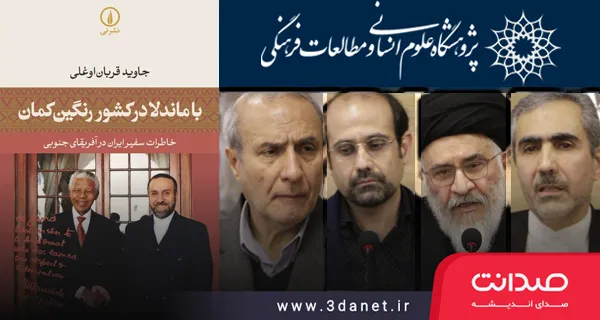
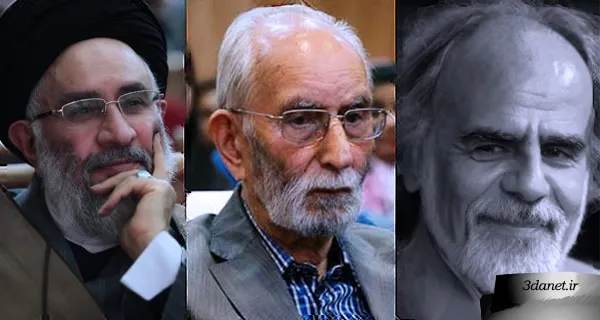
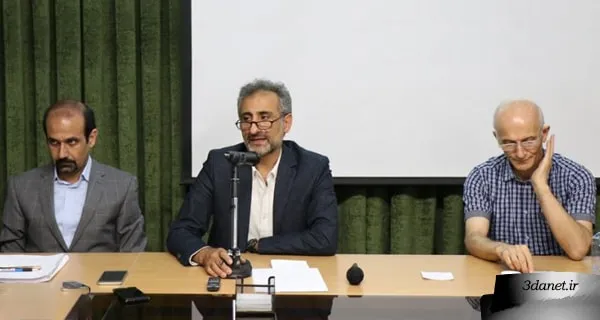
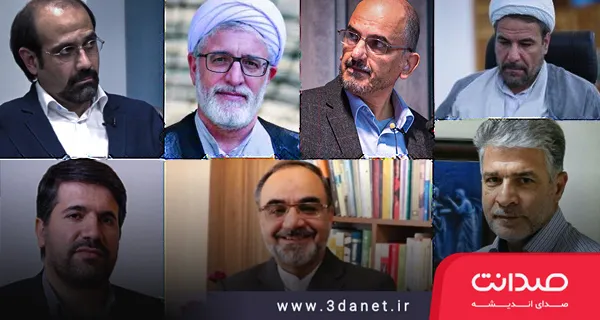
On Tuesday, 28 January 2020, the Office of International Scientific Cooperation of the Institute for Humanities and Cultural Studies held a session titled “Nelson Mandela, a Model of Tolerance in Politics (with a Look at the Book With Mandela in the Rainbow Country).” The speakers at this session were Mostafa Mohaghegh Damad, Alireza Qazili, Mohammad Mehdi Mojahedi, and Javid Qorban Oghli (the book’s author).
At the beginning of the session, Dr. Mohaghegh Damad began his short speech, titled “Tolerance in Governance,” by stating that his acquaintance with Mandela came through the books Mandela himself had gifted him during a trip to Iran to receive an honorary doctorate, and that he had followed Mandela’s articles and writings.
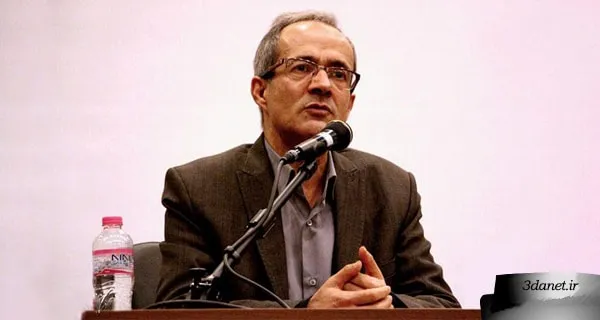
Regarding the term “tolerance” (in Arabic tasāmuḥ and in English toleration), he addressed various opinions on its definition, including the view of John Locke, who identified toleration of the other as the first point of departure toward democracy. But the question is, in the contemporary era, must toleration still be considered the initial step toward achieving democracy? Is this not tantamount to a temporary, imposed peace, a so-called ceasefire? And is it not related to a condition of subordination vis-à-vis the opposing power? Mohaghegh Damad continued: If we wish to look at this position from the perspective of Islamic law and philosophy, two points seem relevant: first, a higher stage can be considered, which is “the right of all.” Second, “truth is not absolute,” and therefore everyone has the right to think, and no one attains absolute truth; faith, in literature, carries this same meaning. Faith does not mean dogmatism but rather being in search of truth, just as the Quran says of believers that when they hear the verses of the Quran, their faith increases. On this basis, instead of tolerance and forbearance, it is better to preserve the right to thinking for all, and in this case, we can open the door to dialogue. Such an approach both reforms personal relationships and, at the level of governance, can establish democracy in its true sense. The second speaker of the session, Mohammad Mehdi Mojahedi, who holds a PhD in Comparative Political Thought and is a visiting professor at Mofid University, Islamic Azad University, Leiden University (Netherlands), Free University of Berlin, University of Jena (Germany), and the University of Amsterdam (Netherlands), spoke on “The Paradoxes of the Politics of Tolerance: Toleration versus Forbearance; Permission versus Respect.”
In his speech, he introduced three main points about the politics of tolerance:
1. Distinguishing between “tolerance as forbearance” and “tolerance as toleration” 2. Distinguishing between “tolerance as permission” and “tolerance as respect” 3. Forbearance and permission as an insult
Mojahedi continued: The politics of tolerance signifies a political action in which the tolerant side upholds the “other.” But the politics of tolerance is not a cheap and easy model for political action. This is because “political tolerance” is a concept of opposites, meaning it signifies concepts that are contradictory to one another. The difficulties of political tolerance in practice stem from this very characteristic of the concept of “political tolerance.” Dr. Mojahedi then proceeded to explain these three topics:
1. Forbearance versus Toleration: In political thought, tolerance has been understood in two senses: forbearance (mudārā) and toleration (ravādārī). In common usage, forbearance and toleration are synonymous concepts. However, in political theories, these two terms signify two contradictory models for political action. Forbearance (mudārā) means tolerance. Tolerance is a political action either from a position of subordination for self-preservation against oppressive superiors, or from a position of superiority toward subordinates with whom, for whatever reason, one must inevitably get along. In other words, forbearance is either the morality of subjugation or the morality of domination. For this reason, forbearance has been called the “morality of empire.” In contrast to forbearance, toleration (ravādārī) means tolerance from a position of assumed equality. That is, the assumption of the tolerant is as if they are on an equal footing with the “other” in terms of legal rights and moral standing.
۲. Permission versus Respect: The politics of tolerance as permission means that the superior power, first, deems only a limited and restricted portion of the “other’s” way of life and differing behaviors permissible. Second, it conditions the permission for the “other” to be different on the “other’s” practical commitment and loyalty to the superior power, especially in military, security, and political terms. In this model, the “other” is merely tolerated and is always seen and kept in the position of a second-class member of society. The continuation of this tolerance depends on the will and goodwill of the superior power. The Edict of Nantes (1598) and the Patent of Toleration (1781) are the most prominent historical examples of “political tolerance as permission.” The former allowed French Huguenots to pursue their sectarian rites and teachings in their own way and in secret within their religious and educational institutions. The latter permitted three Christian denominations in Germany to practice their rites only in private spaces and in a manner not visible or discernible to others from the outside.
But the politics of tolerance as respect tells a different story. Tolerance as respect entails the “recognition” and “acceptance” of differences from an egalitarian standpoint, and judgment of their rightness or wrongness independent of religious beliefs. Respect does not stem from a position of moral or epistemological relativism. Relativism is the antithesis of the politics of tolerance. Respect in this sense possesses three defining components:
a. Critique: That which we do not consider bad or wrong is fundamentally beyond the subject of our tolerance or intolerance. That which is to be accepted tolerantly must presumably first have been deemed wrong or bad. We may only wish to be tolerant toward some of what we consider bad or wrong; the reasons for this judgment must be expressed critically. b. Acceptance: Despite considering the difference in question bad or wrong, there must be another kind of reason indicating the necessity or possibility of accepting that bad or wrong difference. c. Rejection: The reasons for rejection express the limits of acceptance. That is, the acceptance of any bad and wrong difference is not permissible beyond a certain limit.
۳. Tolerance and Permission as Insult: In the history of political thought, a number of foundational thinkers had discerned that contempt and oppression lie hidden within tolerance as permission and forbearance. Traces of this insight can be followed in the views and works of Kant, Mirabeau, Goethe, Paine, and Kierkegaard, among others.
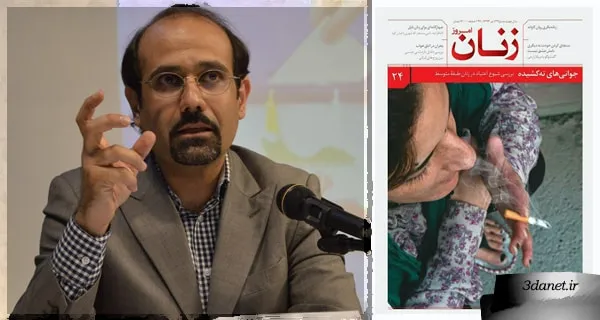
The other speaker at this session was Alireza Qezili, Director of the First Western Europe Department and former ambassador to Bolivia and Norway, who took an international approach to the subject of peace and presented his remarks under the title “The Evolution of the Definition of Peace” as follows: “Peace” has not had a fixed definition or concept and has changed over time. Based on an ontological view of human nature and essence, two schools of thought, realism and liberalism, have been formed. Naturally, each of the two schools offers different prescriptions for establishing peace and security in relations among actors in the international arena. Realists believe that war, violence, and the pursuit of power are inherent human drives. Humans exist in a state of war of all against all, and in the international arena, states struggle to acquire and maintain power. Consequently, conflicts of interest among states lead to strife. In contrast, liberal theorists believe that human nature and essence are not evil; rather, social conditions give rise to behaviors such as bellicosity, violence, and wickedness. States are not inherently belligerent either. War in the international system stems from the flawed structure of the international system. Liberal theorists consider the establishment of peace possible through: creating mutual economic interdependence, strengthening international institutions, expanding democracy, and institutionalizing collective security.
Qezili added: The definition of peace has gradually evolved from the time of the Treaty of Westphalia (1648) to the present day, and new factors are now considered threats to international peace. In the initial traditional definition, peace was limited solely to the “state of absence of war.” In 1945, with the establishment of the United Nations, the definition of peace evolved and is no longer confined to the absence of war and conflict; rather, peace is “a state of international order based on international law.”
He continued: Following the collapse of the Soviet Union and the emergence of very important political, economic, cultural, and social developments, and most importantly the phenomenon of globalization, the heads of the UN Security Council member states, in a statement on January 31, 1992, presented a developed definition of peace: "Today, the absence of war and armed conflict between states no longer signifies the existence of international peace and security. Instability in economic, social, and political spheres, and the violation of human rights, are also considered threats to global peace and security." Based on this definition, peace is threatened by various factors:
A: Political Threats B: Economic Threats: (Poverty, underdevelopment, mismanagement) C: Social Threats: (Uncontrolled migration, illiteracy, drugs, and organized crime) D: Military Threats: (Production and proliferation of weapons of mass destruction and territorial disputes between countries) E: Environmental Threats: (Global warming, depletion of the ozone layer, climate change, destruction of rainforests, drought, reduction of fresh water, pollution of rivers)
The final speaker of the session was Javid Ghorban-Oghli, author of the book With Mandela in the Rainbow Country. This book was published this year by Ney Publishing. Ghorban-Oghli is a senior diplomat at the Ministry of Foreign Affairs who has recounted his memoirs from his time as ambassador to South Africa (1999-2004), with explanations about the apartheid system in South Africa, the history of political and commercial relations between Iran and that country before and after the apartheid era, and has referred to his meetings with Mandela during his presidency of the Republic of South Africa.
In the short time at the end of the session, while emphasizing the subject of tolerance in dialogues, he pointed to the main axes of his speech on Mandela's leadership styles, which were: the leadership model, the connection between ethics and politics as two seemingly contradictory elements, leaving office at the height of power, and belief in reconciliation. At the end, he briefly recounted some of his memories of meeting Nelson Mandela for the audience.
.
.
Session: "Nelson Mandela, A Model of Tolerance in Politics"
Full Video of the Session: Watch on Aparat | Watch on YouTube
*The audio quality of the sound file is better
.
.

Discussion1 comments
یکی از منتقدان ماندلا و افکارش,اسلاوی ژیژک است.او معتقداست با لبخند نمی توان در مقابل نظام سرمایه داری مقاومت کرد. لبخندی که سمبل ماندلا بود.