Religion
Religious Intellectualism and Jurisprudence: A Symposium
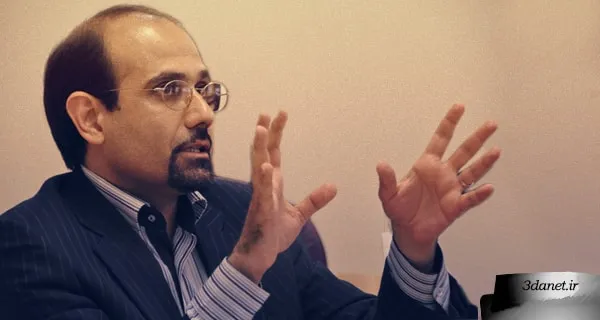
The late Davood Feirahi's views on the relationship between jurisprudence and ethics were examined and critiqued at the 'Religious Intellectualism and Jurisprudence' session. The discussion centered on questions ranging from the place of democracy and the source of values to the relationship between religion and ethics.
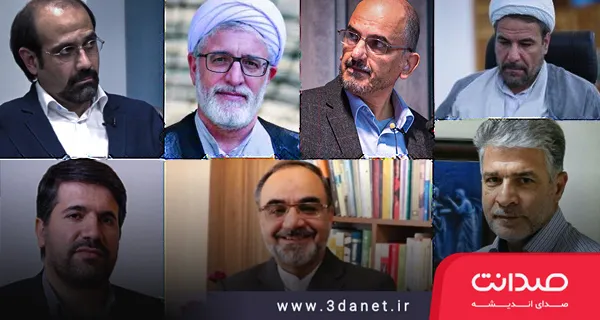
In the session “Religious Intellectualism and Jurisprudence,” the views of the late Dr. Davoud Feirahi[1] regarding the stance of religious intellectuals on the relationship between jurisprudence and ethics were presented and subsequently examined and critiqued by the attendees. These critiques were primarily directed at claims made in response to the following questions:
1- Do our religious intellectuals seek to separate religion from tradition? Or do they intend to replace jurisprudence with ethics?
2- Why do religious intellectuals prefer democracy over dictatorial or authoritarian rule? Is this an ethical question, with some turning to jurisprudence to find a justification in favor of that ethical question? Or is it a jurisprudential question?
3- Can a reconciliation be achieved between accepted values such as democracy, human rights, and the right to self-determination, etc. — on the one hand — and a particular reading of jurisprudence that is incompatible with those values — on the other? Fundamentally, what is the reason for the acceptability of these values, and from where do these values derive their status as values? From politics? From law? From ethics? Or from religion?
4- To resolve these incompatibilities, must one refer to the same traditional sources and with the same traditional method? Or should one refer to modern ethics and law, using methods that are not necessarily traditional?
5- What is the place and importance of rational and religious good and evil in this discussion? And what is the relationship between religion and ethics?
6- Some of the most important of these questions, which have also been the focal point of the conflict between the Ash'arites and the Mu'tazilites, are based on the answer to this crucial question: Do moral values, rulings, and norms originate from the legislative will of God? Or from moral intuitions? Moral conscience, or moral sense and experience? Or a combination of these?
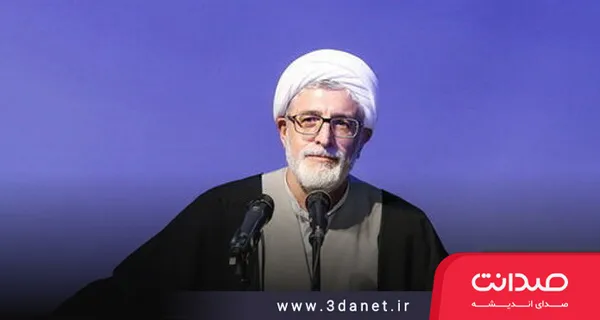
[1] The Sedanet Cultural Institute, with profound sorrow, regret, and deep grief, extends its condolences to the academic community and all admirers and enthusiasts of his lucid thought and flowing pen on the passing of the pious cleric and enlightened intellectual thinker, Professor Dr. Davoud Feirahi.
.
.
Full Audio of the Religious Intellectualism and Jurisprudence Session
Listen to the Full Audio of the Religious Intellectualism and Jurisprudence Session on YouTube
.
.
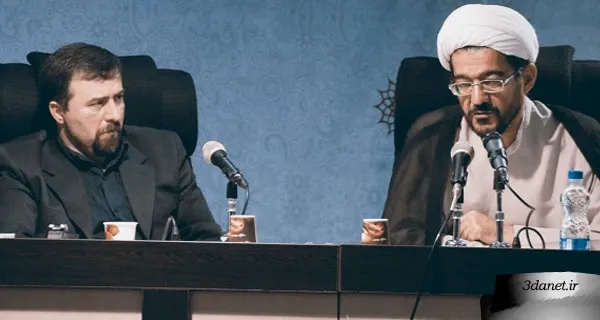
With the presence of the late Davoud Feirahi, Mohammad Mehdi Mojahedi, Abolghasem Fanaei, Seyyed Ali Mirmousavi, Mahmoud Shafiei, Yousef Khanmohammadi, and Seyyed Sadegh Haghighat
Mofid University; Wednesday, June 10, 2020
.
.

Discussion0 comments
No comments yet; let yours be the first voice.