Political Science
Revolution as Event: A Reflection on the Question of the “Achievements of the Revolution”
Revolutions are unplannable events, not goal-oriented projects; asking about the 'achievements of a revolution' is meaningless. The question must be reframed as the 'consequences of a revolution,' for the outcome is an accumulation of transformations, not the result of intentional action.
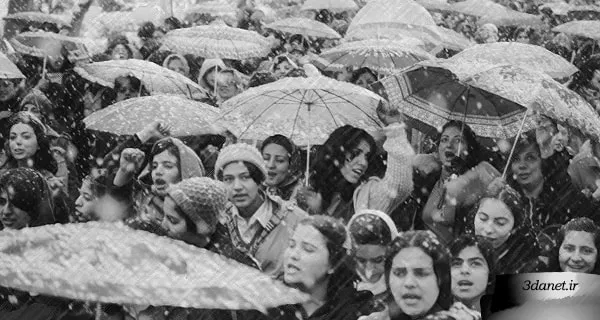
Just as one cannot speak meaningfully about the achievements of an earthquake, one cannot inquire into the achievements of a “revolution,” at least in its classical sense. The same holds true for scientific revolutions. Political revolutions, exactly like scientific revolutions, are neither programmable nor predictable, nor can they be controlled or prevented.
This is not merely a discussion about the precision of words and terms. The issue is not whether, regarding a revolution, it is more appropriate to speak of “consequences” or “achievements.” The main issue lies in the rigid and weighty presuppositions hidden behind each of these two expressions and their like, and by using each of them, we underwrite those presuppositions and calibrate the nature and direction of our questions, inquiries, hypotheses, and evaluations based on them.
For instance, when we speak of the achievement of a revolution or an earthquake, it is as if we are implicitly and necessarily saying that the event could have not happened, especially if we now see that its benefits were not worth its harms. But the reality regarding revolutions is that just as they are as sudden as earthquakes and as surprising as scientific revolutions, they are also inevitable and unavoidable.
In contrast, reform, or normal research programs, of course require intention, purpose, resolve, vigilance, and also actors who act deliberately, intentionally, and according to plan, and who, at low cost, guarantee the greatest results for the people through reforming a political structure or implementing a scientific project, so that, for example, the edifice of their lives does not suffer revolution-like earthquakes; so that they prevent revolution. But revolutions are only identified after they have happened, and everyone realizes their occurrence when, in fact, some time has already passed since their onset.
Or, for example, when we speak of “achievement,” it is as if we forget that revolution itself is an exceptional and maximal point at the peak of the curve of changes, a point that is the result of the accumulation of prior transformations, and the before and after of it are not supposed to have a major qualitative difference from one another.
One can ask about the “achievements” of projects and the planned, deliberate, and intentional actions under them. But classical revolutions, like any other event, are not the result of any designed and planned project, and the diverse and numerous actors who strive on the threshold and within the midst of revolutions to change or preserve the status quo know almost nothing of the fact that they are actually turning the pages of a revolution’s ledger. The occurrence of the revolutionary event becomes clear to the actors and spectators of the revolution only later. Classical revolutions, including the 1979 Iranian Revolution, which has been the last of them to date, are “events,” not projects.
In any case, as far as we know from theories of revolution, classical revolutions cannot be considered the result of a specific plan or project. Revolutions are, in fact, the high peaks of the curve of transformations. Peaks that are conspicuous and in which most political, social, and economic rules and laws, like most power relations, temporarily change their nature, and after some fluctuations, return to a normal state. Revolutions, in this sense, do not have achievements. They are themselves the “consequence” of a set of transformations, and of course, they themselves have “consequences.”
It is true that in a revolutionary event like the one that finally led to the change of the political system in Iran on February 11, 1979, there are people and leaders without whose wills and actions no significant event would occur. But there is another point at stake: the actors who become active within the context of classical revolutionary events, whether at the level of leadership and mobilization, or at the level of mass movements of revolutionaries, or within the command and ranks of the government, discover entirely contingently and in the moment, and without any long-term or medium-term plan, what the limits of their action and authority, their degrees of freedom, and the possible options for their agency are. This point may become clearer especially by scrutinizing the difference between revolution and reform programs, and also by scrutinizing the difference between the role of reformers in reform programs and the role of revolutionaries in events that are later deemed “revolutions.”
Some might consider the political lessons drawn from revolutions—which serve to improve political systems—as achievements of revolutions. But these lessons are not an achievement of revolutions; rather, they are the achievement of studies by those who strive to learn from events, just as the engineering and urban-planning lessons learned from earthquakes are not an “achievement” of earthquakes. That after any event some people sit down to study and reflect is, of course, one of the consequences of any event, whether natural or human, whether an earthquake or a revolution.
Now, if we reduce the “question of the achievements of the revolution” to the “question of the consequences of the revolution,” another idea that might be raised is that some of the consequences of a revolution are deliberate and intentional consequences. This latter idea stems from overlooking one of the important characteristics of revolutions. A classical revolution is a total event; it is a “moment” of the collapse and convergence of many unplannable processes and occurrences. Amidst this, some people devise plans and take actions. They themselves are part of the event of the revolution. The revolution is not part of their doings.
Let us return to the difference between reform programs and their comparison with the event of revolution. For example, the socio-economic reforms of the late 1970s and early 1980s in China were the result of the planning and action of Deng and his associates. Had they not planned and acted, the reforms would not have occurred in China. But revolutions are not subject to the planning of this or that person. When their time comes, revolutions find their own actors. The revolution is the sound of that instrument which, in Rumi’s allegory, a thief ironically said would be heard the next morning. Revolutions, years “before” their manifestation, in fact gradually take shape in the deepest layers of power relations. But the sound of the revolution is raised and heard only when they have already occurred and it is too late. In this sense, revolutions are not the product of the action of this or that specific actor. For the same reason, the consequences of a revolution cannot be attributed to the will and intention of this or that specific actor.
On the other hand, the unthinkability of revolutions does not come down to the simplicity or complexity of our tools of study, observation, analysis, and prediction in the humanities and social sciences. The political and social rules we know in political science, social science, and sociology are the rules of normal or quasi-normal situations. These sciences, like most fields of the empirical natural sciences, have been formed to examine normal situations and phenomena, not extreme, exceptional, and maximal situations and phenomena like revolutions. Normal political and social laws, methods, and rules, just like physical rules, change their nature under extreme conditions. For instance, the rules and methods of Newtonian physics and mechanics work for the world of normal sizes, masses, and speeds, but on a galactic or subatomic scale, or near the speed of light, they lose their explanatory power and change their nature. The rules and methods used in political science and sociology are the same.
Charles Kurzman has explained this point well in his book The Unthinkable Revolution in Iran. The Iranian Revolution is an example of the unthinkability of revolutions. Not that no one had simply thought of them, but that thinking of them through conventional methods of political analysis was impossible before their occurrence.
For example, what roles the army, guilds, the judiciary, the police, prisons, political parties, the cultural and economic elite, interest and influence groups, and even ceremonies and rituals like the fortieth-day memorials for the deceased play in society and politics, and which of them can guide and lead or control and contain changes, are well-known topics in the conventional humanities. But the situation of revolution, by definition, means a situation in which no structure, institution, or organ any longer has those conventional functions and roles. Well, in such situations, which are the extreme and ultimate situation, the chain of fortieth-day commemoration ceremonies for fallen protesters can lead to the fall of the Pahlavi regime, or a Tunisian fruit vendor, by setting himself on fire, can strike the spark of a revolution on the powder keg of society and set the tent of power ablaze across the Middle East. This is not predictable by any method.
Revolutions create sharp and intense jolts in the outermost layers of the hard structure of power, but they usually do not change the foundations and infrastructures. In fact, on the contrary, infrastructures have changed so much and in such a way before the occurrence of the revolution that they have made the event of revolution inevitable. And for this reason, in most revolutions, for periods ranging from one to five decades, we witness an era of reproduction of the previous order and the system lost in the outermost layers of official power.
In other words, the behavioral relations of pre-revolutionary power are gradually reproduced after the revolution in the form of new names and structures. For example, one can recall the reproduction and promotion of despotism after the Constitutional Revolution or after the French Revolution. The main reason for the reproduction and restoration of the outer shell of the previous order is that revolutions are not the "cause" of an event in the foundations, but rather "indicative" of them. In fact, contrary to popular perception, before the occurrence of the revolution, the foundations have undergone such fundamental changes that now the event of the revolution merely recounts their story loudly, so that even the heaviest ears can hear. Revolution is indicative of infrastructural transformations, not their cause.
The behavioral reproduction of the previous order, however, is the work of the heirs of revolutions. They have patterns of the power game in their minds that are the result of their lived political experiences before the revolution. Those patterns and experiences, of course, have no relation to the ideals of these passionate revolutionaries. But the tragedy of revolutionism is precisely that revolutionaries do more or less the same things they saw from the past regime. This is why the period of reproduction may last half a century, but precisely for the same reason that the previous regime could not endure, these reproductions also do not last, and the consequences of revolutions only gradually reveal themselves after the fall of this second version. Exactly like the French Revolution or the Constitutional Revolution.
In this game of reproducing the previous order, structures and their hard layers have no agency. Those structures and institutions express the limits and rules of the game, which have gradually taken shape through historical accumulations in the soft and hard relations of power. Now, by definition, these structures are supposed to be fluid capacities for discovering and solving problems. But beyond a certain point, if they do not become complex in step with the complexity of life and its problems and become fossilized, they themselves turn into part of the predicaments. That is, not only do they deprive us of the power to solve problems, but they themselves become a center radiating problems, for example, when corruption becomes institutionalized. The institutionalization of corruption means corruption becomes the secret to a system's survival. Or, for example, when a system becomes crisis-prone. That is, it cannot secure its survival except through giving birth to, nurturing, and preserving crises. These become grounds where the structures themselves become part of the problem statement.
In this case, if a set of "unthinkable" conditions accidentally come together, they subject the hardest and most rigid political systems to events as great as revolutions. And these accidents do not need to be specific occurrences. The self-immolation of a vegetable seller in Tunisia sparked a revolution. Unthinkable. Interestingly, about six months before that, a reputable center for Middle East studies in America had published a detailed report, the result of the efforts of dozens of specialists, stating that in the Arab Middle East, Tunisia had the most stable situation. And Iran, as you know, was called an island of stability a few months before the revolution.
.
.
Revolution as Event: A Reflection on the Question of the “Achievements of the Revolution”
Author: Mohammad Mehdi Mojahedi
.
.




Discussion1 comments
افزون بر تفاوت « دستاورد » ( که متضمن وقوع با برنامه و هدف رخداد است ) با « پی آمد » ؛ « برآیند » نیز با « پی آمد » فرق دارد : « پی آمد » حادثه پس از انقلاب است و لزوماً نتیجه و برآیند آن نیست هر چند ممکن است متأثر از آن باشد ، مثلاً جمعیت نسبی روستا در ایران پس از انقلاب کاهش یافت ، یا مناسبات کالایی و تجاری گسترش و عمق یافت ، یا « طبقه متوسط فرهنگی » حجیم شد ... ، این ها پیامد انقلاب بوده اند نه برآیند آن ، یعنی از عواملی بنیادی تر مایه گرفته اند ، عواملی که شاید موجد انقلاب هم بوده اند . ( در روایت های ارتجاعی و ضد انقلابی از این رخداد ، همه امور منفی ، نتیجه و برآیند انقلاب قلمداد می کنند و جنبه های مثبت را یا انکار و یا بدون هیچ معیار مشخصی ، نتیجه عوامل دیگر توصیف می کنند . )