Sociology
Ethics in Iranian Society: Transformation or Crisis?
Anti-social behavior in Iran has increased due to factors such as information overload, a lack of pro-social personality, the prevalence of narcissism, and weak place attachment; urban life and marginalization intensify this crisis.
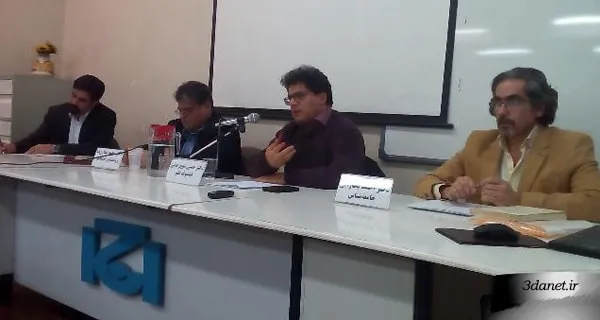
The meeting of the Sociology of Social Issues and Problems Group of the Iranian Sociological Association was held on Saturday, November 12, 2016, with three speakers in the fields of sociology (Dr. Ahmad Bokharaei), social psychology (Dr. Majid Saffarinia), and philosophy of science (Dr. Hossein Sheikhrezaei).
At the beginning of this meeting, Dr. Majid Saffarinia spoke about Iranians' counter-social behaviors and the reasons for their increase, stating: To define this concept, we must first know that social behavior is like an individual respecting different cultures and ethnicities, not littering in the street, not overcharging, a taxi driver returning the remainder of the fare to the passenger, respecting the environment, and any behavior contrary to civic behaviors is certainly counter-social behavior. When we examine these kinds of behaviors; in the driving environment, in landlord-tenant relations, in our behaviors on the metro, etc., we see that counter-social or uncivic behaviors are increasing. One of the causes of this issue is information pollution or what social psychologist Stanley Milgram termed "stimulus overload." In fact, life in cities creates conditions where we suffer from information overload due to the increase in information input to our brains. Our mind perceives overload as a threatening context. For example, when you enter the metro, before the passengers inside the carriage disembark, the passengers outside enter and do not allow them to exit. This issue is due to the density of people in the metro space, causing individuals to experience cognitive overload and the context to become threatening. This is also why violence and aggression increase during metro peak times.The characteristic of life in dense and populous cities causes the brain to act selectively towards incoming stimuli, not receiving all events, and it suffers from forgetfulness or allocates less time to incoming stimuli. It is precisely for this reason that in an incident like the one in Sa'adat Abad, people were only filming instead of helping. When our mind suffers from information overdose, uncivic behaviors increase.In psychology, we speak of a personality that has a social dimension under the title of prosocial behavior/personality. That is, a personality that helps other people, like a teacher who shaves their head like their sick student, or a firefighter who sacrifices their life. Empathy, belief in a just world, social responsibility, internal control, and low self-centeredness (not being narcissistic) are the axes and components of this personality. Empathy means when my friend has a problem, it is as if I myself have a problem. When I see a poor person, I feel heartfelt sympathy and sadness. Belief in a just world means believing that you reap what you sow, belief in the Prophet's saying that this world is the farm of the hereafter. Social responsibility means attention to civil rights, animal rights, etc. Internal control means that individuals with a prosocial personality do not attribute events to luck and chance.
He added: In 2003, we standardized the Prosocial Personality test in Iran. But where in our educational system is this test administered? Where in our education system are prosocial behaviors promoted?! Which parent gives their child two pens so that if a classmate needs one, they can give it to them? We only teach them to stand up for their rights at school, if someone pushes you, push them back, and so on. When a prosocial personality is not promoted in society, such a personality does not take shape. The second factor in the increase of non-normative behaviors in society is the failure to raise prosocial individuals. The third reason for the increase in antisocial behaviors is personality factors. Today, narcissistic disorders are on the rise, partly due to single-child families; from officials and managers to university professors, workers, employees, and so on. Our general population thinks half of NASA's managers are Iranian. It has become a common saying that art is unique to Iranians and that's it. Unfortunately, narcissism—that is, self-love which signifies an excessive affection for oneself and reliance on internal self-conceptions—is rampant in our society. Most people consider themselves the ultimate intellect; from an 18-year-old youth to an 80-year-old man. Of course, it is natural for actors or presidents to be narcissistic, but why should an ordinary person or an 18-year-old youth be narcissistic? Narcissistic behaviors cause antisocial behaviors to increase.
Dr. Safarinia said: Today, in schools, we are facing a phenomenon called "non-suicidal self-injury," which is not done with the intent of suicide. For example, when a child is surprised, they hit themselves hard in the face. When arguing with a classmate or their parents, they bang their head against the wall, or they carve their name on their hand with a knife or sharp object, or even get a tattoo; this behavior is a symbol of borderline personality disorder; a disorder with two faces; one white, which people fall in love with, and the other black, which leads oneself or others to the gallows. These individuals also tend toward substance use. Among its causes, one can point to: experiencing sexual abuse or having cold, rejecting mothers; this type of personality is not uncommon in our society. All these factors, alongside mental illnesses, have led to an increase in antisocial behaviors in society. Dr. Noorbala, a psychiatrist and former Deputy Minister of Health, in a longitudinal study he conducted, announced that 41.5 percent of Tehran's population suffers from adjustment disorder. That is, 41.5 percent of Tehran's population is not well. Of course, they are not ill, they just have problems in the dimension of adjustment, they have low resilience, they become angry quickly and act aggressively..
He continued: The fourth reason for the increase in socially deviant behaviors is related to environmental psychology, called place attachment. For example, a person constantly says, I am a kid from such-and-such street. That is, the individual feels a sense of self-esteem regarding that neighborhood and is less prone to depression, because the environment possesses characteristics that can attach the person to it. When a person has place attachment, they do all their shopping at the neighborhood supermarket; if they are a criminal, they do not commit crimes in their own neighborhood; they do not use drugs in their neighborhood, and so on. Now consider that 20 percent of our people live on the margins of cities. We launched a project and are even proud of it, called Mehr Housing! We are proud that 15 kilometers from Tehran, in, say, Gorgabad, we have built Mehr housing complexes, while the sizzling sound of addicts smoking opium can be heard through its walls. On the margins of cities, which have no identity or authenticity whatsoever and were previously gathering places for stray dogs, we have built Mehr Housing, and then we expect people's well-being to be good! The output is nothing but the Owl and the Bat and so on... Today, dozens of ethnicities and cultures have settled on the margins of cities without any elements of place attachment. 20 percent marginalization is not a small figure at all..The fifth factor is among social factors, such as defenseless urban spaces and social health. Urban health means a society whose climate is healthy. Today in Tehran, we witness light pollution. The Ministry of Energy has flooded the city with light, and no stars can be found in the city sky anymore. People are forced to spend 200,000 Tomans to go on a desert tour just to see the stars in the sky. On the other hand, we may have often wondered why Indians who live in garbage are happy; it is because amidst the garbage, they perceive pleasure, but an Iranian in their tower on the best street in the city does not feel pleasure, because the standards of social health in our society are low. Social health indicators include social cohesion, social flourishing, social acceptance, and social participation. Social participation in our society is not high; although some say that people participate in presidential elections and this is a sign of participation, when the president asks people to withdraw from receiving subsidies, no one withdraws; this means that people voting in elections is not a sign of participation—not taking the subsidy is participation. The low dignity of specialists is one of the components of the lack of social health in our society. Divorce, suicide, and extramarital affairs are among the moral and social crises of our society. A person is 50 percent social. If we take an individual from the Shush district with socially deviant behaviors to Canada, they become a social citizen; they fasten their seatbelt, obey the law, and so on... In our society, the standard of social health has declined, and the reason for this is our poverty and deprivation.
After Dr. Saffarinia, who described and analyzed socially deviant behaviors from the perspective of social psychology, Dr. Hossein Sheykh Rezaei, a philosopher of science and faculty member at the Iranian Institute of Philosophy, as the second speaker, examined the subject of ethics in a religion-oriented society.
He said: The first point that must be considered is that there is a distinction between being ethical and having ethical knowledge. A high level of ethical knowledge does not necessarily mean being an ethical person. In the common discourse of a society, when the word ethics is spoken or heard, what issues come to mind, and what is meant by immorality in our society? One of the best places to understand the general Iranian public's conception of ethics is the history of Persian literature. We have many works in this regard, the best of which is Saadi's Golestan. For example, in the chapter on ethics in Golestan, it is stated: "Do not be deceived by the enemy's trickery, nor taken in by the flatterer's pride; for the former has laid the snare of deceit, and the latter has spread the skirt of greed. The fool is pleased by praise, like a carcass whose heel you fatten." In this tale, when ethics is discussed, it is an individual matter, and we are primarily dealing with individual ethics. That is, the traits an individual should possess, with less reference to the individual's relationship with others. Also, ethics mainly encompasses moral virtues. The purpose of having moral virtue is survival in an insecure society. The ethics depicted in the history of Iranian literature is not related to decision-making but to character. On the other hand, the moral ideal of an individual is a dervish. Today, the general perception of our society considers an ethical person to be a detached individual. This detachment and ethics overlap with piety. Furthermore, the ethics depicted in our literary history has a high ceiling and is maximalist, and ultimately, the most important medium for teaching or expressing ethics is advice, counsel, and the use of the imperative verb. I believe these conceptions of ethics, rooted in our literary history, are still with us, and indeed, the problem begins right here.
Our society's contemporary conceptions of ethics do not answer to ethics in the new world. When we consider an ethical person to be untroubled, low-maintenance, unproblematic, and dignified, how do we make sense of environmental ethics, medical ethics, or professional ethics?! That is, when we view ethics as an individual, character-based issue related to one's inner disposition, how do we understand the ethics of cyberspace?! The conception of ethics based on our literary history does not mesh with modern compounds like cyberspace. In other words, we lack a modern conception of ethics. This modern conception pertains to decision-making, not purely individual and character-based issues. That is, we need to consider in our decisions whether the ethical dimension is taken into account, and this matter is not so dependent on personal disposition but relates to action, not the individual.
Dr. Sheykh Rezaei added: I do not agree with Dr. Saffarinia that we should reduce all the causes of the ethical crisis in society to poverty, make it the cause of all causes, and see its solution in high political and administrative councils. In that case, we will never have an ethical society. Even if a hundred councils are formed, if our conception of ethics is an ideological one, we will not achieve an ethical society. The most important solution for resolving the ethical crisis in society is to increase citizens' sensitivity to the concept of ethics. The ethical or unethical nature of an action must enter our discussions, but not in an ideological way, rather in the sense that we discuss them and reach a conclusion.
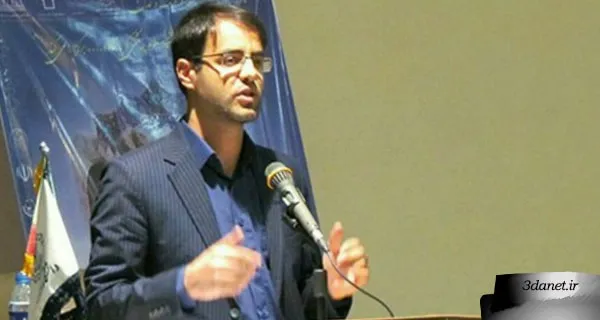
After Dr. Sheikh Rezaei, who addressed social ethics from the perspective of moral philosophy, Dr. Ahmad Bokharaei, sociologist and university faculty member, presented his discussion as the final speaker on “Ethics in Iranian Society: Transformation or Crisis,” stating: In general, four stages in the evolution of the sociology of social ethics are discernible: 1- Durkheim’s concerns in the nineteenth century, after an ethics tied to an era characterized by mechanical solidarity, turned toward an ethics that crystallizes in a society with organic solidarity. This social ethics has an educational nature, as Durkheim expresses in the distinction between punitive and restitutive law. In the former, laws are less flexible, but in the latter, laws are subject to revision, and the aim of criminal law is the restoration, construction, and education of the deviant individual. Or where Durkheim considers education, rather than the family, as assuming the educational role in the modern era, he is striving to deepen social ethics. From Durkheim’s perspective, in the ancient period, immorality meant scratching the collective conscience, but in the modern period, social ethics serves to safeguard individual consciences. I call this: “Ethics for Society.” In this designation, my attention is on the instrumental and means-oriented nature of “social ethics,” which in a way reflects the “a priori” character of ethics in relation to society. 2- The second period in the evolution of social ethics in sociology relates to the mid-twentieth century and Parsons. With his macro-level structural-functionalist approach, he attends to the necessity of creating “moral consensus” in society. Parsons’s view of social ethics is reflected in the necessity of placing the cultural subsystem at the apex of the four social subsystems, from which the other subsystems are obliged to receive information. The function of this subsystem is the maintenance of action and behavioral patterns in society. Therefore, social ethics in Parsons’s view has two characteristics: 1- patterns originating from culture, 2- the necessity of the existence or creation of moral consensus. Parsons’s view is directed toward the functions of social ethics, but he considers an ethical system in a society to be functional only if it, firstly, encompasses all parts contained within the cultural subsystem—meaning it is not selective or partial—and secondly, there is agreement and consensus among social actors regarding them. I have named this approach to social ethics: “Ethics in Society.” In this designation, my attention is on the encompassment of “social ethics” within “society.” 3- The third stage of the sociology of social ethics is associated with critical sociology, parallel to structural-functionalist sociology. In this approach, a kind of ethical critique of society is undertaken, and its idealistic aspects are strong, as seen in the perspectives of Marx, the neo-Marxists, and the critical school. I have named this: “Ethics Over Society.” In this designation, my attention is on the a priori, as well as the prescriptive and imperative, nature of ethics in relation to society. 4- The fourth sociological stage in social ethics is mainly related to the efforts of the last five decades, such as the work of Robert Bellah in the 1970s and after, which takes on an interdisciplinary aspect, and an intermingling of three concepts—explanation, understanding, and action—emerges in the definition of social ethics. We can loosely call this: “The Ethical Society.” In recent decades, the philosophy of life has also entered the sociological discussions of social ethics. In my view, a synthesis of the second and fourth stages can represent a full-fledged sociology of social ethics. In other words, the two aspects of structuralism and ethical orientation can be considered in this new combination.
Dr. Bokharaei continued: But some believe that in our society, the existence of religious ethics is sufficient to give coherence to social ethics. Look, nearly a thousand years before Islam in ancient Greece, Aristotle in the eighth section of the Nicomachean Ethics says: "Concord in cities is achieved when citizens are of one mind about their interests.... This state exists among good men, who are in harmony both with themselves and with others.... Men of no virtue can achieve concord among themselves only to a small degree, and likewise, they are incapable of friendship, because they want to receive more than their share of benefits and to do less than their share of work in public offices and duties; and since each of them wants greater advantages for himself, he closely watches the other and prevents him from benefiting, and where there is no concord, the common good is trampled, and the result is that discord appears among the citizens, and each compels the other to observe legal justice but does not himself wish to bow before justice." It can be observed that the lofty concepts of social ethics were articulated in numerous ethical and social texts centuries before Islam, and these concepts reached Islam in their historical context and have continued to this day. I want to say that discussions of social ethics are not specific to one time or one school of thought, such that we would need to begin from there. But you see the traces of all these ethical concepts in religious teachings as well. The Prophet of Islam says: 'I have been sent to perfect the noble traits of character,' or 'Indeed, you are of a great moral character.' In religious ethics, two elements: justice and piety, have priority. But both of these factors, within the context of social currents and oriented toward time and place, acquire an operational definition—of course, I mean that part which seeks to help strengthen the social order; otherwise, in the relationship between the individual and God, religious behaviors have more distinct characteristics. Piety or justice, in its initial expression, had a general and concise definition. This general concept, when confronting any society, takes on specific operational definitions and particular indicators. For example, when Imam Ali in Sermon 23 of Nahj al-Balagha says: 'If any of you observes a deficiency or shortcoming in his relatives, let him not refrain from remedying it, for if he does not give, his wealth will not increase...'—in essence, attention is drawn to the necessity of economic interactions in a proper context with formal and informal oversight, an example of which is collecting taxes from the wealthy and transferring them to the poor, which is realized within the framework of administrative rationality. The very thing that capitalism also did when it came to its senses, so that the working class would not revolt, and this too was a rational action. I want to conclude that if we, in this session and amidst the discussions of social ethics, do not turn to religious teachings, it is not because they lack influence, but rather due to the need for a detailed definition of social ethics that emerges from the sociology of social ethics. But what is the difference between morality and ethics, or between Morality and Ethics?
The head of the Sociology of Social Issues and Pathologies department, in response to this question, stated: These two moral concepts are distinguished on four grounds: 1- In terms of "whatness," social morality consists of "principles" and habits. Thus, social morality can primarily be pursued at the micro level and among individuals; hence it is said that someone "has no principles." But social ethics are unwritten "rules" that are expected to be followed. These rules are formulated at the macro level. 2- In terms of "domain," social morality has a personal and individual aspect, whereas social ethics is external and outward. 3- In terms of "origin," the starting point of social morality is our beliefs, meaning "we" are the origin, but in social ethics, society is the origin, meaning "society" dictates that we must do a certain thing. 4- In terms of "nature," social morality is of a "convictional" nature, but social ethics of the ethics type is of a "dispositional" nature, such as an individual who does not "believe" in hijab, based on social morality, does not observe hijab in the private company of their intimates, but this same individual in society has a "disposition" to maintain hijab. However, regarding the definition of ethics, one can also adopt a fresh perspective from another angle. We can also, based on Maslow's hierarchy of needs, map five types of needs onto their corresponding five types of social ethics. The first need is the physiological need; therefore, the "equitable" distribution of people's basic necessities such as food, clothing, and healthcare, as well as addressing the need for mating, is a primary necessity whose ethical element is "justice." But the social immorality associated with the first level of need in Maslow's hierarchy is "discrimination" and creating obstacles to the fulfillment of an individual's physiological needs. At the second level of Maslow's needs, the need for emotional security is raised, whose ethical requirement at the group level is the existence of a healthy family, and the corresponding social immorality is formal ruptures in the family and informal ones, i.e., emotional divorce. At the third level is the need for belongingness and receiving attention within a group, whose requirement is group dynamism, and the corresponding social immorality is preventing the formation of groups. The fourth level of need in Maslow's hierarchy relates to fulfilling a social role at the societal level, whose requirement is the availability of opportunities for role fulfillment, and the corresponding social immorality is the denial of roles and unemployment. The final and fifth need includes self-actualization, whose ethical requirement is the existence of platforms for expanding the level of cognition, and the corresponding social immorality is keeping society away from abstract and rational thought. These five levels of social ethics, in order to consolidate human identity, are respectively situated in these five units: the individual, the family, the group and neighborhood, society, and the world. But on the other hand, everything described in the fivefold account of social ethics manifests in three directions: 1- Towards oneself, i.e., self-respect and self-esteem, 2- Towards specific others, i.e., respect for others, and 3- Towards general others, i.e., respect for: a- society, b- nature and the environment. In the first direction, the individual must feel a sense of agency, and if they feel a sense of objectification, their self-esteem is trampled, and they become hypocritical, sycophantic, and preachy. In the second direction, if the individual does not find themselves among a group of friends and family, they are driven towards immorality, violence, and deriving pleasure from others. In the third direction, if social ethics does not crystallize, it indicates the existence of a rootless, unprincipled politics in society, where the individual feels insecure about the future, and with the existence of distrust in society, chaos ensues. This anarchy inflicts irreparable blows on both society and the environment. But the next point is that in terms of "subject matter," we can extend social ethics to three domains: commerce, professions, and law. In the first two cases, they may not necessarily be codified, but they are expected to be observed. For example, the expectation of observing business ethics in dealing with child laborers. Medical, nursing, research, and journalistic ethics, etc., fall under the second case. But legal ethics is violated when a conflict of interests arises, such as when rent-seeking occurs. This tragedy happens when common resources in a society or in the global community, such as aquatic life, forests, and underground resources, are subject to rent-seeking, or are disputed, like the release of greenhouse gases.
That claim-seeking which shakes the foundations of society can be based on nepotism or ideologism, leading to “monopoly,” then to “rent-seeking,” and ultimately to “structural corruption.” Accordingly, if we wish to define social ethics using a Parsonian approach, by distinguishing three sub-systems we can say that the ethical patterns existing in the cultural sub-system, if they are to keep society distant from immoralities, must, in the social sub-system, see the two phenomena of “reasoning” and “law” respected so that “transgression” does not occur; and in the political sub-system, “democracy” and the just distribution of opportunities must manifest to prevent the emergence of “betrayal”; and finally, in the economic sub-system, a sense of relative security for meeting biological needs, along with frugality to prevent the occurrence of “gluttony” and the excesses of the affluent classes, must emerge. Overall, it can be said that there are three main grounds for strengthening the foundations of social anti-ethics: 1- The distortion of values, which leads to individualism and has these manifestations: vindictiveness, increased oppression, chaos, the isolation of the learned, insecurity, and the inversion of values; 2- Social rupture, which manifests itself in weak social capital, low participation, and low trust; 3- A sick economy, which brutalizes minds, turning reason into a mere instrument, increasing the destitution of vulnerable strata, and, as in our present day, inefficient banks that harm a healthy economy, along with land grabbing, embezzlements, and the like, rear their heads. Drawing on value concepts, three types of social immorality can be distinguished: 1- “Moral hypocrisy,” which involves possessing moral knowledge and speaking of moral matters but not acting morally, representing abnormal conditions; 2- “Moral disbelief,” which involves neither speaking nor acting morally, indicating the existence of a kind of anomic and normless condition; and 3- “Moral rebellion,” which involves lacking moral knowledge and also acting counter-morally, akin to opposing the ethics of global coexistence.Dr. Bokharaei concluded his discussion by saying: A final word on what ethical state we are in. Ethical transformation in a society must have two characteristics: first, the quantitative statistics of social harms must decrease, and second, the qualitative depth of immoralities must be reduced. Are we witnessing these two changes in our society today?! Quantitatively, we are witnessing an upward trend in statistics related to social deviances and immoralities. Qualitatively, in our society today, abnormalities have become norms, meaning that shamelessness has become easy; individuals sometimes commit crimes openly and blatantly. If a society moves in a direction where harms decrease quantitatively, or even if they do not decrease but at least the blatancy of abnormalities is reduced, we can claim that an ethical transformation has occurred. But has this transformation taken place in our society?! It does not appear to be so. Therefore, both quantitatively and qualitatively, what has happened in our society is an ethical collapse and crisis! Today we face the problem of open drug use in neighborhoods and parks and drug injection; that is, the normalization of an abnormality. The theft of academic articles has become public in society, like the recent incident in the academic sphere. This problem existed before, but in secret; however, today our society is increasingly on a downward slope of ethical collapse, and abnormalities are becoming more and more normalized. You ask: What is to be done? We have only one path; we must define a new model for society's progress. The old model, under which elements are merely rearranged, does not function. Now, this solution and this new model may be met with labels such as Westernization or secularism. From a sociological perspective, it can be firmly stated: We need a new model that is fundamentally different from the one under which we have behaved over the past three or four decades.
.
.
Related Content: Audio and Video Links for the Session "Social Ethics in Iran: Transformation or Crisis?"
- Complete Audio Link, Including All Three Speakers
- Selected Audio Link of One Speaker (Dr. Ahmad Bokharaei)
- Complete Video Link of the Said Session, Including All Three Speakers
- Selected Video Link of One Speaker (Dr. Ahmad Bokharaei) at the Said Session
.
.
Ethics in Iranian Society: Transformation or Crisis?
Source: Iranian Sociological Association
.
.




Discussion1 comments
فرهنگ فاسد ایرانیان که بر اساس خودبینی و خودنگری و غرور بیجا و خشونت پنهان و اماده بروز و عدم اعتماد به یکدیگر و جوگیری و محبتهای ظاهری و زیاده خواهی و حرص دنیاطلبی بی پایان و تحقیر دیگران و فرصت طلبی و چاپلوسی که از پستی طبع سرچشمه میگیرد و عدم توجه واقعی به علم و تفحص اما مدرک گرا!، فضول زندگی و طرح عیوب دیگران و بی توجه به نقایص خود که طی هزاران سال شکل گرفته و بخشی از ان مربوط به عدم یکنواختی قومی و نژادی است سبب شده تا سرزمینی بنام ایران هرگز رشد نیابد و محیط مناسب برای زندگی امن و روبه پیشرفت نباشد و مسئولان که اغلب از جنس همین مردم هستند با توجه به افراد چاپلوسی ، ارزشهای ازادگی را در مردم تضعیف میکنند اما خدمت برای این مردم که اکثریت مشکل اخلاقی و اندیشه و روش زندگی دارند اشتباه است.سازمانهای مسئول در ساختار فکری و اخلاقی و هنجاری جامعه بدلیل وجود افراد نالایق و منفعت طلب قادر به رفع مشکل نیستند