Sociology
The Possibility and Impossibility of Dialogue Among Elites in Discourses by Malekian, Shariati, and Ayazi
The state of dialogue in Iran is more alarming than it appears, having devolved into fruitless monologue or polemic; a report on a meeting with Malekian, Shariati, and Ayazi on the obstacles to dialogue and the consequences of the elite's rupture from society.
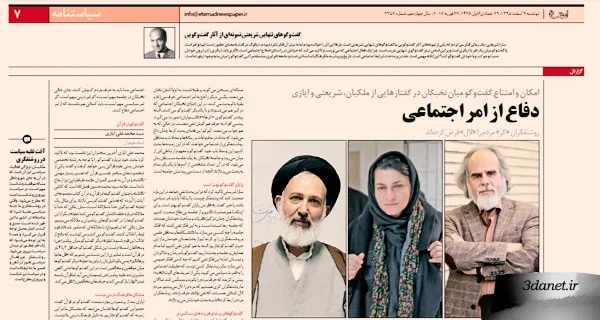
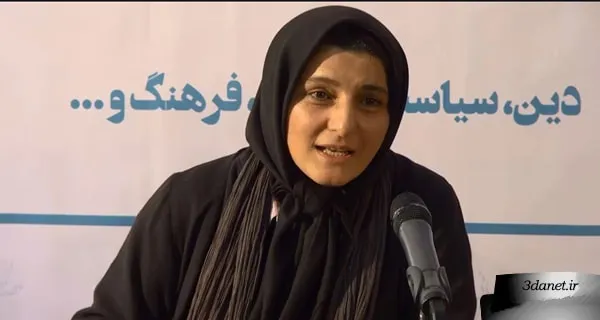
The discussion about dialogue in Iranian society may seem overly repetitive and tiresome, although practically speaking, the conditions for it have not yet been met, and as you will see in the following talks, the situation is more alarming than it appears on the surface. To be more precise, the inflation of discussions about the necessity of dialogue, its benefits, and its effects and consequences is not proof that, in a real and practical sense, the conditions for dialogue have emerged in our society. What still exists is either, in the words of Sara Shariati, one person speaking and others listening, or oration and lecturing, or, as Mostafa Malekian emphasizes, a conversation accompanied by affirmation and agreement among a gathering of disciples, friends, and like-minded individuals. Sara Shariati, who considers the situation even more alarming than this, believes that what takes place among intellectual elites, academics, and intellectuals is essentially a dialogue of the deaf; that is, everyone talks without anyone listening—a futile dispute and debate whose main result has been the elites' disconnection from society and leaving it to its own devices. Mohammad Ali Ayazi, while emphasizing that religious culture is not the cause of this situation, points to examples of dialogues found in the Holy Quran and demonstrates that a lack of dialogue does not emerge from the heart of religious culture. He sees the cause as historical despotism and the culture of excommunication and accusing one another, a situation that causes people to feel fear in freely expressing their thoughts, and the result, as Sara Shariati says, is their turning to backbiting, lying, and hypocrisy. What follows is a report on the speeches of these three individuals, delivered last night at the Rahman Institute in a meeting on "The Possibility and Impossibility of Dialogue Among Elites." The session, chaired by Hadi Khaniki, was also attended by Mostafa Moin, Najafqoli Habibi, Gholamreza Zarifian, and a number of reformist academic figures:
The Necessity of Facilitating Dialogue in Iran Mostafa Moin
Former Minister of Science
Mostafa Moin, the former Minister of Science and director of the Rahman Institute, referred to the state of dialogue in Iran at the beginning of the meeting and said: A country that becomes the flag-bearer of dialogue must be able to engage in dialogue internally, and there should be no political, intellectual, or any other obstacles to dialogue within it. But unfortunately, instead of dialogue and a kind of friendship, we witness a kind of distance and separation, and the fact that there is no tolerance for hearing dissenting voices. This is a problem that has historical, social, and perhaps structural dimensions, and we must continue this discussion so that it can later become a discourse and we can facilitate the grounds for dialogue in all areas. Concluding his introduction, Moin noted that this is the first roundtable to address this topic from three different angles—ethics, sociology, and jurisprudence—and added that we hope these discussions will continue to the point where they pave the way for further work and the fruition of these activities.
Dialogue is the Only Solution to the Country's Problems Hadi Khaniki
Professor at Allameh Tabataba'i University
Hadi Khaniki, professor of communication sciences at Allameh Tabataba'i University, began his discussion by stating that perhaps the experience of most of us is that in dealing with various issues, we have realized that no matter how big we think, we should start with smaller tasks. He said: In this regard, I will use the humorous allegory that Susan Shariati employed in one of the Rahman sessions, where she said that unlike other places where they first do social work and then political, here they first do political work and then social. A group, primarily in politics and in the country's management, from among academics, had been pursuing one of the discussions since 3-4 years ago: if we realized that the fundamental problem in our country is dialogue, how could we unlock or untie this knot? Not in an explosive way, of course, meaning we would not want to suddenly transform Iranian society into a dialogical society. Khaniki, emphasizing that if there is only one way that can solve Iran's problem, that way is surely dialogue, added: In this regard, the Rahman Institute concluded that if we want to raise the issue among academics so that they continue it, where should we start? Once, I was with Dr. Sara Shariati at the defense session of a thesis titled "Intellectuals' Understanding of Marxism," with the subjects of study being Dr. Shariati, Professor Motahhari, and Engineer Bazargan. At that meeting, I said it is a problem that before the revolution, intellectuals only got to know each other in prison. Ms. Shariati gave a good answer and said that currently, our professors only engage in dialogue with each other at defense sessions. Khaniki concluded his discussion by saying: We have felt this with our flesh and skin, that even living in the university, we are in self-woven enclosures. Therefore, we decided to initiate dialogues that could pave the way for other dialogues.
On the Tribulations of the Absence of Dialogue
Mostafa Malekian
Professor of Moral Philosophy
Mostafa Malekian began by referring to Khaniki's question about the status of dialogue in Iranian society, pointing out that he is not a sociologist and therefore does not wish to describe or explain the status of dialogue among intellectuals in society. He proceeded with his discussion in three points and said: My first point is that the absence of dialogue in our society is not confined to the intellectual sphere; our academics and our other teaching and educational institutions also do not engage in dialogue with one another. Of course, it is essential to emphasize that the intellectual, the academic, and the religious scholar are conceptually different from one another, although in terms of instances, one person might be both a scholar and an intellectual, or both an academic and an intellectual. Nevertheless, it is crucial to stress that the lack of dialogue with one another is not exclusive to our intellectual community from the dawn of the Constitutional Revolution until now; rather, our university professors also do not engage in dialogue with each other. Each of our academics, religious scholars, and intellectuals does not have their own circle of followers.
On the Tribulations of the Absence of Dialogue
Malekian went on to describe the absence of dialogue among intellectuals, religious scholars, and academics, and their confinement to their own followers, as destructive in two respects, saying: First, the followers of an intellectual, academic, or religious scholar have a positive emotional feeling toward him and, in some cases, are infatuated with him; consequently, they become blind and deaf to his flaws and shortcomings and are unable to critique him. The second destructive problem with this confinement of an intellectual, religious scholar, or academic to his supporters is that he only associates with people who are, as a rule, scientifically beneath him or at most on his level, and in most cases lack his power of understanding; as a result, even if they intend to critique him, they are unsuccessful in that intention. Whereas it is only when a person confronts his peers that it becomes clear what he is truly made of. He stated: This has meant that neither in our seminaries, nor in our academic circles, nor in our intellectual circles has the true stature of scholars, academics, and intellectuals been determined. This is exactly the opposite of what happens in the West. In Western universities, we see that the primary audience of an academic is other academics of his own rank, and they critique him, and it is in this mutual critique that everyone's relative weight is determined. Malekian, emphasizing that this situation leads to a compounded problem in the case of intellectuals, said: The problem is that, unlike academics and religious scholars, intellectuals acquire a more distinctive aspect. After all, an academic or a religious scholar is questioned in academic circles or seminaries, and, for instance, asked to provide sources and evidence for the things he says. In third-world countries, and especially in our society, intellectuals play a more distinctive role, and as a result, dialogue either does not take place in our intellectual sphere, or takes place poorly, and one cannot engage in discussion with them.
"Charisma" has the first and last word
The philosophy professor went on to identify the politicization of Iran's intellectual sphere as another obstacle to the formation of a dialogical space, saying: Over the past hundred years, intellectualism in Iran has become politicized with greater intensity than in other countries, as if an intellectual is a political activist. A characteristic of political activity is that, instead of truth and falsehood, what matters is success and failure. In politics, it is victory and defeat that are at stake. When the political aspect dominates our intellectualism, which unfortunately has happened in our country, truth and falsehood receive less attention, and the focus is mainly on how someone achieves victory in the political arena. The politically inactive intellectual has not yet taken root in our minds and consciousness, and in politics, victory and defeat are what matter, and when someone has a greater number of supporters and a larger following, he is more successful. In such an atmosphere, the intellectual's charisma has the first and last word, and what matters is how much power of persuasion he has. Whereas, for a university professor, the power of persuasion is not important. This atmosphere also prevents a dialogical space from emerging.
Our religious intellectual always speaks without having fully digested his thoughts
Malekian identified the third obstacle to dialogue in the intellectual sphere and among Iran's elites as being mainly directed at religious intellectuals, saying: Since our religious and faith-based intellectuals also confront public opinion, this means that even if they do not fear political power and courageously express what passes through their minds and consciousness, they fear public opinion. Our religious intellectual always speaks without having fully digested his thoughts. That is, our religious intellectual takes on not only political power but also society. For this reason, no religious intellectual has been able to speak what is truly in his heart. Usually, their words are either sealed and expressed after their death, or they flee to a place beyond the reach of public opinion and speak their minds there.
Sometimes public opinion restricts freedom of expression
In closing, he pointed to the harm this problem inflicts on the sphere of dialogue and said: One important condition for dialogue is freedom, and freedom is not only at issue in the face of the political regime; public opinion also sometimes creates restrictions on freedom of expression. For this very reason, the religious intellectual cannot express what passes through their conscience and mind, cannot be honest, and consequently avoids dialogue, because they lack the necessary condition for dialogue. These three points have meant that over the past hundred years we have not witnessed dialogue among elites and intellectuals, and remedies must be found for all three.
Defending the End of Dialogue
Sara Shariati
Professor of Sociology, University of Tehran
Sara Shariati began by referring to the remarks of Moein, Khaniki, and Malekian and said: I want to defend the end of dialogue. Dr. Moein said that in Iran, which advocates the dialogue of civilizations, the atmosphere for dialogue has not been suitable. Mr. Malekian also said that monologue has been the dominant form of dialogue in Iran, meaning "I speak and you listen" has been the dominant tradition in our society among intellectuals, academics, and religious scholars alike. The reason is that the positions of the parties are not equal, and in an unequal situation, one becomes the speaker and others are compelled to listen to them. We live in a hierarchical society, and in such a society, individuals are not in equal positions; that is, one is in a higher position and speaks while others listen, and as a result, no dialogue takes place. Of course, there is question and answer everywhere, but this question and answer is not for challenging and raising new discussions but for clarifying the discussion and clearing up points of ambiguity.
Dialogue of the Deaf
Sara Shariati identified the problem as our failure to recognize the other and said: This is one of the pathologies of dialogue in our society. Of course, sometimes I think the more fundamental issue is that dialogue does not take place between the elites and society. We elites, including intellectuals, academics, and religious scholars, become so entangled in our own discussions that we forget society. For us, dialogue transforms from a communicative category into something self-contained. One person speaks about an issue and the rest react to them; another speaks about a social matter and the rest debate with them. In this world of elites who become entangled with one another and engage in dialogue, what mostly occurs is the dialogue of the "deaf." That is, individuals do not listen to each other's words, even as they respond to one another. Gradually, this atmosphere of deaf debate becomes so heated that in the press, media, journals, and intellectual circles, you are constantly asked to discuss these topics. In the midst of this, the essence of dialogue itself and its communicative concept is lost, and the elite community becomes an independent society in which a specific number of people constantly debate one another. What is lost is the text of society.
The End of Dialogue is Better
Sara Shariati emphasized that in this discussion she does not want to talk about what an intellectual is or whether they must be political or not, and said: In my opinion, the end of dialogue is better. So that we do not talk to each other and instead speak about a defenseless society. Intellectuals are so entangled in their own theories and debates that society has been abandoned, and they do not think about who shapes the thoughts of society. We have filled universities and scientific and intellectual circles with our own discussions, and in this respect, we have no dialogue. Of course, we do not listen to each other, but we constantly have conferences, meetings, and discussions; dialogue with disciples, students, and friends. But we do not think about who shapes public opinion. Is the intellectual not someone who tells the social truth to political power? One definition of the elite is the chosen one who speaks the people's words and reflects them. But now we are deaf intellectuals who see the people as mute. Mute people are those who cannot speak. Intellectuals have abandoned the people and are engaged in their own discussions.
More Dialogues, Heavier Costs
Shariati said: But in such a void and absence, who supports society and becomes the voice of society? Eulogists, women who hold religious gatherings, or those who manufacture cheerful beliefs and thoughts for the people? Intellectuals pay no attention to this issue at all and only think about what a certain intellectual said yesterday or what the views of a certain theorist were. We do not listen to one another, and this is not due to the Iranian character but because of the background we have. Every time we have engaged in dialogue, we have paid an even heavier price, and for this reason, it is logical not to pay the price anymore and, consequently, not to engage in dialogue.
The Sociologist Is the Translator of the People
This sociology professor read out an important sociological discussion to the people and said: The sociologist is the translator of the people and must listen to the people's words and convey their speech. Of course, there is a difference of opinion among sociologists on this matter. Some sociologists say that sociology does not listen to the people because the people are mute. Some sociologists also consider themselves representatives of the people. A number have also addressed how domination in all its forms has caused society to become so hardened that people do not trust one another and fear each other. The dialogue of the people is silence and muteness, and sometimes it is accompanied by resentment and complexes, and if we engage with it, it bursts and turns into tears. Sometimes it turns into backbiting, and backbiting means the absence of the other, and all of these indicate harm and discord in the relationship with the other.
How Do Lies and Backbiting Become Prevalent?
Shariati, emphasizing that this absence of dialogue stems from a caste-like and hierarchical culture, said: In our classrooms, the professor usually sits two levels higher, and the professor is always placed in a position above his audience, while others are listeners and hearers. It is in such a situation that society moves toward lying and backbiting. Why do Iranians, in the words of Western Iranologists, lie? Because they cannot and are afraid to speak clearly in the presence of others. They are afraid to speak loudly. Dialogue is not a decision by politicians who speak of dialogue from tomorrow onward. (And this is not a purely political discussion) that people are afraid to encounter one another and freely express their thoughts and beliefs. The fear is not merely political; it is fear of the father, fear of the mother, fear of a domination that has become part of our social culture. He said: There was a time I thought one of the examples of our dialogical works was Shariati's Solitary Dialogues. I had read this work many times but had never thought about its title. Dialogue literally means the presence of at least two people, or a conversation between one person and another, and on this basis, the title Solitary Dialogue is strange. Why must a social activist who writes and emphasizes that his life is aimed at social reform inevitably seek the other within himself and converse with himself? This is an important point. The cause is the infrastructure of social conditions. Our history and background is a despotic culture, and an unequal hierarchical society has not fostered dialogue among us. He further added: Mr. Malekian says our religious intellectuals do not speak in a veiled manner. Why is this so? Because, firstly, a sense of incompetence has become institutionalized among us, and secondly, the fear of paying a price means no one dares to speak. It is on this basis that I think perhaps we can speak of the end of dialogue; dialogue among and between intellectuals and elites, and turn toward society, not just behind the podium but turn toward the abandoned society. This is what Pierre Bourdieu, who worked scientifically all his life, did. In his last work, The Weight of the World, he went into society and took his podium into society, and in the depths of society, he spoke with the weak and the lower social strata and asked them to say what their problems were. In a society suffering from poverty, the source and reference are not the intellectuals. Shariati concluded by citing Hadi Saber as another example of intellectuals who went into society, and said: Hadi Saber spent his entire life in political and social activity, held classes, and discussed women, the history of Iran, and so on, but ultimately concluded that one must go into society and pursue one's activities among the people. He used every opportunity and went among the people of Sistan and Baluchestan. On the day of his funeral, we witnessed a busload of people from Baluchestan who had come to attend his ceremony. Our social elites must listen to the people. The absence of elites in society is significant; if the religious matter is important, if the political matter is important, there must also be those who defend the social matter.
Dialogue in the Quran
Seyyed Mohammad Ali Ayazi
Professor of Quranic Sciences
Mohammad Ali Ayazi was the last speaker of this session, who emphasized that he would pursue his discussion on dialogue in accordance with his own specialized field, namely Quranic sciences, and said: One of the contemporary figures of Quranic exegesis who wrote a very important commentary, in which he also references Allameh Tabatabai's Al-Mizan, is Allameh Seyyed Mohammad Hossein Fadlallah, who wrote a book titled Dialogues in the Quran, and in that book, he brought a collection of verses that have a dialogical atmosphere. For example, one instance is God's dialogue with the angels, such as when God converses with the angels about the creation of humankind. Another example of these dialogues can be seen in the conversations of prophets and angels. Like when Abraham (PBUH) dialogues with the angels tasked with punishing the people of Lot and tries to prevent the punishment of this people. Another example is the dialogue between the Prophet (PBUH) and the opponents of Islam. This form of dialogue appears at least 3 or 4 times in the Quran, and we hear expressions like "Qul hatu burhanakum," meaning say, bring your proof. Another example of dialogues is between proponents and opponents. In these dialogues, even harsh expressions against the Prophet (PBUH) and the believers sometimes appear. But the Quran recounts them with forbearance and quotes the words of the opponents.
Our Problem Is Not Religious Culture
After enumerating numerous instances of dialogue in the Quran, Ayazi said: The volume of these dialogues shows that our problem in lacking dialogue is not due to our religious culture. That we do not listen is not because of our Quranic culture. Our Quran emphasizes, "So give good tidings to My servants who listen to the word." That is, it gives glad tidings to the servants who lend an ear. Yet we do not listen, and because we do not listen, we cannot engage in dialogue.
Historical Despotism
Continuing the discussion, he addressed the cause of this problem of our inability to engage in dialogue or to listen, and said: In my opinion, this issue has two fundamental causes. One is our historical despotism, which has both a cultural and a political aspect and has so deeply penetrated our mentality that it has created a space for lying and backbiting. Whereas, historically, in every period when this despotism was absent, the space for dialogue and rationality flourished. For example, in the 4th and 5th centuries AH, due to the opening that occurred in the atmosphere, Islamic science and civilization experienced such a bright period that it is called the Golden Age. A period that saw figures like Sheikh Mufid, Abu al-Ala al-Ma'arri, Sayyid Murtada, Abu Bakr al-Baqillani, and others. In Baghdad, there were chairs where Jews, Christians, Muslims, Shia, and Sunni were present. Even the flourishing of Shi'ism dates back to this period. Therefore, our first problem, if we want to pass through this difficult and fragile stage, is to recognize our opponents. Ayazi said: Religious scholars talk a lot, but knowledge takes shape when there is continuity. In Germany, they celebrate the 200th anniversary of the Quran Association; how many independent Quranic associations do we have here? It is clear that in that society, as a result of 70 years of continuous effort by a scholar like Nöldeke, the History of the Quran is produced. Our problem is that, whether in the space of religious scholars or non-religious scholars, we think we are in a position where the word we speak must prevail. This desire to prevail is, from a religious perspective, far from our religious culture. Therefore, the first problem in the lack of dialogue among our elites is historical despotism.
Takfir Is Not Merely Religious
Ayazi called the second problem the issue of takfir and said: Although takfir is a religious term, in my opinion, it is our general problem and has nothing to do with our religious culture. It is a disease, like the disease of obsession. Takfir is also a disease and creates limitations. Therefore, part of the lack of dialogue is also because a person cannot speak out of fear of takfir. We usually think that takfir only has a religious aspect. But in intellectualism, too, there is takfir in its own way. We see this point in the dialogues among intellectuals. In the literary space and among Marxist intellectuals, there is also takfir in their own way. It also exists in scientific circles, to the extent that a person fears that their word might become isolated and be subjected to the taunts and humiliation of others, so they come quietly and go quietly, saying nothing that might incur a cost. Ayazi said: It is for this reason that our great intellectuals and scholars, like Avicenna, were isolated in their own time. Did Avicenna not write his book in prison? And is Sheikh al-Ishraq not called Sheikh al-Maqtul (the Slain Sheikh)? Or have many of our scholars not experienced a good period in their own time and only become renowned after their death?
Independence as a Condition for Dialogue
Ayazi then went on to present his own solutions to this issue, stating: We must begin with ourselves. If Muslim intellectuals and religious scholars have something to say, they must think about how to express it. This is an important issue. Sometimes the manner of speaking has led to greater restrictions, whether from the common people, or from politics and the government. The late Motahhari, in his book The Fundamental Problem of the Clerical Establishment, regarding the problem of the Shia clergy in his own time (before the revolution), says that the Sunni clergy in his time was dependent on the government and could not speak freely and comfortably, but the Shia clergy did not have this restriction. He defends the independence of the Shia clergy and considers it a guarantor of intellectual independence. At the end, he said: But my final word is that we cannot prescribe for others. We must think and, by managing our words, bring up discussions. That is, if the masses of people are incapable in this regard, at least the intellectuals should be able to manage themselves. We must address how to speak and what our priorities are. Under such conditions, the ground and culture for institutionalizing dialogue will be provided.
.
.
Audio of the Session: The Possibility and Impossibility of Dialogue Among Elites
.
.
The Possibility and Impossibility of Dialogue Among Elites in Discourses by Malekian, Shariati, and Ayazi
Defense of the Social Matter
Intellectuals Have Assumed the 'Deaf' People to Be 'Mute'
Transcription by: Mohsen Azmoudeh
Text Source: Etemad Newspaper
.
.


Discussion2 comments
زبان فارسی پر از وازگانی است که برتری یک سویه رابطه را نشان می دهد : چاکر ، نوکر ، کلفت ، جان نثار ، سگ درگاه ، مرید ، فرمانبر ، گوش به فرمان ، حلقه به گوش ، بنده ..... ؛ اما واژگانی که بر همترازی و دو سویه بودن رابطه دلالت کنند ، اگر یافت شوند ، اندکند و بیشتر مربوط به یکی دو قرن اخیر . در این بستر فرهنگی که بر بستر اقلیمی ـ اقتصادی و بافت اجتماعی ویژه ای روییده ، حتا معنای واژگانی چون همکاری بنا بر موارد کاربرد در حال تغییر است : همکاری یعنی بیگاری ! نبود کلمه ای که بر گفتن و شنیدن دو طرفه دلالت کند ، حالت ویژه ای از این بافت فرهنگی است . در واقع ، گفت و گو مانند شست و شو و رفت و روب ، بر تکرار کار دلالت دارد ، نه دو طرفه بودن و برابری طرفین . مباحثه و مناظره هم که مبین دو طرفه بودن هستند ، پلکانی اند و بر همترازی دلالت ندارند . در بخش های فرهنگی و آموزشی حتا به اصطلاح مدرن ما نیز چنین است . مرور رجز نویسی موسوم به « نقد » که سرآمدان فکری ایران صادر می کنند ، گواه این داوری است .
بنظرم یه گفتگوی ساده و مسالمت آمیز تو ایران خودش مشکل بزرگیه