Religion
Lectures by Mohammad Soroush Mahallati and Rasoul Rasoulipour on the Fifth Night of the “Ashura and Our Today” Series
At the 'Ashura and Our Present Day' session, it was argued that in despotic regimes, officials do not accept responsibility for crimes; by appointing Ubayd Allah ibn Ziyad and failing to punish the perpetrators, Yazid was the principal commander in the killing of Imam Hussein (AS). A report on a lecture by Mohammad Soroush Mahallati.
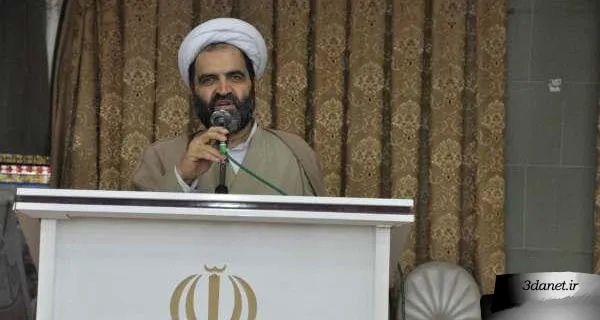
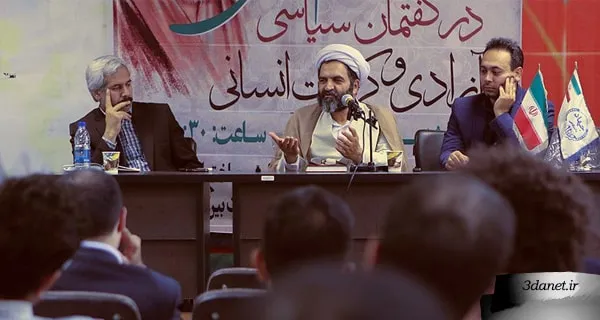
Mohammad Soroush Mahallati
Speaker
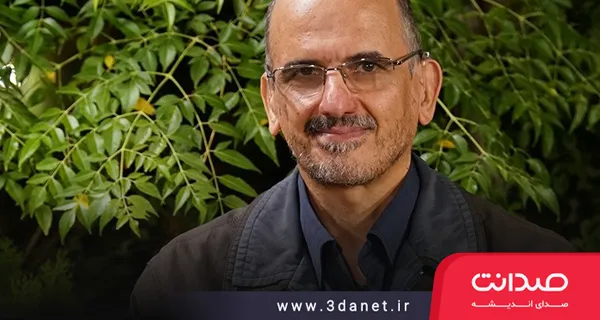
Rasoul Rasoulipour
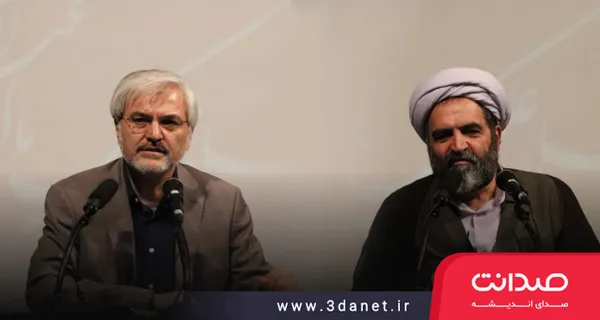
SpeakerOn the evening of Monday, September 8, during the fifth night of the series of sessions “Ashura and Our Today,” organized by the House of Humanities Thinkers, Mohammad Soroush Mahallati and Rasoul Rasoulipour delivered lectures.
Report by IQNA on the lecture by Mohammad Soroush Mahallati:
Hujjat al-Islam wal-Muslimin Mohammad Soroush Mahallati, a religious researcher, stated on the evening of Monday, September 8, during the fifth night of the series of sessions “Ashura and Our Today,” organized by the House of Humanities Thinkers: One of the neglected points that has not been addressed regarding the event of Ashura until now is the role of rogue commanders in bringing about the tragedy of Karbala. A characteristic of despotic systems is that high-ranking officials do not accept responsibility for the crimes they create, and the center of decision-making and power is not clearly defined; however, there are always words and signals among the agents of despotic governments and their commanders and high-ranking officials that pave the way for crime and murder.
This religious researcher added: Wherever we search in history, we do not see an explicit order showing that Yazid had commanded Ubayd Allah ibn Ziyad to kill Imam Husayn (AS) and commit the other crimes of Karbala, but for two reasons we can say that whether Yazid explicitly ordered the killing or not, he is considered the main culprit and the one who ordered the killing of Husayn ibn Ali (AS).
Soroush Mahallati added: The first reason is that Yazid appointed a person with a history of violence and lawlessness like Ubayd Allah ibn Ziyad to the governorship of Kufa instead of a tolerant person like Nu’man ibn Bashir. When a ruler appoints an agent with a history of violence, lawlessness, cruelty, and inhumane acts to govern a city, it means that I approve of your record and trust you to carry out the new responsibility with the same previous approach and character. In other words, when Yazid installed Ubayd Allah, with that record, in the governor’s palace of Kufa and dismissed Nu’man ibn Bashir—even though he was a supporter of the Umayyad regime—solely because of his leniency, it meant that Kufa must be administered with violence, severity, and harshness, and in this regard, whatever Ubayd Allah does is not objectionable.
He recalled: Regarding Muslim ibn Aqil, Yazid wrote to Ubayd Allah ibn Ziyad: After arresting Muslim ibn Aqil, banish him or kill him; the choice is yours. When a ruler thus gives his agent a free hand to kill, it is clear that a bloodthirsty character like Ubayd Allah will choose killing and, under those pitiful circumstances, will martyr Muslim.
The author of the book “Jurisprudence in Ashura” stated: The second reason that shows Yazid was the main culprit and the agent of the killing of Imam Husayn (AS) is that after the event of Karbala, although he outwardly expressed displeasure at the killing of the Imam and, in his court, condemned Ubayd Allah ibn Ziyad by uttering the phrase “Qabbah Allah ibn Marjanah” (May God make ugly Ibn Marjanah), he did not retaliate against or punish any of the participants in the event of Karbala. One of the characteristics of a despotic government is that when a crime occurs, its high-ranking officials outwardly express concern and distress, but they do not punish the perpetrators of that crime because they are the darlings who have guaranteed the survival of the despotic ruler.
Soroush Mahallati continued: As an example, one can refer to the story of Ubayd Allah ibn Abbas taking a complaint to Mu’awiya’s court. Ubayd Allah ibn Abbas was the governor of Yemen on behalf of Imam Ali (AS). After the Battle of Siffin, Mu’awiya sent a bloodthirsty and ruthless character named Busr ibn Artat to Yemen to suppress the Shi’a of Imam Ali (AS). When Busr ibn Artat reached Yemen, Ubayd Allah ibn Abbas had left the place, but his children and wife were present in the governor’s residence. With utter ruthlessness, he beheaded Ubayd Allah’s two young children in front of their mother. A few years later, Ubayd Allah went to Syria and Mu’awiya’s court and cried out for justice, saying: What had my young children done that their heads were severed from their bodies in such a manner? Did you give such an order to Busr?
This religious scholar stated: Mu'awiya replied, "By God, I did not give such an order." At that moment, Busr ibn Abi Artat, out of anger, threw his sword on the ground in front of Mu'awiya and said, "By God, you ordered me to do whatever I could to intimidate and frighten the people." He then left the court, and Mu'awiya never retaliated against him or punished him.
In another part of his speech, Soroush Mahallati said: The duplicity and double-dealing in decision-making centers, as well as the arbitrariness characteristic of Yazid's despotic and totalitarian rule, can also be seen in the interaction between Ubayd Allah ibn Ziyad and the army of Umar ibn Sa'd. This is because, after Damascus, the second center of decision-making regarding Imam Husayn (AS) was Kufa, and the third center of decision-making regarding that event was the army of Umar ibn Sa'd in Karbala. Neither the Kufa headquarters nor Ibn Sa'd's headquarters in Karbala explicitly accepted responsibility for the Karbala massacre. Ubayd Allah, who himself had dispatched Ibn Sa'd with an army of several thousand to Karbala to stop Imam Husayn (AS), force his allegiance, and, failing that, kill him, explicitly refused to accept this and attributed it to Umar ibn Sa'd.
The professor of the Qom Seminary continued: Umar ibn Sa'd, who, lured by the governorship of Rey, had prepared a massive army from Kufa to fight Imam Husayn (AS), also refused to explicitly accept responsibility for the massacre in Karbala until the night of Ashura and even after the event of Ashura, attributing it to Shimr ibn Dhi al-Jawshan! Through the language and insinuation characteristic of the criminal Umayyad rule, they understood and were justified in what they had to do, but outwardly, and to escape public pressure, they did not accept responsibility directly. They shifted the blame onto one another and, of course, did not retaliate against or punish one another.
He said: An example of this irresponsibility within the Umayyad apparatus is the story of the altercation between the slave of Muhammad ibn Hisham ibn Abd al-Malik and a Christian man. A Christian man got into a fight with the slave of the caliph's son. The caliph's son, in a panic, asked among the courtiers, "Who will take responsibility for punishing this Christian?" One of the eunuchs of the harem said, "I will take care of him," and did so. Consequently, a severe beating was inflicted on the Christian man by this eunuch. The Christian went to the court of Caliph Hisham ibn Abd al-Malik to seek justice and said, "The eunuch, acting on the orders of your son Muhammad, has brought this calamity upon me." The caliph asked Muhammad, "Did you give such an order?" The caliph's son replied, "By God, I did not give such an order and did not request such a thing." Then both Muhammad and the caliph expressed their displeasure over the matter, but they did not retaliate against the eunuch either.
In another part of his speech, Soroush Mahallati pointed to the characteristics of Imam Husayn's (AS) army and said: In the army under the command of Imam Husayn (AS), everything was done based on rules and Islamic laws and under the Imam's command. No one did the slightest thing without the Imam's permission. For example, on the day before Ashura, the Imam, along with several of his companions, went to inspect the area around the tents. A person from the enemy army had come closer to the tents than was permissible and was within the range of the Imam's soldiers. The soldiers asked the Imam for permission to shoot him with an arrow, and killing him could have caused panic in the enemy army, but the Imam (AS) did not grant permission because he did not want to be the one to start the war.
He concluded: Now compare this with the behavior of Harmala, who, without permission from his commanders, casually shot a three-pronged arrow at the six-month-old son of Imam Husayn (AS) and martyred him. No one had given him a specific order to do this, but Harmala's hands, and those of that entire army, were free to commit crimes, and afterward, he was not held accountable for this atrocity. Whereas on the day of Ashura, even those who went to the battlefield for martyrdom sought permission from Imam Husayn (AS) one by one.
.
IQNA's report on the speech by Rasoul Rasoulipour:
Rasoul Rasoulipour, a faculty member of the Philosophy Department at Kharazmi University, delivered a speech on the topic of "Ashura as a Model for How to Live" as part of the continuing series of sessions "Ashura and Our Today," which is being held for seven nights at the House of Humanities Thinkers, located on Nejatollahi Street.
While reading out Imam Hussein’s (AS) sermon at the beginning of the journey toward Mecca, he said: At the start of the journey from Medina to Mecca, Imam Hussein (AS) declares the situation, the path, and the goal of his movement, and by pointing out that death is certain and inevitable for the children of Adam, he describes the extent of his longing to join his grandfather and noble father.
He continued: Imam Hussein (AS) says: I see my bones being torn to pieces among wolves, and empty stomachs being filled, and empty waterskins being filled, and there is no escape or flight from what has been decreed. God’s satisfaction is the satisfaction of us, the Ahl al-Bayt, and we endure His trial and affliction with patience, and God will grant us the reward of the patient. The flesh and blood of the Holy Prophet is not separate from him, and we are going to meet the Holy Prophet. If anyone is ready to give his blood and sacrifice his life, and is prepared for the meeting with God, then let him set out with us.
Ashura is an invitation to life for human beings
While elaborating on the issue that many sentences and phrases have been said about Imam Hussein (AS) throughout history, creating the belief that Imam Hussein (AS) is the Imam of death and a model for going, not for staying and living, this professor of philosophy in our country said: In my belief, all the prophets and divine saints, especially Imam Hussein (AS), are Imams of life and living, and Ashura is a scene not for inviting to going and dying, but a scene of life from which the Imam draws upon every moment of this event to continue life and invite human beings to it.
Rasoulipour continued: On the day of Ashura, in a sermon before the army of Umar ibn Sa’d, Imam Hussein (AS) said: “This summoned one (Ubaydullah), the son of the summoned one (Ziyad ibn Abihi), has held me between two choices: drawing the sword or disgrace and abasement. ‘Hayhāt minnā al-dhilla; Far be it from us to accept disgrace!’” And this statement shows that the Imam was placed in a position where he had to either accept death or disgrace, and this duality of death or disgrace was forcibly imposed upon him. Because of the intermingling of religion with otherworldly messages and death-awareness, it may have occurred to us that religions have come to prepare us for death, or that religions are a remedy for accepting the hardship of death. Has man fundamentally come to stay or to die? Are the prophets our encouragers to live rightly, or providers of an antidote for dying comfortably?
This professor of philosophy added: Much has been said of Imam Hussein’s (AS) courage in going, but I want to speak of his courage in staying. In contemporary society, despite the fear of death, the saying “death once, wailing once” has been raised, as if death can be a kind of liberation. Existentialist philosophers believe that man, especially modern man, faces three types of anxiety: death, meaninglessness, and doubt, and those who can overcome these anxieties are few.
He continued: The Stoic philosophers, who had a considerable school in the period after the peak of Greek philosophy and after Plato and Aristotle, also state that human beings who are masters of living and can overcome the anxiety of death, guilt, doubt, meaninglessness, etc., are permitted to commit suicide. For this group, welcoming death by weak human beings is not acceptable; rather, courageous human beings who prepare themselves for death, and whose act does not mean they cannot cope with problems and are forced to submit to death, can go toward death.
Invitation to life; Imam Hussein’s (AS) choice
The faculty member of the Philosophy Department at Kharazmi University stated: Living has a cost. Life is hard, and living requires a courage that most of us lack. Facing great scenes requires courage. But Imam Hussein’s (AS) choice to go is not a choice of death over living, but an invitation to life and living. Of course, the Imam emphasizes in various parts of his speeches that living is not under any conditions, with anyone, or in any manner.
He pointed to and elaborated on the human being's becoming a necessary existent after birth: As soon as a human being steps into existence, they bear the necessity of being, and even our dying does not mean going away, but rather a transfer to another world, not the end of the matter. When we, as humans, understand that we are necessary existents and will no longer become non-existent, life becomes difficult. If we knew there was a short end, perhaps we would come to terms with it more easily, but if, according to what philosophers have said, once we come into this world, we remain and there is no going away. We must plan for staying, not choose the easiest path and think about how to go.
Rasoulipour continued: How to live is difficult, and we must learn the lesson of living from Hussain (AS) and learn from him with what principles and rules to live and what things in life to submit to; the basis is how to live, not how to die.
At the end of his speech, he referred to the words of Imam Hussain (AS) at the time of his martyrdom, when he says: "In the name of God, and by God, and from God, and to God, and in the path of God, and upon the creed of the Messenger of God, and I put my trust in God, and there is no power nor strength except by God, the Most High, the Almighty. O God, I have submitted my soul to You, and turned my face toward You, and entrusted my affair to You; from You I ask for well-being from every evil in this world and the Hereafter," and said: These phrases show contentment with death.
.
Audio of the lecture "The Share of Self-Serving Commanders in the Karbala Tragedy"
Speaker: Mohammad Soroush Mahallati, Religious Researcher
.

Discussion0 comments
No comments yet; let yours be the first voice.