Political Science
Freedom and Human Dignity in the Political Discourse of Imam Khomeini
A conference examining the political discourse of Imam Khomeini was held at the University of Tehran. Soroush Mahallati and Sharif Lakzaei, through an analysis of the works of Imam Khomeini and Martyr Motahhari, emphasized the inherent dignity of the human being and the necessity of moving from general discussions to concrete examples and the implementation of laws.
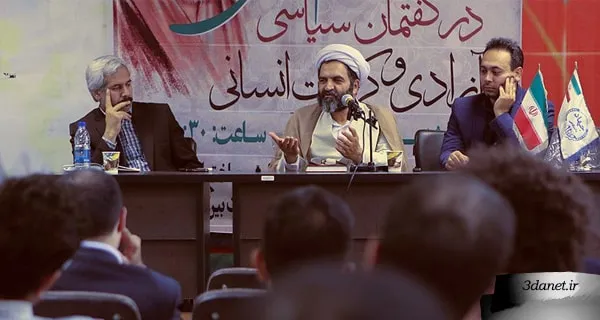
Two reports on the session “Freedom and Human Dignity in the Political Discourse of Imam Khomeini” at the Faculty of Law and Political Science, University of Tehran, 1 June 2016 + audio file
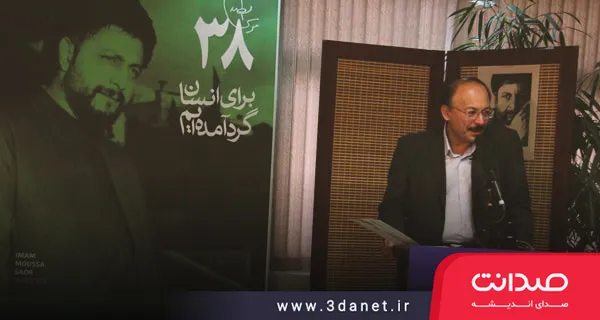
The academic session “Freedom and Human Dignity in the Political Discourse of Imam Khomeini” was held yesterday, organized by the Imam Khomeini, Velayat-e Faqih and Islamic Revolution Student Cultural Center in cooperation with the Cultural Vice-Presidency of the University of Tehran.
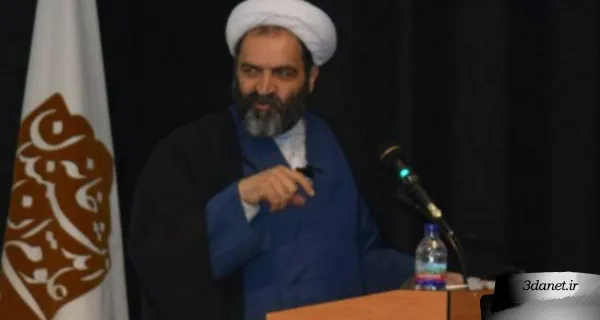
According to a report by the university desk correspondent of ANA News Agency, Hojjat al-Islam Soroush Mahallati, a researcher in Shiite political jurisprudence and a seminary instructor, referred in this session to understanding Imam Khomeini’s intellectual system through the works of Martyr Motahhari.
He said: “Motahhari was one of the most authoritative figures in this field. In Martyr Motahhari’s last work, ‘An Introduction to the Islamic Worldview,’ the issue of dignity was raised repeatedly. In this book, in various sections and discussions, he set forth the position of human dignity, and it is repeatedly stated in this book that human beings possess inherent dignity.”
Mahallati referred to the concept of human dignity in Imam Khomeini’s view and said: “Although Imam Khomeini’s intellectual system cannot be fully understood through his works, given that the issue of human dignity has been examined in the works of Martyr Motahhari, as one of Imam Khomeini’s students, Imam Khomeini’s intellectual system can be studied and examined in this regard.”
Regarding freedom and human dignity from Imam Khomeini’s perspective, he cited the book A Look at the Islamic Worldview and said: “Given that the Constitution was drafted during Imam Khomeini’s time and by his closest companions, it possesses very many merits. Freedom from the aspect of belief in Imam Khomeini’s view can be understood through statements such as ‘Islam is not a school of imposition’ or ‘We only present Islam; whoever wishes accepts it, and whoever does not wish does not accept it.’”
According to IRNA's religious affairs correspondent, Sharif Lakzaei said on Tuesday at the scientific conference "Freedom and Human Dignity in the Political Discourse of Imam Khomeini" at the Faculty of Law and Political Science of the University of Tehran: The Imam believed that the root and principle of all beliefs is monotheism, and based on his statements that "man must submit only to the Truth and should obey no human being unless that obedience is obedience to God," he concluded that according to the principle of freedom, no human being has the right to deprive a nation of freedom. He added: The concept of freedom has been expressed more than 1,600 times in the Imam's statements, but the important point is to what extent the dimensions and facets of this freedom extend and how it is realized in practice. The head of the Philosophy Department at the Islamic Sciences and Culture Academy added: Part of the Imam's statements can be examined as those of a political activist who spent years in exile and courageously stood against an oppressive government, and another part can be examined as the founder of a new political system that was the will of the people and who aided him in a comprehensive struggle. This university professor, referring to the ethical, mystical, jurisprudential, and political dimensions of the Imam, said: The Imam was a philosopher and sage who moved in the path of Transcendent Theosophy and raised the issue of freedom in the continuation of Islamic political philosophy; although this issue also has its place in the fields of ethics, jurisprudence, and philosophy. Lakzaei continued: The Imam's subjective, epistemological, and visionary outlook encompasses philosophy and theology, and in his theological discussions on this matter, he emphasized the element of free will, and in his view of ethical virtues and values, he also emphasized free choice. He said: Every statement made by the Imam about general and social concepts finds meaning in three layers (jurisprudential, ethical, and philosophical). ** If we act according to the constitution, the state of our society will change fundamentally A researcher of Shia political jurisprudence and a seminary professor also pointed to understanding the Imam's intellectual system through the works of Martyr Motahhari. Soroush Mahallati, referring to the concept of human dignity in Imam Khomeini's view, said: Although one cannot fully understand Imam Khomeini's intellectual system through his works, given that the issue of human dignity has been examined in the works of Martyr Motahhari, as one of the Imam's students, the Imam's intellectual system can be studied and examined in this context. Citing parts of the book "A Glance at the Islamic Worldview," he referred to statements by the Imam about freedom and human dignity. Mahallati further said: Considering that the constitution was drafted during Imam Khomeini's time and by the Imam's closest companions, it possesses very many merits, and if we simply act according to this constitution, the state of our society will change fundamentally. He added: Freedom from the aspect of belief in the Imam's view can be understood with these statements where he said: "Islam is not a school of imposition," or where he said: "We only present Islam; whoever wishes, accepts it, and whoever does not wish, does not accept it." This religious expert considered this passage from the Imam's statements to be the logic of the Quran, which advised the Prophet that the Prophet only communicates the religion. He also examined the issue of freedom from the political aspect in the Imam's statements and said: The Imam said: "Every individual of the nation has the right to interpellate the ruler of the Muslims, and he must give a convincing answer, and our Islamic Revolution was formed based on these thoughts, and the people made sacrifices with these ideals and formed the Islamic system." The scientific conference "Freedom and Human Dignity in the Political Discourse of Imam Khomeini" was held by the Imam Khomeini, Velayat-e Faqih, and Islamic Revolution Student Cultural Center in cooperation with the Cultural Vice-Presidency of the University of Tehran. This seminary professor, criticizing the selection of a general topic for discussion at this conference, said: After four decades, instead of general discussions like human dignity, we should engage in detailed dialogues, but the issue is that there is no ambiguity or problem in Islamic principles and laws; rather, these problems arise during implementation. He considered one of the challenges of the issue of dignity to be that some consider it an abstract concept and some consider it an objective reality. He added: If a human being has dignity, then they must also have rights, and their rights must be observed. He further examined the relationship of Islam and faith with dignity and said: Over the past 30 years, we moved forward for a while, but after a period, we stopped. He referred to the Constitution of the Islamic Republic of Iran as one of the sources that considers the issue of human dignity as one of the foundations of the Islamic system and has placed human dignity alongside the principles of religion. Soroush Mahallati continued: If human dignity was among the foundations of the system in the past, why should it be sought elsewhere today? This meeting is one of the sessions of a conference that will be held tomorrow with the presence of Hujjat al-Islam wal-Muslimin Seyyed Hassan Khomeini and a number of experts and cultural and political luminaries under the title of the Conference on the Political Discourse of Imam Khomeini (RA) at the National Library and Archives Organization. .
It was repeatedly emphasized in the book An Introduction to the Islamic Worldview that human beings possess inherent dignity
This seminary instructor criticized the choice of a general topic for discussion at this session and said: “For more than 35 years we have been sitting and organizing academic sessions and talking about human dignity. Has the time not come, after four decades, for the intellectual state of society on this issue to be clarified, and instead of general discussions under the title of human dignity, to address more specific instances and research topics in this field?”
He added: “How many more decades do you think we need to discuss and dialogue about human dignity? What is the problem? Are the foundations in this area ambiguous, and are these sessions held to resolve ambiguity in the foundations, or do the laws related to the issue of human dignity and freedom have a problem? Or the problem lies neither in the foundations nor in the laws, but in implementation.”
Mahallati said: “We must see what we are looking for in these discussions and dialogues. Will a new view on the subject of dignity based on Islamic foundations be put forward, or are there other questions and queries in this regard?”
He considered one of the challenges of the subject of dignity to be that some view it as abstract while others regard it as concrete, and added: “If dignity is an abstract concept, then in that case we do not look for specific signs to identify dignity. On the other hand, some Islamic thinkers raise dignity on the basis that human beings possess dignity and have a higher value compared to other creatures because they possess reason.”
Mahallati added: “Can an insult to a Muslim and a citizen be prevented on the basis of the principle of dignity? If the answer is no, then this dignity has no objectivity. Can a citizen be deprived of his rights without the formation of a just and competent court? If the answer is yes, this means that there is no dignity.”
If human dignity was among the foundations of the system in the past, why should it be sought elsewhere today
He said: “Unfortunately, throughout this large city, on every street and alley, there are poor people, and it has even reached the point where children are begging; this is incompatible with human dignity.”
The researcher of Shiite political jurisprudence said: “There are many disagreements over the definition of dignity. We have no choice but to examine the foundations of intellectual and Islamic systems and what approach the constitution has adopted toward human dignity. If human beings possess dignity, then they must also enjoy rights, and their rights must be respected.”
He examined the relationship of Islam and faith with dignity and said: “We initially moved forward for a while, but after a period we came to a halt.”
Mahallati added: “If human dignity was among the foundations of the system in the past, why should it be sought elsewhere today?”
According to IRNA's religious affairs correspondent, Sharif Lakzaei said on Tuesday at the scientific conference "Freedom and Human Dignity in the Political Discourse of Imam Khomeini" at the Faculty of Law and Political Science of the University of Tehran: The Imam believed that the root and principle of all beliefs is monotheism, and based on his statements that "man must submit only to the Truth and should obey no human being unless that obedience is obedience to God," he concluded that according to the principle of freedom, no human being has the right to deprive a nation of freedom. He added: The concept of freedom has been expressed more than 1,600 times in the Imam's statements, but the important point is to what extent the dimensions and facets of this freedom extend and how it is realized in practice. The head of the Philosophy Department at the Islamic Sciences and Culture Academy added: Part of the Imam's statements can be examined as those of a political activist who spent years in exile and courageously stood against an oppressive government, and another part can be examined as the founder of a new political system that was the will of the people and who aided him in a comprehensive struggle. This university professor, referring to the ethical, mystical, jurisprudential, and political dimensions of the Imam, said: The Imam was a philosopher and sage who moved in the path of Transcendent Theosophy and raised the issue of freedom in the continuation of Islamic political philosophy; although this issue also has its place in the fields of ethics, jurisprudence, and philosophy. Lakzaei continued: The Imam's subjective, epistemological, and visionary outlook encompasses philosophy and theology, and in his theological discussions on this matter, he emphasized the element of free will, and in his view of ethical virtues and values, he also emphasized free choice. He said: Every statement made by the Imam about general and social concepts finds meaning in three layers (jurisprudential, ethical, and philosophical). ** If we act according to the constitution, the state of our society will change fundamentally A researcher of Shia political jurisprudence and a seminary professor also pointed to understanding the Imam's intellectual system through the works of Martyr Motahhari. Soroush Mahallati, referring to the concept of human dignity in Imam Khomeini's view, said: Although one cannot fully understand Imam Khomeini's intellectual system through his works, given that the issue of human dignity has been examined in the works of Martyr Motahhari, as one of the Imam's students, the Imam's intellectual system can be studied and examined in this context. Citing parts of the book "A Glance at the Islamic Worldview," he referred to statements by the Imam about freedom and human dignity. Mahallati further said: Considering that the constitution was drafted during Imam Khomeini's time and by the Imam's closest companions, it possesses very many merits, and if we simply act according to this constitution, the state of our society will change fundamentally. He added: Freedom from the aspect of belief in the Imam's view can be understood with these statements where he said: "Islam is not a school of imposition," or where he said: "We only present Islam; whoever wishes, accepts it, and whoever does not wish, does not accept it." This religious expert considered this passage from the Imam's statements to be the logic of the Quran, which advised the Prophet that the Prophet only communicates the religion. He also examined the issue of freedom from the political aspect in the Imam's statements and said: The Imam said: "Every individual of the nation has the right to interpellate the ruler of the Muslims, and he must give a convincing answer, and our Islamic Revolution was formed based on these thoughts, and the people made sacrifices with these ideals and formed the Islamic system." The scientific conference "Freedom and Human Dignity in the Political Discourse of Imam Khomeini" was held by the Imam Khomeini, Velayat-e Faqih, and Islamic Revolution Student Cultural Center in cooperation with the Cultural Vice-Presidency of the University of Tehran. This seminary professor, criticizing the selection of a general topic for discussion at this conference, said: After four decades, instead of general discussions like human dignity, we should engage in detailed dialogues, but the issue is that there is no ambiguity or problem in Islamic principles and laws; rather, these problems arise during implementation. He considered one of the challenges of the issue of dignity to be that some consider it an abstract concept and some consider it an objective reality. He added: If a human being has dignity, then they must also have rights, and their rights must be observed. He further examined the relationship of Islam and faith with dignity and said: Over the past 30 years, we moved forward for a while, but after a period, we stopped. He referred to the Constitution of the Islamic Republic of Iran as one of the sources that considers the issue of human dignity as one of the foundations of the Islamic system and has placed human dignity alongside the principles of religion. Soroush Mahallati continued: If human dignity was among the foundations of the system in the past, why should it be sought elsewhere today? This meeting is one of the sessions of a conference that will be held tomorrow with the presence of Hujjat al-Islam wal-Muslimin Seyyed Hassan Khomeini and a number of experts and cultural and political luminaries under the title of the Conference on the Political Discourse of Imam Khomeini (RA) at the National Library and Archives Organization. .
.
Complete audio file of the lecture at the session on Freedom and Human Dignity in the Political Discourse of Imam Khomeini + Q&A | File size: 6.67 MB
.
.


Discussion0 comments
No comments yet; let yours be the first voice.