Religion
Ayatollah Soroush Mahallati: Ensuring Moral Security Has Neither Legal Nor Jurisprudential Justification
Ayatollah Soroush Mahallati considers the plainclothes police plan for hijab enforcement to lack both jurisprudential and legal justification, arguing that the police are tasked with confronting crime, not moral misconduct. A covert officer constitutes forbidden spying, and impounding a vehicle because of a passenger is not permissible under Islamic law.
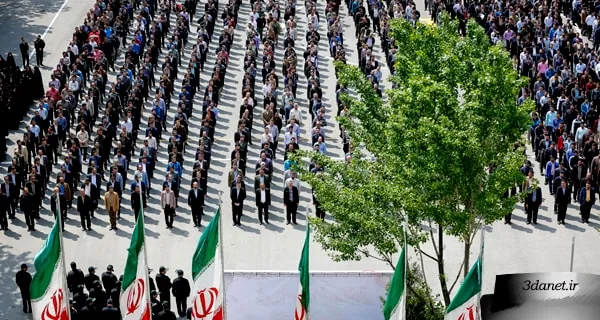
*These days, the issue of plainclothes police presence to ensure the moral security of society is being raised. In your opinion, does this action have any jurisprudential justification?
- At the launch of this plan, the commander of the Greater Tehran Law Enforcement Force raised the issue of "preserving public chastity," but such a perception is completely flawed from both an ethical and a jurisprudential standpoint, because non-observance of hijab does not fall under "unchastity," and we have no right under Sharia to level such an accusation against a person who does not observe full hijab. This accusation, according to Sharia, warrants discretionary punishment (ta'zir) and sometimes a fixed Sharia penalty (hadd). Moreover, it is highly illogical to use the label of a very grave sin to deal with a minor one.
*In your opinion, can dealing with the phenomenon of bad hijab fundamentally be placed under the title of "ensuring moral security"?
- This title has neither legal nor jurisprudential justification. Because if an issue falls within the realm of ethics, it is outside the responsibility of the police. The police's duty is to deal with crime, not with immorality. Furthermore, it is unclear whether the police want to prevent the moral harassment of others, in which case, although ensuring security is at issue, it has nothing to do with ethics. Or does the police want to prevent the individual's own moral transgression, in which case why do they use the term "ensuring security"?
*In general, I have this question: is the requirement of hijab and covering an ethical ruling?
-Hijab cannot generally be considered an ethical ruling. An ethical ruling, according to the perception of our scholars like Muhaqqiq Tusi in Akhlaq-i Nasiri, is a ruling whose ugliness or beauty is judged by human reason and innate nature, such as the ugliness of lying. In my opinion, hijab is not generally like this. That is, human conscience and reason do not judge the exposure of women's head hair or their forearms to be ugly or repugnant. I do not think any jurist has ever proven the necessity of hijab through this method. Yes, covering and concealing a part of the body is necessary from the perspective of all human beings' reason, and to this extent, exposing the body is contrary to ethics, but beyond that, the necessity of hijab is a jurisprudential ruling and has a religious aspect. Therefore, labeling the measures taken for covering women's head hair as ensuring moral security is not correct in terms of scientific terminology, because the obligation of covering to this full extent is a religious and jurisprudential ruling, not an ethical one.
*According to this plan and as stated by the police commander, if the occupants of a car remove their hijab, that car will be stopped. Does this action conform to jurisprudential standards?
- No jurist can consider this action legitimate and permissible, because punishment must be directed at the offender; therefore, it is meaningless for the driver of the car to be punished for the offense of a passenger!
The woman who removed her hijab in the car might be a passenger whom the driver does not even know! The driver might have objected to her and not be at all satisfied with this action! How can the driver be considered guilty? On the other hand, this type of punishment means that every car driver, in order to prevent their vehicle from being impounded, must prevent the passenger from removing their hijab by any means necessary, lest they themselves be punished! Thirdly, even if the driver is at fault in this matter, is the driver necessarily the owner of the car? If another person is the owner, why should they be punished by having the car impounded? Has a father who entrusted his car to his child committed a crime? I am certain that the esteemed grand jurists never consider such actions legitimate.
*To provide jurisprudential justification for this police action, it is said that the police have a duty to act against "evident crime" (jarm-e mashhud), and cases such as bad hijab are evident crimes. Is this so?
- Yes, in certain cases the police have the right to deal with a witnessed crime, but the point is that if the crime is overt and the police are present at the scene of the crime, they act to prevent the crime or confront the offender or arrest the offender. However, in this plan, the matter is something else: the police take no action to prevent the crime in the face of a witnessed crime; they only record the license plate number so that the vehicle can be impounded later. This falls outside the discussion of dealing with witnessed crimes. When it is stated in this plan that officers have no right whatsoever to confront the driver and cannot even give them a warning, it means their work is not dealing with a witnessed crime. Fundamentally, assigning an undercover officer for a witnessed crime is a contradiction. If the matter is a witnessed crime, then the police must be overt and official and prevent that offender by their presence. These contradictions show that this plan has not been thoroughly and precisely examined.
*The issue of using plainclothes officers is also raised in this plan. Is the use of this method compatible with Islamic and ethical standards?
-Plainclothes officers have a specific place in the legal system; for example, in crimes such as espionage, where the crime is committed covertly, or in actions against security and subversion, which are also carried out non-overtly, there is no alternative but to use plainclothes officers. However, in crimes against chastity, a non-overt and unidentifiable officer has no precedent in jurisprudence or law, especially if these individuals intend to enter the private sphere of individuals and their work involves investigating crimes against chastity, which is an instance of forbidden spying. But regarding bad hijab, the use of undercover officers entails corruption. This corruption is the spread of suspicion and mistrust among citizens and causes people to lose their peace of mind. Such social consequences stand in opposition to the philosophy behind confronting crime, because if we seek to create psychological and moral security, yet with these undercover officers we damage psychological and moral security, this is another reason that this plan contains a contradiction and its performance is contrary to its appearance.
However, regarding this plan, deploying an undercover officer and making them a judicial officer has another serious problem from a jurisprudential perspective. According to jurisprudential standards, someone who issues a ruling against another as a judge, or enforces that ruling as an officer and bailiff, bears responsibility, and the convicted person can and has the right to file a complaint and bring a lawsuit against them in the event of error or transgression. But in this plan, because the law enforcement officer is undercover and the convicted person does not know who reported against them, if they consider the report to be untrue, due to not knowing the identity of the reporter and the officer being undercover, they are deprived of the right to complain against them. This, in addition to being problematic from a religious standpoint, also creates grounds for corruption itself, because it places officers in a realm of irresponsibility and assures them that none of the citizens can direct any objection at them.
* If, in general, the Islamic state bears no responsibility for the phenomenon of bad hijab or non-hijab, then what difference is there between a religious state and a secular state?
- Certainly, the Islamic state bears responsibility for moral and religious matters and cannot remain indifferent to such issues; this much is beyond doubt or objection. However, the entire difficulty lies in the method and approach the Islamic state intends to adopt in dealing with the problem. If this matter is placed under the rubric of “forbidding evil,” its condition is that the measures taken must be beneficial and effective; another condition is that they must not cause corruption. All jurists accept these conditions, but are police methods for confronting evils such as improper hijab truly effective? Firstly, the current state of society on the one hand, and the various plans of the Law Enforcement Force, which change every so often, on the other, indicate that the benefit and effectiveness of these measures are open to doubt. Moreover, the condition of not causing corruption is relevant—meaning the negative side effects and consequences of these actions must be evaluated. A serious concern is that, through these schemes, individuals who merely avoid hijab might turn into individuals who oppose hijab; that is, people who are practically non-observant and inclined to laxity could, as a result of harsh confrontations, become opponents of hijab, leading to a new polarization. Analyzing these consequences falls outside the duty of religious scholars; sociologists must investigate the matter. But do sociologists, criminologists, and psychologists have sufficient space for research and for expressing their opinions on these subjects?
*Is there no jurisprudential possibility for rulings such as hijab to be enacted as law, with the government obligated to enforce it?
- Yes, this capacity exists within the social rulings of Islam, but the point that must be observed in legislation is that the religious stipulations of a ruling should also be mentioned in the law. Of course, in many cases, this is a difficult task. For example, on the very issue of hijab, from a religious perspective, there is a difference between the hijab of free women and slave women; there is a difference between the hijab of Muslim and non-Muslim women; there is a difference between the hijab of young and elderly women. But can these distinctions be incorporated into law? And if the law does not attend to these subtleties, will it still be a law that conforms to Islam? For instance, regarding elderly women, the Quran has explicitly considered their hijab to be lighter: “so there is no blame on them to put aside their outer garments” (Surah An-Nur, verse 60). Therefore, jurists such as Sheikh Ansari and contemporary jurists have stated that they may refrain from using the “khimar” and “jilbab.” Martyr Motahhari, in his book The Issue of Hijab, deemed it permissible for them to remove the headscarf, though they too do not have the right to “tabarruj” (ostentatious display). But have these religious dispensations been observed in the law, and do officers pay attention to them when recording license plates? I recall that in 1979, when Imam Khomeini was in Qom, a famous Italian journalist named Ms. Fallaci interviewed him and objected to hijab. The Imam told her that such an obligation does not exist for women around your age. This interview has been published in Sahifeh-ye Imam, and I believe that lady was fifty years old at the time and not engaged in tabarruj!
*Where does the main problem in the hijab debate lie?
I do not know what you mean by the main problem. That is, who or which institution is at fault for the emergence of the current situation? Or what factors have caused the present undesirable state? If this is what you mean, your question has a social dimension and must be answered by relevant experts; such discussions are not within my area of expertise. However, if we look at the issue of hijab from an Islamic or jurisprudential perspective, there are two matters concerning this subject: one is the quantity and extent of covering, and the other is the quality and manner of covering. Of course, the second matter is more important, because in cases where Islam grants dispensation or leniency regarding the extent of covering—such as for elderly women—it does not grant dispensation regarding the quality of their covering, since tabarruj is forbidden for them as well. The serious problem at present is that we have, to some extent, controlled and restrained the first aspect, i.e., the extent of covering, but the second aspect, which is more important—namely, tabarruj and the provocative nature of clothing and makeup—is out of control. And of course, the moral and social corruption of the latter is far greater. Perhaps the compulsion and pressure to observe the first aspect has led to rebellion against the second aspect, and therefore, in countries where that pressure does not exist, this reaction of tabarruj is also not so widespread. I think we must find a solution for tabarruj and consider it more important than observing the quantity of covering and its full observance.
.
.
Ayatollah Soroush Mahallati: Ensuring Moral Security Has Neither Legal Nor Jurisprudential Justification
Published in Jomhouri-e Eslami newspaper – Ordibehesht 1395
.
.


Discussion1 comments
این حاج اقا و تا اندازه ای شما ها ریادی تو جلباب و تبرج و بقیه چیزها مثل اینا هستین. یعنی هنوز تو فکر «غایت فقه» هستین