Political Science
Soroush Mahallati: The Main Factors Behind the Stagnation of Political Thought in the Seminary
Soroush Mahallati identifies the main causes of the stagnation of political thought in the seminary as the decline in diversity of opinion, forthrightness of expression, and intellectual dynamism among jurists—qualities that once drove the flourishing of political thought among contemporary jurists.
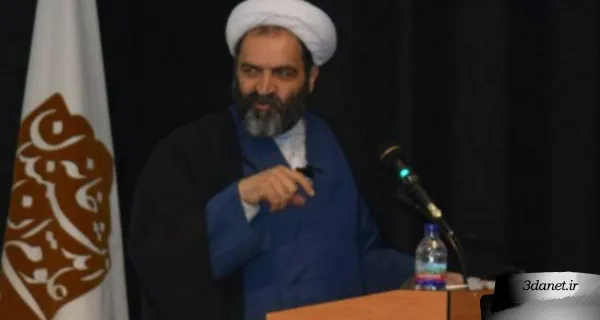
As you are aware, the subject of my remarks is the vicissitudes in the political thought of contemporary jurists. In this humble view, a series of ups and downs has occurred and continues to occur in the thought of our contemporary jurists; naturally, we must specify where these vicissitudes take place. We can explain with three components that we have had ascents in some aspects—not an absolute ascent, of course, for descents have also occurred and continue to occur. But the three ascents we spoke of are as follows:
Diversity and Plurality in Thoughts and Opinions
In the past century, among our own jurists—at least from the Constitutional era onward—we encounter a kind of diversity and plurality in political thought and ideas; just as during the Constitutional period, we can name Akhund Khurasani, Sayyid Muhammad Kazim Tabatabai Yazdi, and certain other jurists and seminarians with various thoughts and ideas, who, for instance, expressed different approaches to the formation of an Islamic state. The prominent approach is that there is no such thing as an Islamic state and there cannot be one. Of course, there were also those who did not hold this view. In later years, we have Hajj Sheikh Abd al-Karim Haeri Yazdi—the founder of the Qom Seminary—who did not believe in forming an Islamic government; Ayatollah Borujerdi also had this inclination. After the passing of Ayatollah Borujerdi, diverse viewpoints were raised, and many scholars expressed various opinions. When we look carefully at the past, we see such a situation among the thoughts and opinions of the jurists.
Frankness, Transparency, and Courage in Expressing Opinions
Our jurists presented their views and opinions with frankness, transparency, and courage, and for this reason, they offered every viewpoint under any circumstances and by any means. Thus, at one juncture, you can see the late Hajj Sheikh Abd al-Karim Haeri, during the first Pahlavi era, raising the issue of Islamic government in the Qom Seminary, under the very restricted conditions that existed at the seminary's inception. Then, after a delay of twenty to thirty years, you see the next source of emulation, the late Ayatollah Borujerdi, in Qom and in his extensive teaching circle, raising the same issue and fully presenting his reasoning. After that, you see a figure like Allameh Tabatabai, who in 1961 raised the issue of Islamic government. Various viewpoints were presented at every opportunity, within the very domain that our jurists contemplated. Therefore, alongside that diversity, this transparency, frankness, and courage was also a distinguished characteristic.
Generativity and Dynamism in Opinions
But the third characteristic we see in the past is a kind of change and transformation accompanied by generativity and dynamism in the thought of our jurists. For example, Imam Khomeini raises the issue of Islamic government in his works and discusses it in the Najaf seminary. At that juncture, in Imam Khomeini's discussion of the Guardianship of the Jurist, we see nothing about the role of the people in administering the government; that is, there is discussion about the necessity of forming an Islamic government, who should be in charge of administering it, and what authorities they have, but the role of the people is entirely passed over in silence. Subsequently, over a ten-year period, he repeatedly and explicitly raises the issue of the people's role and that the Islamic government is formed based on the people's vote. This is a step forward and a transformation. I am not now seeking to judge this discussion; but in any case, a change occurs. After the Islamic Revolution and the establishment of the Islamic Republic, he again, in the ten-year period he had, took several steps forward; among them, the issue of the government's authorities and the limitations that existed from past times among the opinions of traditional jurists—who even considered price controls on goods to be religiously dubious and forbidden—and other matters. By stepping forward, he expanded these authorities for the principle of governance. These transformations were constantly occurring over a period of twenty to thirty years.
Diminishment in the Three Mentioned Factors
Firstly, the plurality of the past no longer exists; secondly, transparency and candor are disappearing; and thirdly, the change, transformation, and regeneration that were needed no longer occur. That is, we in the seminary face difficulties in all three areas. First, the diversity and plurality, given today's conditions, are not what they once were. In the past, it was possible for someone like Hajj Sheikh Abdolkarim to easily state in his class that we do not have an Islamic government; but today, such a right has not been granted to the jurists, and such a thing cannot happen. And if a jurist happens to hold such a view, he prefers to remain silent. Even the legacy we inherited from our predecessors cannot be presented or offered. For example, a book about the lessons of Ayatollah Haeri on this subject—written by Ayatollah Araki, his great and prominent student—when it reached this topic, twenty pages were removed before it was published! Meaning, at one time, one could speak of this in the seminary classroom, but no longer. Or a jurist like the late Ayatollah Falsafi, who taught in the Mashhad seminary, when he naturally arrived at this subject, he was told to ignore this issue and not raise it, because it represents a differing viewpoint. Ayatollah Vahid Khorasani—one of the great contemporary scholars and sources of emulation—was teaching the Book of Trade at the Azam Mosque a few years ago; when he reached the discussion of guardians and who possesses authority, upon arriving there, he omitted this discussion. Yet the natural order of jurisprudential discussion requires that, in the matter of the guardians of affairs, the question of who holds authority be raised. Does the jurist have authority or not? This is the defined course of the lesson; but for the several years he taught this course, he would say: 'We will not raise this section,' and move on to the next issues. Such a thing did not happen in the past; anyone with any viewpoint could express their opinion. In reality, no one dictated terms, the individual himself felt no internal limitation, and he saw no obstacle to presenting his views. In any case, this is an unfortunate development we are facing.
But candor and transparency are also diminishing, because individuals try not to express their points and remarks too clearly and openly. May God have mercy on the late Ayatollah Mousavi Ardebili; he held official responsibilities within the system, then came to Qom and assumed the position of a source of emulation. A legal inquiry was sent to him with the following content: 'State your opinion on the Guardianship of the Jurist and its absoluteness.' His reply: 'The principle of guardianship is certain; its elaboration is not feasible here.' In many places, one sees them say, 'Do not ask me.' In short, it is that I accept its general principle, and it is not feasible to elaborate further. Thus, a portion of the issues remains unspoken, which happens to be the very portion related to politics. Several years ago, I was in Najaf in the presence of Ayatollah Sistani and raised this very issue with him. I asked, 'What is your opinion on this matter?' He replied: 'On this matter, I have neither said anything myself, nor will I, and I have also advised my office not to answer any questions in this regard.' That is, he refrains from expressing an opinion altogether. The meaning of this non-expression of opinion is not that the jurist lacks a view; he has an opinion, but in any case, he sees it as expedient to say nothing.
The third unfortunate development we are witnessing is that the regeneration, change, and transformation that once existed—out of the necessity of finding new answers for new problems—no longer occurs in that form, and we have stalled in the same past situation. Good subjects and discussions were raised in the past that could be discussed now; for instance, certain issues were last raised in 1989 during the revision of the Constitution. It was raised there how oversight of power should be determined, and that was the end of it.
Following these events and occurrences in the last two decades, at least within the community of scholars and jurists, we have fallen into a stagnation. This is the predominant state of our current situation; although there have been and are among our scholars those who nonetheless express their views, when thinking incurs a cost, it inevitably suffers serious harm.
.
.
Audio of Soroush Mahallati's Speech
.
.
Soroush Mahallati: The Reduction in "Diversity of Opinions," "Courage of Expression," and "Dynamism of Thought," the Main Factors Behind the Stagnation of Political Thought in the Seminary
Source: Mobahesat
.
.

Discussion0 comments
No comments yet; let yours be the first voice.