Political Science
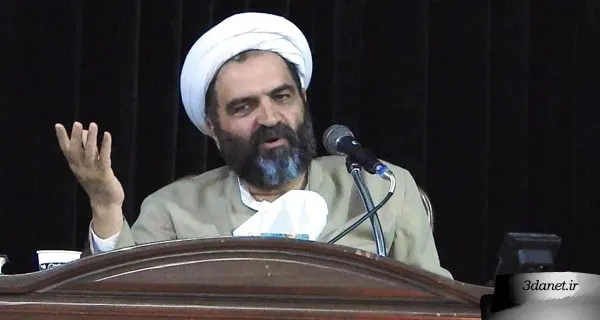
Mohammad Soroush Mahallati's Lecture on the Relationship Between Ethics and Power in Shiraz
Mohammad Soroush Mahallati, speaking in Shiraz, argued that outward rituals have come at the expense of ethics, and identified the true measure of being a Muslim not as prayer but as truthfulness and trustworthiness. He described power as the enemy of morality and stressed the necessity of holding rulers accountable and giving priority to ethics.
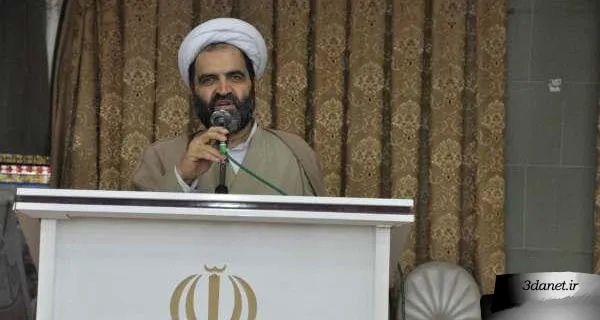
Why is ethics sacrificed in our society? Because ethics becomes weak in our society; and a being that becomes weak is immediately sacrificed. Why does it become weak? Because ethics is demoted from the position and rank it should hold in society, and it is no longer placed in the first rank. If ethics held the first rank, investment in ethics would surpass everything else, but at present, other matters have taken the first rank. Rituals, at times, have been elevated above ethics and their importance surpasses that of ethics, and this itself is a danger; rituals that have an outward aspect. Each of these is important in its own place, but not in the sense that they take precedence over ethics.
.
Report by Ensaf News on this lecture:
Hojjat al-Islam wal-Muslimin Mohammad Soroush Mahallati, stating that much blood has been shed for this system to be an Islamic system, added: We have all reached the conclusion that we must be in a position beyond the current indicators.
According to an Ensaf News reporter, this religious scholar, at an iftar banquet held by the Neday-e Iranian Party and the Democracy Party – Fars branch – in Shiraz, raised ethical issues as the first topics in his speech, saying: In any society where foreign policy takes precedence over domestic policy, ethics is destroyed, and this is a rule.
He, recalling Martyr Motahhari as his teacher, said: He makes a comparison between the era of Amir al-Mu'minin (AS) and the era before it; that is, the era of the second and third caliphs. In this comparison, he says that in the era of the second and third caliphs, the axis of policy was foreign policy and conquest. This responsibility that we must make the people of the world Muslim; we must migrate; go and preach and wield the sword and save the world from ignorance. Muslims participated in these wars one after another, went forth, and constantly expanded the Islamic territory. These belong to one period. When Amir al-Mu'minin Ali (AS) took power, he did not pursue this policy. You never see the Imam continuing this line; equipping a group to continue those activities that were being carried out. He did not define such a responsibility for himself and his government.
"Amir al-Mu'minin said we must return and make the heritage of the Prophet (PBUH) understood among ourselves; institutionalize Islamic culture among ourselves; for this society, before needing propagation among the infidels and others, needs to recognize this itself and be capable of it, and after that, if a true model of Islam is realized in this land, the best propagation has occurred."
Soroush Mahallati, continuing with a hadith from Imam Sadiq (AS), said: Did the Imam not say, show with something other than the tongue, meaning with action, what privilege you possess.
The author of the book "Religion and State in Islamic Thought" continued: But the second topic; why is ethics sacrificed in our society? Because ethics becomes weak in our society; and a being that becomes weak is immediately sacrificed. Why does it become weak? Because ethics is demoted from the position and rank it should hold in society, and it is no longer placed in the first rank. If ethics held the first rank, investment in ethics would surpass everything else, but at present, other matters have taken the first rank. Rituals, at times, have been elevated above ethics and their importance surpasses that of ethics, and this itself is a danger; rituals that have an outward aspect. Each of these is important in its own place, but not in the sense that they take precedence over ethics.
He, citing a narration from Imam Sadiq (AS) mentioned by the late Koleini, said: Do not look at someone's bowing and prostration, that this gentleman prays on time; has long prostrations; why?! Is prayer not among the obligations? Is prayer not among the divine duties? Why does Imam Sadiq (AS) say do not make prayer the criterion?! The Imam himself said that many of these prayers have become a matter of habit and indicate nothing.
“If we do not take prayer as the criterion, then what measure is there? The Imam said, if you wish to know a Muslim, do not do so by his prayer; rather, know him by his truthfulness and his trustworthiness. Now see how much these criteria undergo change and transformation in society. That which Islam has elevated is brought low, and vice versa, and presented to the people. In this society, religious rituals matter. Rituals, behaviors, ways, forms—these are all important, but what the Imam (AS) is saying belongs to another stage. Is lying considered vile in society? Is a liar looked upon like one who abandons prayer? The list of unethical behaviors has truly collapsed, and this matter is neither complex nor difficult. The Imam said, look to see whether he speaks the truth or not. How does he preserve a trust?
The author of the book “Islam and the Requirements of the Time” said in this regard: Are the country’s assets not a trust in the hands of the country’s rulers? Is the public treasury not a trust? Above material assets, spiritual assets and human resources—are these not trusts in the hands of rulers and sovereigns? Is this generation that today, for various reasons, ends up in addiction, ends up in prostitution and abominations—are they not trusts in the hands of the system and the government? The Imam (AS) said, base your judgment and arbitration on this. Do not look at the one who spreads his prayer mat at the first call to prayer; look at whether he speaks the truth or lies; whether he reaches out his hand toward the trusts of the nation or not. This is a change that occurs, and as a result of this change, ethics is degraded from its position and weakened, and when it is weakened, it can easily be destroyed.
Mahallati, continuing with the third theme of his speech, stated: Ethics has an enemy, and the stronger this enemy becomes, the more frail and emaciated ethics will become, and ultimately it will be destroyed. What is that enemy? Power! Power and ethics are very difficult to combine; I do not say it is impossible; I want to say that power takes two forms: power that becomes compatible with ethics, and power that stands against ethics. Did God not say in the Quran that when man attains power, he will be exposed to rebellion? One must ask oneself what action can be taken in the face of this issue. Government and power are a necessity for human society; we cannot use this as a pretext to forgo the principle of political power, for otherwise, madmen would swallow and destroy the country; but what kind of power? Ethical power. Ethical power means power that is bound by ethical principles; that accepts ethics. How can power be ethical? Firstly, ethical power is an accountable power; it is a power that makes no claim to divinity. It is remarkable that God describes this for us in the Holy Quran. God says that those in power cannot even tolerate an invitation to piety: ‘And when it is said to him, “Fear God,” pride seizes him in sin.’ Tell them to be pious; that is all. He cannot bear it; arrogance overtakes him; he is not even willing to accept an invitation to piety. Is it not perhaps astonishing that someone would be upset by an invitation to piety?
This teacher of religious studies, continuing with a segment of history and a story about Abd al-Malik ibn Marwan, who said, ‘Whoever invites me to piety, I will strike his neck’ [as narrated by Ibn Athir], said: Some rulers in the past would strike the necks of those who invited them to piety. In such societies, power will become intertwined with corruption and moral corruption. Why is this so? Because it is only through supervision, enjoining good, and the vigilance of the people that immorality and corruption in government can be prevented. If power exists solely for the sake of power, the ground is prepared for corruption. For ethical power to endure, the grounds for flattery must be eliminated; otherwise, power will move toward corruption, and then ethics will be sacrificed.
Soroush Mahallati, continuing, stated that Ali (AS) is the perfect human being and we have no one higher than him, and said: Who is the most worthy person for governance? The most worthy person after the Prophet (PBUH) is this individual who says no one has the right to praise and extol Ali ibn Abi Talib. Ali (AS) himself prevented all pens and tongues that wanted to praise him. Were these people not lovers of Ali (AS)? Did they not want to praise Ali (AS)? Had Ali (AS) paid them to praise him? No! Ali (AS) even forbade praise and commendation born of trust. Now see how this situation changes in society. This leaves no room for ethics. Flattery of those in power throws healthy individuals down. This is the word of the Commander of the Faithful (AS) in Nahj al-Balagha: how many people have fallen because others praised and extolled them. This act will corrupt individuals.
Mahallati concluded his speech by saying: Ali (AS) said to Malik al-Ashtar: Malik! Be careful about your entourage and choose pure and truthful individuals; is that enough? No. Ali (AS) said be careful that they never praise you. Prevent them; train them so that they never speak your praise and commendation. Ethical societies require ethical grounds, and we must create these ethical grounds. In the words of Martyr Motahhari, one whose eye sees nothing but glorification, whose ear hears nothing but flattery, whose hand is extended only to be kissed, it is impossible for them to remain spiritually healthy.
.
.
Audio of Mohammad Soroush Mahallati's Lecture on the Relationship Between Ethics and Power
Download from Server 1 | Download from Server 2
.
.

Discussion0 comments
No comments yet; let yours be the first voice.