Religion
The Meaning of the Text: A Study in the Qur'anic Sciences, Nasr Hamid Abu Zayd, translated by Morteza Kariminia
Nasr Hamid Abu Zayd regards the Qur'an as a literary text shaped in dialogue with culture and society, and considers its rulings to be contingent. Morteza Kariminia's translation of The Meaning of the Text has been published, accompanied by an introduction and an interview with the author.
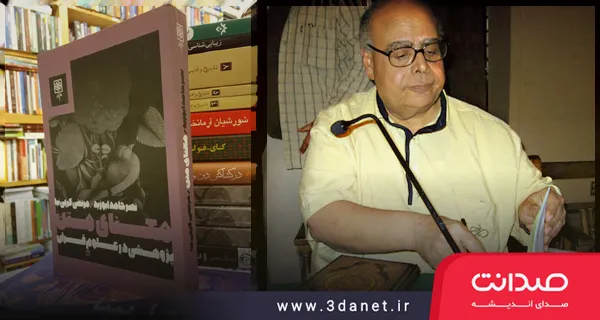
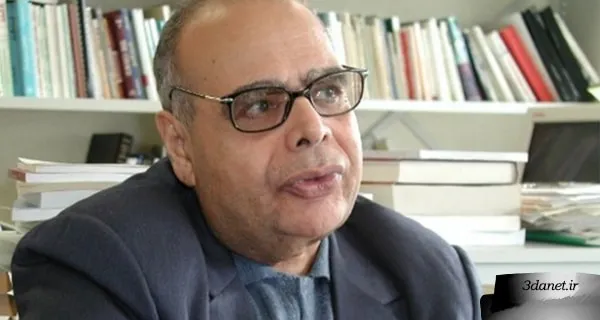
Nasr Hamid Abu Zayd (1943–2010) can be called one of the most controversial intellectuals of the contemporary Arab world. His writings led to his dismissal from his professorship of Arabic language and literature at Cairo University and ultimately to his excommunication and a ruling of apostasy. After the difficulties that arose for him in Egypt, he went to Leiden in the Netherlands and there continued his studies on the Qur'an. The most important area of Abu Zayd's studies and theorizing was the Qur'an, and his relatively novel view of this holy book provided the grounds for his excommunication.
The book "The Meaning of the Text: A Study in the Qur'anic Sciences" is one of his most important works, first published in Beirut in 1990. In this book, he presents his view of the Qur'an in detail, using various examples and diverse evidence. He raises traditional subjects discussed regarding the Qur'an, such as Meccan and Medinan surahs, the occasions of revelation, and abrogation, but analyzes them from a new perspective. He employs these subjects to advance his theory at the heart of all of them and to present his intention across all traditional Qur'anic concepts. Abu Zayd's view of the Qur'anic text is a literary one. He regards the Qur'an as a text and proceeds with his in-depth analyses based on this presupposition.
The summary of Abu Zayd's argument is that the text of the Qur'an was shaped in active dialogue with culture and society, and that this book is a cultural product. From his perspective, the Qur'an was heavily influenced by the society, culture, and events surrounding it. Abu Zayd considers the strength of any literary masterpiece to be its connection with reality, and he does not exempt the Qur'an from this rule. He says that no text is formed in a vacuum, independent of its time and place; rather, every text is a mirror of the language and culture of its author and its audience. Of course, it must be noted that this relationship between the Qur'an and culture is a two-way relationship, not a one-sided monologue, meaning that the Qur'an is not a mere, passive reflection of the reality of its time. From his viewpoint, the sequence of the Qur'an's revelation is such that it first reconstructs and refines relations with society in an effective manner (an approach found more in the Meccan verses), and after it became the dominant text of society, it affects the realities around it (as in most Medinan verses). From Abu Zayd's perspective, although the Qur'an has a revelatory origin, its text was formed in a dialectic with society (though not in the Hegelian sense). This view of Abu Zayd regarding the sacred text has consequences, among which one can point to considering the jurisprudence and rulings derived from the Qur'an as contingent, because these commands arose from that specific society and at that particular moment in time, and with a complete and precise understanding of the relationship between the text and society, one can discern its origins.
Abu Zayd devotes the final section of his book to analyzing the views of Abu Hamid al-Ghazali. From his perspective, the Sufism of figures like Ghazali emerged from the heart of his Ash'arite views. The Ash'arites considered the Qur'an an attribute of God's essence and sought to find a way to connect with God through the text of this holy book. Ghazali places other sciences, such as jurisprudence, which had gained great value at the time, among the less important sciences and introduces his goal as the knowledge of God. In this regard, Ghazali, in an unprecedented move, even divides the Qur'an and designates certain verses as the jewels of the Qur'an, in which the most important and precious messages of the Qur'an are hidden. From his viewpoint, to receive the message hidden in this book, one must pass through its shell and crust to reach its core and essence. This process, that is, the interpretation of the text and the transition from the sensory world to the celestial realm, is possible, of course, by passing through the realm of imagination. In this context, dreams and visions are undoubtedly the best witness and example for understanding the quality of the intersection of these two worlds (henceforth, and especially in the view of Ibn Arabi, dreams and sleep found a special place in Sufism). From this standpoint, Ghazali likens the world to a kind of sleep and dream and considers everything in need of interpretation and dream-explanation. Thus, language is also a tool for depicting and embodying spiritual matters, and just as one must reach from the visible and sensory world to the unseen and celestial world in the process of the mystical, imaginative ascent, so too must one pass through the external shell and crust of the Qur'anic text, which is its form, and attain its depth. The interpretation of the Qur'anic text to reach its esoteric meaning is similar to the act of dream interpretation. On this basis, all the words of the Qur'an become like the forms a person sees in a dream. The outward aspect of the Qur'an is a material form whose hidden meaning must be discovered.
Nasr Hamid Abu Zayd's book Mafhum al-Nass has been published by the distinguished translator and Qur'anic scholar, Morteza Kariminia, under the title The Meaning of the Text: A Study in the Qur'anic Sciences. This book has been published by "Tarh-e No" Publications. In addition to the text of Mafhum al-Nass, the book contains other supplementary materials: a letter from Abu Zayd granting Kariminia permission to translate the book, as well as a special preface by Abu Zayd for the Iranian reader. At the end of the book, a text on the author's biography by the translator, along with approximately forty pages of an exclusive interview between the translator and Nasr Hamid Abu Zayd, has been printed. From this perspective, the Persian translation of the book is very comprehensive. According to the translator, during the translation of the book, he was in constant contact with Abu Zayd, sharing the difficulties and ambiguities of the text with him in order to present a complete translation to the Iranian reader.
.

Discussion2 comments
سپاس عالی
ممنون، خداقوت