Religion
A Look at The Language of the Quran, the Interpretation of the Quran, Translated by Morteza Karimi-Nia
The book The Language of the Quran, the Interpretation of the Quran, translated by Morteza Kariminia, introduces modern text-based methods in Quranic studies while critiquing the isolation of domestic scholarship and offering fresh perspectives on the dating of the Quran and traditional exegesis.
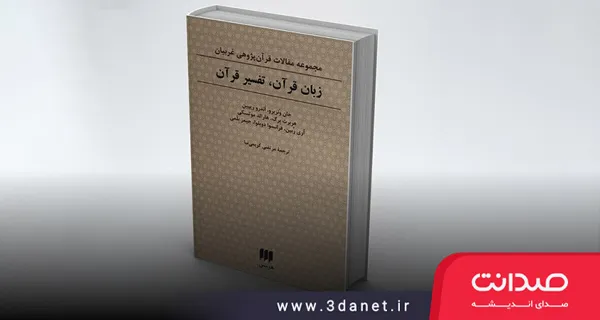
A Look at the Book "The Language of the Quran, the Interpretation of the Quran", Translated by Morteza Karimi-Nia
Iman Taji
The Quran is a book that, according to the belief of most Muslims, is the result of God's revelation to His Prophet, Muhammad (PBUH). Over many centuries, this text has been analyzed and interpreted by numerous scholars. However, in the last hundred years, as the sciences have advanced rapidly—and the humanities have been no exception—new methods of textual criticism emerged in Western societies that were able to open novel and innovative approaches in the field of humanities. One of the texts subjected to Western analysis and criticism was the Quran. Westerners, or so-called Orientalists, using the tools of new methods based on textual analysis in the humanities, conducted extensive research on the Quran.
The book "The Language of the Quran, the Interpretation of the Quran" is a collection of articles by several Western Quranic scholars, previously translated by the skilled translator and Quranic researcher, "Morteza Karimi-Nia," and published in various journals. Now, these articles have been collected and published in a single volume by Hermes Publications. Karimi-Nia is a multilingual translator, working from German, English, and Arabic. He is a pioneer in introducing the works of Western Quranic scholars and Arab new thinkers in our country. In his introduction to this book, Karimi-Nia writes:
"... It is not only we Iranians, Arabs, Turks, Malays, and Muslims of the subcontinent who engage in the study and discussion of the Quran and the exegetical sciences surrounding it. For a long time now, others have also been raising scholarly questions in this field, making the discipline of Quranic studies fresher and more flourishing in their academic and university circles; just as such a thing occurs in all technical, basic, medical, agricultural sciences, and most importantly, in various fields of the humanities. The most important difference between Quranic studies and other academic and university disciplines in our country is that the founders and bearers of this field often consider themselves, in theory and practice, to have no need of knowing the questions of others."
"... In the meantime, however, Quranic studies in our Iran today, despite its impressive quantity and vast dimensions, remains limited and trapped in the repetition of commonplaces. For this reason, it bears a strange resemblance to an island whose inhabitants speak only in a language they themselves understand. Neither are its productions recognized in the global scientific circuit, nor does any graduate of the seminary or university, upon entering Western Islamic studies conferences, understand a whit of the topics of the articles or the methods of discussion and debate among the participants. In the utmost optimism, we assume that the individual in question does not face a serious language barrier."
From this perspective, the value of the book "The Language of the Quran, the Interpretation of the Quran" lies not only in presenting new interpretations and content in the field of Quranic sciences, but more importantly, in the introduction and demonstration it provides of modern methods of approaching text-based studies concerning the Quran. Methods that have remained unfamiliar to us.
"The Language of the Quran, the Interpretation of the Quran" is divided into three parts:
The first part deals with exegetical studies.
This section contains seven articles:
1- Arabic Rhetoric and the Interpretation of the Quran, with a Look at the Figure of Laf wa Nashr (John Edward Wansbrough): Wansbrough considers the writing of the Quran to be the result of a historical process that took shape in the first three centuries of the Hijra. More of his articles are included in the book. This article examines the figure of Laf wa Nashr in the Quran and explores its origins. Due to the difficulty of reading this article, Karimi-Nia has added useful explanations to it.
2- The Story of Abu Lahab and the Gazelle of the Kaaba: A Look at the Interpretation of Surah Al-Masad. (Uri Rubin): In this article, a new interpretation based on a pre-Islamic era narration is presented regarding the verse "May the hands of Abu Lahab be ruined, and ruined is he," which is unprecedented in Islamic exegeses. A noteworthy point in this article, besides this new interpretation, is the reason this interpretation did not find its way into Islamic texts, which can serve as a historical model for many other issues that were excluded from texts for ideological reasons. Andrew Rubin adds that the oldest literary origins for—at least—some passages of the Quran actually have their roots in pre-Islamic Mecca and nowhere else.
3- Iqra' bismi rabbika . . . Notes on the Interpretation of the First Verses of Surah Al-Alaq (Uri Rubin): What has been etched in our minds from this verse is this: Read in the name of your Lord (and this "Iqra'" has been repeated several times). This verse has become a pretext to demonstrate the value of knowledge, reading, and the pen (perhaps Dr. Ali Shariati played the greatest role in popularizing this issue). The general understanding of most exegeses from this verse is that God encouraged and urged the Prophet to recite the Quran. This article attempts to reconstruct one of the old interpretations on this matter, which is almost forgotten today. This interpretation gives another meaning to this verse, urging the Prophet to praise the name of the Lord, not to recite the Quran.
4- The Enwrapped Messenger: Interpretation of the Words Muzzammil and Muddaththir (Uri Rubin): Here too, Uri Rubin, with meticulous scrutiny and mastery of sources, retrieves the course of interpretation of these two words and selects an older narration, now forgotten in Islamic texts, as the interpretation of these two words, to the effect that Muzzammil and Muddaththir are actually attributes that awaken the Prophet to emerge from his previous garments, not to be slack, and to act actively and selflessly to fulfill his duty. This type of interpretation is based on the assumption that the Prophet's being enwrapped was an improper state and he had to emerge from it.
5- The Interaction of Exegesis and Hadith in Determining the Seven Mathani (Uri Rubin). The interpretation of the Seven Mathani and determining its referent in verse eighty-seven of Surah Al-Hijr has always been a subject of discussion among exegetes. Here too, Rubin, by analyzing various viewpoints on this matter, selects the oldest interpretations, in which "seven" here is a symbol of multiplicity and does not refer to a specific issue or surah.
6- Ibn Abbas in the Exegeses of the Abbasid Era (Herbert Berg): Many exegetical hadiths in Islamic exegesis books are narrated from Ibn Abbas. In this lengthy article, the historical course of Ibn Abbas's role in Islamic exegeses is well examined, and the issue is raised that many of the hadiths attributed to him are fabrications of the Abbasid era, who used them to seek religious prestige for their dynasty. This article is one of the strongest in this book.
7- Dating the Exegesis Attributed to Ibn Abbas, Some Supplementary Points (Harald Motzki). This article discusses and comments on the true history and author of the book known as the Exegesis of Ibn Abbas.
Part Two: Quranic Studies of John Wansbrough
1- Literary Analysis of the Quran, Exegesis, and Sirah: A Look at the Methodology of John Wansbrough (Andrew Rippin): As mentioned, Wansbrough, through literary analysis of the Quran, concludes that this book is the result of a historical evolution over three centuries and not written at the dawn of Islam. In this lengthy article, Rippin critiques the analytical pillars of Wansbrough and questions his method in source criticism.
2- Observations on the Book Quranic Studies (William Graham): Quranic Studies is the name of Wansbrough's most famous book, in which he presented his view on the Quran. This article also offers a methodological critique of Wansbrough.
3- Methodological Notes on the Fourth Chapter of the Book Quranic Studies (Andrew Lawrence Rippin) In this article, less attention is paid to criticizing Wansbrough, and more to introducing his method and examining its merits.
4- The Collection and Codification of the Quran: A Re-examination of Western Views in Light of Recent Methodological Developments (Harald Motzki): A lengthy and highly significant article in terms of the methodology of dating documents. Motzki concedes that we cannot prove that the reports concerning the history of the Quran go back to eyewitnesses of the events as claimed. Nor can we be certain that everything actually happened as reported in the traditions. However, he adds that we must accept that the Muslim accounts and reports are much older and closer to the time of the alleged events than Western scholars, particularly Wansbrough, have assumed. He traces the traditions concerning the collection of the Quran during the time of the Caliphs back to the first quarter of the second century AH.
Part Three: The Language of the Quran
1- Camel or Rope: Even Until the Camel Passes Through the Eye of the Needle (al-A‘raf-40) (Andrew Rippin): In this article, Rippin, with his characteristic meticulousness, seeks to find the oldest interpretations of this verse.
2- Foreign Vocabulary and Determining Its Foreign Origin in Quranic Interpretation: (Andrew Rippin): By citing various examples, he explains that accepting the existence of foreign loanwords in the Quranic text is key to the puzzle of why some Quranic words have a meaning that is not known among Arabic speakers or Arab literati outside of that specific Quranic context.
3- The Issue of the Influence of Aramaic and Syriac Languages on the Language of the Quran (Morteza Karimi-Nia): This article is, in fact, a review and critique of Christoph Luxenberg's book, "The Syro-Aramaic Reading of the Quran: A Contribution to the Deciphering of the Language of the Quran." Relying on philological and linguistic issues, this book puts forward the claim that the Quran is in the Arabic language and dialect of the Quraysh, who lived at a specific time in Mecca and were heavily influenced by Aramaic languages, especially Christian Syriac. His theory has had widespread repercussions in Western media. According to his method, Luxenberg reads many verses of the Quran differently and understands their meaning differently in order to unearth more roots of Quranic verses in the Syriac language! In addition to a thorough introduction of the book and its chapters, Karimi-Nia offers general critiques of it.
4- A Critique of the Book "The Syro-Aramaic Reading of the Quran" (François de Blois): A very sharp critique of Luxenberg's book, which generally calls his knowledge in the field of linguistics into question. I should add that many critiques of this book have been written by Westerners.
5- Al-Raqim or al-Ruqud: A Note on the Ninth Verse of Surah al-Kahf (James A. Bellamy): Bellamy is among those who, using methods of textual analysis from 1973 to 2002 and in numerous articles, has proposed emendations to the standard text of the Quran. He believes that the Quran was revealed in clear Arabic and its purpose is not to confuse or perplex its listeners, but to bring clarity and awareness. Bellamy even has an article in which he proves that the mysterious letters of the Quran, or as he calls them, "The Mysterious Letters of the Koran," are in fact ancient abbreviations of the Basmala, not cryptic letters. In this article, he also analyzes the scribal errors in the ninth verse of Surah al-Kahf—where the meaning of al-Raqim is a point of disagreement among commentators—and states that the original form of this word must have been al-Ruqud.
6- Some Further Proposed Notes on the Text of the Quran (James Bellamy): Another article by him that offers more suggestions for the emendation of certain words. Bellamy believes that proposed textual emendations should, as much as possible, be such that they do not alter the orthography of the Quran.
"The Language of the Quran, the Interpretation of the Quran" can open up a new world for those working and researching in the field of Quranic interpretation and Quranic studies, and inform them of Western research in this area.

Discussion0 comments
No comments yet; let yours be the first voice.