Religion
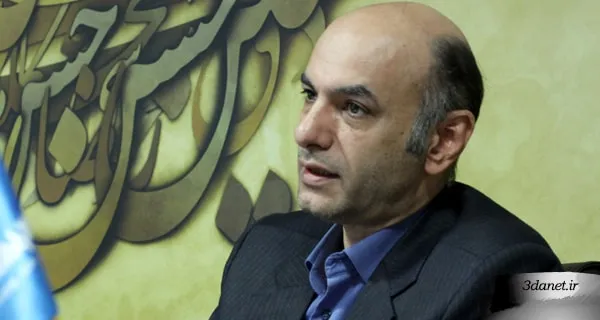
Hassan Mohaddesi’s Lecture, “Interpretive Eloquence in Ayatollah Taleghani’s Exegesis of the Quran”
In his analysis of Ayatollah Taleghani’s exegesis A Ray from the Qur’an, Hassan Mohaddesi emphasizes the necessity of attending to the limitations of human language, the interpreter’s presuppositions, and a horizon of fusion with the text. He elucidates the principles of understanding the Qur’an as a linguistic and historical text.
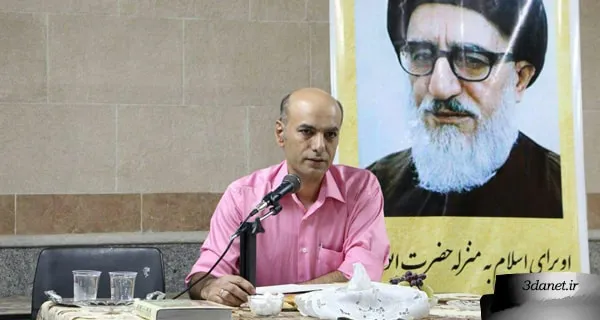
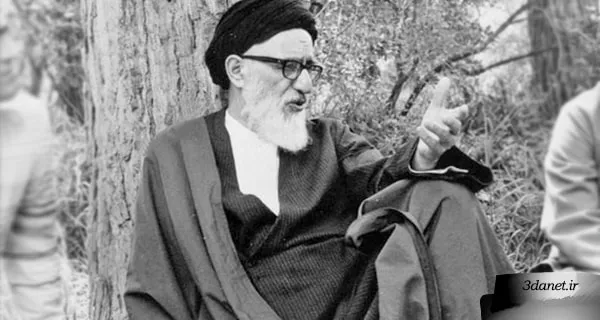
First, I consider it my duty to point out that Ayatollah Taleghani is one of the very great figures of our age. He is so great in my eyes that I feel humbled before him. He is a great mujahid of our time. An extraordinarily pious, selfless, and God-fearing human being. Such that he can serve as a model for each and every one of us in our personal lives and can serve as a model for our age. He is one of the finest religious personalities of our time, so much so that we can tell our children, and indeed all people, that when we speak of religion, one of the supreme exemplars of religion in our time is Ayatollah Taleghani, and this is a very great honor. The religious and the claimants to religion in our age are very numerous; people who have made the face of religion exceedingly ugly and have presented it to us in a very inhumane and violent form. But we can at least take pride in people like Taleghani, Shariati, Bazargan, and Imam Musa Sadr and say that when we speak of religion and religious models, these are whom we mean. These are a few of the great religious figures of our age, and I personally say it is a source of pride that we are contemporaries of great figures like Ayatollah Taleghani. In my eyes, he holds such a station. He is a very, very exalted human being.
However, in this session I do not wish to speak about his personality. I want to offer some points to you regarding the exegesis Partovi az Quran (A Ray from the Quran), and these points are also critical in nature. Since my time is short, I will get to the main subject more quickly.
First, I will explain my own view regarding the Quran, and then I will present to you my understanding of Ayatollah Taleghani's exegesis, Partovi az Quran. I am, of course, not a Quranic scholar or researcher. If I speak on this subject here, it is solely because, as a religious person, I am interested in this subject and have done some studies and had some reflections on it, and I wish to speak only to that extent; I do not speak as a claimant to Quranic research and scholarship. Consider it more as me wanting to share my hypotheses with you. If there are any flaws or shortcomings in these hypotheses, the professors who speak after me will rectify them and bring them to our attention.
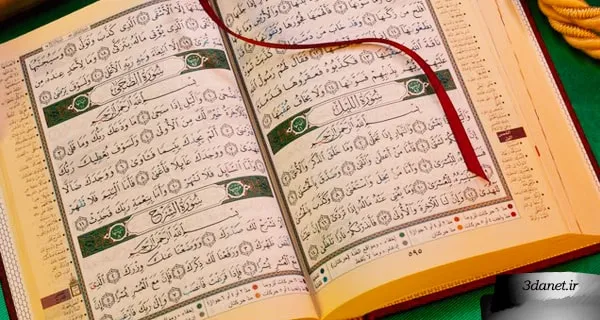
The first point I want to make is that the Quran is a text like all other texts; in the sense that because it is a text presented in the form of human language, all the possibilities and limitations of human language apply to this text. Therefore, as someone encountering this text, at the outset, this text is for us like any other text; like encountering the texts of Hafez, Saadi, Rumi, or any other text. Because it has come in the form of language, and consequently, the possibilities and limitations of human language also hold true for this text. Therefore, our claims about the Quran cannot go beyond the possibilities of language; because this text is also bound within language. This is the first point, the consequences of which I will explain later. In fact, this is my first presupposition. You noted that my discussion in no way concerns the origin of the text.
The second presupposition I must state is that regarding the interpretation and understanding of any text, we naturally have prior thoughts, which are technically called presuppositions. In fact, our minds are not empty. We also have positions, perspectives, and viewpoints. If we want to speak of interpretation in the general sense of the word, even translators who translate texts have a prior mentality, and that prior mentality is involved in the translation of the text. In translations of the Quran, we also face this same issue, and translations of the Quran differ from one another. The type of thought and thinking that the translator has determines how they understand that text, and this matter is certainly involved in the translation they produce as well. It is for this reason that translations of the Quran are not identical. Sometimes they are very, very different from one another. Translations of the Quran, in the general sense of the word, are also a kind of interpretation of the Quran. This was the second point.
The third point is that in order to understand a text, we must know the horizon in which that text was born. Regarding texts that are not co-horizonal with us, we face a serious obstacle and problem; because we might understand, translate, and interpret that text according to our own understanding, while the people who encountered that text and were its first audience perhaps lived in another horizon. If I want to interpret and explain Hafez now, I might understand him as a twentieth or twenty-first-century figure, while Hafez lived in the eighth century AH, and to understand Hafez's language, I must be able to become co-horizonal with him. Therefore, we have a serious problem for understanding texts like the Quran. In fact, since we are Persian speakers, we have two fundamental problems, and in my opinion, one of the reasons the Quran is not read as much as expected, and especially why our youth do not connect with it, is entirely related to these issues: one is that the text of the Quran is originally in Arabic and we are Persian speakers, and this is a serious obstacle. But a more serious issue than this is the problem of the disharmony of horizons. We live in one horizon, and this text came for an audience that lived in another horizon and world. To understand these texts, we absolutely must be able to become co-horizonal with the era in which this text emerged. Note that I do not mean a cursory and preliminary understanding. I am considering a more precise, scholarly, and scientific understanding of the text. Therefore, we must be able to reconstruct that era, society, and cultural organization. If this does not happen, we cannot understand the text correctly. Thus, one of the requisites for understanding the text is that we become, at least relatively, co-horizonal with the text. This was the third point.
The fourth point I must make is the same previous discussion, but it has a negative aspect; meaning that the fundamental problem of the disharmony of horizons causes us to attribute the cultural components of our own era to a text that does not belong to our horizon. We judge this text and its audience according to the intellectual and rational standards of our own time and fall into anachronism. Therefore, the fourth point I am making is that we must be able to suspend all the components embedded in our own horizon; and this, again, is a very, very difficult task.
The fifth point I want to make is that for interpreting any text, we need a specific method. In other words, interpretation must necessarily be methodical, and the interpreter must follow a single method from beginning to end, remain committed to that method, and for any claim they make about the text, they must be able to provide textual evidence so that their claims about the text can be taken seriously.
The sixth point is that, regarding the Quran, a point I must make is that the Quran has two periods, and in understanding it we absolutely must pay attention to this matter. One period is the period in which we encounter this very Quran that has taken the form of a book. This book has been divided into chapters, the surahs have been specified, and each has a name. But if we broaden our historical studies a little, we reach the conclusion that the Quran also has a period in which it is not in the form of a book; the period before it became a book. To understand the Quran, we absolutely must move beyond the period of the Quran being a book and see the Quran in its pre-book stage. The Quran was not originally presented as a book, and it is not the case that it has an author who intended to write a book from beginning to end. The Quran is a collection of separate fragments. In fact, it was revealed piece by piece; each time concerning something. An issue arose within the Prophet or within certain people, or an issue arose externally or in society, and a Quranic fragment was sent down. Therefore, if we look more closely, we are not faced with a book, but rather with a collection of fragments upon which book-hood was imposed due to the exigencies of the lives of early Muslims, and it was presented to us in the form of a book. A fundamental problem we have here is that the chronological order of all these fragments is not known. That is, we do not know what the chronological order of these fragments is and which fragment came before which. Of course, regarding the first fragment, we know that it is the first five verses of Surah Al-Alaq, and it is the first fragment revealed to the Prophet, and then various fragments were revealed over the course of more than twenty years and were later arranged into this existing form. However, if we knew what time each fragment belonged to and exactly what events it was related to, we could understand these fragments more easily. Of course, the occasion of revelation and the reasons for the revelation of some fragments are known and recorded in the sources. But apparently, this cannot be said about all the fragments. I have heard that efforts have been made to arrange these fragments chronologically. I am only talking about these fragments and why it is so important. I will give a simple example to clarify my point: An event happened to me that might help explain this discussion: One day I was going to class when I saw a lady sitting in my place and, say, teaching. I said to myself, you've made a mistake again. For instance, you took the wrong floor and went to someone else's class. I was about to pass by and find my own class when I saw all the students stand up and say that your class is right here. I went inside, and that lady, whom I later realized was a student, sat in her own place and said to me that your place is a very good place. I replied that it is not as good as you think.
Now suppose you encounter such a dialogue:
"First person: Your place is a very good place.
Second person: It is not as comfortable a place as you think."
What do you understand from this dialogue if you do not know this story?
In reality, that lady was saying my chair is wooden, and we are not comfortable sitting on these wooden chairs. Your place is one of those chairs that is leather, soft, and comfortable. In response, I told her this place carries responsibility and can be problematic. She was talking about the physical "place," and I was talking about the social "place."
If we do not know this story, we cannot make much sense of this conversation, and everyone will understand it in their own way. According to this example, all Quranic passages are like this; that is, all Quranic passages emerged in connection with an affair, an incident, and an event (whether an event within the heart of the Prophet or an external event). For a precise understanding of these passages, we absolutely need to know these affairs and events. Many of these are not, in fact, a universal speech revealed once and for all for all of humanity. At times, they are entirely specific to a contextual matter. A considerable portion of these passages is completely bound to that affair, and it is quite possible that we understand these passages in a universal way and fall into strange and peculiar errors. Whereas, if we knew what the event connected to that passage was, we would understand that passage more precisely. Again, it is necessary here to caution and draw attention that I do not mean that the signification of these passages is necessarily confined solely to that affair, but rather, as I said, understanding these passages requires familiarity with those events and understanding those events.
Now, based on the points I have mentioned (the six presuppositions), I want to look at Ayatollah Taleghani’s exegesis alongside other traditional exegeses. In traditional exegeses, including that of Ayatollah Taleghani, which more or less follows the same model (although there are differences, the model is the same model), the first point is that these exegetes fundamentally imagine that one can understand a text without any presuppositions whatsoever, and therefore they reproach predecessors and others for having looked at the Quran from a philosophical perspective, or for exegeses that have looked at the Quran through a mystical method, and so on. Then they say that we seek an exegesis that has none of these viewpoints and presuppositions and is not contaminated or imbued with any prior perspective. As if one can approach the text with a blank mind and understand it. We see this claim in the work of Ayatollah Taleghani as well, where he reproaches others. Of course, the instances he reproaches are, in my view, correct in one respect. But it seems they hold the notion that the Quran can be understood without any presupposition or viewpoint whatsoever. Another point I observed in his work was the lack of fundamental and methodological attention to the difference in horizons; that is, they point out that we must use various sciences, but they do not make this the basis for reconstructing that historical era. Now, in order to understand who the first audience of this text was, we must know those people, their culture, and their society. We must know in what age they lived so that we can understand this book more correctly. If we want to engage with the text methodically, we must use archaeology, anthropology, sociology, linguistics, and other sciences and bodies of knowledge to reconstruct that community which was the text’s audience and see what characteristics the society has and what issues the people are grappling with, so that we can understand the text or even translate the text. With this approach, the story changes considerably. Thus, even in the translation of Quranic vocabulary, a little negligence leads to highly misleading errors. I am involved in a discussion and conducting research that examines the difference between "bab" and "dar." Whether we translate the word "bab" as "entrance" or "door" changes the story. We must know what Arab architecture was like in that era, what the buildings were like, what materials they were made of, and what components they had. Can we fundamentally say that Arab houses in that era had doors? For instance, one of the concepts I am grappling with in this subject is the concept of "mafatih." Should "mafatih" be translated as "keys"? If we translate it with this meaning, since a key is installed on a door, then a "door" must also have existed. When we look at the sources, we see they readily translate "bab" as "door" and "mafatih" as "keys." When we investigate further, we see that we gradually begin to doubt, and then we encounter those who, for example, say that "mafatih" is most likely the plural of treasury or storehouse and is not the plural of key. If we translate mafatih as storehouses, it yields one result, and if we translate mafatih as keys, the story changes. I saw a subject regarding the architecture of the Kaaba translated in such a way that it seemed as if the Kaaba has stairs. First, one must go up the stairs to be able to enter through the "door," and another had translated it as "ladder." There is a vast difference between stairs and a ladder. A ladder can be made of wood or metal, but stairs can also be made of stone. If stairs are translated as ladder, a different judgment has been made about the material culture of that era. A ladder is a sign of the existence of a carpentry industry or a blacksmithing industry, depending on what the ladder is made of. Translation is this involved. These are just examples concerning the translation of vocabulary related to material matters. Regarding vocabulary related to spiritual and immaterial matters, the impact is far greater than this. For example, "yatawaffa" is usually translated as "We take your soul." Did the Arabs of that era fundamentally believe in something called the soul as an immaterial entity or not? Does the soul, in the sense of an immaterial entity and as a part of human existence, even exist in the Quran? The fact that you, the translator, believe in the soul does not permit you to attribute it to the Quran as well! If we do not understand these subtleties and fine points, our translation of the Quranic text changes.
For this reason, I always advise student friends that when they study the Quran, they should not content themselves with a single translation; they should have several translations at hand, compare the translations in sensitive cases, and study and work a bit more meticulously. It is a very important point that we recognize the horizon in which that text emerged, recognize the characteristics of the society of that era, and recognize the culture of that period so that we can understand the text well.
The problem I see in Ayatollah Taleghani’s exegetical work is that he was not much engaged with the need to specify the cultural and social characteristics of that era, to discuss them, and to tell us what kind of society and what kind of audience we are dealing with, and what discussions are fundamentally possible to raise there and what discussions are not. For example, if I speak of human rights in the Quran or democracy in the Quran, as some have done (some have even said that bay‘ah is the same as democracy), this lack of attention to the era to which the text belongs leads to gross errors, where a bay‘ah pertaining to the members of a tribe is equated with a modern concept that emerged in the nineteenth, twentieth, and twenty-first centuries, and they say bay‘ah is democracy and that, for instance, so-and-so attained the caliphate democratically. If that were the case, our situation in the Islamic world should be very good. If a democratic government existed at the dawn of Islam, we could now claim that we have had a democratic tradition in Islamic civilization! Then our situation could be very good. But why, in Islamic societies, are most thinkers and religious scholars hostile to democracy? If democracy existed in our religious tradition, then why is our situation in the Islamic world so deplorable in the political arena? How can we consider bay‘ah, which was a tribal tradition and a heritage of tribal social life among the Arabs, as democracy? These show that someone who does not know that era makes a simple analogizing; a completely amateurish analogizing, and it is imagined that we can consider these two apparently similar subjects as identical, while they have fundamental differences.
Another point I wish to make is that, unfortunately, in Ayatollah Taleghani’s exegesis, as in other traditional exegeses, there is no single, definite method; that is, the exegete is not bound to a specific method. When there is no definite method, the exegete can say whatever first comes to mind. I call this “interpretive eloquence.” To put it colloquially—which admittedly becomes somewhat disrespectful—the colloquial term would be “rhetoric.” But we are speaking about Ayatollah Taleghani, who holds a very high position, so I use the term interpretive eloquence. In traditional exegeses, because there is no definite method, the exegete can engage in interpretive eloquence and fill many pages about a concept or a verse, saying whatever comes to mind. An interesting point in some of these exegeses is that the exegete, in the first year of his commentary, encounters a verse and says something about it. In the twentieth year (some of these exegeses take twenty years and twenty to thirty volumes or more of commentary are written; precisely because of this interpretive eloquence), he comes to that same verse, which is repeated, and now says new things about it; because new things have come to mind and his thinking has changed. Twenty years have passed and the exegete has changed. This shows that the exegesis is not methodical. Because if the exegesis were methodical, the possibility would no longer exist for the exegete to say just anything, and the method would constrain the exegete. For a method provides certain possibilities, and at the same time, a method binds the exegete. With a method, it is not possible to say everything that comes to mind and for the exegete to constantly say that perhaps it could also be said this way. In these exegeses, we constantly see statements that this and that have been said, and this could also be said. This shows that there is no precise and specific method. The primary method found in traditional exegeses, including Ayatollah Taleghani’s exegesis, is consulting the meanings of words. For instance, what does the word “knowledge” mean in the dictionary? We understand those meanings and then go to the text and interpret it. Here I refer to Mr. Toshihiko Izutsu, the eminent Japanese scholar of Islam. To all friends who are not familiar with him, I recommend studying Izutsu’s numerous works, at least those on the Quran, of which he has two important ones. These two works are “God and Man in the Quran” and “The Structure of the Ethical Terms in the Quran.” At least look at Izutsu’s book God and Man in the Quran! He is such an outstanding Quranic scholar that when Mr. Nasr Hamid Abu Zayd wanted to write the book Meaning of the Text and conduct research on the Quran, he traveled to Japan to see Izutsu and seek his help and guidance, though he was not successful. In any case, he mentions in his book that he used Izutsu’s method. Izutsu seriously criticizes this method of approaching the Quran and its verses. He says we cannot discover the meaning of these words through the dictionary. Because every concept has a history, and every concept finds its meaning within its own linguistic context. This concept takes on different meanings in different eras, and usually this diversity of meanings and concepts is not found or mentioned in any dictionary. Therefore, he approaches the Quran using applied linguistics, and when he speaks of Quranic verses, he places each concept within its own semantic field. He places each concept within its own semantic field. For example, when he speaks of Allah, he says Allah is understood in one way and has a certain character in the pre-Quranic semantic field, and Allah has other characteristics and a different character in the Quranic semantic field, and this same Allah has yet another meaning in post-Quranic semantic fields, for instance in Islamic-mystical thought, or in Islamic-philosophical thought, or in Islamic theology, and the character of Allah changes. It is one word, but its meaning and nature change in different semantic fields, and these cannot be found in any dictionary, and we can only understand them by reconstructing those historical horizons and seeing how the audiences of that era themselves used these words and what they meant by them.
Let me give a simple example: I worked for a while at the Ministry of Cooperatives. It was a student job, and I worked there on 89-day contracts. Every time I entered the Ministry of Cooperatives, I was bothered by the irrelevant use of this Quranic verse written on its entrance: And cooperate in righteousness and piety. Well, we studied social sciences and know that cooperatives and cooperation took shape in the 18th and 19th centuries, and that cooperation has fundamentally nothing to do with this verse. But because they translated it as “cooperative,” they stuck this verse onto the Ministry of Cooperatives. That is, they have confined the general meaning of the Quranic word to the specific 18th- and 19th-century meaning of cooperative—as a mode of economic and social life. Or, for instance, we have the same problem with this verse which says: Are those who know equal to those who do not know? They also translate this as: Are those who know equal to those who do not know? Then people say, of course those who know are surely superior! Presumably, this is one kind of understanding, but in reality, “knowledge” here does not mean knowing. Izutsu explains to us that in the Quran, ‘ilm (knowledge) is not the opposite of ignorance; ‘ilm is not the opposite of jahl (ignorance). He goes on to say that ‘ilm means true knowledge that guides a person towards guidance; knowledge that is, in fact, luminous, and ‘ilm stands in contrast to zann (conjecture), which is knowledge that is unreliable and unstable. So ‘ilm is not the opposite of jahl but rather the opposite of zann, and jahl is the opposite of hilm (forbearance). He explains that if we try to understand through the dictionary, we fall into this error and then irrelevantly write on the entrance of the university: Are those who know equal to those who do not know?
Then it is as if anyone who went to university became a true human being and is superior to the rest. Whereas we know this is not the case, and even if you go to university, you do not necessarily become a true human being, and you might, in fact, become a very savage and dangerous human being. That doctor in whose presence a patient is fluttering and dying is a knowledgeable person, but in truth, he is not a true human being and has, in reality, no trace of humanity, when he tells the patient you must first deposit the money, and then I will treat you! It is quite possible that a shepherd who has no trace of lessons, sciences, or university is far, far superior to a university professor; that is, in the culture in which we were taught and raised, we were told that it is quite possible the janitor of the faculty is much nobler than you, the university professor. Then, when you say: Are those who know equal to those who do not know? and you interpret it in this way, well, I fall into delusion and think I am superior and more of a true human being than others. Whereas ‘ilm never meant that at all, and you have translated it wrongly and misunderstand the matter. This is because we rely on the dictionary to understand these propositions.
Ayatollah Taleghani does the same thing, and I did not see him go back to the history of Islam, go back to the Islamic society of that day, and say that such-and-such word that I am translating and interpreting here had such-and-such meanings in Arab poetry, in Arab proverbs, or in the Arabic language, and it is used in such-and-such meaning in the Quran, and I am translating based on that. At least, I did not see such a thing in this text, and it seemed to me that he mostly uses the meanings of words from dictionaries.
Another point I saw in the work and exegesis of Ayatollah Taleghani, and which I see in other traditional exegeses, first regarding (eloquence). Because it is a very important and very serious issue. I said that in traditional exegeses, the commentator says whatever his heart desires. I want to read an instance of it to you so that I have not spoken without reason or evidence. After all, I must also present evidence. For example, they are interpreting verses 46 and 47 of Surah An-Nur. In explaining and interpreting these verses, they have arrived at the discussion of evolution and, I submit, the laws of evolution and the stages of evolution. I will read this passage for you, and it truly raises the question for me: what connection do these have with each other, or how can we connect these verses to the theory of evolution!
For example, he states that “al-nāṣiyah is the hair at the front of the head, as if it is an allusion and metaphor for the locus and center of the emergence of evolution” (Taleghani, 1362, vols. 1 & 2: 37). That is, (al-nāṣiyah) means the locus and center of the emergence of evolution. Elsewhere again he discusses the Straight Path and says that what is meant here by this term is “the straight path of evolution” (ibid: 36). He has spoken at length, under the discussion of the “Straight Path,” about the evolution of beings (ibid: 34–35)! In effect, he connects the theory of evolution—which is entirely new and belongs to the scientific age and the modern era—in this manner to concepts that belong to 1,400 years ago and, in fact, to a different society with a different epistemology, and then links them to Quranic verses.
This is one piece of evidence among dozens present in his text, which is precisely an instance of eloquence. When we do not speak methodically, we can speak freely, guess at many things, and also present them as the exegesis of a Quranic verse. In the same vein, in addition to employing new scientific knowledge and findings—which seem irrelevant—in interpreting Quranic verses, he also draws upon new human sciences and interprets verses based on these new human sciences.
Such an exegesis apparently seems a very fine and beautiful undertaking and appears modern, but it is what I—forgive me for speaking so bluntly and directly, and I apologize for saying it—refer to as modernolatry. Modernolatry means we present religion in a way that makes it seem contemporary. One day I went to my child’s school and was waiting for them to come out. In the meantime, I was reading the bulletin boards. I saw that in one place it was written that the reason we Muslims pray toward the Qibla is that there is a magnetic field beneath the Kaaba, and when we pray in that direction, the energy of this field affects our bodies!
This was a reason given, for instance, to high school students for why we pray toward the Qibla. We call these things scientism and modernolatry. Presenting religious matters in a contemporary fashion, which of course may seem very appealing to the laity, but they lack a solid foundation and are indefensible. Let me offer another example from Taleghani’s exegesis: for instance, under “and to parents, goodness (iḥsānan)” (ibid: 214), let us see what Ayatollah Taleghani says. He has written that “the word iḥsān encompasses the natural rights that God, by the covenant of primordial nature, has placed within the human constitution” (ibid: 215). Well, natural rights are one thing, and the iḥsān spoken of here is something else entirely, and attaching such concepts to Quranic verses is utterly indefensible.
Similarly, another presupposition Ayatollah Taleghani holds is that—like all traditional exegeses—since they believe the Quran is unlike other books, the Quran therefore does not follow linguistic systems and constraints. Whereas, as I have stated, every book, every text, and every speech, because it comes in the mold of human language, utilizes the possibilities and constraints of human language; that is, it cannot speak beyond language or possess possibilities beyond language.
Human language grants possibilities and imposes certain constraints. Yet all traditional exegetes believe that the Quran has seventy esoteric layers and that there is an ocean within it, which we do not see and only perceive its outward aspect. Only those firmly grounded in knowledge can dive into a portion of the seventy layers of this ocean. It is as if everything can exist and be contained within this text; whereas this is not the case. If we consider the text constrained by human language, no language will ever, under any circumstances, grant such a possibility (note that, contrary to some thinkers, I am not saying the speaker of this text is human, but rather I am speaking about the language of the sacred text, which is a human language; that is, the Arabic language).
That is, when you speak a language, its words have specific usages and definite meanings, and you cannot arbitrarily assign whatever meaning you wish to them. In fact, words cannot be hollowed out. Words have specific usages, and their meanings are determined within those usages. Yet it seems the traditional exegete wants to hollow out the words and extract something new from the depths and heart of the words, leaving us all astonished, exclaiming, “How wondrous! So it also had this meaning, and how mistaken we have been!” Why? Because this view holds that this text differs from other texts, and that the limitations of human language seemingly do not apply to it. You can speak of the differences between texts; there is no doubt about that. But you cannot speak of a text that does not follow the rules and characteristics of language. The same applies to Ayatollah Taleghani. Time and again he states—especially wherever he cannot provide a clear interpretation—that this text possesses a strange and wondrous eloquence, and is astonishing. For example, on page 51 and page 65—in the first volume of the book—there are instances where he says it could have this meaning, or that other meaning, or even various other meanings that he mentions, and the reason for this is that the text possesses a strange and wondrous eloquence! That is, he does not say that I, or we interpreters of the Quran, are incapable of explaining this matter and face difficulty in understanding this verse; rather, he says that this text is highly multi-layered! Again, I emphasize that I am in no way denying Quranic eloquence. However, we must not consider our own inability to explain the import and meaning of the text as evidence of the text’s eloquence, and then propose numerous interpretive conjectures about the text and subsequently claim that the text possesses hidden depths. The traditional exegete does not say, “I am incapable of understanding the text and clarifying its meaning,” but repeatedly says, “This text has multiple depths”; meaning the text practically does not follow linguistic rules! Interestingly, the text itself has repeatedly stated that it is in clear Arabic.
Another point is that Ayatollah Taleghani, like other traditional exegetes, views the Quran as a single book, and because he views the Quran as a single book, he essentially wants to see all these fragments as uniform and unified and connect them to one another; whereas, if we pay attention, this text was not originally a book, and its book-ness was imposed upon it by the exigencies of Islamic civilization. Considering that this text is fragmentary, and each fragment, as I exemplified, pertains to a specific event. In fact, the fragments are disconnected; although, according to some scholars, these fragments are connected based on an internal logic. People were engaged with one another, and propositions were issued amidst and during those engagements, and the meanings of those propositions must be understood and grasped with regard to those events and those people. These disconnected fragments are event-oriented. But when you turn it into a book, then this book has meaning and has spoken for all of humanity and possesses universal meanings, and perhaps there are verses that are contextual, and for this reason, their contextuality is ignored, and all of them are considered unified, and all parts are seen as connected and coherent. Even the supra-contextual meanings of the text depend on understanding the contextual significations of the text.
The final point I wish to discuss is that in order to understand a text, we must essentially maintain our neutral stance and strive to clarify the meaning of the text as intended by the author. Therefore, we cannot engage with the text in a normative or doctrinaire manner. For example, if we want to interpret Hafez, we face the same problem. Let me give an example from a gentleman who said that the word “wine” in Hafez’s Divan simply means grape juice. Mr. Morteza Motahhari, in his book The Mysticism of Hafez, states that “wine” is the water of purification. Now, in your opinion, should we say that Hafez was a man of revelry or a man of mysticism? So what should we do? What does “wine” mean?
If we are people of mysticism and spirituality, we naturally say that Hafez is just like us, and if we are people of revelry and such, we say Hafez is just like us and interpret wine as grape juice. This kind of encounter with the text is problematic. We must interpret the text based on specific methods and let go of our own normative, dogmatic, and prejudiced positions and our attachments, and then see what the meaning of the text and the author's intention is. That is, we must interpret based on textual evidence and with attention to the symbols, concepts, and propositions of the text, and the personality and thought of the author; hence, precise interpretation is like this. Whereas traditional exegeses of the Quran are not like this. The exegete himself has a dogmatic and normative position. His position is also a specific one. He is a traditional Muslim, and from that position, he understands the text, and often understands it in a way that is fundamentally in contradiction with the elements of the text itself, merely to align the text with his own doctrinal assumptions.
On the whole, my impression of Ayatollah Taleghani's exegesis of the Quran is that although he tries to interpret the Quran in accordance with the issues of the day, especially the social and political issues of the time, and this has, of course, led to a kind of dynamism and social value for this work and his exegesis, Ayatollah Taleghani's interpretive paradigm is the same as the interpretive paradigm of traditional exegetes.
Thank you very much for bearing with me! I also apologize if I said things that some esteemed friends consider impertinent. As I said, these are my conjectures and hypotheses. We put them forward to be discussed and debated, and to be critiqued and examined so that we may learn new things. I am grateful!
.
.
Audio of Hassan Mohaddesi's lecture titled "Interpretive Eloquence in Ayatollah Taleghani's Exegesis of the Quran"
PDF of Hassan Mohaddesi's lecture titled "Interpretive Eloquence in Ayatollah Taleghani's Exegesis of the Quran"
.
.
Interpretive Eloquence in Ayatollah Taleghani's Exegesis of the Quran
Lecture by Dr. Hassan Mohaddesi in commemoration of Ayatollah Taleghani (24/6/96 - Shiraz)
A summary of this article was published in issue 107 of the Iran-e Farda magazine:
Mohaddesi Gilvaei, Hassan (1396) "Interpretive Eloquence in Ayatollah Taleghani's Exegesis of the Quran: Lecture by Dr. Hassan Mohaddesi in Commemoration of Ayatollah Taleghani." Iran-e Farda Magazine, Issue 107, Dey and Bahman 1396, pp. 42-45.
.
.

Discussion0 comments
No comments yet; let yours be the first voice.