Religion
Taleghani and the Emancipatory Power of Socio-Political Tawhid
Ayatollah Taleghani regarded tawhid as the foundation of religion and the prophets' call for a transformation in thought and action; tawhid is tantamount to liberation from bondage, tyranny is tantamount to shirk, and he stresses the emancipation of human beings from the domination of other human beings and from stupefying ideologies.
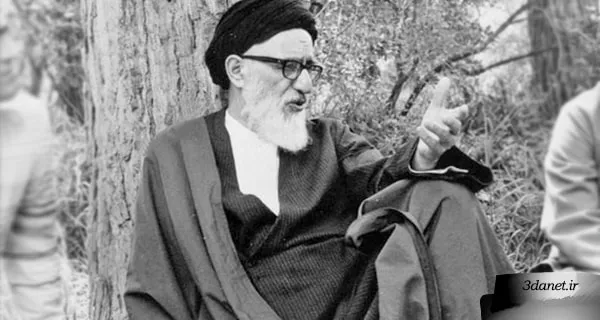
In previous notes, we discussed the necessity of reviving socio-political Tawhid and the need to re-examine the views of the first generation of religious intellectuals on it, and then examined the perspectives of Engineer Bazargan and Dr. Shariati on socio-political Tawhid. In this article, we address socio-political Tawhid in the view of Ayatollah Taleghani.
Taleghani's view on socio-political Tawhid, in its entirety and in its rejection of the lordship and domination of other human beings, is similar to the views of Shariati and Bazargan. However, in another dimension, just as Bazargan emphasized the rejection of religious domination and Shariati highlighted Tawhid's approach to eliminating discrimination, Taleghani, in his intellectual project, emphasizes the category of emancipation and the creation of solidarity and interconnectedness of Tawhid among human beings.
1
Ayatollah Taleghani, like Dr. Shariati, considered Tawhid to be the foundation of religion and the call of the prophets, and their perseverance to change the direction of people's thoughts and actions as being aimed at expanding Tawhid. In his article "Tawhid, the First Call of the Prophets," he writes:
"From the very time when the innate intellect of humanity became ready to receive the truth of Tawhid and rose above the complete domination of instincts, God raised the prophets to sow the seed of Tawhid in intellects and to bring about a transformation and revolution in human souls. This is the very revolution and transformation that the prophets began from the intellect and inner self, to turn the direction of thought towards the unique Origin of power and life... This is the headline and the first call of the prophets. Other doctrinal and ethical principles, religious laws and regulations are the rays and circles of this central point. This is the intellectual and social revolution of the prophets, which began from the inner and inward revolution and transformation of humanity, which is the turning of the direction of thought towards the Origin of power and life and harmonizing the untainted innate nature of the human being with the order of the universe. The perseverance of the prophets was for creating such a revolution that sought to completely overturn the inward and outward state of human life and direct it straight towards the Truth. For this reason, under no circumstances and nowhere did they cease proclaiming this secret of salvation. The Quran presents Noah arguing with his stubborn and ignorant people and while building the Ark atop the flood; and Abraham in the midst of the cave and observatory of Tawhid, and while striking the axe upon the bodies of idols, and within the flames of fire, and atop the foundations of the Kaaba, and under the scorching sun; Ishmael while cooperating with his father and under the knife; Isaac and Jacob among their kin and on their deathbeds in the throes of death; Joseph in the darkness of prison and upon the seat of power; Moses before the Pharaoh's people and in the wilderness; and Jesus with his sackcloth-clad, desert-wandering disciples and upon the gallows; and the Seal of the Prophets in Mecca, atop the mountains, in the deserts, and on the battlefields. It shows all of these and their followers, who were the vanguard of humanity's intellectual revolution, in the act of proclaiming this truth and striving for this intellectual and rational revolution."
He also, like other thinkers of the first generation of religious intellectualism, emphasized the importance of socio-political Tawhid:
"Tawhid is not merely a heartfelt and inner belief that confines a person to temples and keeps them performing devotional duties within the environment of mosques, nor is it merely a philosophical and theological discussion that, once proven with demonstrative reasoning, is archived in the treasury of books. Rather, it is a truth that must bring about transformations in thought, character, and action, and turn the direction of life's course and social policy."
"The prophets came to free humanity from all forms of polytheism, from all bonds, from all limitations, from all one-directional views, one-dimensional views, and one-dimensional existences, and to return them to the independent, innately rational human being."
He believed that Tawhid means "individuals or classes should have no grounds for seeking lordship, and the life and destiny of the people should not be dependent on the will and desire of anyone."
2
In Taleghani’s view, tawhid was equivalent to freedom from bondage, and despotism equivalent to shirk (polytheism) and the enslavement of human beings. Masoumeh Pariro writes about the role of tawhid in Ayatollah Taleghani’s political thought:
“The foundational and central point of Ayatollah Taleghani’s political thought is the belief in tawhid. In his view, the idea of tawhid becomes a significant obstacle to the enslavement of human beings by their fellow humans, and in this way, humanity in fact attains its innate and intrinsic freedom. There are many verses in the Quran that regard freedom and free will as a divine gift to humanity, and Taleghani, drawing on these verses, believes that human beings possess the right to choose based on their own inclination and will. Therefore, he emphasized human freedom in all its dimensions and believed that since we have a precept such as ‘There is no compulsion in religion,’ why should we fear freedom in its various dimensions and deprive others of their freedom? For Islam states: ‘Truth has become distinct from error.’ In that case, we will have no problem with freedom. On this basis, the struggle against taghuti (tyrannical) governments—or in today’s terms, despotic governments—holds an important place in his thought and action, because the enslavement of human beings is a requisite of despotic rule, and this issue contradicts the innate principle founded upon human freedom. To preserve freedom and human dignity, he believes that laws and regulations must govern societies in order to defend freedom, and this is not possible except under the aegis of forming a government.”
Shariati identified the agents of stupefaction as narcotizing religions, ideologies, and schools of thought; Taleghani, too, regarded tawhid not only as the liberation of humanity from bondage to other humans, but also as the liberation of humanity from the bondage of stupefying schools:
“The freedom of human beings is not merely about being free in economic terms and in the state of the social order; a more important freedom is for the human mind to be free, not to think in molds. Many people cry out for freedom and are advocates of freedom, yet we see that they are in the shackles of particular schools of thought. These people are, in reality, slaves to a school, slaves to a thought, slaves to a party and social system. No! We say the Quran is for the free human being, it is for the liberation of the human being, a human being who wants to become free.”
“Any religion or school that keeps humanity confined within its own limits, and takes away its freedom of thought and reflection and restricts it, that school is against humanity. The school of humanity and humaneness is the one that grants everyone the freedom to think outside the confines of religion and school.”
“Worshipping and serving God means liberation from every servitude and from all forms of shirk; otherwise, God has no shackles with which to bind people. It is these human beings and schools that, through the games of disciples and masters, try to keep people’s thought and reflection confined within their own bonds. It is personality cults that seek to bind people. All of these are shirk. The Quran says: Worship God so that you may be free from servitude to every slave, every phenomenon, and every power.”
3
Ayatollah Taleghani believed in the direct relationship between the emancipatory power of tawhid and the creation of a sense of connection and solidarity among human beings through it:
«Islamic Tawhid leads creation from the darkness of illusions toward the light of faith, and from the abasement and servitude of mankind and submitting to human laws and customs toward the honor of Islam and servitude to the Creator of the world, and harmonizes it with the universal law of evolution and the comprehensive order of the world, and preserves the members of society from decline and disintegration and leads them toward survival. This truth is 'Falah' (salvation), as in 'Say: There is no god but Allah, and you will prosper...' The motto of this truth is 'La ilaha illa Allah' (There is no god but God), where the phrase 'La ilaha' (There is no god) is the negation of every will, worship, and servitude, and 'illa Allah' (but God) is the affirmation of these for the True Deity. The shattering of idols and the palaces of governments and human legislations and the raising of the sword and axe is the manifestation of the first phrase, and the building of mosques and rows of worship and the implementation of God's decrees is the manifestation of the second phrase, and its other motto is the word: 'Allahu Akbar' (God is the Greatest), which in prayer, with the raising of both hands, signifies casting behind every memory, every will, and every greatness other than the Truth... so that the human face turns entirely from worship and attention to other than the Absolute Origin toward Him, and through this inner connection, individuals and classes unite with one another, and the order of human society becomes like the universal order of the cosmos... so that no individuals or class have grounds for seeking lords, and the life and destiny of the people are not dependent on anyone's will and desire... and this compressed form of forces and talents that has taken the shape of a human being must connect its conscience and thought to an Origin and turn toward Him whose perfection and power are infinite and beyond the infinite, so that perhaps a sense of responsibility toward spiritual assets may awaken within it, and it may employ its talents together and in harmony and advance ever further... This is the very truth of Islam, after which the religion of the Final Prophet is named—meaning submission of will, thought, and action, and the removal of every resistance and obstacle. The Quran says: All the prophets called to Islam to free people from servitude and obedience to other than God and bring them into obedience to God, who is absolute Truth, Justice, and Wisdom, and to release the chains of servitude, illusions, and false traditions from the thought and will of the people (and relieves them of their burden and the shackles which were upon them...»
From his perspective, Tawhid is a path for the solidarity and interconnectedness of human beings beyond race, nationality, class, differing customs and traditions, etc.:
«Can any remedy for the salvation of humanity in that era of material civilization and hedonism be found other than this transformation and change?... That luminous world and radiant environment into which the Quran introduces humanity is the world of Tawhid; Tawhid of the Essence, Tawhid of Power, Tawhid of Life, Tawhid of Guardianship, Tawhid of the systems, relations, and laws of the world, Tawhid of Will, Tawhid of human thought and will. This environment and destination, in its brightness and clarity, its truth and secret are hidden and concealed from the general public. The decrees, ethics, and social matters, which are the relations and stories of the Quran, are within, throughout, and enveloped by the light of Tawhid... And if until now, faith in such an Origin and its worship was considered among individual duties and virtues, today, as the interconnectedness of the world's people increases, the need to turn to a single Origin and intellectual Tawhid is felt more. Indeed, it enters the realm of necessities. If until today this truth has taken the form of local and racial customs and traditions, henceforth it is the sole path and remedy for human connection and the prescription for universal peace and well-being. The Quran, in these verses, calls upon all to become aware of their own creation and the world in which they dwell, and to know the world, with all its blessings and beauties, as originating from the Origin and for the benefit of all, and since all are in His guesthouse, all should worship Him...»
Ayatollah Taleghani, like Dr. Shariati, considered the duty of intellectuals and revivalists to be the continuous establishment of socio-political Tawhid. In his interpretation of the verse «Say, 'O People of the Scripture, come to a word that is equitable between us and you—that we will not worship except Allah and not associate anything with Him and not take one another as lords instead of Allah,'» he says:
... is a resonant and galvanizing address to all the People of the Book—Jews and Christians who possess a creed grounded in revelation and scripture—or to any educated person and writer who holds a thought or school and bears the responsibility of leading the masses. It is these who need a clarifying and motivating proof and exposition, to cast doubt upon rigid, polytheistic thoughts and beliefs, to be freed from the bonds of servitude, and to prepare for transcendence, so that they may liberate the blind, deaf followers bound by illusions and enslaved to masters, untie their spiritual knots and contradictions, and harmoniously incline toward a single, indivisible word and slogan, which is the unifying word and the source of consensus.
In his commentary on the verse, "And say to those who were given the Book and the unlettered ones, 'Have you submitted?' If they submit, they are guided; but if they turn away, your duty is only to convey" (Surah Al-Imran, verse 20), he also points to this same responsibility:
"In this verse, where the 'unlettered' are conjoined with and contrasted to 'those who were given the Book,' standing in place of 'the polytheists,' there is an indication that the intended meaning of those given the Book, or the People of the Book, is those familiar with books, the literate, and the possessors of a school of thought, not merely those affiliated with a heavenly scripture. God's Book is primarily addressed to these, and the unlettered have their eyes fixed upon them. Thus, these are responsible both for themselves and for others. If they undergo a transformation and submit to God's will, they will draw others after them. And God's religion is precisely this inner revolution, this coming out of oneself and liberation from the bonds of self-worship and other forms of worship influenced by it, and Tawhid and the submission of one's whole being to God, which becomes the source of the transformation of humans and societies and of human Tawhid.
The motivator of this liberation and revolution from the depths of innate nature, and its guide, is innate reason and the revelation of the prophets. Anything else, in whatever form, is polytheism, a bond, transgression, and discord. Discord in privileges, bloodlines, and classes; in the principles and branches; and in the substance and form of God's religion. If transformation and submission to God do not occur, then submission is to caprice, idols, and transgression. And the One God, the truly worshipped, appears in the guise of the lineage of Israel and the Messiah, becoming a trinity, and the trinity, in various thoughts and a base social system, becomes a square, a pentagon, and so on; and the gods of heaven and earth, the lords of the species and the lords of the people, monks, rabbis, and tyrants—all of which is transgression, spiteful enmity, and the wasting of capital, 'out of transgression among themselves'—then they will array themselves in ranks and dispute against the Prophet of Islam and the caller to Tawhid, freedom, and submission."
Ayatollah Taleghani placed great emphasis on the emancipatory power of Tawhid and human freedom; for this reason, he was fiercely opposed to despotism, colonialism, exploitation, and the stupefaction of the masses. His Tawhidic worldview led him to be broad-minded, open-hearted, and to extend his protection to all political groups, regardless of their school, creed, or belief—a pluralism that encompassed the entire spectrum, from the fundamentalist Fada'iyan-e Islam to the Marxist Fada'iyan-e Khalq, for which he was called "Father." Taleghani's views on councils and council-based governance also originated from this same anti-despotic Tawhidic worldview. Shariati called his Hedayat Mosque a minaret in the desert, and in the words of Hoda Saber, none of those who were his students—from Chamran to Basteh Negar and Hanifnejad—ever fell into deviation and remained fighters for human freedom until the end of their lives.
.
.
Taleghani and the Emancipatory Power of Socio-Political Tawhid
Author: Mohammad Qotbi
.
.
Part One of this series:
Part Two of this series:
Part Three of this Article Series:
Shariati and the Dual Functions of Socio-Political Tawhid
Part Four of this Article Series:
Taleghani and the Emancipatory Power of Socio-Political Tawhid
.
.



Discussion0 comments
No comments yet; let yours be the first voice.