Philosophy
The Philosophical Foundation of Shariati's Thought by Hassan Mohaddesi Gilvaei
Contrary to the view that Shariati lacked a coherent intellectual system, Hassan Mohaddesi Gilvaei seeks to demonstrate that his body of work rests on specific philosophical foundations which, through reinterpretation, can reveal the connecting thread among his diverse ideas.
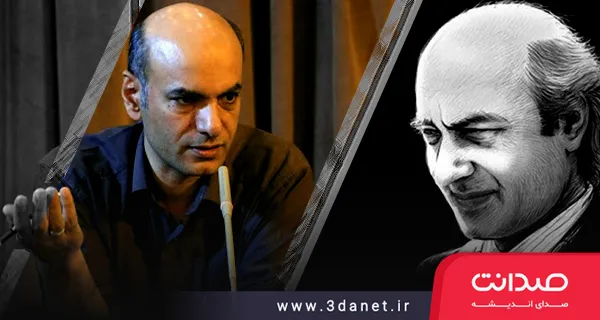
The Philosophical Foundation of Shariati's Thought
Hassan Mohaddesi Gilvaei
(Assistant Professor, Department of Sociology, Central Tehran Branch, Islamic Azad University)
Introduction
Ordinarily and customarily, when an audience encounters the thoughts and ideas of a thinker, they initially expect to encounter a coherent set of thoughts. It is highly unlikely that this expectation has a psychological or biological root. The genesis of such an expectation in such encounters probably stems from our intellectual upbringing. Nevertheless, part of the matter seems to relate to the workings of the mind. The human mind, it seems, guides us to discover the congruities and incongruities of thoughts with one another through comparison and finding connections between ideas. However, the expectation of coherence and harmony among the diverse views of a thinker—views produced and presented in different periods of their life, each nurtured in a specific social and psychological context and linked to the exigencies of the time and the thinker's inner states—is usually not met. Indeed, various incongruities often find their way into the views of thinkers and intellectuals. Sometimes this incongruity is so great that it separates the periods of a thinker's intellectual life, leading to discussions of two or more distinct periods. In such instances, where the incongruities among a thinker's various views are fundamental and foundational, one often speaks of the thinker's paradigm shift. One of the concerns of researchers who examine and analyze the thoughts of thinkers is finding the thread or threads of connection and linkage among the diverse views of the thinkers under study. The subject of our discussion in this article, in general, is finding this thread of connection and linkage in the diverse views of the religious thinker, Ali Shariati.
Statement of the Problem
For a systematic and fundamental engagement with a thinker's thoughts and works, we have no choice but to inquire into their intellectual tradition or the lineage of their thought. Thirty-six volumes of collected works remain from Shariati, which his inheritors (including family members and some of his followers) have compiled into their current form, based on thematic and content proximity or according to a will he left behind, into these 36 collections. The subjects he discusses are highly diverse, and Shariati himself, by dividing them into Islamology, Sociology, and Kaviriyat (Desert Writings), attempted to somehow establish a link among these diverse materials.
Shariati is a religious thinker who, if we cannot say possesses a special genius, is at least highly creative and, in a short span, seeks to answer many questions and cast a new design. It is not without reason that Chandra Muzaffar, the Malaysian Muslim modernist, considers him "the most creative mind" that "twentieth-century Islam has produced" (Muzaffar, 1394). However, the problem is that genius or creativity (whatever term is appropriate for such personalities, and the purpose of mentioning them here is not advocacy or praise but rather to state the problem) not only does not guarantee the harmony of a thinker's diverse views, but, quite the contrary, dispels it. In the mind of a creative thinker, new problems are constantly born and novel ideas are generated. At least on the surface, the wide spectrum of these diverse subjects, problems, and thoughts have no harmony with one another. This is a serious problem in understanding, re-reading, and critiquing the views of such thinkers.
However, in Shariati's case, there is another serious problem, which is that most of his works are oral productions. He is a thinker whose thoughts, in unstable, turbulent, and rapidly transforming conditions, were quickly nurtured, expressed, and consumed. Inevitably, his thoughts and ideas remain incomplete, fragmented, imprecise, repetitive, and occasionally, perhaps, without comprehensive reflection on their foundations. Naturally, incongruities among the views of such a thinker will manifest even more.
Now, in examining and critiquing the thoughts of such a figure, how should one proceed, and how should one engage with them? I believe that the unrefined nature of our thinker's ideas does not permit us to approach his thoughts superficially, to pass over them quickly, and merely point out the weaknesses with which the works of such a figure will inevitably be replete. It seems that, alongside advancing a critique that mercilessly exposes all the flaws and problems in his works and thoughts, we must interrogate his intellectual tradition and his system of thought. If we regard Shariati, or any other thinker, not as a person to whom we are attached, nor as a person who is the object of our wrath, but rather as a cultural and human asset, it is fitting that we delve into, assess, and cultivate his intellectual foundations, and then critique his opinions and thoughts in light of these foundations. This is a cultural duty that each new generation bears toward its cultural assets, for the production of thought and culture will only be possible through such endeavors.
When such an option is proposed, some consider Shariati a thinker lacking a coherent philosophical system. This group of experts believes that one should not seek a foundational intellectual system in Shariati's views because his thoughts and ideas are a collection of materials and discussions cultivated in response to the exigencies of the times, events, conflicts, and the objectives he pursued. If this is indeed the case, Shariati cannot be placed within a specific tradition of thought, nor can he be considered to possess an intellectual system capable of nurturing a current of thought. If we accept such a viewpoint, we must inevitably accept that we can only expect fruitfulness and influence from his works to the extent of utilizing the individual components of Shariati's thought.
Nevertheless, as someone who has been deeply engaged with the works of Ali Shariati for more than three decades, I wish to oppose such a view and, in this article, to the best of my ability, demonstrate that the totality of Shariati's works is based on a specific intellectual apparatus and possesses specific philosophical foundations. Although Shariati himself did not cultivate and present this philosophical apparatus in a coherent manner, and perhaps did not have a detailed awareness of it, we can, through a reinterpretation of his thoughts and works, reconstruct this philosophical system and find a foundational connecting thread in his views. I even wish to make a still greater claim: we may occasionally, and on certain subjects, find differing and even contradictory views in Shariati's works, but what is explicitly or implicitly present and plays a role in most of his works are these very specific philosophical foundations of his. By discussing these claims and substantiating them, perhaps I can, after years of being steeped in and drawing upon Shariati's works, fulfill a part of my debt to this great teacher of our era. Although I am not a graduate of the field of philosophy and am, in fact, a mere novice in this discussion, and my words are sorely in need of judgment by specialists in this field of study, I believe that what I have grasped can serve as a clue for more serious work in examining the views and thoughts of Ali Shariati.
Theoretical Foundations
To discuss the philosophical foundations of Shariati's thought, I must first establish the theoretical bases of the discussion so that a coherent and systematic argument can be pursued based upon them. Since this article intends to speak about the philosophical foundations of a religious thinker's ideas, I will first open a discussion on the philosophical foundations of theological systems, and then, with the aim of explaining and outlining the general coordinates of Ali Shariati's intellectual perspective, I will present a comprehensive categorization of philosophical thought. These theoretical foundations have been deliberately prepared to enable the explanation of the understanding and interpretation I have derived from the totality of Shariati's thoughts.
A) The Philosophical Foundations of Theological Systems
We know that every thought—religious or non-religious—rests upon specific philosophical foundations. Philosophical foundations constantly color and influence our thoughts and ideas, direct our thinking, and lead us to attract certain intellectual fragments and attach them to our mental system. The extent to which a thinker is or is not aware of the philosophical foundations latent in their own thoughts is another matter. Of course, if thinkers have a detailed awareness of the philosophical bases of their thought, they strive to preserve the systematicity and coherence of their various ideas. Nevertheless, the thoughts of those thinkers who have not reflected upon the philosophical bases of their ideas, or who are only summarily aware of the philosophical foundations of their thought, are not exempt from this influence. A thinker's awareness of their own intellectual foundations can only play a role in refining those influences, but it cannot cause an escape from the logical requirements of thought. Philosophical foundations have their own specific logical requirements, and these logical requirements more or less impose themselves upon the intellectual dynamism of the thinking person. In Converse's precise phrasing, "idea-elements are bound together by some forms of constraint or functional interdependence" (Converse, 1964: 207).
These requirements direct the thinker's cogitation. Therefore, the intellectual bases adopted so far relatively direct us in selecting and attaching other intellectual fragments to our thought system. The concepts "more or less" and "relatively" have been included in my previous sentences so that my emphasis on the directing role of philosophical foundations in this discussion does not take on a definitive and total aspect. In explaining the use of these words, I must add that to the extent the thinker in question is capable of systematic thinking and avoiding intellectual confusion, and has been trained for it or has trained themselves in this regard, one can expect the degree of influence of these philosophical foundations on their intellectual system to be greater. Thus, it can be said that in the intellectual works of thinkers, there are latent philosophical bases, veins, or unifying threads, of which they themselves may be aware, or may have remained ignorant, or may be summarily aware. Therefore, only those who are constantly engaged in eclecticism in the intellectual realm and do not conduct this eclecticism based on specific foundations will lack any kind of unifying intellectual bases and threads. Although literary figures and poets are not expected to have philosophical foundations, whether thought-out or not, even in their case, one cannot say with certainty that no unifying philosophical bases and veins exist in their works. In any case, unifying intellectual bases and threads in any intellectual system lead to the relative unity of thinkers' ideas. Theological systems also have their source in philosophical thought. Every theological system is rooted in a kind of philosophical thought. The reason for this is that theological systems are intellectual systems that form around religious concepts and propositions—especially the concepts and propositions of sacred scriptures—and engage in the exegesis and interpretation of these concepts and propositions. But exegesis and interpretation are not possible without reliance on specific intellectual principles and foundations: "Interpretation—in other words, exegesis—is always based on principles and concepts that serve as presuppositions guiding the interpretation; although the interpreters or exegetes themselves are often unaware of this fact" (Bultmann, 1380: 61).
It is probably on the basis of this very lack of awareness of the philosophical and intellectual foundations of their own religious ideas that some religious scholars—including some Muslim scholars—consider their own religious understanding to be identical with the claim of religion itself and denounce any other understanding or reading as erroneous. Some Muslim scholars find it extremely difficult to grasp the idea of the possibility of religious readings, because they believe that only one reading exists, and that is, of course, their own true reading. In explaining such an incorrect understanding, Bultmann says: "Perhaps we should say that we must interpret [the text] without any presuppositions, and that the text itself provides us with the [appropriate] concepts for interpretation? This is something that is sometimes said; but such a thing is not possible" (ibid.: 64). Here he rightly distinguishes between the results of interpretation and the principles and foundations of interpretation. In the results of interpretation, we must proceed without presuppositions, because we are supposed to arrive at results through the research process, and if we have already presupposed the results, we have not undertaken any scholarly or investigative action: "Certainly, regarding the results of our interpretation, we should have no presuppositions in mind. We cannot know in advance what the text will say; on the contrary, this is something we must discover from the text. For example, an interpretation that makes the presupposition that its results must conform to and agree with a dogmatic decree is not a true and valid interpretation. Nevertheless, there is fundamentally a distinction between presuppositions concerning results and presuppositions concerning method. It can be said that method is nothing other than a kind of questioning and a way of posing questions. This means that I cannot understand a text without asking it questions. The nature of these questions can vary greatly. [...] You have a certain understanding of the subject in question, and the concepts of interpretation originate from this understanding. By reading texts, you will learn, and your understanding will be enriched and corrected. Without such a relationship and such a prior understanding [...] understanding any text is impossible" (ibid.: 64-65).
Furthermore, a distinction can be made between the interpreter's motivation and the interpreter's presupposition. Every interpreter pays attention to a text based on an interest, and it is through this interest and motivation that they read and interpret it. Bultmann asks: "What interest do we have in mind when interpreting the Bible?" (ibid.: 67). Here he speaks, in a way, of summoning and calling upon the text for our life in the modern age: "I believe our interest is precisely to listen to what the Bible has in its heart to say for our present situation and condition; to listen to what is the truth of our life and the truth of our spirit" (ibid.: 67). Our interest does not determine our philosophical foundations in interpretation, but this interest and motivation (why I have turned to this specific text) may also guide me in choosing a particular type of intellectual and philosophical foundation. Now, once it becomes clear that the interpretation and exegesis of religious concepts and propositions cannot be realized without presuppositions, the logical consequence will be that with the transformation and change of presuppositions and intellectual foundations, a new religious reading will be born, and therefore, we will have as many religious readings and understandings as there are intellectual foundations adopted in religious interpretation. The conclusion is that the plurality of religious readings and theological systems is inevitable.
The important point here, however, is that some of the presuppositions in question are philosophical in nature and may themselves, in some cases, rest upon other philosophical foundations. Macquarrie, regarding the link between theology and philosophy, reminds us that
These two questions are fundamentally interconnected because theories claim to express truth and are presented as bearers of truth. In logos-centered thought, truth manifests in the proposition (or theory) through the correspondence of the proposition with the fact, or, according to Heidegger's description of this claim, "truth is the correspondence (homoiosis) of a statement (logos) with a matter (pragma)" (Heidegger, http://aphelis.net ... f-Truth). In other words, in logos-centered thought, truth emerges through the correspondence between the knower and the known, or the correspondence between the intellect and a thing (Suvak, 2000: 5, 10). This is what is called propositional truth. Thus, the proposition (or theory) gains primacy over everything that lies beyond it. It is only through focusing on it (the proposition and theory) that we can attain valid and true knowledge, and the mechanism for achieving valid knowledge is representation. However, in anti-logos-centered thought, truth emerges and is tested through that which lies beyond the proposition and theory, within the context that it provides. The element or component typically discussed in anti-logos-centered thought is praxis. Thus, in contrast to philosophies that consider logos the locus of truth, anti-logos-centered philosophies seek truth in action. Among modern philosophies, Marxism, Pragmatism, Existentialism, and Deconstructionism can be named as philosophical schools and approaches that belong to this mode of thought. It is on this basis that some have called the philosophical thought of Marxists such as Marx, Lukács, Adorno, and Marcuse a philosophy of praxis (Feenberg, 2013: 98). The philosophy of praxis is an expression first used by Gramsci in his Prison Notebooks (Ibid: 99). In the philosophy of praxis, solutions to the most fundamental philosophical problems are found within the social world and the transformations occurring in it, not in the abstract theorizing of philosophers. In philosophies known as life-philosophy, such as those of Dilthey, Nietzsche, Bergson, and Heidegger, a potential for anti-logos-centrism is also seen, in which life is set against reason and is recognized as a philosophy of protest; for it rebels against the domination of instrumental rationality (Farin, 2012: 24). Critical theology, or in other terms, German political theology and liberation theology in Latin America and Asia, is also a religious thought that falls under this type of thinking. Anti-logos-centered theology can generally be called anti-scholastic theological thought. In any case, in anti-logos-centered thought, a non-theoretical criterion for knowledge is proposed.
In anti-scholastic theological thought, a non-theoretical criterion is discussed as the provider of valid knowledge and the ultimate criterion of faith. For example, in Islamic culture, this criterion is action; an action that usually carries a positive, constructive, and elevating moral charge, granting spiritual transcendence to the human being as the agent of the act, and dignity to the human being as the recipient of the act. Among those who have used the term counter-logos in the Western world is a Christian theologian named Bonhoeffer (Metz, 1980: 12). In pragmatist philosophy, anti-logos-centrism also appears prominently. According to William James and Dewey, as two prominent pragmatist thinkers, "philosophy must speak about real human life and must serve our continuous betterment. Nevertheless, human life is fundamentally practice, and this is the reason why theory is also a part of this practice considered in its broadest sense. Theory itself is an instrument of our practice; a practice whose main goal is to improve our social and individual lives" (Kremer, 2011: 5).
Based on this brief overview, it can be said that in anti-logocentric thought three components are linked together: 1) adopting anti-scholastic positions and emphasizing that truth is not attained through mere contemplation, reflection, and theoretical engagements, and that knowledge does not hold supremacy; 2) emphasizing the link between theory and practice and the primacy of practice over theory; 3) emphasizing the effort to improve the conditions of human life in this very world through bringing about individual and social changes. It is for this reason that Marx, in several places in his eleven theses on Feuerbach, reveals his anti-logocentric thinking. For example, in the second thesis he says: "Man must prove the truth, i.e., the reality and power, the this-sidedness [this-worldliness] of his thinking ... in practice. The dispute over the reality or non-reality of thinking that is isolated from practice is a purely scholastic question" (Marx, 1386: 36; bold and emphasis are from the text itself and the ellipsis mark is mine). In the eleventh thesis he also says: "The philosophers have only interpreted the world, in various ways; the point, however, is to change it" (ibid: 39). Similarly, Richard Rorty, as a neo-pragmatist, says:
"In all of us contemporary anti-logocentrists, whether followers of Dewey, followers of Davidson, or followers of Derrida, there is a sense that we believe in 'Thesis Eleven.' We no longer try to understand the world in the sense that Aristotle and Hegel understood 'understanding.' Not because we think the world is incomprehensible, but rather because we regard redescribing it, more than an attempt to discover the intrinsic properties of reality, as a tool for individual or social change. But our choice now is between the attempt to change the world or to change ourselves. Immersing ourselves in changing ourselves, the work that Kierkegaard, Nietzsche, and Proust did, seems selfish, unhealthy, and decadent. Therefore, when we see that we have expended much effort on this private program, we become ashamed" (Rorty, 1384: 305).
Rorty, while affirming the importance of theory, also says: "The contexts that theories have created must be evaluated through their efficacy in bringing about effective changes, not (as logocentrists believe) through their adequacy in the way of a goal" (ibid: 305).
Now, based on these theoretical preliminaries, I can proceed with my discussion on outlining the philosophical foundations of the thought of the contemporary religious thinker, Ali Shariati. First, I must show that Shariati was, in brief, aware of the philosophical foundations of his thought, and then I will try to show how anti-logocentric thinking has influenced and manifested itself in the facets of his thought, giving a particular hue and flavor to his religious thought and distinguishing his Islamic thought from alternative forms of religious thinking in contemporary Iran (such as Salafi thought, scholastic thought, liberal religious thought, and traditionalist thought).
Shariati's Brief Awareness of His Philosophical Foundations
Shariati was more or less aware of the affinity of his religious thought with this type of modern philosophies and occasionally spoke of it in his works: "The scientific, philosophical, and sociological depth of our moral scholars, especially the Shi'a, regarding 'action' (which distinguishes Shi'ism from Sunnism, and particularly from the Murji'ah sect: who confined religion solely to the 'heart' and excluded action from its definition) becomes clear when one understands the new discussions of today's philosophies, especially pragmatism and particularly existentialism (which considers action alone as the creator of human essence) and the issue of praxis in Marx's philosophy and sociology" (Shariati, n.d., Collected Works 4: 251). His inspiration from, and occasional borrowing from, these ideas was also due to this very adherence to anti-logocentric thought. Shariati called logocentrism being trapped in a "golden silken mental cocoon." He believed that truth must be tested within history. In his view, truth is not attained in abstraction but is realized and manifested in action, and abstract thought constructs a cocoon of thoughts and concepts in which the intellectual becomes trapped and perhaps creates catastrophe. Critiquing internationalism, Shariati says: "One of these 'golden-threaded silken mental cocoons' for many intellectuals, especially among Asian-African nations, is internationalism. Its warp and woof are woven from the finest human sentiments, the most precious ethical ideals, and the most brilliant and beautiful threads of poetic and delicate thought. But when woven together, it brings about catastrophe! Fortunately, human history has experienced this catastrophe many times. What will an ideology be but romantic fantasy if it does not take heed from history?" (Shariati, 1381 [2002]: 120). The critique that Shariati levels against scholasticism, metaphysics, and intellectualism can be explained from this same perspective. In scholasticism, metaphysics, and intellectualism, truth is situated within thought and knowledge, but from the anti-logocentric thinker's view, truth must be found in the realm of action: "There are many issues where a gap, sometimes to the point of opposition and contradiction, exists between the mental concept and its theoretical image and the objective instance and practical realization, and this is one of the great pitfalls for intellectuals, for the intellectual, fundamentally, because their primary work is 'thinking' and they are distant from 'action,' easily finds themselves in a mental atmosphere, becoming more or less removed from what transpires in the earthly world of objective and practical realities, and lives in a world where often 'abstract philosophical ideas,' 'rational abstract causality,' and 'judgments issued from prior opinions and beliefs' associate with one another and collectively form an ideology for them, which creates two lenses for them through which they view everything" (ibid.: 119).
Based on anti-logocentric thought, Shariati critiques formal logic or the logic of pure reason. Formal logic, in Shariati's view, is the type of logic that directs our mind toward abstract and intangible matters and diverts it from attention to the concrete. For example, regarding the understanding of the human being, Shariati holds that formal logic tells us: "First, one must know the human being in general, then in a concrete form; first, we must ascertain the abstract truth of the human being, then their temporal, spatial, social, individual, or historical reality" (Shariati, 1379 [2000]: 4). Shariati argues that empirical science has set aside formal logic (or "Aristotelian logic") and has caused a major transformation in human knowledge:
"The new scientific insight believes that, to move toward the abstract truth of the human being, or any other phenomenon and any other scientific subject, one must not start from the 'universal,' and from the outset, one must not pose the problem in an abstract, general, and purely philosophical form, and one must not first know its essential truth and then address the particulars and concretes. On the contrary, the general method of scientific research and investigation, which is the empirical method, contrary to Aristotelian logic, requires that we begin from particular and concrete realities; that is, for example, when we want to know the human being, contrary to the scholars of the past who first tried to give a general definition of the truth of the human being – that first, the human being is a being of this sort, and an animal of that sort! – today we must examine the human being that exists, the concrete human being who breathes, walks on the earth, and lives, precisely, perceptibly, empirically, and objectively, and then proceed step by step, and based on the reality, truth, laws, and relations we extract from it, arrive at that thing called the human being, in its universal and true sense. Where do we find this human being who has external reality? In two places: one is history, and the other is society" (ibid.: 4).
Moreover, Shariati critiques formal logic from a religious perspective as well: “In the logic of theoretical reason, God must first show His ways to human beings, and then those individuals who have come to know His ‘ways’ set out and strive upon that path, whereas God, with His own logic, first commands ‘setting out’—action and striving—and then promises ‘guidance’ to these ‘wayfarers’—the actors and strivers” (Shariati, 1358: 15-16). On this basis, in his critique of formal logic, Shariati speaks of the “logic beyond logic” of the Qur’an (ibid.: 15); a logic that claims truth is revealed to the servant within action, and it is in the course of action that he attains guidance: And those who strive for Us – We will surely guide them to Our ways. God “shows His ways to those who walk upon His ways!” (ibid.: 16).
Shariati’s anti-logocentrism also manifests in his critique of Cartesian subjectivism. In his view, Cartesian subjectivism reduces concrete existence to the intelligible. Existence is a concrete matter that lies beyond knowledge, but the thinker’s logocentrism traps him within a cocoon that is imaginative and passionate, placing the concrete within knowledge and turning it into an intelligible existence. Critiquing Descartes’ rationalist empiricism—who has been called the founder of modern thought—Shariati says:
“Addressing the scholars and thinkers of his age, who were immersed in ancient philosophy and mentally captive to the works of the ancients, and who, like some of us, believed that ‘excellence or knowledge belongs to the ancients,’ Descartes commanded: ‘Resez la table’ (Clear off your study desk!). And in response to someone who asked him, ‘What book are you studying?’, he pointed to a sheep’s tripe and said, ‘This book.’ At the same time, who is there that is even slightly familiar with Descartes’ school and does not clearly find in it this reality that he has poured objective realities into the mold of ‘rational categories’ and made of existence an ‘intelligible world’? He studies that very sheep’s tripe from a ‘book,’ and it seems that after having cleared his desk of all writings, sayings, books, and sources, he has once again, with precision, arranged them all back in their places! This is not a jest; it is the truth. His most decisive revolutionary act is ‘doubt in everything,’ which is the famous ‘Cartesian doubt.’ In order to free himself from all his acquired learning, prior knowledge, and philosophical, religious, and scientific opinions and beliefs, he doubts everything, even obvious sensory perceptions and even his own existence. Suddenly he arrives at this point: ‘But we have no doubt that we are doubting,’ and then concludes: ‘Therefore, I must be in order to be able to doubt,’ and from here he reaches the first certainty and discovers a fundamental principle along with his own existence, formulating: Je pense, donc je suis ‘I think, therefore I am’! Then, from this starting point, he proves his thoughts and beliefs one by one anew and reconstructs everything from an ‘abstract idea.’ When Descartes, the epitome of the reason of modern civilization, is like this, should we, mediocre intellectuals, not fear for our weak reason, lest it stray from reality and not automatically engage in creating abstractions and intelligibles free from the external world, and lest it trap and kill us, like a silkworm, inside the cocoon of a golden-threaded, silken school that is beautiful and utterly passionate in our theoretical books, literary works, and intellectual debates?” (ibid.: 119-120).
Shariati’s Position on Truth and Valid Knowledge
As previously stated, in logocentric thought, truth resides within logos or knowledge. In such thinking, truth can be attained in two ways: 1) examining the validity of propositions in terms of their logical validity within the theoretical system; 2) discovering truth through the discovery of the correspondence between the mind and the external world. In the latter sense, in the process of discovering truth, "the two aspects of the faculty of perception and reality ... are abstractly separated from one another" (Kosha and Abe 1389: 39). In both cases, the discovery of truth has an abstract quality and is, of course, historical, but truth itself is not a historical matter; historical in the sense of being concrete. In this sense, what is true is so forever and bears no relation to the concrete. Although the discovery of truth occurs at a specific time, because the subject exists in time, truth itself is not temporal. At the same time, in logocentrism, the discovery of truth is a relative matter in that it "implicitly posits a kind of unattainable transcendent for human cognition in relation to which truth can be relative or historical" (ibid: 39). However, in anti-logocentrism, truth is transient and incomplete and is historically conditioned; because it is a concrete matter: "In contrast to this relativistic concept, there is a dialectical and 'open' concept ... which considers truth as the immanent aspect of history, without imposing an absolute synthesis of the totality of historical aspects in which the movement of truth ends. The transience and incompleteness of truth is not a reason for its illusoriness: truth is merely historically conditioned because it is not a pure quest, but is linked to a specific practical interest" (ibid: 39).
Hence, the process of discovering truth passes through the channel of action and exits the realm of theory. Truth is revealed in action. The truth of propositions "is evaluated by their ability to establish a relationship with the improvement of practical conditions of life" (ibid: 39). Shariati seeks ultimate truth in the concrete and not in theoretical thought. In his view, truth manifests itself in the dynamic flow of life and becoming, not in theoretical thought or inner contemplation: "In life, one cannot be on the path of understanding and comprehending truth through the genius of reason, illumination of the heart, practical thought, and theoretical reasoning. It is in 'becoming' that one can 'be'. ... It is in action that truth reveals itself" (Shariati, 1358: 15). He adds that "if a group steps sincerely and diligently on the path of truth, in the midst of toil and labor for truth, truth becomes more apparent to them and they find the more correct path" (ibid: 15). A requirement of anti-logocentrism is the negation of the primacy of knowledge over action, and Shariati negates the primacy of knowledge by negating the triad of scholastic Islam, esotericism, and intellectualism, as three kindred or complementary tendencies. Scholastic Islam says:
"First you must think, study, acquire knowledge, conduct scientific research, read books, attend seminaries, study under masters ... until 'Absolute Truth' and the 'Absolute of Truth' is revealed to you and you traverse the final degrees of knowledge, and this is only the first stage. After traversing this stage ... you enter the second stage, the stage of action, the stage of reform, but individual action, self-reform. ... Then, you can begin the third stage and proceed to reform others and take responsibility for the religion and worldly affairs of the people. That is, first, cognition of truth, through reasoning and theoretical and logical instruction, lessons, discussions, books, schools, teachers, thought, contemplation, inspiration, and illumination, the work of the 'mind' and the 'heart'! Science and mysticism. Second: reforming oneself exclusively through worship, asceticism, prayer, repentance, seeking forgiveness, and supplication ... and third: reforming society, attending to the affairs of Muslims, responsibility for others, and enjoining good and forbidding evil ... . This is the way of thinking and guiding method of some of the ancients, in 'religion'! And, the way of thinking and guiding method of some of our new intellectuals, in 'ideology' is also like this! 'First, you must build yourself ideologically, choose your worldview, settle your account with religion once and for all, select the logical analytical method for natural and social phenomena, ... and after you have become a standardized intellectual based on the usual criteria worldwide, then you have the right, as a modern-style revolutionary intellectual ... to strive and become committed. We see that both say: First, 'thought', then 'action'" (ibid: 18-21).
But Shariati rejects this type of religious thinking under the title of “religious individualism,” which is “influenced by Eastern Sufi ethics and Christian asceticism,” and considers it a thought that leads to escaping “the troublesome and difficult rule of social command and prohibition, and is a justification for subjective truth-seeking, individual egoism, and evasion of responsibility, and drawing a white or green veil of religious knowledge and piety over the ‘human carcass’!” (ibid.: 22). He speaks of the interesting and novel expression “becoming more Muslim through acting as a Muslim” (ibid.: 23). This expression best reflects the link between faith and action and the primacy of action over belief. Shariati not only speaks of the primacy of action but also (apparently with reference to Marx’s thesis on the relationship between theory and practice) speaks of the dialectical relationship between theory and practice, and in doing so, he considers a whole front of action-oriented thinkers to be with him:
“And today too, great men who have gained awareness of human and social realities—not in libraries, faculties, scientific conferences, and theoretical interviews—but from ‘social action’ and ‘struggle, engagement, and responsibility,’ have experienced this great truth—upon which Islam has based its beliefs and rulings—and contrary to the ‘theoretical logicians,’ who believe that: ‘it is obvious that one must first think, then act; one must first do intellectual work, then practical work,’ they have realized that thought and action are not two consecutive stages, one prior and the other posterior, and there is not a one-sided ‘causal relationship’ between the two; rather, there is a mutual, two-sided causal relationship between them, which are continuously influencing and being influenced by one another, and as one of the most prominent social thinkers of our century has stated: ‘There is a dialectical relationship between belief and action’” (ibid.: 23-24).
It is in explaining this relationship that Shariati says: “Thought and action are constructive and generative of one another. Each is made, nurtured, and shaped in the other and by the other, and the ‘dialectical relationship’ between thought and action means exactly this!” (ibid.: 24).
Therefore, in Shariati’s view, the ultimate criterion for the truth of claims is their practical realization. But if truth is realized in action, how do we find out which claim is true? In other words, in the realization of a claim, what must emerge and manifest so that it can be accepted and established as a valid truth? In Shariati’s view, knowledge is valid if it proves effective in improving human life and liberating them from sufferings and pains: “My criterion for the correctness or incorrectness of a type and a thought is not theological, philosophical, and logical discussions, but rather the usefulness of this thought for a generation and for an era; and also the practical value of this thought in fulfilling the human responsibility of an intellectual in his environment. This is the criterion for the soundness and unsoundness, the weakness and strength of a thought” (Shariati, 1379: 148-149). Based on such thinking, Shariati considers the practical testing of claims necessary in addition to the epistemic examination and assessment of the validity of propositions, and he gives precedence to the practical testing of claims or their verification over epistemic assessment. In his view, knowledge must be assessed not in a self-reliant and internal manner but in a concrete way: “In Islamic research, I believe in a principle ... and that is, instead of proving belief in a principle through scientific and logical methods ... and analyzing its truth and falsehood ..., we should find and apply a more reliable criterion from the perspective of finding truth and a more useful one from the perspective of social life ... . If you see that my inference, for example, from the principle of Imamate and belief in it ... has a positive, constructive, and progressive effect on the personal life of the believer in this principle and the society that believes in this principle, then this inference is correct ... and [otherwise] we must doubt the correctness of our theory” (Shariati, n.d., Collected Works 19: 270-271).
Action, the criterion for judging the existential value of a human being and the factor of dignity and progress for a social group
In Shariati's thought, anthropologically speaking, action is a decisive element. God casts human beings into the world, and human beings create themselves through their own actions:
As can be seen in the above references, what Shariati means by action or praxis is any mode of living and activity in the course of which, and by means of which, something subjective attains external and objective realization and finds objective embodiment, independent of the subject, in the form of behavior or a material thing. Even a human being's life is his objective, practical creation, and he creates himself in the way that he lives. In this general sense and at the initial level, even a theory is a creation born of the subjective possibilities of the theorist, just as a work of art is the product of the artist's talent for artistic creativity. By creating a theory, the theorist himself is also created. But action in Shariati's thought does not remain at this level; rather, it goes beyond it and also encompasses meta-theoretical and objective activism. It is at this stage that the subjective matter, which has attained external realization in one of its expressive forms, must be tested within human action and life, and its effects and consequences assessed. This is a more precise and concrete meaning of action in Shariati's thought. Therefore, it seems that at the first level, the signified of the concept of action in Shariati's thought evokes the meaning of the concept of expressive realization, and at the second level, it expresses the meaning of material realization—materialization in the form of behavior or any other objectified matter. Another important point is that when Shariati speaks generally of the primacy of action over theory, he has in mind absolute action, which is broader than "ethical action" and "action aimed at intervening in reality with the intention of satisfying a need" and solving a problem—a distinction discussed by Fernand Brunner and the thoughtful translator of his work, Reza Davari[1] (Brunner, 1380: 107-108). Thus, in Shariati's view, the external realization of the subjective, in whatever form of its realization, is superior to the unrealized subjective idea or plan. But this is still not enough. In the second stage, the realized matter must be practically tested in human life or during the process of human intervention in the world, and its external, individual, and social effects must be assessed. In this sense, the subjective idea or plan, through being realized and acquiring materiality, finds an external identity, and we can speak of its existence and being; for discussing the existence or non-existence of that subjective matter which has not yet been realized is irrelevant. Only the realized matter becomes relevant for judgment in terms of the quality of its realization. Yet the final touchstone, namely ethical judgment, still remains.
Action Aimed at Reform: The Ethical Touchstone of Action
If we go beyond judging subjective possibilities and characteristics, and objectified and existentiated characteristics, and wish to judge concrete and objectified human affairs, by what criterion can we adjudicate between such affairs? Here, Shariati proposes two interrelated criteria: 1) commitment to the people; 2) taking action for change in the direction of fulfilling social commitment with the intention of reducing the suffering of the people and liberating them. Therefore, the moral criterion of an action is its being transformative in the direction of individual and social reform. Shariati has repeatedly spoken of the difference between service and reform. Reform is a transformative action in the direction of the good, and righteous action possesses such a characteristic (Shariati, n.d.: 162). "Service" is providing something to individuals without changing their situation, and "reform" is changing the situation of human beings and transforming their character, action, and way of life: "Service means helping a person (or society) in the state they are in, and based on the needs they have, which usually and mostly keeps the person or society in their current state. Reform means helping a person or society towards what they ought to become and based on the needs they ought to have but do not. For this reason, every reformer is a servant, but it is not certain that every servant is a reformer" (Shariati, 1368: 218). On this basis, one can also categorize the actions of human beings and, according to the type of individuals' actions, separate servants from reformers. It is clear that transformative action (transformation in the direction of what ought to be) is preferable to service-oriented action, and reformers are preferable to servants: "For example, Avicenna served humanity and science and is a servant, but he is not a reformer. Christ and Moses are reformers because they changed human beings, that is, they made them aware of what they ought to be. Your brother is penniless and you buy him a house; you have served your brother, but you have not made the slightest reform, and he will remain what he was, only living a little more comfortably. But if you provide the means for his education or penetrate his awareness and insight, you have reformed him, and naturally, you have also served him. The difference between Abu Dharr and Avicenna in Islam, the difference between Spartacus and Aristotle in the West, is the difference between service and reform. Compare Rousseau and Voltaire with Edison and Pasteur" (ibid: 218).
Shariati's judgment regarding Hallaj, Avicenna, and Abu Dharr as three Muslim personalities (respectively, the mystic, the philosopher, and the mujahid, as products of three cultural and intellectual tendencies in the Islamic world, namely mysticism, philosophy, and prophetic Islam) is based on such a perspective and on these three criteria. This is a comparison between three prominent Muslim personalities that has often been misunderstood, and for which Shariati has been reproached many times by individuals from various intellectual positions:
"Hallaj is arrested because he says 'I am the Truth, I am God,' meaning I am not (meaning it is God) ... but the people did not understand his profound words, considered him a polytheist, and hanged him in Baghdad ... Was this not a pure death on a hollow path? Yes. Because if thousands like Hallaj were to die daily in Islamic society, no benefit would accrue to the people. A death that is harmful to no one is the most worthless of deaths. Logic deems such a death hollow, because it is of no use to the people and to life. With all the greatness of his spirit, he unfortunately stepped onto a path from which humanity derived no benefit. ... Avicenna, the philosopher, genius, and educated man, a great scholar without any social responsibility or thought about the people and the program of society's life, and selling himself and easily surrendering to the apparatuses of force and wealth. ... 500 Avicennas have no effect on society, except for a few who gather around him to learn philosophy, and if a thousand Hallajs were to gather, a madhouse would come into being. But one Abu Dharr is enough for every century to transform and change it" (Shariati, 1381: 22-23).
Shariati's critics, in their critique of this type of his thought, have unfortunately paid little attention to the philosophical foundations of his ideas. Yet it seems Shariati remained faithful to them throughout almost his entire intellectual and practical life. It is on the basis of keeping such a criterion in view that Shariati, even in his prayers, asks God to deprive him of all grandeurs that do not untie a knot in people's affairs and merely confine and immerse him within his own private world: "O God: deprive me of all virtues that are of no use to the people! And do not afflict me with the savage ignorance of subtle gnostic truths, whereby, in the ecstasy of lofty sentiments and the zenith of transcendent ascensions, I might fail to see the flash of hunger in the depth of an eye, or the blue line of the whip upon a back!" (Shariati, n.d., Collected Works 8: 102). He even recalls that his primary interest was to study "philosophy [...] or criticism," but due to the commitment he felt toward the people, he forwent the realization of his desire (Shariati, 2000: 153). Shariati's remarks in his critique of Hallaj and Avicenna as two personality types are reminiscent of a statement by the contemporary neo-pragmatist philosopher, Richard Rorty, which was cited earlier, but repeating it is useful for a precise understanding of Shariati's point:
"Our choice now is between the attempt to change the world or to change ourselves. Immersing ourselves in changing ourselves, the work that Kierkegaard, Nietzsche, and Proust did, seems selfish, unhealthy, and decadent. Therefore, when we see that we have expended much effort on this private project, we feel ashamed" (Rorty, 2005: 305).
On the basis of such thinking, Shariati believes that God shows more favor and grace to the practicing atheist than to the inactive believer, for the belief of such a believer is considered nothing but an ineffectual belief:
"If 'a group' believes in God, but takes no step toward fulfilling their human responsibilities—that is, if their faith in God has no objective effect on their human development (whose highest natural manifestation is a sense of solidarity with the community, compassion for humankind, and a sense of responsibility toward ugliness and beauty, and the acceptance of commitment toward the destiny of the people) and plays no constructive role in their social life—they have attained a scientific truth and philosophical reality in the realm of subjective belief, which, having no effect on the destiny of the people, is worthless, and since God has no need of it either, it is futile. For we must not forget that it is we who need 'worship of God' for our human and moral growth, human constructiveness, and species evolution, not God! For God—as we can see—looks with more favor and grace upon a 'materialist human being' who does not know Him, but knows their social responsibility, and does not worship God, but serves the creation, than upon a theologian who proves Him with a hundred philosophical, mystical, scientific, and logical proofs and worships Him with meticulous order, but from whom no benefit has ever reached the creation, and who has never felt any responsibility toward the destiny of their people and nation" (Shariati, 1979: 60-61).
Hence, in his supplication (which is in fact a social lesson for the people, delivered in the language of prayer), he says: “O God, grant our scholars responsibility [...]” (Shariati, n.d., Collected Works 8: 118). For Shariati, faith is of no benefit if it does not find practical expression, for progress and honor are the products of action; and if we see that in the contemporary world, atheists and polytheists are more advanced and honored than monotheists (Shariati, 1979: 61-62), the reason is precisely this: “In a word, progress and honor are the result of ‘action,’ and the salvation, life, and sovereignty of a society depend upon striving for the good and struggling against evil; and those who have ‘faith in God’ but are incapable in ‘action’ and evade the responsibility of social command and prohibition—their faith in God will not benefit them!” (ibid.: 64). Thus, being a Muslim cannot be realized without action: “With faith in God, without primary reliance on responsibility, without a practical goal for the people, and without striving in the path of good and struggling against ‘evil’ in life, you become a divine philosopher, a pure-hearted Sufi, a perfect mystic, an ascetic worshipper—but a Muslim? No!” (ibid.: 58). Moreover, what makes each of us kin to another is one thing and one thing only: action. Thus, neither blood, nor beliefs, nor anything else—only action is the measure of our closeness to or distance from others, and the criterion of our bond with or separation from the other: “In all of humanity, throughout time and across the earth, there are only and exclusively two families, two progenies, two races, and two lineages: righteous action and corrupt action! Every human being who is a ‘righteous action’ is of your household, O Noah! O helmsman of salvation in the tempest of corruption and death that rules the world and is an inescapable decree! Everything is perishing except His Face. ‘Unrighteous action’ is condemned to non-existence, and this is the tradition of God, and the tradition of God is unchangeable, untransformable, and immutable! God Himself does not break it” (Shariati, 1980, Collected Works 9: 228-229).
The Religious Foundations of the Primacy of Action
What we have said so far has largely relied on passages from Shariati’s works that introduced his praxis-oriented thought without relying on religious foundations, although some religious propositions were present among them. But Shariati does not merely content himself with citing certain religious propositions; rather, he offers a praxis-oriented interpretation of religion and grounds his praxis-oriented thought on religious foundations. Based on an interpretation of Islam and Shi‘ism, he seeks to establish action as the primary and ultimate criterion for the truth of thought and an intellectual system:
In Shariati's view, to assess the truth of a religion, one should not resort to philosophical argumentation, discussion, and dialogue; rather, the criterion for the truth of religion must be sought in the realm of its actualization: "Every school or religion or religious or non-religious ideology—in any case—the criterion of its truth and falsehood is its social role" (ibid: 156). In his view, one of the major afflictions that a religion may suffer is the primacy of religion itself; that is, religion for religion's sake: "When religion becomes religion for religion's sake, it is severed from its relationship with its final cause and the cause of its legislation, and it becomes independent and abstract in itself, and this is what distances it from contact with action, and this is what causes reliance on this religion in this form to prevent the intellectual or religious individual from acting, and the more emphasis is placed on this matter, the more the thinker loses the chance for action and fulfilling their practical mission" (ibid: 159). In Shariati's view, the otherworldly orientation of religion is an instance of the formation of the phenomenon of religion for religion's sake: "The transfer of all practical and intellectual results of belief in religion from before death to after death is the transformation of religion from a prelude to movement, perfection, growth, awareness, and action, into a collection of beliefs, feelings, movements, and actions that are fundamentally unrelated to action and remain in a mental form" (ibid: 158). Moreover, the interpretation Shariati offers of religious teachings is an anti-logocentric interpretation. For example, when he speaks of Tawhid (monotheism) or of Intizar (anticipation of the Mahdi), he gives them a practical, objective, and social dimension. When he speaks of Tawhid as the most fundamental Islamic belief, he first presents it as a specific type of worldview and then speaks of Tawhid as the social foundation of Islamic society and the constructive principle of the ideal Islamic society. Thus, the religious doctrine acquires a pronounced social relevance and reveals Islam's type of social vision (Shariati, n.d., Collected Works 18: 161-162). Tawhid in this sense is "the ideological foundation and the intellectual and doctrinal cement of a non-contradictory (universal monotheism)" (ibid: 193). Shariati's discussion on distinguishing between Islam-as-culture and Islam-as-ideology is the fundamental principle in such an interpretation of religion, and this very distinction between Islam-as-culture and Islam-as-ideology is based on an anti-logocentric thought; the transformation of Islam from a collection of spiritual teachings and virtues into a transformative religion that constructs the social world. Furthermore, he divides religions, based on their relationship with the status quo and the poles of power existing in society, into two types: justificatory religion and revolutionary religion. He considers the criterion for examining religion to be its revolutionary or justificatory nature, and he regards being revolutionary, or more precisely, being transformative, in a socio-political sense, as the standard for the superiority of one religion over others or over different interpretations of the same religion. Regardless of whether we agree or disagree with him, there is a key point in his argument, which is that revolution, as a social matter belonging to the realm of praxis and the concrete and historical, is the criterion for judging religion, not religion, as an epistemic matter possessing metaphysical content, being the criterion for measuring revolution. Such an attitude in the external and concrete evaluation of religion is an anti-logocentric attitude. Therefore, it must be said here, addressing the critics who have misunderstood his views, that "religious revolution" or "Islamic revolution" was not what Shariati had in mind; rather, revolutionary religion and revolutionary Islam were his intended ideal and aspiration. For this reason, Shariati was not a theorist of the "Islamic Revolution" but a theorist of revolutionary Islam, and these two have a vast difference. Comparing his views on this subject with those of Morteza Motahhari will be interesting and illuminating. Motahhari rejects "revolutionary Islam" and defends the "Islamic Revolution." In any case, as I have stated elsewhere, Shariati "demonstrated that examining and evaluating religion solely based on its internal criteria is an abstract and incorrect examination, and in such an examination, one must simultaneously consider the impact of the social conditions in which the religion lives. This approach in Shariati's work is so serious that he considers internal demarcations between Islamic sects to be of little importance and deems distinguishing them based on their social effects to be more fundamental" (Mohaddesi, 2004: 119-120):
Contrary to what is often inferred from his views, Shariati considers mere pragmatism a "deviant abyss": "We know that immediately after faith, righteous action is on God's tongue, and even according to the Prophet, when asked: 'What is Islam?' he replies: 'Action.' This does not mean that we should fall into a kind of pragmatism and take practical criteria as intellectual criteria. This is a kind of deviant abyss that plunges man into the peril of blind action, because before that, one must have an ideological basis to distinguish righteous action from unrighteous action, and action that serves humanity from action that serves the individual or is fundamentally destructive" (Shariati 1356: 156). Nevertheless, Shariati rejects the separation between the two and the notion that "one must first think, then act; first do intellectual work, then practical work" (Shariati: 1358: 24-23). Thus, in his view, knowledge itself acts as the criterion for identifying types of actions and distinguishing them from one another; but a knowledge that has passed through the stage of ideation and been nourished by the achievements of action. Action without thought is sterile: "In all societies, it is also the case that behind action lies thought and intellectual support, alongside action lies thinking and intellectual support, and in the execution of action, there is again thinking and intellectual support. Whenever thought becomes distant from action, action turns into sterile efforts and thought into mental fantasies, and both become futile" (Shariati, 1379: 165).
In Shariati's view, "When a society has not thought and does not think and has not attained consciousness, it can do nothing. Nothing at all! When you compare Iran's Constitutional Revolution with the Great French Revolution, in comparison with what they copied from it, one turns out one way and the other another way. This is why we see the Constitutional Revolution begin with a few decrees and fatwas. Whereas the Great French Revolution begins with a century of thinking, reflection, new vision, and a progressive, conscious, and enlightening intellectual movement" (ibid.: 166-165). Thus, action requires an intellectual foundation: "If action lacks an intellectual substructure and base, it either does not come into being or does not come into being consciously. This is why everywhere throughout history we see that wherever there has been movement and construction, behind it lies a vision and an intellectual consciousness, an awakening and enlightening doctrinal culture, as well as a critical justification of word and deed" (ibid.: 163). Therefore, it can be said that in Shariati's view, knowledge is the criterion for judging action, and action is the arena for testing knowledge. Thus, Shariati believes in the priority of knowledge over action. It is on this basis that for him, the "revolutionary human being" is not merely someone who has performed a revolutionary act, but rather, before action, has striven to raise and build themselves as revolutionary in intellectual, moral, and existential terms: "Fundamentally, the 'revolutionary human being' is not only a person who participates in a social revolution – for 'opportunists,' 'adventurers,' and 'egoists' may also participate in it, and they do, and the germ of deviation in all movements and the failure of all revolutions is the participation of these people – but rather, a revolutionary is, above all, a transformed, self-made essence; a human being who has replaced their 'inherited, traditional, and instinctive self' with an 'ideological self-made self'" (ibid.: 133). Hence, "becoming revolutionary requires, above all, a mental revolution, a revolution in vision, and a revolution in our mode of thinking" (ibid.: 167). Thus, knowledge holds priority in his intellectual system. In his view, without the illumination of knowledge, human striving will be blind and destructive. But despite all the importance Shariati places on vision, knowledge, and inner and existential virtues (subjective matters), he immediately adds that "a human being is not built by theory alone" (ibid.: 168). The mere accumulation of knowledge may well lead to a form of deviation and blind the individual to realms of the world. Speaking of the duality of the book and work (synonymous with the duality of knowledge and action), Shariati considers the two complementary:
"'Work' not only aids the book in this path, but also prevents the deviation of the human being, and at the same time, like the book, is itself a source of consciousness and a means of attaining truth and another spiritual experience. ... Work is not only a source of experience and consciousness like the book, but true and certain consciousness originates from work, and what comes from the book, while possessing rapid growth, can often be morbid, deviant, and illusory, or may carry elements thereof, which gradually lead to the deviation, illness, or poisoning of the intellectual. The book and work both have an effect on the constitution of a human being. The book combines work with intellectual consciousness, the power of analysis, and the aid of the many experiences provided by other human beings and other geniuses, and work grounds and corrects subjective thought in the field of reality. The perception and feeling of someone who defends the right of workers to strike and someone who has learned progressive ideas about syndicalism is not the same as that of someone who actually participates in a workers' strike" (ibid.: 168-169).
Thus, in the interdependent combination of knowledge and action, each is relatively independent, and each alone does not lead to the desired destination but rather constitutes a deviation from the desired path. For Shariati, in this combination, although knowledge has precedence, it is action that holds primacy; because it is action that 1) corrects mental deviation, 2) provides complete and true cognition, 3) purifies the human being existentially and morally, and 4) acquaints the activist with the suffering and pain of the people:
"True knowledge is a mixture of these two. Work is creative for the human being, it is evolutionary, and it polishes the essence of existence. Work is for the intellectual; it is the changer of class personality, social behavior, morals, emotions, habits, and the deviant tendencies that exist within their class framework and create a separation between them and the masses of the people – the people who work. And finally, work is a summons from the class of suffering and deprivation to call forth the intellectual who, in the middle or upper class, is seeking both their own salvation and the fulfillment of their human responsibility. Work makes the intellectual homogeneous with the masses and elevates them to such an extent that, in the words of a great popular writer: 'People in the streets and bazaars mistake him for one of their own'" (ibid.: 169).
Thus, the relationship between knowledge and action is a dialectical one. They complement each other: "Thought and action construct and give birth to one another. Each is made, nurtured, and shaped in the other and by the other, and the 'dialectical relationship' between thought and action means precisely this!" (Shariati, 1358: 24). In Shariati's view, "speaking and acting, and knowing and applying must always be combined, and this is the tradition of the Prophet of Islam, who never divided life into two seasons, for example, the first season being the season of absolute speaking and the second season being the season of absolute action" (Shariati, n.d., M.A. 28: 89).
The Distinction Between an Action-Oriented Epistemic System and a Non-Action-Oriented Epistemic System
Another important point that guides Shariati's thought, and which he uses as a criterion for judging his own and others' performance and life, is the distinction he makes between two types of knowledge: an epistemic system that is oriented towards action and leads to action, versus an epistemic system that does not culminate in action: "A thought that is fundamentally the thought of action" and is "practical," and a thought that is "subjective," "utopian," and "imaginary" (Shariati, 1379: 162-163). For Shariati, epistemic systems can be evaluated in terms of their capacity to motivate individuals to activism: "This is where the intellectual must be careful that if they see reliance on a thought, in the name of a school or religion, distances one from action, they must, in judgment – if they wish to be precise and fair – differentiate whether this factor of negating action is related to the nature of the thought, that it is a subjective thought and a kind of Vedism, Buddhism, mysticism, Sufism, and tasawwuf, etc., or a subjective existentialism, Hegelianism, or not [...]" (ibid.: 160). The action-oriented epistemic system, in Shariati's view, has two important characteristics:
1) "In history, it creates events (event, movement and phenomenon, occurrence, whether in the form of a social event, a social revolution, or a civilization and a culture). So it becomes clear that it is a thought that is acted upon" (ibid.: 161-162); 2) "It creates and shapes human beings [so that] they can be presented to the world with specific values, and [one can] say this creation is of this school; a created human being, that is, a human being with a specific type, a particular kind and special characteristics derived from this ideology, [so] it becomes clear that this school is not in the form of a utopia and a set of mental constructs, and it creates human beings, meaning it is practical; it is not utopian, it is practical" (ibid.: 162-163; brackets in the original text).
It is based on such intellectual foundations that Shariati pursued his most important intellectual project – "Islam as an ideology" – an Islam that, in his view, would create a specific type of human being and its desired society. In his view, "Islam is a 'plan' [...] that must be built" (ibid.: 160). Now we can once again return to the distinction Shariati makes between certain personality types in the Islamic world (Abu Dharr, Hallaj, and Bu Ali) and pay attention to his critique of traditional mysticism and his criticism of mystics. In his view, reliance on action-oriented intellectual systems is necessary for building a desirable society and is a prerequisite for any practical program: "Intellectual reliance on a thought that is fundamentally the thought of action, is practical thought and the thought of construction, not only aids and confirms action, but the realization of action and also the criterion for the correctness of an action – both its existence and creation and its correctness – requires the reliance of action on this prior intellectual awareness" (ibid.: 162). The intellectual, in Shariati's view, is also someone who has a practical mission and "to carry out their practical mission, they must consciously have intellectual reliance and an intellectual support" (ibid.: 166). Therefore, it is according to such a thought system that he sees the intellectual as a Promethean and prophetic being: "What the intellectual gives to society is divine fire; that fire which they take from their own religion and prophets. And the intellectual – each and every one of them – is a Prometheus who takes that fire and gives it to their own society. What is fire? It means a thought that creates awareness and guidance, light, and also movement, heat, and warmth, and this thought not only does not contradict action, but action is nourished by this thought" (ibid.: 166). It seems that in such a discussion, Shariati – consciously and deliberately or not – also provides a criterion for judging thoughts and his own life.
A Theology Based on the Function of Religion and Its Historical Realization
Shariati's theology also bears a relation to his anti-logocentric thought. He first likens religion to a human being and believes that in understanding a human being, one must know both their biography and their thoughts and works. The latter examines the human being in the process of their becoming. Elsewhere he says: "A human being is nothing other than the becoming of a human being." In the same way, according to Shariati, in theology one must know both the thought that religion presents and the historical emergence and manifestation of religion and its process of becoming: "A religion is also like a personality: the thoughts and works of a religion are its book, that is, the doctrinal text to which it invites people. The biography and life story of a religion is its history. Therefore, in order to know Islam correctly, precisely, and with a modern method, there are two main paths: first, the Quran as the collection of thoughts and intellectual and scholarly works of a personality called Islam; second, the history of Islam, that is, the account of the developments that have passed over it from the beginning of the prophetic mission until today" (Shariati, n.d., M.A. 28: 76). He then goes beyond these general points and presents a more specific method for religious studies, which comprises five main typologies: 1) the typology of the religion's God; 2) determining the type of the religion's book; 3) determining the type of the religion's prophet; 4) determining the manner of the prophet's emergence and orientation (a component that seems could be included in the third case); 5) determining the type of the prominent exemplars that the religion in question has created and nurtured, and through whose cultivation it has practically demonstrated its capabilities (ibid.: 82-83). "Knowing these exemplars precisely and clearly, from a scientific standpoint, is like knowing a factory whose products we know, and from its products we infer the quality of the factory, because religion is a human-making factory" (ibid.: 83). In explaining this case, he compares Hussein ibn Ali on the one hand with Hallaj and Avicenna on the other, and says of this comparison: "Comparing these three makes us aware, in a tangible, auditory, and visual way, of the difference between the school of philosophy or Sufism and the school of Islam, and the points of commonality among these schools" (ibid.: 84). Apart from the last case, which focuses entirely on the practical aspect of the school and its external effects and products, in his theology Shariati pays full and complete attention to the social and external dimensions of the other four components. For example, regarding the manner of the prophet's emergence (case 4), he says: "What was the nature of their alignment at the time of emergence? Toward which class did they gravitate, and against which class did they rise up in struggle?" (ibid.: 82).
This examination can be continued further, and various other axes can be drawn from Shariati's thought and discussed, revealing the anti-logocentric glimpses within them. Naturally, if the theoretical foundations and the manner of my formulation of the discussion are valid, I suppose that anti-logocentric thought is the fundamental philosophical outlook that exists in Shariati's diverse works, acting as the unifying thread of his highly varied writings and also imparting its own particular color to his thought.
Conclusion
Based on the relatively detailed review above, it can be said that Ali Shariati, as a religious thinker, thinks within the anti-logocentric intellectual tradition. The classification of philosophical systems based on the logocentric/anti-logocentric dichotomy provides a suitable criterion for studying and evaluating Shariati's thought and clearly illuminates and explains the philosophical foundations of his ideas. Various thinkers who have evaluated Shariati's views have, in some cases, considered him influenced by Marxism, or Existentialism, or both. Some have also found pragmatist, empiricist, or functionalist elements in Shariati's views. It seems that attention to the anti-logocentric foundations of Shariati's thought reveals that these perceptions and interpretations, at least in some cases, stem from a lack of precise understanding of the specific characteristics of his thought. Each of the aforementioned intellectual approaches bears an affinity with his intellectual foundations, and therefore, a superficial similarity is occasionally seen between his views and such ideas, and sometimes, due to intellectual affinity with anti-logocentric philosophical systems such as Marxism, Existentialism, and Pragmatism, Shariati found the possibility of being inspired by or borrowing from them. Only those who believe in purism and essentialism in thought (which is a kind of intellectual affliction that, if realized and made possible, leads to intellectual stagnation and sterility) consider such inspiration or borrowing unjustified. Of course, in some cases, Shariati's borrowings may not be justified, or at least may not have passed through the process of critical appropriation of the adopted thought. This subject, of course, requires precise research. It is necessary to recall that my effort in this article has not been aimed at justifying Shariati's intellectual system and defending his thought. Any defense or negation and rejection first requires correct and valid understanding. The extent to which Shariati's anti-logocentric thought is generally valid is an independent subject that must be discussed, examined, and criticized separately. Likewise, the status and standing of Shariati's intellectual foundations within the anti-logocentric tradition of thought, and in comparison with other alternatives within this same intellectual tradition, and what validity they possess, requires examination and research. Our purpose in this article has been merely to explain the philosophical foundations of Shariati's thought, which acts as the connecting thread of his diverse ideas.
.
.
References and Sources
Brunner, Fernand (1380) "The Relationship between Theory and Practice in the Course of the Evolution of Western Thought". Translated by Reza Davari Ardakani in the book Western Civilization and Thought: A Collection of Articles. Tehran: Saqi Publishing, pp. 107-118.
Bultmann, Rudolf (1380) Jesus Christ and Mythology. Translated by Masoud Olya. Tehran: Markaz Publishing, first edition.
Rorty, Richard (1384) Philosophy and Social Hope. Translated by Abdolhossein Azarang. Tehran: Ney Publishing, first edition.
Shariati, Ali (n.d.) With Familiar Audiences. Collected Works 1. n.p.: n.p.
Shariati, Ali (1356) Revolutionary Self-Construction, Collected Works 2. Tehran: Hosseiniyeh Ershad.
Shariati, Ali (n.d.) Return, Collected Works 4. Tehran: Hosseiniyeh Ershad.
Shariati, Ali (1368) History of Civilization (2). Collected Works 12. Tehran: Ghalam Publishing, third edition.
Shariati, Ali (1381) Recognition of Iranian-Islamic Identity, Collected Works 27. Tehran: Elham Publications, seventh edition.
Shariati, Ali (n.d.) The Method of Understanding Islam. Collected Works 28. n.p.: n.p.
Shariati, Ali (n.d.) We and Iqbal, Collected Works 5. Tehran: Hosseiniyeh Ershad.
Shariati, Ali (1358) Shia, Collected Works 7. Tehran: Sahab Ketab, first edition.
Shariati, Ali (1359) Alavid Shi'ism and Safavid Shi'ism. Collected Works 9. Tehran: Tashayyo' Publications.
Shariati, Ali (n.d.) Supplication, Collected Works 8. Tehran: n.p.
Shariati, Ali (1379) Islamology, Collected Works 17. Tehran: Ghalam Publications, sixth edition.
Shariati, Ali (n.d.) Hussein, Heir to Adam. Collected Works 19. N.p.: n.p.
Shariati, Ali (1992) Descent in the Desert, Collected Works 13. Tehran: Chapakhsh Publishing, fifth edition.
Shariati, Ali (n.d.) Methodology of Understanding Islam. Collected Works 28.
Cusset, Yves and Haber, Stéphane (2010) Vocabulary of the Frankfurt School. Translated by Afshin Jahandideh. Tehran: Ney Publishing, second edition.
Marx, Karl (2008) Being and Consciousness and Several Other Writings. Selected and translated by Amirhoushang Eftekhari and Mohammad Ghaedi. Tehran: Agah Publishing, first edition.
Mohaddesi, Hassan (2004) Under the Roof of Belief: The Pre-Critical Foundations of Shariati's Thought. Tehran: Farhang va Andisheh Publishing, first edition.
Muzaffar, Chandra (2015) "Iqbal and the Challenge of Reform". Translated by Hassan Mohaddesi Gilvaei. Nasim-e Bidari Monthly, No. 58, April/May 2015.
Macquarrie, John (1996) Religious Thought in the Twentieth Century, Vol. 1. Translated by Mohammad Mohammadrezaei and Abbas Sheikh-Shoaei. Qom: Islamic Propagation Office of the Qom Seminary.
.
.
Convers, Philip, E. (1964) Ideology and Discontent. New York: Free Press.
Farin, Ingo (2012) “Heidegger and Hegel: The Time of Life & The Time of Life-Philosophy. Parrhesia 15:24-34.
Feenberg, Andrew (2013) “Realizing philosophy: Marx, Lukács and the Frankfurt School”. Espaço de interlocução em ciências humanas n. 18, Ano IX, out./2014 – Publicação semestral –ISSN 1981-061X. http://www.verinotio.org/conteudo/0.53075547379512.pdf
Heidegger, Martin, “On the Essence of Truth” .Date of original version: 1943. Based on a translation by John Sallis. This translation is based on fourth edition of the essay (1961). http://aphelis.net/wp-content/uploads/2011/02/Martin-Heidegger-On-the-Essence-of-Truth.pdf
Kremer, Alexander (2011) “Introduction: An American Leftist Patriot” IN The Roots of Rorty’s Philosophy. Vol. 2, Issue 1, Summer 2011. http://www.pragmatismtoday.eu/index.php?id=2011summer1
Metz, Johann Baptist (1980) Faith in History and Society: Toward a Practical Fundamental Theology. Trans. By David Smith. The Seabury Press. New York.
Suvak, Vladislav (2000) “The Essence of Truth (aletheia) and the Western Tradition in the Thought of Heidegger and Patocka”. IWM Junior Visiting Fellows Conferences, Vol. IX/4.
.
.
[1] . I owe my acquaintance with Fernand Brunner's article on "The Relationship between Action and Contemplation in the Evolution of Western Thought" to the esteemed Professor Dr. Bijan Abdolkarimi. Likewise, I am indebted to Dr. Abdolkarimi for drawing attention to the necessity of considering the meaning of action in Shariati's thought, and I hereby express my gratitude to him.
.
.

Discussion10 comments
سلام 1- تقسیم فلسفه به لوگوس محور و غیر لوگوس محور که نوشتار بالا بر آن پی ریزی شده است تقسیمی کاملا دلبخواهانه است و اصولا این دو قطیی سازی ها به ویژه در قلمرو شناخت و معرفت بشر که تمودی طیفی دارد و برساخته های عملی و اجتماعی آن بسنده نیست.نویسنده محترم لطف کنند و جایگاه امثال کانت را در این تقسیم بندی مشخص کنند.آیا نقد عقل نظری لوگوس محور و نقد عقل عملی ضد آن است؟ به قول یکی از دوستان که در بالا اشاره کرده اند اگر شریعتی ابوعلی سینا را در برابر ابوذر قرار می دهد آنگاه جایگاه حلاج معلوم نیست و شاید از سر ناچاری است که شریعتی با همه عشقی که به ماسینیون دارد افلاطون وار تاج گلی بر سر حلاج می گذارد و او را از مدینه علوی خود بیرون می کند. هر نگاه دو قطبی و تراژیکی که جهان را در پوشش خیر و شر وناریخ را در روابط هابیل و قابیل فهم و خلاصه کند به ناچار در چنین تنگنایی می افتد. 2- معلو نیست هدف نویسنده از آوردن این همه اسم چیست. آیا واقعا هایدگر به معنایی که مد نظر نویسنده و مارکس و پراگماتیست هاست عمل را معیار حقیقت می داند. آن وقت با مفهوم آلتیا یا گشودگی و آشکارگی که از هر دو معیار تطابق و عمل فراتر می رود و هایدگر در سرآغاز کار هنری به تفصیل آن را شرح داده است چه باید کرد؟ آیا ذکر نام یک فیلسوف بدون اشاره به دیدگاه نهایی او مطابق با آداب حقیقت ورزی است؟ 3-ردیف کردن نام ها و مرزبندی های دلبخواهانه از شگردهای ویژه دکتر شریعتی است که احتمالا به دلایل عملی به آن مبادرت می ورزید و چندان پروای درستی و نادرستی آن را نداشت. کنار هم قراردادن روسو و ولتر که در مسائل ریز و درشت مانند طبیعت گرایی رمانتیک و خردورزی یا توجیه زلزلزله لیسبون با هم مناقشه داشتند تا چه اندازه درست است؟ بدتر از این در برابر هم نهادن ولتر و پاستور است؛آیا اگر ولتر نیود پاستور سرنوشتی بهتر از هزاران اندیشمندی پیدا می کرد که در دادگاه های تفتیش عقاید محکوم به مرگ شدند. آیا خدمات پاستور نقش اصلاحی کمتری از روشنگری های ولتر در پیراستن اذهان مردم از خرافات داشت؟ اصلا اگر بیکن و نوارغنون ها نبود پاستورها به وجود می آمدند؟ و امثال بیکن دغدغه شرایط علم را داشتند یا عمل؟ آیا نویسنده محترم آن جا که از دکارت و تشریح و..می گویند به تفاوت تجربه و عمل از حیث معرفت شناختی توجه داشته اند؟ 4- به فرض شریعتی به تقدم معرفت و تفوق عمل باور داشت. در راستای همین بازی با کلمات، او چه اصلاحی در مبانی و مواد معرفتی مکتب مورد علاقه اش یعنی تشیع به عمل آورد؟ کدام نظریه یا قاعده فقهی، اصل فلسفی، کلامی یا رویه عرفانی را به نحو روشمند و مستدل طرح و نقد کرد. چز چند طنز که اینجا و آن جا نثار امثال مجلسی کرد آیا یک خط در باره مکاسب و جواهر و شرح لمعه و ...که اکنون بند بند قوانین ما را شکل داده اند نوشت؟اگر این ها را قبول نداشت منشور عمل او چه بود؟ 5-واقعاآیا این که خواست شریعتی "اسلام انقلابی بود و نه انقلاب اسلامی" نوعی دیگر از بازی با کلمات آن هم به قصد تبرئه شریعتی از هر آنچه در چهار دهه اخیر گدشت نیست؟ تفاوت این دو در چیست؟ جهان بینی، معرفت شناسی، اخلاق و حقوق این ها چه تفاوتی دارند؟مگر نه این که در هردو، ساختار جامعه و حاکمیت امت و امامت و نهاد واسط یک حزب آن هم حزبی تمام است و دیگر هیچ؟ 6- به راستی اگر جامعه ای متشکل از گروهی چون بوعلی و حلاج باشند که سر درکار خود و کتاب و شهود و عبادت دارند، چیزی جز تیمارستان نیست، آن جامعه ای که میلبون ها نفر داعیه اصلاح یکدیگر دارند و دن کیشوت وار شمشیر و تازیانه در دست در پی گسترش معروف و زدودن منکرند، چقدر از یک تیمارستان موجه تر است؟ آیا بدون نقد ریشه ای مفاهیم، و باورها و طرح واره های خویشتنی که قرن ها متحمد شده است می توان به آن باز گشت و آیا به صرف لباس چریک پوشاندن به تن یک فقیه و دیندار، و ستاندن تسبیح و سپردن سلاح به او طرحی نو در بشر و تاریخ و جهان در انداخته ایم؟ 6-این که شریعتی چقدر با واقعیت خویشتنی که همگان را به آن دعوت می کرد آشنا بود بماند. همین کافی است که اشاره شود در ذهن شریعتی توهم و تاریخ چنان در هم آمیخته که هیچ گاه مستندی برای اثبات آنچه در باب مدینه فاضله گمشده و اسطوره های انقلابی- تاریخی اش می گوید ارائه نمی دهد. او ازامثال بوعلی و دیگر فلاسفه منزجر بود، انزجاری که به دانشگاه و پژوهش های روشمند دانشگاهی نیز گسترش یافت، شاید به این دلیل که توانایی مستدل و مستند سخن گفتن نداشت. او بیش از هر چیز یک خطیب بود و به قول کانت خطابه همیشه کمتر از آنچه ادعا می کند به ما می دهد..... اما، واقعیت آن است که شریعتی حتی مفاهیمی را هم که از غرب و در دانشگاه فرا گرفت یا درست به کار نمی برد با کامل نمی شناخت.آیا پژوهشگری که با تطور مفهوم ایدئولوژی آشنا باشد آن رادر معنایی مثبت به کار می برد و از آن منشور عملی در برابر جهان بینی مراد می کند؟ آیا امکان دارد یک پژوهشگر دینی پروتسانتیسم را در معنای خشک و عبوس لوتری و کالونی عمیقا درک کرده باشد و باز برای آینده دینی جامعه خودآن را چون الگویی پیشنهاد دهد، و چشم بر محافظه کاری، وانهادگی آگوستینی، روانجوری توام با احساس گتاه دائمی لوتر یا آدم سوزی کالون بر بلندای تپه های ژنو ببندد. 7- شریعتی در تخصص، داشنن هرگونه تیپ معین مثل کارمند، فیلسوف، نویسنده، فیزیکدان و...را دون شأن انسان آرمانی خود می داند،انسانی که باید فراتر از همه نقش ها و تیپ ها باشد. شریعتی احتمالا به دلیل همان کینه دیرینه نسبت به فلسفه نخواست از ارسطو بشنود که ماده بی صورت هیولای صرف است.هیولاها تاریخ نمی سازند، خاستگاه آنان شکاف های تاریک و ژرفی می شود که تود ه ها فوج فوج در آن فرو می غلتند.
واقعا باعث مسرت است که علاقه به شناخت و نقد صادقانه حال چه موافق و یا مخالف شنیده میشود. این که علم و فلسفه ای که در دانشگاه تدریس می شود و جایگاهی غیر قابل نقد یافته و تقدسی بالاتر از تمامی نهادها ، باورها، و افراد یافته را خواهشمندم مورد مطالعه و توجه قرار دهید. پل فایرابن گفته "ساینس همان دین است در لباسی زیبا" و همچنین این که "افرادی شجاع بایست جامعه را از ساینس نجات دهند." وقتی ساینس بر جایگاه مرجعیت می نشیند ... و غیر آن. میشل فوکو نیز با مطالعه تاریخی علم به ما آگاهی می دهد که "علم" صرفا تجربه و مشاهده و شناخت نیست بلکه حاوی ارزش هایی است که به چشم من و شما نمی آید و این که علم ابزار نیل به قدرت است. اشتباهات فرانسیس بیکن و صدمات نگرش او که انسان بایست علم را به کار ببندد تا طبیعت را شکنجه کند و از آن فایده برد را در Ozone layer depletion در deforestationدر Oil spillage در محیط زیست ، در تخریب محیط زیست و نتیجه عقاید ماکس وبر و جامعه سرمایه داری و پروتستانیسم او در کشتار جنگ جهانی اول میلیونها نفر و در نابودی جوامع بشری در غرب با هشتاد و پنج میلیون نفر کشته و صد و بیست میلیون معلول ، اواره و یا بی خانمان تجربه کردیم. تجربه گرایی و طبیعت انگاری، و پوزیتیویسم اشکال های متعدد و بعضا نادری دارند که تحت نام و اتوریته دانشگاه به خورد ما داده شده و این دقیقه را پنهان داشته که اصولا ارزشهای دانشگاهی بعد از قرون وسطی حاوی متافیزیکی است که بعنوان Gospel Truth به ما حقنه شده است. فرانسیس بیکن، راجر بیکن، هیوم، اوکام ، لاک ووو با تکیه بر تجربه و فراموش کردن نقش ذهن و جهل و یا تغافل نسبت به متافیزیک مبانی dogmaیا cannons و methodology جدید را برای فرو ریخت اصول عقاید کاتولیسیزم بر گرده تحصیلات دانشگاهی و ابتدایی رسمی گذاشتند. پوزیتیویسم منشور رسمی این جزم ها dogmaکلیسای جدید بود. مطالعه ، دانش، مشاهده، تحلیل قطعا راه شناخت است اما "ساینس" و " فلسفه" اکنده از ارزشهای غیر قابل دفاع و غیر موجه را بایست مطالعه کرد. ایدئولوژی نامیدن فله ای اندیشه منتقد ساینس بزرگترین ایدئولوژی زمان حاضر و تعصب به دانشگاه و ساینس خرافه زمان ماست که معرفی اش هزینه دار و باعث انزوا و بد و بیراه شنیدن است. فعلا جادوگران جدید یعنی دکتر و مهندس و دانشمند معتقد به ساینس بر گرده شناخت ، معرفت سوارند و اگر بخواهیم مانند امثال افراد مشهور فایده و توجه و پول و تبلیغات به سراغمان بیاید بایست دانشجو را تحقیر و مجموعه عقاید کلیسای ساینس و فلسفه را بر سرشان بکوبیم و له اشان کنیم. کانت زحمت کشیده اما کانت معیار اندیشه نیست و بری از نقد نیز نیست. اگر اعتبار و شهرت و جایگاه رفیع در نگاه دانشجو و مخاطب غافل می خواهیم راه فرانسیس بیکن و ارغنون نو راه نون در اوردن و سری تو سرها پیدا کردن است. اما منتهی به کلیسای جدیدی به نام دانشگاه و دادگاه تفتیش عقاید بی رحمی به نام اصلاحات، لیبرالیسم، و خشونت علیه جوامع جنوب، سیاه پوستان و آمریکای لاتین. اگر دنبال دردسر و فحش و توهن هستید سراغ مطالعه و تاریخ علم و فلسف بروید. تیمتون رو با آگاهی انتخاب بفرمایید.
" آن جامعه ای که میلیون ها نفر داعیه اصلاح یکدیگر دارند ، و دن کیشوت وار ، شمشیر و تازیانه در دست ، در پی گسترش معروف و زدودن منکرند، چقدر از یک تیمارستان موجه تر است؟ " . جمله قشنگی بود .
علی شریعتی در جایگاهی متفاوت در میان روشنفکران ایرانی قرار گرفته است روشنفکر ایرانی راهی را که در جامعه جهانی در اعتراضات وال استریت ، جلیقه زردهای فرانسوی ، اعتراضات به نژادپرستی در غرب مشخصا در نمونه اعلای لایسیته آمریکا طی تظاهرات مردم مورد اعتراض است را دنبال میکند. عجیب است که روشنفکری ایرانی چقدر از تحولات دنیا عقب است و همان ملکم خان و آخوندزاده و سروش به ذهن متبادر میکند. در جامعه جهانی دیگر دعوای ایرانی به تاریخ پیوسته مردم دیگر ارزش های کاپیتالیسم را نمیتوانند تحمل کنند. وقتی آثار نویسندگان ایرانی را میخوانیم هنوز ذهنیت قدیمی شده را مشاهده میکنیم. دیگر جوان و پیر جامعه جهانی پروپاگاندا و اقناع اذهان را بوسیله حاکمیت انگلیس آلمان و آمریکا و غیر این ها را بر رسانه و انتشارات شناخته است و فریب تبلیغات را تشخیص میدهد و جرأت اعتراض به این حاکمیت بر اقتصاد رسانه و تحصیلات را پیدا کرده. نویسنده مقاله فوق باید به روز شود و کهنگی هواداری از نگاه غالب را کنار بگذارد
بدون شک، دین اسلام و کلا طریق درست، به سیاست و امر اجتماعی، توجه میکند، اما از این نتیجه نمیشود دین اسلام، یک مدل و نسخه فراتاریخی و جهان شمول برای سیاست دارد. اصول عام سیاست مانند قسط و عدالت و حفظ حقوق همسایه و دیگری، هنوز هم قابل اتکا هستند، ولی مدل و نسخه کشورداری، امری عرفی و سیال و تغییر پذیر است. خود پیامبر هم اگر در زمان معاصر ما بود، به دموکراسی و حقوق بشر تن میداد. مثلا سیستم مالیاتی در کشورهای پیشرفته، به مراتب به روح و فلسفه زکات، یعنی کاهش فاصله طبقاتی، نزدیکتر است. در حال حاضر بیشتر اقلام زکات، مال قشر مستضعف و روستایی است، از این بیچارهها میگیرند که به کی بدهند؟
از دکتر محدثی بابت نگارش این مقاله ( پرزحمت و پر ارجاع ) تشکر میکنم . اما ثم ماذا ؟ 1- چه رویکرد شریعتی در قبال دین پراگماتیک بود یا نبود ، یا چه پراگماتیسم و رویکرد پادلوگوس قابل دفاع باشد یا نباشد ، شواهد و قرائن حاکی از عبور جامعه ایران از دین است . اما بزعم من حتا اگر جامعه از دین عبور نکرده باشد ، باید عبور کند . چرا ؟ 2- زیرا به طور کلی " متن مقدس " ( خدا فرستاده ) قویا استعداد خشونت زایی ، استبدادزایی ، و تضعیف عقلانیت را واجد است . چرا ؟ الف : به علت قرار گرفتن متن مقدس ( خدافرستاده ) در جایگاهی استعلایی و مافوق بررسی عقلانی . چون و چرا کردن در حکم الهی بیمعناست . بشر ناقص العقل را چه به چون و چرا کردن در حکم الهی . اگر هم امثال سروش تئوری دهند که " فهم ما از متن مقدس " غیر از " متن مقدس " است ، این هم یک تئوری خواهد بود در میان دهها تئوری دیگر . مثلا اصولی و اخباری و اشعری و اعتزالی و دهها رویکرد دیگر ، تئوریهای فهم دین هستند . رشته مشترک همه اینها این است که متن " مقدس " است ( البته دکتر سروش متن را " مقدس " نمیداند ) . ب : متن مقدس یعنی تعطیلی عقلانیت . چرا ؟ زیرا علی الادعا خدا بهترین پاسخ ها را برای مهمترین پرسشها به ما گفته است . اوج تعقل و عقلانیت همین است که ما در کتاب خداغور کنیم . همین و بس . هزاران جلد کتب تفسیر و کلام مبتنی بر همین باور بوده است . ولی وقتی ما هیچ ملجا استعلایی ای برای دانش نداشته باشیم ، مجبور به تعقل و کسب دانش شخصی ( بشری ) هستیم . ج : در همین تاریخ اخیر ایران ، " دین " هم شریعتی و فرقان و مجاهد خلق و فداییان اسلام و از ما بهتران درست کرده و هم بازرگان و سروش. رشته مشترک دسته اول خشونت و ترور و نارواداری تحمل مخالف بوده است . دیگر تفصیل نمیدهم که میوه های درخت " دین " در طول تاریخ ، چه میزان خشونت و استبداد و ظلم را باعث شده . د : دفع دخل مقدر : مگر مارکسیسم یک ایده بشری نبود ؟ مگر استالین مارکسیست حدود بیست ملیون نفر را نکشت ؟ پاسخ آنست که اساسا هر " ایده ای " که تقدس بیاید و در جایگاهی استعلایی بنشیند خطرناک است . ثانیا رویکرد مستبدانه یک شخص و استفاده ابزاری او از یک ایده ، غیر از مقدس بودن یک ایده است . جنایات تحت لوای مارکسیسم ، در حالی واقع شد که مارکسیسم ادعای قدسیت نداشت ، تا چه رسد به ایده ها و متن هایی که خود را ذاتا مقدس میدانند . لب کلام : تبلور سیاسی متن مقدس حکومت مقدس است ، و تبلور فرهنگی متن مقدس رکود عقلانیت است .
1 ـ خودشیفتگی و دگرآزاری و تعصب بر دینداری و بی دینی منطبق نمی شود ؛ چه بسا دینداران دگرپذیر و اهل مدارا و چه بسیار دین ستیزانی که تحمل شنیدن یک پرسش را ندارند و تمامی شرور عالم را به پرسشگر نسبت می دهند! 2 ـ روایت شریعتی از دین فقط معطوف به عمل و نتیجه نبود ؛ رگه های ژرف خوداندیشی و عواطف نوع دوستانه ... داشت . 3 ـ متن مقدس متضمن انباشت دانش در مقطع معین و مبنای کاوش و سنجش و فراروی فکری بوده است . پیدایش ادیان صاحب کتاب ، مبین مرحله ای مهم از فرایند رویش شناخت انسان است . 4 ـ اصرار بر حذف دین و کلام مقدس در تعصب و ویرانگری دست از تعصب دین محورانه دست کمی ندارد . 5 ـ نزد بسیاری از کسانی که می شناسم ، ضدیت با دین پوشش ضدیت آنان با قانون و حقوق دیگران است ! 6 ـ ایرانی با ذهنیت دوقطبی آشتی ناپذیر ، بی دین و ضد دین هم که باشد ، دگر اندیش را ابله می انگارد و لایق حیات نمی داند ؛ حد اقل او را سزاوار دخالت و مشارکت در تصمیم سازی و تصمیم گیری به شمار نمی آورد : هر که با مانیست ، بر ماست و جهان پاک از آن ناپاک بـِه ! اگر این رویکرد و منش « دینی » باشد ، زرتشتی و مانوی است و نگرش چهار طیفی ( حرام ، مکروه ، مستحب ، حلال ) شیعی ( با شدت و ضعف درونی مستتر در احتیاط ها و انواع واجب ) در مقام مقایسه هم برتر است و هم پادزهر آن انگاره باستانی همچنان زنده ، خاصه نزد دین ستیزان !
در آمریکا مجسمه کریستف کلمب سرنگون میشود و مدرنیته و لیبرالیسم و کاپیتالیسم مسیول تبعیض نژادی اعلام میشود و در کشوری که قربانی ارزشهای آمریکایی بوده علیه روشنفکر ضد استعمار مطلب نوشته میشود. جای فکر دارد
بهتر است همین مطالعه در مورد آکادمیای به ظاهر روشنفکر و فلاسفه تسلیم اوتوریته جامعه قدرتمند صورت بگیرد. حمله به شریعتی به علت افشاگری professionalismفیک جامعه "معتبر" دارای"مرجعیت دانشگاهی" و social image الیت ایرانی است نه بر اساس مبنای عقلی و علمی.
کاملاً مشخص است که جناب دکتر محدثی گرامی با اندیشه های دکتر شریعتی زیسته است,, چرا که خیلی خوب با دکتر شریعتی( همذات پنداری) می کنند. اگر دکتر شریعتی واقعاً ( پادلوگوس محور) بود , در نتیجه نمی توانست حلاج را رد کند ولی ابوذر را بپذیرد؟ زیرا حلاج عارف بود و خودش به نوعی پادلوگوس محور. عارفان به کشف حقیقتِ وجود در درون باور دارند و از آن طریق به( حقیقتِ مطلق ) می خواهند که برسند و می رسند . اما ابوذر زاهد بود ,, زاهد به دنبال حقیقت می دود , آیا به حقیقتِ مطلق می رسد یا خیر؟ خودش جای اندکی تامل است! به نظرم دکتر شریعتی در آثارِ خودش به نوعی به دنبال حقیقتِ وجود خودش می گشته است. مثلا شما کتاب حج دکتر شریعتی را که می خوانید,, در این کتاب, شریعتی تماماً دنبال حقیقت وجود خودش می گردد و حقیقت را مطالبه می کند. مانند ابوذر . شریعتی ابوذر وار خودش را می بیند و نه حلاج وار؟ شریعتی خودش را در ابوذر جستجو می کند . و اما در مورد ابن سینا به نظرم دکتر شریعتی , ابن سینا را نخوانده بود که اگر خوب خوانده بود هیچ گاه در مورد او چنین نظری نمی داد؟! پزشکی امروز غرب مرهون اشخاصی نظیر ابن سیناست . به نظرم دور از انصاف و عدالت است که امثال ابن سینا را با آن همه خدمات به جامعه بشریت با ابوذر در یک کفه ترازو قرار دهیم!