Religion
God, Creation, Self: Social Mysticism in the Thought of Shariati and Iqbal
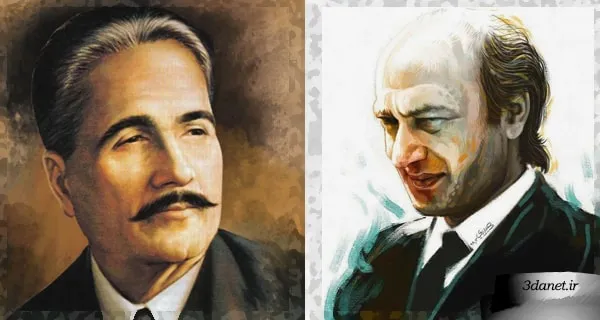
Shariati and Iqbal sought to reconstruct the 'complete Muslim' on the model of Imam Ali—a paradigm that integrates spiritual and social dimensions simultaneously. Their social mysticism forges a multidimensional character devoted both to self-purification and to the alleviation of human suffering.
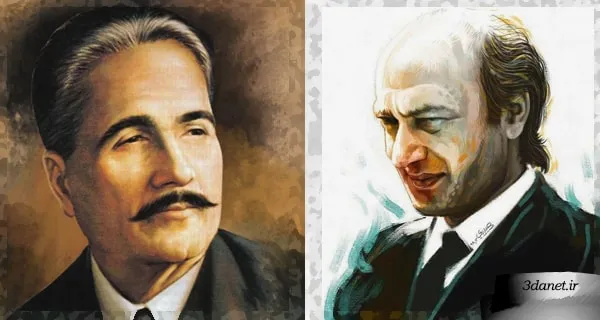
In continuation of the series of writings on socio-political Tawhid, and in the first article of the series on social mysticism entitled “Social Mysticism on the Foundation of Socio-Political Tawhid,” it was stated that because the multi-dimensional monotheist’s Tawhid is not one-dimensional, their spiritual wayfaring is not confined to the individual dimension and is a wayfaring based on social mysticism. It was also emphasized that the school of religious intellectualism, in addition to re-reading the socio-political Tawhid of the first generation of religious intellectuals, needs to re-read the social mysticism of Shariati and Iqbal and the community-oriented teachings of Taleghani, Bazargan, and Imam Musa Sadr, so that once again, from within this school, children like the Chamrans and Hoda Sabers may be born—those who devoted their entire lives to struggle and effort to alleviate the pains, sufferings, and hardships of humanity and to educate and empower them, and to the best of their ability, both articulated the truth and reduced suffering. At the end of the previous article, it was also mentioned that although the social mysticism of Shariati and Iqbal is critical of traditional mysticism and God-centered mysticism and is influenced by Khorasani mysticism and humanist mysticism, it goes beyond Khorasani mysticism within the bounds of humanism. In this article, we will address social mysticism in the thought of Shariati and Iqbal.
۱
What was called the multi-dimensional monotheist in the series of writings on socio-political Tawhid, Shariati called the “Perfect Human” or “Perfect Muslim.” In Shariati’s view, the embodiment of the Perfect Human can be seen in Imam Ali:
“… in this ‘religion of Tawhid,’ Ali, and all the great personalities purely and directly nurtured by the hand of the Prophet and the school of Islam, are like this. These are two-dimensional personalities, a personality exactly like Ali: a man who, in his inner states and ecstasies, recalls a spirit detached from existence, and in his spiritual ascensions, ‘knows the paths of heaven better than the paths of earth.’ Such a spirit, from night till morning, cannot sleep, because: ‘in a distant point of the Islamic society, a human being has gone to sleep hungry.’ A spirit that is so sensitive to the issue of hunger in society, even the hunger of a single individual, in one spot of the earth. It is exactly like a materialistic, people-loving leader who thinks of nothing but the primacy of the material life of the people. And from its other dimension, it is a sage consumed by solitude, silence, and inwardness, who, as if, gives no thought to this entire world! This ‘man of the sword and speech, love and thought, a man from whose sword death rains, and from whose tongue revelation. This man is an ideal human model. These great companions are human models and exemplars that the Prophet and his school present to the history of humanity, mankind, and the Islamic Ummah, so that they may build themselves thus: ‘Perfect Humans,’ ideal exemplars, are the kind of humans whom, in sociology, they call ‘L’.homma.total.’ That is, a human who possesses all the complete dimensions and the ‘total self’ of the ideal human. One of the meanings of Imam is this: the transcendent model and the exemplary human…” (Collected Works 5 / We and Iqbal / p. 30)
In the book We and Iqbal, Shariati believes that Iqbal sought the reconstruction of the complete Muslim, which he built upon the model of Imam Ali:
“… Iqbal is a person who has a worldview, and based on this worldview, and the spiritual-philosophical interpretation he gives of the world and of humanity, he has built his own social school, and based on the culture and history to which he is connected, as far as the building materials of the human being of our century allow, he has built him, as he himself provides the criterion, upon the model of ‘Ali’…” (Collected Works 5 / We and Iqbal / p. 38)
Shariati considers Iqbal a multi-dimensional monotheist who seeks the reconstruction of a “Perfect Muslim”:
«... Muhammad Iqbal is a multi-dimensional Muslim spirit. He not only strove to gather, synthesize, and reconstruct the fragmented dimensions and disintegrated members of Islamic ideology—the living body of Islam, which throughout history has been torn apart by political deceptions and contradictory philosophical and social tendencies, with each piece preserved among a different group—and not only is his "masterpiece" the book "The Reconstruction of Religious Thought," but his far greater masterpiece is the construction of his own novel, multi-dimensional, and complete "self." It is the reconstruction of a "complete Muslim" in his own person. He is a great and precious "self-made" individual...» (Collected Works 5 / We and Iqbal / p. 101)
«.. Muhammad Iqbal is not a Muslim mystic like Ghazali, or like Muhyiddin Ibn Arabi, or even like Rumi, who think solely and exclusively of those transcendent mystical states, and are content only with individual perfection, self-purification, and their own illuminated inner being, or that of a few like themselves, remaining oblivious to the outside world, and unaware of the Mongol invasion, the tyranny of the state, and the enslavement of the people. Nor is he like Abu Muslim, Hasan Sabbah, Salahuddin Ayyubi, and figures like them in Islamic history, who are merely men of the sword, power, war, and struggle, and consider reform, change, and revolution in thought, social relations, and human education sufficient through the exercise of power, force, and domination over the enemy. Nor is he like scholars such as Sir Syed Ahmad Khan of India, who might think that the condition of Islamic society, whatever it may be, even under the domination of the British Viceroy, can be revived through a scholarly modern interpretation, through twentieth-century scientific and logical exegeses of Islamic beliefs and Quranic verses, and through deep scholarly research and philosophical scrutiny. Iqbal is a man who, at the same time, does not, like the West, consider science a sufficient agent for the salvation of humanity, its perfection, and the alleviation of its sufferings; nor is he like those philosophers who present economics and the provision of economic needs as the fulfillment of all human needs; nor like his own countrymen, the great thinkers of India and Buddhism, who imagine the purity of the inner self and the liberation of the spirit from this "samsaric" life and from this karmic cycle into "Nirvana" as the fulfillment of the human mission, and fancy that in a society where hunger, slavery, weakness, and abjection exist, pure transcendent souls, educated and felicitous human beings, and even purified ethics can be built. No, Iqbal, with his school of thought, and fundamentally, with his very existence, shows that the thought to which he is attached, namely Islam, is a thought that, while paying intense attention to the world and the material needs of humanity, nonetheless bestows a heart upon the human being that, in his own words: "sees the most beautiful states of life in the passions and contemplations of dawn and morning.".... Iqbal's greatest proclamation to humanity is this: have a heart like that of Jesus, a mind like that of Socrates, and a hand like that of Caesar, but "in one human being," in one human entity, based on one spirit, and for the attainment of one goal. That is, Iqbal himself: a man who possessed the political awakening of his time at its peak, such that some consider him merely a political figure and a leader of national liberation and anti-colonialism in the twentieth century; and who, in philosophical and scientific thinking, reached a level where in the contemporary West he is considered a modern thinker and philosopher, in the ranks of "Bergson," and in Islamic history, in the ranks of "Ghazali." At the same time, a man whom we know and call a reformer of Islamic society, who contemplates the condition of human and Islamic society, and the society in which he himself lives, and wages jihad for its salvation, awakening, and freedom. He looks, works, and strives not merely as a diversion or academically, or in Sartre's words, in the form of "the intellectual posturing of political leftists," but as a committed and engaged individual. And at the same time, he is also a lover of Rumi, a fellow traveler on his spiritual ascensions, branded, burned, and melted by the fire of love and spiritual pain and anxieties. But a great man who did not become one-dimensional, who did not become fragmented, a Muslim who did not become one-sided and unilateral—that is, a complete Muslim. Even if he loves Rumi, he never dissolves into him, never leans to one side..."(Collected Works 5 / We and Iqbal / p. 33)
Therefore, in the view of Shariati and Iqbal, Imam Ali must be seen as the embodiment of the complete Muslim of the entire school of the Prophet Muhammad. Iqbal also sought the reconstruction of the complete, multi-dimensional monotheist Muslim in the new world. As previously stated, the spiritual wayfaring of the multi-dimensional monotheist also differs from that of other wayfarers, and for a wayfaring befitting this worldview, one must revisit the mysticism of Shariati and Iqbal.
2
Iqbal can be called, in Abdolkarim Soroush's phrase, the
«..Shariati, like his mentor Iqbal, was concerned with change more than interpretation; to the extent that his epistemological and faith-based outlook in understanding the reality of phenomena, and especially revelatory and sacred matters, can be seen as grounded in voluntarism and praxis (thought-based action). Iqbal held that the Qur'an deals with action more than thought, and that "religion is neither mere thought nor mere feeling, but an expression and interpretation of the whole human being" and "its aim is to transform and guide the inner and outer life of man"... This belief, whose highest manifestation is found in the verse "Indeed, Allah will not change the condition of a people until they change what is in themselves," emphasizes the essence of will as the locus of change and sees the path to the transformation and liberation of human beings from inhuman conditions, suffering, pain, limitations, and various forms of social determinism as being made possible through action and deed, and not through a purely theoretical confrontation.. Based on this same doctrine, Shariati also held the view that "the Islam of the Qur'an has replaced heavenly destiny—in which man is nothing—with human destiny, in which man plays an essential role." And in another passage concerning Iqbal's mystical view of man, he says: "Man in Iqbal's mysticism, which is neither Indian Sufism nor religious fanaticism, but Qur'anic mysticism, must change time".. Shariati sees the path to truth and meaning as being made possible in the context of action, and by relying on praxis, in which the human being appears in the full spectrum of existence (thought, feeling, and will), the world is both changed and interpreted, and it is with this outlook that he says: "The interpretation of the monotheistic worldview is made possible through movement," and the disclosure of truth and meaning happens in action, and to attain them one must set out and achieve them through struggle and action, "And those who strive in Our way, We will surely guide them to Our paths." In his view, understanding meaning depends on being on the path of the referent of that meaning. Like the burning sensation felt on the skin from a bullet, and the paths of God are opened and unfold within the heart of action and events. Without action, belief and disbelief in something are equal (being a believer is equal to being an unbeliever), faith and unbelief, good and evil, etc., are realized only after action. In Eagleton's words: "To act is to lose at the very point of trying to grasp".. In other words, truth is not somewhere we go toward; action and truth are born in the process of movement.. Shariati, instead of the primacy of thought over action, believed in the dialectic of thought and action and did not believe that, for instance, to perform religious duties one must first become a knower of the truths of religion, then attain perfection in self-purification and piety (self-reform), and then proceed to the third stage, namely reforming others and taking responsibility for the good and evil of society. He considered these three as parallel, passing dialectically from one aspect to another and from one level to another, and in the field where faith and action overflow, they become intertwined and unfold..»
In the mystical vision of Shariati and Iqbal, in addition to the emphasis on changing the world and criticizing the non-commitment and irresponsibility of traditional wayfarers toward the surrounding world, doctrines such as the unity of being and annihilation in God are also subjected to criticism. Shariati considered the mysticism of the unity of being a form of alienation; according to Narges Souri, Shariati's mysticism was a mysticism of connection:
"...In his book Islamology, where he discusses the types of alienation, Shariati criticizes the mysticism of the unity of being as one of the alienating factors and one of the types of alienation, because, in his view, it causes the human being to become estranged from their human nature and identity. Hence, in opposition to this mysticism, Shariati defends a mysticism that can be called 'mysticism of connection,' 'revolutionary mysticism,' and, in a sense, 'this-worldly mysticism.' The most prominent characteristic of this mysticism is its social nature, that is, its connection and interaction with the social real. Shariati makes this link between mysticism and the social possible by introducing a third pole, which is the element of the 'other,' whose other expressions in his literature are the people (khalq) and the masses (nās)... Therefore, Shariati's mysticism is formed from a triangle whose three sides are God, the mystic, and the people. With the introduction of the element of the people, mysticism moves away from self-reliance and its intrinsic value—that is, mysticism for mysticism's sake—and becomes a mysticism oriented toward the people. Thus, although in Shariati's mysticism there is talk of self-negation, death of the self, self-sacrifice, and altruism (though not in its negative Sufi sense), all of these are for the sake of and in the direction of the other... On this basis, in his thought, self-building and other-building are considered two concomitant matters, meaning that a person, while building the other, is building the self, and self-building is considered a necessary condition for other-building, and they have a reciprocal relationship with one another. In this way, if in other-worldly mysticism self-building requires purifying the self from the other and the alien, and thus seclusion, in Shariati's mysticism the self is fundamentally a concept interwoven with the other, and self-building and even self-awareness are made possible through the existence of the other. For this reason, he emphasizes that someone can create transcendent values within themselves and, in a sense, become God-like by engaging with the fate of the deprived and oppressed people. As we see, unlike other-worldly mysticism—a characteristic Weber also emphasizes in his typology of mysticism—where there is a deep chasm and gap between the lifestyle of ordinary people and the lifestyle of mystics, in Shariati's mysticism this gap is removed, such that interaction and engagement with society and the life of the common people is considered a necessary and essential precondition for the realization of the authentic human self. Hence, this mysticism is a mysticism close to the human realm and sensitive to their fate. If, based on the above discussions, we accept that attention to the fate of the oppressed in the specific sense, and attention to the fate of the masses of people in the general sense, is a fundamental presupposition of Shariati's reading of this-worldly mysticism, then it is possible to understand its connection with the issue of liberation. In 'Revolutionary Self-Building,' Shariati explicitly emphasizes that 'before we are liberated, we cannot, as a human being, assume a role in our time and our society for the class toward which we feel responsible...'
In addition to the importance of God and the people, Iqbal and Shariati have also spoken of the importance of the self in spiritual wayfaring. Soroush Dabbagh writes about the types of selflessness in the fourth article of the collection Sketches of Modern Mysticism:
«Two meanings of “selflessness” (bī-khudī) and “selfhood” (bā-khudī) can be distinguished and recognized. According to the first meaning, “selflessness” entails being transformed and submerged in the Infinite and annihilation in God (fanāʾ fi-llāh). Iqbal Lahori and Ali Shariati rightly criticized this conception of “selflessness” and “annihilation in God” within the mystical tradition, speaking instead of “subsistence through creation” (baqāʾ bi-l-khalq) and highlighting the wayfarer’s free will and volition, considering their exercise as constitutive of a path-opening, captivating, and efficacious mystical wayfaring. Furthermore, another meaning of “selflessness” can be discussed, one that does not entail the dissolution and annihilation of the wayfarer, yet possesses strong ethical and esoteric dimensions. Hence, with regard to Rumi’s ghazal, the components of “selfhood” and “selflessness” in the second sense have been distinguished. Self-infatuation, fragility, being a hunter of gnats; being sorrowful and frozen like autumn, along with covetousness, restlessness, and agitation, are among the constituents of the concept of “selfhood” in the second sense. In contrast, having a broad digestion, not seeing oneself in the midst, being ocean-hearted, loving, being oriented toward the “other,” and hunting elephants; being joyful and glad, and possessing serenity and tranquility, are among the components of the concept of “selflessness” in the second sense. Modern mysticism, as narrated by the author, entails a turning away from “selflessness” and “annihilation in God” in the first sense, and an elevation and adoption of “selflessness” in the second sense, along with an effort to realize its components and constituents within the attitude and conscience of the wayfarer. In other words, one can become “selfless” in the valley of wayfaring and go forth to meet it; but a selflessness that is not contingent upon transformation, submersion, and annihilation in the Infinite; rather, it arrives with attributes such as will, lightness of spirit, and tranquility. In fact, what is condemned and rejected in modern mysticism is “psychological egoism”; for in it, the “self” is central and the “other” is not taken into account. Yet the modern wayfarer, in the words of Henry Sidgwick, is on good terms with “rational egoism” and takes it seriously. In other words, “altruism” and openness toward others, which are central to modern mysticism, do not preclude taking the self seriously in a reasonable manner. “Self-love” and taking the “self” into account and loving it, in a reasonable and balanced way, is of course permissible and adoptable; in contrast, “psychological egoism,” which is intertwined with “selfhood,” self-centeredness, and narcissism, is unjustified. On the other hand, “selflessness” in the first sense is also to be abandoned, for in it, no remnant, identity, or independence of the wayfarer remains, and his existence is dissolved and obliterated, vanishing from the midst...»
He also writes about selfhood and selflessness in the thought of Shariati and Iqbal, and the importance of the role of the “self” on the path of wayfaring from their perspective:
«..Muhammad Iqbal Lahori is by no means in accord with this sense (the first sense) of selflessness and annihilation, and believes that the modern wayfarer must emerge from lethargy and passivity and freely, creatively, and honorably imprint their role upon the page of existence, abandon the former station, and not seek dissolution and absorption on the path of spiritual wayfaring; for mystical wayfaring does not depend on effacement and annihilation in the boundless ocean of being, and another image and conception of mystical wayfaring and the wayfarer can be presented. In his New Gulshan-i Raz, by posing several questions, he challenges the mystical theory of the “Unity of Being” as narrated by Sheikh Mahmud Shabestari and, by extension, other mystics, and emphasizes that with the acceptance of this theory, no remnant of the dissolved and annihilated wayfarer and mystic remains to assert existence, activity, and movement. Hence, contrary to the majority of mystics, Iqbal Lahori believes that the frail and eclipsed “self” must be revived, brought back onto the scene, given centrality, and a spiritual wayfaring that entails the exercise of the wayfarer’s will and choice must be justified and elevated.. Ali Shariati, following in the footsteps of Iqbal Lahori, also speaks of “annihilation in God” and “subsistence through creation,” and believes that the mystic and wayfarer should not become immersed in their personal contemplations, tastes, and ecstasies and pay no heed to concrete, specific human beings; therefore, instead of “subsistence through God,” one must think of “subsistence through creation,” see the pain, suffering, and socio-political afflictions of the people, and set out to alleviate them. Hence, Shariati praised the Sarbedaran movement and was not particularly in accord with mystics such as Bayazid Bastami and Mansur Hallaj, calling them self-alienated Sufis. The dialectical relationship between mysticism and politics in Shariati’s intellectual system and political conduct throughout the different periods of his life must also be understood in this context. The emancipatory aspect of Shariati’s Kaviriyat (Desert Writings) consists of the descended, liberated human setting foot on the earth among the people, for transformation, rebellion, opposition to oppression, and the realization of a classless, monotheistic society. The light-hearted wayfarer who has experienced spiritual solitude in this world, set foot in the “lost realm of existence” and the abode of non-being and nothingness, and attained bewilderment and serenity, thereafter steps into the abode of multiplicity and conventional life, mingles with the people, solves the enigma, and thinks of improving the lives of the human beings beside them...»
Abdolkarim Soroush writes about the role and importance of the “self” in Iqbal’s mysticism:
«.. Iqbal’s poetry must be regarded as the narrator of “self-cultivation” and the negator of “idolatry.” The “self” is the most substantial element in Iqbal’s poetry, and if he is to be called the “founder of a new Sufism,” it is for this very reason. Our old Sufism, in which dignity, free will, initiative, fervor, and striving are reduced to zero, and annihilation, lowliness, and humility sit above them, where being the hunted takes the place of being the hunter and there is no trace of designing and possessing the world, gives way in Iqbal’s poetry to a Sufism whose axis is the “deified human being.” And this God-man, this divine self, with its own special free will, power, invention, and creativity, not only does not renounce the world but conquers it: “Renouncing this ancient monastery: conquering it”... Yes, the Sufis also spoke of annihilation in God, and even beat the drum of “I am the Truth,” but when they donned the garment of divinity and placed the crown of lordship upon their heads, they became an all-embracing, kind, and mystery-knowing god, and nothing more. Not a creating, autonomous, open-handed, role-creating, designing, and powerful god. But Iqbal summons us to this Creator God and to that creativity. He too says takhallaqu bi-akhlaq Allah (adorn yourselves with the divine attributes), but do not forget that “Autonomous” is also among the Divine Names, just as Creator, just as Powerful and Subduer. So take your share of free will, power, and creativity as well, and do not surrender all of this to poverty, incapacity, abasement, determinism, subjugation, and servitude. In old Sufism, abasement prevailed over dignity, and determinism over free will, and even love, when it confronted reason, was sometimes like a blindness that envied the sighted. All of this is inverted in Iqbal’s poetry, and his epic-mystical poetry becomes replete with dignity, free will, and a seeing love that resides in a self made substantial by God and has turned it into a god on earth... Iqbal’s poetry was also a response to the atheist existentialists of his time who said that the small human being, beside the infinite God, is so diminished that nothing remains of them. The import of Iqbal’s words was that the finite human being, through association with the Infinite, becomes so infinite that it is as if no trace of servitude remains in them and they become wholly dominance and autonomy. His poetry is entirely in the service of this dignity-nurturing, autonomy-centered human-divine Sufism... »
Kavous Kiani believes that Shariati and Iqbal, instead of the unity of being, believed in the “unification of existence,” in which the human “self” is not only not dissolved but has a special role, namely becoming the “precious pearl” of the realm of existence:
« ...In the view of the mysticism of the unity of being, including that of Rumi, the ultimate ideal of a mystic is “effacement in God,” “dissolution in God,” “becoming no one,” and in the mystics’ own terms, “annihilation in God” (fana fi’llah). In the mysticism of the unity of being, the human being is a drop that, ultimately, dissolves its “own self” in the “sea” of God’s existence, effaces it, and is annihilated... In the thought of Shariati and Iqbal, we do not believe in the “unity of being,” but rather, as Iqbal said, we believe in the “unification of existence.” We do not seek “annihilation in God,” but rather, we are in pursuit of the “journey toward God.” We do not seek “selflessness” (becoming alienated from oneself / not sensing the “self” / alienation by God), but rather, we seek the realization of the independent human identity of our “own divine self.” We are not after being an identity-less drop (no one) in the sea of existence. Although “in the beginning,” we were a drop that trickled from that sea (inna lillah), and ultimately we wish to join that sea of existence (ilayhi raji’un), our goal, however, is neither to remain a drop, nor to be a drop in that sea, but to become a gem and a “precious pearl.” We too, our desire is to join the sea, and to live in that sea of existence with the other creatures of the universe, but we are not willing to become “selfless,” and lose our identity; rather, with the distinct identity built throughout our life (and a soul and Him Who proportioned it, and inspired it with its wickedness and its righteousness, indeed he succeeds who purifies it...), we will be present in that sea. This insight is found in myths, that the “precious pearl” is formed through the movement and effort of the insignificant drop of water within the wave. And Iqbal of Lahore, in his “philosophy of selfhood,” has sung this becoming a precious pearl of the “self,” within its own shell, in the most beautiful form possible:
Life is to build a gem within one’s own shell,
To plunge into the heart of the flame and not melt...»
Kiani calls Shariati’s theory of mysticism, equality, freedom the vision of the “primacy of divine existence,” whose goal is for the human being to attain Godlikeness:
«..In Shariati’s synthetic theory of “mysticism, equality, freedom,” every human being who seeks individual evolution and social evolution will attain these goals solely and exclusively by relying on all three relationships: the relationship with Being, the social relationship, and the existential relationship. In other words, any human being who wishes to characterize their “self”—in religious language, as “God,” that is, “divine-human values,” and in non-religious language, as “moral-human values”—must achieve this by establishing a constant, loving relationship with the center of Being, in whatever form and belief that orients the path of liberation (the mystical role), by active social presence within the fabric of “society” (the socialist role), and also by striving to cultivate and safeguard the “self,” that is, one’s own divine self, in the arena of establishing the relationship of this “I” with the “other,” which involves making and being made, influencing and being influenced, teaching and learning, loving and being loved, forgiving and being forgiven, and so on (the existentialist role). To put it another way, Shariati has defined his position regarding this historically troublesome triad of “self, people, God” as follows: to convey the “self,” through the “people,” to “God”! ... In the theory of “mysticism, equality, freedom,” which can be called the vision of the “authenticity of divine existence,” every human being who follows this ideal, like the mystics, has a profound existential relationship with the spiritual center of Being. And they are like a drop that wishes to join the sea of existence, but not with the intention of “dissolving” in it, “annihilating” in it, “vanishing” in it, and becoming a drop without identity, merely one drop among the drops of the sea; rather, in the words of Iqbal Lahori, to shine like a “gem” in that boundless sea, and to be the “unique pearl” of the ocean of existence, while preserving one’s own “self” and enjoying eternal existential independence. Every human being who follows this theory, while, like the mystics, being filled with divine love, in constant communion with their God, and a worshipper of divine-human values, in relation to society and in relation to other human beings—each of whom is a member of this great human family, a family in which every member is their brother and sister, and God is the parent of that family—possesses a feeling brimming with kinship, unity, self-sacrifice, and kindness, and is so impassioned that no exploitation should occur, no right should be trampled, and individuals, solely by virtue of being human, and a member of this great human family, and through their effort and work, should equitably enjoy the blessings of life. Such a human being seeks to design and expand the power of humanity’s stirring freedom and choice, and to elucidate the passionate relationship between their “existence” and their “essence.” And they consider themselves in this world a separate, singled-out strand, cast into this desert (the Fall), and this feeling of “separation” gradually draws them toward “solitude.” But such a human being, since, like that mystic, in confronting Being, they are placed in a loving relationship with the “Unseen,” and in that Unseen, they have found divine values, and these values are the criterion, standard, and orientation for every “thought, word, and deed” of theirs, and also the orientation for this precious existential freedom and liberating existentialism, will no longer be drawn from “freedom” to “vagrancy,” and this freedom will become a ground for becoming and becoming and becoming, and for attaining the most precious goal of that eternal, invulnerable, kind one in the creation of humanity: “becoming God-like.”»
۳
Regarding the importance of the “self” in Shariati’s thought, one must also pay attention to his doctrine of Islamic humanism. In Shariati’s theocentric humanism, the human being, unlike in Western humanism, is not the center and axis of their own universe in place of God and alongside God, but rather God’s vicegerent and successor in existence, situated along His axis. This view is also evident in the thought of Imam Musa Sadr. Yousefi Eshkevari writes about Shariati’s humanism:
«..He considers the human being as “Khalifatullah” in the sense of being God-like (in terms of attributes, of course) and God’s vicegerent in nature, and counts qualities such as creativity, wisdom, the power of choice, and freedom as signs of this station; therefore, he believes that the work God does in the universe (creation), the human being does in nature and on earth. He views Adam’s “disobedience,” which in the Quran is realized through Adam and his spouse eating the forbidden fruit, as a symbol of human freedom and free will, and declares that the Quranic human being is not only not a captive of natural or historical determinisms, but is so free that they have the power to disobey even God, and for this very reason, they are responsible and determine their own felicity or wretchedness (it is clear, of course, that he does not mean to say the human being has the “right” to disobey God; rather, his point is that they “can”). From Shariati’s perspective, the human being is the only creature that first comes into “existence” and then chooses its own “essence,” and its tools are consciousness, will, creativity, and the power of choice. Shariati’s human being is a breaker of determinism and can liberate its “human self” from the stocks of the four prisons of nature, society, history, and the self (instincts). In this thought, not only is there no original sin, but despite the inherent contradictions of the human being, the human “fitrah” (primordial nature) is oriented toward perfectionism, truth-seeking, justice-seeking, freedom-seeking, love of virtue, and in a word, “the good”; hence, contrary to the view of some Western thinkers (Machiavelli and Hobbes), man is not a wolf to man, and one can be optimistic about human nature and the possibility of its salvation. The human being in this thought has the capacity to fly from the “mire” to the “spirit,” from dust to God, from the earthly realm (nasut) to the divine realm (lahut), and from earth to heaven, and of course, this constant striving and struggle is carried out by the human being itself; not by God, or the saints of religion, or magic and sorcery, or anything else. This is a path and a possibility for the “becoming” and “process” of the human being, and the prophets are callers toward “guidance” and “justice” and have no right to any kind of compulsion, domination, or exercise of sovereignty over human beings. In the monotheistic religion, there is no “mediator” between the creation and the Creator, and every human being has the power and capacity to contact God directly and without intermediary and attain a “religious experience”...»
Shariati believed that bashar (human being as a biological entity) is a being, and ensan (human being as a becoming) is a becoming, and religion is a path for this becoming and process. Mohammad Bagher Talgharizadeh writes about the difference between bashar and ensan in Shariati’s thought:
«..Therefore, all people are equal in terms of being bashar, but in terms of being ensan, the distance between them is from dust to God. In other words, the more those three characteristics—self-consciousness, choice, creativity—are realized in a person, the further they distance themselves from being bashar and become “more ensan”... But this ensan oscillates between dust and God, and in its course of evolution, that is, the movement from dust or bashar toward God or God-likeness, which has no end, it faces many obstacles, the most important of which Shariati considers to be the fourfold determinisms, and he refers to them as the four prisons of the human being...»
Shariati believes that one can only be freed from the fourth prison through love, love for the other:
«...It is this fourth stage where the human being sacrifices itself. A person who has reached—in a single, very meaningful word that has no equivalent in any other language—the stage of “ithar” (self-sacrifice). Ithar is the stage where the individual, the human being, chooses the other over themselves; ithar means this: choosing the other over oneself. Even when it is the life of another and your life, choosing the other or others over your own life; preserving them, destroying yourself. Here it becomes clear that the human being has chosen one of two deaths, the one that is their own death, whether the death of their life, the death of their benefit, the death of their name, the death of their happiness, the death of their comfort, whatever it may be, whether their bread or their name. From this fourth prison, which is very heavy, terrifying, internal, and unconquerable, every human being can be freed by the power of such a love, a love that can, beyond reason and logic, invite us to negate the self and rebel against the self and trample upon our own being, for a goal or for others. It is at this stage that the free human being comes into existence, and this is the most transcendent stage of becoming ensan. The summary of my remarks: that liberating, creative, self-conscious, choosing human being is freed from the prison of nature through science, from the prison of history through science, and from the prison of the social system through the science of sociology, but from the fourth prison through religion, through love...»
Hamoud Hormozi believes that in Shariati’s view, primacy belongs to the human being and not religion, and considers him a radical humanist:
«..His humanism is founded upon two basic pillars: A —
This social mysticism is based on a monotheistic worldview that can be called, in Iqbal's phrase, "the unity of existence," in which mental-philosophical monotheism and socio-political monotheism carry equal weight, and social conduct in the surrounding world is as important as individual conduct in the personal world, with the path of personal conduct also passing through society. Social mysticism is a humanist mysticism based on praxis (thought-based action); in this mysticism, the wayfarer acts within the triangle of "God, Creation, Self" and, instead of "annihilation in God" (fanā fi'llāh), thinks of "subsistence through creation" (baqā' bi'l-khalq). By adopting a "theocentric humanism" approach, they do not overlook their role within these three sides and build themselves in the path of helping creation through the dialectic of thought, action, and love for the other, and through their sacrifices on this path, they are in a state of perpetual "becoming" and spiritual evolution until reaching God-likeness and the co-suffering of the realm of existence. Unlike traditional mysticism, social mysticism is not heedless of political commitment, the negation of subjugation, and its social commitment in the face of the suffering of fellow human beings, and considers mutual aid, support, sympathy, sacrifice, and social benevolence for improving people's conditions as necessities of the spiritual path. The multi-dimensional monotheist, with their monotheistic worldview and emancipatory awareness, seeks, through social conduct, the empowerment, education, support, and ever-increasing effort to improve the situation of receptive strata and the financially, intellectually, and otherwise dispossessed (mustad'afin), which, in Shariati's words in the book Solitude Dialogues:
"... Mysticism is the highest peak of thought's flight, the most transcendent feeling of the human spirit, and the most beautiful, sacred, and finest movement and leap of the human heart, but for a nation burning in poverty, illiteracy, degeneration, hunger, and disease... what benefit can talk of paradises beyond this world and realms beyond this sky, and gardens, settlements, and springs hidden in the deserts, mountains, seas, and plains of the spirit have, except more suffering than that which already afflicts it..."
If the one-dimensional monotheist thinks only of their personal world, their example becomes the proponents of traditional Islam, whose spiritual conduct is also in the style of traditional mysticism. If they think only of the surrounding world and neglect the personal and epistemic world, their examples can be seen in revolutionary militant groups like Forqan, whose conduct is based on revolutionism and social struggle without acquiring thought; the fruit of the former is passivity and inaction, and the fruit of the latter is extremism and violence. To avoid these afflictions, the multi-dimensional monotheist is obliged, in their worldview and spiritual conduct, to maintain equilibrium and balance in attending to their personal world and their surrounding world.
What Iqbal and Shariati unveiled as the "Complete Muslim" can be seen in the figures of Chamran and Hoda Saber. In subsequent articles, we will address the social mysticism of these two multi-dimensional monotheists who, following the path of the religious intellectualism school, did not neglect engaging in social projects in their spiritual journey, in addition to knowledge and politics.
.
.
God, Creation, Self: Social Mysticism in the Thought of Shariati and Iqbal
Author: Mohammad Qotbi
.
.


Discussion2 comments
شریعتی مارکسیستی بود که اسلام را دستاویز کرد و دانسجویان را فریب داد و در آشوب و به هم ریختن جامعه نقش داشت. تحلیل مارکسیستی دکتر از هابیل و قابیل را بخوانید از خنده روده بر میشودی ولی شوخی نمیکرده واقعی میگفته! این آقای قطبی چه نمدی از عرفان اجتماعی میخواهد بسازد؟
توهین و فحاشی شما حاوی استدلال نیست. معلوم است دل پری از دکتر علی شریعتی دارید!شریعتی مسلمان بود و از سلمان، ابوذر و امت اسلامی می گفت. تحریف کردن شریعتی تلاشی ناموفق است که به علت حسادت محبوبیت وی صورت می گیرد.