Religion
The Active Element of Being and the Way-Opening Companion: Social Mysticism in the Vision, Method, and Character of Hoda Saber
Critiquing the reduction of God to a petty, small-scale figure in official, seminary, and intellectual discourses, Hadi Saber viewed God as a “path-opening companion” active in collective life. He considered a strategic and ongoing relationship with God essential for humanity to become His partner in building society.
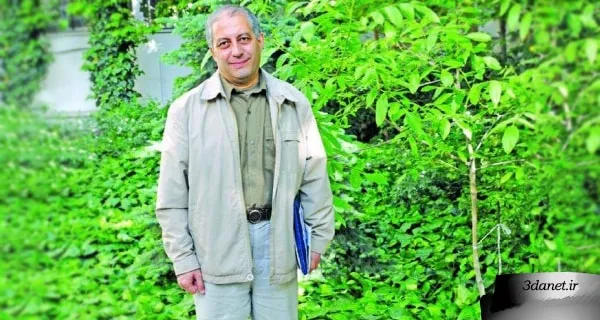
In the first three articles of the collection of articles on social mysticism within the context of socio-political monotheism, which are considered spin-offs and subsidiary articles to the four-part series The Necessity of Reviving Socio-Political Monotheism, we addressed topics such as the importance of social mysticism in the first article, the complete Muslim and the trinity of "God, Creation, Self" and the importance of the human "Self" in spiritual wayfaring within the mystical teachings of Shariati-Iqbal in the second article, and in the third article, we examined the social mysticism of Shariati-Iqbal in the vision, method, and character of Mostafa Chamran and the importance of the role of "Creation" in his spiritual wayfaring. In the final article of this series, we turn to social mysticism in the vision, method, and character of Hoda Saber, and the role of "God" in his spiritual wayfaring within the triangle of God, Creation, Self.
1
Hoda Saber was a critic of "miniaturizing God" in the social sphere, and he also held post-revolution religious intellectuals, along with the seminary-scholastic conception and the conception of official religiosity, responsible for miniaturizing God. In the memorial volume for the second anniversary of Saber's passing, prepared by his students and admirers, the following is stated regarding Saber's critique of these conceptions:
".. The one-sided and narrow-minded reliance of the official religiosity's conception of God on only a few limited attributes of 'Him' in the Quran, such as God's compulsion and vengefulness, and.. the seminary-scholastic conception of God views 'Him' solely through the lens of 'the verses of rulings,' and .. the mystical-intellectual conception of God looks only at the spiritual experience that led to the emergence of the Quran and brackets and silences the verses of the Quranic text... In this conception, God is in a limited orbit and in the private sphere where He relates to humans. The highest form of religiosity is considered to be experientialist religiosity, which seeks 'religious experience,' and it is clear that this experience does not take on a social form; rather, it is something tangible in the individual's spiritual relationship with God. The clear result of this approach to God is His deactivation in collective life and social action. If 'religious experience' is to be formed in the individual's relationship with God and in the seclusion of the home, what immediate social aspect of the human-God relationship can be imagined, apart from the indirect consequences of this relationship? In his 'Bab Bogsha' (Open the Gate) discussions, Hoda Saber was also not at peace with this kind of miniaturizing of God in the social sphere and sought to transform a conception of God that had summoned 'Him' to the realm of private life into another conception of God, in which God is not merely the source of possibility for critical junctures and the individual domain; but the teacher and source of possibility for all individual and collective trajectories and processes.."
Saber believed that post-revolution religious intellectualism, which spoke of a minimal religion, had, wittingly or unwittingly, also transformed the maximal God into a minimal God, and he maintained: ".. In the conditions of impasse and intellectual and social crisis in Iranian society, it is only with the help of the maximal God—God with all His attributes and functions—that one can emerge from the impasse. Of course, in Saber's view, the special need for the maximal God in times of blockage does not mean being able to dispense with the maximal God in times of openness and relief..."
Critiquing the miniaturization of God in the social sphere by the three aforementioned conceptions, Hoda Saber spoke of a new conception of God, called the conception of God as the "Way-Opening Companion":
«..In the “Bab Bogsha” (Open the Gate) discussions, Saber sought a new formulation of a conception of God that presented God as the source of possibility, resource, and efficacy in all individual and collective trajectories; a God who is disposed to change and partnership with humanity, and upon whom humanity can rely to build and to advance itself, its surroundings, and its society. From the perspective of Martyr Saber, this conception of God is far closer to what we observe of God’s attributes and actions in the Final Book (the Quran) and the book of history than the three aforementioned conceptions...The God who is the “Way-Opening Companion” surges throughout the Quran, and a vast range of the Quran’s signs (verses) affirm this conception of God—that “He” is disposed to partnership and cooperation with humanity; disposed to establishing a continuous relationship, and considers humanity not as a slave with a ring in its ear to commands and orders, but as possessing dignity and as God’s vicegerent on earth for building, partnership, and cooperation with Him; and the meaning of being a servant of God is also derived from this all-times, continuous relationship of humanity with God..»
The conception of God as the Way-Opening Companion is an attitude arising from socio-political monotheism:
«..Although from one aspect, “Bab Bogsha” was a kind of questioning and research-oriented approach to the Quran as the highest product of the relationship between humanity and God, from another aspect, it was a broader exploration of monotheism with a socio-strategic (not theological-doctrinal) approach, pursuing a concrete and practical goal: bringing “God” into daily life, collective trajectories, and social action. “God” here is not as a subjective God, a concept, a merely identity-bestowing source, nor as a mace-wielder at the crossroads of history, a tool for eliminating dissenting voices, negating partnership and the active role-playing of humanity, nor as a small-scale God, confined to the private sphere, inactive in the social arena, but rather as the source of possibility, possessing resource and efficacy, having an active role in the life of the individual and society, disposed to partnership and companionship with humanity, and the Way-Opening Companion...»
Taghi Rahmani writes about Hoda Saber’s conception of God:
«..Hoda’s conception of God in the Quran and his manner of encountering the sacred text is a continuation of the tradition of a specific intellectual current that Taleghani initiated. This perspective is neither jurisprudential nor philosophical. Rather, it has a scientific approach, in the sense of the exact and human sciences. But the philosophical perspective and the seminary perspective are absent from it».
Saber believed in humanity’s partnership with God in existence. He spoke of humanity’s partnership-seeking with God in commemoration of Ayatollah Taleghani and in the Way-Opening Companion speech:
«...Men! Women! Co-religionists! God, the Lord, is exceedingly partnership-seeking. God, with all His omnipotence and absolute knowledge and abilities, in the path of the moment-by-moment changing of the world, seeks to provide the grounds for humanity’s partnership. He does not take away possibility from humanity and then say, “Participate.” He does not crush humanity and then say, “Express your opinion.” He does not wither the seed of thought and then say, “Form a council, be active in the council.” God, the Creator, Lord, Bearer of glad tidings, Way-Opener, bestows possibilities, nurtures humanity, then chooses, and then gives the arena. And with all His authority and absolute self-sufficiency, He says to humanity, “Come in”; God says to humanity, “Come in.” In this sense, He is the Way-Opening Companion and the chivalrous one at the crossroads of the history of the world of possibility».
Saber was a critic of a tactical and episodic relationship with God and spoke of the necessity of a sincere, continuous, all-times, and strategic relationship with God. In the early sessions of the Bab Bogsha course, he says:
«The necessity of a sincere, continuous, all-times, and strategic relationship with God means a relationship that is not tactical, not with trickery and deceit, not out of caprice, not cornered, and not occasional. In other words, continuous companionship... in the sense that we do not become captive to the existing epidemic and conventionalized manner of dealing with the Lord in an occasional and tactical way, and that we can maintain propriety with Him»
Hoda Saber held the “Bab Begosha” (Way-Opening) sessions at Hosseiniyeh Ershad to elucidate this type of relationship, one of the discussions of which was “The Functions, Wisdoms, and Assets of God.” The axes of this discussion included God the Designer-Engineer, God the Creator, the strategic view, the process-oriented approach, the stage-by-stage system, the historical view and historical analysis, God the Possessor of Ideas, God the Source of Inspiration, God the Origin of Love and Hope, God the Source of Energy, God the Preserver, God the Guide, God the Confirmer-Supporter, God the Refuge, God the Delegator, God the Source of Possibility, God the Responsible, and God the Ideal-Bearer—these very headings revealing Saber’s perspective on God. He believed: “A tactical, instrumental, triangular, and episodic approach to God is reprehensible under any circumstances, and this is the explicit text and repeated emphasis of God in the Final Book…” and he sought to elucidate a continuous, reciprocal, and participatory relationship between God and humanity:
“…Here, the discussion is about a ‘special emphasis.’ That is, if the human relationship with God must, under all circumstances, be characterized by continuity and sincerity, then in times of crisis and blockage, recourse to God’s assets and functions becomes a hundredfold more necessary. And this special emphasis is linked to the dynamism and vitality of the human relationship with God: to the extent that a person is serious in their relationship with God and walks the path of servitude, to that same extent, God makes that person a locus for the descent of His grace and mercy. God’s mercy is not without rules; it is the degree of questioning and inquiry of the human type that determines the extent of their benefit from God’s capacities and assets. Therefore, the meaning of the special emphasis on the maximal God in times of crisis is that, as necessitated by the existing deadlock, the human being must adopt a redoubled and more serious approach in their relationship with God, so that they may, to the same proportion, benefit from God’s assets. The ‘Bab Begosha’ discussions were nothing other than an elucidation of this very continuous and all-times relationship between God and humanity and the possibility of humanity benefiting from God’s assets and functions…”
Kamal Razavi writes about Saber’s intent regarding God’s assets and functions:
“…Essentially, the ‘Bab Begosha’ discussions were aimed at negating an instrumental and tactical approach to God and emphasizing the necessity of a continuous and strategic relationship with God. Therefore, when Hoda Saber speaks of God’s assets and functions, it is neither the everyday and handy functions of God in conventional religiosity, nor the function in its conventional sense in social science theories. God’s assets and functions mean how God, in the course of the relationship with humanity, enables the willing and active human being to benefit from His continuous blessings and possibility-creations in existence, and what the change-oriented human type can borrow from God as the Creator, the Active, and the special Overseer of existence to advance their social life…”
2
Therefore, from Saber’s perspective, the God who is the Way-Opening Companion is a maximal God with whom the human being has a sincere, continuous, all-times, and strategic relationship, and who is disposed to cooperation and partnership. Saber called the cause of our society’s current condition the state of the absence of the sense of God, which stemmed from the crisis in society’s relationship with God and the “separation from existence and not being an active member of existence” of the individuals in society. In the memorial volume for the first anniversary of his passing, it is stated regarding Hoda’s view on this deficiency:
“…Whether in his lecture series ‘Eight Thousand, a Thousand Needs’ or ‘Bab-e Goshā’ (The Way-Opener), Hoda Saber presented this understanding of the existing conditions: that every social action demands its own epistemological foundation. Considering the account he gives at the beginning of ‘Bab-e Begshā’ of the social situation and the social, political, intellectual forces and social activists, he identified the void of the era as a doctrinal and strategic bewilderment and perplexity, the notion of a vicious circle, and the ‘absence of the sense of God’ and His expulsion from relations. In his view, this bewilderment had led to passivity, widespread despair, and a lack of a sense of life in various arenas of social existence… Saber articulates the crisis thus: ‘The feeling is that we are trapped in a two-way dead-end alley of existence, we have no escape route, no one supports us, God is retired and has abandoned us without a compass, and He actually plays the role of a brake, and the police?’ Yet he believed that one should not camp out in doubt and crisis, and that to exit such a situation, one must contemplate a ‘remedy for transition.’… Delving into this situation, Saber saw the crisis as multifaceted and octopus-like: psychological, doctrinal, conceptual, ethical, and ultimate. He then unpacks the core of the crisis through a three-windowed understanding: ‘the crisis of cognition, the crisis of position, and the crisis of relationship’ with ‘God.’ He considers the fruit of this multifaceted crisis to be ‘separation from Being and not being an active member of Being’… Saber regarded the current period as the end of an era and a turning point, an era in which religion, God, the changing and ideal-bearing human-centered subject, and monotheistic thought have been cast aside. Hence, to exit the current intellectual, political, and strategic impasse, he calls everyone to a fundamental summation of the situation—a situation that has become famous as the ‘era of transition,’ yet our mode of confronting it is as if it were a ‘permanent waystation.’ Therefore, he proposes understanding the crisis, accepting the crisis, and an analytical relationship with the crisis. In this section, after the preliminaries and explaining his angle of entry, Saber draws us into the ground of pre-explanation. In this pre-explanation, he considers ‘farewell to one conception and greeting and equipping oneself with a new perspective’ as the means and definition of phase zero and an injection of fresh blood into the situation: farewell to and abandonment of the tenant-like conception within Being, the conception of a small-centered God, and any other conception that has led to the current situation; and greeting to a new vantage point in the relationship between humanity, God, and Being—a conception in which we are a sharing, role-playing, and participation-seeking member of Being. Hence, a new idea must also be built in light of this new conception, a conception that is ‘a rising from within doubts and questions’ and seeks to correct relations and, of course, within its core, to reconstruct principled relations with ‘God, Being, and society’—a God who is neither the commander of the garrison, merely wielding the stick of His authority over the world, nor merely the God residing in the corner of the heart, whom many religious intellectuals confine and do not count ‘God’s vote’ due to their own intellectual tyranny and dictatorship; a God who is only good for a heart-warming intoxication in isolation and abstraction, although this explanation, with its mystical approach, bears no relation to the active God in Being and the God who aids society in the Quran… Saber’s Bab-e Begshā begins from doubt, questioning, and diagnosing the crisis, and by elaborating on the tenant-like feeling and inactivity, the bewilderment and confusion in the existing state, pursues the necessity of exiting the crisis with an effective method. It then puts forward the philosophy of creation and the model of the Abrahamic companionate relationship. In the next stage, it proceeds to identify the active capacities and assets of Being itself, and step by step seeks to establish ‘a bond with this primordial intimate.’ The output of Saber’s work [though it remained unfinished] tends to remind us that the human subject is based upon the macro-foundation of Being…”
Abutaleb Adinehvand considers Hoda Saber’s goal to be the building of the “active element of Being” and his approach a continuation of the project of Engineer Bazargan and Dr. Shariati within an motivational and social approach to religion:
«..Hoda Saber viewed the current situation of Iranian society as akin to the Battle of Uhud, where forces suffer from ideological-motivational, strategic, and organizational vertigo. In his perception, the crux of the crisis lay in the epistemological foundations that left forces bewildered and passive. Therefore, in this regard, he sought to establish an epistemological basis that, in its targeting of human beings, would create
«..جهانی را كه ما در آن میزييم، در آن تنفس میکنيم و خود نيز جزئی از آنيم جانی است؛ جهان را جانی است. جهان را جانی است مركب از چند عنصر: خلق اول، خلق جديد و پياپی و مستمر، پرورش، هدفداری، تغيير، دگرگونگی و صيرورت...خدا را ساعت ساز لاهوتی تلقی كردند و لقب دادند. خدايی كه خلق اول را انجام داده، ساعتی را ساخته و كوک كرده و خود از عرصه كنار است و در مدار، غير فعال. در كتاب آخری كه برای هر چه به زيستن بر ما نازل شده است، عناصر متشكلهی جان جهان با ادبياتی ويژه و پر عمق موج میزند. خلق جديد؛ پرورش؛ اصطفا؛اجتبا؛ خلق جديد دال بر اكتفا نكردن به خلق اول، ادامهی خلق و استمرار خلق، بداعت و آفرينندگی خدا، در يك كلام ديناميسم جهان و عناصر تشكيل دهندهی آن... پرورش: مويد نقش پروندگی خدا مستقل از خالقيت بودنش، هم خلق هم پروراندن، وجه ربوبی خدا و رابطهی پرورشی و آموزشی ميان پروردگار و انسان مخلوق، خدا هم تجهيز كنندهی بشر به علم، هم رهنمون كنندهی او به مسير رشد. اصطفا و اجتبا: به مفهوم جعل، به سوی خود جذب و جلب كردن، گزينش و فراوری، و به عبارت دقيقتر در يك روند فراورانه برگزيدن و به جايگاه رساندن. خدای خالق، همزمان با خلق جديد و مستمر به طور جدی برای ايفای نقش انسانهای اهل خلق، اهل تغيير و اهل بهبود زندگانی مردمان زمينه فراهم میآورد...از ديرينهها، از دوران اديان رسمی تا كنون دو تلقی اصلی از خدا وجود داشته است: خدای كلاسيك غيرشامل و خدای ديناميك همهجا و همهگاه شامل. در تلقی اول يا تلقی كلاسيك از خدا، خدا صرفا خالق، نگهدارنده، منذر، بازدارنده، تنبيه كننده، عبوس، خشن، دور دست و محدودمدار است. و در تلقی دوم، خدای ديناميك ،خدايی است كه ضمن خلق و نظارت و انذار ، پيشبرنده ، مبشر، مشوق، انگيزاننده و رفيق و رهگشای راه نيز هست. بس مهم است كه طيفی كه خدا را خدای كلاسيك میپندارد، خود چند ويژگی بروز میدهد: حفظ وضعيتی كه هست، محاسبهگری محض، ريسك ناپذيری؛ اما طيف ديگر كه خدا را هم خالق، هم پرورنده، هم منشا تغيير و هم مبشر و راهگشا میداند و رفيق راه؛ خود اهل نو به نويی است، اهل خلق است، اهل ايده است، منش دارد، محصول دارد، دستاورد دارد و ارمغان دارد...در مسير بشر يك اتفاق بس تاريخی افتاده است، رخدادی نه خود به خودی و نه از سر سلطه، كه آگاهانه و از سوی پروردگار؛ آن رخداد چيست؟ برگزيدگان مسير اجتبا و اصطفا از انسانهای طيف دوم بودهاند و نه از انسانهای طيف اول!..رشد در كتاب به معنای راه نشان دادن، به كمال رساندن و ارتقا دادن است...رشد و اصطفا كه ممزوج شود، از آن ابراهيم سر برون میآورد. در مورد موسی واژهی صنع به كار رفته است...صنع به مفهوم ساختن توام با پرورش. از آنجا كه خدای پروردگار به كل بشر نظر دارد، سير اجتبا، اصطفا و رشد را ذيل كادر انبيا و در سطحی متفاوت با رسولان صاحب وحي به ديگر انسانهای مستعد نيز تعميم میدهد...»
استعاره شمع چمران را در مشی هدی صابر می توان تحت عنوان استراتژی کرم شب تابی دید، آدینهوند درباره این استراتژی در بینش صابر مینویسد:
«..Saber considered work fruitful only when it rested on a clear and specific epistemological and strategic foundation. His epistemological foundation appears to be his own account of God’s conception of humanity, the project of Adamhood, and the self-sacrificing human as the agent of change, which he elaborated in detail in his series of lectures “Bab Begosha” (Open the Gate), so that the “active element of being” might emerge from those concepts. His strategic foundation, in turn, goes back to the lecture series “Rah Hasht Faraz, Hezar Niaz” (The Way of Eight Summits, a Thousand Needs), which offered a grand summation of eight episodes of struggle in Iran’s contemporary history. He believed that desirable activity meant participating in a process-oriented activity in which, simultaneously with this process-oriented activity, real and objective transformation occurs in people’s lives across various spheres of social life. This means that activists should be so organized that, while active in the public sphere, they can momentarily alleviate the objective, everyday pains and sufferings of the people. Thus, an active element of being, through his process-oriented presence, shoulders some of the countless burdens left on the ground of this realm... Based on that epistemological conception set out in “Bab Begosha,” which yielded the “active force of being” as the strategic agent, and also on his strategic summation of contemporary history with its content of “process-oriented participation leading to objective transformation commensurate with objective needs,” Saber presented a course of action for its realization within his thought. Saber would quote Samad Behrangi: “I do not want to be the world-illuminating sun and light up everywhere; rather, I want to be a firefly that lights up my surroundings.” Through the mass multiplication of “fireflies” in a convergent process, everywhere will be lit up... The Azeri teacher, Mr. Samad Behrangi, was right when he said in his tales: “The firefly said: ‘My rabbit friend, I always strive to light up the dark gatherings of others, to light up the forest, even though some animals mock me and say: “One flower doesn’t make a spring; you strive in vain to light up the dark forest with your meager light.”’ The rabbit said: ‘That saying belongs to the old-timers; we say: “Light, however meager, is still illumination.”’... That epistemological conception set out in “Bab Begosha” yielded the “active force of being” and the strategic agent within the sphere of process-oriented activity. Therefore, the basis for realizing the sphere of process-oriented participation and activity is the active element of being, trained and equipped with ideas, organization, and a problem-solving approach in activity...»
In Rahimpour’s view, empowerment in Saber’s perspective is a prelude to active membership in being:
«..In explaining the strategic relationship with God, Hoda Saber believed in active membership in being. This active membership in being has two fundamental aspects. First, it is extendable to every single human being, and second, it requires a project. But the prelude to all of this is becoming empowered, in the sense of discovering capacities and moving in the direction of individuals’ inner competencies... He saw the universe as the arena for the gallop of middling humans and called upon the mediators to participate in being. From this visionary proposition, he found a path to development, and in his economic literature he emphasized the proposition that “the world is the world of the middling.” For this very reason, he defended the strengthening of the national bourgeoisie as a national program for the growth and protection of the country’s material and spiritual capital... With a deep understanding of the world of the middling, he shaped a dual-sided programmatic goal-setting that, on the one hand, believed in discovering human capital and, on the other, considered its empowerment. To put it more precisely, the creation of equal opportunities is the product and fruit of the empowerment of each and every individual. Hoda Saber considered empowerment a responsibility that, on the one hand, was rooted in his developmentalism in the social and economic spheres, and on the other, counted as an effort toward active membership in being, which was rooted in his visionary concepts and worldview..»
Hoda Saber believed that the capacity of the active elements of being must be placed in the service of “social empowerment,” in the words of Mojtaba Najafi:
“...Saber, for the realization of the radical, had arrived at a social reading of politics, according to which the capacity of the active elements of being must be placed in the service of ‘social empowerment.’ In Saber’s view, social empowerment meant challenging social crises, a challenge that itself provided a ground for constructing individuality. Hoda Saber, like proponents of radical democracy theory, believed that human individuality is constructed in interaction with the collective, and that the isolated individual has not attained the true characteristics of a human being. Based on this view, to the same extent that we participate in building society, our individuality is also formed in the process of this very effort to build. This was the theoretical basis that drew him from Lorestan to Khuzestan for teaching, and sent him off to Zahedan to acquaint deprived youth with the world of business. Fundamentally, Hoda Saber can be introduced as a praxis-oriented figure whose ideals all serve his pragmatism. It was this praxis-oriented characteristic of his that drew God down from the heavens to the earth, placed Him in the service of humanity, and positioned Him not as a judge but as a friend; a kind of social mysticism that saw the path to God through helping human beings and striving to reduce their pain and suffering...”
Reza Alijani writes about the importance of empowerment in Saber’s thought and action:
“He considered the empowerment of ‘the human being’ a fundamental agent of ‘change’; a change upon which he staked his life and soul. A change he considered the foundation of ‘existence,’ and he saw ‘Him’ as the supreme companion of this path and the comrade of all strivers on this way. And he himself was thus, and he himself did thus...”
Saber also attached great importance to the category of education, and due to his liberating consciousness-raising approach, he was called, like Shariati, the martyred teacher among his students:
“Hoda Saber spent years researching and working in the fields of development, social harms, social institutions, the student movement, sports, championship, and so on, and also conducted deep research on the contemporary history of Iran’s struggles and the Quran, the results of which were presented in the years 2006 to 2010 in the form of two series of lectures entitled ‘Eight Ascents, a Thousand Needs’ (75 sessions) and ‘Open the Gate: The Necessity of a Continuous and Strategic Relationship with God’ (69 sessions) at Hosseiniyeh Ershad. The ‘Open the Gate’ lecture series remained unfinished with Saber’s arrest in August 2010, but Saber’s efforts continued. In prison, until his passing, he continued teaching the contemporary history of Iran and the Quran...”
In addition to holding epistemological and historical classes for students and his research on economics and social problems, like Chamran, he also engaged in empowerment activities, but in the deprived areas of Iran:
“Saber not only became a helper to the families of political prisoners but also had one foot in southern Tehran and the margins of the capital, concerned for the homeless and working and street children, and one foot in the remote corners of vast Iran, such that he traveled to the farthest reaches of Sistan and Baluchestan.” “At one point, he accompanied the marginalized and the unemployed and deprived youth of Sistan and Baluchestan. The implementation of two projects, ‘Development of Basic Skills’ and ‘Formation of Entrepreneurship Groups and Bankability Training’ in the informal settlements of Zahedan in June 2009 was the peak of this effort. The main goal of the project was the development of basic empowerment skills and capacity building for the communities of the informal settlements of Zahedan city. About 900 residents of these areas—with an emphasis on women and youth—were to acquire capabilities through skills and technical and vocational training so that they could create job and income-generating opportunities for themselves in the local or Zahedan labor market... In another similar effort, before Zahedan, he also had an effective presence in Khuzestan and Masjed Soleyman in empowering 250 youth from Khorramshahr and Abadan...” Today, a decade after Hoda Saber’s efforts in Zahedan, the projects of this active element of being have borne fruit, and 186 female heads of households from the villages on the outskirts of Zahedan are selling their products with job skills, and 170 children are being educated at the Hoda House.
As mentioned earlier, Saber considered the current state of the world the era of the agency of the average and the small. Aboutaleb Adinehvand writes about striving to the extent of one’s capacity in Saber’s thought:
“…Our world is distancing itself from the vertical hierarchical system, and the network society has inclined the world toward horizontal relations, providing an opportunity and possibility for the role-playing of the public. Saber believed that in the current state of our lifeworld, it is the era of the agency of ‘the average and the small,’ and this leads to an increase in the coefficient of participation in the world… The average and the small pursue their actions within micro-institutions and, instead of acquiring power, lay the foundation for the issue of the common good… In explaining the role-playing of ‘the average and the small,’ inspired by Samad Behrangi, Hoda Saber spoke of the presence of a ‘firefly’ everywhere, and the achievable, widespread illumination of the firefly, instead of becoming a world-illuminating sun, deferred to an unknown future…”
Saber also mentioned this subject in his political testament:
“…Our Iran is a part of existence; an existence active in essence, a participatory existence, an existence that creates opportunities and grants possibilities to the human being—the questioning, seeking, root-working, and transforming human being… In the depth of our striving for the well-being, welfare, and future of 13-year-old prostitutes, female heads of households, men ashamed by poverty, and for the masses of unemployed under the wheels of the harsh chariot of the economy, and for the peace of mind and comfortable life of the followers of all religions and all ethnicities, and beyond that, for the national future and the lofty standing of the Iran of Arash-Mossadegh in the world, we strive; a striving on the scale of an average human being with their own particular shortcomings…”
3
Hoda Saber believed that an active member of existence and a human being centered on change requires “character” (manesh); hence, he was a critic of the characterlessness of society and intellectuals. In the words of Javad Rahim-Pour: “Hoda Saber’s ideal human being was the human being centered on change. This human being defines a project and brings it onto the dotted-line path of transformation. Of course, only human beings with character can advance their project and steer through the midst of circumstances… Character is the altruism of interests and the sharing of interests and possibilities; without character, human beings fall into the abyss of various forms of conservatism. The lowest level of conservatism is exiting the orbit of change and pursuing purely individual interests. The pursuit of group interests and the exclusion of others is also a kind of upgraded conservatism… But a person of character shares interests without regard to class or any other social distinction…”
Mohammad Rezaei writes about character in the thought and practice of Hoda Saber:
“…‘Character’ (manesh) in Hoda’s view is ‘belief’ in absolute and transcendent moral values and ‘striving’ to ‘become morally habituated’ to them in individual and social life. ‘Character’ is a kind of ethical living that sets constraints for the individual’s action towards themselves and their society. These constraints are permanent and enduring and cannot be ignored or even temporarily set aside under any ‘expediency.’ ‘Character’ from Hoda’s perspective is moral values concretized in individual practice and social action, which always accompany the individual in every method and insight. Furthermore, ‘character’ is an indicator for moving away from or closer to individuals, forces, and currents…”
For this reason, Saber undertook a re-reading of change-centered human beings of character in history and constructed models from them:
“…He sought the ‘lost character.’ He explored the ‘lost character’ that is ‘searchable’ and realizable. Saber believed that ‘exhuming graves’ pleases neither God nor history. He said: One cannot invigorate ‘present stagnation’ with past ‘glories.’ And he added: Just as the ‘conservation of energy’ is a ‘principle,’ the ‘conservation of love’ and the ‘conservation of character’ are also ‘principles.’ He believed that finding character and ‘updating’ it is pleasing. And he emphasized that the discussion of ‘character’ (manesh) is separate from ‘method’ (mashi): ‘Methods, in accordance with conditions, are changeable, but characters are enduring. He would ‘update’ and re-read the character of Hanifnejad, Takhti, Taleghani, and Bazargan.’
The importance of character in Saber’s view is such that Kamal Razavi considers character to be the soundtrack of Saber:
“…Among Saber’s achievements in the 2000s, two of his works are centrally focused on reviving the status of character: the special issue ‘An Empty Space, a Green Space’ for Takhti (Cheshmandaz-e Iran magazine) and the book ‘Three Allies of Love’ for the founding Mojahedin. But apart from these two works, whose main orientation and ultimate goal is to prod the audience toward an approach to character and to present an objective model for its realization in social and political life, in the vast majority of Saber’s discussions one can observe a thread of emphasis on character; as if this emphasis is the background music of Saber’s discourse…”
It was this very heroic character that was the reason for his attention to and agency in the tradition of chivalry and heroism in Iranian history, in Razavi’s words:
“…Hoda Saber was interested in Iran’s heroic heritage, and this interest had two aspects: first, the fondness he had for Iran’s heroic sport, and second, the character crystallized in heroes of spiritual conduct. In a joint research project titled ‘The Heroic Heritage,’ Hoda Saber sought to recover and historically delineate the life of heroism in Iran. In this context, Seyyed Hassan Razaz had a considerable influence on Saber; so much so that he names him as one of the models bearing character…”
Saber also had great interest in Mohammad Hanifnejad and the founding Mojahedin, and in the book Three Allies of Love, he revisited their vision, method, and character, re-examining their study and training work, their founding and organizational process, their seriousness, perseverance and character, their sense of social responsibility, and so on, calling them the foremost youths of the era. Saber’s model was Mohammad Hanifnejad, but unlike the two students of Engineer Bazargan—Mohammad Hanifnejad, who was an urban guerrilla, and Mostafa Chamran, who was a military guerrilla—Saber was not a proponent of armed and violent struggle. Hoda became renowned as a civil guerrilla, a guerrilla similar to Bazargan himself, whom people called the “Old Guerrilla,” based on a nickname given to him by the French magazine Paris Match.
Based on what has been said, it can be succinctly stated that: The Way-Opening Companion God is a maximal God with whom the human being has a sincere-hearted, continuous, all-encompassing, and strategic relationship, and a God of cooperation and partnership. The human being’s relationship with God in this conception is two-way and all-encompassing, and the possibility of the human being benefiting from God’s assets and functions is possible, and the human being must have a redoubled and more serious approach in relation to God in order to benefit from God’s assets to the same proportion. God’s assets and functions, meaning how God, in the course of the relationship with the human being, makes the willing and active human being benefit from His continuous blessings and possibility-creations in existence. In this relationship, the human being is a participating, performing, partnership-seeking member and the active element of existence. In this strategic and partnership-seeking relationship, the active members of existence define a common project with God, and God will also participate in the project based on their credibility and sincerity. The human-centered strategy of change is “the attainable, realizable illumination of a pervasive firefly”; they are a human being bearing character, a character that leads to altruism, adherence to principles, observance of ethics, having principle, and chivalrous and heroic action.
The multi-dimensional monotheist (the complete Muslim) is a human being who has become an active member of existence, is the human-centered agent of change, is in a strategic, all-encompassing, and partnership-seeking relationship with God, is a performing and participating member of existence, has a project, is principled and bears character, and is an enabler. They have a practical approach and are action-oriented. In their worldview, monotheism is not one-dimensional, nor is the mysticism in their conduct. Within the environment of the trinity of God, creation, and self, they move in their social mysticism, which is a humanist mysticism, existential monotheism, based on the maximal God and the Way-Opening Companion God. They seek God’s address from the city of creation and, with their God-centered humanism, to the extent of their capacity, like a candle, like a firefly, they bestow light, and in a partnership-seeking and project-oriented relationship with God, they engage in empowerment and alleviating the pains of creation, and through this, they undergo becoming and are placed on the path of God-likeness and the pain-knowing of the realm of existence.
The path and environment of movement and the role of the “self” in spiritual wayfaring were delineated in the first article through a rereading of Shariati-Iqbal’s views on mysticism. In the second article, the nature of the relationship between the self and “the people” was shown through a rereading of Chamran’s vision, character, and method, and in the third article, the nature of the relationship between the self and God was shown through a rereading of Hoda Saber’s vision, character, and method. This monotheistic worldview (encompassing mental-philosophical monotheism in the personal world and socio-political monotheism in the surrounding world), with its own mystical path and spiritual wayfaring (encompassing individual wayfaring in the personal world and social mysticism in the surrounding world), also requires a theological framework, which can be called a “cooperative liberation theology” based on the community-oriented and institution-oriented teachings of Bazargan, Imam Musa Sadr, and Ayatollah Taleghani. This article is the final piece in the series on social mysticism, and the subsequent articles will be a summation and framing of the preceding eight articles and a roadmap for presenting a theological approach based on the thought-system of religious intellectualism, which will be published in continuation.
.
.
Series of Articles on Social Mysticism in the Context of Socio-Political Monotheism:
Part One: Social Mysticism on the Bedrock of Socio-Political Monotheism
Part Two: God, the People, the Self: Social Mysticism in the Thought of Shariati and Iqbal
Part Three: The Progressive Love and Ascending Love of the Mystic Guerrilla
Part Four: The Active Element of Being and the Way-Opening Companion: Social Mysticism in the Vision, Method, and Character of Hoda Saber
Author: Mohammad Ghotbi
.
.




Discussion1 comments
خدا بیامرزدش. چقدر غریب و ناشناس از دنیا رفت.