Religion
Liberating Consciousness and Utopian Energy in the Thought of Shariati and Iqbal
In the thought of Shariati and Iqbal, tawhid is a dynamic concept for liberating humanity from earthly bondage and integrating the spiritual with the material; a liberating consciousness and utopian energy that channels faith into praxis and social transformation.
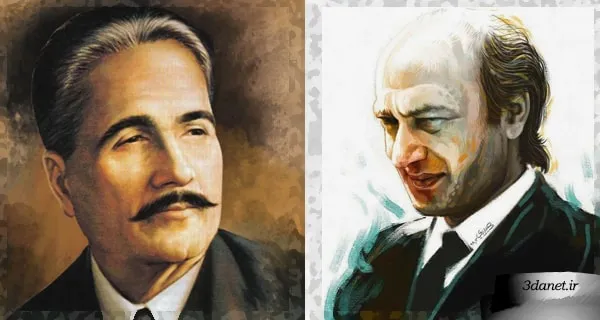
In the previous article, the categories of servant religion, institutionalism, and social cooperation in the thought and practice of Imam Sadr and Engineer Bazargan were discussed, and it was emphasized that to achieve tawhid and a humanistic conduct, one must first have a humanistic reading of religion itself, and that for "worshipping God through creation" in the modern world, attention to institutionalism and social cooperation is essential. In this article, drawing on the teachings of Shariati and Iqbal, the liberating consciousness that motivates the wayfaring monotheist and the utopian energy that leads to the continuation of this movement, praxis, and change will be examined.
1
As stated in the second article of the series on social mysticism, Iqbal presented a new perspective on tawhid; the unity of existence instead of the unity of being. A tawhid that causes dynamism, movement, and vitality and, in the words of Hassan Mohaddesi, leads to the complete integration of the spiritual and the material:
..»The challenge for Muslims to transfer the principle of Tawhid – the very essence of faith – into the praxis of life for reconstruction [was] fundamental to Iqbal's [conception of] religious thought. Over the centuries, traditional scholars had presented Tawhid to Muslims as a refined theological concept, distant and detached from their daily struggles. Iqbal sought to “transform Tawhid into a living factor in the intellectual and emotional life of humanity.” For him, the oneness of God signified the oneness of life itself – the coherence of the political, economic, social, cultural, and other dimensions of human experience within an organic unity through spiritual and moral values rooted in a transcendent truth. Thus, Iqbal “makes God the sustainer of this world, now with us in confronting our problems from within, creating a new and better world; with us and through us.” By actualizing Tawhid, Iqbal, in a sense, gave a dynamic new meaning to loyalty to God, or revived the meaning that the early Muslims had given it. In his words, “since God is the ultimate spiritual basis of all life, loyalty to God virtually amounts to man's loyalty to his own ideal nature.” Through this link between Tawhid and the ideal nature of humanity, Iqbal revolutionized the meaning of faith and the purpose of life. He demolished the barrier that conservative religious thought had erected in separating the spiritual from the religious, the eternal from the temporal, and the sacred from the secular. Iqbal maintained that “in Islam, the spiritual and the temporal are not two distinct domains, and the nature of an act, however secular in its import, is determined by the attitude of mind with which the agent does it … an act is temporal or profane if it is done with a mind detached from the infinite complexity of life behind it; and it is spiritual if it is inspired by that complexity.” He further elucidates this thread of connection between the spiritual and the material by noting: “The ultimate Reality, according to the Qur'an, is spiritual, and its life consists in its temporal activity. The spirit finds its opportunities in the natural, the material, the secular. All that is secular is therefore sacred in the roots of its being. The greatest service that modern thought has rendered to Islam – and indeed to all religions – consists in its criticism of what we call the material or the natural – a criticism which discloses that the merely material has no substance until we discover it rooted in the spiritual. There is no such thing as a profane world. All this immensity of matter constitutes a scope for the self-realization of spirit. All is holy ground. As the Prophet so beautifully put it: ‘The whole of this earth is a mosque.’” This, then, is the intellectual foundation of Iqbal's reformist ideas: an interpretation of Tawhid as a dynamic principle of life; the complete coherence of the spiritual and the material, the sacred and the secular; the infusion of spiritual and moral values into one another and into every aspect of life.
In the Qur'an, Abraham is mentioned as a model and exemplar; he is considered the father of Tawhid and the father of the monotheistic Abrahamic religions. Shariati's Tawhid, in the words of Narges Souri, is the liberating Abrahamic Tawhid. A Tawhid with the coherence of the spiritual and the material. Hadi Saber also emphasized the reconstruction of the Abrahamic relationship with God. Souri considers Abrahamic theology a liberation theology that does not remain suspended in the heavens:
..» Tawhid eliminates the domination of human over human in its various forms and creates an ideal society in which all are equal and free; no mental or objective bondage limits the human being, and by this virtue, he once again attains his God-founded subjectivity, which had been lost in relation to another human. In this sense, Abraham's movement is not a philosophical and doctrinal struggle but is simultaneously a socio-historical struggle to save humanity from the captivity of gods and earthly masters who have subjugated his will. The struggle against idolatry is not a struggle against something illusory but a struggle against an objective reality that has produced its own specific social constructs. Therefore, Abraham's theology does not halt in the heavens and does not take refuge in the beyond of human existence; by moving towards saving humanity from corruption, it becomes a liberating theology.. Abraham's liberation is the embodiment of pure Tawhid, which has broken free from the bondage of the other's objecthood in all its forms and, relying on his own individuality without the guidance of another human, has entered into a direct relationship with the Absolute. "Immediacy" is the fundamental concept that Shariati adopts from the Abrahamic movement and Tawhid, and by placing it at the center of his religious reform project, he pivots towards a project of liberation. For Tawhid, by negating all earthly intermediaries and mediators in the three faces of gold, coercion, and deception, turns the human being into an absolute subject whose human will is constrained by no bond or fetter. By entering into a direct relationship with the Absolute, the human being achieves absolute liberation, because through the Tawhidic negation of earthly intermediaries, he frees himself from a reified and fetishized relationship with the external in the form of natural, social, and historical determinations«...
The difference between the Tawhid of Iqbal and Shariati and traditional Tawhid was examined in the sixth article, and the difference between Iqbal's existential Tawhid and the Unity of Being of the mystics and the Tawhid of the philosophers and jurists was discussed. In the ninth article, it was also stated that this Tawhid is a humanistic and anthropocentric Tawhid, which differs from the Tawhid espoused by religious fundamentalists and traditional wayfarers, in Souri's words:
..» According to Shariati, the individual in Hajj assumes the form of Abraham so that, like him, through Tawhid, he may transcend all limits and boundaries and be liberated from exploitation, stupefaction, and despotism, which are socio-economic idolatries. Relying on Tawhid, the individual breaks away from earthly masters to become the master of his own self and be saved from the servitude of another. Shariati portrays Abrahamic Tawhid as a humanistic Tawhid in which the issue of human liberation, or in his words, the people, is of fundamental importance. Tawhid, as interpreted in fundamentalist and radical readings, does not mean the establishment of God's rule on earth and the elimination of human sovereignty, or in other words, the dissolution of human dignity before the Subject-God; rather, according to Shariati, Tawhid is fundamentally about the human being and his liberation. For this reason, he considers stepping onto the path of the people and the masses to be stepping onto the path of God, and he repeatedly emphasizes that the people and God are in the same rank and direction... Shariati's emphasis on the humanistic nature of Tawhid distinguishes the boundary of his discourse from radical and violent religious fundamentalism. Because in this view of Tawhid, the human being and his liberation are central, and the human being is not meant to be sacrificed for the realization of God's majesty and a specific form of pure religiosity on earth«...
Therefore, existential Tawhid brings about the complete coherence of the spiritual and the material. It is a humanistic Tawhid that stands in opposition to the Unity of Being of traditional mystics and the Tawhid of fundamentalists, which is God-centered. Just as humanistic mysticism stands in opposition to the God-centered mysticism of traditional mystics and the jihadist conduct of fundamentalists. In the ninth article, it was stated that the essence of cooperative liberation theology is a special emphasis on the role of the human being, a human being who, in the conduct of traditional wayfarers and fundamentalists, is annihilated, negated, and dissolved before God. Movement in this theology and the triangle of God, the masses, and the self, with this worldview of existential Tawhid, begins with liberating consciousness.
۲
Like Imam Musa al-Sadr, Shariati considers the human being the axis of transformations and emphasizes consciousness coupled with action—a consciousness that is liberating and founded upon pain, love, and action. In the sixth article, it was stated that, in Shariati’s view, Iqbal sought to reconstruct the “total Muslim,” which he beheld in the figure of Imam Ali, and he likewise called Iqbal a total Muslim. Susan Shariati believes it is this liberating consciousness that made Iqbal a multidimensional human being, a consciousness of the kind that leads to action and not abstract consciousness:
“… Consciousness is considered an important element in the works of Iqbal and Shariati; a consciousness that leads to an event and an occurrence, not an abstract, mental consciousness, and it is the effect of this kind of consciousness that has made Iqbal multidimensional and created a different coexistence. The consciousness of which Iqbal speaks is an immediate and direct consciousness, and it is not merely the product of a machine called the mind; rather, it is naturally a consciousness that is aggressive, oriented toward life, and in fact based on the three elements of pain, love, and action. Because this kind of consciousness is oriented toward life, it takes shape and form, is realized, and is defined in all realms of life—in my relation to the sacred, in my relation to the social, in my relation to the social ‘we’ and the historical era, and in the synthesis of the two, love and action. This kind of consciousness does not lie in closing one’s eyes to life and seclusion, or, in Shariati’s terms, in crawling into oneself, but takes shape in accepting the invitation to life, and it is for this reason that it leads to an event and arrives at an occurrence, immediately showing its effect in the individual’s life. This kind of consciousness is not like a stereotyped, one-dimensional human being; it has multiple facets, and it is this very consciousness that brings a different life into being. This is why, when Shariati enters the domain of religiosity, he again refers to Iqbal. For, since this kind of consciousness is based on pain, love, and action and creates a parallel, multidimensional existence, it also offers a different experience of religiosity.” …
A reciprocal relationship must be established between this consciousness and action; Dr. Ali Shariati, in this regard, again refers to Imam Ali:
“… Sincerity, existential oneness, and, in a sense, existential monotheism, is the unification of thought and action. The relationship between thought and action is a reciprocal one. In the best expression, as Ali said (he who himself is an exemplar of such monotheism):
‘Min al-iman yustadallu bi al-‘amal’
‘Wa min al-‘amal yustadallu bi al-iman’
‘From faith, one is guided to action, and from action, one is guided to faith.’ …
Sara Shariati believes that “Shariati considers the highest index of human consciousness to be consciousness of self, God, and society. In this definition, society holds an importance on par with the self and God.” Abbas Manouchehri writes about the relation between Shariati’s humanism and self-consciousness in Shariati’s thought:
..The foundation of “true humanism” is “self-consciousness”; hence, he says: “Self-consciousness is not realized unless the human being becomes aware of and feels his situation as a human being, and it is only in relation to the ‘world’ that he can clearly, precisely, and completely understand and realize ‘where’ he is and, consequently, realize himself and understand ‘who’ he is. My emphasis on consciousness in the human being, and on self-consciousness rather than progress and civilization, is not merely a philosophical theory or a scientific point; the choice of this or that emphasis determines the generic destiny and existential conception of the human being: speaking of the human being as ‘power’ or conceiving of him as ‘virtue’ (value). In the first view, the emphasis is on ‘ability’ and the goal is ‘enjoyment.’ In the second view, the emphasis is on piety and the ideal is salvation..Here, God Himself is the source of consciousness-raising for the human being, yet He is aware of his exercise of will; thus, in response to the angels, He speaks in such a way that the philosophy of prophethood is essentially consciousness-raising... Self-consciousness is indeed the meaning of the ‘forbidden fruit,’ which is the existential characteristic of the human being: the forbidden fruit has been interpreted in several ways, and... I... interpreted it as self-consciousness, which is supported by both many rational indications and numerous scriptural evidences. But this consciousness does not mean knowing something; it is not knowledge of a matter that was unknown to the human being, but rather a kind of ontological interpretation and hermeneutics: fundamentally, what we call ‘self-consciousness’ is not of the scientific type of consciousness: it is a kind of ‘existential apprehension’ that is specific to the human being, and in it, the human being intuits his ‘existential meaning’ and his ‘worldly position.’ Such an ‘existential apprehension’ is like a fundamental moment and a dialectical mediation between the human being and his world. Self-consciousness is the source of all that the human being can be as a human being. A religion that entails ethical consciousness and knowledge leads to responsibility: for a monotheist, responsibility grows from the depths of the world of existence and is rooted in an objective reality free from individual subjectivity and collective tradition.”
Ehsan Shariati, regarding the idea of liberation in Shariati’s thought, believes that attaining “complete” self-consciousness requires the active participation of the liberating subject in a kind of spiritual, amorous, or mystical praxis:
..»The first step toward understanding the concept of “liberation” is recognizing the diverse forms of “bondage” (offering a negative definition): from a child reaching maturity and being freed from the coercive guardianship and tutelage of parents, to liberation from the domination of political despotism, the subjugation of economic exploitation, and the “stupefaction” of historical-social cultural traditions (whether religious or customary)... Ali Shariati, who was simultaneously a critic of the religious and political-economic tradition of our societies and a critic of the hegemonic, secular, capitalistic modernity, borrowing an expression from Frantz Fanon, is in search of “a new humanity, with a skin of another color.” For him, liberation is linked to the concept of self-alienation, in the sense that freedom is always a striving for liberation from various kinds of “possession.” After pointing to and resuming the discussion of alienation, in its Hegelian-Marxist and existentialist narratives, alongside the modern forms of human self-alienation, he addresses indigenous types of alienation. The “jinn” here is a metaphor for all the “hidden” and neglected psycho-behavioral realms of our individual and social existence. Hence, the deeper aspect of attaining liberation is self-consciousness or the removal of all forms of alienation. In the tawhidi humanism of Iqbal and Shariati, freedom is the first inherent, God-given gift to humanity, which is defined, in the first instance, by “free will” or the capacity and right to “choose” (the possibility of approaching the tree and tasting the forbidden fruit of self-consciousness). Not only does human “existence” here precede consciousness of one’s “essence,” but the very definition of human essence is this free existence of theirs. Therefore, the first inherent property of the human being, which belongs to them more than anything else and constitutes their “self,” is freedom. Self-consciousness is the recovery of a lost “essence” and the retrieval and appropriation of usurped ownership. The human being, as a passageway, and in Nietzschean terms a “bridge,” between animal and superman (here, God), is a free being and an act of choice. Without this freedom, neither responsibility nor “dignity” applies to them. Their greatness lies precisely in this fragile conscience (the possibility of sin), or in Pascal’s terms, in being a “thinking reed.” In Shariati’s existential-tawhidi anthropology, the human being, who in the individual moral dimension is always subject to the three psychological forces of “interest, fear, and ignorance”—the three “drives” that are the origin of the tripartite social structure centered on “gold, force, and fraud”—in their fundamental constitution, lives in captivity within a kind of four-walled prison; and their true life crystallizes through a kind of continuous transcendental struggle, aimed at transcending these fourfold natural, historical, social, and psychological finitudes... Attaining “complete” self-consciousness requires the active participation of the liberating subject in a kind of loving or mystical spiritual praxis. And “is not the Spirit of God precisely this ‘human being saved from these four prisons of unconsciousness’?”...
The root of this self-consciousness in the thought of Shariati and Iqbal lies in the redefinition of the philosophy of creation. Susan Shariati says of Shariati and Iqbal’s new definition of the philosophy of creation and the search for God in the soil:
..»The redefinition that Iqbal offers of the entire philosophy of creation essentially considers it a shared conspiracy between humanity, God, and nature; consequently, from the very beginning, the kind of gaze and relationship that the human being establishes with God, the sacred, and the Creator is a conspiratorial gaze, a relationship of complicity and shared narrative, not a relationship of master and slave. In this type of one-sided relationship, the dynamic between the believer and the sacred is disrupted and a reciprocal relationship is established, and essentially, the secret of creation, in Iqbal’s own words, is “the discovery of the human being by themselves.” According to this definition, concepts such as the view of disobedience and the Fall also change, and sin is no longer considered the engine of the religious person’s movement; and when the entire matter of disobedience and the Fall is conceived as based on a conspiracy—meaning I was meant to disobey, to fall, and to stand before the sacred—then the definition of responsibility, and consequently presence on earth, also changes. According to this definition, the goal in life is no longer considered to be apologizing, supplicating, weeping and wailing, and flattering at the divine court for a return to paradise; consequently, I am not a sinner at all, and I was meant to come to earth, and I am no longer meant to curse and damn the earth and life; rather, the earth itself is a sign, living in nature itself is the goal. Therefore, a religious person is no longer meant to remain faithful by closing their eyes to life; consequently, the ethics born from this definition is not an ethics of abstinence and world-renunciation, but rather takes the world to mean life, and the faithful person is one who accepts the invitation to life, loves nature, and, in Dr. Shariati’s words, searches for God in the soil«...
And in his belief, it is this reinterpretation of the philosophy of creation that has become the source of humanism and anthropocentrism in the thought of Shariati and Iqbal:
..» Therefore, the knowledge of God passes through self-knowledge, and he does not consider God to be an abstract, distant, inaccessible entity, and says: in order to reach it, I must begin with myself. This kind of perspective is the foundation of a new kind of humanism, a different humanism in which the human being is humble. That is, it no longer takes the human being as absolute, and the centrality is not upon the human being, and it does not sever the umbilical cord from the sacred, claiming to be all-powerful and self-sufficient. In this type of religiosity, the believer does not retreat behind the closed doors of morality to purify and cleanse themselves, and consequently, we are dealing with a different kind of religious person, and it is for this reason that in the worldview thinking of which Iqbal speaks, and upon which Dr. Shariati constantly relies, a boundary emerges with the mystical worldview and the philosophical worldview. In this regard, Iqbal has a discussion that Shariati also addresses, which is that he says the old Hellenization in the East created the philosopher, Easternization created the Sufi, and Christianization created the ascetic; as a result, Islam suffered from multiple afflictions, each of which had serious blights and their own undesirable effects«...
Ehsan Shariati writes about the obstacles to liberating self-consciousness from Shariati's perspective:
..»Liberating effort and striving is, at one and the same time, the product and the prerequisite of a kind of time-consciousness, or an awareness of the transience of the existing situation and the “possibility” of change-and-transformation, along with the conception and imagination of a probable, desirable, “other” situation. This cognition and awareness, however, is itself the product of experimental-critical and “deconstructive” agency. This “liberating self-consciousness” is gradually attained in the course of the struggle to remove politico-economic and cultural obstacles. In Shariati’s view, among all the forms of “estez‘af” (disempowerment, such as colonialism, despotism, exploitation, etc.), it is “estehmar” (befoolment) or cultural-ideological and psycho-ethical self-alienation that constitutes the principal obstacle to liberation and transcendence. In traditional societies, among the constituent elements of “culture”—such as language, art, religion, mode of life (and production and the degree of technological development), and history—the central core is religion or “mazhab.” In Islamic countries, Muslim intellectuals must launch a war of liberation to free Islam itself..; “If Muslims are saved while Islam remains imprisoned, they will fall back into the prison of reaction.” At the global level and in the most advanced industrial countries, however, the critique of ideologies, headed by “neoliberalism,” as forms of “new estehmar,” is on the agenda of the consciousness-raising struggle. Thus, “estehmar” is assessed not only as the most complex form of “estez‘af,” but also as the ground that prepares the way for its other forms. Estehmar (from the root ḥ-m-r, to become dull and heavy like a donkey), bears a relation to ḥomq (stupidity) and ḥaml (cf. the two types of “ḥaml,” bearing a load like “a donkey carrying books,” and being a bearer or agent of knowledge in the Qur’an, Surah al-Jumu‘ah/5) and functions as the “maḥmel” (vehicle/burden-bearer) of all types of estez‘af. The keyword “estehmar” is one of the original and principal concepts of Shariati’s lexicon. Its antidote is a kind of spiritual and moral self-consciousness that finds a historico-social and politico-economic dimension in the trinity of “mysticism, equality, freedom.” The position of this type of mystical knowledge, with its two “social-democratic” sides, indicates the concrete or liberating nature of this practical and behavioral cognition and consciousness, whose subject is “wisdom” (the equivalent of Sophia in our culture), as a free and just lifestyle, and the pursuit of growth and transcendence. It is here that the negative, liberating aim of positive freedom-seeking becomes reconciliation with life and alignment with the course of existence. “Liberté is merely liberation from a bond, but falāḥ (salvation/flourishing) encompasses an existential, evolutionary freedom, not the freeing of an individual from a prison. It is not the removal of an obstacle, but a kind of growth, a blossoming.”»...The simple “theology of liberation” of Shariati, however, is made possible by the key he himself provides: freedom, like justice and spirituality, constitutes one of the three pillars of this thought. The realization of this understanding of freedom, in relation to equality and self-consciousness, lays the foundation for a concrete project of gradual and phased liberation that extends from liberal freedom to social equality and on to spiritual falāḥ. The characteristic of the ultimate salvation he envisions is that this matter will only be conceivable and possible in a free and equal society; otherwise, beyond the individual dimension and at the social level, any talk of spirituality, ethics, and mysticism would be nothing but a deception! For in a word, liberation from the other and the negation of alienation is the prerequisite for the realization of freedom and the recovery of one’s own self..».
The ideal and goal that this liberating self-consciousness pursues in Shariati’s thought is the trinity of mysticism, equality, and freedom. He repeatedly lamented the separation of the three human needs and ideals of mysticism, equality, and freedom from one another. Shariati considered capitalism, communism, and reactionary religion to be the distorters of these ideals and spoke of the necessity of these ideals being brought into presence simultaneously. He sees intellectuals in the role of prophets who first attain self-consciousness themselves and then, following the sense of responsibility they feel within, take on the duty of an intellectual and cultural liberating struggle to save these ideals through consciousness-raising:
..» تمامی تاریخ به سه شاهراه اصلی میپیوندد : آزادی، عدالت، عرفان. نخستین، شعار انقلاب کبیر فرانسه بود و به سرمایهداری و فساد کشید. دومی شعار انقلاب اکتبر بود و به سرمایهداری دولتی و جمود.و سومین شعار مذهب بود و به خرافه و خواب! کار اصلی هر روشنفکری در این جهان و در این عصر یک مبارزه آزادیبخش فکری و فرهنگی است برای نجات انسان از منجلاب وقیح سرمایهداری و استثمار طبقاتی، نجات عدالت از چنگال خشن و فرعونی دیکتاتوری مطلق مارکسیستی و نجات خدا از قبرستان مرگآمیز و تیره آخوندیسم! و این رسالت بزرگ پیامبرانه را روشنفکران راستین و مسئول بزرگاندیش، نه با تفنگ و نارنجک، نه با میتینگ و دادو قال ُ نه با سیاست بازیهای رایج و سطحی ُ نه با انقلابها و تغییر رژیمها و عوض کردن آدمها و خلق ماجراها و حادثهها و نه با مشغولیتهای روزمره و مبارزههای باب روز و نه با پیشرفت تکنولوژی و اقتصاد و علم و اخلاق ُ نه با ترجمه و تقلید و عمل به رسالههای عملیه و فتواهای مراجع رسمی و رایج روشنفکری و نه با فضل فروشیهای آلامد در تشبه به موجهای نو و چپگراییهای آخرین مدل و تجددمآبیهای مهوع و عقدهگشاییهای حقیر و وراجی و تکرار و تلقین و نقل قول از هگل و مارکس و انگلس و لنین و مائو و بکت و برشت و رژی دبره و ادا و اطوارهای مثلاً انقلابی دوبله فارسی… بلکه با کاری پیامبرگونه در میان قوم و در عصر و نسل خویش ُ در هر گوشه از این جهان که هستیم باید آغاز کنند : ابلاغ! و سلاحش کلمه! «...
۵
گفته شد به باور احسان شریعتی نیل به خودآگاهی «کامل»، نیازمندِ مشارکتِ فعّالِ سوژهی رهاییبخش در نوعی پراکسیس معنویِ عاشقانه یا عارفانه است، اما پراکسیس معنویِ عاشقانه یا عارفانه برای شکلگیری نیاز به انرژی اتوپیایی دارد. انرژی و طرحی برای تغییر وضع موجود به وضع مطلوب. مهدی خلجی درباره نسبت آگاهی و اتوپیا مینویسد:
»در عصرِ ما تخیّلِ اُتوپیا یا آرمانشهر، دیگر آرزویی مُحال مینماید. تب و تکاپوی ساختنِ اتوپیایی در آینده، جای خود را به ملالِ مرگاندودِ زندگی در dystopia یا ویرانشهرهای کنونی داده است. تودههای از ریشهبرآمده و از آینده دلکَنده، در آتش حسرتِ «دوران طلائیِ» گذشته میسوزند و به جای دوختنِ چشمِ امید به افق آینده، تمنّای تکرارِ زمان از دسترفته و شوقِ زندگی در پشتسر یا retrotopia را میپرورند. با چیرگیِ رِتروتوپیا بر اوتوپیا، یا بازگشتخواهی بر آرمانشهر، فروغِ چراغ عقلانیّت میکاهد و تودهها، بهسانِ گلّههایی گرسنه و مستأصل در بیابانِ جهان، سرگردان میمانند و تنهایی و وانهادگی را در میان جمع تجربه میکنند. در چنین موقعیّتی آدمها گرفتارِ افسردگی و خشمگینیِ تابنیاوردنی و فروخورده، جز دو راه پیش رو نمیبینند: ناگزیر یا سر در انفعال و انزوا فروبرند یا دل به رنگ و نیرنگ ایدئولوژیهای میانتهی و تبلیغات سیاستمداران پوپولیست ببازند. بنیادگرایی و رادیکالیسم، در شکلهای گوناگونِ دینی و ملّیگرا و چپ، مکرّر و مدام سربرمیآورند، به سرعت میبالند و با برانگیختنِ غبار و غوغایی بیحدّ، فکر و فضای همگانی را میآشوبند. نورتروپ فرای، جایی در یادداشتهای روزانهاش، اتوپیا را «بینش نسبت به شکلِ عقلانی جامعه» میخواند که باید نه به صورت نقطه پایان که اصلی آگاهیبخش بدان نگریست. فرای بر پیوندِ نزدیکِ اتوپیا و آموزش تأکید میگذارد: «اتوپیا جنبه عینیِ (اُبژکتیو) آنچیزی است که از نظر ذهنی (سوبژکتیو) آموزشِ ایدهآل به شمار میرود. در قرن شانزدهم، آرمانشهر و رساله آموزشی، نزد کسانی چون رابله، کاستیلیون و اسپنسر، به هم پیوسته بودند. رساله آموزشی جای طرحِ آرمانیِ نظم دربار و دانشگاه بود. وانگهی، آموزش تنها راهِ پرورش عادتها و آداب لازم است. بنابراین، نظریه آموزش و آرمانشهرگرایی ازیکدیگر ناگسستنیاند... نظریه آموزشی خود به نوعی درکِ از نظمِ واژگان تکیه میزند«...
محمدرضا نیکفر بر این باور است که جامعه ایران دچار افت انرژی اوتوپیایی شده است و ما در دوران بیاتوپیا به سر میبریم:
»Having a utopia in its concrete sense means having a real plan for change, making such a plan one's own, planting it in one's mind and heart, sharing it with others and displaying that partnership with signs, feeling oneself as a representative of the future in the present, criticizing the now from that perspective, living one's life in an alternative way from this very moment. Saying no is not possible through rational analysis alone. To say no, we must detach our hearts, avert our eyes, attach our hearts to something else, and gaze at a point in the future. Having a utopia is having the ability to expand the horizon of possibilities, to desire the impossible. Social utopian energy does not exist without solidarity. When we speak of the decline of utopian energy, we can also express our meaning by describing the decline of solidarity. We can speak of private desire and purpose, but not of a private utopia, even though the current era is sometimes called the era of the decline of idealism, the era of the "privatization of hope"... In the category of "movement," we see the link between utopian energy and solidarity. A movement is created from a solidarity for change. If the slogan of a society or an era is "look out for yourself," that society or era has become devoid of ideals... Utopian energy declines when "we cannot" overcomes "we can," and conversely, it rises when we have the will to change and say we can... Look out for yourself! This is the slogan of the era without utopia«...
The way out, according to Nikfar, is new thought and a new liberating imagination to renew utopian energies: «The faculty of imagination and conception is liberating and allows the human being to posit an alternative thought against current belief, an alternative situation against the established situation, and even an alternative world against the existing world«...
After Shariati's death, monarchists, secularists, leftists, and fundamentalists launched many attacks against Shariati, but Nikfar considers one of the reasons for the decline of utopian energy in the current society to be the unfair criticism of Shariati by religious intellectuals after the revolution, as well as by the reformist movement:
»We have distorted reality if we see the disagreement between Shariati and his critics among religious intellectuals as an epistemological disagreement; the main disagreement is over idealism, over the level of utopian energy. The decline of utopian energy is observable both in the world and in Iran. Idealists are looked upon as beings from another age and another world. In Iran, we see manifestations of the decline of utopian energy in the decline of the leftist movement, the decline of the student movement, the decline of literary and artistic imagination, a pervasive lethargy... the devaluation of values, widespread vulgarity, and an elitism that contents itself with producing chic and weighty commodities: chic Islam, weighty leftism, precious books, a decline in the level and depth of sociability and simultaneously an elevation of social etiquette. When utopian energy declines, mockery grows. Ideals are ridiculed. Everything is belittled. The most contemptible ideas rise up against lofty ideas. Mockery is the most vicious form of surrender to the existing situation... From this very moment, one can direct this criticism at religious intellectuals: at a time when it was necessary to make transformative ideas available to young Muslims, they were busy producing a chic Islam for a privileged stratum whose criticism is limited to why the system does not allow them to enjoy and increase their privileges as they wish. The hallmark of the rightward tendency of religious intellectuals was settling scores with Shariati. The reformists closed Shariati's office«...
For a human being who has attained self-consciousness, a multi-dimensional monotheist, to move and continue moving in a spiritual and loving praxis within the triangle of God, creation, and self, they need utopian energy; they need prophetic intellectuals like the Shariatis, Sabers, and Hanifnejads. Consciousness-raising and energy-giving intellectuals. An intellectual who, in the words of Narges Souri, seeks the revival of the alienated human being:
»In his view, religious reform is not a project that is an end in itself and purist, merely aspiring to revive a pure and unadulterated religious matter; rather, religious reform must be placed in relation to the social matter in such a way that a kind of identity relationship can be established between the two. In this respect, religious reform in Shariati's conception approaches the discourse of liberation theology, because it summons religion with the aim of liberating the
..»In the face of the dictatorship of this reality, what is our weapon? We have neither power nor means; only hope and only faith will give us this power and these means. Hope for a future in which we share in its making, and faith in the ideals and values that are the meaning of our lives. A friend once asked me, what is to be done? And in response to every path, every action, every suggestion I offered him, he would enumerate its problems, obstacles, and inhibiting social realities. All correct, precise, and realistic. I had nothing to say. I told him, you are right. But the precondition for any action is not the means at our disposal, nor the power we enjoy; the precondition for any action is "to love." One must first love this nation, this people, this land; one must belong to this land; one must think of a shared destiny so that its good and bad become our own good and bad, and then we can strive to change it. My earlier talk was about fidelity. Fidelity to a concept: the concept of the new human being. And to a movement: the recommencement of history. The fidelity I spoke of was fidelity to our own values despite the existing reality. Fidelity to that very love, those very ideals, those very principles, those very values, those very ambitions that brought us this far. A constant search and never giving up. Are we not still, even now, believers in those ideals and those achievements? So let us, instead of washing our hands of our own claims, "redefine" these distorted concepts and reappropriate these usurped values. Let us, after cleansing these concepts and restoring them to their original dignity, lay claim to them. Lay claim to our own land. Lay claim to the discourse of justice-seeking. The very discourse that today, in our society, those who stand against freedom claim as their own; let us lay claim to the discourse of democracy, the very democracy that modern capitalism considers its absolute property. Let us participate in a liberatory project and wrest our own values from the clutches of their identifiable claimants and owners. Let us be faithful to our own heritage. Half a century ago, Mosaddegh spoke of the Iranian nation. Bazargan spoke of the social Muslim. Taleghani spoke of councils and justice-seeking. Shariati considered al-nās the social translation of Allāh. But we have let go of all this. We have set aside national belonging in the name of cosmopolitanism. We have privatized our religion so it costs us less. We have abandoned justice-seeking because the Right is its custodian. We consider liberal democracy the only successful and possible narrative, because those other experiments had failed. Today, we are addressing our problems by retreating, yet the issues remain. At a party, a relative of ours, whose two children studied history, said: Curse the one who lets their children study history, and by this he meant: "…a believer is not stung from the same place twice…" I will complete this statement: sometimes the believer sees that, having been stung, he is now powerless. He reads that one must learn from these stings and feels that there is nothing he can do. Sometimes his patience runs out; in this state, the believer, if he is a believer, does not revise his faith. Because his faith has been appropriated, he does not reject it. Because his faith has not been realized, he does not let go of it. Because he does not attain his faith, he does not deny it. Because reality is against his truth, he does not surrender. The believer considers the meaning of his existence, his life, to lie in fidelity to his faith. The believer prefers this fidelity over attaining popular acceptance. The believer turns his own life into a testimony and himself becomes the exemplar of his own values. The believer, having been stung once, does not fall; love, faith, hope, ideals, meaning are the dynamism of the movement of history. Fidelity to these values compels us to search for and create new models. This is our task and responsibility today«...
Thus, the multi-dimensional monotheist has attained self-consciousness, possesses a utopia, and within the triangle of God, the people, and the self, with an aggressive, life-oriented consciousness grounded in the three elements of pain, love, and action, seeks the realization of this utopia through a loving and spiritual praxis. Through their liberating consciousness, they engage in consciousness-raising and the dissemination of utopian energy in society—a consciousness that leads to the uplifting, empowerment, and utopian-bestowal upon the oppressed within an institution-oriented social cooperation and collaboration based on the doctrine of “cooperation for survival.” In the next article, which is the final piece within the framework of cooperative liberation theology, we will summarize the preceding eleven articles and the capacities and prospects of religious new-thinking for initiating a social project based on this theology.
.
.
The Third Article from the Series on Cooperative Liberation Theology
Liberating Consciousness and Utopian Energy in the Thought of Shariati and Iqbal
Author: Mohammad Ghotbi
.
.




Discussion3 comments
اقبال ، شریعتی، عبده، سید جمالدین اسد آبادی ، عبدالرحمان کواکبی نمونه افرادی که اندیشه اشان محکوم نگرش غرب نشد و نه تنها تکرار کننده آثار اندیشه غربی نشدند بلکه توان تفکر مستقل در آن ها موجب خلق آثار متفاوت و بدیع شد.
شریعتی برخلاف روشنفکر ، صادق، original، کارا، اهل اندیشه بود. شخصیتش و اندیشه اش ارزشمند تر، قوی تر ، تاثیر گذار تر از جذابیت شهرت و تبختر متفکر بودن و تظاهر به تعلق به ایلیت خارج رفته فرانسه زبان بود. شریعتی مورد حسرت فلاسفه و روشنفکرین تشنه شهرت بود و هست. تاثیر شریعتی سالهاست که باقی مانده و مورد تهاجم متظاهرین مترجم مؤلف نما است.
واقعا مقاله بامزهای است! مقاله در مورد اقبال و شریعتی است ولی نویسنده حتی به یک پاراگراف از متون این دوارجاع نداده. در عوض نقل قول در نقل قول از افراد درجه دوم آورده شده است. نقل قولهایی از محدثی تا نیکفر! دلیلش چه میتواند باشد ؟ عدم آشنایی نویسنده با متون اصلی؟ در هرصورت سیاه مشق مفرحی بود. اما برای خوانندهی بی حوصله امروز که کمتر کتاب میخواند و با آثار اصلی شریعتی و اقبال آشنا نیست این شبه مقاله ها به شدت خطرآفرینند. چرا که در میزان آشنایی شریعتی با اسلام و همچنین با فلسفه غرب اغراق میکندو او را علامه دهر نشان میدهد. مشخصا میزان آشنایی شریعتی با فلسفه غرب همان مد روزگار خودش بوده است اگزیستانسیالیسم سارتری ( و نه هایدگر) و مارکسیسم. تمام واژگان این نظریه بافیها هم از افق فکری این دو نحله خارج نیست. خودآگاهی،عمل،مبارزه، وحدت میان نظر و عمل و... در مورد سواد اسلامی شریعتی هم اما و اگر های زیادی بوده است که برخی از اهل علم و فضل بارها گفته اند. در مورد اقبال هم حرف بسیار است عجالتا باید گفت علامه اقبال مشخصا در مقابل مولانا کلام آزاد و عبدالغفارخان قرار گرفت و ایده کشور پاکیها را بافت. بد نیست برادرانی که به توحید نظر و عمل اعتقاد دارند سری به کشور پاکی ها بزنند تا ببنند که بافتن بدون مسئولیت و جاهلانه چه بر سر مردم آورده است.