Religion
Roundtable on the Hermeneutics of the Quran with Mojtahed Shabestari and Qaeminia
Mojtahed Shabestari defined hermeneutics as the nature of understanding, which, unlike traditional exegesis, begins with the mind and its pre-understandings. Drawing on Kant and Schleiermacher, he viewed understanding as an unfinished dialogue with the text and considered Islamic culture the product of a dialogue with the modern sciences.
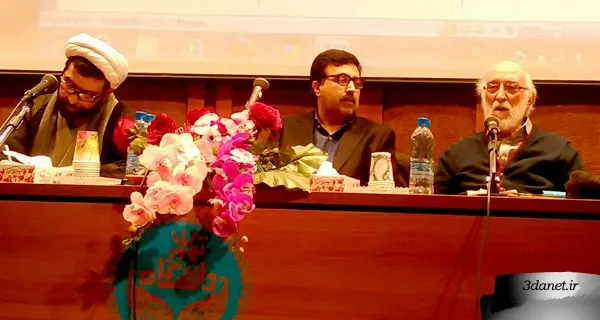
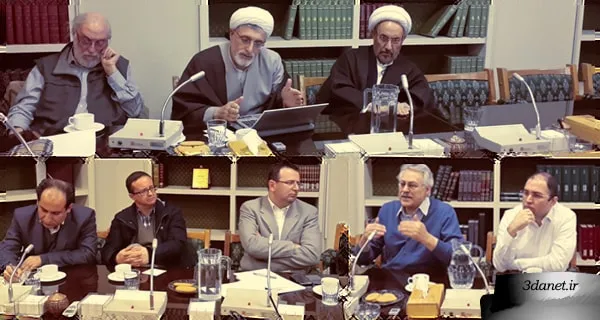
The Hermeneutics of the Quran, First Steps in Quranic Interpretation | 15 February 2016 With the presence of Mohammad Mojtahed Shabestari and Alireza Qaeminia | Faculty of Theology, University of Tehran
Islamic Culture and Civilization Emerged Through Dialogue
The first speaker of this session was Mojtahed Shabestari, who, in order to elaborate on the aforementioned question, first turned to the term "hermeneutics" and, by posing the questions "Is hermeneutics the same as ta'wil (esoteric interpretation)? Is hermeneutics the same as tafsir (exegesis)?", deemed it impossible to answer them within the limited time of the session and only briefly defined the subject of hermeneutics as the nature of understanding. He further stated: "When we speak of understanding and interpreting, we mean that there is a specific meaning somewhere and everyone wants to understand it, or that there exists a science called interpretation which, if everyone performs it, they will arrive at the intended meaning. This is while, according to hermeneutics, this notion is mistaken." After explaining this view and referring to the relationship between understanding and its purpose, the Quranic studies scholar entered into the discussion of why new hermeneutics has been raised among Muslims and said: "We Muslims live in an era in which various new philosophies and sciences have emerged, all of which have challenged our understanding and interpretation of texts, including our understanding and interpretation of the Holy Book and the Sunnah. The most significant of these philosophies are the various philosophies of language, the various sciences of linguistics, hermeneutics, and new anthropologies and history. Under these circumstances, we Muslims cannot content ourselves with our heritage in understanding and interpreting texts; rather, we must carefully examine these four domains and determine their relationship to and impact on our own understanding and interpretation of texts and the Sunnah. This is what Muslims did in past eras when confronting Greek philosophy, Arab culture, Christianity, and Judaism, and in fact, Islamic culture and civilization emerged through dialogue." The next part of Shabestari's speech was the meaning and concept of the "Hermeneutics of the Quran," which was dedicated to explaining the approaches that exist in Iran regarding this issue and clarifying its incorrectness. He then explained his own meaning of this term and said: "What I mean by the hermeneutics of the Quran are the discussions, topics, and issues regarding which it is necessary for us to clarify our position so that we can say today how we can interpret the Book and the Sunnah."
Knowledge Begins with the World Outside the Mind
این استاد فلسفه سخن خویش را با طرح پیشینه هرمنوتیک جدید دنبال کرد و براساس قول تاریخ نگاران هرمنوتیک، نقد عقل به وسیله کانت را نقطه آغاز هرمنوتیک جدید دانست. اینکه چرا این اقدام فلسفی کانت چنین تاثیری داشت در ادامه سخنان این فلسفه پژوه معاصر پاسخ یافت: «نقد عقل به وسیله کانت نشان داد ساختار و نظمی که ما از جهان به دست می آوریم به فنومن ها مربوط است نه جهان فی نفسه. این طور نیست که مستقیم صورتی از جهان در ذهن ما می آید و ما جهان را فهم می کنیم؛ فنومن هست که ما با آن مواجه هستیم؛ یعنی ما آن گونه که جهان می نماید آن را فهم می کنیم نه آن طور که هست». «دانش درباره جهان خارج از ذهن آغاز می شود». این عبارتی بود که شبستری از قول کانت مطرح کرد و ادامه صحبت هایش را در این بخش به توضیح آن اختصاص داد؛ «در ذهن ما چهارچوب هایی هست که وقتی ما با جهان مواجه می شویم جهان را در آن چهارچوب ها می فهمیم». ممکن است بپرسید که ارتباط این دیدگاه کانت با بحث هرمنوتیک چیست. این استاد فلسفه با طرح پرسشی که در ذهن عده ای همچون شلایر ماخر شکل گرفت این ارتباط را برقرار کرد. او گفت: «سابقا تصور می شد که فهم متون به وسیله فهم کلمات آن متن بلافاصله وارد ذهن می شود، اما با طرح دیدگاه کانت، این سؤال پیش آمد که آیا فهم متون هم از ذهن آغاز می شود؛ یعنی مقدمات، علائق، جهت گیری ها، پیش دانسته ها و پیش فهم هایی در ذهن هست که با فرد با آنها به سراغ متن می رود. اصلا اگر آدمی ذهنی تهی از اینها داشته باشد، نمی تواند سراغ متن برود. نقطه شروع فهمیدن و بعد تفسیر کردن یا فهمیدن و در عین حال تفسیر کردن از ذهن آغاز می شود. این گونه بود که پای ذهن به بحث فهم متون وارد شد». ادامه بحث در این باره، مجتهد شبستری را وارد بحث ساختارگرایی و تفاوت آن با هرمنوتیک کرد. ایشان در این باره گفت: «به گفته شلایر ماخر، در فهمیدن از مدلول زبان فراتر رفته می شود؛ داستان فهمیدن، داستان رسیدن به معنا نیست، بلکه داستان حصول فهم است. ما دنبال فهمیم نه دنبال فهمیدن معنای این الفاظ. ساختارگرایی به دنبال این مسئله رفت که معنا چیست، اما هرمنوتیک بر فهم تاکید کرد».
آنچه باید فهمیده شود گایست است
«گایست» و چیستی آن موضوع دیگری بود که در بیان سیر تحول فهم متن نزد شلایر ماخر مطرح شد. شبستری پس از اشاره به ترجمه نادرست این واژه در ایران، توضیح خویش درباره نظریه پردازی شلایر ماخر را این چنین ادامه داد: «بنا به نظر ماخر، آنچه باید فهمیده شود گایست یا همان روح است که زبان از آن ناشی است؛ یعنی نوشتن یا گفتن از چیزی ناشی شده است که همان گایست است؛ بنابراین در فهمیدن باید گایست یا همان ذهنیات او را فهمید». همان گونه که می دانید، روش شلایر ماخر را روان شناختی می دانند، اما آیا میان این توصیف و دیدگاه یادشده در بالا نسبتی برقرار است؟ سخنان بعدی این پژوهشگر علوم قرآنی دلیلی است بر مثبت بودن پاسخ این پرسش؛ زیرا او توضیح داد: «شما وقتی می خواهید متن را بفهمید باید فرد گوینده آن را روان شناسی بکنید و ببینید در ذهن او چه خبر است نه اینکه ببینید جمله به چه چیزی دلالت می کند». شبستری در ادامه تقریر دیدگاه شلایر ماخر گفت: «برخلاف تصور رایج که آنچه به صورت معمول اتفاق می افتد فهم است و سوء فهم چیزی است که گاهی اتفاق می افتد، ماخر گفت قضیه برعکس است؛ آنچه معمولا اتفاق می افتد سوء فهم است؛ پس شما در رویارویی با نوشته دیگران باید اصل را بر این بگذارید که نمی فهمید». با این توضیحات بود که محمد مجتهد شبستری براساس آرای ماخر، فهم را فهم یک دیگری دانست و اظهار نمود: «کتاب دیگری نیست؛ الفاظی که در آن کتاب است دیگری نیست؛ دیگری هم باید ذهنی باشد مثل تو». پیامدهای تولد دیگری در فلسفه های گوناگون، به ویژه فلسفه دین اگزیستانسیالیست، ادامه سخنان این استاد فلسفه را به خود اختصاص داد. چگونه می توان متن را فهمید؟ این استاد فلسفه براساس دیدگاه شلایر ماخر آن را چنین توضیح داد: «باید با متن وارد گفت و گو شوید، سوال طرح کنید و از متن پاسخ بگیرید. فهمیدن یعنی پاسخ فلان سوالم این است. اصلا فهمیدن کلی وجود ندارد». او ادامه داد: «در نتیجه این حرف ها چند ادعای بزرگ مطرح شد که یکی از آنها این بود که فهم همیشه ناتمام است و فهم کامل امکان ندارد. این سخن در آثار شخصی مثل گادامر حالت به کلی دیگری به خود گرفت و آن این بود که هیچ کس تمام آنچه را که در درونش دارد نمی تواند آن را بیان کند». ادامه جریان هرمنوتیکی در فلسفه زبان تحلیلی و هرمنوتیک فلسفه تحلیلی و هرمنوتیک گادامری و اروپایی بخش بعدی سخنان شبستری بود.
Hermeneutics Has No Precedent in Our Philosophical Tradition
In the next axis, this philosophy professor pointed to the classification of interpretations based on purpose, and based on that, said: "Whenever you go to interpret a text, first specify your purpose; that is, for what reason are you interpreting this text. It is impossible to begin interpreting a text before specifying the purpose." It was after stating this matter that Shabestari entered into the discussion of the relationship between hermeneutics and Quranic interpretation and explained his view on this as follows: "The points that hermeneuticists have raised, especially the matter of what it means to say we understand this subject and its philosophical definition, has had no precedent in our philosophical tradition; it has had no precedent among the scholars of legal theory, nor in mysticism, nor in our philosophy." He continued: "These matters have been raised in the hermeneutic approach, but many important issues have also been raised in the philosophy of language and structuralism; for example, Wittgenstein's philosophy of language threatens us; he says meaning is meaning in use; meaning is not reference to an external object; meaning is not reference to a concept that is in your mind; meaning is use. Use happens in a game; a language-game of use is only possible in social-historical life. A language-game of use is utterly inconceivable beyond this world. This is while in the philosophy of language of the ancients, meaning means reference to external objects; meaning means reference to a mental concept. Someone like Sadr spoke of the association of meaning. Are these meaning?!" This philosophy professor, after explaining the problems posed to the theory of coinage, spoke of the challenges created for Muslims and considered the most important challenge to be that "with this famous belief among Muslims that the text, words, and meanings of the Quran, just as they are, have come entirely from God, can understanding be interpreted? If you say it can be interpreted, which understanding and interpretation, and with what purpose?" After summarizing his remarks, he said: "With this famous belief, to what extent can one enter into interpretation, and what kind of interpretation were the interpretations of the ancients, and to what extent are they acceptable? So, the first step is the critique of the past interpretations of jurists, mystics, theologians, and philosophers while holding all these challenges in hand, not by ignoring them. The second issue is, what is the basis of this famous belief in the first place; that the Holy Prophet claimed that everything I tell you, with all its words and meanings, is revealed to me in this very form from God?"
Luther's Main Conflict with the Catholic Church Was a Hermeneutic Conflict
It was with these questions that Mr. Shabestari concluded his remarks, and the next speaker, Dr. Qaeminia, began his address. In the introduction to his talk, he referred to the kinds of knowledge we encounter in the present age. He divided these knowledges into two categories: methodological and substantive. This seminary and university professor identified one of the characteristics of the new era as the abundance and diversity of methodological knowledges, and described the question of how these methodological knowledges can be applied in the field of religious studies as his central concern. In explaining this, he referred to the views of Izutsu and his semantic method for the Quran. «Another characteristic of the new era is the diversity of methods, and there is no single method; they have been formed in interaction with one another; in a sense, new thought has no essence.» This statement was part of Qaeminia's remarks, the explanation of which led him into a discussion of the history of modern debates, particularly hermeneutics. On this subject, the philosophy professor said: «The term hermeneutics is derived from Hermes, the messenger of the gods in ancient Greece. His task was, in the Temple of Delphi, to receive the message from the gods, translate and interpret that message, and proclaim it to others.» The difference between hermeneutics and linguistics was a topic that arose in the course of hermeneutics' development in the West, and Dr. Qaeminia explained it as follows: «The subject of linguistics is the scientific study of language, but hermeneutics, throughout history, has had no fixed subject and has constantly changed its subject; in ancient Greece, hermeneutics was the understanding of myths, in the Aristotelian period, it became a part of logic and acquired a different function, and in the medieval period, it became the method of understanding the Holy Scripture.» But was modern hermeneutics the same as that which was discussed in the medieval period, or did its course of development open a new path before it? To hear the answer to this question, let us follow the continuation of this seminary and university professor's words, who said: «The starting point of modern hermeneutics goes back to the conflict between the Catholic Church and Protestantism. Luther's main dispute with the Catholic Church was a hermeneutical dispute, although it also had a political dimension. Luther's question was: when we encounter diverse understandings of the Holy Scripture, which understanding is correct, and who has the right to say that their understanding is correct? The Catholic Church, claiming that the will of the Holy Spirit was manifested in the Catholic Church and considering this apparatus infallible, asserted that its understanding of the Holy Scripture was correct. In opposition to the Catholic Church, Luther raised the issue of induction in the signification of the Holy Scripture and said that you need nothing more than the hermeneutical circle to understand the Holy Scripture, and through this, you can discover the truth.» What this hermeneutical circle was from Luther's perspective, and the consequences of this conflict—one of which was intentionalism and the other its critique—occupied the next part of Qaeminia's speech. The philosophy professor then spoke from the viewpoint of the father of Protestant theology: «Schleiermacher was the first person to give hermeneutics a Kantian form. Kant was the first to introduce transcendental questions, that is, questions related to the conditions of possibility, into philosophy. Kant asked: Under what conditions is knowledge possible? Corresponding to this question, Schleiermacher posed this question in hermeneutics and asked: Under what conditions is the understanding of linguistic products possible?» Continuing the discussion, Hojjat al-Islam Qaeminia touched upon the changing subject of hermeneutics and stated: «Schleiermacher considered hermeneutics to be the understanding of language. Dilthey transferred hermeneutics to the discussion of the methodology of the human sciences (Geisteswissenschaften); that is, he said: Hermeneutics is the method of the human sciences. You see that hermeneutics was constantly changing its subject. In the early twentieth century, Heidegger took hermeneutics into the discussion of ontology. Gadamer, who was Heidegger's student, brought about a change and transformation in hermeneutics with the writing of the book 'Truth and Method.' He removed the duality from Schleiermacher's hermeneutics and made hermeneutics take on its most Kantian form. In Gadamer's hands, hermeneutics became the knowledge of understanding. Understanding in the absolute sense. This is how hermeneutics became the most general philosophy.» Why did Gadamer name his book 'Truth and Method'? Dr. Qaeminia answers this question as follows: «Modern philosophy in the West, throughout its history from Descartes onward, was formed based on two concepts: the concept of truth and the concept of method. Descartes's point was that truth exists independently of the human being, and there is a method that, by employing it, the human being can attain truth. Gadamer targets the traditional meaning of these two concepts; he accepts neither a truth independent of the human mind nor a method that can guarantee the human being's attainment of truth.»
Hermeneutics was born incomplete in Iran
After explaining the trajectory of hermeneutics in the world, he entered into the discussion of hermeneutics in Iran, considered its birth there to be incomplete, and proposed solutions for emerging from this situation: “In my view, we must approach the methodological sciences with critical activity, grasp their strengths and weaknesses, and not regard them as revealed truth. Some people have a revealed conception of these sciences and, from that standpoint, completely critique revelation. We need critical activity. Critical activity is a two-sided activity; that is, it has one foot in tradition and one foot in new discussions. We must have a philosophical view of new discussions and also approach the discussions of tradition with a critical eye. Truth is born from between these two. The epistemic events that have occurred in the Western and Islamic worlds teach us that we need both sides.”
A significant and thought-provoking question that Dr. Qaeminia raised in his talk was: “Why did hermeneutics not emerge in the Islamic world?” By way of introduction in answering this question, he said: “In my view, this does not have a single cause, but a series of reasons that must be discussed. Overall, however, I find linguistics more commensurate with the Islamic world.” But to answer this question in detail, it was necessary to identify the essence of philosophical hermeneutics; hence he said: “Philosophical hermeneutics is influenced by the essence of continental philosophy. The essence of continental philosophy is historicity. Historicity has many meanings, two of which I will mention here: one is the historicity of the text itself, and the other is the historicity of the human being, which leads to the historicity of understanding.”
But you may ask, what does historicity mean? To become acquainted with this concept, we must turn to another part of this philosophy professor’s talk, which went as follows: “This historicity was raised in Hegel’s discussions. According to Hegel’s view, Kant had two claims: first, that we do not have access to the thing-in-itself and see it from behind veils; second, that these veils are mental veils. Hegel accepted the first claim, that we do not have access to the thing-in-itself, but said these veils are not mental veils; rather, they are historical veils and arise from the historical limitations of the human being. Of course, Hegel had a gloss on this view of his and said that dialectics complements this historicity and helps the human being overcome that temporal limitation and gain access to truth as it is. After Hegel, historicity was interpreted in various ways: Marx took historicity to social classes, and feminists viewed it through the lens of gender.” He continued: “Historicity in understanding arrives at the point that every understander faces a set of historical limitations, and we have no absolute understanding; we have no final understanding. This is the consequence of historicity. After Gadamer, historicity had two interpretations: constructivist historicity (which was raised in Gadamer’s views; that is, a historicity that is constructed, according to which truth is made in dialogue) and realist historicity (which holds that although the human being has historical limitations, the human being is not cut off from truth; truth is not made by the human being).”
But Mr. Mojtahed Shabestari’s fundamental question was about the interpretation of the Quran, to which Qaeminia responded as follows: “In my view, if we want to teach a methodology for the Quran, we must see all dimensions, and hermeneutics alone will not solve our problem, especially philosophical hermeneutics with a constructivist approach. Of course, my view is not black and white, and I am not saying we should discard them. Each of these philosophies has points that we must learn; points based on which a more comprehensive view can be attained.”
This seminary and university professor continued: “The fundamental difference between semiotics and linguistics on the one hand, and a specific philosophical hermeneutics (which Gadamer also pointed to) on the other, is that in semiotics and linguistics, the characteristics of the object of understanding are also considered, but in philosophical hermeneutics, understanding is completely separated from the characteristics of its object. Because linguistic signs have their own specific features, and the understanding of a text cannot be equated with the understanding of a psychological state. Therefore, efforts have been made to create a series of integrative and detailed approaches that consider both the characteristics of the object and the discussions of hermeneutics, combining them to arrive at a comprehensive semiotics.”
The Hermeneutics of the Quran Is a Paradoxical Phrase
Do you know why Dr. Qaeminia moved toward structuralism and did not make hermeneutics his primary concern? To learn about this, consider another part of this philosophy professor's remarks, which went as follows: “None of the new sciences can offer a complete approach to the human being. The hermeneutics of the Quran, if hermeneutics is meant in its specific sense, is a paradoxical phrase; because specific hermeneutics, or philosophical hermeneutics, is an anti-method philosophy, whereas the interpretation of the Quran is based on the text presenting a truth, whether one attains it or not; as is said in linguistic philosophy. Philosophical hermeneutics, due to its anti-method character, cannot be placed in this equation; the hermeneutics of the Quran cannot be in the specific sense, because, in addition to its anti-method character, it pertains to the understanding of the exegetes.
When you come to critique the understanding of this exegete and that exegete, what do you put in its place, especially if everything is supposed to be preconceptions and presuppositions and there is no path to the text itself? This is the third critique. If the hermeneutics of the Quran is meant as methodological hermeneutics (Gadamer's hermeneutics, in one sense, is methodological hermeneutics. Although he accepts historicity, he believes truth exists and can be reached through methods), it does not become paradoxical; because when it is applied to the Quran, you are dealing with the question of by what method the interpretation of the Quran can be undertaken. But if the hermeneutics of the Quran is in the sense that Mr. Shabestari mentioned—the geography of the discussions of methodological sciences, or in other words, thematic ones, and those that connect with Quranic sciences—I, too, am pursuing this, but I do not give great weight to philosophical hermeneutics and consider it only as one of the facets of my discussion.”
The continuation of Qaeminia's speech is a detailed answer to the question raised above, for which he provided an introduction: “I believe that discussions with a linguistic approach have a greater affinity with the Islamic world. In my view, Christian thought is hermeneutical thought, and Islamic thought is linguistic thought. It is not without reason that over the past fourteen centuries, Islamic scholars have devoted attention to linguistic discussions.”
The summary of the discussed topics was the final part of Hujjat al-Islam Qaeminia's speech, which he expressed as follows: “The first point is that we must utilize new sciences; the second point is that I consider a critical activity necessary for this work. I do not have a revelatory view of new discussions; I have a human view, just as I have a human view of our own tradition. What Mr. Shabestari said about revelation must be discussed elsewhere; what view we hold regarding revelation, and its philosophical foundations must be debated. I believe that using new sciences opens our hands and removes the blockage that has occurred in our knowledge. I do not reject the efforts of our predecessors. We see the peak of these past efforts in thinkers like the late Tabatabai, who employed all methods at once, but knowledge has now reached this point, and from now on, you should not expect a significant and remarkable change in religious knowledge by relying on traditional discussions; because these methods are now processing the margins. If an important event, or as they say today, a revolution, is to occur in religious knowledge, it must be through the use of new sciences and methods so that it can remove the blockage that has arisen in religious knowledge and acquaint us with new dimensions of the Book and the Tradition.”

Discussion1 comments
با سلام این متن گزارش گونه و نا منظم است که در باشگاه اندیشه به فاصله چند روز از برگزاری جلسه منتشر شد، ولی امید وار بودیم که صدانت متن کامل پیاده شده و منقح آن را منتشر کند که نشد.!!!