Religion
First Session of the Roundtable on Salafism
The first session of the roundtable on Salafism was held at the Center for the Great Islamic Encyclopedia, aiming to examine the political and historical dimensions of this movement. Experts emphasized the need to distinguish traditional Salafism from new takfiri currents and to trace the roots of contemporary developments.
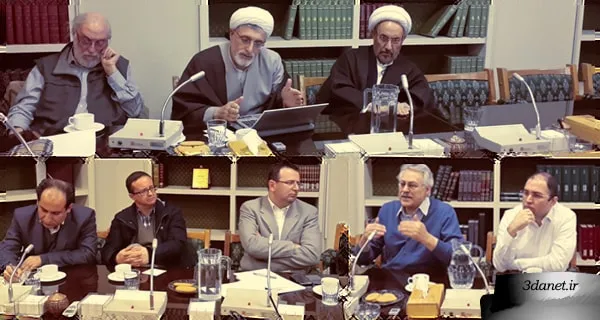
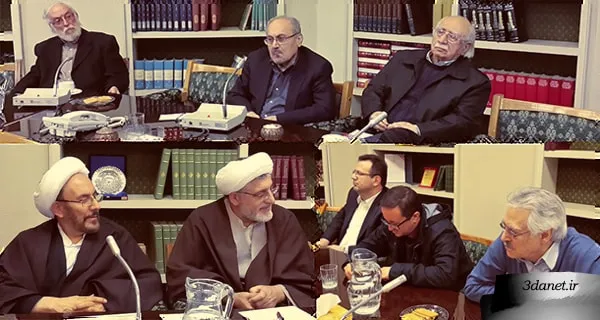
The first session of the series on Salafism and the study of its contemporary developments (Roundtable on Salafism) was held at the Center for the Great Islamic Encyclopedia.
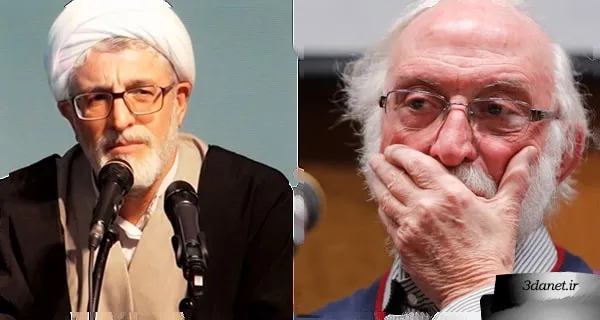
According to DBA, the participants in this meeting, which took place on the 11th of Bahman, 1393, were: Mr. Seyyed Kazem Mousavi Bojnourdi, President of the Center for the Great Islamic Encyclopedia; Hojjat al-Islam Dr. Ali Younesi; Dr. Mojtahed Shabestari; Dr. Ahmad Pakatchi; Dr. Fathollah Mojtabaei; Dr. Davoud Firahi; Dr. Seyyed Javad Tabatabaei; Dr. Esmaeil Shams; Dr. Reza Davari Ardakani; Asghar Qoreishi; Ali Mowjani; Engineer Ali Akbar Ranjbar Kermani; Dr. Ali Bahramian; Hassan Mousavi Bojnourdi; and Masoud Tareh.
Mr. Mousavi Bojnourdi: In the name of God, the Most Gracious, the Most Merciful
For nearly two years, we have been preparing a plan to write the article on Salafism. Our intention was for the Salafism article in the Great Islamic Encyclopedia to become the most important reference for all researchers and professors worldwide who encounter this issue and wish to investigate it. With this intention, we began preparing a preliminary plan and held meetings. I personally had numerous meetings with Dr. Shabestari, Dr. Pakatchi, and other friends, and it was finally decided to hold a roundtable, inviting all experts in this field so that their statements might pave the way for the Salafism article in the Great Islamic Encyclopedia. Especially since political Islam and Salafism have become deeply intertwined in the last one or two decades, and the world is highly sensitive to this issue. We must be able to distinguish between Salafis who are not blameworthy and those who have been subject to blame and censure. We should address the history of the matter theoretically, going back to the era of Ahmad ibn Hanbal—and even earlier, if we find instances—up to the present day. God willing, with the efforts of our friends, we will successfully manage this relatively complex matter. I hope this roundtable proves fruitful. I hand the floor over to Dr. Shabestari.
Dr. Mojtahed Shabestari: To speak very generally, referring to the discussions we had in previous meetings, the topic of Salafism has a scientific-historical dimension and a theological dimension. This part of the discussion requires information, and one must pay attention to the historical research conducted on this subject so far. In that historical research, classifications have been made of the Salafis—in fact, the Salaf, not Salafism. It begins with the Salaf and reaches Salafism, and then Salafism itself is examined in various historical contexts.
This is one type of discussion on this subject, and a more important discussion, in my opinion, concerns the political dimensions of this matter. In these recent decades, political movements have occurred that base themselves on and attribute themselves to the Salaf and Salafism. It seems to me that in the first part, which pertains to historical research, there is general information available, but regarding the political part—speaking for myself, as someone whose work is primarily in the field of Islamic theology and beliefs—I lack sufficient information about the political behind-the-scenes of this current that has shaped Salafism in this way. Additionally, there is a point Dr. Davari added in the previous session that I found interesting, which is that this new movement of Salafism and primitivism undoubtedly began the day Seyyed Jamal al-Din Asadabadi invoked the verse, “Indeed, Allah will not change the condition of a people until they change what is in themselves.” Dr. Davari emphasized this matter further, and it may be a turning point in the discussion of modern Salafism. This was his account, which he presented, and there are other accounts as well. If I discern correctly, we should first gain some awareness of the political dimensions of this matter, and then, in addition to that, arrive at the historical awareness, historical justifications, and hermeneutical aspects, such as what Dr. Davari mentioned. In my opinion, the friends from the Ministry of Foreign Affairs who are present here, or those who have followed this issue politically in history, should provide us with information about the political roots of this matter and enrich the session with this information; then we can address the issues that are on our minds and piece them together.
Mr. Ali Mowjani: In the name of God, the Most Gracious, the Most Merciful
My sense is that we are encountering many phenomena for which we cannot find a single phrase or theme, and we are compelled to carry them in our minds and categorize them in our own definitions. The roots of Salafism, Wahhabism, and recently the new term Takfiri are raised, whereas these are neither Salafi, nor Wahhabi, nor even Takfiri. These are new phenomena that demonstrate our lack of knowledge and our meager understanding regarding the vast realm of the Islamic world and the developments of the last two hundred years.
In our imagination, for instance, they seem very close to Wahhabism and Salafism, but when we study their core and proceed further, we see that they have no connection to the Salafis and have not tried to make any contact with them. They may have used that literature or occasionally benefited from their banner, but they have not necessarily been answerable, in terms of their own principles and fundamentals, within that school of thought, nor were they people who sought to preserve it. For this reason, the behavior we see from them is generally not close to any of the standards of Salafism or even Wahhabism. For example, take the incident that occurred in Syria where two Japanese nationals were captured and then a ransom was demanded. In the case of ISIS, compared to the past, there is a transformation in this process. That is to say, ISIS is no longer pursuing hostage-taking and beheading ideologically; rather, it has turned into a tangible material benefit, and this tangible material benefit is a symptom of the developments taking place on the scene.
From my perspective, when I look at it politically, part of it goes back to the situation of oil prices. Meaning that countries like Saudi Arabia and Qatar, which were investing in the Syrian crisis, are now saying they have no money, and the financial conditions for these groups have become difficult, and they must seek sustenance from another source. For this reason, they now cast aside this guise of being a reformer performing an act of faith and fully reveal that it was a facade and a cloak they had draped over their shoulders, to which they had no commitment, and today they are acting on a different path.
In one or two very clear instances, I encountered these differences, which I will share with you. The first issue that preoccupied my mind goes back to two years ago when ISIS had established itself as the Islamic State of Iraq and the Levant. This question, or this coincidence, was on my mind: in the events before September 11th, we were faced with the phenomenon of the Taliban and the Arab Afghans in Afghanistan. The Arab Afghans were Al-Qaeda. Al-Qaeda, in continuation of Salafi and Wahhabi thought, had created a network in Afghanistan whose intended purpose was jihad, with all the characteristics we read about in academic sources. It wanted to wage jihad and connect itself to the Salafi state of the Prophet. The Taliban was also a phenomenon that had established the Islamic Emirate of Afghanistan for itself in Afghanistan. Al-Qaeda wanted to wage jihad and had not targeted any specific territory for its jihad; it could be in Chechnya, Yemen, or Sudan. But the Taliban had formed a government and emirate entirely within its own geographical territory. In the events very close to September 11th, we witnessed very sharp clashes between them. In the Mazar-i-Sharif case, which we also explored and studied, we were always faced with a duality, in the sense that when we spoke with one of the Taliban officials about Mazar-i-Sharif, he would say it was the work of the Arab Afghans and not their doing, and he responsibly sought to exonerate the Taliban from the incident that occurred in Mazar-i-Sharif. But in contrast, Al-Qaeda would say it was a general phenomenon and would happen again. September 11th did not allow us to draw the dividing line between the thinking of the one that wants an Islamic Emirate—and perhaps is not necessarily Salafi—and wants to determine its fate based on an Islamic outlook within its limited geographical boundaries, and to distinguish itself from that prior jihadi environment.
September 11 created an atmosphere that completely transformed the region, and this turmoil continued for ten years until the fall of Saddam. After Saddam's fall, this phenomenon manifested itself from time to time until ISIS emerged. Of course, even before ISIS, a branch of extremist currents came into being that I cannot call Salafi. Because when we talk about them, we see that among them there is a Ba'athist who fundamentally does not believe in using the garb of religion—Arabism is the concept for him—or, for example, there is a Naqshbandi whose outlook is Sufi and initiatory, and again, his perspective does not find meaning within the framework of the concept of Arabism. These groups found each other and work together very well. Until a few years ago, the Tigris and Euphrates did not hold meaning for us in their historical sense, which encompasses both the Levant and Iraq, but today, with the advent of ISIS, we feel that yes, they are speaking of a specific geographical realm. That geographical realm is not entirely clear to us, but we sense it must be close to Salafi and Wahhabi views. Sometimes they raise concepts that we may be compelled to address in our studies, such as the discussion of the Caliphate.
Let me give another very clear example, which perhaps Dr. Shams and Dr. Mojtabaei are familiar with. In Diyarbakır, there was the Sheikh Said Piran movement. In all Kurdish studies and research texts, because the Kurds were seeking to create a national homeland and were pursuing dialogue about a shared Kurdistan, this movement has been placed within Kurdish nationalism and introduced under the rubric of Kurdish nationalism, and Westerners, in their studies, have generally addressed this aspect—that is, the Sheikh Said Piran movement in Diyarbakır is a nationalist movement in line with all the developments of the Kurdish world. But now we see that the same point, the same people, and the same followers—the intellectual followers and those connected to Sheikh Said—have today entered the ISIS network and speak of the Caliphate. When we study this issue, connect with them, and engage in dialogue with them, we realize that this Sheikh Said movement was also, absolutely from the very first day, seeking to establish an Islamic Caliphate according to its own concept, and we can no longer view it as a Kurdish nationalist movement; indeed, multiple reasons distinguish it. For instance, if we look at the minutes of Sheikh Said Piran's meeting in Istanbul, we see that he came to establish the Caliphate and raises the Quran on a spear—that is, behaviors that have no nationalist or even ethnic aspect and are entirely religious. From this angle, I felt truly, how can one write an entry for Salafism and place these new cases and existing phenomena under it? I think a garment must be tailored for them that is necessarily close to Salafi and Salafism, but in reality, they have no such connection at all. In these last thirty, forty, or hundred years, new subjects have emerged for which our thinkers have not yet been able to find a specific term. This has caused them to take the closest set that possesses similar characteristics and place these subjects under it, and unfortunately, this extends into our thinking and judgment, and at a much lower level, it is used in common literature, media, and gatherings due to a lack of knowledge. Take this very concept of Islamic unity of Sayyid Jamal al-Din al-Afghani, which Dr. Ardakani mentioned. When we come to it, we see that we cannot necessarily consider the concept of Islamic unity as a thought in line with Salafism, or a thought in line with the creation of the era of the Caliphate in the traditional form of the Caliphate in the past and early Islamic centuries, or the late Caliphate in the Ottoman era, where the Caliphate shifts from the Ottoman branch to the branch that Sayyid Jamal defends. Sayyid Jamal for a time sought the Imam of Yemen, and for a time sought Abd al-Qadir al-Jaza'iri and the like. My personal reaction to what has happened is that we cannot, in a final summation, place it among the branches and offshoots of Salafi or Wahhabi thought, or Akhbari views and such categories, and make a general judgment about it and popularize this judgment, because then we encounter contradictions. In the practical arena, we face individuals who, to the same extent that we imagine them to be Salafi or Wahhabi, themselves challenge and ridicule this notion.
After Morsi came to power, I spent three days with Mr. Emad Abdel Ghafour, the leader of Egypt's Salafi movement, and we were in constant meetings. At that time, he had formed the Al-Nour Party, and Al-Nour was one of the very important and influential branches in the process of the developments that brought Morsi to power. When I spoke with him, I would ask, "You are a Salafi; what is your relationship with the Muslim Brotherhood?" He would reply, "Not at all, we are not Salafis, we are Islamists." I thought he wanted to use this cover and give it an inclusivity so that he could accommodate other branches within this party. When I spoke with Emad Abdel Ghafour's associates, they too used similar phrases; but the concept was not very clear. Until I saw in an article he himself had published, he had written: "a Hanafi Turk (a friend of mine), an Iranian Rafidhi (meaning me), an Iraqi Sunni, an Egyptian liberal, and an Islamist (meaning himself)." This same Mr. Abdel Ghafour, in the interval of the events that occurred, suddenly set aside the Al-Nour Party and split off. With a majority of the community we called Egyptian Salafis, he formed a party called the Al-Watan Party. I was very surprised, because the concept of 'watan' (nation) should not exist in Salafi views. This literature and concept of 'watan' is the very literature of Gamal Abdel Nasser. That is, he is reproducing Nasserist thought in the same form, but in an Islamic garb. The Al-Watan Party is entirely Egyptian and wants to distance itself from Al-Nour, or from that view and that interpretation that others had of it as Salafi. I want to say that such phenomena and examples, firstly, require a series of field studies, and then, for a deeper understanding, we must realize that these phenomena are in the process of being born, and there is no necessity to categorize all of them under a single general concept that exists in our minds. Rather, we should search, reflect, and create new concepts for them. Especially in the encyclopedia, if there is this thinking of finding a definition for these concepts, we should employ this thinking and use phrases for these kinds of behaviors that can somewhat make the lines and distinctions more pronounced and help advance studies into the components and branches of each phenomenon in a serious manner.
I have thought about this issue from this angle, and in the new atmosphere and developments, at least for us who are facing it, it can be one of the questions. Mr. Qureshi is more knowledgeable than I am. We cannot apply the general label of Salafi to this phenomenon when we see Abu Bakr al-Baghdadi speaking of a concept and even mocking it. In his last statement regarding Mullah Omar – if we consider Mullah Omar as one of the branches connected and close to Al-Qaeda that seeks an emirate – he says that Mullah Omar is an ignorant and dishonest person, incompetent and inept, and has no understanding at all. From where should we derive our understanding of this phenomenon? Furthermore, in such phenomena, there are factors that are entirely non-scientific, elements that are not ideological and have an instrumental view of them. For example, certain intelligence services, or individuals who see interests in these movements and support them. At least in the structure of Shia Iraq, we see these examples: parts of the Shia Iraqi establishment do not mind something called Daesh emerging in the garb of a caliphate, growing, and helping to partition, so that it can preserve its own Shia region and completely separate the community that is not connected to this region, shaping a new destiny. In the Kurdish part of Iraq, which Dr. Shams can explain better, we see this same view again, that they too are supporters of such phenomena. This directed and influential view and support from these components also enters into these subjects. One cannot think that a school or intellectual sect has come into being. This intellectual sect is thus in the process of maturing, and with its own theological views and its own historical evolution, it presents us with a chapter that is a continuation of the past chapters of the nations and sects of the Islamic world and our surrounding geography.
Dr. Firahi: In the name of God, the Most Gracious, the Most Merciful
Mr. Moujani's remarks are, in a way, the reverse of the path I have been pursuing in my studies, and I sense that he pays more attention to the novelty of these phenomena, whereas I look at how they can still be studied in old terms as well. I have two reasons for this study; first, their literature, both formally and in their circles, is generally Salafi literature, with changes they have introduced into it. I do not deny its change, but they have made changes within Salafi literature. One could say this is a wave and a kind of internal change. The second reason for being able to examine them with classical literature goes back to their origins. When we trace the genealogy of this group, we can easily see where this community started and took shape. For example, we can say how this current emerged from within the Syrian crackdowns of 1982 to 1986, and there was a link between the Ikhwani movements and the like. Then, how in 1990 these currents emerged from within the Jama'at Ansar al-Islam of Iraq. This history may be one reason for being able to say what has happened. If I want to bring my discussion closer to Mr. Moujani's statements, I can say this: if we want to understand this current, we must distinguish what the whole current is and where its center is. Like a firefighter who does this, first looks to see where the main flame is, then sees where it has spread and how far its peripheries extend. Regarding these currents, one must see how, for example, the Naqshbandi movement or even Ba'athist currents joined it. I sense that this distinction helps us to identify this story from the beginning. In the literature of some scholars, it is said that these currents are like castor oil; first they spill in one place, then they seep and spread to the surroundings. These are the appendages and peripheries that have attached themselves to the main text. If the center is recognized, the relationship of these peripheries to it can be better explained. With this introduction, I will try to touch upon two points. In my studies, I have concluded that two events have occurred. First, there is a transformation within Salafi thought. This transformation is important for us. In order to identify this central current, I have divided Salafi currents into four categories. First, the classical Salafis of the pre-Saudi and Ibn Taymiyyah era; second, the Salafis supported by Saudi Arabia, whom we can refer to as Wahhabi Salafis; third, a discourse under the name of Al-Qaeda, whose gaze is outward and whose assault is toward the West; and fourth, this generation and current whose approach is inward, that is, toward the Islamic world itself. Their dimensions also differ from one another; the Al-Qaeda movement exported the terrorist abroad, but these import him inside, and they have a particular characteristic. The 'other' for Al-Qaeda was the Westerners, and the 'other' for these are the Shia and the Sunni; thus, the two are very different. They use old concepts that have been newly charged, such as the concept of takfir. Takfir is a concept that has undergone a metamorphosis in their view, and they have been able to make it a justificatory foundation for their projects. In my opinion, we should discuss more this part, what has happened and what transformation has occurred in the concept of takfir. Takfir has a place in classical Muslim literature, but for various reasons, it was not put into practice. Instance-based takfir is not seen. That is, takfir was explained, but it was very rare for someone to issue a ruling of takfir on a specific instance. But in their discourse, we see a kind of general takfir taking place. For example, we see that in 1990, 1991, Sheikh Abdul Malik, the Mufti of Iraq, who was in fact one of the founders of the Jama'at al-Ansar current, issued a ruling of takfir on the lands of Iraq in general. Or Abu Musab al-Suri in 1991, 1992 issued a ruling of takfir on all Shia and Alawites of Syria. I want to say that one way to understand the new currents is to understand the transformation in their concepts and to grasp what metamorphoses from old concepts have taken place in the new concept.
The second point concerns the social and political contexts of this current. Regarding the social contexts, it seems not without reason that this current has grown strong in Iraq and Syria. Takfiri currents had formed in Iraq, but why they gained so much power can be explained, I believe, by four causes. Field research also points to these four reasons. One is that because Iraq was in a state of war for a long time, the Iraqi tribes acquired remarkable military skills. Let me offer a phrase that is their hallmark. It is said that the Takfiri-Salafi movements are Salafi in creed and Ikhwani in method. This is a term they use. Salafi in creed means they operate with Salafi concepts, but their organization is inspired by the Ikhwani organization. The Ikhwani organization has recently, after Morsi, been transformed. It operates intensely through centralized, dispersed, networked, and networking Gold Coast systems. That is, in terms of leadership, they do not have a single axis, but they share common concepts. Now, why did this happen in Iraq? One cause was military skills. Second, Iraqi youth became more familiar with Salafi doctrine through the Ansar al-Islam movement. The Ansar al-Islam movement in Iraq must be taken seriously. This movement was strong during Saddam's time and practiced takfir. It even declared takfir against Saddam himself and the Shiites. Most of the countries that opposed Saddam, including Saudi Arabia, Turkey, and Jordan, provided them with assistance in order to tie Saddam's hands, and a great deal of weaponry fell into their hands. A very important event occurred in Iraq; because the Ba'athist army was in power in Iraq and since they did not trust the Shiites, all the weapons and ammunition depots of the Iraqi army were located in the Sunni-populated areas. Later, when the Shiite system came to power in Iraq and encountered problems, since the weapons, tribes, and the Sunni army of Iraq were also on that side, this technology and weaponry easily fell into their hands. Here I would like to disagree with Mr. Moujani. The Ba'ath Party army is not entirely secular. In the Ba'ath Party, there is a large Salafi segment that we can identify; among them there are also Ikhwanis, but it is these Salafis of the Ba'ath Party who joined this current, not its secularists. I want to conclude that a conceptual transformation has occurred in Salafi movements, to the extent that we can refer to them as the fourth generation and explain their characteristics under the title of Takfiri currents. In 2006, we witness that seventy thousand armed tribal forces, under the name of the Sahwa movement with the Islamic Awakening current, were cooperating against Saddam. When the Shiites seized power, the Sahwa current was armed, it was able to link up with the remnants of the Ba'athist army, and then marry the ideology of Ansar al-Islam, and very easily obtain these weapons and proliferate. It can be explained what happened next, that the Naqshbandi movements—which involve ethnic changes and even nationalist concepts in some of these currents—linked up with them and drew close. Therefore, the chance these currents had was the establishment of a Shiite government in Iraq and the mistrust that Sunnis harbored toward Shiites. If there is an opportunity, I can explain the revolution in concept within these currents.
Mr. Mousavi Bojnourdi: In future opportunities, do follow up on this revolution in concept. I do not know whether the intention you had has been fulfilled, or if we should also draw on Mr. Qureshi's information.
Dr. Mojtahed Shabestari: I think if Mr. Qureshi has newer material beyond what Mr. Moujani presented, we should use it.
Mr. Qureshi: It is roughly the same. I have studied more about Yemen.
Dr. Firahi: I forgot a point that I will mention. In their literature, they deny Salafism, but in the background, they believe that Islam is precisely this. There is a specific claim among them, meaning that when they say we are Muslims, it means there is no Islam outside of them, not that they are one current within Islam.
Mr. Qureshi: Salafism existed and still exists in Yemen, and they had a university. The September 21 Revolution of Ansar Allah was a Zaydi revolution against the government and the Muslim Brotherhood establishment. In Yemen, four years before the Arab Spring or the Islamic Awakening, the Muslim Brotherhood and Ali Abdullah Saleh's party had become dominant, meaning they had seized half of the power. This was a plan devised based on the Gulf Cooperation Council initiative, and ten founding countries—the five permanent members of the Security Council and the five GCC member states—were backing this plan. Power was divided between Ali Abdullah Saleh's party, the General People's Congress, the Muslim Brotherhood, and the Salafists. Recently, that is, after September 21, Ansar Allah dismantled the Salafists' apparatus, meaning what they had in terms of a university, centers, and seminaries. And now, the most important Salafi figure in Yemen, Sheikh Abdul Majid al-Zangani (?), who was the head of that university, is a fugitive and his whereabouts are unknown. With a perspective that is, of course, not very deep or precise, from the time I was in Yemen and reading these figures' interviews, my impression is that they are fiercely opposed to democracy and human rights. Perhaps we can say that these new Salafi phenomena are the product of the conflict between modernity and tradition, and the issue is the conflict between democracy and a particular reading of Islam. They vehemently reject democracy and modernity, and of course, they also engage in ijtihad. That is, the transformation we see in them differs somewhat from the past and is the result of the ijtihad they practice. I have mentioned this point to this extent.
Dr. Mojtahed Shabestari: Mr. Qureshi added a point; to make it more complete, if you agree, Dr. Tabatabai, since his field is political research, could express his view on this matter so that this dossier becomes a bit more complete.
Dr. Tabatabai: I apologize for arriving a bit late, and unfortunately, we did not hear the initial remarks. I think up to this point, the discussion about ISIS and the rest of the Salafists has been under two concepts: one, its religious aspect, and the other, its political aspect. Let us set aside the religious aspect; I do not wish to speak about it. However, if we place these under the political concept in its traditional sense—for instance, a known movement like the Freedom Movement in Iran—if we take politics in this sense and then try to subsume today's Salafi currents, with all their differences, under it, we have made a mistake. In my opinion, these currents fit neither precisely under the concept of a religious movement nor a political one. After my expulsion from the university, I was in France for almost ten years. A large portion of my classmates and professors were in one or two important French parties and became influential figures. I came to Iran, and when I returned, a minimal connection was established so that I could obtain my residency card. That was the time when think tanks were being set up, and most of my former friends were in them. Among those who frequented these think tanks, I noticed one or two of my former classmates were part of France's DSD security apparatus. In the discussions there and at that time, I became aware of a part of these issues, and I will try to express my point with that in mind. In these circles, which have more precise information and engage in discussion, one issue is that neither the religious aspect of these currents is as important as it appears from the outside, nor is the political aspect in the traditional sense of the word, as I mentioned, that important. But they speak of a newer concept, which is the criminalization of politics. That is, politics in some places is intertwined with terrorist organizations, murder, secret police, and far-right currents. These infiltrate into these currents. Outwardly, they preserve both the religious aspect and the political aspect in the traditional sense, but from within, they manipulate them in a direction that advances their goals. I will mention one case that is somewhat relevant to us and for which there is documentation.
We know that Dr. Nasr is a member of the Maryamiyya order and apparently its head. Those who frequented the Philosophy Association before the revolution and shortly after, like Mr. Davari, know that there were currents promoting Schuon and Guénon, with ideas opposing modernity, the reign of quantity, and so on. These have a philosophical aspect that is not our subject of discussion, but within this current there was an Englishman named Mark Sedgwick who entered this current and was also very interested in spirituality. He goes to Egypt, learns Arabic, meets Guénon and another person whose name I don't recall, and becomes closely acquainted with them. Seven or eight years ago, when I was in America, a book called Against the Modern World came out there. This book is very important, and in it Sedgwick explains his departure from this Traditionalist current. (I translate it as 'Traditionalist' because 'traditionalist' does not convey that meaning.) He provides explanations in this book that are also confirmed in other ways from other places, which I will mention. He says that originally it is a spiritual current, of which there is no doubt, and it opposes the modern world, the reign of quantity, modernity, etc. He says, however, that it was infiltrated from within, especially by extreme right-wing and fascist European currents, particularly in Belgium, France, and most of all in Germany. A part of these currents has infiltrated the police apparatus of these countries. That is, these extreme right-wing elements infiltrate a significant part of the high-level body of the police in France, Belgium, Germany, and many countries like Italy. In events like the killing of Aldo Moro, the president of Italy, about which both a book and a film were made, we see how they infiltrate. While he was kidnapped by extreme leftists, the police and extreme rightists manipulated it to kill him in a very bad state and turn public opinion in Italy completely against the left. The dimensions of this subject are now known, and its documents exist. Sedgwick says the same thing about the Traditionalist order. He says that some of those who were at the top and whom we thought were very important were, in terms of finances, gender, etc., charlatans, and he has presented a photograph where, if I am not mistaken, he says Schuon was enjoying himself with young men in Capri on the shores of the sea, while we thought he was traversing the stages of spirituality. On the other hand, the same is true regarding the extreme leftist organizations of Europe.
There was an organization called Gladio, consisting of rightists and the police body of parts of Europe, especially Belgium. They have shown how, wherever extreme leftists were and did something, they infiltrated and steered the work towards the goals of the police and extreme right-wing currents. For example, look at Boko Haram in Africa now; these are neither a religious current nor a political current, but without any doubt, a murderous current. The same is true regarding Ireland. Although in Ireland there is patriotism, freedom, and opposition to England, a significant part of the main operators of this current were in fact professional criminals, and there are interests behind these crimes for them.
I think this aspect of the subject is very important, and what can we write about these matters here in the Great Islamic Encyclopedia? What this collection of Salafis is, is of no importance to me at all; in my view, what is important for us and for Iran is the threat they can ultimately pose to us and the danger that can threaten Iran in the medium term. This is a very important issue. This is why I say this matter should not be seen as purely political in the sense of foreign affairs, nor purely religious in the sense of the Center for the Great Islamic Encyclopedia. In the face of this danger, it is natural that we must do something. We will probably bring an entry, but we must know that we are besieged within these currents that have a religious aspect to hoodwink the general masses of the Islamic world, and a political aspect to deceive the simple and naive intellectual currents of these countries. But more than anything, it is the criminal aspect of these currents that threatens us, and in my opinion, outside of here – I think it is not related to the Encyclopedia – in addition to the entry we write, we should focus more on this aspect.
Mr. Mousavi Bojnourdi: The point that Mr. Tabatabai raised at this stage of the discussion could perhaps be subsumed under one heading, and that is the criminalization of politics. In this regard, I might have a brief comment in support of Mr. Tabatabai's remarks and raise the question of why this has come about, why criminal politics has emerged. Dr. Younesi, the political dimension of the Salafi movement is on our agenda; with the knowledge and experience you possess, please present your views and share your information.
Dr. Younesi: In the name of God, the Most Gracious, the Most Merciful
In the distant archives of my mind, there are some points regarding the politicization or sectarianization of this current, which I will offer and hope will be useful. One can also take a historical view of the issue, which Dr. Firahi pays attention to in his discussions. Most of the armed movements to date have had their roots in Egypt, and it still seems to originate from there, and this intellectual and executive dominance that Egyptian currents have over the Islamic movements of the region continues to this day. Of course, in recent decades, the wealthy Persian Gulf states have provided them with financial support, but in terms of thought, executive and managerial dominance, and intellectual leadership, it still belongs to the Egyptians. For the first time in Islamic countries, an experience occurred in Afghanistan, and these developments were a turning point that laid the foundation for terrorist organizations in Afghanistan. After Afghanistan was occupied by the Russians, Muslim countries and Muslim movements, with all the contradictions and differences they had among themselves, all went to the aid of the Afghans and, in the short term, set aside their differences, striving to liberate Afghanistan from Russian occupation. A little later, after a few months had passed, the Egyptian armed movements preferred that this occupation continue, that it was better this way, and that there was no reason to strive for the liberation of Afghanistan. They encountered a phenomenon that had no precedent before. They saw that from all over Muslim countries and European countries, individuals were coming to Afghanistan solely with the intention of jihad, and this was a completely new phenomenon: individuals streaming into Afghanistan from America, Europe, Australia, Muslim countries, and everywhere, solely with the intention of martyrdom. They realized that there was an immense potential which, if managed and organized, could allow them to achieve the dream of creating a new power against the West, a dream of the revolutionaries of the past. After a while, neighboring and non-neighboring countries became aware of a new danger: a new current was taking shape that they would ultimately be unable to manage.
Even within Iran itself, there were disagreements among the security apparatuses about how much to help them and to what extent to get close to them. Far-sighted individuals took the danger very seriously and believed that in the future one would not be able to stand against them, and that one must separate from them right now. Some also said that we must help them, and that this is an immense potential against America and Israel. We must manage it and ward off danger through them, and by infiltrating among them, solve our own future problems by means of them. Both groups had their own specific reasons. Later it became clear that this was not only our problem, and some countries, like Pakistan, became more entangled than this. In Pakistan, they had extensive influence in the army and the security apparatus, an influence that continues to this day, and Pakistan cannot stand against them. The Saudis realized that they had gained influence in vast social and financial networks, and it was not long before they understood that it was not only Afghanistan that had been occupied, but that all the countries of the region had, in a sense, been occupied by them. All these countries were also suspicious of one another; for instance, the Saudis thought that we had outmaneuvered them and were managing these currents, and we thought that they were all Wahhabis and Salafis. So to speak, we went to fight the Soviet Union, but the strange thing that happened was that everyone became suspicious of everyone else, and this suspicion continues to this day. I think this was an event and an incident that occurred, and none of them intended to circumvent the other countries and dominate themselves. Everyone there was striving for there to be a power in Afghanistan against the Soviet Union. But those political groups that later became known as al-Qaeda were trying to prolong the liberation of Afghanistan so that they could solve their own problems. The Afghans themselves also realized this meaning, that they did not want to fight but had come to Afghanistan for their own affairs. Later it became clear that during this very period, they had practically laid the foundations of the Taliban government.
When the September 11th operation occurred, not only America but all countries, and even the Taliban, were taken by surprise. The Taliban had been deceived. They thought that this organization was a structure at their disposal, but later it became clear that the matter was the reverse, meaning it was they who were running the Taliban. At that time, Osama bin Laden had sent a message that for victory, we have independently created mujahid organizations everywhere and in all countries, and all of them are free to act on their own authority. This is exactly the point that Dr. Firahi mentioned. It is not the case that these groups take orders from somewhere. They have been taught that the conditions of each country have their own requirements, and therefore it is not necessary to necessarily take orders from a single center. It is enough that they share the same goals. Everyone must help one another. It is not important that they have differences with one another; what is important is that the anti-Western movement achieves unity.
At that time, this debate was raised: the near enemy or the far enemy? Is the main target America and Israel, or these regional countries like Saudi Arabia that have become mercenaries for these currents? Some believed the near enemy first, and some believed the far enemy first.
The leaders and ideologues of these currents are all educated, literate individuals, well-versed in political currents, well-versed in history, and well-versed in Islamic currents, not that we should imagine they are a bunch of common, uneducated people. From some of them whom I had contact with and spoke to, a number of them said that we are forced, in order to keep our followers, to pretend to be anti-Shia; otherwise, we believe that ultimately we must resolve our contradiction with the Shia, especially since we have no problem whatsoever with the Shia according to the reading that Imam Khomeini has. A number of them also said that our silence towards Iran is tactical. Ultimately, Zarqawi made this dispute public and then declared that the main enemy is this very near enemy, and we must address it.
Looking at the issue from another angle, I believe that three currents in the Islamic world are simultaneously striving to gain power and authority in the Islamic world. The first is Turkey. Turkey is seeking to revive Ottomanism and has prepared all the necessary tools for the task. And it has been relatively successful. One power is Iran, which has been the most successful in the region, and everyone is worried about this because Iran, under the Islamic Republic and the revolution, has managed to attract a large portion of the youth's thoughts and has absorbed and assimilated all Shia sects, and has been able to bring the Shia minorities of the region along with it. It has become a great power that, if fully formed, everyone will ultimately have to submit to. The Saudis, more than anyone else, are confronting this and have been very angry about the events in Yemen and Bahrain lately, and seriously feel threatened because this Iranian power is a new and dominant power in the region. If the Americans also accept and recognize Iran's nuclear issue, then they will no longer be able to rival Iran.
Another is the power of Saudi Arabia, which has so far nourished most of the Takfiri and Salafi currents in the philosophical and theological sense. Both financially and intellectually. They wish that when operational matters arise, they would be in their hands, but they are incapable of management, and the thread of affairs slips from their grasp and sometimes turns against them.
In these three decades since the revolution, they have started the work on a vast scale. The Saudis are ahead of everyone in terms of intellectual influence. These three currents have completely encompassed all the events of the region, and there is no doubt that each wants to repel the other. Turkey has always tried to act calmly, but lately, it has acted poorly and suffered sharp defeats in the Islamic Awakening. Turkey's defeat in Syria was very heavy. Turkey is currently also helping ISIS in order to have influence, and they are also very keen to carry the banner of the struggle against Israel and have extended their influence from Asia to northern China. In terms of economic and cultural influence, they are ahead of the Saudis and us. Turkey is ahead of us in terms of commercial, economic, and cultural influence. On the other hand, the religious influence of the Saudis is ahead of us, and in the midst of this, our operational and intellectual influence is ahead of theirs. You cannot imagine any of the important events in the region outside of these three currents. Ultimately, the effort and goal of these three powers is to seize the leadership of the Islamic world. Currently, each of these three currents holds a part of this power.
Mr. Mousavi Bojnourdi: In order to complete the first part of our discussions, which is the political part of the issue and close to current affairs, I think three more people need to speak to complete this part of the discussion. Dr. Shams, Dr. Bahramian, and Engineer Kermani.
Dr. Bahramian: Very briefly, I would like to say that if we are to look at Salafi as a term, or something we want to apply based on what we ourselves diagnose or what the media provides us, I want to say that writing such an article requires a clarification of the subject matter. One cannot consider a very broad topic and abstractly apply it to various things. As far as studies in the field of history, beliefs, and theology show, essentially every Sunni is a Salafi, and there is no Sunni who is not a Salafi, meaning they do not adhere to the tradition of the pious predecessors and do not seek the revival of the Caliphate. This matter is somewhat strange and unfamiliar to Iranians in particular and to Shias in general. One reason is that in Shiism, and especially among Iranians, they have come to terms with this issue throughout history. But in the Sunni world, they have not. Every Sunni, in their mind, seeks to revive the Caliphate again and return to the same glory and grandeur that existed at the time of the conquests. However, to create a link between Ahmad ibn Hanbal, or even earlier than that, the Kharijites, until we reach these currents that happen, for example, in France and corners of the world, and then want to examine and explain all of these, with all these differences, under the title of Salafi, is, in my opinion, not logical. Its application is also not correct.
They say that someone brought something called fālūdhaj to Ahmad ibn Hanbal, and he did not eat it. They asked, "Why don't you eat?" He said, "I have not seen in the hadith that the Noble Prophet ate fālūdhaj." Now compare him with the person who killed people in France. One of the news agencies interviewed one of his neighbors, and he said that he was a very good boy and even used to go to the disco. Where is Ahmad ibn Hanbal, and where is this disco-going Algerian youth in France? In my opinion, lumping these together under the single title of Salafi is not at all logical, and it is practically impossible. It requires a very extensive sociological explanation. Of course, as is also in this project, these things can be explained from a theological perspective. They also cite instances of Salafis. One example was found by Mr. Mujani at the Ministry of Foreign Affairs, and I analyzed it somewhat. The information was about a person named Abu Sufyan al-Sulami. The things he said were very weak and not at all comparable to Ibn Taymiyyah. He had brought a few hadiths, combined them with Shiite beliefs and various other things, and ultimately said that the Commander of the Faithful is Abu Bakr al-Baghdadi, and we must follow him and revive the Caliphate. And as has been said, some Ba'athist and non-Ba'athist individuals in Iraq merged together in political currents. It must be accepted that the theological elements among these are very thin, meaning they are not enough to prepare a person to strap a bomb to himself and kill people. Other reasons must be found for it, but whether a scientific project like this is the place to express these matters, I have some discussion which I will present to you in the next part.
Dr. Shams: In the name of God
I had organized my talk mostly based on this project, but since the political discussion came up, I will mention some points on this matter, and God willing, the main topic will remain for the next session.
I think in the first part, we should discuss the concept of this term a bit and have it conceptualized. I just saw that the term foundation-oriented and, as Dr. Tabatabai says, tradition-oriented were conflated, while these two are different. Traditionalism is tradition-orientation, and fundamentalism is foundation-orientation, and currently, we refer to both under the title of Salafism. Whereas these two are fundamentally different. In my opinion, we must differentiate here between the tradition-oriented and the foundation-oriented, while acknowledging that the disposition of both goes back to that same central core of Salafism.
The second matter we must examine conceptually is the discussion of missionary Salafism and Jihadi Salafism. The center of missionary Salafism is the Deobandi community in India, and the origin of Jihadi Salafism is, in a way, Egypt. In my opinion, we must keep in mind the distinction between Jihadi Salafi and missionary Salafi. The next issue, I want to start from Dr. Firahi's discussion. What is that central core or that focal point of the general term we refer to as Salafi? Mr. Bahramian pointed it out. That main focal point goes back to the same theory of return, which we see in the phrases of Dr. Shariati and a number of other thinkers in the form of a return to the self. This theory of return to the self, or theories of revival, in the imagination of our religious intellectuals, turned into theories of reform. These theories of return to the self or revival are an important subject, and in my opinion, the main source for studying its primary origin is the newspaper Habl al-Matin of Calcutta and Sayyid Jamal's al-Urwah al-Wuthqa. These two are important sources that show these theories were first proposed there. My understanding and belief is that they emphasized two axes. Authenticity plus identity. That is, the discourse we have labeled Salafi emphasizes two points: one is authenticity, which is the return to the pure, authentic self and the untainted source, and the other is identity-building, meaning an identity with a party and an organization. In fact, the Salafis came and gathered the past with the future in the present. Their ideology, thought, and program are based on both futurism and past-orientation. Futurism is its identity branch, which looks to the future, and past-orientation is that authenticity which wants to return to the authentic self. And this authentic self is the Salaf al-Salih (the Pious Predecessors). Historically, we do not have Salafism; if you look at Shahrastani's al-Milal wa al-Nihal, or al-Baghdadi's al-Farq bayn al-Firaq, or many of the books that have the title of sects – whether theological or jurisprudential – we do not have a sect called Salafism, but we do have the term Salaf al-Salih.
Dr. Davari Ardakani: Ibn Taymiyyah was the first to use the term Salafiyya.
Dr. Shams: Ibn Taymiyyah did not use the term Salafiyya either, and if you pay close attention, Ibn Taymiyyah used the discussion of the Righteous Predecessors (al-Salihun), whose root goes back to a hadith of the Prophet and a verse of the Quran. The Prophet (PBUH) says:
One current is that of Sheikh Said Nursi. Sheikh Nursi became a standard-bearer of the Caliphate in the Ottoman Empire and gathered a large community around himself. At present, Fethullah Gülen is also a disciple of Sheikh Nursi, though he has blended Nursi’s thought with Turkish chauvinism. Alongside Gülen, there are several other currents affiliated with Sheikh Nursi, most commonly known as the Nur Community or the Nur School.
In Egypt, Hassan al-Banna, the leader of the Muslim Brotherhood, emerged. The formation of this current was also a reaction to the fall of the Ottoman Caliphate, occurring almost shortly thereafter.
Abul A'la Maududi also emerged in India and wrote the books Political Theory of Islam and Caliphate and Kingship, which, in my view, are very important sources for understanding Salafi thought and even jihadist ideas. These three currents emerged simultaneously in three different parts of the Islamic world. All of this, in fact, conveys the reactive nature of the currents of authenticity and identity, or in today’s terms, Salafism. If I were to sum up, I must say that the ideological wellspring of today’s Salafis is that same Salafi thought, but in terms of minhaj or method, we really cannot apply the term Salafi to ISIS. They are, in fact, neo-Salafis. If we refer to the jurisprudence of the Prophet, we see that the Quran itself is divided into Meccan and Medinan parts. Jurisprudence, too, becomes Meccan jurisprudence and Medinan jurisprudence. Meccan jurisprudence, and in a broader sense even the Meccan Quran, is more reformist and missionary. However, the rulings on jihad were mostly revealed in Medina. The old Salafis tend more towards the rulings on jihad and defense that were revealed in Medina. Just as we say neoliberalism or neo-Marxism and mean a kind of revision of liberalism and Marxism, I think we must use the term neo-Salafi for ISIS, which has revised the classical literature of Salafism.
When did al-Qaeda and the Taliban emerge? When the Algerian revolution, Algerian democracy, and the Islamic Salvation Front that had come to power in Algeria were destroyed by a coup. Al-Qaeda became more active at that time.
When did ISIS and the new phenomena become active? When the government of the Muslim Brotherhood and Morsi was destroyed. In Egypt, since the time of Hassan al-Banna, there had been a dream that if an Islamic Caliphate were to be formed, its origin would be Egypt. Just as when the Mongols destroyed the Arab Caliphate, the Caliphate was renewed in Egypt. But with the fall of Morsi, this dream remained unfulfilled. This crisis and this angry reaction began among the supporters of the Muslim Brotherhood and a faction of Salafis outside Egypt. Another important point is the discussion of the geography of Salafi-prone areas, which we must pay attention to. In fact, where can this thought, which is like a seed, grow? We do not pay much attention to Salafi-prone areas and the breeding ground for the rise of Salafism. If we look at the jurisprudential schools among the Sunnis, we see that Salafi tendencies are more similar to the Hanbali and Maliki schools. Ahmad ibn Hanbal was in Iraq, but no Hanbali was able to flourish in Iraq; rather, it flourished in Arabia. The Maliki school, and later the Zahiri school, also flourished in North Africa and Andalusia. In today’s world, where do Salafis flourish? I think we cannot look at it purely from an ideological or political perspective. We must also pay attention to the economic, social, and even beyond that, the psychological and psycho-social context—in which regions Salafis flourish and in which regions the ground is prepared for a reaction. As Dr. Tabatabai mentioned, this discussion is not suited for an encyclopedia and other institutions should be active in this field.
Dr. Younesi: I looked at the outline and feel it would be better to write a comprehensive article with a new classification, and to complete it in six articles. One topic is the theories of revival. The point Mr. Shams made is correct. There is room for new research in this area, especially since many of these discussions and developments of the last two hundred years have originated from these very theories of revival.
Another topic is the historical course of takfir, which was less touched upon. Dr. Shams made a point, namely that Ibn Taymiyyah belongs to the seventh century and is completely distant from the Companions, the Successors, and the Successors of the Successors, and the school of Ibn Taymiyyah had no reflection whatsoever in its own time. He wrote a book that was cast aside in a corner, and its voice was raised several centuries later.
Dr. Shams: Why? Ibn Taymiyyah debated Allamah al-Hilli and was imprisoned.
Dr. Younesi: Yes, his father also disowned him. To that extent. But as a phenomenon in the Islamic world, it pertains to recent centuries. Also, takfir in Shiite and Sunni jurisprudence, which is an important current and must be examined. Also, takfir in Shiite and Sunni theology, which is itself a separate subject that can complement takfir in Shiite and Sunni jurisprudence. And then, the trajectory of contemporary takfiri currents, which requires a field study, and the works of Dr. Firahi that I have seen are mostly in this direction. Each of these articles could become a comprehensive study from every angle and even be turned into a book.
Mr. Mousavi Bojnourdi: Mr. Kermani, as the last speaker in the first section, which is the political aspect of the issue, if you have anything to add beyond what has been said, please proceed.
Mr. Kermani: The article that was supposed to be written, since the section concerning contemporary currents was my responsibility, I wanted to name some currents in this regard and explain what each one is like. In examining contemporary active Salafi currents, whether in the arena of armed warfare or in the intellectual arena, I myself, if I may not say with contradiction, was faced with a wide spectrum of thought and action. If we want to address the subject of return to self and revival, we even have Salafism in Shiism, and many Shiite intellectuals also began their work initially with Salafism.
Dr. Tabatabai, in a part of his remarks, said things that provoked me to raise this discussion here because of its novelty. Recently, following the work I was doing, I was busy collecting sources when I came across two small books, and they were so interesting to me that I began translating them. One is a book called "The Group That Calls Itself a State," meaning this very ISIS, which calls itself the Islamic State of Iraq and Syria. The other is a book called "Foreign Fighters in Iraq and Syria." On the whole, these books are not useful for our article, but I became interested in reading them for general knowledge and because they might contain material suitable for our article. When I looked at them, I saw that reputable Western research institutions had written these two books. One of them was published by the United States Military Academy at West Point. In these books, we realize that the individuals, elements, and personalities who join these groups from the West are, firstly, young. Secondly, they have diverse origins. Some of them are originally European, and some of those who are not originally European went to Europe at a very young age and grew up with a European upbringing. There is a time when we see someone becomes a Salafi in Saudi Arabia. Becomes a Salafi in Afghanistan, we know it is a reaction to colonialism. Becomes a Salafi in Algeria, it is a reaction to the slap they received in that election, where despite having won, they were told, "We will not let you win." But a young Westerner who goes to discos and a girl who wears a bikini and becomes a Salafi—this is a reaction to the result of which action? I wanted to mention in the news that one type of them is like this. Secondly, and the important point is that Western intelligence agencies have oversight over them, and it is not the case that they do not know them. For this reason, as soon as someone, for example, makes a commotion in Iraq, we see that immediately their name, reputation, photo, and background are broadcast. For instance, they say they have been arrested several times before for various crimes. The Western security agencies themselves say that we have these individuals under surveillance, and that, for example, so-and-so was a good boy studying at such-and-such college and is now, for example, in such-and-such part of the ISIS front. This was the point I wanted to make.
Mr. Ali Moujani: Regarding the Western studies that Dr. Kermani referred to, a book titled The Virtual Caliphate was published in Israel in 2012. At that time, there was no ISIS and no talk of Abu Bakr al-Baghdadi. Its author says that since 2007 he has been studying various websites and internet networks and realized that a new phenomenon called the Caliphate had emerged in these networks, and that this Caliphate today even has four ministries. He even elaborates and categorizes, stating very clearly and precisely that it has a Ministry of War, a Ministry of Morality, a Ministry of Financial and Executive Affairs, and a Ministry of Rulings and Religious Law. He then says that he has categorized the work, and what he has obtained is a volume of conversations and contacts on the sites that will manifest itself in the not-too-distant future.
Another point is that, when I was working on this subject, I happened to see a report by the late Taqizadeh, which he had sent from London 71 years ago and which the late Iraj Afshar published in the collection Letters from London. Taqizadeh's report from 71 years ago states that the discussion of an Arab Caliphate, as a concept, is gaining influence. This Arab Caliphate is an extension of the Umayyad, Abbasid, and Fatimid Caliphates. Taqizadeh describes its components and fully describes how it will be realized. He outlines what factors exist upon which the Caliphate operates. 71 years ago, Taqizadeh said there are two obstacles facing this Caliphate that prevent us from seeing it on the ground. He mentions names like Benghazi, the Tigris, and the Euphrates, and says these are the body of the Caliphate. These are the very names we see today. He then says the first obstacle is that this matter will not be realized until these countries achieve relative independence. At that time, there was the colonial system in North Africa and the mandate system in the Middle East. Trusteeship and colonialism existed there, and we see today that this obstacle has been removed. The second obstacle Taqizadeh speaks of is that they must reach a single culture, meaning the means of communication and contact between them must be provided. These means of communication have been provided in the last decade by the internet, satellite, and social networks. So, the obstacles to the formation of this Caliphate have been removed, and this study distances us from that traditional view of the Salafi, and the discussion is no longer very theological.
Dr. Firahi: I also have a source at hand, and it is good for friends working in this field to know about it. It is a book called ‘Ālam al-Dā‘ish (The World of Daesh), written by Rashad al-Hashemi and published in Beirut on September 5, 2014. It provides a very good report on its structure and organization, which is global in nature. It has an organization that provides its insurance, and its insurance is not national at all; it insures its forces and their families in France, Northern Europe, America, Indonesia, Australia, and other places. My point is, those working in this field should also pay attention to these matters. Currently, it is a network whose state structure has 22 ministers. When we look at them, we see that, for instance, it is true they are present in Raqqa and Mosul, but it is not just that. They use the internet and social networks very easily and have a massive circulation of money. And if we look at their donations, we realize they have very extensive religious gifts, and their income from this source is far greater than that of a state.
The networks they have designed are all transnational, and at the same time, they also have a relatively terrestrial state. Friends can work on the subject of where their organization draws its inspiration and origins from. Another subject is their linguistic network. I very much like the phrase 'criminalization of politics' that Dr. Tabatabai used. One thing that has occurred among them is the criminalization of religion. Religion itself is becoming criminal. If we work on their linguistic network, then perhaps we can say where the core of this matter lies and where it originates from.
Dr. Younesi: After the advent of the internet and new means of communication, new theories also emerged. That was the creation and occurrence of virtual, territory-less states and new forms of ownership. A theory emerged that vast international properties could exist without anyone being the owner, and all people and a large number of countries could be members and partners in it, without having any specific citizenship. After that, the Vatican and the Church practically began forming this world government. The Vatican reorganized and formed its virtual state with extensive ministries and enormous revenue across the entire world. In every country, a part is under their command. Its think tank is in the small territory of the Vatican, but its state is vast and its subjects and citizens are all over the world. After that, Israel and then the Arabs did this. We are very delayed in this regard. Various such states came into being, and after that, the Islamic Caliphate is proposed as a painful and humiliating reaction. After the Caliphate was taken from the Arabs and fell into the hands of the Iranians and Turks; throughout history, the Arabs have always lamented that era and remember that golden age with regret, and they attribute all the humiliations inflicted upon them to the fact that the state was not in their hands. In recent theories, they have tried to return to that past once again. Here, there are two contradictory theories that are slowly being resolved. That the Islamists were creating a caliphate in one way and the secularists in another, and this practically prevented them from getting closer, and recently in Iraq and elsewhere we are witnessing that they have gotten closer and both, so to speak, tolerate each other. In the virtual world, this Caliphate has taken shape, and it is mainly the Islamists. The Saudis and all governments have realized that this has happened, which has immense financial and propaganda power and facilities. They understood how a small state with a free news network can influence everyone. Currently, this Islamic Caliphate organization extensively possesses the news and information system. Its headquarters may be in the mountains of Afghanistan and Pakistan, but in reality, they are managing, they are ruling as a caliphate, they have a vast propaganda organization, they have garrisons and facilities, and their entire goal is to seize Saudi Arabia. Others are free in this Islamic Caliphate, and they grant autonomy to everyone. Then Turkey and other countries each become a state subordinate to the Islamic Caliphate. They say that we have no worries about Israel because once this state is formed, Israel will have automatically disappeared. They consider their main problem to be America recognizing their power. There is no obstacle for Muslim minorities in Western countries, who number around 50 to 60 million, to join this Islamic Caliphate and be citizens of both this and that. If they have the wisdom to compromise and use political tactics, unfortunately, the West is ready to accept this matter, which is very dangerous for us. Extremism, radicalism, and foolishness have been the bane of ISIS; otherwise, in terms of organization, appeal, and power, they have no rival. The only thing they lack is mastery in implementing jurisprudential methods. If, like the Wahhabis who compromised and came to terms with the Saudis, or just as they have drawn closer to Turkey, they also come to terms with Western countries, containing them will be a truly difficult task, and of course, it is still not too late.
Dr. Shams: A point came to my mind, and that is that a common feature among those we call Salafi leaders, from Ahmad ibn Hanbal to Abu Bakr al-Baghdadi, is that they were all in prison, and their behavior was largely shaped in prison.
.
.
First Session of the Roundtable on Salafism | 11 Bahman 1393
Prepared and arranged by: Mahboubeh Soufi
.
.
Related Content:
Second Session of the Roundtable on Salafism
.
.

Discussion0 comments
No comments yet; let yours be the first voice.