Religion
Beyond Jurisprudence?!
Davoud Feirahi considers a move beyond social jurisprudence unfeasible and sees an intra-traditional metamorphosis as necessary; in response, Shabestari cites the absence of reasonable theological foundations as grounds for moving beyond jurisprudence, while Feirahi regards jurisprudence as a knowledge system distinct from history and fatwas.
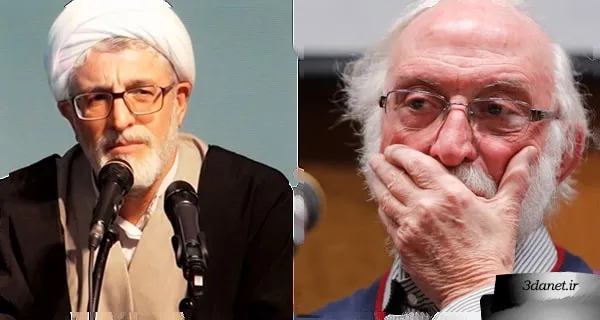
Davoud Feirahi, in an interview with Andisheh Pouya published in September 2017, described Mohammad Mojtahed Shabestari's project as unfeasible. Mohammad Mojtahed Shabestari responded briefly to Feirahi's critique on his personal website on December 13, 2017, and Feirahi replied to that response on his Telegram channel. You can read the three aforementioned pieces below:
.
.
An excerpt from Davoud Feirahi's interview with Andisheh Pouya (page 110):
✅ It seems to me that the project of my teacher, Mojtahed Shabestari, is not feasible at all. Studies show that even the revolution of modernity and the scientific revolution emerged from within church traditions; that is, it was not the case that they set aside tradition. Metamorphoses and gradual changes began from within tradition. In this respect, I agree with Dr. Tabatabai, who, when discussing modernity in the history of European thought, goes back to the Church Fathers. Even in countries that have experienced radical secularism, many of the styles and modes of tradition and laws have ecclesiastical roots.
✅ All societies have their traditions. We must gradually change the specific functions of traditions. This is a question that has been on my mind. I am a constant reader of Dr. Soroush's works and continue to follow his lectures. He possesses meticulous insights, but because he was not in the seminary, he is not familiar with the world of tradition, especially jurisprudence. He is more acquainted with the fields of theology and philosophy, seasoned with mysticism, particularly of the Konya school. Living inside the world of jurisprudence and jurisprudential texts is the main point. Soroush looks at jurisprudence from the outside. He judges the nature of jurisprudence based on the results that the knowledge of jurisprudence manifests. Perhaps he constructs a logical syllogism that a tree must be known by its fruit, and a rotten fruit indicates a dead tree, but this is not the case. The knowledge of jurisprudence, a knowledge that has permeated the warp and weft of culture for 1400 years, possesses immense potential—both liberating and destructive.
✅ The issue in my works is a historical one. Problems are not solved by drastic revolutions and fundamental metamorphoses, such as the prescriptions of my teacher Mojtahed Shabestari. It requires patience. If the Tanzimat thought during the Nasserid era had succeeded, Iran's constitutionalism would probably have had an outcome similar to Malaysia's. But because the Tanzimat failed and the government pursued its own interests, the people's only refuge became the religious forces. In this way, every form of liberation became tied to religious leaders. This issue advanced until the Islamic Revolution. This has been our historical tradition.
.
.
Mohammad Mojtahed Shabestari's note on his personal website titled "Why I Move Beyond Social Jurisprudence?" – December 13, 2017:
✅ Some of our researchers, such as Dr. Davoud Feirahi, believe that moving beyond social jurisprudential ijtihad (political, economic, criminal jurisprudence, etc.), which this writer proposes, is not feasible, and that for governance in a country like Iran with a long-standing Islamic religious tradition, we must patiently and gradually create a form of social jurisprudential ijtihad.
✅ My word to these researchers is that such a jurisprudence must inevitably be based on a kind of defensible and reasonable theological foundations. However, as I have stated in the book Critique of the Foundations of Jurisprudence and Theology, in my opinion, in the present age, one cannot speak of such foundations and substantiate them.
✅ If our researchers believe such foundations exist, it is incumbent upon them to state those foundations clearly and substantiate them, so that their efforts in developing social jurisprudential ijtihad can demonstrate their solidity and robustness.
✅ This writer's insistence on moving beyond social jurisprudence is not out of expediency or to open a revolutionary space for democratic governments in Islamic countries. This insistence is, above all, because no matter how much I think, I cannot find reasonable and substantiated foundations for such a jurisprudence in the present age, and therefore that jurisprudence is automatically negated and exits the scene.
✅If the intention is that, because the clergy and the institution of marjaʿiyya have very deep roots in Iran and political affairs cannot proceed without their jurisprudential approval, some form of seeking permission and constructing religious legitimacy is necessary, then we have sacrificed truth for expediency, and such an undertaking has extremely harmful and regretful consequences.
.
.
Davoud Feirahi's response to Mohammad Mojtahed Shabestari on his Telegram
✅ In a short interview, I mentioned that, considering the intellectual-civilizational situation of Muslim societies and the place of the discipline of fiqh within it, moving beyond fiqh is not feasible for such societies. The thoughtful scholar, Mr. Mojtahed Shabestari, in reaction to this point, posted a piece on social media with this title: "Why do we move beyond social fiqh?" Also, on p. 315 of the newly published book "A Critique of the Foundations of Fiqh and Kalām," he warned and wrote: "Warning! Democracy cannot be 'fiqhi'."
✅ Professor Shabestari has asked of this humble researcher: "If our researchers believe such foundations exist, it is incumbent upon them to state those foundations clearly and substantiate them, so that their efforts in elaborating social jurisprudential ijtihad demonstrate their solidity and robustness."
✅ Out of respect for the professor's request, I will offer some points. Given the nature of social media, these contents will inevitably be in multiple, though sequential, parts. First, I will point out some important presuppositions; it appears that fiqh, as a "system of knowledge," is clearly distinct from four other things:
a) The history of fiqh; b) Fatwas and jurisprudential opinions; c) Jurisprudential ideologies; d) The practical conduct of jurists.
a) If, in all sciences and systems of knowledge, the separation between knowledge and the history of knowledge is of vital importance, why should such a separation not be recognized in fiqh studies and jurisprudential research? For example, the discipline of philosophy and the history of philosophy, or the history of medicine and the discipline of medicine, are always kept separate. This separation is important because it allows the process of absorption and rejection, and necessarily the relationship between the old and the new in any discipline, including fiqh, to be explained. Thus, would reducing the discipline of fiqh to the history of fiqh not be a kind of "optical illusion"?
b) It seems that fatwas and jurisprudential opinions, despite their importance, are logically distinct from the discipline of fiqh; at best, they resemble scholarly recommendations-descriptions and the common doctrines in other scientific fields such as philosophy and law. Knowledge observes, explains, and interprets, while opinion issues fatwas, rules, and applies.
✅ In principle, theory and knowledge, in any science, including fiqh, do not completely overlap; theories are like a small blanket over the large body of knowledge: whichever part they cover, they inevitably fail to encompass another part. For this very reason, no discipline remains confined within the cage of even the most famous theories and theorists.
✅ Now, if we look at the history of philosophy and law, it is a storehouse of ancient anti-democratic theories. By virtue of this long history of anti-freedom and anti-equality, can one rule that the essence of philosophy and law, and the apparatus of these disciplines, is anti-democratic? By the same analogy, can one conclude from the jurisprudential theory and violence of ISIS that the discipline of fiqh, as a discipline, is founded upon violence?
c) Fiqh also differs clearly from jurisprudential ideologies; fiqh and theology, like two other important disciplines—science and philosophy—are always at the border and exposed to ideology. This is a question worthy of reflection: what percentage of any jurisprudential or philosophical theory might possess the caliber of fiqh or philosophy? In other words, what is the share of the discipline of fiqh, as knowledge, in jurisprudential theories?
✅ Ibn Rushd, the famous philosopher of Andalusia, rightly believed that Plato's philosophical theories were not pure demonstration, but a combination of demonstration and things attributable to the conditions and culture of Greece; in today's terms, a combination of demonstration and non-demonstration, and necessarily philosophy and non-philosophy. It was for this very reason that he wrote "al-Ḍarūrī fī al-Siyāsa" to distinguish the sound from the unsound in Plato's theory.
✅ Is such an analytical process impossible in jurisprudential theories? Many of the theories of any jurist of note, at the analytical level, are probably a combination of jurisprudential proofs, plus the personal psychology and extra-jurisprudential data of that jurist's era; this combination is precisely what constructs jurisprudential ideologies or causes jurisprudential theory to slide to the verge and exposure of becoming ideological.
d) Jurisprudence as a discipline also differs from the practical conduct of jurists; no scholar is completely dissolved in their discipline, nor is such a thing possible. The jurist, like any other scholar, is a human being with all contradictory inclinations, interests, and instincts; they have their own human actions and reactions; for this reason, in the historical conduct of jurists, one can also see signs of service and betrayal—something that relates to the jurist's life within the culture and history of a society.
✅ Now, can one derive from the practical conduct of jurists a proof for judging, positively or negatively, the discipline of jurisprudence itself? What proof can be found by which one could recommend to a society the transcendence of a discipline such as jurisprudence, and not jurisprudential fatwas, theories, and ideologies?



Discussion2 comments
نمونه ای از مواجهه فکری قابل قبولتر از آن چه امثال جواد طباطبایی رواج می دهند .
اقای داود فیرحی این منابع فقه هستند که قابل استناد واستدلال پذیری نیستند کتاب وسنت بدلیل تاریخی بودن وفاصله زمانی ومکانی بسیار دور از ما وبدلیل موضعگیریهای سخت ومتصلب قابلیت استدلال پذیری را ندارند ونمیتوان با توجه به انها احکام وقوانینی وضع کرد که قابلیت دفاع عقلانی از انها وجود داشته باشد