Religion
Second Session of the Panel on Salafism
In the second session of the roundtable on Salafism, Dr. Pakatchi analysed the history of the caliphate, distinguishing between the era of the Rashidun Caliphs and the Umayyads—a period that Sunni hadith scholars do not regard as a 'caliphate of prophethood' but merely as a kingdom.
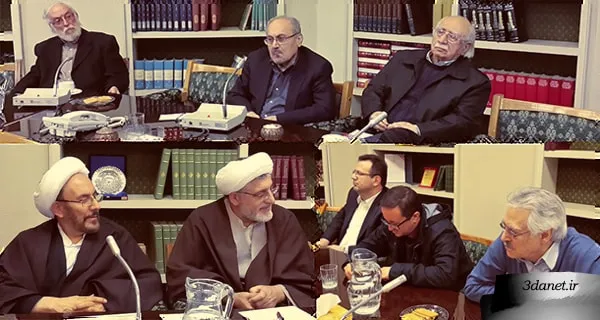
The second session of the series on Salafism and the examination of its contemporary developments (Salafism Panel) was held at the Centre for the Great Islamic Encyclopaedia.
According to DBA, the participants in this meeting, which took place on the 25th of Bahman, 1393, were: Messrs. Seyyed Kazem Mousavi Bojnourdi, President of the Centre for the Great Islamic Encyclopaedia; Hojjat al-Islam Dr. Ali Younesi; Dr. Mojtahed Shabestari; Dr. Ahmad Pakatchi; Dr. Fathollah Mojtabaei; Dr. Davoud Firahi; Dr. Seyyed Javad Tabatabaei; Dr. Esmaeil Shams; Asghar Qoreishi; Ali Mowjani; Engineer Ali Akbar Ranjbar Kermani; Dr. Ali Bahramian; Hassan Mousavi Bojnourdi; and Masoud Tareh.
Mr. Bojnourdi: Today we will focus more on examining the political movement of Daesh and its political aspects, from the caliphate to the various issues related to Salafism, from the theoretical dimension of the matter. Dr. Pakatchi, please begin:
Dr. Pakatchi: In the name of God, the Most Gracious, the Most Merciful
I was asked to speak about the issue of the caliphate. On the occasion of authoring the article on the caliphate for the Great Islamic Encyclopaedia, I was engaged with this subject for months, but today I will try to make my discussion on the issue of the caliphate more analytical and to draw a conclusion regarding the behaviour of the Salafis in relation to the caliphate.
If we have a very brief review of the first events that occurred regarding the caliphate in the Islamic world, I think we can arrive at a pathology whose afflictions have persisted throughout the subsequent centuries. The story actually begins like this: the Holy Prophet (PBUH) passes away, and a dispute arises over the caliphate after the Prophet. In this dispute, Abu Bakr attains the caliphate, and the general body of Muslims pledge allegiance to him, and in any case, the principle is that the Prophet did not appoint a successor. I am speaking from the perspective of the Ahl al-Sunnah wa al-Jama'ah – its well-known perspective – a line of thought that naturally continues in the Salafi outlook as well.
It has been said that the selection of Abu Bakr was by the choice of the Ahl al-Hall wa al-'Aqd (the people who loose and bind), and this method became a basis for choosing the caliph. When the caliph was dying, he bequeathed that Umar ibn al-Khattab should be caliph in his place. They said this was the covenant of the previous caliph, and in this way, the covenant of the previous caliph became a new tradition for appointing the caliph. When the second caliph was dying, he selected a council to choose the next caliph. They said the council was also one of the ways to choose the next caliph; meaning, it seems as if each method is only being tested once. Finally, when the turn of the Commander of the Faithful as the fourth caliph arrives, it is famously held that the same method of the Ahl al-Hall wa al-'Aqd, by which Abu Bakr was chosen, was employed again, and in fact, the Commander of the Faithful was also chosen by the method of the Ahl al-Hall wa al-'Aqd, and in this manner, the four caliphs attained the caliphate. The caliphate of Imam Hasan does not reach a conclusion, and the caliphate is transferred to the Umayyads. Among the theorists of the Ahl al-Sunnah, I have not encountered any opponent regarding the view that the Umayyad rule was by force and conquest, and no one disputes this. Everyone has accepted that the Umayyads did not attain the caliphate through any of those three methods but rather used force and conquest to reach the caliphate.
This is perhaps the first intellectual and ideological rift we encounter within the Sunni sphere, in the sense that, firstly: gathering the first four caliphs under one banner, considering they had conflicts with one another, was itself a very hard and difficult task. That is, in fact, inventing a constellation called the Rashidun Caliphs was itself a very difficult task, and this work was apparently done in the third century, and one of the first people to undertake this was Ahmad ibn Hanbal. It is technically called the doctrine of Tarbi' (quadripartite recognition), meaning that some people came forward and said they consider all four caliphs to be rightful. Whereas generally, one group was Uthmani and did not accept Imam Ali (AS) for the caliphate, and another group was Alawi and did not accept Uthman for the caliphate. For people to come forward and recognize all four caliphs despite the existing differences was not a very normal or conventional matter, and at the very least, it had not been theorized. Its theoretical basis was presented from the third century onwards.
A more serious problem was that of the Umayyads. Figures like Ahmad ibn Hanbal put forward the theory of the Fourfold Caliphate regarding the first four caliphs and recognized all of them as the Rightly Guided Caliphs; but they were unable to explain what kind of caliphate the Umayyad caliphate was. A narration that became famous among the hadith scholars from the late second century—I do not care at all whether it is fabricated or authentic, what matters is that from the late second century this narration spread very widely among the hadith scholars—the content of this narration is very important and it says: "The caliphate after me is thirty years," and another text of it says: "The caliphate of prophethood is thirty years, then there will be kingship." That is, in fact, it wants to say that the caliphate was only thirty years, from the eleventh year of the Hijra, when the Prophet passed away, until the forty-first year of the Hijra, when the caliphate was transferred to the Umayyads. Therefore, the transmitters who narrated these hadiths—who, incidentally, are the overwhelming majority of famous Sunni transmitters, and this hadith even appears in the authentic books of the Sunnis—believe that the Umayyad caliphate is not the "caliphate of prophethood." It is, in fact, a caliphate where we do not know to whom it is attributed and we do not know whose caliphs they are, but they are not the caliphs of the Prophet, and in terms of the government they have, their rule is kingship, and this was the belief of the hadith scholars. If the belief of the hadith scholars regarding the Umayyad rule was such, it is very natural that the matter continued from then on, and the rule of the Abbasids and the House of Osman is the same, meaning, in fact, that we have a period of the Rightly Guided Caliphs with which the period of the caliphate of prophethood came to an end. So we can have two Sunni readings of the caliphate: a restrictive reading that gives the caliphate of prophethood a basis of sanctity and limits it to the first four caliphs, and a general reading that somehow grants legitimacy to all of them and considers all of them caliphs. Interestingly, some analysts present a picture contrary to what we sometimes see in books, and the attacks are always directed at the hadith scholars, and it is always perceived that the hadith scholars cooperated most with the court, while the theologians cooperated the least; here we observe almost the opposite. That is, figures like Abu al-Hasan al-Mawardi in al-Ahkam al-Sultaniyya and others who even had Mu'tazilite leanings and theological thoughts tried to somehow expand the concept of the caliphate and, in a way, grant legitimacy to these caliphates, but the hadith scholars who, in fact, continued the thoughts of the early hadith scholars did not insist on this matter. We observe that Ahmad ibn Hanbal accepts only the caliphate of the Rightly Guided Caliphs as a sacred caliphate, and when he speaks of the Umayyad and Abbasid caliphs, he merely raises the issue of obedience to them, and we know that in Sunni thought, obedience to "every ruler, whether righteous or wicked" has a meaning other than the foundations of the caliphate. This path continued throughout the middle centuries, while in the Abbasid period, thinkers like al-Mawardi, even al-Ghazali, and others tried to fill these gaps and somehow extend sanctity to the Abbasid caliphate, and we clearly observe this in their books. But in the atmosphere of the Ahl al-Hadith, that is, those who followed the thoughts of the Ahl al-Hadith, we still observe the same thought of the Fourfold Caliphate and the avoidance of generalizing the sanctity of the concept of the caliphate continuing. One of the places where we can clearly see the emergence of this issue is in the thoughts of Ibn Taymiyyah. Ibn Taymiyyah, as a thinker, is naturally in a position where he must clarify his stance on some of these historical issues. Just as he usually tried to adopt very decisive and clear positions on other historical issues, it is the same regarding this matter.
I have discussed this in detail in an encyclopedia article, that from around the third century it becomes serious and continues until the eighth century when Ibn Taymiyyah speaks, and it steadily becomes stronger, and that is the theory that although the caliphate of prophethood ended after the Rightly Guided Caliphs, the ruling caliphs are caliphs, but not the caliphs of the Messenger of God, rather, based on the verse "O David, indeed We have made you a vicegerent upon the earth" and similar verses, they are the caliphs of God, and with the title "caliph of God" they want to grant them legitimacy and define the relationship of this "caliph of God" with the "caliph of the Messenger." Over these centuries, we have at least twenty theorists who have tried to formulate and address the issue of the caliphs being the caliphs of God.
When Ibn Taymiyyah confronts this issue, he deals with it very harshly. In one of his treatises called al-Rasāʾil wa al-Masāʾil, there is an independent treatise on the concept of khalīfat Allāh. He devoted an entire treatise to this subject and attacked it fiercely, arguing that no one on earth is khalīfat Allāh except Adam and David, and he vehemently attacked all ideas holding that anyone other than Adam and David—as explicitly stated in the Quran—is khalīfat Allāh. Ibn Taymiyyah says the only thing that can be a proper justification for caliphate is khilāfat al-rasūl Allāh. In the discussion of khalīfat al-rasūl Allāh, he also emphasizes the discussion of khilāfat al-nubuwwah, and after the Rightly Guided Caliphs, he considers the later caliphs to be possessors of kingship (mulk), not possessors of caliphate. It is precisely for this reason that a contemporary Egyptian published that treatise of Ibn Taymiyyah as an independent treatise and even named it al-Khilāfah wa al-Mulk, with Ibn Taymiyyah as the author. Ibn Taymiyyah himself did not give the book such a name, but this book is indeed by Ibn Taymiyyah. In fact, Ibn Taymiyyah, as a pivotal and prominent figure in the formative atmosphere of the Salafi movement, seems to have expressed his positions very clearly on the issue of caliphate. Of course, we must not forget that Ibn Taymiyyah chronologically lived in a period when there was no powerful caliphate in the Islamic world. Ibn Taymiyyah belongs to the Mamluk period, and during the Mamluk period, there was a nominal Abbasid caliphate in Egypt, and the Abbasid caliphate in Baghdad had fallen. But there were those who sought to revive the caliphate and raise the issue of caliphate, and Ibn Taymiyyah, with this approach of his, had effectively criticized this thinking.
If I may jump ahead a bit and come forward, we know that with the conquest of Egypt by Sultan Selim and Sultan Selim's effort to connect the Abbasid caliphate of Egypt to the caliphate of the House of Osman, another shift occurs again, and the story is that from the time of Sultan Murad I, that is, the third Ottoman Sultan, the Ottomans claimed the caliphate. I have brought out the documents and shown that this is both on their coins and in their correspondence, and they explicitly considered themselves caliph, but khalīfat Allāh. From the time Sultan Selim conquers Egypt, he claims that henceforth we are also khalīfat rasūl Allāh, and in fact, he wants to assume that khilāfat al-nubuwwah, which had a special sanctity, has been transferred to the Ottoman caliphate, and in this context, we observe oppositions to this movement. The part of the oppositions that is not related to Salafism is beyond our discussion now, meaning some non-Salafis also had oppositions to the issue of the Ottoman caliphate. Both some factions of Sufis, some factions of theologians, and of course, some factions of Salafis.
In the Salafi spectrum, we specifically have Muhammad ibn Abd al-Wahhab. Muhammad ibn Abd al-Wahhab, as someone who had placed his theories entirely in continuation of Ibn Taymiyyah's thoughts, could very naturally make the utmost use of Ibn Taymiyyah's thoughts on the issue of caliphate as well. For the war and confrontation against the Ottomans, one of the most important constraints that existed was how a Sunni community could be convinced to revolt against the caliph. It does not seem an easy task for a group to come with the slogan of Islam and the slogan of following the Pious Predecessors and revolt against a caliph who is, after all, recognized as legitimate and whose caliphate the general Muslim populace has accepted. It requires that some theoretical foundations be mentioned for this matter. The theoretical foundation was precisely that Muhammad ibn Abd al-Wahhab again limited khilāfat al-nubuwwah to the Rightly Guided Caliphs. In this case, the only thing that practically remained for the House of Osman was khilāfat Allāh. And Ibn Taymiyyah had already clarified the matter of khilāfat Allāh, that no one except Adam and David enjoys khilāfat Allāh. Therefore, the title of caliphate for the House of Osman became a meaningless title, that is, a name for which it was unclear what its annexed term was and whose caliph they were, and this helped Muhammad ibn Abd al-Wahhab to easily revolt against the House of Osman and have a religious justification for this action of his.
I am amazed by those who analyze the movement of Muhammad ibn Abd al-Wahhab and usually overlook these constraints—how he was able to rise up against the reigning caliph under the banner of Islamism. Logically, ideologically, he would first have had to discredit the caliph in order to carry out such an act, and in practice, this is precisely what occurred. It seems that this is, in general, the cornerstone of the new Salafism. It should be noted that Muhammad ibn Abd al-Wahhab personally has no work on the caliphate, but I have extracted statements from his letters and treatises in which he spoke and addressed this matter.
Among other Salafis in the last two centuries, we fully encounter this thinking. One of the most famous and well-known books presented as a theoretical work from Salafi currents concerning the caliphate is the book "Al-Khilafah wa al-Mulk" (The Caliphate and Kingship) by Abul A'la Maududi, in which Maududi has chosen precisely this teaching as his central doctrine: "The Caliphate of Prophethood is thirty years, then there will be kingship." That is, this book was written exactly along the lines of demarcating the concept of caliphate and the concept of kingship and the status of each, and it seeks to specify that what we have encountered throughout history as caliphates was nothing but a nominal designation of caliphate and they are not the true caliphate.
In the final part of my discussion, I need to add a point. Reviewing the Salafi literature on the caliphate would require a great deal of time, but one point is important here, and that is that while these kinds of attitudes toward the issue of the caliphate have existed, we also witness that the new Salafi currents have been, in a way, interested in the revival of the caliphate. Among those interested in reviving the caliphate was Hasan al-Banna, the founder of the Muslim Brotherhood movement, who, in the declaration of the Fifth Conference of the Muslim Brotherhood, explicitly considers the establishment of an Islamic caliphate to ensure unity among Muslims as one of the main goals of the Muslim Brotherhood movement. Likewise, in his writings, he dedicated independent sections to the discussion of the caliphate.
Muhammad Rashid Rida, who is recognized as one of the prominent figures of the Salafi movement in Egypt, is also among those who have an independent book on the caliphate, and we know that for a time he strongly supported the caliphate of the Ottoman Sultan Abdul Hamid. In an article he wrote about the Balkan Wars in the magazine Al-Manar—I was looking at the article itself—there, in the manner of the Shahada (testimony of faith) where one says "I bear witness that there is no god but God and I bear witness that Muhammad is the Messenger of God," he adds "I bear witness that Abdul Hamid is the Caliph of God." He bears witness to this, and this is very strange. That is, we see on the one hand that he accepts this caliphate, and on the other hand, he accepts the concept of "Caliph of God," which Ibn Taymiyyah had so opposed, fought against, and written treatises against, and he bears witness to it. Even later, when he feels that the Ottoman Caliph Abdul Hamid is no longer capable of helming the caliphate of the Islamic world, he raises those secondary discussions, suggesting that, for example, Amir Hussein al-Hashimi or, let us say, the Zaydi Imam of Yemen be chosen as caliph. There are various efforts in which Muhammad Rashid Rida himself was involved, and he tried to participate in each of them. This indicates that achieving a caliphate was very important, serious, and fundamental for them.
I think one of the greatest problems that the Ahl al-Hadith currents and the currents that later came to be called Salafi have had throughout history in relation to the issue of the political system largely stems from the fact that the political system—as its name implies, in a system, we are talking precisely about a regime and a system—Salafism, in its religious thought, was intensely system-averse. To illustrate this system-aversion, it suffices that when Ahmad ibn Hanbal was asked why he does not write a book on jurisprudential matters, he explicitly declares that he is opposed to this and that we have no right whatsoever to put a series of matters together and say, "This is Islam." Ahmad ibn Hanbal gave this answer explicitly to his student Abu Dawud al-Sijistani. The fact that one of the four jurists of the Ahl al-Sunnah, named Ahmad ibn Hanbal, does not have a single page of a jurisprudential book, itself clearly shows that this person has no interest whatsoever in system-building. Naturally, those who continued his thoughts also possessed this aversion to system-building. Therefore, when one speaks of a Salafi political system, a paradoxical situation arises. On the one hand, a Salafi political system, by virtue of being a system, must move towards the ideological-political systematization of itself and its thoughts, and on the other hand, systematization is fundamentally incompatible and inconsistent with its foundations, and this has created a challenging situation for Salafi currents throughout history and, in this respect, has made the political systems of Salafi currents vulnerable. Even regarding the point that Dr. Shabestari raised, as to whether Ibn Abd al-Wahhab wrote any theoretical works in this field or not, perhaps the reason he only addresses this issue sporadically and does not involve himself in it is that he does not have the possibility of system-building in this area. Mostly, fleeting, sharp, and thunderous statements, without the possibility of system-building being carried out within the framework of those statements, are seen among this group. And the problems related to early Islam, which I tried to touch upon somewhat at the beginning of my discussion—the concept of the Salaf, whose reference is fundamentally always to the events of early Islam—also complicates the matter further. That is, when they want to build a system, they must precisely refer to the Righteous Predecessors (al-Salaf al-Salih) for this system-building, and when they refer to the Righteous Predecessors, they see that the greatest challenges and conflicts existed during the era of the Righteous Predecessors. In that period, we were not faced with a fixed procedure for choosing the Caliph, and precisely at a time when the Companions were still alive and, from the Salafi perspective, it was still the era of the Righteous Predecessors—not only had the era of the Followers not ended, but the era of the Companions had not yet ended either—that is, in the year 41 AH, the Caliphate of the Prophetic model ended and the Caliphate transformed into kingship. If we consider the conduct of the Salaf as authoritative, then we must consider the acceptance of kingship as authoritative, because a large group of the Companions accepted kingship, and this again creates a serious challenge and an ideological paradox for Salafism, which, on the one hand, wants to insist on the tradition of the Rightly Guided Caliphs and the non-acceptance of kingship as Caliphate, and on the other hand, insists that the tradition of the Salaf is worthy of emulation and includes the era of the Companions and the Followers. And this means that we must consider this tradition to have continued until around the year 100 AH, whereas we did not have a Caliphate beyond the year 41 AH.
Overall, I have tried, by reviewing various aspects of the issue, to depict the challenges and problems that Salafi thought faces in its encounter with the Caliphate. Thank you very much for the time you gave me.
Mr. Bojnourdi: In the research you conducted, did you determine the position of the forgers among the hadith scholars, and did you assign a role to them, or did you only research the course of thought, regardless of whether its founders were forgers or not?
Dr. Pakatchi: In the article itself, regarding the issue of the Caliphate, I addressed the evaluation of about three hadiths that were very central and key, and I tried to show in which period these hadiths were fabricated and came into being. But overall, considering that even if forgery occurred, this forgery itself signifies a thought and an idea, and considering that these hadiths have been viewed with acceptance by the Ahl al-Sunnah and have entered their Sahih collections, and practically all Salafi citations are to these very hadiths, it shows that these hadiths possess sufficient credibility for our citation. Because we are, in fact, studying the course of thought.
Dr. Pakatchi: This point that Professor Shabestari raised—that Shiism does not have a caliphate but an imamate—is actually a very interesting one. Let me add one remark. Among the new Salafi currents, there are some that were not at all inclined to use the term caliphate and preferred to use imamate and emirate. Among them, the Taliban, who introduced Mullah Omar as Amir al-Mu'minin and named their government the Islamic Emirate of Afghanistan, not the Islamic Caliphate. This had meaning, and one cannot simply gloss over this issue.
Dr. Tabatabai: It meant that a caliph would come and this emir had paved the way for him. But regarding imamate, it is interesting—I don't know why you didn't mention it—because someone like Ibn Khaldun uses the term al-imama al-kubra (the supreme imamate) and discusses imamate more than caliphate. I think Ibn Taymiyyah, in al-Siyasa al-Shar'iyya, also discusses the idea that, from their perspective, the caliphate in a certain sense is finished, and therefore he puts forward the theory of imamate. Perhaps in opposition to the Shiite imamate, as a different theory countering the one the Shiites had formulated.
Dr. Firahi: Al-Mawardi, too, in his book al-Ahkam al-Sultaniyya, begins his discussion with the subject of imamate; indeed, its very opening is with this.
Dr. Tabatabai: He discusses the caliphate, explaining why we now say caliph: because at first it was the Caliph of the Messenger of God, then the Caliph of the Caliph of the Messenger of God, and after three or four caliphs this became too long, so they dropped the rest and just said caliph.
Mr. Bojnourdi: To complete the discussion on the caliphate, I would like to ask Dr. Firahi to begin his talk and especially to address the caliphate of ISIS—what kind of caliphate that is.
Dr. Firahi: In the name of God, the Most Gracious, the Most Merciful
I will try to point out some changes in their terminology that did not exist before. Dr. Tabatabai referred to the concept of the caliphate, and there are discussions in this very context. Since the time of Ibn Taymiyyah, a foundation has emerged in Salafi literature that is a paradoxical foundation of unity, containing an inherent contradiction. They feel that the reason the Arabs and Muslims lost power to the Mongols and these events occurred was the internal divisions among Muslims, their division into multiple sects and nations. For this reason, they sought unity, and for unity they looked back to early Islam, particularly the era of the Rightly Guided Caliphs. And since, naturally, as Dr. Tabatabai also pointed out, there was no single interpretation of those forty years, they made their own interpretation the basis for unity—which in reality is itself the beginning of a division and the start of a conflict. I wanted to make this point: what did this foundation do to Sunni jurisprudence, and what transformations occurred? One of the most important effects of this foundation was the spread of the jurisprudence of takfir (excommunication). That is, the Salafis gradually began to excommunicate those around them. Takfir existed before as well; we had individuals in the past who threatened others with excommunication. But gradually, as we move alongside Salafism into the contemporary era, we feel that this current and the thought of takfir becomes denser and turns into a central axis in Salafi literature.
If you will allow me, since I think it is very important, I would like to say a few sentences about it. The Salafi movement is inseparable from takfir; the reason is that, by virtue of the claim that the Islamic world must be united and that this unity must return to the first forty years, anyone who had a disagreement or if there was a difference, they would channel it into the issue of takfir. I want to explain how this matter functioned in Salafi thought. In their literature on takfir, they say that takfir is the attribution of unbelief to Muslims, and they have a term for takfir which is "huwa nisbat ahad min ahl al-qibla ila al-kufr." Then, in the jurisprudence of takfir, the discussion is about how a Muslim, despite claiming to be a Muslim, receives the ruling of an unbeliever, and once he receives the ruling of an unbeliever, the four rulings of unbelief are applied to him. The four rulings are very important and consist of: one, his wife becomes divorced; two, the death penalty; three, access to his property and that he no longer owns anything; four, his repentance is not accepted. In addition to these, they add a few other things, for example, they say the permissibility of cursing him and the impermissibility of praying and seeking forgiveness for him. This thought became intensified in the literature of the new Salafi movements and from the Wahhabi movement. I can point to the source and say why this is happening.
One of the developments that I think is very important is the Afghan war, and another is the events that occur with Mawdudi in the course of takfir within Salafism. In Mawdudi's literature, there is an interesting term called the new jahiliyyah, and he believes that Muslims after a while returned to the age of ignorance, and one of the symbols of this jahiliyyah is unbelief, or takfir itself, and they say that in the old jahiliyyah there was no Islam, but the new jahiliyyah has the appearance of Islam, and then they pursue a kind of Puritanism or purism and say let us return and create a Salafi basis for it. Then they draw two conclusions: one, today's Muslims are Muslims in appearance and must be fought. Second, in order to fight them, we must return to the early days of Islam, and the term they use is the fifth caliph, meaning the caliph of ISIS is not in the line of any of the Umayyad, Abbasid, or Ottoman caliphs.
Dr. Mojtahed Shabestari: Have you now entered the discussion of ISIS?
Dr. Firahi: No, I am stating their term and that they have such a term, and I am going back.
I should say that when they engage in takfir, they excommunicate the entire new Muslim world. In this new Muslim world, it is not just one or two people—they excommunicate everyone except themselves. Anyone who does not possess this triangle of hijra, jihad, and takfir—meaning anyone who does not join them, whether mentally or geographically, does not join the jihad, and does not excommunicate others—is himself excommunicated. Such a view entails considering all Muslims to be in a state of jahiliyya, and in order to liberate Muslims, they return to the early days of Islam and consider themselves an extension of the Four Caliphs and the fifth caliph after Imam Ali (AS). Interestingly, in ISIS literature, they publish a genealogy for themselves in which, through Imam Hasan (AS), they trace their lineage back to the Fatimids and Fatimid movements, and this part constitutes a large portion of their outlook. When ISIS speaks of the caliphate, they mean the caliphate of the Messenger of God; for ISIS, the concept of khalifat Allah (vicegerent of God) does not exist at all, and they excommunicate all those who speak of khalifat Allah. That is, a very great deviation is seen in their minds. Another point is how takfir functions as a machine in their operations. When I searched through their literature, it was as follows: they believe that we divide all of humanity into two parts; non-Muslims are divided into the People of the Book and those who are not People of the Book. In practice, they consider Jews, Christians, and Zoroastrians as People of the Book. Those who are not People of the Book are also of two kinds: either they are infidels, like Buddhists. The second group of non-People of the Book are the ahl al-qibla (people of the prayer direction), and they have said that the infidel from among the People of the Book is equivalent to a member of the ahl al-qibla who considers himself affiliated with the religion of Islam but is not a Muslim. That is, in their view, he is not a Muslim. They say that those who are apparently Muslims but are not truly Muslims are of two categories: one, sects whose disbelief is stipulated in the texts, such as the ghulat (extremists) or even a portion of the Kharijites, whom they believe do not even need to be excommunicated as their disbelief is textually stipulated; and second, those who become infidels for a reason—these are the takfiri ones. This second group's excommunication is because they deny the necessities of the religion—not a specific necessity of the religion, but the general necessity of the religion, which can be explained using a term common among themselves. A specific necessity means something that is necessary in someone's view; this they call a specific necessity. But when they say someone commits shirk (polytheism), for example, in their view, the Shiites, or someone who collaborates with infidels like the United States, or someone who does not rise up against the ruler, like the ruler of Saudi Arabia—these people they consider deniers of the general necessity. That is, wherever you look in Muslim society, these are necessities, and they assert that the necessity of these things is an Islamic necessity. Then, by invoking this category of general necessity that they speak of, takfir takes shape in their literature, and after that, they also create a transformation in the jurisprudence of takfir of Ibn Taymiyyah, as well as in the jurisprudence of takfir of Wahhabism, which there may not be time to mention here. The summary of their argument is this: they [the earlier scholars] believed that the ruler could not be excommunicated at all; that is, I have never seen even Ibn Taymiyyah excommunicate the Ottomans, and the basis of traditional literature was that the ruler cannot be excommunicated. Takfir was directed elsewhere, for example, the excommunication of scholars. But ISIS specifically excommunicates the ruler. Suppose, for instance, they excommunicate the rulers of Saudi Arabia, Syria, or Jordan. This is one part of their takfir. The second part of the takfir they practice is what is termed collective takfir. Previously, it was such that a person would be tried in a court or elsewhere, statements would be extracted from him, and a specific ruling would be issued for him. But now it is not like that; they excommunicate an entire region. For example, they suddenly issue a ruling of takfir for the lands of Iraq or the lands of Khorasan, meaning Iran, Afghanistan, and parts of Central Asia and the south of the Persian Gulf. In the earlier literature, the principle was based on faith and being a Muslim, and then takfir was made an exception; but they act in reverse, taking takfir as the principle and faith as the exception. It is precisely for this reason that when they encounter Shiites or Sunni Muslims, they do not hold repentance ceremonies for them, but they do for infidels—for example, they hold repentance ceremonies for Yazidis and Christians. These are the changes that have occurred in their literature, and I want to explain why and when this happened. There are lengthy reports, but the outward aspect of the matter began when the United States occupied Afghanistan and a large portion of the takfiri currents returned to Saudi Arabia.
There they concluded that they were fighting in Afghanistan because its ruler was aligned with Russia or America; when they came to Saudi Arabia, they saw that the same thing was happening there, meaning the ruler of Saudi Arabia was also hand in hand with the Westerners. In this way, this current, which already had a history, began to move, and its peak is the occupation of Afghanistan, and it acts with intensity.In the classification of this current, they are called fourth-generation currents. That is, not only do they have no direct connection to Ibn Taymiyyah—although the pilot they burned had a text by Ibn Taymiyyah placed on him—they are not even fully connected to Wahhabi currents, nor do they have much affinity with al-Qaeda. They have a very particular interpretation of the concept of the caliphate and a very particular interpretation of this Islamic purism, the basis of which is takfir. In fact, they have begun to act within this framework, and it can be said that many Salafi principles are inverted in them.
Mr. Bojnourdi: Mr. Firahi, my question is this: from what you are saying, their main theory is very new, meaning that after the occupation of Afghanistan they go to Saudi Arabia and gradually gather together and these ideas take shape among them. Firstly, tell us whether these rites they have and these definitions they make for unbelief and the caliphate are new or old, and if they are old, where did they originate, and who is their main theoretician at present.
Dr. Firahi: In tracing their thought, it is said that through Abu Musab al-Suri they go back to the Ikhwani-Salafi Sururi currents. That is, the school of Surur al-Din Zayn al-Abidin al-Sururi. In fact, after 1982, when a major part of them were suppressed in Syria, a serious takfiri current emerged from within them, inspired by the Sururi currents. The Sururi currents are, in their terminology, Salafi in creed and Ikhwani in method. They have organizations and their methodology is like the Ikhwan, and unlike the Ikhwanis, who are no longer Salafi, they are Salafi, and again unlike the Ikhwanis, they call their organizations, in their terminology, independent kata'ib.
Independent kata'ib means independent battalions, battalions that, wherever each one is formed, if they feel a sense of responsibility, they act upon it. In Islam, we have a principle under the title that obligation is contingent upon power, and both Shiites and Sunnis believe in it; therefore, wherever anyone feels they have power, they then begin and carry out their duty in that region. So in Islamic jurisprudence, there is such a basis that says obligations are contingent upon power, and whoever acquires power, these obligations become incumbent upon them, and these independent kata'ib are formed. This is abundant in the works of Abu Musab al-Suri, and symbolically, most of them have the kunya Abu Musab; even the caliph they appointed for Iran was given the kunya Abu Musab. All of this originates from the work of Abu Musab, and Abu Musab himself goes back to the Sururi currents, and the Sururi currents, after the suppression in Syria, moved to Saudi Arabia, Qatar, and these regions.
Dr. Shabestari: Dr. Firahi, from your statements, one can conclude that the most pivotal concept in motivating them is being obligated to the rulings of the Sharia.
Dr. Firahi: Yes, yes, it is, and I can even say that one of the most important Sharia rulings for them is the ruling of takfir. A point they have, which they have added to the previous ones, is that they have highlighted three factors of takfir. Previously, it was that someone who declares unbelief is an apostate, but now they say that someone who does not declare unbelief but commits shirk, like the Shia in their view, is an apostate. Someone who has nifaq, meaning outwardly they are with them but inwardly they are with America, is an apostate, and this is also takfir. If someone has bid'ah, like democracy, this is also takfir. Therefore, they have added three serious principles to the criteria of takfir: one who is a mushrik, meaning the Shia; one who has nifaq, meaning Sunnis who behave duplicitously; all those who have a new matter, like democracy and elections.
Dr. Mujtahid Shabestari: So one can say that we are obligated to implement the rulings of the Sharia to the extent of our power.
Dr. Firahi: And its first ruling is takfir.
Mr. Qureshi: In Yemen, after that Sanaa explosion, Ansar al-Sharia was formed, in opposition to Ansar Allah, who are Zaydi Shiites.
Dr. Firahi: That is precisely their core term. They believe that the Sharia has no specific custodian, unlike the classical literature which held that the ruler must regulate these matters, but they do not believe this and say that whoever has power [may do so].
Mr. Bojnourdi: Gentlemen, please pay attention; in order to complete the discussion on the Caliphate, if anyone has something to say on this subject, let them speak up.
Mr. Younesi: In the name of God, the Most Gracious, the Most Merciful
The discussion of takfir and Salafism, each of which points to a particular direction and dimension, and both are necessary and concomitant. In a historical categorization, I divide this into five stages, and each stage emerged after a crisis that arose within the region or within the Islamic world, giving rise to this intellectual crisis as well.
The issue of takfir is, in any case, an intellectual crisis that emerged after a political and social crisis. The peak of political crises is civil wars, the civil wars of the Islamic world, or collapses and extinctions, and after that, an intellectual crisis was also born, the first of which, incidentally, arose in the Shiite world. That is, during the Caliphate of Imam Ali (peace be upon him), after the war began and the issue of the Kharijites occurred, and the civil war proceeded in a terrible manner and practically led to their victory, it caused an intellectual crisis, the result of which was the emergence of various Kharijite sects. The first organized takfiri current that considered everyone other than themselves to be infidels was the Kharijite current, who were, incidentally, soldiers of Imam Ali (peace be upon him). This Kharijite current, which itself encompasses various sects, in some of these sects considered everyone except themselves to be non-Muslims and infidels, and they are very similar to the currents we witness today. This is one stage where a crisis of the Caliphate and internal governance is created and leads to an intellectual crisis, and this issue continues in the form of a war between reason and tradition in the Islamic world. In my opinion, the discussion of rationalism and jurisprudence is an important one, and here we must consider the discussion of the Mu'tazila and the Ash'ariyya in examining the issue of Salafism. There too, the discussion of takfir, killing, and war existed extensively and preoccupied the Islamic world for several centuries. Sometimes the Caliph and the state apparatus would align with one current and destroy the rival, and this situation continued until the Mongol invasion. The Mongol invasion caused the entire Islamic world to suffer a crisis of a management vacuum, internal crisis, and the release of internal energies. This crisis reaches its peak in the Islamic world, and it is here that Ibn Taymiyyah emerges and conducts a pathology, [concluding] that the cause of the fall of the Caliphate and the cause of the Muslims' defeat is that they were internally divided into sects, and for the first time, it is he who says that returning to the Salaf al-Salih (the Pious Predecessors) is the path to salvation. Ibn Taymiyyah's movement is a movement towards the negation of all jurisprudential, theological, and mystical schools. That is, against the Four Schools, against all other sects like the Shia, against the mystical orders that the majority of the Islamic world followed, and also against the theological schools. Why? Because, in his view, all the differences that exist among Muslims stem from following this school or that jurisprudential school or that mystical order, and in his view, all differences arose from this, and these differences did not exist in the world of early Islam. In early Islam, we had neither the Four Schools nor theological, dervish, or mystical schools; so let us return to that simplicity of the Islamic world and the Salaf al-Salih. The proposal of this simple Islam, because it negates many of the constraints and obligations that have been placed upon Muslims over time, has always held an attraction for everyone. Muslims suffered from the heavy burden placed on their shoulders over time by schools and various jurisprudential sects, and they felt that many of these obligations and prohibitions were things that had been placed upon them over time and were not there from the beginning.
Ibn Taymiyyah was the first to negate this, referring the Islamic world back to its very beginning, when, despite having few and limited obligations, they possessed authority and honor, and none of these sects and schools existed. This, while containing within itself all the contradictions the professors mentioned, also held an appeal. This is one stage, meaning the crisis of the Abbasid Caliphate's fall leads to the emergence of Ibn Taymiyyah's new school, which is the foundation for other schools and the subsequent era. This stage continues until the era of the Ottoman Caliphate's fall. The Ottoman Caliphate brought a humiliation to the Islamic world in the sense that Muslims both experienced colonial domination and, in a very bad way, the authority of the Islamic world, which the declining Ottomans were custodians of, was endangered. The Ottoman Caliphate becomes extinct, and we witness the emergence of Wahhabism. In my view, Wahhabism, for the first time, reconciles with a governmental system and cooperates for the first time in Arabia to shape power and government, and succeeds in forming a system, although they later quarrel; this is another stage. The next stage is the crisis after the Islamic Revolution, where the Sunni majority felt humiliated. With the crisis of the occupation of Afghanistan, the Islamic world once again sees itself in a humiliating crisis, and what happened in Afghanistan was an activity and a struggle to exit it, during which the third stage of Salafism takes shape, and this also leads to the formation of a system. In my opinion, they again reached the conclusion that without a system and power, they could not accomplish anything, and this time they succeed in forming the Taliban. In the second stage, they had succeeded in shaping the Al Saud and formed the Al Saud monarchical system, and in Afghanistan, they succeeded in forming the Taliban government. In the fourth stage, they form the government of the Levant and Iraq. That is, in the three subsequent stages, they felt that without possessing power and a system, they could not accomplish anything.
Salafism is the echo of humiliation and defeat and an attempt to exit the crisis. Whenever a crisis has engulfed the Islamic world, this has happened, and they consider it an effort and a solution for exiting the crisis. In truth, it is a reaction and echo to both internal crises and the humiliation of colonialism, Israel, and America. A characteristic of all of them is anti-Westernism. The reason for this is that they feel a large part of this humiliation is a humiliation imposed upon them by the West, and this was very evident in their third current. Al-Qaeda, by attacking America, sought to demonstrate this in the best possible way. Al-Qaeda shows that their worst and most formidable enemy is the West, and the symbol of the West is America, and it must be defeated so that Muslims can regain their honor; that is, responding to this Western hegemony was carried out with a suicide attack.
Another important characteristic of theirs is the negation of all theological, mystical, jurisprudential schools and new ijtihad. All Salafi currents have this characteristic of rejecting specialized interpretation of Islam. That is, they do not accept any authority for defining Islam. This authority of defining Islam, which is one way in Shiism and another way in other sects or in mystical schools, they reject all these specialized interpretations that have formed throughout history and grant the right for everyone to refer directly and derive from Islam themselves. That is, independent ijtihad for everyone, and you do not see a scholar or jurist in any of these new movements, and among their leaders, you do not see an individual who has expertise in Islamic or human sciences.
We ourselves had a similar occurrence in the suppressed excitements of the revolution era. In the Forqan group, they were also told that seminary and university specializations were an obstacle for you, and you must interpret directly yourselves. Hence, we see Gudarzi, who is an ordinary individual, granting himself the right to come and reject all the words of Motahhari and others and give his own opinion, and his first act is violence and assassination. In the course of the revolution or before it, all the groups that were formed within Shiism were entirely like this, and none of them had a source of emulation. An ordinary person who possessed the characteristics of general ijtihad, meaning he had courage and general knowledge, was able to take on the leadership of a current. This has happened in the Islamic world on a vast scale; al-Qaeda, ISIS, Boko Haram, etc., in all of these, a specialized Islamic scholar, a mystic, a jurist, whether Shia or Sunni, is not at the head; they are all duty-bound.
Let me summarize my point. Takfir is the necessary corollary of these five historical developments and its distinguishing feature. As Mr. Firahi said, takfir today is no longer a jurisprudential method but a school of thought. For them, takfir is a school whose requisite is hijra—that they must leave Europe and everywhere in the world and certainly wage jihad, meaning they must necessarily negate those around them who are not of their own. Negating those around them who are not of their own is a method and a school, not a jurisprudential ruling, which is very important, and it seems we need to work a great deal on this subject. Many of their organizations are named al-Jihad wa al-Takfir, and many of their organizations are [named] Takfir, because in their view takfir is a school, and they have arrived at the conclusion that through takfir they can settle their account with Europe, America, the West, and everyone. For them, takfir is even higher than jihad, and without takfir they cannot undertake hijra and jihad. The principle is takfir; they must first declare takfir so that they can then separate from Europe and undertake hijra.
Mr. Bojnourdi: Thank you. Mr. Moujani, please go ahead.
Mr. Moujani: In the name of God, the Most Gracious, the Most Merciful
Let me first say that during Mr. Younesi's remarks, numerous instances from recent decades came to my mind, and I was able to review them, and I was taken aback by people who were not jurists and had other specializations, yet all of them entered into the matter of jurisprudence and made statements, each of which became the starting point of a sect and a line of thought.
The subject I wanted to address regarding the caliphate is from this angle. The reference Dr. Pakatchi made to the concept of the caliphate, and the point in Dr. Firahi's remarks concerning the discussion that they consider themselves Fatimid or connected to Imam Hasan (AS). The new Daesh has for some time now created a concern in my own mind, from the perspective that in the Islamic world, fundamentally, before the issue of Abu Bakr al-Baghdadi's caliphate was raised, we had no form or expression of this whatsoever, and we thought it was a category consigned to history and that there was no longer any necessity for anyone to think about it beyond studying it. But now someone has concretely come forward, donned the mantle of the caliphate, and claims the caliphate, and naturally, he is also making use of this lineage. One of the grounds that can create great concern is how this group of Sadat, Shurafa, and Nuqaba will connect to us in the not-so-distant future. I say this from the perspective that recently, when I was in the city of M'saken in Tunisia, I saw that everyone there is a Sharif and a Naqib, and practically they are also predisposed to claim the caliphate, meaning they saw this duty within themselves. These were all our Ahl al-Bayt people, meaning they had connections, contact, work, and interaction with the Ahl al-Bayt World Assembly, but now they no longer have that feeling, and their feeling is that no one is more worthy than they are to use this power that they legitimately possess by virtue of lineage and to demonstrate in practice the duty that has been placed upon them. I am not saying that this concept of the caliphate is entering an environment of—I am not saying Imami Shi'ism or our jurisprudential sphere—but it is entering an environment in which the Islamic Republic has invested over these years. How will our confrontation be with people who feel a duty within themselves and who, naturally, by lineage are all Sharif and of noble descent? I do not know whether there is an instance in history from the Abbasid era in the minds of Dr. Pakatchi and Dr. Firahi, because the same situation existed in the Abbasid era. A few days ago, I was speaking with Mr. Bahramian about this very point, that there too there was a dispute between Muhammad al-Hanafiyya and the Abbasid house over who was more entitled to don the mantle of the caliphate. Today, the interpretation and translation of this phenomenon in this realm, which is close to us, can be very crisis-provoking. Is there an instance or an example to which one can resort, create a space, and draw a clear line? I raise this more as a question.
Mr. Bojnourdi: Dr. Mojtabaei, if you have any remarks regarding the caliphate, please share them.
Dr. Mojtabaei: The topics were very useful. Apparently this is an introduction to the entry you wish to write for the Encyclopaedia of the World of Islam. The subject was very well developed historically, and I believe that in the encyclopaedia, this historical aspect should be addressed more, and in my opinion, you should not delve too much into current circumstances. Because the difference between an encyclopaedia and an article or book is that in an encyclopaedia, one must address those things that are established certainties of the time, and theorizing, conjecture, and speculation must be set aside until a period of time has passed over it so that history, in any case, clarifies what the matter is. I think that issues currently unfolding in time should only be addressed to the extent of providing general information, because truly nothing is clear. The historical fate of the Muslim Brotherhood is clear. Al-Qaeda and the Taliban are also clear to some extent, but it is truly unclear where this Boko Haram and ISIS came from, why they came, and what they are doing. They are doing nothing other than destroying Islam in the world. They are, in any case, pursuing a theory whose history has now been expounded, and it has a very solid and clear history, but the fact that Boko Haram is committing murder and plunder in Africa in this way, or that ISIS acts in this manner, it is as if their intention is to destroy the image of Islam in the minds of the world. This is why one must treat current movements with great caution. But this issue, in whatever religion it forms, has this characteristic; that is, there is a group that, so to speak, clings to the precedents and history of the fathers, and there is also a group that wants to create a movement, reform, and move forward. It has existed in Judaism; Christianity itself is one of the manifestations of this current that arose within Judaism. The dispute between Catholics, Protestants, and Orthodox also, in truth, possessed such a quality. This matter has also existed in India. That Vedic and Upanishadic literature, in truth, has such a quality. The Vedas wanted to cling to precedents and that which were the roots. It was radicalism and fundamentalism. The Upanishads wanted to have a forward movement. In more recent periods, again in India, two groups emerged, Arya Samaj and Brahmo Samaj. The Brahmo Samaj wanted to adapt themselves to the conditions of their time, and the Arya Samaj wanted to return to the traditions of the fathers. In Buddhism, too, the difference between Mahayana, Theravada, and Hinayana is something like this. The Theravadins wanted to return to the former traditions and the origin and roots, and the Mahayanists wanted to separate themselves from the roots. This is nothing new, and this matter has existed in all religions, and it is the nature of every religion that it necessitates movement, because history is moving. If a religion wants to stand still in the very place it came into being and mark time, history will crush it. This is why it must move, although this movement must be under a specific supervision. There is a story the Buddhists have that says: A group had a paternal house. The homeowner died, and the heirs fell into disagreement. Some of the heirs believed the house must be kept exactly as it was inherited from the father. Now, even if the foundations have suffered from damp and the walls are ruined, it must still be kept in that same form. A group of the heirs said this is the paternal house and it is very dear, but it must be repaired and maintained in such a way that one can live in it today, in accordance with what we need today to dwell in it. Another group said no, this house must be completely demolished and a new house built on this land from scratch. This is an allegory, and these three currents exist in some form in all religions and are nothing new. However, because Islam came into being and grew in a specific historical situation and quality, these differences have become more intense, more widespread, and more glaring. In Islam, as I mentioned, this has existed from the very beginning. Between the method and vision of the second caliph and that which the Prophet and the first Imam of the Shia had, there is a difference of heaven and earth. Read the Complete History of Ibn al-Athir, read al-Tabari, read the biographies, and you will clearly see that the method the Prophet had, the method the fourth caliph or the first Imam of the Shia had, and the method the second caliph had are different as heaven and earth; this has existed from the very beginning. Then we have the Kharijites, we have the Hanbalis, and these come together and crystallize in a person named Ibn Taymiyyah, taking on a logical and scholarly expression, and all those branches that exist today, whether in India, Egypt, Central Asia, or Iran, all begin from Ibn Taymiyyah and all go back to what Ibn Taymiyyah said.
When Muḥammad ibn ʿAbd al-Wahhāb appears in Arabia, his return is to Ibn Taymiyya. In India, when the Islamic Mughal Empire is formed, Akbar Shah, in order to preserve the state and empire he has established, to be able to maintain a Muslim minority within a Hindu majority and make progress, is compelled to befriend and come to terms with the Hindus. This action of Akbar is strongly protested by the religious scholars and Muslims of his time, until a person by the name of Shaykh Aḥmad Sirhindī, one of the Naqshbandī shaykhs, appears and vehemently objects to this move of Akbar. He begins to struggle, and a group gathers around him, and a very strong nucleus of fundamentalist religious scholars emerges in India in opposition to Akbar. Akbar is compelled, in order to preserve his empire, to come to terms with the Hindus, while this group objected and considered Akbar an infidel and even someone who should be killed. Shaykh Aḥmad and some of his associates even held positions within Akbar’s establishment. But there were three people who encouraged Akbar and kept him going: Shaykh Mubārak Lāhūrī and his two sons, Fayḍī and Abū al-Faḍl ʿAllāmī. These, in any case, were the theoreticians of Akbar’s establishment, and Akbar was able to create a very strong military power, and in fact, most of the leaders of his army were from the Shīʿa who had come from Iran to India with Akbar’s father, Humāyūn, and had obtained positions, and Akbar relied on the support and assistance of these Iranians. This struggle and conflict existed intensely during Akbar’s time, but Akbar’s power was such that, with the backing of the Hindus, he maintained himself. If the Hindus had not supported Akbar, the Hindus themselves would have dismantled the apparatus of Islamic rule in India. As long as Akbar was alive, Shaykh Aḥmad Sirhindī was also there, and along with those who shared his views, he fought against Akbar. When the first Islamic millennium arrived, Akbar ordered a history to be written called the Tārīkh-i Alfī, and in this history, he wanted, in fact, to present Akbar as the head of the millennium. Shaykh Aḥmad strongly opposed this idea, but later he himself became the Mujaddid-i Alf-i Thānī (Renewer of the Second Millennium). These ideas became so widespread that both Akbar wanted to be the founder and renewer of the millennium, and Shaykh Aḥmad did as well, and the Mujaddidiyya, that is, the followers of Shaykh Aḥmad, came into being. This is during the period when Akbar was alive; after him, his son Jahāngīr ascended to the throne. Jahāngīr was also compelled to continue his father’s method, and he clashed with Shaykh Aḥmad and ordered that Shaykh Aḥmad be arrested and imprisoned. Shaykh Aḥmad was in prison for a while, and apparently during this time, Jahāngīr would go to the prison and speak with him, and after Shaykh Aḥmad was released from prison, he brought him into his own establishment and kept him under surveillance and would speak with him, and there he convinces Shaykh Aḥmad that if, among the Hindus, we want to observe the sharīʿa limits and consider them as infidels whose blood may be shed and kill them, the first one to be killed will be ourselves. The Hindus will annihilate us, for the Hindu majority was a very vast majority from the south of India to the north of Kashmir and those regions. Akbar had been able, through the connections he had established with these Hindu families and rajas, and the marriages he had promoted between Hindus and Muslims—and he himself had taken several Hindu wives, and several of his children had Hindu mothers—to preserve this balance. When Jahāngīr comes, he too is compelled to preserve this balance, and he has dialogues with Shaykh Aḥmad, some of which are recorded in the Tūzuk-i Jahāngīrī, and he convinces Shaykh Aḥmad that the good of Islam lies in this: that for now, we must accept the presence of the Hindus here, establish a kind of tolerance, and maintain relations with them, because if we want to fight them, we will be destroyed. For a hundred, a hundred and fifty years before Akbar Shah, a Hindu named Khusraw Shah had himself proclaimed king in India and nearly swept away Islamic rule in India, destroying the Khaljīs, and then Islamic rule regained strength, and after this man was killed, Islamic rule in northern India, so to speak, preserved itself again and gradually moved toward power and advancement. After Jahāngīr, his son Shāh Jahān comes. Shāh Jahān was a gentle man, under the influence of the jurists and scholars of his establishment and court. Shāh Jahān had two sons named Awrangzīb and Dārā Shukūh. Here, a rift emerges between these two groups. The group that favored compromise and the method of accommodation with the Hindus, with Dārā Shukūh at its head. He had attracted the Hindus to himself. The translation of Hindu books into Persian began in the time of Akbar Shah, and its peak was in the time of Dārā Shukūh, and Dārā Shukūh, in fact, became a beloved figure for the Hindus. On the other side, the other brother, ʿĀlamgīr or Awrangzīb, in order to eliminate his brother, relies on the Naqshbandiyya.Most importantly, it was the father of Shah Waliullah Dehlavi who authored the Fatawa-e-Alamgiri. On one side, Alamgir relies on these radical and extremist Naqshbandi Islamic scholars, and on the other side, Dara Shikoh relies on that liberal, free-thinking group of Hindus, Muslims, and mystics. War breaks out between the two brothers and ultimately results in Dara Shikoh being defeated and killed, and his brother Aurangzeb coming to power with the support of extremist Sharia-minded scholars. The person who later directs this current was Shah Waliullah Dehlavi, whose father wrote the Fatawa-e-Alamgiri and who introduces Alamgir as the living Caliph of Muslims in the world, and for the first time in India, Aurangzeb claims the Caliphate. From here, a very deep rift emerges between these two groups, and it is this rift that ultimately leads to the disintegration of Islamic rule in India and the dominance of Hindus over Muslims. After Aurangzeb, rule falls to the descendants of Aurangzeb with the support of the followers of Shah Waliullah, and their main book becomes the Hujjat Allah al-Baligha of Shah Waliullah. Here, they split into two factions: Hindus on one side and Muslims on the other. During Aurangzeb's own time, a war breaks out between Hindus and Muslims, and a major part of India slips out of Aurangzeb's hands. On the other hand, at the instigation of these very Muslim extremists, Aurangzeb attacks the Deccan. The Deccanis were mostly Shia and had ties with Iran. This itself also causes Shia and Sunni to separate from each other in India, creating a great rift between Muslims, Shia and Sunni, and Muslim and Hindu, and Aurangzeb, with his misguided policies, fragmented and tore apart Indian society, and Islamic rule in India fell into the hands of Muslims who had great enemies. The Sikhs in Punjab and the western frontiers were very powerful. From the south, they faced the remnants of the Shia sultans of the Deccan; from outside, they were embroiled with the Hindus. Several wars occurred, and in all these wars, the Muslims were defeated. Tipu Sultan was the king of Mysore; the British had just arrived. With the arrival of Nader Shah in India and the breaking of the back of Islam and Islamic rule in India, immediately afterwards the East India Company came and took Delhi. After the defeat of Muhammad Shah at the hands of Nader Shah and after Nader Shah's departure from India, the British gained power and came and gradually dominated all of India. A Shia by the name of Tipu Sultan, son of Hyder Ali Bahadur, was the king of Mysore. He also had conflicts with Aurangzeb, and Aurangzeb could not remove him from power; he remained and became embroiled with the British. In this war, only the Shias stayed around Tipu Sultan, and neither the Sunnis nor the Hindus supported him. The British eliminated Tipu Sultan, and Mysore, where Tipu Sultan was, is the first place where British rule was established, and then they came and took Delhi as well.
After that, the tradition of Shah Waliullah, which had, so to speak, come to dominate the Islamic world, split into two branches. In Hujjat Allah al-Baligha and Tuhfat al-Muwahhidin, Shah Waliullah holds that Islamic rules and precepts must be propagated through proof and reason, but on the other hand, Shah Waliullah himself had gone to the Hejaz, studied there, was a classmate of Muhammad ibn Abd al-Wahhab, came under the influence of Wahhabi ideas, and returned to India. He combined Wahhabi ideas with Naqshbandi ideas, which were to a large extent close to one another, and from the combination of Wahhabi and Naqshbandi ideas a synthesis was formed in which Wahhabi ideas predominated, but streaks of mysticism and reliance on reason and proof that were present in Shah Waliullah's thought persisted until the late nineteenth century. There it branched into two, one branch leading to Sir Syed Ahmad Khan and one branch leading to the Mujahideen, the Fara'izis, and the Deobandis. These Mujahideen, Fara'izis, and Deobandis were in fact the continuators of Shah Waliullah's ideas, while Sir Syed Ahmad Khan adopted that aspect of reason, or so-called rationalism and evidentialism, of Shah Waliullah. And here again a conflict arose between these two groups. Since the time of Tipu Sultan, the British government had understood that the Muslims considered themselves the heirs of Islamic rule in India and the British as usurpers. For this reason, the British tried to give the Hindu element dominance over the Muslim element, so they began building new universities for Hindus in Madras, Benares, and Bombay and taught the new sciences to the Hindus. Sir Syed Ahmad Khan came forward and said we also want some of these new colleges, and the Muslims who were Mujahideen, Fara'izis, and Deobandis opposed the new colleges and attacked Sir Syed Ahmad Khan, calling him a Mu'tazilite and even an infidel. There was a conflict between the modernism of Sir Syed Ahmad Khan and his supporters and those who supported the Mujahideen and were in the majority. In any case, Sir Syed Ahmad Khan managed to persuade the British to establish a new college for Muslims in Aligarh as well. A so-called Aligarh Movement began, and they founded Aligarh Muslim University for Islamic studies.
At this very time, Sayyid Jamal al-Din al-Afghani arrived in India, where he had a newspaper called Habl al-Matin. This newspaper gained widespread circulation in India, was translated into Urdu, and distributed throughout the country. Sayyid Ahmad Khan also had a newspaper named Tahdhib al-Akhlaq. Often, Tahdhib al-Akhlaq would criticize Sayyid Jamal, and Habl al-Matin would criticize Sayyid Ahmad Khan. Sayyid Jamal launched fierce attacks on Sayyid Ahmad, considering him a naturalist and an infidel, and gave him the epithet 'Nechari' (Naturalist). Sayyid Ahmad, for his part, accused Sayyid Jamal of fanaticism and antiquarianism. At this same time, the issue of the Caliphate arose in India, and a group began to follow the Ottoman Caliphate; the Mujahidin wanted to establish the Ottoman Caliphate in India as well, but Sayyid Ahmad Khan was vehemently opposed to it. His reasoning was that the Ottoman Caliphate was no longer an empire. That is, after the defeats the Ottomans suffered at the hands of Nader Shah and later in Crimea, Bosnia and Herzegovina, and East Asia, and having lost Egypt, with Arabia almost murmuring of Wahhabi independence, Sayyid Ahmad argued that this Ottoman Caliphate was itself disintegrating; what were they doing, and why did they want to tie themselves to the Ottoman Caliphate? On the other hand, they argued that the Ottoman Caliphate must be revived and strengthened. This dispute continued until the great war between Hindus and Muslims together against the British, which the British called a sedition and tumult, and the Muslims called the War of Freedom and Independence. The war broke out in 1857 and 1858 because the British had put pressure on the local rajahs and sultans, some Muslim and some Hindu, in order to seize their properties. The British sought help from the Sikhs of Punjab and the western regions and brutally suppressed this joint Hindu-Muslim movement, after which British rule in India became very firm and strong. When Sayyid Ahmad Khan was reproached for defending the British government, he would say that if the British were to leave, the majority would be with the Hindus, and the Hindus would utterly destroy us; but we have come to terms with the British, and it is possible to continue to get along, whereas it is not possible with the Hindus, and the Hindus will annihilate us. The solution of separating Muslims from Hindus and establishing an independent government was, in fact, proposed by Sayyid Ahmad Khan. Sayyid Ahmad said our only path to salvation is to have an Islamic government in those regions where we are the majority, and in those regions where the majority are Hindus, the government should belong to the Hindus. This separation of India and Pakistan truly originated from the thoughts of Sayyid Ahmad, and these ideas held sway until Pakistan was formed.
In any case, my point was that this issue of Salafism is nothing new; it has existed all over the world. In India, which had an Islamic government until the recent approval and realization of Indian independence, this conflict between the Salafis and the modernists has been ongoing. That story I told you about India, that house which some believed should be preserved in its original form, some said should be renovated, and some believed should be razed to the ground and built anew; these three currents still persist in the Islamic world.
Mr. Bojnourdi: We thank His Excellency Dr. Mojtabaei for expressing these important points regarding the Indian subcontinent. Dr. Shams, please proceed.
Dr. Shams: In the name of God, the Most Gracious, the Most Merciful
Regarding the discussion of the caliphate, I felt that several issues were not raised. Following Dr. Pakatchi's remarks and the important point made by the esteemed scholars Dr. Mojtabaei and Dr. Mojtahed Shabestari, one issue is the link between emirate and caliphate. It was mentioned that emirate is currently considered a part of the caliphate. I feel that this is not the case, and in the thought of the Taliban and most Salafis, emirate is the other side of the caliphate. After the Prophet's death, Abu Bakr was called Caliph (successor of the Prophet), and Umar was called the Caliph's Caliph, for whom the term Amir al-Mu'minin was later used. The same was true for Uthman. Even for Umar ibn Abd al-Aziz, the term Amir al-Mu'minin is used. Therefore, the discussion of the Taliban's emirate is not the same as that discussed in al-Mawardi's book Al-Ahkam al-Sultaniyya, where al-Mawardi discusses an emirate that governs somewhere with the authorization of the caliphate. This issue of emirate among the Taliban and neo-Salafis, I believe, must be distinguished from the discussion of emirate presented in al-Mawardi's book. The subject of emirate and Amir al-Mu'minin as discussed among Salafis is another aspect of the caliphate, and its evidence exists both in the Quran and in Sunni hadith sources. In the Quran, when we compare the verses on caliphate with those on imamate and place them side by side, the style and context of the verses are of the same form. Where He addresses David, saying: O David, indeed We have made you a vicegerent upon the earth, so judge between the people in truth and do not follow desire, lest it lead you astray from the way of Allah. Indeed, those who go astray from the way of Allah will have a severe punishment because they forgot the Day of Account (Surah Sad, verse 26). In this verse, there is both the discussion of caliphate and of judgment or arbitration. Regarding Abraham, the context is exactly the same, and He says: And [mention] when Abraham was tried by his Lord with commands and he fulfilled them. [Allah] said, "Indeed, I will make you a leader for the people." [Abraham] said, "And of my descendants?" [Allah] said, "My covenant does not include the wrongdoers" (Surah Al-Baqarah, verse 124). That is, addressing Abraham, He also says, "I have made you an Imam for the people." Here, to explain the relationship between the two prophets and the people, the term vicegerent is used once and the term Imam once. In Sunni sources, these two are conflated, and for example, Umar ibn al-Khattab is referred to by both the term Caliph and Imam. Today, in Salafi literature, the three terms Caliph, Amir al-Mu'minin, and Imam are used in the same sense and sometimes for the same referent. In the literature of the proponents of the caliphate, several other verses are also frequently used. One is the verse "and whose affair is [determined by] consultation among themselves." Another is the verse "and consult them in the matter." Another is the verse "O you who have believed, obey Allah and obey the Messenger and those in authority among you." "Those in authority among you" in the literature of the proponents of the caliphate differs from its Shia interpretation and means the consultative council or the people who loose and bind. The mission of the people who loose and bind is to elect the caliph and advise him or the emir. Of course, the final word belongs to the emir. I think it is necessary that when the entry on the caliphate is written, we see this overlap. Furthermore, there is the very important hadith "The Imams are from Quraysh" in the literature of the caliphate, which confirms this overlap between Imam and Caliph, and it was not mentioned here. I am not concerned with whether it is authentic or fabricated, but the important point is that this hadith has been repeated in all historical periods from the second century until today. Note that it does not say "the Caliphs are from Quraysh," but uses "Imams" (plural of Imam). In many periods, this hadith has been cited, and non-Qurayshis were not allowed to attain emirate or, in other words, the caliphate. Therefore, the position of this hadith, regardless of whether it is fabricated or authentic, must be considered in the discussion of the entry on the caliphate and Salafism. Another point seen again in the literature of the caliphate is the category of baghy (rebellion). Baghy is an important category that we must definitely look at in the entry on the caliphate. One who does not accept the caliph's ruling is a rebel (baghi), and they were also called apostate (murtadd), and today the term takfir has become common. This relationship between takfir, baghy, and apostasy, I believe, is a discussion that must certainly be paid attention to both in the field of Salafism and in the field of caliphate literature. This discussion that among all Salafis and neo-Salafis, the Sunni jurisprudential schools have practically been set aside must also be considered. In reality, these are neither Hanbali nor Shafi'i nor Maliki, etc., but they refer directly to the Quran and perform ijtihad based on it, and for this reason, they are diverse.
In the discussion of Adam, the Qur'an directly designates man as His vicegerent, and in the discussion of Abraham, He appoints him as an Imam, and in the discussion of David, He makes him a special vicegerent. In fact, this direct conversation with God and the severing of intermediaries is current among the neo-Salafis today, and we must take it into consideration. There are also hadiths in Sunni texts according to which the caliph is not elected by a council but is appointed by the Prophet or the preceding caliph; for example, there is a hadith that the Prophet placed Abu Bakr as the prayer leader, which indicates the endorsement of his caliphate. There are also hadiths in which it is said that the Prophet specified the order of the caliphs after him in the sequence that occurred. Now we say that these hadiths are fabricated, but these hadiths have existed and continue to exist and have always been cited. The final word is that today's Salafis, in my view, have distanced themselves from Sunni literature. That is, we can no longer call today's Salafi Ash'ari in terms of theology and a follower of one of the four Sunni schools in terms of jurisprudence.Mr. Bojnourdi: Thank you. Dr. Tabatabai, please go ahead.
Dr. Tabatabai: In confirmation of Dr. Mojtabai's remarks, and considering what I said in the previous session, the new currents and events taking place have a criminal-devotional aspect which I think, if we are to write this article, it would be better to disregard it entirely. That is, we should follow the discussion of Salafism only as far as the sources and theoretical debates exist, provide that much explanation, and not enter into recent developments. Although everyone follows these currents, and we follow them too, my suggestion is that we not enter into them in this article. I wanted to mention one or two points regarding the discussion of the caliphate. One is the reference made several times to the second Imam of the Shiites, Imam Hasan (AS), where some Sunni theorists have somehow tried to link themselves to him and, through Imam Hasan, draw closer to the Prophet's family and his Ahl al-Bayt. One instance, which is very interesting and some have certainly seen it, is the case of Fazlallah Ruzbihani Khunji, who in his book and in various places makes references, but precisely at the beginning of the rise of the Safavids and his opposition to them. In order to counter those who claim their connection to Shiism and the revival of Shiism in Iran, in the book Tarikh-e Alam-ara-ye Amini, he explains a kind of philosophy of history regarding this historical development. He then says that there was the Prophet and the four Rightly Guided Caliphs, and then it was transferred to Imam Hasan, and then the Rightly Guided Caliphate and what the Prophet had founded was severed. His sentence is that the leadership that had been diverted from the house of Hasan (i.e., Imam Hasan) was renewed with the coming of Uzun Hasan. This Hasan connected himself to that Hasan (Imam Hasan), and the coming of the Aq Qoyunlu in Iran is a continuation of that tradition. This is precisely at the time when Shah Ismail has come to power and is, in fact, linking himself in a way to the Shiite Imamate. He, in turn, creates another form of leadership which he connects to the Prophet's family through Imam Hasan. The other point is Dr. Shams's final remark that the Shiite model should not be underestimated either. Developments are taking place in this regard, which I am not aware of, but in my opinion, this is a noteworthy subject, and especially if we consider the case of Tunisia, where a figure like Ghannouchi was receiving help from both Iran and Qatar, and in fact both sides had invested in it, this shows that something is happening there. On the other hand, from this point onward, in my view, it is a political discussion: to what extent Iran, by possibly providing some assistance and establishing relations with them, can exert influence in the equations of this region—well, this is not my topic of discussion, and I do not know; I just mentioned it to draw attention to it.
Another topic concerned Dr. Pakatchi's remarks, which I think would not have been amiss to address. Of course, since his talk ran long, they could not cover all of these issues. That point about thirty years and the hadith from the Prophet that the caliphate is thirty years and after that it turns into kingship. Ibn Khaldun is one of those who has transmitted this in various forms, and interestingly, he has fashioned a theory out of it. Ibn Khaldun quotes this in at least one or two places in the Muqaddimah and says it turned into a rapacious kingship. The interesting point is that his explanation is that here, governance according to the Sharia in its precise sense ended with the murder of the fourth caliph. Then, in order to say that we are, in any case, in the era of autocratic governments, and its explanation is no longer based on the Sharia. It is here that he briefly discusses Sharia-based governance and brings a summary of al-Ahkam al-Sultaniyya, but immediately sets it aside and says that we are in a period of autocratic governments. Autocratic governments in the Islamic world can be explained by a new, newly founded science, and that is the science of ʿumrān. He says that after this, we have no Sharia-based discussion; we have the discussion of the science of ʿumrān, which moderns call the science of sociology. But its meaning is that after the year 41 AH, we are in the period of autocratic governments, which the science of ʿumrān can explain, and the science of ʿumrān, as Mr. Sadr puts it, lies in the realm beyond the Sharia. Sharia-based discussion is no longer possible because the government is no longer Sharia-based. A part of it was Sharia-based, which the al-Ahkam al-Sultaniyya of al-Mawardi and the likes of al-Mawardi addressed, and it ended there, and we have no further discussion on this matter, and after that, he says I will explain, and of course, he links the issues of the Islamic world, the decline of the Islamic world, and so on to this very matter, which is also the subject of our discussion.
Dr. Mojtahed Shabestari: As the discussion indicates, the article on Salafism can be written in two ways. One is that the theories be written in different historical phases, but apparently the correct approach is to write the article on Salafism in a different manner. It emerges from the discussions that Salafism is a continuous political-doctrinal current throughout the history of Islam and, in a sense, continues among Muslims from Ahmad ibn Hanbal to today's ISIS. This is a reality. Even what was said about Ibn Taymiyyah by two of the gentlemen, that he also felt that the dispersion and the state of being adrift that had occurred in the Islamic world could not be remedied and this disorder rectified except through a unity, and that unity consists of a return to the Salaf. Even that was largely political, because returning to the Salaf with the aim of eliminating dispersions and putting the Islamic world in order is a political goal. A jurist does not think this way; that is, this thought is a political thought. Muhammad ibn Abd al-Wahhab also had a strong political thought, and so on. If we were to examine different phases, as Dr. Mojtabaei said, those who pursued the caliphate in India also had a strong political thought, and in short, wherever the idea of returning to the beginning has been raised in the Islamic world, it has apparently been accompanied by a strong political thought. If this is what Salafism is, it seems the article cannot be written in that way. It seems that, well, Ahmad ibn Hanbal thought this way, then such things were added to his thought in Ibn Taymiyyah, and then in Abd al-Wahhab it became this, and now it is like this. It must be written differently from this, and in this article, it must be portrayed and displayed as a multi-stage political-doctrinal current where each period has its own specific characteristics. Of course, I also think, as the esteemed professors said, that the article should not enter the current phase. Because the historical identity of ISIS and the like is not yet very clear, and there is not enough information. If something is written about them, it should be limited to what Dr. Firahi depicted regarding what they think about takfir, what they think about hijra, and the like, which allows their beliefs in this area to be formulated. Of course, I still doubt whether it is even possible to enter into this current of ISIS and the like or not.
Now my question is that the gentlemen kindly give their opinion on how this article should take shape. In the earlier outline, in the limited sections I recall, it was mentioned what role power played and what role politics had, but what the totality of the discussions shows is that the matter is more than this, and one cannot merely state the views and, for instance, somewhere also have to say what the role of power was. One could even begin the article like this: that this is a political-doctrinal current, and now we will expound this in several stages. What is your opinion?
Dr. Younesi: Regarding the very point that Dr. Shabestari made, I wanted to say that I believe the issue has been entirely political, and the entanglement of this discussion with Imamate and Caliphate is for several reasons. The subject of the developments that occurred in the Indian subcontinent, in Egypt, in Central Asia, everywhere, this discussion has been entirely political, and the point that Dr. Shams made, I think, is a very good start for the article. The discussion of apostasy (irtidād) and rebellion (baghy) are two entirely political discussions, and unfortunately, due to lack of explanation, they have been presented as a simple jurisprudential discussion, whereas the discussion of apostasy and rebellion is entirely political and has also occurred in political crises. Interestingly, rebellion is an entirely political crime; that is, if we want to write an article on political crime, we must cite rebellion, which has Quranic roots, and incidentally, in the verses that indicate rebellion is a political crime, both groups involved in the political issue are declared believers, and what has occurred is rebellion. The Quran says: 'And if two factions among the believers should fight, then make settlement between them. But if one of them oppresses the other, then fight against the one that oppresses until it returns to the ordinance of Allah.' There is absolutely no discussion of excommunication (takfir) or apostasy, and whichever of the two factions of believers fights the other, it says invite them to peace, and if one of them does not accept, compel it to submit by force. But what has happened externally is the result that one of these two factions ...
It is interesting that the jurisprudential opinion of both Shia and Sunni scholars is all this, and they said that if rebellion means the ruler... and none of them said that ... the jurisprudential theory is also that the governor has rebelled against the rightful caliph, and its instance occurred during the time of the Commander of the Faithful. Shia and Sunni said that these people are heretics, and Imam Ali, in response to those who said why do you not pursue them, why do you not confiscate their property, and why do you pray with the rest, said that they are Muslims; that is, he did not excommunicate them and accepted them as Muslims. What has happened in history is rebellion. The basis of the political movement, which is precisely in connection with the seizure of power – politics, meaning the seizure of power for governing the country – its instance was exactly what happened in the seizure of power, in the early civil wars, and the conflation of political apostasy with jurisprudential apostasy has created a great error that, in my opinion, must be separated. The article can start from here, and by explaining the historical developments with a political perspective, a good article will result.
Dr. Moujani: It occurred to me that if we consider the discussion as doctrinal-political, and with the references made to the influence of Shiism in today's context, at some point we reach the stage of the political system that we have today in Iran, which is in fact a jurisprudential system believing in guardianship (wilāyah). Where should we address this so that it is not misunderstood, because it can, in any case, have its own impact. I now feel that the Shiite incubator that friends in the Arab world have paid attention to has been a model for the emergence of this phenomenon, has helped it, and has accelerated it. If our perspective becomes political, it will also lead us here. Unless the article ends at some point before we reach the year '57, the revolution, the discussion of the Guardianship of the Jurist, and the influence of the Iranian Revolution.
Dr. Pakatchi: As a member of the small non-political faction in this session, I wanted to say that perhaps the predominance of esteemed political figures in this session has steered it toward the conclusion that we should end up with a resolution stating that Salafis are entirely political. In my opinion, this is a completely mistaken perception, and I say this with all candor because it will lead us down a different path. We do have political Salafism, but the history of Salafi thought and Salafi thinking has not necessarily always been political. Firstly, we clearly see the Salafi movement in connection with non-political social movements. We have many individuals who are engaged in theoretical challenges within the Salafi discourse, and their discussions have never been drawn into the political sphere. This can be observed in various parts of the Islamic world. I could provide a long list of names of people who are recognized as prominent Salafi figures but have never engaged in political activities. Even if we review some of the figures we discussed today, friends will acknowledge that we have appropriated them in favor of politics. Ibn Taymiyyah was more of a social activist than a political activist. It is true that the politics of his era imprisoned him several times, but Ibn Taymiyyah's thoughts, his manner, and his activism characterize him more as a social activist, not a political one. For instance, suppose we want to present a record of Muhammad ibn Abd al-Wahhab; perhaps the political part is where Muhammad ibn Abd al-Wahhab relinquished control and handed it over to the Al Saud. The Al Saud were not Salafis at all; the Al Saud came and allied with the Salafis. But regarding the part that pertains to Abd al-Wahhab himself, which political writings does Abd al-Wahhab have? The works of Muhammad ibn Abd al-Wahhab are on Tawhid, on issues of Jahiliyyah, on Shirk—meaning the theories he presented are not political theories. When we trace figures like Ahmad ibn Hanbal in our historical past, alongside Ahmad ibn Hanbal in the coastal regions of the Levant, we have one of the centers of Salafism. In cities like Tarsus, Mississa, and Antioch, one of the main centers of Salafism emerged during the very era of Ahmad ibn Hanbal. Hadith scholars like Abu Ubayd Qasim ibn Sallam, Humayd ibn Zanjawayh, and a group of others are prominent Salafi figures in that region who never undertook any political movement and were never recognized as political theorists, yet they left profound impacts on the Salafi movement. When we speak of figures like Ibn Taymiyyah, Ibn Taymiyyah did not start something; Ibn Taymiyyah continued something. We have Abd al-Wahid al-Maqdisi, Abd al-Ghani ibn Sa'id al-Maqdisi, Diya' al-Din al-Maqdisi, and another group in the Levant, all of whom are prominent Salafi figures and played very fundamental roles in Salafism. Ibn Taymiyyah continued their discourse, but none of them were recognized as political figures. Even if we want to review the Salafi movement in modern times, the vast volume of works produced by Salafis—for example, Muhammad Nasir al-Din al-Albani, as one of the important theorists of Salafism who has perhaps written more than forty volumes of books—Muhammad Nasir al-Din al-Albani is a completely academic personality and has no political thoughts whatsoever. Even those who stand in opposition to Muhammad Nasir al-Din al-Albani as the opposing front, like Habib al-Rahman Arzavi—who adopted the title Arshad al-Salafi for himself—he is also not political at all and was entirely pursuing an academic defense of the foundations of the Salaf al-Salih. If I were to provide a list, as I said, it would be a headache for friends, but then we would realize that out of every four or five Salafis that have emerged in the Islamic world, one has had a political discourse. In the best-case scenario, taking the discussion of Salafism entirely toward politics, in my opinion, causes us to misunderstand the meaning of Salafism.
Mr. Qureshi: One issue that was not mentioned is the connection between the Islamic Revolution, the emergence of the Islamic Revolution, and the new Salafi movement. I will refer to the case of Yemen. One year after the victory of the revolution, a sheikh named Sheikh Muqbil Hadi bin Hadi, who was originally Yemeni, returned from Saudi Arabia to Yemen and, with Saudi financial assistance, established a seminary next to the center of Sa'dah, that is, next to the Zaydi headquarters. This very issue caused the Zaydis to be provoked. In fact, this Sheikh Muqbil returned to Yemen under the influence of the Islamic Revolution and began Salafi preaching there. At the beginning of his work, he did not speak of politics at all; I have seen articles that point out this individual wanted to stay away from politics. But regarding the point that Mr. Pakatchi made about them not being political, we must see what our definition of politics is. After all, this individual is under the influence of the Islamic Revolution, and it is true that he himself says I have nothing to do with politics, but the nature of his work is political in nature. What does it deal with? It deals with power, meaning when the discussion turns to power, it becomes a political discussion. Now, whether he himself was social or political, that is, whether he had an interest in politics or not, the result of his work returns to politics. The work of this very individual in the seminary he runs causes the Zaydis to be provoked, and from 25 years ago they begin cultural work and launch the Believing Youth. Their work, too, is apparently not political, but ultimately leads to a political issue.
Dr. Younesi: I define Dr. Pakatchi's statement in the opposite way. Nothing non-political has ever happened in the Islamic world, because the Caliphate and Imamate were a religious matter, and whether to obey the Caliphate or not, to have it or not, to stay away from it or not, to rise up or not—the Islamic world has revolved around these very issues, and this means the discussion of politics. Politics is nothing other than this, and the discussion of power is the discussion of politics. Mr. Pakatchi, if Imam Khomeini, who wrote the book Velayat-e Faqih, had not risen up, it would have been as if he had written a book like the late Naraqi. The late Naraqi also wrote a book on Velayat-e Faqih, and no one says he interfered in political work. Imam Khomeini wrote a book on Velayat-e Faqih and made a revolution. There is no difference; both engaged in political work. He did not have the opportunity for revolution, but Imam Khomeini had the opportunity for revolution. All Shia and Sunni scholars and all sects, no one can be indifferent to the matter of Wilayah and Imamate. Those who are opposed are also engaging in political discussion. As the famous saying goes, both those who oppose philosophy and those who agree with philosophy and engage in philosophical discussion are both philosophers. Someone like Allameh Amini writes Al-Ghadir. The book Al-Ghadir is a political book, even though Allameh Amini makes no claim; he neither wants to reach power nor government, but Allameh Amini engaged in political discussion, because in the religious concept, for better or worse, unfortunately or fortunately, religion is not separate from politics. It is inseparable. Whether we want to say politics is the very essence of religiosity or not, both of these are political discussions. What has occurred in the Islamic world and in the history of Islam, all transformations without exception are the result of the discussion of the Caliphate and Imamate.
Mr. Bojnourdi: I will state Mr. Shabestari's view. In one of these sessions, he said that such discussions and theories are, in fact, formed with an eye on power.
Dr. Mujtahid Shabestari: I will say very briefly that, firstly, Dr. Pakatchi, in this proposal he has prepared, has himself incorporated a significant political dimension, and the proposal he has written is not devoid of politics. In several instances, he has, to some extent, expressed the political dimensions related to Salafism. My point was that, in fact, it should be somewhat more pronounced than this, and by adding a few expressions, that purpose would be fulfilled. But I want to raise a general issue, and that is something that has also been mentioned to some degree. In the Islamic world, two sciences in particular have never been separate from politics. Their practitioners were also not separate from politics. One is jurisprudence (fiqh) and the other is theology (kalām). In the Islamic world, both fiqh and kalām are political sciences. Mr. van Ess has written a very extensive book of several thousand pages on history titled Theology and Society, which has been translated up to the mid-second century AH and will, God willing, be published gradually; it has also won the World Book Prize. In his book, he repeatedly explains the connections of important theological figures with political issues—what political origins these positions they took had; what political currents they were connected with, and what political consequences they had. The same is true of fiqh. Fiqh is not specific to acts of worship. Over time, acts of worship have become a limited part of fiqh. Therefore, I think that the science of fiqh and the science of kalām, and the great jurists and theologians, whether Salafi or non-Salafi, were, in their emergence, greatly influenced by political waves and political circumstances—in how they issued fatwas and in how they formulated theological theories.
Secondly, regarding political effects, although they may not have directly been involved in politics themselves, they have had an extraordinary influence on the political circumstances of Islamic society. They have steered public opinion in a direction that either sought alignment with the caliphate or sought opposition to it. Mr. Sarrāj, in his book Al-Luma‘ fi al-Tasawwuf, has a very interesting section where he classifies the scholars of Islam and says that the theologians and jurists were the guardians of the boundaries of being a Muslim. That is, they determined what being a Muslim meant, what a Muslim should do, and with whom a Muslim should agree or disagree—meaning this current of fiqh and kalām was entirely political. Their positions can be shown one by one. The same is true in the Shi‘i world. The prominent Shi‘i jurists, whether those who wrote about the Guardianship of the Jurist (Wilāyat al-Faqīh) or those who wrote other things, have played a role in politics. Shaykh Tusi cannot be defined apart from politics. ‘Allama Hilli cannot be defined apart from politics. The author of Jawāhir cannot be defined apart from politics. Shaykh Ansari, who shaped the Shi‘i seminary, and this seminary has played very important roles in politics, cannot be separated from politics, even though he himself did not believe in the Guardianship of the Jurist, but he played a role in another way.
The next point is that in the period we are discussing, political effects or political circumstances were not separate from social circumstances. To come and say that Ibn Taymiyya was a social activist and not a political activist is, in my opinion, a matter for reflection. In those days, politics was not separated from society. In those days, we did not have separate political sciences alongside separate sociology to say that this gentleman is a political activist and that gentleman is a social activist. Everything had the color of religion. Religion was the thread that bound politics, social ideas, religious ideas, and everything together. When it bound them together, someone who had a social impact naturally also had a political impact. Someone who had a religious impact definitely also had a political impact. Separations of this kind seem to have emerged later. Even the Mu‘tazila and the Ash‘ariyya—it seems the Mu‘tazila were intellectual people who theorized. We all know that the Mu‘tazila played a very important role in politics and in the Islamic world. The Ash‘ariyya also played a very important role in politics. Therefore, there may be some difference of opinion, but my intention was that this should be highlighted in the proposal that has been planned. As Dr. Mojtabaei said, I also believe that this discussion of ISIS and the like, which is new and whose nature is not yet clear, cannot be entered into in such a setting. Of course, when I said that these were not differentiated in the Islamic world, I do not mean that theories, as theories, should not be given their due in exposition. The point is that when we formulate the theories, their political origins and their political effects should be taken into account.
Dr. Feyrahi: With the perspective of a reader looking at an encyclopedia article from the outside, I have a suggestion regarding the article's structure. The reality is that in a situation where the word Salafism is on everyone's lips, there is a certain expectation from the article. An article that cuts off such discussions is seen as somewhat archaeological.
Dr. Mojtahed Shabestari: It becomes detached from life...
Dr. Feyrahi: Yes. In fact, the lifeblood of the article is lost. In any case, in any society today, any young person, any researcher, any insider or outsider who looks at an encyclopedia article expects that, in this chaotic situation, reading the article will presumably give them a concept, since we had its history before as well. Thus, I make this suggestion for two reasons. The first reason is that very expectation, and the second is that encyclopedia articles are updated from time to time. For these two reasons, my suggestion for the article's structure is that it be divided into three parts. One part, the history of Salafism, which includes the backgrounds of its emergence and its theoretical and intellectual discussions, meaning political discussions and historical developments, and even political turning points. One part, jurisprudential evidence and likewise an introduction to the great Salafi jurists and their ideas. And the final part should deal with the new typology of currents. That is, we know it exists now, and Dr. Shams also made some references. Today's Salafism includes the Sahwa, the Ijtihadiyya, the Ikhwani Salafis. There are Takfiri Salafis, and some of them call themselves Mu'tazili Salafis, and ultimately, these are numerous. My feeling is that this part should be addressed, even if very briefly. The reader expects that the article has paid attention to these discussions. That is, it should not be the case that the article leans too much toward history and fails to meet the reader's expectation.
Dr. Pakatchi: When I said the Salafiyya were not system-builders, friends pointed out that they created the Al Saud system and the Taliban system. I meant a theoretical system. I was precisely discussing that Salafi thought is incompatible with creating a theoretical system; otherwise, they can come and create a system, which I have also seen and am aware of. Regarding my last point about politics, I was actually surprised by the responses I received. I also accept that the issue of the Imamate has been a political issue since early Islam. If we approach issues in this way, we would have to say that a book like the Rasāʾil of Shaykh Ansari is a political, jurisprudential, legal, and theological book, and it contains all of these. Yes, it does, but as a group of academics, as people who are obliged to categorize and put everything in its proper place, the very density of the relations with each other matters. For example, suppose Imam Khomeini was a great jurist and Ayatollah Khoei was also a great jurist; can we really say that both had political thought to the same extent? The fact that Ayatollah Khoei also spoke about the issue of the Imamate in some places, and the issue of the Imamate is a political issue, what grade do we give it as a political thought compared to someone who came and presented the theory of Wilāyat and created a government with it? Allow me to say why Ibn Taymiyyah is a social activist. I think some of these terms had meaning in the past as well. In a time very close to Ibn Taymiyyah, we have Qadi Burhan al-Din, known as Qadi Sivas – the city of Sivas in Central Asia. I want to say, look, we have a Salah al-Din al-Ayyubi, a Qadi Burhan al-Din Sivasi, and an Ibn Taymiyyah al-Harrani, who are not very far apart in time. Salah al-Din al-Ayyubi is a political activist who also studied, but his dominant aspect is not that of a religious scholar, so we do not expect him to be a theorist. Here, I present to you an inscription in which Salah al-Din al-Ayyubi published about two full pages in his own era, introducing himself as Muhyi al-Din al-Ashʿariyya al-Usuliyya... and ascribing a religious mission to himself. But we know that Salah al-Din al-Ayyubi is, above all, the founder of a ruling dynasty and, above all, a military commander. He is even, above all, a general and knows military techniques. On the other hand, we have someone like Qadi Burhan al-Din in Sivas who comes and establishes a government very similar to Imam Khomeini's. That is, he is a person who, given his scholarly position as a judge and a scholar – not like Salah al-Din al-Ayyubi as a military man and politician – comes and, relying on his scholarly authority and the followers he has, establishes a government and naturally has a governmental theory. The main point we have about Qadi Burhan al-Din is that he is a political activist because he took action towards establishing a state. Close to that era, we have Ibn Taymiyyah, who never took action to establish a state. Even the material he brought under the title of al-Siyasa al-Sharʿiyya is very far from political system-building. It has a more negative and critical aspect than a positive and propositional one for creating a state. My point is that we should not underestimate these distances. In fact, in our studies, we must categorize these and place each of them in its proper place. While I agree that all of these have a kind of political behavior, if we use this in a way that breaks our categorizations and destroys our classification systems and, in fact, places everyone in one category, we will not achieve a scientific result.
Dr. Mojtahed Shabestari: After the revolution, one of our friends went to Najaf to see Mr. Khoei. Mr. Khoei had said, "By God, we did not know that one could create a government. We did not know; now that we know, we have no objection either."
Dr. Mojtabaei: It seems Dr. Pakatchi's remarks were not properly understood. The definition of politics, and when we speak of politics, it all goes back to the meaning it has today. Politics means the administration of society or the formation of a society. This is the general meaning of politics. And in this sense, drawing a line between belief and politics is very, very difficult. Especially in a religion like Islam, whose essence is social. It is unlike Buddhism, which promotes and propagates withdrawal from the world. Islam encourages living in society and building society. The nature and essence of Islam is completely different from the essence of other religions. The essence of Islam is made for forming a society; for this reason, any belief that comes into Islam and has an essence for administering society, that is, it has politics. For this reason, Islam cannot be separated from politics at all. Islam means a social and political system and theory in the original sense of the word. It seems Dr. Pakatchi's point was not properly expressed, and he himself later corrected it and provided further explanation.
Belief is something from which action arises. Belief itself is nothing. Belief itself is like a seed that is planted, and from within it, action emerges. Islamic beliefs are all seeds that, under specific conditions, turn into a sapling and bear fruit. So to speak, belief and politics are not separate; they are like the tree and the fruit of the tree. And that, especially in a society like Islam, whose essence is social.
Dr. Shabestari: Ultimately, is your discussion in support of Mr. Pakatchi?
Dr. Mojtabaei: I corrected his statement.
Dr. Mojtahed Shabestari: He held the opposite point of view to your statement.
Dr. Firahi: It was a corrective defense.
Mr. Bojnourdi: Some remarks, especially Mr. Bahramian's, remain. Anyone who has an opinion, please give it to us in writing. Particularly regarding how we should begin the article and what chapters it should contain. Among the opinions received is that we can divide the article into several headings, which I have drawn upon from the discussions that took place. Nevertheless, we will revise and complete the Salafism outline, taking into account all the discussions that were held and preserving the core of the original outline.
.
.
Second Session of the Panel on Salafism | 14 February 2015
Prepared and edited by: Mahboubeh Soufi
.
.
Related Content:
First Session of the Panel on Salafism
.
.

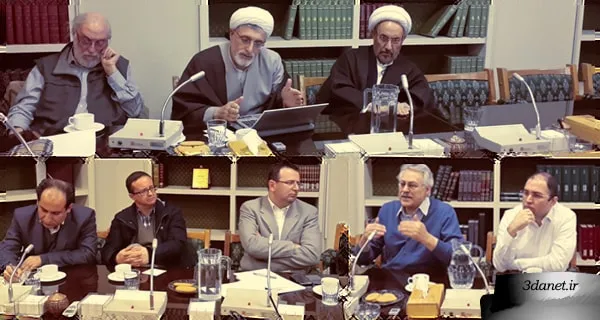
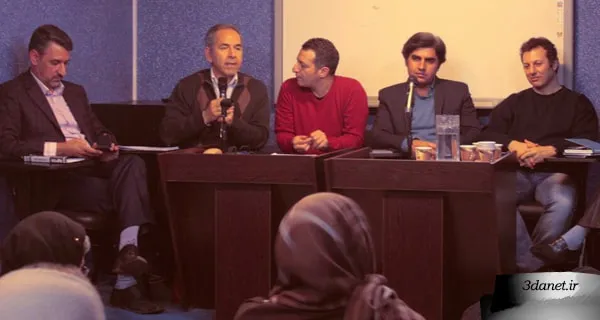
Discussion0 comments
No comments yet; let yours be the first voice.