At the beginning of this session, Dr. Safari, while congratulating on the Sha'baniyah holidays and thanking the management and research deputy of Jami'at al-Zahra (S) for holding this workshop, presented part of Dr. Pakatchi's resume and emphasized that, given the launch of scholarly research journals in the seminary, this workshop is of great importance.
At the beginning of this session, Dr. Ahmad Pakatchi, emphasizing that we will address general topics in this workshop, dedicated the title of the first session to "From Finding the Problem to Design," the details of which are presented below.
.
Full Text of the Specialized Workshop on Methods and Principles of Writing a Scholarly Research Article
.
From Finding the Problem to Design
The most important and key point in the formation of an article is finding the problem. For example, if an egg is given to a hen to hatch, if it lacks a germ cell, nothing will come of that egg. It is very important for a researcher to spend time, make an effort, and review sources, but all of this is contingent upon the existence of a problem for them. If the researcher has no problem, it is of no use, and their article is not scholarly research.
Finding the problem is entirely exploratory, and the researcher must have found a problem that is new in the world of studies. The innovation of the entire research depends on finding the problem. One must allocate part of the time to finding the problem, or if during studies, we encounter a problem, record it somewhere and work on it later.
For those who have just started research work, finding the problem can be arduous and time-consuming, but as they progress, they will gradually see that problems rain down like rain, and one constantly regrets why they cannot address all the problems.

Three Stages of Conducting Research:
1- Receiving the topic and encountering the problem: The research must be the researcher's own problem. A researcher might, in a simplistic view, ask someone else for a problem, and this is incorrect and will confront the work with major difficulties later on.
2- Refining the questions and initial design: That is, how we can move from the problem to the questions and design our research.
3- Executing the research
If someone does not follow this path, they will not achieve a suitable result. It is impossible for a person to immediately go to the library and start taking notes without having a problem.

The biggest problem we face in the discussion of knowledge production is that in the epistemic space, we are entangled in epistemic customs. This is my first time coming to Jami'at al-Zahra. For this reason, on the way here, I bombarded my companions with questions, asking about the routes and the situation of that complex. Someone who does not know the way must constantly ask others. We become very happy when we know a place and feel sorry for those who do not know this city.
The negative side of the issue is that as soon as our knowledge and information about the path move towards automaticity, we stop thinking, do not pay attention to its subtleties, and the possibility of comparison is not provided for us. When we read the travelogues of Orientalists, within a month they have obtained information about Iranians that we have paid less attention to. Automaticity is precisely this process.
In the discussion of academic and seminary sciences and learning, the problem of automatism is the greatest affliction. As long as we talk about science and its dissemination, there is no problem. In many cases, a single example is repeated for a thousand years; for instance, since the time of Seyyed Morteza and Sheikh Tusi, whenever the imperative is discussed—whether its essence lies in obligation or is broader than that—the example “idha qala al-sayyid lil-‘abd if‘al kadha” (when a master says to his slave, ‘Do such and such’) is immediately brought up. This is not a flaw, and it is fine as long as we are teaching, but as soon as we want to produce knowledge, these become obstacles and veils. One must ask oneself: even if the master were God, would it still be the same? Who stated this rule that the nature of divine commands takes the form of a master’s commands to a slave? This is an assumption and may not be acceptable. When we paid attention to the imperative form, did we also pay attention to this side of the issue—whether this example is correct?
It is interesting that a person who has never studied these lessons and is studying in another field, such as sociology, if they become familiar with jurisprudential principles to a limited extent, asks: why do you liken God’s conversation with the believers to a master’s conversation with his slave? When you say, “If a lord speaks to his servant in this way,” do you even have a system of slavery in your society to see how he speaks to his servant? This is precisely the problem of automatism; that is, we have engaged with a subject in an educational manner and repeat it as instructors. As long as we are teaching, it may not be a problem, but a scholarly research article does not come out of this.
If we want to follow this same path and write an article based on it, the most we will say is that such-and-such scholar of legal theory says this, and so-and-so opposes it. The author of Ma‘alim did the same thing in his book, and it is more elegant. The difference between the production and dissemination of knowledge becomes apparent from here.
In the realm of knowledge dissemination, we want to spread what our scientific community knows to more people, but in knowledge production, we want to say something new that has not been said before, and it is precisely here that automated patterns reveal themselves. Interestingly, with a little manipulation, we realize that automated patterns show their flaws, whereas when our perspective is educational, we do not consider these flaws. For example, there is a very famous phrase in Sunni doctrinal books: “al-iman bil-qadr khayrihi wa sharrihi min Allah” (faith in destiny, its good and its evil, is from God). We do not pay attention to the fact that when someone says this phrase, what new point does uttering the word “khayrihi wa sharrihi” (its good and its evil) contain? This itself is a point, and we usually pass over it very quickly.
Last year, in the summer, I had a recitation of Surah al-Najm that lasted about a month and ten days, because I wanted to read this surah not with the understanding I had become familiar with since adolescence by reading the Tafsir Majma‘ al-Bayan. I wanted to see if it was possible that we had fallen into automatism regarding these verses.
When God Almighty speaks about the Prophet (PBUH) seeing something, He says: “Afatumarunahu ‘ala ma yara” (Will you then dispute with him about what he saw?). This is a Meccan surah, and its addressees are the polytheists. The Quran says: Do you dispute with the Prophet? And to emphasize this matter again, it says: The Prophet (PBUH) has indeed seen that thing another time. Where did he see it? It gives the address: “‘inda sidrat al-muntaha” (near the Lote Tree of the Utmost Boundary). It gives the address of the Lote Tree of the Utmost Boundary as follows: “‘indaha jannat al-ma’wa” (near it is the Garden of Refuge).
The issue for me was that I try to put myself in the place of Abu Jahl and Abu Sufyan. I assume I am the addressee of these verses and these verses are being revealed right now. I say to God: Are you convincing me that this event happened, and you give the address that it was at the Lote Tree of the Utmost Boundary? Where is the Lote Tree of the Utmost Boundary? What kind of explanation is this? I do not even accept Paradise, and I do not believe in these matters, and you give the address of a tree in Paradise? What is even more interesting is that in the next phrase, it gives the address of Paradise with the Lote Tree of the Utmost Boundary, whereas in the commentaries, they give the address of the Lote Tree of the Utmost Boundary with Paradise.
Here it becomes clear that I am faced with automated knowledge that pays no attention to the concept of “Sidrat al-Muntahā” and quickly takes me to the end of the line. For this reason, I do not understand why these conversations are taking place. By reading commentaries, a knowledge has become fixed in my mind, and I have understood that I know all of this, and no problem arises for me.
There is a famous joke about a seminary student who wanted to write a gloss on al-ʿUrwa. He went through it from beginning to end and saw no subject for a gloss. The same thing happens here.
To solve this problem, I once read the verse in such a way that we assume we do not have that detailed information. If we adopt this perspective, reconstruction happens immediately; that is, by reading these verses several times, it became clear to me that I must see what Sidrat al-Muntahā is. If we can perform a role regarding it, we can find its central signifier. The result of this matter is an article on “The Quiddity of Sidrat al-Muntahā,” which will be published in the journal Ṣaḥīfa-yi Mubīn.
The first step was turning over all the books of exegesis; because seeking to say something new does not mean disregarding the texts. The next step was examining a collection of data and beliefs of the pre-Islamic Arabs. Unfortunately, we lack good sources. Ultimately, with a great deal of searching, in about 35 pages I was able to prove that Sidrat al-Muntahā is the name of a constellation that the Arabs of that time knew and understood what the Quran was saying. But later its name changed and caused confusion, and the interpretation of it as a tree belongs to later commentaries. When the original meaning was lost, they sought to explain the matter in another way.
What path was traversed over these pages is one thing, and finding the problem statement is another. In this part, attention was paid to the issue that the phrase Sidrat al-Muntahā cannot be meaningful with the common understanding of that time.
There are many such instances; for example, we have read the verse “wa-in yakād” hundreds of times and interpreted “la-yuzliqūnaka bi-abṣārihim” as casting the evil eye. The Arabs used “baṣar” and “ʿayn” for the eye, but the term “baṣar” is used when vision is at issue, and “ʿayn” refers to the organ. That which relates to vision is called “baṣar” in Arabic. For the evil eye, the Arabs precisely used the word “ʿayn”; for instance, they say: “Duʿāʾ li-dafʿ al-ʿayn.”
Why, when we read this verse, is the first thing that comes to our mind that some people want to cast the evil eye on the Prophet (PBUH)? And with this issue, our minds become locked, and we only speak of the evil eye and pay no attention at all to the meaning of “zalaq.” If we reflect anew on the phrase, a research dossier might be opened, and the subject studied afresh. Even if you look at the context of the verse and the verses before and after it, the subject is not the evil eye; and a thousand other issues.
By recounting some memories, I want to convey my experiences. We were sitting in a meeting, and someone said: We intend to publish a scholarly research journal and want an article from you for it. Behind him was a rug-tapestry on which this verse was written: “Wa-la-qad katabnā fī al-Zabūr min baʿd al-dhikr anna al-arḍa yarithuhā ʿibādiya al-ṣāliḥūn.” My mind in that meeting became preoccupied with this verse. After the meeting, I said that I had found the subject of the article. Now this article is published, and its subject is “The Concept of ‘min baʿd al-dhikr’ in the Holy Quran.”
Again, the matter returns to removing automation. Ordinarily, commentators have two main opinions about “min baʿd al-dhikr”:
1- Al-Dhikr is the Mother of the Book, and al-Zabūr is the Quran; that is, after what We wrote in the Mother of the Book, We write in this Quran. In this way, the subject finds no connection to the previous scriptures and is a matter between the “Mother of the Book” and the “Quran,” but this point is self-evident. I doubted that we might be mistaken. Why should this matter be pointed out? If it means the Mother of the Book, we must see what characteristics exist in this verse that “min baʿd al-dhikr” is said only here?
2- ذکر یعنی تورات و زبور نیز یعنی زبور داود؛ یعنی در زبوری که بعد از تورات آمده است.
نکته جالب این است که از قبل میدانستم این آیه در زبور وجود دارد و فعلاً این تفسیر دوم مرجح است ولی آیا ذکر میتواند معنای تورات داشته باشد؟
دو سؤال مهم پیش میآید:
1- باید دید که من بعد الذکر چه گفتن دارد؟ هر چیزی که در زبور است من بعد الذکر است و اول تورات نازل شده است؛ مگر اینکه هدف مقایسه زبور و تورات باشد و حرفی برای گفتن باشد.
2- کلمه ذکر را قرآن برای تورات اختراع کرده است؟ مسئله مهم این است که مخاطب قرآن، اهل کتاب است و آنها باید اصطلاح ذکر را بشناسند تا حرف قرآن را متوجه شوند.
پس باید دو مسیر میرفتم:
1- تمام کتب یهودی را بررسی میکردم و ببینم کلمه «ذکر» کجاها استفاده شده است؟
2- در تورات چه چیزی است که قابلمقایسه با این عبارت زبور است؟ قاعدتاً باید تورات به زبان عبری موردبررسی قرار میگرفت؛ زیرا در فارسی، عبارات ترجمهشدهاند و در بسیاری از موارد پیدا نمیشود.
این دقیقاً رفتن از مسئله به سؤال بود. در این مثال عملاً با مشخص شدن استراتژی من با نحوه مواجهه با این مسئله، معلوم شد که باید به این دو سؤال جواب بدهم و اگر جواب بدهم میتوانم ادعا کنم مسئله را به سؤالهای معین تبدیل کنم و این دومین گام در مسیر کار پژوهشی است.
یک سؤال قلمبه مشکل محقق را حل نمیکند. محقق زمانی موفق است که سؤال را به دو سؤال ریز معین تبدیل کند و به دنبال جواب آن برود؛ زیرا از لحظهای که ذهن ما نسبت به مسئلهای حساس میشود تا زمانی که به دنبال جواب آن بگردیم باید قدمی در این وسط وجود داشته باشد.
دریافت اولیه برای من فقط یک احساس است؛ یعنی وقتی آیه «سدره المنتهی» را میخواندم احساس میکردم هیچچیزی در اینجا با هم جور درنمیآید و حالا که آیه با مشرکین صحبت میکند باید یک معنی دیگری داشته باشد. برای پیشبرد کار پژوهشی باید دو سه سؤال معین را یادداشت کنم و به دنبال جواب آنها بروم؛ مثلاً سؤال اول برای من این بود که چه پدیدهای در آسمان میتوانست برای فرهنگ عرب جاهلی بهعنوان یک «سدر» مطرح شود؟ بلافاصله اولین قدم من این بود که 15 کتاب در مورد پدیدههای آسمانی را مطالعه کردم؛ یعنی مسیر برای من معین شد که الآن باید کجا را بگردم؟ دیگر با یک مسئله تحلیل نشده مواجه نبودم. حتی برای آشنایی با این مسئله با گیاه شناسان صحبت کردم و مجموعهای از عکسهای درختان سدر را جمعآوری کردم که یکی از آنها برای تحلیل مسئله در مقاله چاپ شد. تمام صور فلکی که در شبهجزیره عربستان دیده میشدند را بررسی کردم. صورتهای فلکی باید معنا داشته باشد و ویژگی آنها بررسی شود. این دقیقاً رسیدن به سؤالها از مسئله است.
دکتر صفری: در این زمینه روایات اهلبیت (ع) را نیز مطالعه کردید؟
این کار در ابتدا صورت میگیرد. تمام آنچه در روایات مأثور از اهلبیت (ع) و حتی اهل سنت موردمطالعه قرار میگیرد. ادیسون میگوید من 999 راه را میدانم که به اختراع برق منجر نمیشود. اینطور نبود که به آزمایشگاه برود و همان یکلحظه برق را اختراع کند. او صدها راه را رفته و به بنبست خورده است.
As another example, in the same Surah al-Najm there is another verse I have researched, and the results have been published. Commentators have said about "Lord of Sirius" that Sirius is the name of a star mentioned in the Quran. As usual, because I cannot easily pass over matters, I asked myself, why have commentators noted that this is the only star mentioned by name in the Quran? Perhaps this is not the name of a star either. Why should God mention a star by name?
The first step was to look at the narrations. When I looked at the narrations, I encountered one or two that I did not expect to see, and they changed the course of my study.
One narration was from Qatada, who had said that Sirius is the name of a star. All other interpretations were about which star Sirius is. But this interpretation says: Sirius is a star. From the perspective of the principles of meaningfulness, when a commentator like Qatada says this, it means he is giving new information to the audience; that is, there is an audience that does not know Sirius is the name of a star. A new path opened up for me. So it had another meaning for the audience. Since the article has been published, you can read more details in that article.

Deconstruction through Coextensiveness and Contraposition
For finding a problem, there are techniques that also existed in ancient logic: the phenomena of coextensiveness and contraposition. When we encounter propositions, to see if automatization can be discussed here, one of the things to examine is the coextensiveness and contraposition of the truth of the propositions.
For example, some, in analyzing the development of European countries, say that the influx of wealth from the colonies to the European states paved the way for their growth. This view is among the commonly held opinions. If we want to analyze this well-known narrative from the perspective of automatization, we must ask whether this statement is coextensive for all instances? Is it also true in terms of contraposition? For instance, we must show that in every case where colonial powers existed, such development occurred. The Portuguese were the first colonizers, yet today, within the European Union, they are the most backward country after Greece. This is despite the fact that Portugal had many colonies for a long time, one of which is Brazil.
Has every country that experienced this type of progress done so as a result of colonialism? Germany was never a colonizer; therefore, in a general view, it is not correct. This matter is either a partial cause, or we must look for another cause.
Another example is the issue of hijab, which is a good field for research work. In a well-known perception, such a notion exists among us and has become automatized. When the Holy Quran speaks of "do not be soft in speech, lest he in whose heart is disease should covet", it shows that the issue of arousing men can be a cause for some commands. There is another phrase in Surah al-Nur: "That is more suitable that they should be known and not be harmed", which shows there is another cause at work, and that is distinguishing free women from slave girls and bondwomen. From a research perspective, one must examine which causes take priority?
It is commonly held among us that we think cause number one is the cause. Whereas it is true neither coextensively nor by contraposition. If the meaning is that in every case where arousal occurs, the problem is with the clothing, we arrive at the fatwa of Fazil Hindi, who says that if a gentleman has a handsome face and fears causing trouble for others, he is obliged to cover himself; and on the other hand, in all cases where instructions are given about guarding relations between men and women, is it necessarily because of the covetousness of sick men, or does it have another cause?
This is a starting point for posing a problem that can lead to specific questions. Analysis using the method of coextensiveness and contraposition can lead to clarifying the problem.
Regarding problem-finding, I will mention another case. I will first explain the case and then say what category it fits into. I have a great deal of research interest in the subject of the Kharijites. The reason is that I think the more we study them, the more our own deviations will diminish. Kharijite studies is tantamount to the study of dangers, and we must see what dangers threaten the community of believers.
For this reason, I have researched the Kharijites for years, and along the way, certain problems occurred to me. One of these problems is that when we speak of the first stirrings of the Kharijite movement in the Islamic world, we see that both in Kufa and in Basra, there were Kharijites. Kufa is the main base of the Kharijites, but after forty years, it is as if there had never been a Kharijite in Kufa, and it is presented in such a way as if Basra had been the center of the Kharijites.
Some of the ideologues of the Kharijites, such as Abdullah ibn Kawwa al-Yashkuri, who constantly asked Imam Ali strange questions, was a Kufan, but after about thirty or forty years, we see that the roots of Kharijism were eradicated from Kufa. The question for me is why such a thing should happen? Why did it not continue in Kufa?
For myself, without knowing what would happen, I prepared a collection of data on Kharijite notables, and like a civil registry office, I would prepare an identity record for every Kharijite I came across, until I reached a point where I felt no new person was being added.
Naturally, I would engage with these identity records. The strange point was that we have numerous men from certain tribes, and in some tribes, Kharijites are never seen.
I had also read a sentence in al-Mubarrad's book al-Kamil, where they say a Kharijite was captured and brought before al-Hajjaj, and he asked: "From which tribe are you?" He said: "Kinda." Al-Hajjaj asked: "Do we have Kharijites from Kinda too?" It was interesting to me why al-Hajjaj was surprised. It was important to me why we have no Kharijites among the Quraysh? When I put these things together, there was a clear conclusion, which was that the Kharijite issue was not a doctrinal issue but a tribal one. At the very least, it can be said that the tribal issue was more important among the Kharijites. In the book Waq'at Siffin by Nasr ibn Muzahim, it is stated that the first place where the cry "La hukma illa lillah" (Judgment belongs to God alone) was raised was from the tent of the Banu Murad tribe. So the dispute is a tribal dispute.
The part that has become automatic is that when our greatest researchers speak about the Kharijites, the first thing they remember is the calloused foreheads of the Kharijites and their closed, rigidly dogmatic minds. I do not deny that they were like this, but I have a different view regarding the main body of the Kharijites.
So organizing data can help eliminate automaticity.
Another example concerns the time when I was working on the subject of Abu Hanifa. When we look at the sources, we see it is famous that he did not attach importance to Hadith. Abu Hanifa answers a question, and the questioner says that the Hadith of the Messenger of God (PBUH) contradicts it, and he says: "Da'na min hadith Rasul Allah (PBUH)," meaning, leave aside the Hadith of the Messenger of God. How is it possible that in the second century, an individual would allow himself to say such a thing? Even in the present era, no one would say such a thing.
It was a question for me that for such a person with this pessimism towards Hadith, this stance of his must manifest itself somewhere. For this purpose, I took three books as criteria: Ikhtilaf al-Fuqaha by Abu Ja'far al-Tahawi, al-Ishraf by Ibn al-Mundhir al-Naysaburi, and al-Khilaf by Shaykh al-Tusi, and I coded all the legal opinions; on this basis, to extract who Abu Hanifa agreed and disagreed with in each and every issue. Our expectation was that Abu Hanifa and the People of Opinion would be in one group and the scholars of Hadith in another; whereas it was the opposite.
Abu Hanifa and other scholars of Kufa were placed in one group, while figures like Malik ibn Anas, the traditionist of Medina, and Rabi'ah al-Ra'y, the rationalist of Medina, were placed in another; thus it became clear to me that the dispute was more a dispute of cities than a dispute of reason and tradition. If it were the case that Abu Hanifa opposed hadith, we would expect his fatwas to differ from those of the People of Hadith in eighty percent of cases; whereas his fatwas bore many similarities to those of the People of Hadith in Kufa.
These are all examples of how we can use the organization of data to overcome automaticity.
.
.
At the beginning of the session, Dr. Seyyedeh Saeedeh Gharavi, the esteemed Vice President for Research of Jami'at al-Zahra (s), presented a brief report on the activities of the vice presidency, and afterwards, before starting the discussion, Dr. Pakatchi answered a question and made an important point.
The detailed proceedings of this session are presented below:
One of the attendees asked: If someone lacks the skill of finding a problem, should they refrain from engaging in research work?
We were not talking about the individual; rather, our emphasis was on the work. The discussion was that research cannot be brought to fruition without a problem, but individuals may work in groups, each possessing skills in a particular area, and this can bring the work to completion. I only recommend that the person who finds the idea and the problem must be personally present throughout the work process. Taking notes from a professor, adopting the problem as a basis, and working on it does not get the job done; because it is the professor who owns the problem, and the subject cannot be transferred to another person with just a couple of lines.
An important point to be made about automaticity is that automaticity is layered. We may pass through one layer but become stuck in another. An interesting example in the history of thought is the thinking of the French thinker Louis Althusser. He says that Marx noticed that capitalism had imposed a certain thinking upon the whole world: that the owner of capital should reap the greatest profit, and the worker should receive the wage that the owner of capital deems to be their right. But Marx decided to overturn the rule and make the worker aware of their own rights.
Althusser says that Marx paid attention to half of the matter and neglected the other half. One trap was the worker being exploited by the capitalist, and Marx was able to overcome that, but there was another trap Marx did not notice, which was: who says the worker's labor is a commodity? The capitalist says this, and Marx also accepted it, merely arguing that it should be at its price, not below its price. He had fallen into an automatized space and worked within that same space.
The same issue occurs in women's studies. There was a centuries-old belief that women should not participate in social activities, defining limited duties for them, mainly within the home. Now they have reached the stage of asking: who said this? That is, they want to exit the stage of automaticity, but another layer still exists.
I found it interesting that in several different institutions focusing on women, there is a special emphasis on the issue of the family; that is, the situation is such that it is as if women are the ones who must bear the burden of the family on their chests. Hence, as soon as the issue of the family is studied, the concept of womanhood automatically comes to mind. The majority of researchers working in the field of family are women. This is another layer of automaticity. In my opinion, men should pay as much attention to the family as women should. I suggest that you also bring men into family studies. The issue of the family will reach its desired destination when men also participate.
Question: Men have worked sufficiently in the field of women and family, and the gap of women working in this field is felt.
If that is the case, I have no objection, but I do object to the gentlemen working in the field of family as well.
Continuing the workshop discussion, Dr. Pakatchi addressed the criteria for an article.
Novelty of the Subject
In a research article, the subject must be new, meaning it must necessarily lead to new knowledge; if it does not, that work is not considered a research work. I have raised this issue dozens of times in various gatherings, and it has been a common problem. Some believe that we might write an article that contains no new knowledge, yet it includes useful content that is necessary for society.
We must clarify two matters for ourselves: what is useful and what is research, and these two are very different.
The Holy Quran says: "So remind, you are only a reminder." There are many topics that must be recounted repeatedly. A preacher speaking about the remembrance of death and depicting heaven and hell for people is very necessary and essential, but it is not research. Even individuals may be very successful teachers and write excellent commentaries for scholarly books, but this is education, and research is something else. I urge you to distinguish between being beneficial and being research-oriented. Novelty is part of the essence of research work.
Dr. Safari: Can precise explication not be considered research?
Explication and description, in the sense of illuminating new dimensions of an issue, or presenting a holistic picture where we previously viewed it in a fragmented way, or presenting it to us in the form of a typology that allows us to have a classification system, is research. However, unpacking and explaining a matter is not research work.
Question: For whom should this new knowledge be? It might be known within a specific class, or an individual might have attained knowledge themselves but not presented it.
New knowledge is for the world of science, not for a single student. Furthermore, in the field of research methodology, we do not recognize knowledge that is "in the hearts of men" and has not been presented, because this traditional view—where an individual feels their chest is full of knowledge and they have not had the opportunity to transmit it to others—does not exist in today's world.
The moment a researcher puts pen to paper and investigates, they, like everyone else, do not know. When they reach a result, they are the only one who knows, and when they publish their report, they allow others to know as well.
Dr. Safari: Can new knowledge be independent of a literature review?
The research background is always an inseparable part of research work. Fundamentally, the scientific community is not thirsting for someone to come and present content in a field of knowledge that is so novel it lacks any background. The interest is for someone to come and advance knowledge by one step.
Entering into something that lacks a background is high-risk, and there is no guarantee that the research will proceed on the right path under these conditions. That is why, when someone proposes a research discussion, they are asked about the theoretical framework, the research background, and the unsolved problem statement.
General Characteristics of the Subject

Clarity of the Subject
In stating the problem, it is important that the subject is clear. For example, compare the space of propagation with the space of research, and let us accustom ourselves to behave in a propagative manner in the propagative space and in a research-oriented manner in the research space.
When someone speaks about the afterlife in a gathering with the intention of propagating religion, they are very careful not to enter into dubious areas; if they do, everyone says this person is inexperienced. It is precisely for this reason that using vague, ambiguous, and diplomatic phrases is useful in the space of propagation and teaching; that is, they state the issue in such a way that the other person does not become entangled in doubts, and if it happens, we find an answer for them.
For example, it is among the certainties of the Islamic faith that Jesus was not crucified, but whether he is alive or has passed away is not among the certainties of Islam, and both views exist among Islamic scholars and in the narrations. Suppose someone, in explaining Islam's position, raises the issue that Islam believes he was crucified but does not enter into the question of his being alive. For centuries, people have spoken about this matter and have not emphasized the part that is not among the certainties. In the context of propagation and teaching, it is the speaker who decides where to use clear expressions and where to use ambiguous ones, but the world of research is not the world of speaking ambiguously; because the audience is specialized and not a general audience about whom we worry about casting doubt in their minds. The research perspective is about opening paths of knowledge; therefore, raising issues ambiguously in research is considered a flaw and is by no means a skill. So, from the title to every single sentence of the article, everything must be in the utmost clarity.
The Limited Scope of the Subject
This is a challenge we are always grappling with. Sometimes a student wishes to write a thesis that solves all the problems of Muslims. Likewise, a 20-page scholarly research article cannot solve a wide range of issues. If someone lays out a spread in such works, they must be able to wrap it up; one cannot simply raise an issue and leave the rest, postponing it to another time. So the subject must be confined to this extent.
If during the design phase we see that the subject is broad, you have the option to narrow the subject down.
The Subject's Capacity for Elaboration (for Analysis and Extraction of Detailed Discussions)
Many matters exist in our minds in a summary form. If we can bring this summary concept onto paper and elaborate on it, a research article emerges from it, and if we cannot, we no longer have the possibility to move forward; because just like a tree that starts from the root and then branches out, if you have an idea in your mind, you must be able to branch it out so that it takes the form of an article.
The Impartiality of the Subject
All of us, as human beings, have inclinations, and it is natural that when we study, we cannot transform into another person and set aside all our attachments. But this is not a reason to apply all our attachments in our research.
It is natural for a man to have an inclination to make men the focus of his study; just as women feel the same way about themselves, but a lady might work on a subject and not involve her gender. An Iranian might do work that requires mentioning the virtues of the Arab people. The researcher's ethnicity should not influence the writing of the article.
It is very important that the researcher controls and manages themselves. The worst case is when judgment is made in the article's title. Unfortunately, this practice has not become established among us, but those who publish articles in foreign journals especially should note that a barbed title might cause someone not to read our article.
Dr. Safari: What about using honorific titles for the Infallibles (AS), which carry a specific semantic weight?
The audience is not like the audience of fifty years ago who were unfamiliar with Shia Islam; therefore, using these titles poses no problem. My point in raising this issue was about prejudice; otherwise, observing respect is necessary.
The Comprehensiveness and Exclusiveness of the Subject
In designing our own work, we must consider the proportions in a comprehensive and exclusive manner; for example, the title, abstract, introduction, body, and conclusion of the article must be consistent in terms of comprehensiveness and exclusiveness. In other words, it must not be the case that we say something in the abstract, introduction, text, or conclusion that we have not addressed in the article. The different parts of the article must be consistent with each other in terms of content. It must be clear which topics have been addressed and which are excluded. In article evaluation forms, there is a section where the evaluator must answer how much extraneous material the article contains, or how comprehensive the article is relative to the claim it makes.
Sometimes we think certain topics are comprehensive based on our own mental presuppositions, but we must not let our mental presuppositions interfere. For instance, someone chooses the topic “Pathology of Quran Recitation Education in Elementary Schools.” The fact that this article is situated in Iran is our mental presupposition, but if it is translated elsewhere, that context is lost. A topic may have been studied in a specific city, which should be mentioned in the article title. Or it is a jurisprudential topic and does not indicate which school of thought it belongs to. It is clear to us that it is the Twelver Shia school, but it is not clear to the reader.
Dr. Safari: A question has been asked about whether there is a difference between research articles and ISI articles?
I will dedicate one of the afternoon sessions specifically to these types of articles. There is no difference in terms of the fundamentals of research methodology. The only difference is that there are strict standards there that may not exist within the country. There is another point that is not related to the scientific aspect, which I will mention in the next session.
Several Questions About the Topic

There are four fundamental questions that, even if we are a reviewer, we must ask of that article:
1- Does the topic have value and priority for research?
An average, ordinary researcher, if they work very diligently and have the ability, is not expected to write more than three scholarly research articles in a year. Suppose this person lives to be seventy, and their peak productive years are limited. In the best-case scenario, they can write 60 scholarly research articles. This usually does not happen, and there are so many problems in life that cause interruptions in work; therefore, for any work we want to do, we must consider whether the topic is a priority for research.
This priority can be related to the researcher's planning; for example, they might say, “I want to work on the history of Shia theology in the first three centuries over the next twenty years.” If you look at the list of my own articles, you might initially think I have worked in a scattered manner across all fields, but my plan over many years has been to identify research methods and implement them in the field of Islamic studies, constantly filling in the gaps like a puzzle.
2- Does this topic have the capacity for research?
In some cases, the available resources do not allow us to conduct research. I raised a discussion in one of the classes and said that it is probably inferred from some verses and narrations that at the time of the emergence of Islam, in addition to Jews and Christians, a group of Zoroastrians lived in Mecca and Medina, but so far, most work has been done on Jews and Christians.
Two days later, one of the students requested to make this topic their thesis. I said, if you want to look for sources that contain reports, to my knowledge, only one person has touched upon it in passing, and that is Shahrestani in Al-Milal wa al-Nihal. So, in terms of reports, we are empty-handed; therefore, we turn to methodology. It requires someone to do discourse analysis, and that method still needs development. With this small amount of sources and the lack of a method, if someone engages in this research, nothing can be done. So, the issue is not just that the topic has attracted us, but we must see if this work is even feasible?
Some research may require time and context; for example, it might be possible to do it twenty years from now. Today, due to software capabilities, many research projects can be done that were not possible a few years ago.
3- Does the researcher have the ability to address the topic?
A specific research project may require a particular language that we do not master. Someone wrote a dissertation on an aspect of the history of Islam in Andalusia, for which I was a reviewer. One of my critiques was that I presented a list of materials I had written that they had not paid attention to. They responded by saying, “I did not know Spanish.”
Precisely, a researcher must consider their own capacities. The same applies to other research that requires knowledge of certain techniques and specific sciences.
I would very much like to be able to write an article examining Izutsu's Japanese translation of the Quran. As a specialist in semantics, it is important for me to know how much his semantics influenced his translation of the Quran, but I do not know Japanese. From the very beginning, my task is clear, and I will not pursue this research.
4- Is the researcher interested in the subject?
Research is hard and exhausting work, and it is important that the researcher be interested; commissioned work done reluctantly does not yield results.


In this section, regarding the researcher's scientific ability, I refer to its final point, namely the limitation of the disciplines involved, which requires explanation. In this era, there is a fever called interdisciplinary studies. The reason I call it a "fever" is that, although I am interested in it myself, sometimes these studies become a plague and are presented in a way that does not do justice to the subject.
Someone who engages in interdisciplinary study must have sufficient knowledge in both disciplines; for example, someone wants to conduct research in the field of psychology and the Quran. They know the Quran but do not know psychology, whereas they must know psychology sufficiently. Another way is to conduct the research as a group. The world is a world of collaboration.
In any case, engaging in interdisciplinary studies without sufficient knowledge is a disgrace to research and extremely damaging.
Dr. Safari: Please explain more about interdisciplinary studies.
Interdisciplinary is the translation of (Interdisciplinary). Interdisciplinary is used in two senses: general and specific. Interdisciplinary in the general sense is where two or more disciplines are involved together. But this part itself has subdivisions, the simplest of which is multidisciplinary or multidisciplinary; for instance, you encounter a field of study titled Women's Studies, which is multidisciplinary. Individuals look at women from the perspectives of psychology, sociology, jurisprudence, or other aspects, and no effort is made to unify them all in one direction; rather, the intention is to look from different viewpoints. Another example is Health Studies, which is studied from various perspectives.
There is another area which in Persian is called transdisciplinary, and its meaning is that something from one science enters another science, and not vice versa; that is, it is a one-way path. For example, the work Mr. Izutsu did in semantics: he went to semantics and applied semantic models to the Quran.
Interdisciplinary in the specific sense, that is, in the precise scientific meaning, is where one or more sciences come into relation with each other, and from them a new science is born that did not previously exist separately. For example, cognitive science emerged from various disciplines such as linguistics, philosophy, computer science, and neuroscience entering into dialogue, and such a science resulted from them. This science is very much like a human child, bearing resemblance to both families. This situation occurs very rarely and requires very stringent conditions.
Question: Are 'problem' and 'subject' different?
The problem is found right at the beginning of the research, and when we reach the design stage, the subject is introduced. The subject has a positive aspect, and the problem has an interrogative aspect. Also, the clarity of the subject is greater; that is, from the ambiguous problem that had a sensory aspect, we arrived at the subject, which has a conceptual aspect; meaning we precisely use specific concepts from the science, but when we find the problem, we are not involved with these specific concepts. When we are engaged in finding the problem, we think to ourselves, but when we reach the design stage, we have an audience, and the research must be understandable.
Question: Professors say the title of an article or thesis should be problem-oriented, not subject-oriented. What is the difference between these two?
This issue stems from the fact that in Persian we use the term 'mowzu' (subject) in two senses. One is in the sense of subject and the other in the sense of topic. When they say an article should not be subject-oriented, they mean subject in the sense of subject. The 'subject' we are talking about now is topic; meaning, every piece of work must have a title, and there is no doubt that the title must be problem-oriented. This is a case of equivocation that has occurred in Persian.
In the initial design, I must definitely know where I am going. What is the path already traveled? How much untraveled path do I have? We must definitely write these down. Sometimes students come to me verbally and say they want to work on such-and-such a topic. I tell them I am unable to establish any verbal connection with a topic, but if you write it down on paper, I can connect with it. The point is precisely here: when people talk about a topic, they only convey their feeling. We are not talking about an emotional subject. A person is successful if they manage to write one page about it.
We are now talking exactly about that one page that a person must write for themselves as a proposal. In the past, we would write the proposal and place it in front of us, and like a map, constantly refer to it. Now, this can also be done with a computer, but even now, I still prefer the method of writing. When we say all components of an article must be comprehensive and exclusive, this can only be controlled if I have a plan.
Trusting the mind in such a case is not correct. Note that a researcher never relies on their memory; because our memory is very fleeting and fluid; meaning, as I work, I change my own viewpoints, and if I don't have a plan, my plan becomes a malleable plan, and it becomes unclear which part of my article was written based on which plan. This is why, for such individuals who do not work based on a written plan, the beginning of the article is one thing and the end of the article is another.
This is precisely why one must have a written plan. Now, if during the work I reach the conclusion that I must make a correction, I must correct systematically; meaning, I must correct both in the proposal and re-examine all components of my article.
Sources for Choosing a Topic

Continuation of Previous Research
The important issue is that we have a background, and the researcher does not start from scratch. They are a corner of the world of science and take one step in knowledge. It is clear where my field of work is.
Assimilation of Previous Research
In some cases, research may not have been conducted in a specific field, but similar research has been done in another field. For example, if I want to research the Quran's references to the Bible, and no significant work has been done in this area, but similar work has been done regarding the Torah, I will study that work, and if I see it has a particular scientific standard, I will use its model.
Case-Specific Expansion of Theories
Very often, individuals propose a theory, and this theory can be implemented in hundreds of cases. We might select a theory and implement it in our own subject. For example, Allameh Tabatabai has the theory of Etebariat (contingent perceptions), which he has both expressed in The Principles of Philosophy and the Method of Realism and elaborated on more extensively in his treatise on Etebariat. Now, someone wants to implement this theory in a specific case, such as women, and the title of their article would be: The Status of Women in Islamic Society Based on the Theory of Etebariat; meaning, I want to implement the theory of Etebariat and, through its lens, consider the relationship between men and women in society and the status of women in Islamic society. Here, I use the design of the theory itself; for instance, one of the discussions Allameh Tabatabai raises is that human Etebariat have a direct relationship with need. Changes in needs cause changes in Etebariat; therefore, I can dedicate a part of my article to how, with the change in social needs in the modern era, the definition provided regarding the status of women has changed. To explain my article, I must elucidate the various components of this theory and implement them on my subject.
Case Testing of Methods
We have a world called the world of methods, and I, in proportion to my interest, am very much engaged with it. There are hundreds and hundreds of different research methods in the humanities; for example, we have a methodological field called discourse analysis, and among these, the method of Fairclough's critical discourse analysis. Someone wants to implement this specific method in a case study somewhere; for instance, to examine a short sermon from Nahj al-Balagha based on Fairclough's model of critical discourse analysis. This research proceeds based on that same discourse analysis method and its steps.
Dr. Safari: Can any method be used anywhere?
Certainly not; therefore, our encounter with these methods must be selective and critical. We must see how well that method fits that case. This is why it is necessary to have sufficient information about those methods, to know their origins, and to understand how effective they are in our work. So, we believe in differentiation and do not consider the use of every method appropriate, nor is it correct to block the path of using methods.
Problem-Finding with Creative Thinking
This is the most difficult part. All the points I have mentioned may place you within a framework. In some places, an individual might find a problem through creative thinking and, with creativity, derive the plan from the subject itself; it is good work but very time-consuming. Students and those at the beginning of their research are expected to pursue the previous cases, and those who are more advanced are expected to use creative thinking.
I deliberately chose the term creative thinking. Nowadays, classes are held to increase skills in using creative thinking, and books have also been written.
.
.
In the third session of the workshop on the principles and methods of writing a scholarly research article, Dr. Ahmad Pakatchi, in explaining the criteria for scholarly research articles, examined the criteria of isi articles and then addressed the framework and overall structure of article writing.
isi is the abbreviated name of an institute whose full name is (Institute for Scientific Information), and its translation is Institute for Scientific Information. This institute was founded in 1960 by a person named Eugene Garfield and was purchased in 1992 by an institute called Thomson Scientific & Healthcare. The isi website is better known by this company's name, and in other words, isi is a company.
When isi was created, it only paid attention to the exact sciences such as agriculture, environmental science, medicine, chemistry, and the like, and naturally, the humanities were absent from this collection, which was called sci. Later, when it was well-received, they launched ssci (abbreviation for Science Citation Index), which performed a similar function in the social sciences. The latest development in this collection was the launch of ahci (abbreviation for Arts and Humanities Citation Index), which included the arts and humanities. In Anglo-Saxon literature, humanities is used for those branches that are not of the nature of science but rather for matters related to human taste and talent. Religion also falls within this domain. This is while we view religious sciences as science.
These three layers collectively constitute isi. The reason for interest in it is primarily the technical and engineering sciences and, after that, the social sciences. We must always bear in mind that, from the perspective of those who manage the isi space, the third layer is an adjunct to the sciences and does not exactly fit within the definition of sciences. This matter is very important from the standpoint of submitting an article.
Isi considers a set of criteria for journals. No author has direct contact with it; rather, this institution communicates directly with journal owners, and authors communicate with the journals. When we want to send an article to journals, we must consider what objectives lie behind this system?

Our researchers' perception is that this institute is a body like a thesis defense session, where the student defends their work and the work is evaluated scientifically, but it is not the case that a scientific body has convened to evaluate an article and confirm its credibility. Sometimes, people even post articles on the internet as critiques that have been accepted in isi, while the article does not meet the requirements. The opposite also happens frequently, where an article meets the essential conditions but is not accepted by this institute. The matter goes back to the objectives behind the formation of isi.
The goal of isi is the creation of an information system for researchers' quick access to resources. A very large number of journals are published in the world, and if a humanities researcher wanted to look at every issue, their lifetime would not suffice. The best solution is to prioritize and place some journals and articles in a priority; for example, telling someone that if they want to look into topics about family in Islam, read these three journals.
Isi defines a collection of subjects for itself and, in each case, designates two or three journals and presents them to the audience. For this purpose, it has considered a series of rules, some of which are scientific, such as the quality of the article's writing, which we will discuss, but some parameters are not related to the scientific aspect of the journal, such as the timely publication of the journal. Currently, in our own country, the Ministry of Science emphasizes this matter in auditing journals. It is at this point that if a journal feels it has fallen behind in timely publication, it may slacken its rigor, and if it feels it is publishing sufficiently, it increases its rigor; therefore, part of the rigor relates to timely publication.
The journal having an international editorial board is another of the isi criteria. It is possible that all members of an editorial board are top-tier national professors, but if they are not international, isi does not pay attention. This point may not relate to the author, but one matter can relate to the author, and that is that just as isi values an international editorial board, it also values a journal that has articles from different nationalities. This issue is beneficial for Iranians, and sometimes leniencies may even be exercised. There are some points that are formal in nature, for instance, that the text of the article, or at least its abstract, be in English.
There are other criteria as well, and if you are interested in this matter of publication, read all the isi criteria. To study these criteria, click here!
In any case, this institute pays more attention to formal regulations, and in this context, professions such as scientific fraud have also taken shape; therefore, it is not strange that in various countries, teams have formed, read all the isi rules, and are capable of presenting articles that meet isi criteria and lack scientific peer review.
A point I must emphasize for all articles is that for whichever journal you send an article to, be sure to follow its formatting guidelines. Note that different journals have their own specific, defined formats, but there are also a series of common formats that we can focus on. For submitting articles, form is important. There have been cases, both for journals and for conferences, where the author sent the article and it was returned. We followed up, and they said, for example, the abstract should be 500 words, and they wrote it in 1000 words. The reason is that they care about forms, but we in Iran care less about them. Even if the matter of punctuation and copyediting is not observed, it is very important for scholarly research journals; the reason is that they do not have many people for this task. When you look at a journal's website, it tells you the font type and size should be such and such. The logic is clear; because they have no one to change this font. Something that may be incomprehensible to us. In Iran, this matter is somewhat more relaxed; because they have staff and do it; therefore, be sure to read that journal's instructions.
Article Framework and Rules of Article Writing
1- Title
2- Author's Name
3- Contact Information
4- Abstract
5- Keywords

These are the beginning of the article, and after these, the body of the article begins. Some of them need no explanation, but I will explain those that do.
Author
A point regarding the author's name is the issue of plagiarism. If an author's name is omitted or there is an issue of name order, the first author is the person whom the journal editor thinks should be contacted. Now, if these names are not arranged correctly, they cause disruptions in communication.
Dr. Safari: Some people think that if a professor's name is included alongside their name in an article, it means the professor has violated their rights and is exploiting their own name.
The name of everyone who contributes to the work must be included in the article. In this context, contribution must be defined; for example, in ISI journals, you must state who contributed to the writing of the article to the extent that if someone provides you with software to perform calculations, their name should appear in the article; because if their contribution were not acknowledged, the work would not have been completed. In the last session, I mentioned that there may be individuals who undertake the work of providing ideas, intellectual foundations, finding sources, or organizing the content, in which case their names must be mentioned. This is the same principle observed in theses; because the supervisor plays a role in providing ideas and guiding the work, and their name is naturally mentioned, and if it is omitted, an injustice occurs; unless individuals voluntarily waive their right.
Dr. Safari: On what basis is the order of names determined?
It is based on the level of commitment and responsibility; that is, who is directly accountable for the content of the article?
Keywords
We usually select 5 to 6 words as the article's keywords. Essentially, keywords are for searching, which is why we did not encounter this phenomenon before electronic search tools became common; meaning that search engines like Google use these words to find the article, and if someone searches for your keywords, they can find your article.
With this assumption, several points must be considered:
1- Phrases should not be long; for example, someone might say: "social issues related to the family." They should be a maximum of two words.
2- Some people use words that are in the article's title; for example, if an article's title is "The Historiographical School of Medina in the Third Century AH" and they choose the word "historiography" as a keyword. There is no need for this; because this word is in the title and search engines can find it through the title. In our keywords, we must compensate for words not reflected in the title. If we do not do this, it means losing the possibility of our article being accessed in a search.
3- General, ordinary, or meaningless words should not be used; for example, if someone puts the words "history" and "Islam" in their keywords, if someone searches for the word history, the search engine will give them millions of search results.
If we know that the philosophy of keywords is searching, our method of selecting keywords will change.

The Overall Article
Three important points must be considered in the overall article:
¢ It must have a sufficient academic level.
¢ The primary function of the article is to convey a message to the reader and convince them of the value of the research conducted, so it is better to reflect on the message of the subject before starting to write. Using eloquence and appropriate rhetorical techniques is part of following the article-writing style.
¢ Content that is not going to be discussed in the body of the article must be removed from the introduction and conclusions.
I have reviewed dozens of articles where, upon reaching the conclusion, the author suddenly remembers they also need to mention this point. Or they raise points in the introduction that are then abandoned in the body of the article.
The Article Title
Giving a title is not easy, and half the work must be done before one can give a title.
1- The title is the most important phrase of an article, which must be a complete representation of the main research subject. In the review forms for scholarly research articles, one of the items the reviewer judges is whether the article's title is proportionate to the text. If it is not, the article's value is diminished.
2- The title of the article should be as precise and expressive as possible, and the use of unfamiliar or abbreviated terms should be avoided. Usually (though not always), in naming most research, the following points are considered: What do we want to examine, in what community, where, and when? You have the right to coin a term and define it right there, but in the title, we do not have the right to do this; because in the title we cannot explain the intended term; for instance, you must qualify it like this: The Status of Tanqīḥ al-Manāṭ in Imami Jurisprudence in the Eighth Century AH. The fewer these qualifications, the more unmoored the article becomes, and it is unclear what exactly the author wants to say. This point must also be observed in a thesis, and it is the same matter we discussed in the previous session.
3- The title must be "free of prejudgment." Also, the result of the research should never be mentioned in the title of the article as a proven fact. A judgment should not be given in the title; rather, it is given during the examination of the issue. It is similar to a court, where an individual is called the accused and not a criminal; because their accusation is under review and their crime has not yet been proven, and if it is proven, they are called a criminal at the end of the trial. A scholarly research article is the same; that is, something that is to be proven during the article and should appear as a conclusion cannot be brought as a prejudgment in the title of the article; for example, if someone wants to examine the religious affiliation of ʿIkrima, the mawlā of Ibn ʿAbbās, they cannot use this title: "The Kharijite Nature of ʿIkrima, the mawlā of Ibn ʿAbbās." Therefore, it is appropriate to say: "A Study on the Religious Affiliation of ʿIkrima, the mawlā of Ibn ʿAbbās."
4- If certain words play a key role in describing the characteristics of your study, be sure to include them in your title.
Research Abstract
The research abstract was not part of our writing tradition. The story of the research abstract began around the mid-twentieth century in the exact sciences. A series of articles are published in journals, and the best-case scenario is to buy and read the entire journal. In the twentieth century, it was customary to publish a series of indexes that contained only the titles of articles and were categorized by subject; like the Index of Persian Articles or the collection Kashshāf al-Dawrīyāt al-ʿArabīyah. If you wanted to know what articles exist on the status of Muḍārabah in Islamic banking? You would refer to titles that were categorized by subject, and it would introduce several articles to you. These types of indexes only had the article title. Perhaps reading the titles of articles helped to some extent, but the need for more information was still felt. The requirement was to invent a middle ground that was larger than the title and smaller than the full article, and this middle ground was the research abstract.
This practice became an efficient method and was widely welcomed, and researchers felt it was a very suitable solution for keeping up with the sciences. People may not have the time to read the original articles, but they can pick up a volume once a year and read the abstracts of various articles and stay informed about all the topics.
Two or three decades later, with the advent of the internet, the abstract took on a new form. Now, every article that is written definitely has an abstract, and that abstract can be presented through information systems. Many institutions that sell the full article provide the abstract to you for free. Through this, the researcher can be sure that this article is useful to them and then purchase the article.
The abstract is available to someone who does not have the full article, and I must convince them with my abstract that my article is worth reading. The abstract has another function as well. Individuals cannot read all articles from beginning to end, but they can read the abstracts; therefore, one can expect a researcher in their own field to read all the abstracts and then decide which original article to read?

1- The abstract is almost as important as the title. In the abstract, the various parts of the article, including the introduction, objectives, methods, and research findings, are summarized. Regarding methods, it may be important for the reader to know what method the author used. For example, to prove the extent to which the Sahifa al-Sajjadiyya is attributable to Imam al-Sajjad (AS), a researcher might examine it from the perspective of chains of transmission, biographical evaluation, manuscript studies, text analysis, or discourse analysis; therefore, the author must state their method in the abstract. One of the benefits of this is to avoid repetition.
Dr. Safari: What do you mean by method? Because someone might say their method is descriptive-analytical and the like.
This is a problem that needs to be pathologized. Another pathology we have in this area is what is written under the title of library method. The question is, in the fields of science we deal with, can anyone choose a method other than the library method? The library method is used in contrast to the field method; that is, someone uses survey methods in the social sphere. Such expressions are an evasion of explaining the research method.
Many books have been written about methods, and it is worth introducing them again. Sometimes we engage in the analysis of a subject, for which we must use analytical methods, which themselves have various types. Sometimes we look at the subject historically, which itself has many methods. Sometimes our method is comparative, which also has numerous methods.
When we declare our method, the audience should only expect from us within that scope. But if we state the method in a general way, not only will the audience become confused, but they can also object to us and point out several things we did not address; therefore, declaring the method can also be a form of self-defense.
2- The article abstract is the part that the reader looks at and reads after being attracted by the article's title. The abstract, besides being short, must be meaningfully condensed and contain the main content and the most important definitive findings of the article.
I recommend that you develop skills for yourself in writing to size. Those who have taken TOEFL classes know that one of the requirements used to assess language ability is writing to size; for example, write about a certain event in 200 words, and as soon as it exceeds this number, a penalty is applied.
We must learn to speak to measure. This issue is especially very important for those involved in encyclopedia writing, and if it is not observed, it becomes unmanageable. My dear friend Dr. Shahiri asked me to write an article in 1000 words on the difference between discourse and culture. At first glance, such a task seems impossible, but after examining it, I concluded that I could do it. A researcher's life is constantly full of such issues, and writing to measure must be considered a skill. This skill is learnable.
In the abstract, too, one must spend to measure. This is exactly like someone who has a fixed amount of money for a task and no more, and must plan in such a way that they do not run out of money before the end. Every word used without reason in the abstract must be deleted; for example, some write:
There is a famous anecdote about a man who put up a sign by the sea that read: “Fresh fish sold here.” Someone, perhaps versed in methodology, told him, “It’s obvious you sell fish here. So the phrase ‘here’ is redundant; remove it.” He did so. Another time, seeing it read: “Fresh fish sold,” he told him, “Everyone knows fish is fresh; so the qualifier ‘fresh’ is redundant; remove it.” He did so. Another time, he said, “Everyone knows you sell fish here; the qualifier ‘sold’ is redundant.” The last time he came, he saw the sign read: “Fish.” He said to him, “What kind of word is this? It’s obvious there is fish here.”
This is a reality, a phenomenon we seriously encounter in research. In some writings, we see sentences that carry no meaning whatsoever. We must change our writing habits. I can say from personal experience that writing an abstract takes time. After finishing the writing, one must eliminate the superfluous; for instance, if an adjective and a noun are mentioned together, the adjective alone suffices, and I remove the noun, or I remove the parenthetical clause. One must trim this abstract like a surgical blade until its essence is obtained.
.
.
In the fourth and final session of the specialized workshop on the principles and methods of writing a scholarly research article, Dr. Pakatchi elucidated the theoretical foundations and framework of research and described the various types of research methods.
At the beginning of this session, Dr. Safari Foroushani, head of the Encyclopedia of the Muslim Woman, while posing some questions from the audience, pointed out that some books by Dr. Pakatchi are available at Bustan-e Ketab Publications in Qom, and those interested in learning more about methodological topics can refer to these books.
After that, Dr. Pakatchi continued the workshop discussion by answering a question.
Question: Given that you said if someone wants to write an article in interdisciplinary studies, they must also be proficient in those sciences, how should those studying at the Level Four program proceed if they want to write an article in the field of comparative exegesis?
In interdisciplinary work, the issue of expertise is directly related to what kind of interdisciplinary relationship we want to establish; for example, if someone wants to compare the exegesis of the Testaments and Islamic exegesis, their goal is to achieve a result from this comparison, for instance, to assess the relationships between the approach to the Testaments in exegesis and the approach to the Quran. Naturally, this is not something achieved by reading one or two books.
As far as I know, there are opportunities in Qom for individuals to participate in open classes and pursue a course of study. I am not saying they must gain expertise in the Testaments to the same degree as they have in the Quran, but it must at least be to a level where they attain insight and perspective in the scientific field to make a scientific comparison. Superficial familiarity can cause more misunderstanding and error than benefit. Someone who does interdisciplinary work buys themselves trouble. There is a famous saying: either befriend elephant-keepers or build a house fit for an elephant.
I know of no middle way that would relieve a person of this task.
Theoretical Foundations of Research or the Theoretical Framework of Research
Every researcher must have accepted a series of foundations beforehand as their presuppositions and must be familiar with a series of theories before beginning to conduct research.
They asked, what is the difference between the theoretical foundations of research and method?
Method is something I must implement in the article, while framework is something I only need to declare in the article as the theoretical framework of my research. The framework already exists, but the method does not. For example, when someone conducts research on the Sahifa Sajjadiya from the perspective of content analysis, they define content analysis as the method in their article. However, this method is based on a certain thought, and to specify how I am permitted to apply it to the Sahifa Sajjadiya, I must explain the theoretical foundations; that is, I must state that we encounter the Sahifa Sajjadiya as a text possessing a kind of synchronicity. In other words, we do not assume that this book consists of a fragmented text, and because we consider it a synchronic text, we are permitted to implement the method of content analysis. That is, I must state the theoretical foundations before implementing the method.
Very often, colleagues draw upon discussions of semantics. We have a large number of articles in this field that use these discussions. Of course, we set aside those who use semantics in a sense other than its original meaning; they are not the subject of our discussion. For example, someone who uses Izutsu's model of semantics needs a theoretical framework beforehand. Izutsu's semantics considers the relationship between language and ethnicity to be a very strong one; therefore, as a theoretical framework, the author must declare that within their theoretical framework, they use the model of ethnic semantics, which adheres to these components.
The theoretical framework is the basis and foundation of the method, and as long as it has not been stated, we cannot apply the method. If the theoretical framework is one of those frameworks on which theoretical work has been done, the author's task is easy; they can provide a brief explanation and refer the reader elsewhere for details.
Dr. Safari: Is this the same as the presupposition?
The presupposition differs slightly from the theoretical framework. Presupposition means something we could have discussed but have deferred its discussion to another place. This is not necessarily the same as the theoretical framework. For instance, someone examining the scientific miracle of the Quran presupposes that the Quran was not revealed in the common, cultural language of that day but rather contains pure scientific propositions that we are meant to discover with our knowledge. They can state that this is their presupposition, provide no further explanation, and refer to another article that has discussed this topic. The theoretical framework is broader than this, because it explains the theoretical foundations of the method.
The theoretical foundations of the research must be presented with scholarly citation and references. An article is a good article when a section of its theoretical foundations is included. If possible, we present it briefly and refer elsewhere; if this is not possible—meaning the theoretical foundations have not been refined in our subject of discussion—we must do it ourselves. Therefore, sometimes the theoretical framework section of articles may be extensive.

Introducing the Research Method and Approach
One of the topics usually discussed in issues related to research methodology is research method and approach. Research method is taken as equivalent to Method and approach as equivalent to Approach, and many articles use these two terms; the concept of approach has become especially important in interdisciplinary studies. The matter concerning method is the matter of a path. The matter concerning approach is the matter of a point of departure and a point of view. What is meant by path is that using a method involves stages that lead to a result. We travel a road that leads to a result; that road is called the method. The word method itself means a way. However, approach is not a discussion of a movement; it is a discussion of from where to where we are going, not which path we are taking.
The word that follows “approach” indicates the point of departure, and the explanations that precede it indicate the destination. For example, if the title of an article is “An Examination of the Phenomenon of Mourning with a Sociological Approach,” it means that there is a known phenomenon called mourning, but this time we are encountering a specific movement, and someone speaks about mourning from the starting point of sociology. Or “An Analysis of the Personality of Ammar ibn Yasir with a Psychological Approach”—much has been said about Ammar ibn Yasir in our sources, but this time we look at the matter from the starting point of psychology. How does psychology, which performs personality analysis, view Ammar’s personality? Sometimes the approach and the method may coincide, meaning this person does not work with our traditional data at all and implements their own personality analysis models here; thus, they apply one of the personality analysis models that exists in psychology to Ammar’s personality. Therefore, approach and method can be combined, but they are not necessarily always combined in one place.
If someone in a scholarly research article has an unconventional point of departure, it must be mentioned as an approach, but in cases where the point of departure is within its own domain, there is no need to mention it; for instance, “A Jurisprudential Examination of the Issue of Wiping Over Khuffayn”—here one cannot say “a jurisprudential approach.” If someone wants to examine this same issue from a non-jurisprudential perspective, they must mention it; for example, examining the issue from an anthropological standpoint. Answering questions such as: What were the types of shoes people wore in early Arab society? Could this be related to the characteristics of people’s footwear? What is a khuff? A jurist qua jurist does not usually encounter the issue of wiping over khuffayn in this way; rather, they examine the evidence and reach a conclusion based on it. Someone who approaches it from the perspective of footwear customs and their types in the daily life of the people of that era can say: “An Analysis of Reports on Wiping Over Khuffayn with an Anthropological Approach.”
Today, in the world of the humanities, we deal with a vast spectrum of methods. No matter how methodologically versed a person is, there are still many methods they do not know. In the present age, anyone working in any field of science is certainly asked to specify their method. I will explain the purpose for which specifying the method is done.
Note that our classical scholars never stated their method in all the Islamic sciences. Declaring one’s method is a modern concern and, in past ages, did not occupy the minds of the learned. The phenomenon called research, in the sense we know it, came into being around the year 1800. Around 1800, in the city of Berlin, Germany, a person named Wilhelm von Humboldt was the German Minister of Education. At that time, higher education had not yet been separated from general education. He created a non-religious university with a new model, which still exists in Berlin and is known today as Humboldt University. He invited Fichte (the famous German poet and thinker) and Schleiermacher (the founder of modern hermeneutics), and they formed three departments and created something called the university. This group was the first to conclude that, in order to have a common language in scholarly discussions, everyone must explain what their research method is. Before that, when people read someone’s work, they trusted that individual and did not deem it appropriate to ask them about their method. In fact, research at that time was personality-centered and based on trust.
The new development that arose based on the foundation laid by these three at the University of Berlin was the issue of the multiplication of scholars; that is, they said we will train a number of people for scholarly work, and instead of relying on their personalities and seeking to present famous individuals to society, we will create common methods so that people trust the methods. In fact, a shift occurred, and trust in the individual transformed into trust in the method. In the past, they would ask, “Who said this?” Today, they ask, “Based on what method do you make such a claim?” To control the correct execution of the method, they invented citation practices and the like.
This was a newly emergent phenomenon in the scholarly community and spread rapidly; hence, today, reputable universities make a special investment in students learning methods.
Dr. Safari: Don’t the books we used to have in the past as “adab” (etiquette), such as “Adab al-Munazara” (The Etiquette of Debate), have any relevance to research methodology?
The crucial point about method is that the path is step-by-step and defined; otherwise, method itself has no particular meaning. What has made method gain importance is that in the academic sphere of the last two hundred years, the individual is asked to report the path they have taken step by step. They say, tell us how you arrived at this conclusion? Don’t just tell us your opinion. In the past, you would state your opinion, and the audience did not concern themselves with what went on behind the scenes. A friend of ours used to tell a sweet story. He said: It had just become fashionable in high school to set up laboratories. For some time, we had been insisting that our chemistry teacher take us to the lab and show us up close this claim that if we mix alcohol and water and evaporate it, the alcohol evaporates sooner. He told us: When I tell you this, I am not lying. I have no motive to lie, and going to the laboratory is unnecessary. That teacher’s statement is the product of this past way of thinking.
The reason for method in modern science is that scientific findings are shared; whereas in the past, only the result of scientific findings was shared. If someone does not do this today, they are not accepted, and method is demanded of them. We may not accept this matter, and even some elders might not submit to it. But the expiration date of that model has passed, especially since we wish to participate in the world’s scientific communities, produce knowledge, and have others cite our articles. We must observe the rules of the game, provide a complete report of the process of arriving at the results, and mark the path step by step.
One of the goals of method is gaining trust. It has another goal, no less important than the previous one, which is that traversing the path ceases to be a personal matter, and knowledge becomes a collective phenomenon. The researcher says, I have gone this far and reached this conclusion, and another can continue from here onward. Whereas, when there is no report and I have given no explanation about the method, another person must start from the beginning. A few days ago, a work of mine titled “Research into the Documents of Nahj al-Balagha” was unveiled. I was supposed to say there what advantage this work has over previous ones. My most important point was that if this work has no other benefit, it has this benefit: the entire path taken has been reported, and anyone who encounters a sermon can understand which group has seen which source and which source they have not seen? Which part of the source has been seen? With this, there is no need for another person to start the work all over again from the beginning. This is precisely the difference between the two models of working.
When we report the path, we automatically point to paths not taken and not seen as well. Some individuals even recommend themselves that it would be good for someone to research a certain matter. This causes scientific productions to follow one another in a chain-like fashion.
Dr. Safari: Ultimately, is method the path or the manner of going?
Allow me to use the word method, which precisely means the path. The researcher must record and report the path they have taken. I draw your attention to the term “judicial precedent” among jurists. Judicial precedent means that a court has previously taken this path and reached this conclusion. This can be cited by subsequent courts. In some judicial systems, judicial precedent is authoritative. Exactly the same thing happens here; that is, when the researcher explains the path taken, the next person learns from the path they took, and subsequent individuals behave likewise, and this becomes a research precedent; thus, we encounter various types of paths that researchers have taken, which are the result of paths others have taken. Suppose someone wants to explore a cave; they mark the path, and the next person who wants to continue the way uses their markings, and the previous markings become a normal path.
The topics we have raised are very important. Some ask, what is the authority of your particular method? These individuals view method from a perspective of issuance, and their critique is authority-centered; however, this is not the case. This method has neither been issued from somewhere, nor does its validity derive from an authority to which it refers. When you wish to examine the question of the legitimacy and authority of using a method in humanities discussions, pay attention to the philosophy of method. Even if my remarks were unclear, investigate further. It is very important: when I am asked, "Can God create a stone so heavy that He cannot lift it?" and I involve myself in answering the question, the simpler way to respond is to say that the question itself suffers from a conceptual paradox. Regarding these questions we usually face about the authority of methods, we must note that we are dealing with a practical procedure whose validity is secondary. Its validity lies in the frequency of its use. If its authority is to be assessed, it must be examined precisely from this perspective, not from the perspective of a method of issuance.
Considering the first and second aims of method that I mentioned, I must say that the issue of method in the research of the last two centuries is a kind of covenant and commitment. When individuals do not sign this commitment, they do not enter the circle of researchers, and they are not recognized by them. We cannot ask the world of science, "Why do you ask us to work like you?" This is one of the important veils and obstacles preventing our articles from being read by scholars abroad and within the country, and a major barrier to interaction between the seminary and the university.
Types of Methods
We said there are three methods: analytical, historical, and comparative. Suppose I study a phenomenon such as a tea glass (estekân). At one point, I might compare this tea glass with other things; for example, examining the relationship of a tumbler to a tea glass, a saucer, and a cup. If I seek to understand the tea glass, I succeed when I understand other things like the tumbler, saucer, and cup, and understand their type of competition and convergence. Here, I advance understanding based on comparisons. This is an instance of the old example, "Things are known by their similarities and opposites." This type of study is called comparative.
But at another point, I do not compare and instead focus on the tea glass itself. What matters to me is: what is the story of the tea glass? How did it come into being? I say a phenomenon called tea drinking emerged and brought with it customs and rituals, of which the tea glass was one of the tools. The tea glass was a product of Russia, and its word comes from that culture. I go to various museums and examine how tea glasses were in different periods. What stages did the narrow-waisted tea glasses go through, and how did they come about? From what materials were they made? This is historical analysis, and we examine the historical process of a phenomenon.
At another point, I want to study the tea glass in a single moment. Here, I can examine it from various aspects. The simplest way is to examine its components, material, shape, and function. This type of study is analytical.
We might apply these three types of approaches to a concept such as "salat" (prayer);
1- Comparative study: If we have prayer, what do others have? Or comparing prayer with other acts of worship in Islam.
2- Historical study: What trajectory has the concept of prayer followed in its historical course?
3- Analytical study: Examining the concept of prayer, its components, pillars, composite form, and function.
The same can be done with a text; for example, in interpreting the Quran by the Quran, we encounter an analytical view because we do not go outside the text of the Quran; we neither compare nor take a historical view. Rather, we consider the text of the Quran as a whole and examine the relationship between the parts of this text.
Certainly, these methods are not exclusive to the West; rather, they are human, and a human being possessing the rational faculty can follow these paths. We have had all three of these perspectives in the past. This is a quasi-rational discussion, and in methodological studies, we have nothing other than these three. Further explanation: it is either a comparison with another, or it is a thing in itself; when we speak of a thing in itself, we either measure it in relation to a previous time or in a single moment. That thing in a single moment has no other division.
Dr. Safari: Is comparison different from correspondence?
Comparison is a more appropriate term than correspondence.
Dr. Safari: Do these methods also have subcategories?
Yes; these three are the main divisions, and each of them has many subcategories.
This classification of methods has always existed and is not the invention of a particular group. The only point is that at a certain stage we encounter the systematization of these models; that is, a group became sensitive to naming these models, explaining each one, and teaching them to various individuals. Many of our predecessors traversed these stages single-handedly, but now you can transmit a model of thinking with a one-day workshop; therefore, the work done today is the standardization, systematization, and teachability of methods. In the past, the master's method was transmitted to students through practice. I emphasize that the issue of method has always existed and is not something new.
Among the branches of research method, the most complex method is the analytical method; because by choosing the analytical method, which means you do not want to use the historical and comparative methods, we face a severe lack of tools; that is, in the initial encounter, we experience an epistemological crisis: if I do not compare and do not use the historical method, then what am I going to say? It is precisely for this reason that in the years of transition from the nineteenth century to the twentieth century, around 1900, we encounter a scientific revolution in the field of methods. In the period before this year, analytical methods lacked appeal, and many sciences did not use this method.
The phenomenon of using the analytical method is a product of this year onwards, and the prerequisite for using this method is to have a series of models for this work. It is for this reason that most models of the analytical method are a product of the twentieth century. In the analytical method, we are severely in need of tools to use as quantitative and qualitative criteria.
For example, a doctor draws blood from a patient to diagnose an illness. What must they do to diagnose the illness? The blood test itself is also a product of the twentieth century, and before that, we did not know what to do with this blood, and this matter was an incomprehensible whole. To transform this incomprehensible whole into components, I need to have techniques to carry out this separation. Before that, I must also have arrived at a series of qualitative criteria. If you look at blood test sheets, a specific quality is considered in each section. The starting point of the matter is arriving at qualitative parameters. The entire progress of the blood test is the result of understanding what components blood is made of and what function each of them has.
The same conditions exist in our discussion; that is, when we encounter a whole, we must be able to divide it into various components and know what function each of these components has? For example, when we look at Tabarsi's Majma' al-Bayan exegesis, we realize he paid attention to the phenomenon of context (siyāq) and brings the verses context by context, and in the meaning section, he brings the entire context together, whereas he could have written the exegesis verse by verse. In some verses, the meaning of the subsequent verse is dependent on the meaning of the preceding verse. Despite Tabarsi having separated the contexts, we must trust him because he has not told us by what tool he considered these verses related to each other and the subsequent verses unrelated. We have taken one step towards analysis because we have realized that these several verses together are the composite components of a larger whole, and those larger wholes can together form an even larger form. We were able to extract a series of qualitative criteria that aid analysis, but we could have been more successful if these qualitative criteria had been written down; that is, one of our exegetes would write a few pages stating that this is how we understand that these several verses encompass one context. No one did this. This is the analytical view.
Another example concerns the issue of the Khawarij. You can say that the Khawarij are a sect that emerged in the aftermath of the Battle of Siffin and possess these characteristics. But if we want to take an analytical view, the question that arises is: from a holistic perspective, what components make up the Khawarij? The clichéd answer: a group of ascetics incapable of understanding the depths of religious issues. The analytical answer: we must seek to identify groups within the Khawarij that have different roles; meaning, for instance, among the men of the Khawarij, there are individuals with greater military skill, not just a prayer-mat-bound ascetic. These have a different function from the ascetics. Some of them are political figures; for example, a person named Ash'ath ibn Qays, although not a Kharijite himself, was very influential in the formation of the Khawarij. He is a politician and a tribal chief.
A lack of attention to the discussion of structure causes us not to have a correct understanding of this group.
The army of the Azariqa is formed, which endures for several decades, which is no small matter. How did people who were so cautious that they would not abandon Hadith for fear of falling short in reciting the Quran find the time to implement organizational techniques? In the experiences of our own era, we see that there were a number of organizational people among this group. Also, orators are very conspicuous among the Khawarij.
Therefore, we must take a piece of paper and identify, one by one, the functions of the different groups within the Khawarij, and in the next step, get to know the men and place each one in its own category, and ultimately arrive at this analysis: why did the history of the Khawarij unfold in this way?
When we lack these analyses, we become confused in confronting the Khawarij. Is it possible that a dull-witted and foolish group could achieve such success, form governments, and have some of their groups continue to this day?
.
Text of 4 Sessions of the Specialized Workshop on Methods and Principles of Writing a Scholarly Research Article
.
.
.
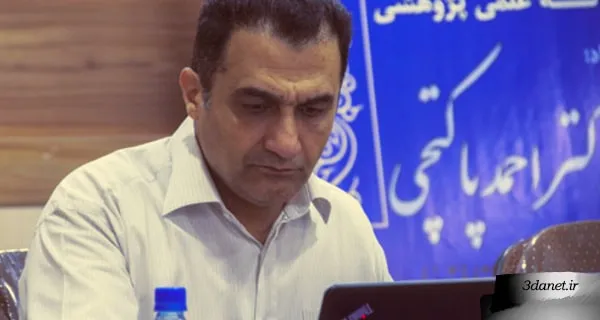

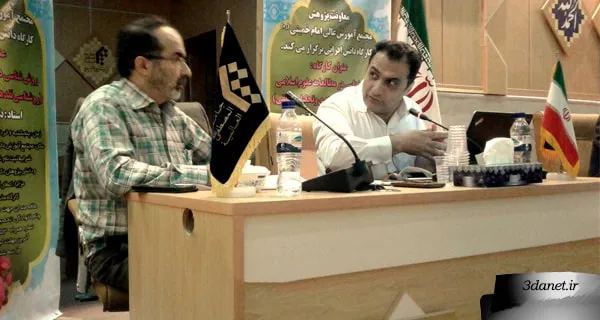
Discussion0 comments
No comments yet; let yours be the first voice.